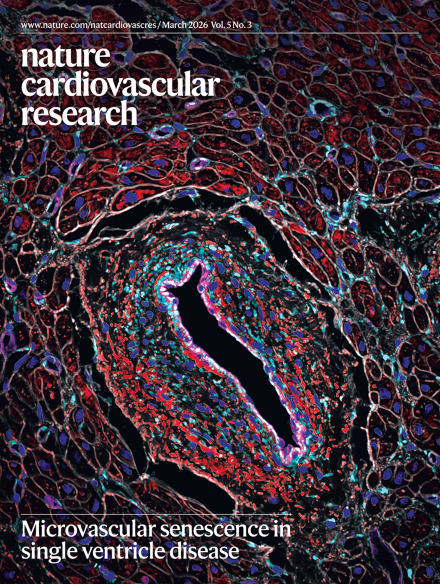
❤️Our March issue is out❤️Read about an AI model using echocardiography images improves cardiac diagnosis, LVAD unloading alleviates cellular senescence, inhibition of a hematopoietic death regulator shows cardioprotection, and more.
nature.com/natcardiovascres/…
ALT Image: Yuka Morikawa at The Texas Heart Institute at Baylor College of Medicine. Cover design: Francesca Corra
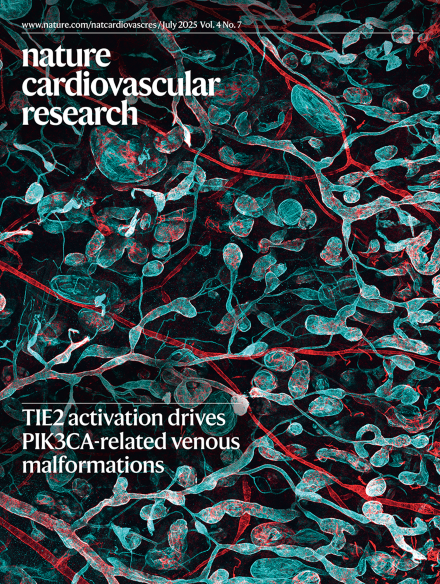
Microvascular senescence in single ventricle disease
Image shows IL6 expression in samples from individuals with hypoplastic left heart syndrome. Red denotes IL6; purple denotes endothelial cells; green denotes cardiac fibroblasts; white denotes cell boundaries; and blue denotes nuclei.
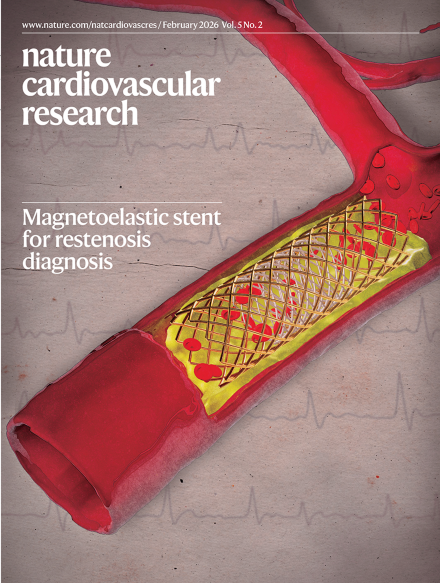
❤️Our February issue is out❤️Read about self-powered stent for real-time monitoring, cardiomyocyte regeneration through glucocorticoid receptor antagonism, immunometabolic targeting for type 2 diabetic cardiomyopathy, and more.
nature.com/natcardiovascres/…
ALT Image: Jun Chen Laboratory, University of California, Los Angeles. Cover design: Bethany Vukomanovic
Magnetoelastic stent for restenosis diagnosis
Chen et al. describe a smart stent that combines mechanical support with continuous blood-flow sensing and demonstrate its functionality in vivo for restenosis diagnosis.
Research | Lazarevic et al. reveal a shared loss of a TBX5-dependent atrial gene network in cardiomyocytes and a disease-specific network gain in activated fibroblasts across atrial fibrillation and heart failure models.
nature.com/articles/s44161-0…
Research | Chen et al. developed a self-powered smart magnetoelastic stent for real-time hemodynamic monitoring and stenosis detection.
nature.com/articles/s44161-0…
Research | Da Pra et al. show physiological glucocorticoids suppress GF-induced CM regeneration by inhibiting ERK signaling and propose glucocorticoid receptor antagonism as a strategy to enhance their regenerative effects.
nature.com/articles/s44161-0…rdcu.be/e2Fa9
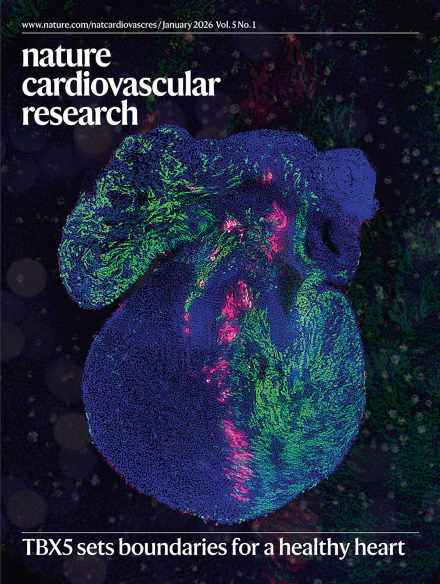
❤️Our January issue is out❤️Read about pathogenic mechanism of mutated ribosomal protein PRL3L, identification of cardiac progenitor lineage linked to congenital heart disease, multimodal vision graph for drug repurposing, and more.
nature.com/natcardiovascres/…
ALT Image: Martin Dominguez, Drexel University, Irfan Kathiriya, University of California, San Francisco. Cover design: Bethany Vukomanovic
TBX5 sets boundaries for a healthy heart
Kathiriya et al. identify a Tbx5 /Mef2cAHF cardiac progenitor lineage that demarcates the interventricular septum during development, and changes in this lineage contribute to congenital heart defects in mice. (see Kathiriya et al.)
Research | Kathiriya et al identify a cardiac Tbx5 /Mef2cAHF progenitor lineage that bisects the intraventricular septum during the development and show that alterations in this lineage lead to congenital heart disease.
nature.com/articles/s44161-0…rdcu.be/eZGiu
Big thanks to the Science Ministry of Serbia, Drs. Knoblich, Guilliatt, Stewart, & Turco, and Profs. Radisic, Hedtrich, Clevers, Vunjak-Novakovic, Trayanova, Lütolf, Heilshorn, Dvir, Cho & Singh for the great event! @milicaruoft@GVNlab@TheCleversLabyoutube.com/watch?v=4wmna0hv…
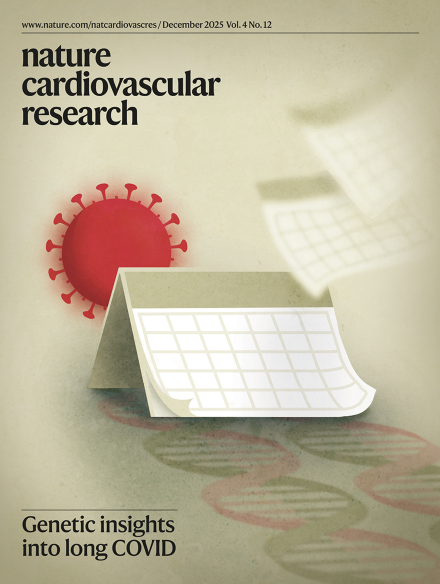
❤️Our December issue is out❤️Read about a method to measure mitochondrial membrane potential in intact hearts, gene therapy for myocardial infarction, genetic association between thromboembolism and long COVID, and more.
nature.com/natcardiovascres/…
ALT Image: Bethany Vukomanovic. Cover design: Bethany Vukomanovic
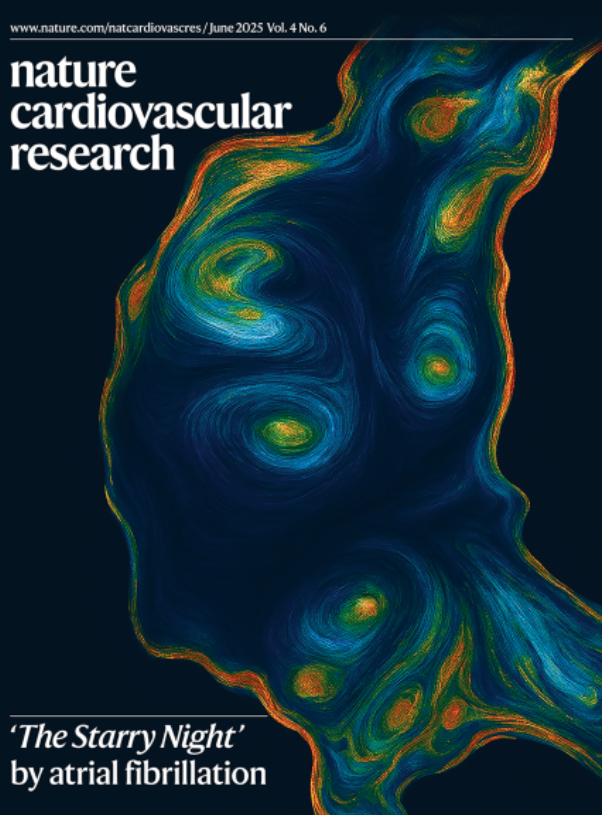
Genetic insights into long COVID
Human genetic analyses show that thromboembolism-related variants are associated with an increased risk of long COVID, suggesting shared pathogenic pathways and implicating the thrombin receptor PAR-1 as a potential contributor. (see Schuermans et al.)
Research | Neo et al. map blood emergence from three hemogenic endothelial (HE) populations biased toward distinct blood fates. HE primed for stem progenitors shows elevated chromatin and RNA splicing gene expression.
doi.org/10.1038/s44161-025-0…rdcu.be/eQxPN
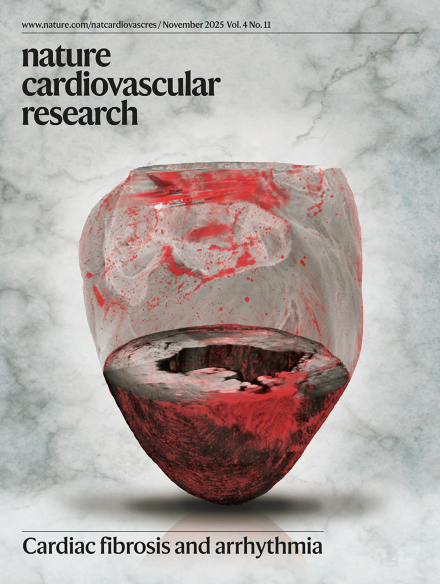
❤️Our November issue is out❤️Read about an imaging method that combines cardiac electrophysiology with 3D structural heart reconstruction, a targeted glycophagy ATG8 therapy reversing diabetic heart disease, and more.
nature.com/natcardiovascres/…
ALT Image: Leonardo Sacconi, Institute of Clinical Physiology. Cover design: Bethany Vukomanovic
Cardiac fibrosis and arrhythmia
Three-dimensional structural reconstruction of entire cleared mouse ventricles from a diseased heart acquired using mesoSPIM tomography. Myocardium is visualized by fluorescence (gray), and fibrosis is detected via scattered light (red) (see Giardini et al.).
Research | Chan et al. generate a high-resolution spatiotemporal atlas of healing hearts and reveal cellular networks of lesion repair, including macrophage-fibroblast interactions that control late-stage fibrosis.
doi.org/10.1038/s44161-025-0…rdcu.be/ePzs6
Research | Chen, Wang, Zhong and colleagues show that females derive greater cardiovascular benefits from guideline-recommended levels of physical activity and require less activity than males to see their beneficial effects.
doi.org/10.1038/s44161-025-0…rdcu.be/ePoLS
Research | Tan et al. identify PRDM16 as a key repressor of fibrotic switching in smooth muscle cells and show that its downregulation in atherosclerosis drives smooth muscle cells toward a synthetic fate, promoting fibrous plaques.
doi.org/10.1038/s44161-025-0…rdcu.be/eOBP0
Research | Lin, Geng et al. identify a non-canonical AHR pathway that is activated by canonical AHR inhibitors, promoting the proliferation of quiescent endothelial cells with potential applications in cell therapy.
doi.org/10.1038/s44161-025-0…rdcu.be/eOoxB
Research | Amiad Pavlov, Heffler et al. demonstrate that stress transmitted to the cardiomyocyte nucleus by the microtubule cage drives LMNA-associated cardiomyopathy and may represent a promising therapeutic target.
doi.org/10.1038/s44161-025-0…rdcu.be/eOeTA
Research | Yamazoe et al. show that B-cell derived autoantibodies contribute to the development of atrial fibrillation, suggesting that targeting the humoral immune response may represent a viable therapeutic approach.
doi.org/10.1038/s44161-025-0…rdcu.be/eNFJV
Research | Mulholland et al. identify progenitor exhausted T cells, expressing intermediate levels of PD-1, as a prominent source of pro-inflammatory cytokines in the murine atherosclerotic aorta and potential cellular targets.
doi.org/10.1038/s44161-025-0…rdcu.be/eL2nN
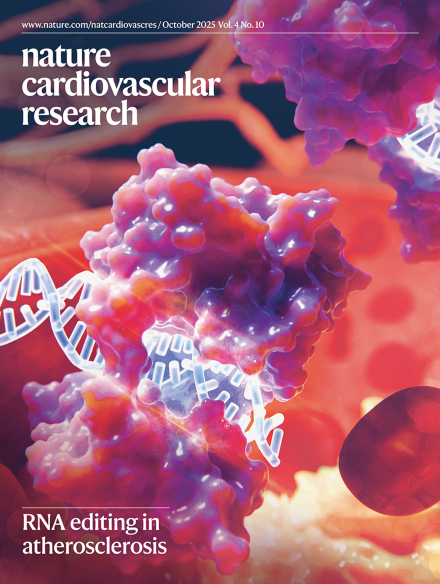
❤️Our October issue is out❤️Read about the RNA editing enzyme ADAR1 regulating atherosclerosis progression, PGC-1α and cardiac adaptation to exercise training, the role of LYVE1-macrophages in heart regeneration and peripheral artery disease, and more.
nature.com/natcardiovascres/…
ALT Image: ScienceBrush Design. Cover design: Bethany Vukomanovic;
RNA editing in atherosclerosis:
Weldy et al. show that expression of the RNA-editing enzyme ADAR1 in smooth muscle cells regulates activation of the double-stranded RNA sensor MDA5, in a new model of atherosclerosis.
Research | Barbera et al. identify and map genetic variants that alter the characteristics of vascular smooth muscle cells and contribute to the risk of coronary artery disease.
doi.org/10.1038/s44161-025-0…rdcu.be/eKY2S