NeuroScope: Clear, visual videos on Alzheimer’s, Parkinson’s & more. Understand the brain’s mysteries. Subscribe to stay informed.
Joined July 2025
- Tweets 8,961
- Following 740
- Followers 9,476
- Likes 6,045
1,543 Photos and videos
Pinned Tweet

BREAKING:
Researchers are shining near-infrared light through people's skulls — and it's showing real signals in Alzheimer's brain scans.
Not a gadget.
Not wellness.
Peer-reviewed trials at NYU, Harvard, and a major French multicenter study are now enrolling.
Here's what science actually says — and what it doesn't. 🧵
13
66
314
37,856
I agree with timing 👍...but the supplements need a balanced understanding ... if not, it's just going to be very expensive urine. 🤣
Supplement take -
The evidence is clearest when you're deficient ... which is actually pretty common ... magnesium deficiency affects an estimated 50% of Americans, and vitamin D deficiency is widespread.
If you're deficient, correcting it genuinely can shift energy, sleep, and mood. If you're not deficient, you're likely just making expensive urine.😁
The timing advice -zinc in AM, magnesium at night, vitamin D with food
This does have some logic to it ...Here's why
Magnesium's relaxing effect makes it sensible at night, and vitamin D is fat-soluble, so it absorbs better with a meal.
However, there's no rigorous trial testing this exact regimen as a stack ... or whether this agrees with everyone.
Here's the most important take
This is also not zero risk.
High-dose zinc can actually interfere with copper absorption over time.
Vitamin D is fat-soluble and can accumulate to toxic levels.
So, before you do anything ...
Worth getting bloodwork before supplementing heavily.

Zinc in the morning. Magnesium at night. Vitamin D with your first meal. Do it for 30 days and tell me your energy, your sleep and your mood didn't completely shift.
1
6
452
Harshi Peiris, Ph.D. retweeted
Why are more people under 50 getting cancers that used to only hit older adults?
Diet and ultra-processed food matter.
But one major factor is still ignored by most:
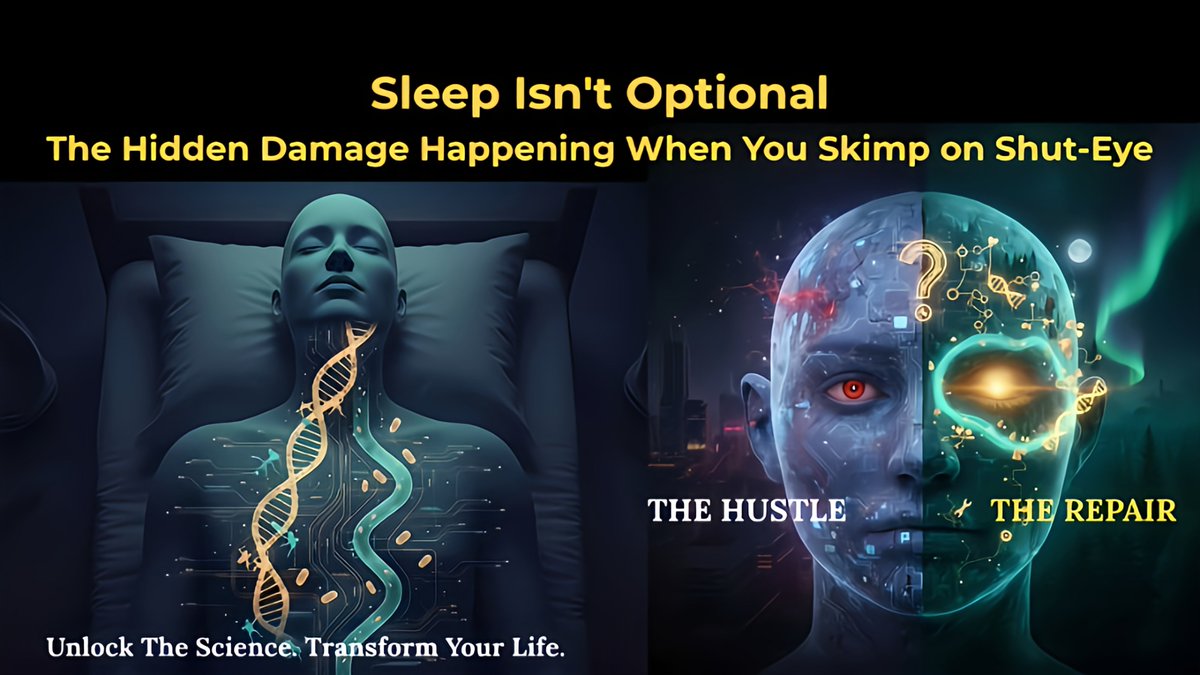
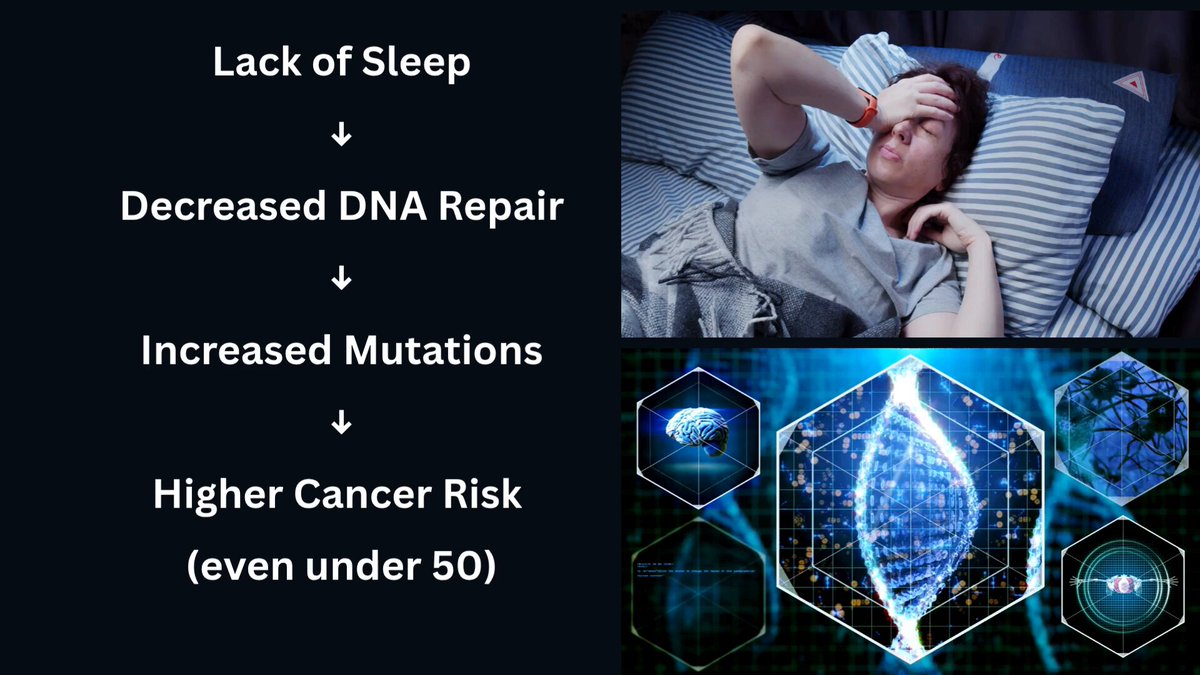
Chronic poor sleep = broken DNA repair.
Thread with the cellular mechanism 👇

Why are more young people getting cancers that used to be seen mostly in older adults?
Diet, obesity, ultra-processed foods, and environmental exposures are important factors.
One potentially important contributor that receives far less attention is chronic sleep deprivation and its impact on DNA repair.
Even people who eat well and exercise regularly can accumulate mutational burden if their sleep is consistently poor.
3
8
914
Harshi Peiris, Ph.D. retweeted
Why are more young people getting cancers that used to be seen mostly in older adults?
Diet, obesity, ultra-processed foods, and environmental exposures are important factors.
One potentially important contributor that receives far less attention is chronic sleep deprivation and its impact on DNA repair.
Even people who eat well and exercise regularly can accumulate mutational burden if their sleep is consistently poor.

Why are so many young people developing cancers once considered the purview of old age?
go.nature.com/3QhVdgs
19
6
34
4,166
Why are more young people getting cancers that used to be seen mostly in older adults?
Diet, obesity, ultra-processed foods, and environmental exposures are important factors.
One potentially important contributor that receives far less attention is chronic sleep deprivation and its impact on DNA repair.
Even people who eat well and exercise regularly can accumulate mutational burden if their sleep is consistently poor.
Why are so many young people developing cancers once considered the purview of old age?
go.nature.com/3QhVdgs
19
6
34
4,166
Sleep is foundational preventive medicine.
Sleep is also not one-size-fits-all... therefore, a universal cure cannot be found.
Find the specific reason that drives your sleep issues.
Talk to a professional.
#SleepHealth #DNARepair #CancerPrevention #Neuroscience #BrainHealth
169
Sleep is foundational preventive medicine.
For more on sleep and brain health, check my full Brain Science Library (with all the sleep articles collected in one place):
neuroscope.substack.com/p/yo…
What other under-appreciated factors do you think are driving early-onset cancers?
1
3
347
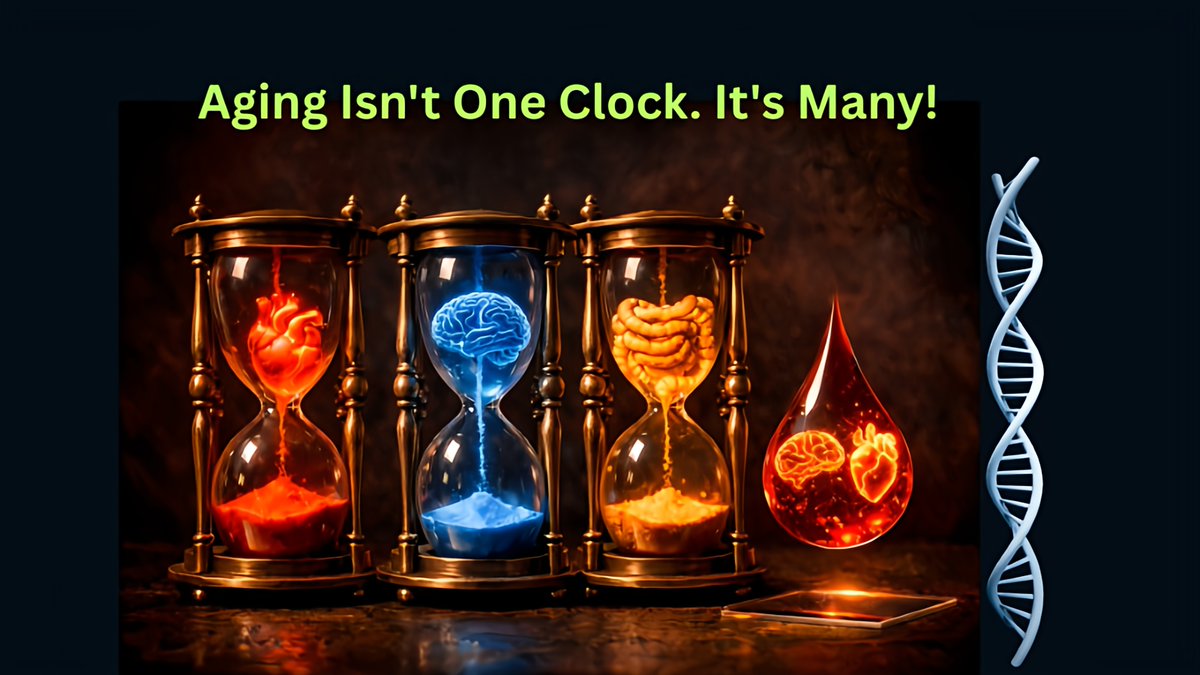
I explore both angles in detail:→ Why aging isn’t one clock but many (and sleep’s role):
neuroscope.substack.com/p/ag…
→ The hidden cellular damage from insufficient sleep (DNA repair failure, mutations, cancer & neurodegeneration):
neuroscope.substack.com/p/sl…
287
Aging isn’t driven by one single clock. Different systems in the body (genomic, metabolic, immune, neural) age at different rates — and poor sleep accelerates several of them at once through accumulated damage and reduced repair capacity.
This helps explain why some “old-age” diseases are now appearing earlier.
x.com/Neuroscope_mp/status/2…
🚨 BREAKING: Stanford published the most important aging study of 2025.
They found that two organs determine whether you live long or die early — and you can measure both from a single blood test.
Your brain. Your immune system.
This changes everything. Thread 🧵👇
1
181
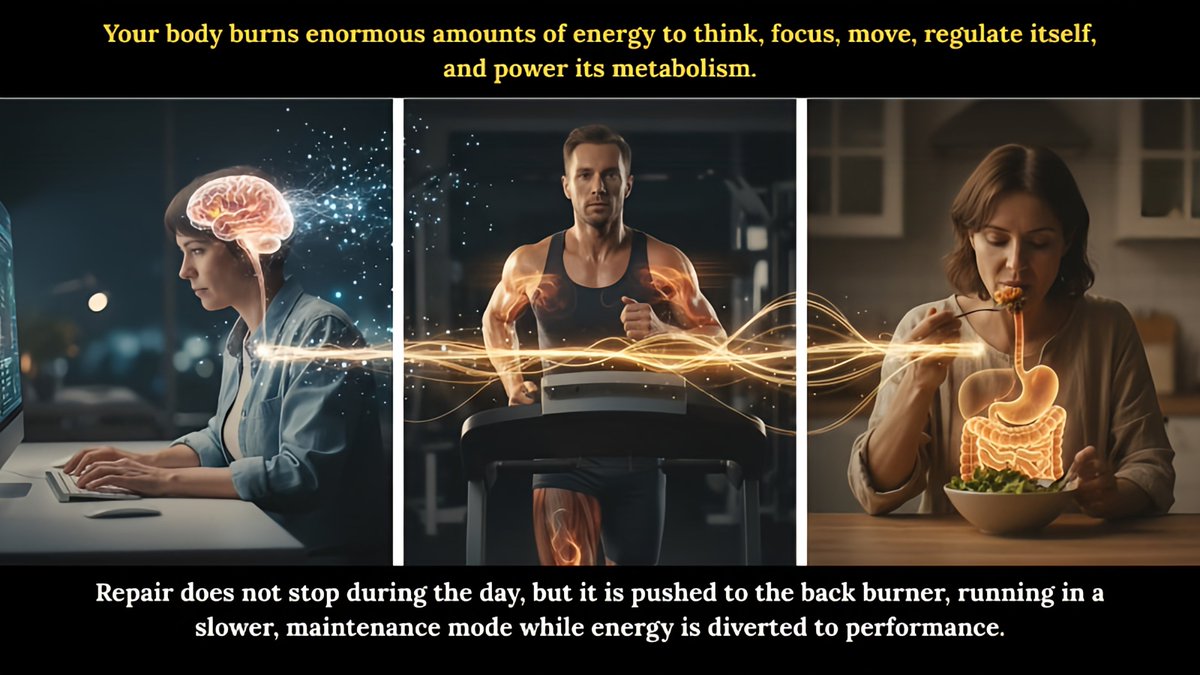
Sleep is not passive rest.
It is active biological maintenance. It also regulates inflammation and circadian DNA repair genes.
Diet and exercise help, but they cannot fully compensate for daily repair deficits caused by poor sleep.
2
3
133
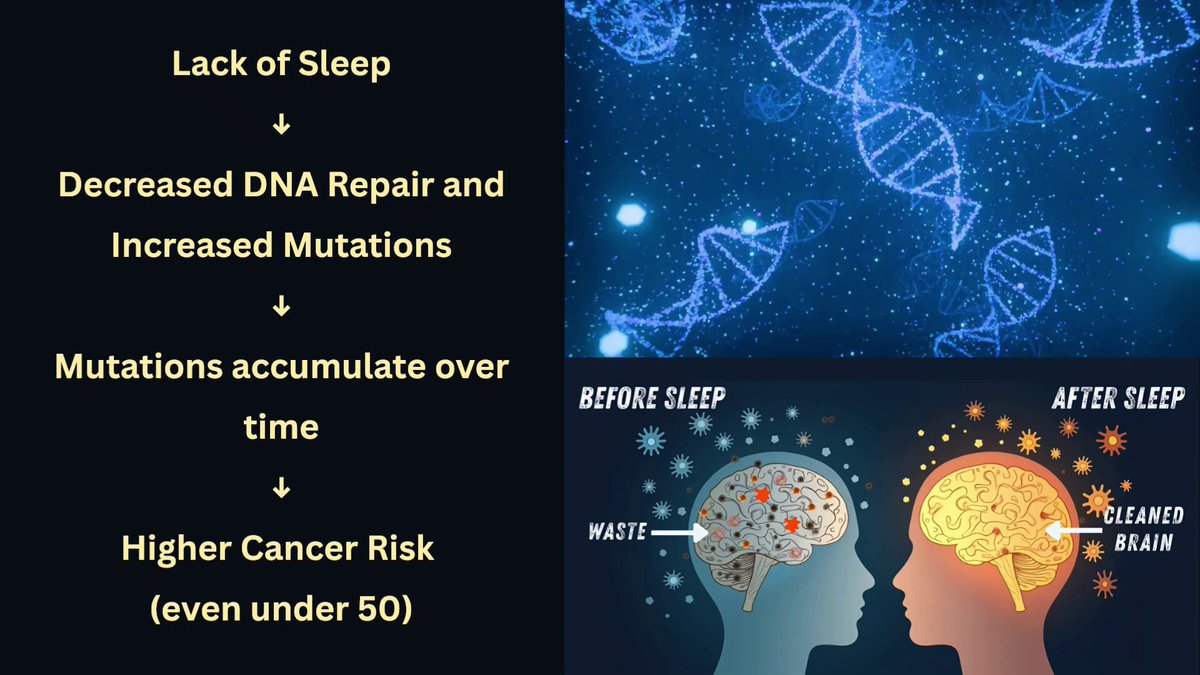
When sleep is short, fragmented, or of poor quality, repair consistently lags behind the daily damage.
Over months and years, unrepaired DNA damage accumulates as mutations.
This increases genomic instability — raising risk for cancer, faster brain aging, and neurodegeneration
1
1
2
97
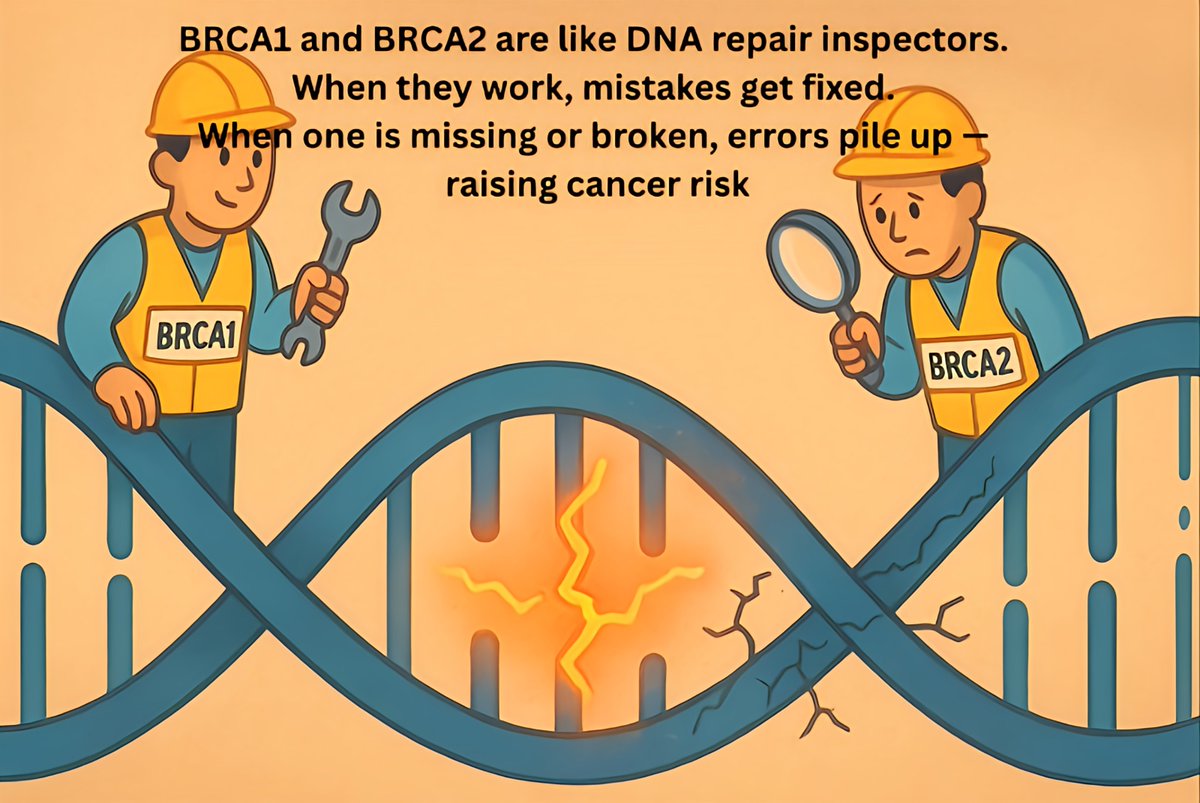
Our DNA repair systems work hard to fix this damage.
But many of these energy-intensive processes (autophagy, base excision repair, etc.) function far more efficiently during deep sleep.
1
96
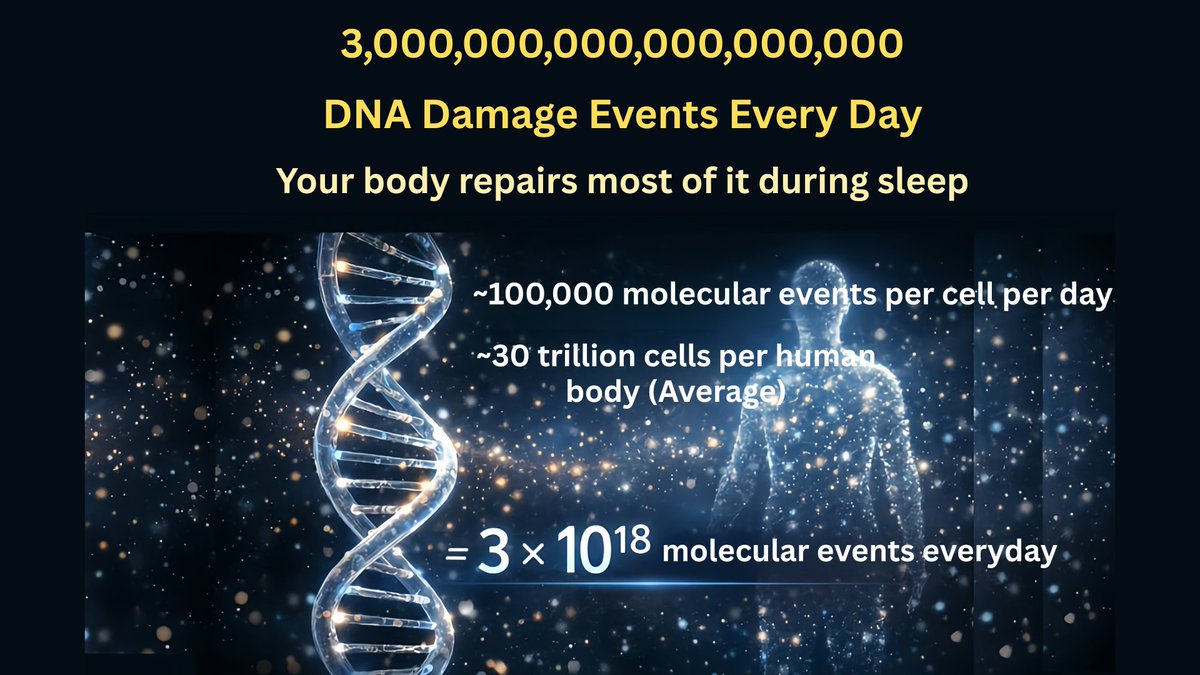
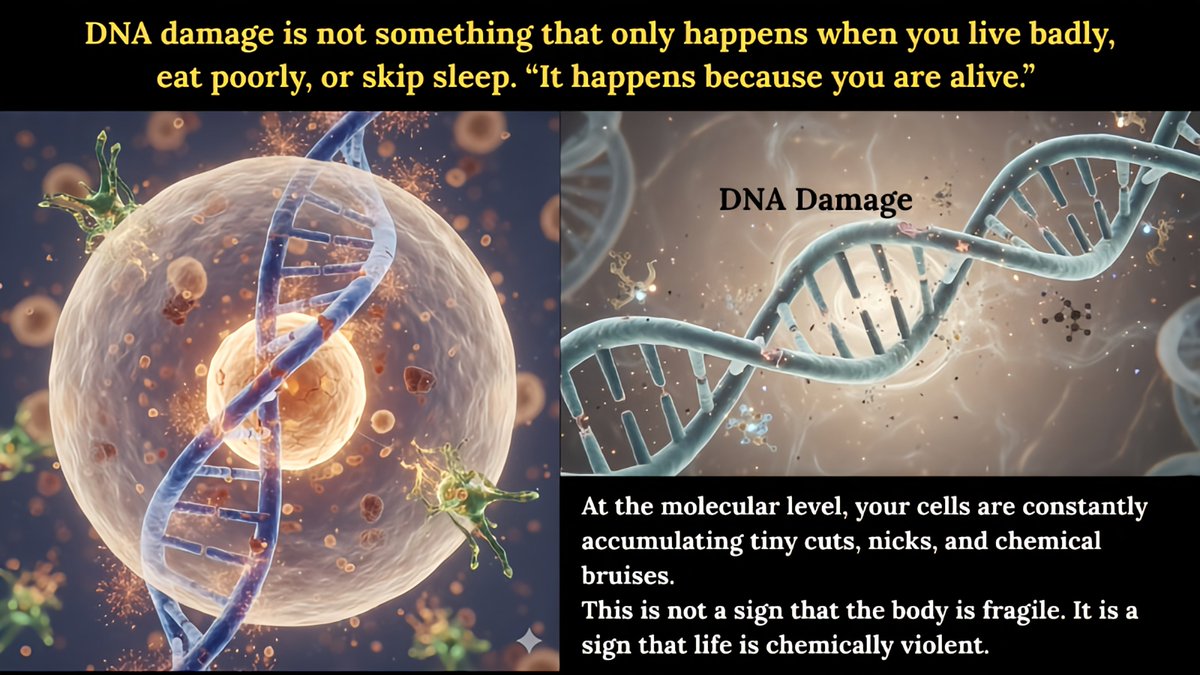
Every single day, each of our cells sustains roughly 100,000 DNA lesions.
With ~30 trillion cells in the body (on average), that equals 3 × 10¹⁸ (3 quintillion) molecular damage events every day.
Our DNA repair systems work hard to fix this damage — but many of these energy-intensive repair processes (including autophagy and base excision repair) are prioritized and function more efficiently during deep sleep.
2
109
Harshi Peiris, Ph.D. retweeted
BREAKING:
Researchers are shining near-infrared light through people's skulls — and it's showing real signals in Alzheimer's brain scans.
Not a gadget.
Not wellness.
Peer-reviewed trials at NYU, Harvard, and a major French multicenter study are now enrolling.
Here's what science actually says — and what it doesn't. 🧵
13
66
314
37,856
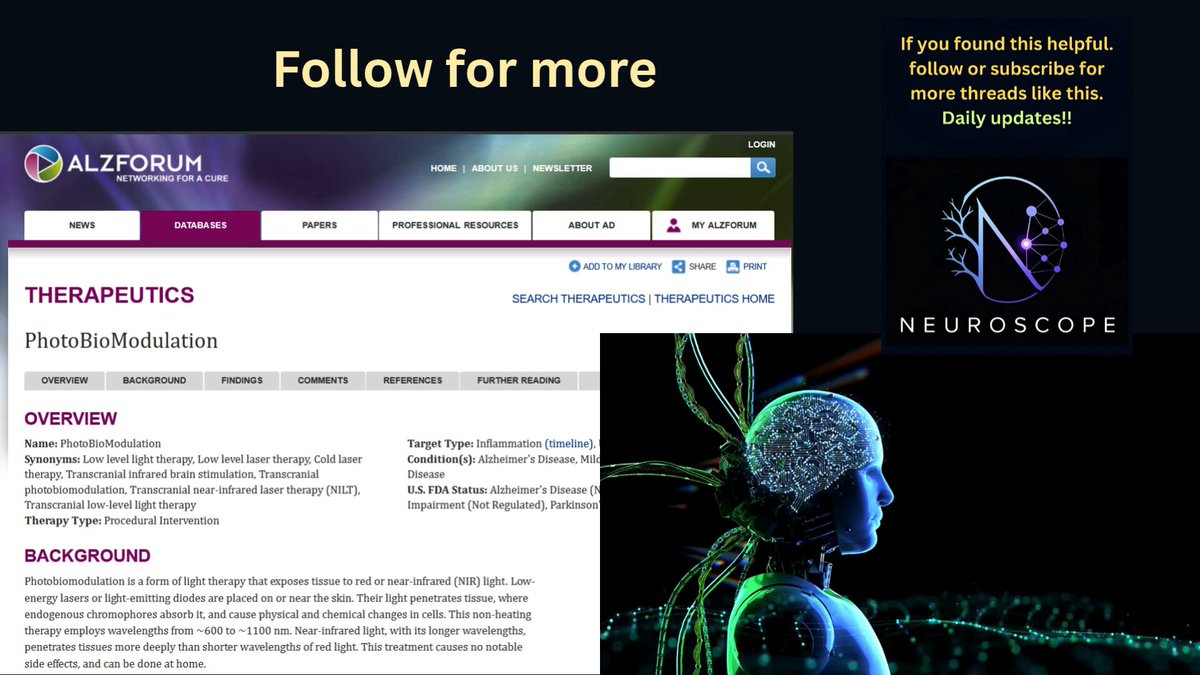
I’ve been getting tons of questions about PBM (red/near-infrared light therapy) from both the Alzheimer’s and Parkinson’s communities lately.
In PD, the evidence is more advanced — several clinical trials already show benefits for gait, tremors, and even possible neuroprotection (see my Wednesday thread here:
x.com/Neuroscope_mp/status/2…
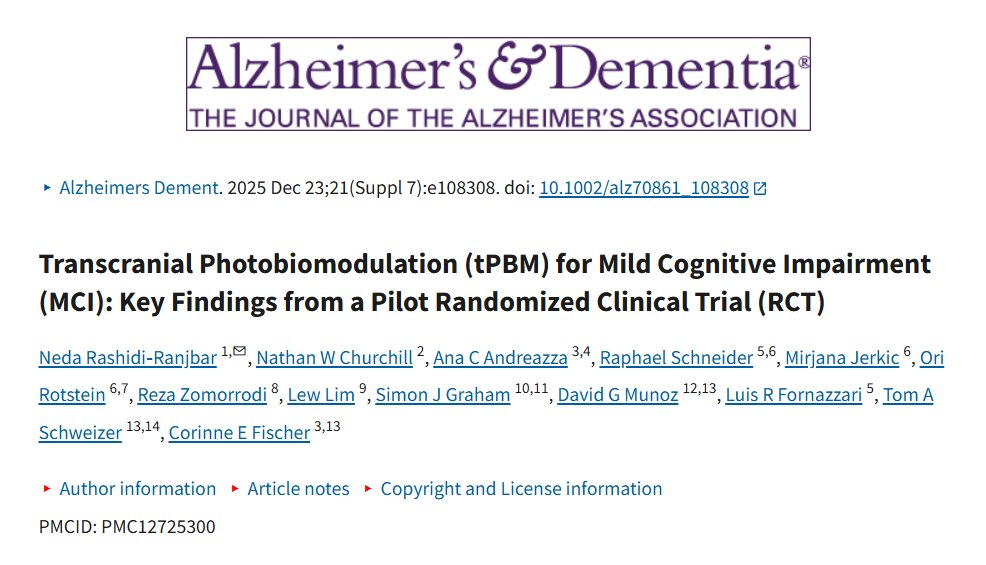
For AD, it’s catching up fast with serious trials now running at NYU, Harvard, and in France (including one that treats brain gut at the same time).
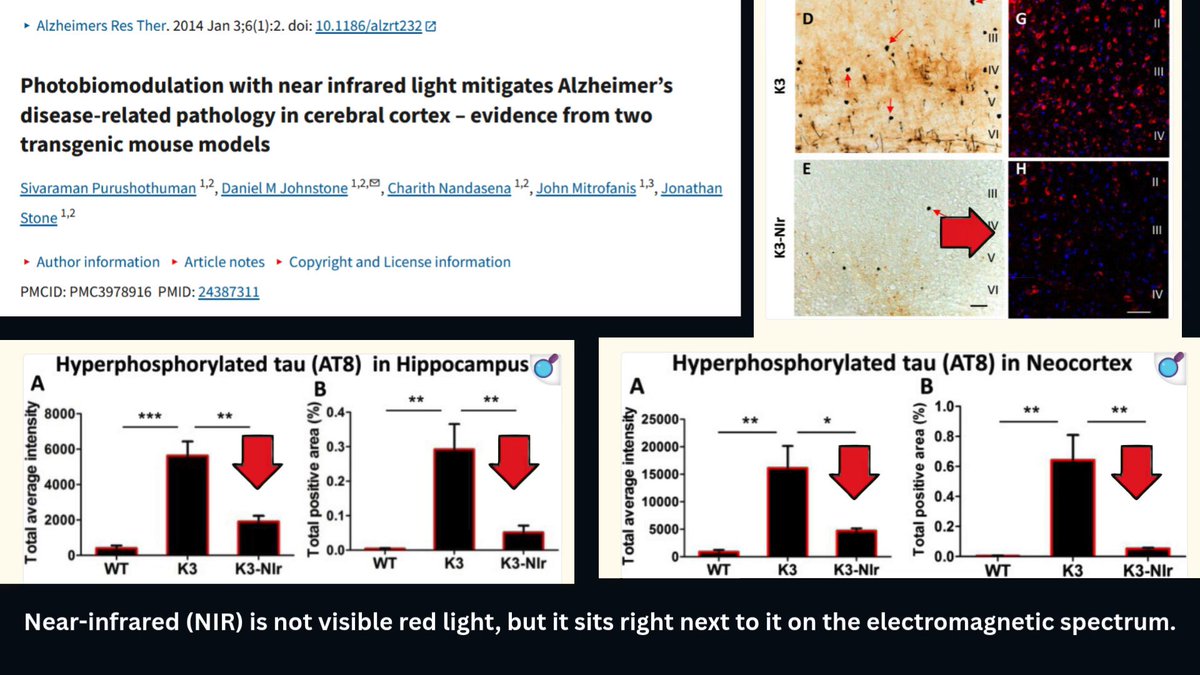
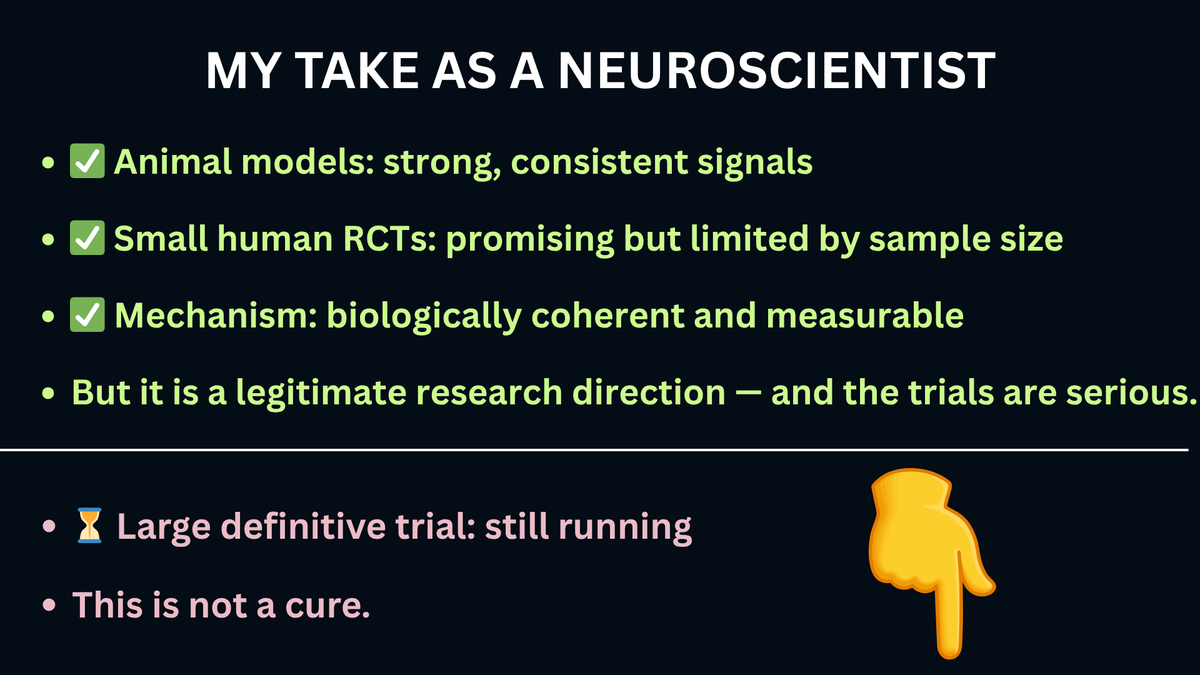
Honest take: The animal data looks promising, small human studies are encouraging, and the ongoing trials are well-designed.
This is not a disease reversal or cure — but it may help slow progression and support symptom management in some people.
What do you think — worth watching closely?
BREAKING:
Researchers are shining near-infrared light through people's skulls — and it's showing real signals in Alzheimer's brain scans.
Not a gadget.
Not wellness.
Peer-reviewed trials at NYU, Harvard, and a major French multicenter study are now enrolling.
Here's what science actually says — and what it doesn't. 🧵
9
16
75
4,856
Big news in medical AI today
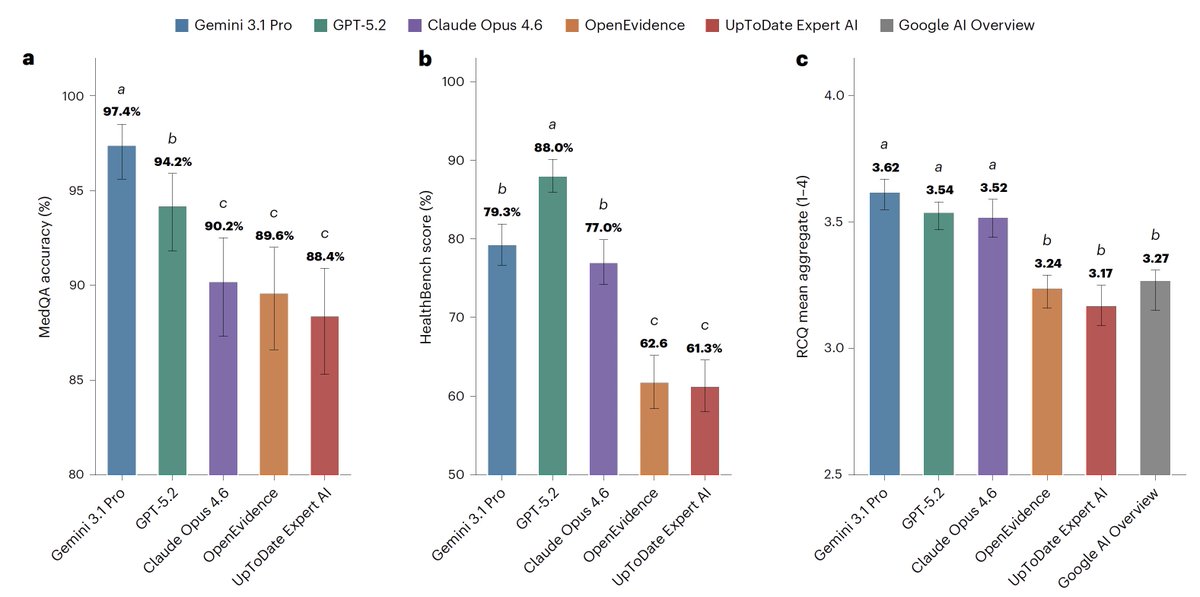
Doctors and researchers often use specialized “medical-only” tools (like UpToDate or OpenEvidence) because they’re considered safer and more accurate than regular ChatGPT-style AIs.
A new study just tested exactly that — and the results surprised a lot of people. The big general AIs (Gemini, GPT, Claude) actually beat the specialized medical tools on real doctor questions, not just exam-style tests.
The catch? The human review part only involved 12 clinicians.
And in fast-moving fields with mixed or early evidence (like many brain health treatments), the real skill is knowing what we don’t know yet and clearly saying so.
That careful judgment still feels like it needs experienced humans in the loop.
What do you think — would you trust a general AI more now for medical questions?
Jun 12

For medical information, general AI frontier models (Google, OpenAI, Anthropic) outperformed specialized @EvidenceOpen and @UpToDate as assessed by 12 US clinicians, randomized and blinded to which model and extensive testing/benchmarks. This was not anticipated. @NatureMedicine
nature.com/articles/s41591-0…
3
1
13
1,172
BREAKING:
Researchers are shining near-infrared light through people's skulls — and it's showing real signals in Alzheimer's brain scans.
Not a gadget.
Not wellness.
Peer-reviewed trials at NYU, Harvard, and a major French multicenter study are now enrolling.
Here's what science actually says — and what it doesn't. 🧵
13
66
314
37,856
This is the Parkinson's clinical trial story from two days ago.
x.com/Neuroscope_mp/status/2…
🔴Promising new data:
Red light therapy is showing real results in Parkinson's disease clinical trials —
gait improves, tremors ease, and new brain imaging suggests it may actually protect dopamine neurons.
This isn't fringe science.
It's peer-reviewed.
Here's what the data shows 🧵👇
#Parkinsons #NeurologyResearch
1
12
1,201
@JAJafri, this one's for you. This is what I found.
1
4
713
PBM for Alzheimer's is not wellness hype.
It's also not a proven treatment.
It's a biologically coherent intervention targeting something most Alzheimer's drugs don't touch — mitochondrial dysfunction and network connectivity — with a safety profile that makes serious trials feasible.
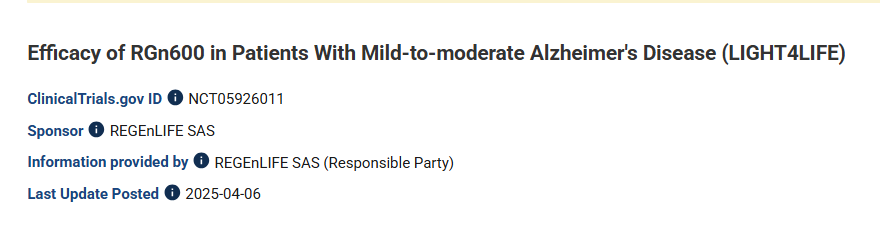
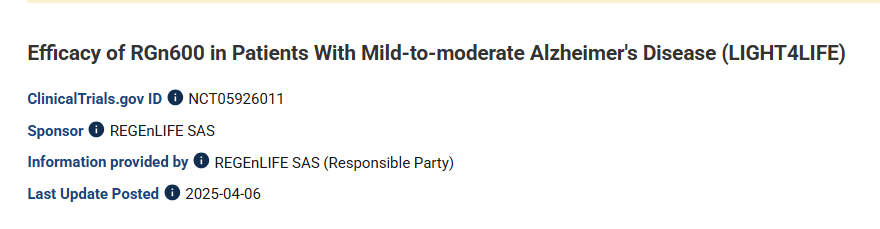
The results from LIGHT4Life, TRAP-AD, and Revitalize will tell us whether the mechanism translates into meaningful clinical outcomes.
In the meantime, this is one of the most scientifically interesting non-pharmacological approaches in the neurodegeneration space.
Full deep-dive later — mechanisms, the gut-brain connection, and what caregivers should actually know.
#Alzheimers #BrainHealth
1
2
8
774
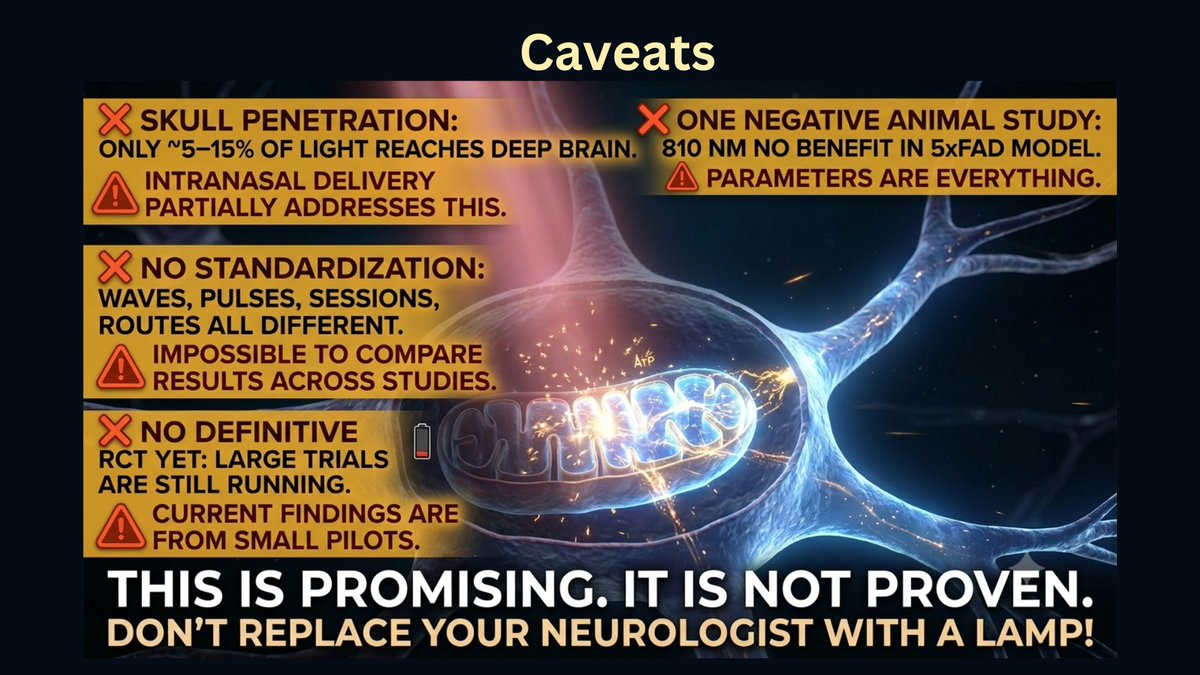
⚠️ THE HONEST PICTURE — WHAT WE DON'T KNOW YET
The caveats matter:
❌ Skull penetration: only ~5–15% of transcranial near-infrared light actually reaches deep brain structures.
Intranasal delivery partially addresses this.
❌ No standardization: every trial uses different wavelengths, pulse frequencies, session lengths, and delivery routes — making it nearly impossible to compare results across studies.
❌ No definitive RCT yet: the large trials are still running.
All current positive human findings are from small pilots.
❌ One negative animal study: 810 nm showed no benefit in the 5xFAD model — a reminder that parameters are everything. This is promising. It is not proven.
2
2
8
809