
My actions are in alignment with the paramount interest of the nation.
Joined September 2022
- Tweets 10,445
- Following 1,129
- Followers 1,301
- Likes 14,174
129 Photos and videos












Pinned Tweet

1 Dec 2024
Seek knowledge pure, let wisdom grow,
In every gift, God's blessings show.
Be content with what He's decreed,
And strive to serve with every deed.
Do good for all, let kindness reign,
Through trials faced, His joy we gain.
Fulfill your role, both small and grand,
And walk with faith, by His command

16
2
117
10,321
An~an retweeted

Jun 12
Candace Owens reveals the dark doctrine hiding behind world power!
348
1,295
5,809
644,155
An~an retweeted

May 16
Singapore’s Foreign Minister, Dr Balakrishnan casually explaining how he built his own AI agent (a 2nd brain for diplomacy) using Claude & WhatsApp integration etc. on a Raspberry Pi
“You cannot govern a technology you have only been briefed on.” 🇸🇬
180
2,080
11,069
2,260,886
An~an retweeted

May 11
Women and children are emotion-led.
Men are rational.
To emasculate men: feminise them.
Tear away their rationality and make them emotional. Turn them into eternal adolescents.
The two pillars of this transformation: porn and video games.
The system doesn’t want focused men.
It needs them distracted. Overstimulated. Emotionally reactive.
A man who can’t focus is easy to control.
That’s why so many are trapped in the same cycle: porn, video games, dopamine, repeat.
Porn kills ambition. Video games replace real achievement with artificial progression.
A grown man with the mindset of a permanent teenager.
Consumerism isn’t just about buying products. It’s about consuming identities instead of building one.
The system doesn’t need chains anymore. It just needs distractions.
339
812
5,818
209,730
An~an retweeted

May 10
INSTEAD OF WATCHING NETFLIX TONIGHT.
Spend 1 hour with this.
Claude AI FULL COURSE that teaches you how to BUILD and AUTOMATE anything.
The people who watch this tonight will wake up tomorrow with a new skill.
Watch it and Bookmark it now.
14
265
1,344
108,967
An~an retweeted

May 6
1. Claude.ai (solve any problem)
2. Remove.bg (remove backgrounds)
3. Perplexity.ai (research anything)
4. Suno.ai (compose music)
5. Lovart.com (design graphics)
6. Voicebox.sh (clone voices)
7. Notebooklm.google (perfect note)
8. Youmind.com (summarize YouTube)
9. Runway.ml (edit videos)
10. Descript.com (edit podcasts)
11. Heygen.com (create ai avatar videos)
Save Share🙂
41
668
2,996
187,249
An~an retweeted

May 7
This video is 100% AI
these “yapping” style UGC ads are insanely fast to make
and even faster to scale
one script → dozens of variations
same product, different faces, tones, settings
you can sell anything:
- saas
- ecom
- supplements
- digital products
rt comment “yapper” and i’ll send the guide
(follow for dm)
405
180
522
38,072
An~an retweeted

Apr 27
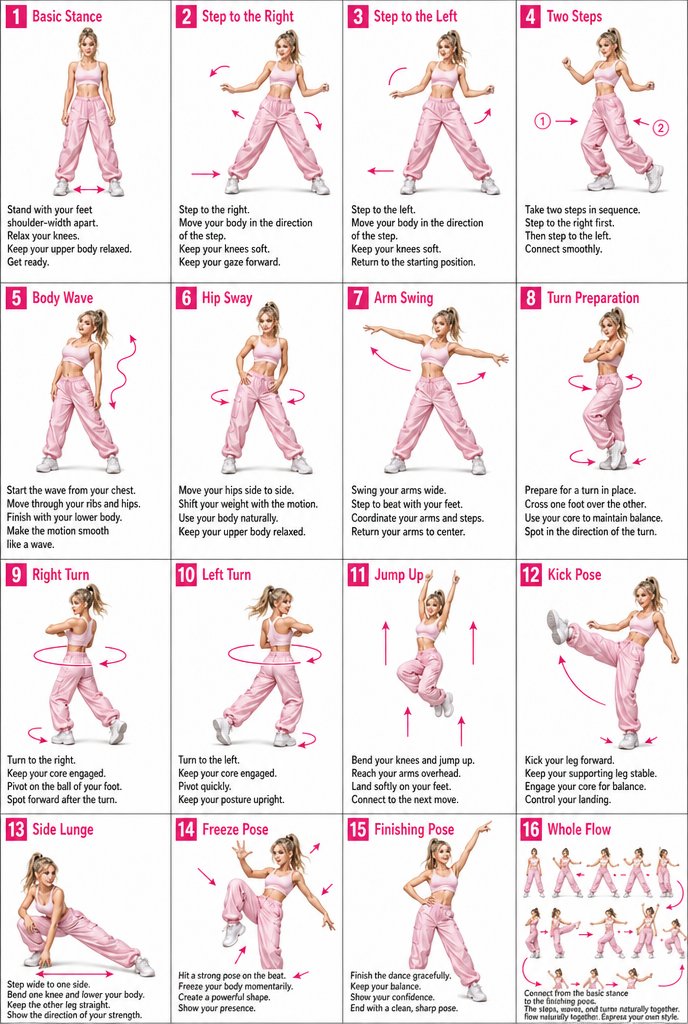
I created a dance movement sheet by using a reference image to animate every 16 panels from the reference image I provided.
GPT Image 2 @Seedance 2.0 on @yapper_so
Tutorial Below
Prompt
Here’s every step with the text under each heading:
1. Basic Stance
Stand with your feet shoulder-width apart.
Relax your knees.
Keep your upper body relaxed.
Get ready.
2. Step to the Right
Step to the right.
Move your body in the direction of the step.
Keep your knees soft.
Keep your gaze forward.
3. Step to the Left
Step to the left.
Move your body in the direction of the step.
Keep your knees soft.
Return to the starting position.
4. Two Steps
Take two steps in sequence.
Step to the right first.
Then step to the left.
Connect smoothly.
5. Body Wave
Start the wave from your chest.
Move through your ribs and hips.
Finish with your lower body.
Make the motion smooth like a wave.
6. Hip Sway
Move your hips side to side.
Shift your weight with the motion.
Use your body naturally.
Keep your upper body relaxed.
7. Arm Swing
Swing your arms wide.
Step to beat with your feet.
Coordinate your arms and steps.
Return your arms to center.
8. Turn Preparation
Prepare for a turn in place.
Cross one foot over the other.
Use your core to maintain balance.
Spot in the direction of the turn.
9. Right Turn
Turn to the right.
Keep your core engaged.
Pivot on the ball of your foot.
Spot forward after the turn.
10. Left Turn
Turn to the left.
Keep your core engaged.
Pivot quickly.
Keep your posture upright.
11. Jump Up
Bend your knees and jump up.
Reach your arms overhead.
Land softly on your feet.
Connect to the next move.
12. Kick Pose
Kick your leg forward.
Keep your supporting leg stable.
Engage your core for balance.
Control your landing.
13. Side Lunge
Step wide to one side.
Bend one knee and lower your body.
Keep the other leg straight.
Show the direction of your strength.
14. Freeze Pose
Hit a strong pose on the beat.
Freeze your body momentarily.
Create a powerful shape.
Show your presence.
15. Finishing Pose
Finish the dance gracefully.
Keep your balance.
Show your confidence.
End with a clean, sharp pose.
16. Whole Flow
Connect from the basic stance to the finishing pose.
The steps, waves, and turns flow naturally together.
Express your own style.
67
61
472
54,632
An~an retweeted

Apr 22
Train you'll get strong
Plant seeds they will grow
Study a language you'll know more than you did before.
The Key is not wasting time on non productive things.

7
14
209
11,856
An~an retweeted
Apr 19
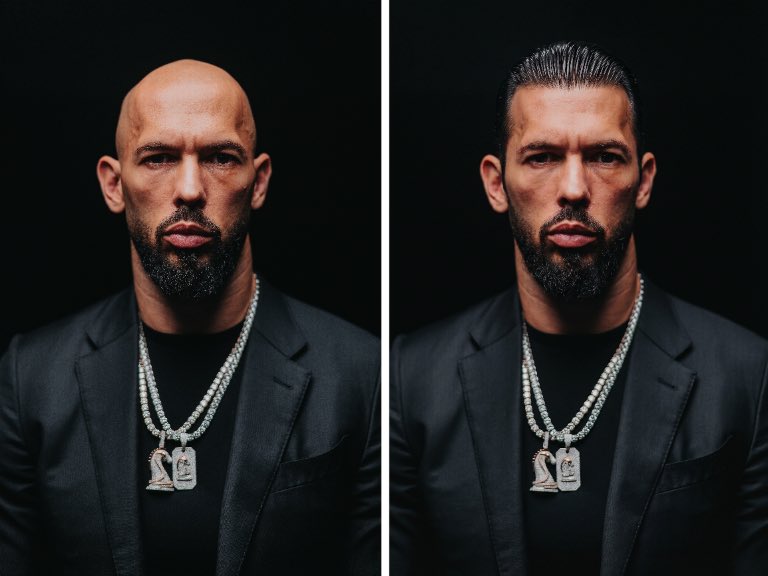
5000 retweets I grow my hair back.
1,630
4,738
14,996
907,154
An~an retweeted
Apr 14
Women never earned the right to work.
They were tricked into it.
One man’s salary used to feed the whole family.
Now one salary can’t even pay the bills.
She trades her husband’s house for her boss’s office.
Leaves his sphere of influence to bow down to some other man’s rules all day.
A double shift, every single day. Grinding at the job, then coming home to cook, clean, and pretend she’s still a wife.
And while she’s out there playing “independent woman,” who is raising the kids?
This is the beauty of female liberation.
Another woman, some poor, low-wage third-world nanny or daycare worker getting paid pennies to watch someone else’s children.
Women’s freedom is at the price of other women’s enslavement.
590
1,657
13,288
724,328
An~an retweeted

Apr 14
Food for thought.
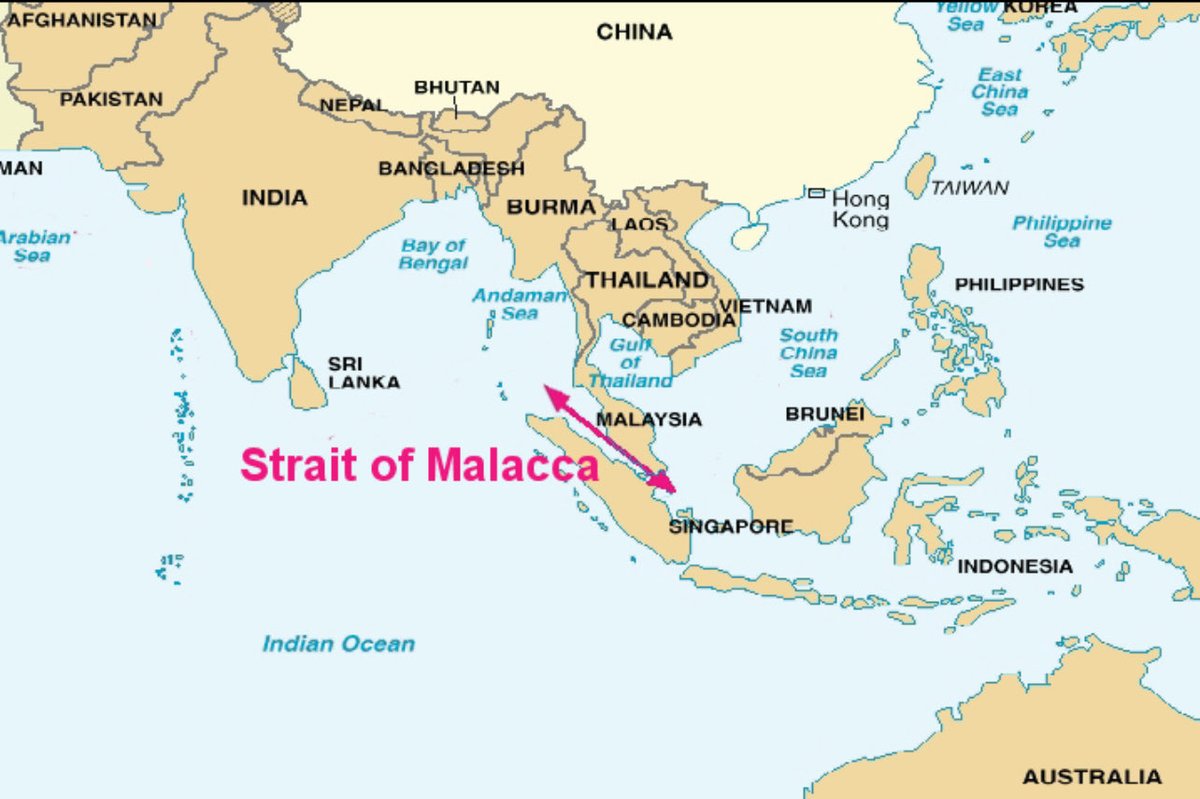
Trump’s Deal With Indonesia: Mahan at the Strait of Malacca
Hu Jintao warned China about this moment more than twenty years ago. In 2003, the then Chinese president coined the phrase “Malacca dilemma” to describe a simple, brutal fact: the country’s economic rise depended on foreign oil sailing through a narrow strait that other powers could, in a crisis, choose to close. Most of China’s imported crude and gas still squeezes through that same bottleneck between Indonesia, Malaysia and Singapore. The US has just moved to wire that vulnerability, and it is no accident this is happening on Donald Trump’s watch.
Washington’s new Major Defense Cooperation Partnership with Indonesia is being sold in the usual diplomatic euphemisms: capacity building, maritime security, joint training. Strip away the boilerplate and you see something far sharper. The agreement’s focus on maritime domain awareness, subsurface and autonomous systems, and special forces training is about giving Indonesia and by extension the U.S. and its allies, a far richer picture of everything that moves between the Indian Ocean and the South China Sea, and greater ability to shape it in a crisis. As with Trump’s broader Indo‑Pacific posture, this is one more move to reassert the US as the pre‑eminent maritime power of the age, and to ensure China feels that reality every time a tanker clears the Strait.
Hu’s “Malacca dilemma” was never only about a single shipping lane. It was about the geometry of China’s energy dependence. Oil from the Gulf and Africa has to arrive by sea. The shortest, cheapest route runs past India, through Malacca and adjacent Indonesian straits, and then up into waters where the U.S. Navy and its partners have operated for decades. A coalition that can see, track and, if necessary, interdict that flow holds a lever over China’s economy that no amount of rhetoric about multipolarity can wish away.
More than a century ago, Alfred Thayer Mahan argued that sea power, fleets, chokepoints and maritime commerce, would decide the fate of great powers. The Malacca dilemma is Mahan’s theory rendered in modern energy terms: a continental power whose trade and fuel move by sea lives or dies by access to narrow maritime bottlenecks policed by others. Trump’s Indonesia move is pure Mahan: rather than chasing dominance on land, Washington is tightening its grip on the sea lanes and straits through which China’s economic lifeblood must flow.
Beijing has spent two decades trying to escape this trap with pipelines from Central Asia and Russia, a corridor through Myanmar and a “string of pearls” of ports from Gwadar to Djibouti. Yet the volumes tell a less reassuring story: overland routes move at the margin, while the bulk of China’s energy still comes by tanker and still passes through Southeast Asian chokepoints. The dilemma has been managed, not resolved.
That is why Indonesia matters. Jakarta insists it is not choosing sides and will continue to balance between Washington and Beijing. It doesn’t have to do more than that for this pact to bite. As Indonesian officers train with American counterparts and integrate U.S.‑supplied surveillance and patrol systems, the operational environment quietly changes. Chinese planners contemplating a crisis over Taiwan, the South China Sea or even a clash around Hormuz now have to assume that traffic through Malacca and its alternatives will unfold under a web of sensors and partnerships that lean, in practice if not in rhetoric, toward Washington.
Another move by President Trump, in other words. From rebuilding American shipyards to pouring money into Indo‑Pacific maritime forces, the pattern is clear: the United States intends to remain a maritime superpower, and to make China live with Hu Jintao’s old nightmare instead of escaping it. Mahan would have recognised the logic instantly: in the end, it is the power that commands the sea, and the straits, that sets the terms for everyone else.
380
2,575
7,007
1,051,835
Apr 13
Trying to level up with AI I guess.

19
Apr 1
Happy New Year! This is not an April Fool's joke. My body is genuinely reacting to nature.. 🌳🌥️🌅😌
3
48
An~an retweeted

Mar 31
THROWBACK: Malaysian PM accuses Israelis of ruling world by proxy
In 2003, outgoing Malaysian PM Mahathir Mohamad urged Islamic leaders to unite to defeat Israel.
“Today this world is ruled by Israeli proxy. They get others to fight and die for them,” he stated.
He also said that the Israelis “invented socialism, communism, human rights and democracy so that persecuting them would appear to be wrong.”
“With this, they have now gained control of the most powerful countries and they, this tiny community, have become a world power.”
33
758
1,958
62,627