
my notes on whatever i find interesting ✨ 🔬 science-backed 🔍 curiosity driven 🎤 host on @SciShow @KQED @PBSTerra @FeministBookClub 📍 san francisco
Joined June 2017
- Tweets 1,141
- Following 385
- Followers 1,183
- Likes 5,015
85 Photos and videos

Pinned Tweet

Feb 17
Your brain deserves better than brain rot 🧠
Come learn with Big Ideas: compound eyes 🐝 eggs 🥚 bioluminescence ✨
Human made. Real scientists. Real filming.
Out now: youtube.com/watch?v=5UCQoFO9…
from the @kqedscience team behind @deeplook
9
310
Jun 10
superior to chess in every way
Jun 9

This indie dev is making a chess game where every piece has been replaced by a cat with its own personality and breed
- Stray cats vs house cats
- Play with your cats while waiting for the opponent’s turn
- The purrfect chess game
Would you play this? It's called Cat Chess.
5
99
Niba 🌱 🎬 💄 retweeted

Jan 22
Having a cat is insane because it's Claude but you're the assistant
20
44
864
23,358
Niba 🌱 🎬 💄 retweeted

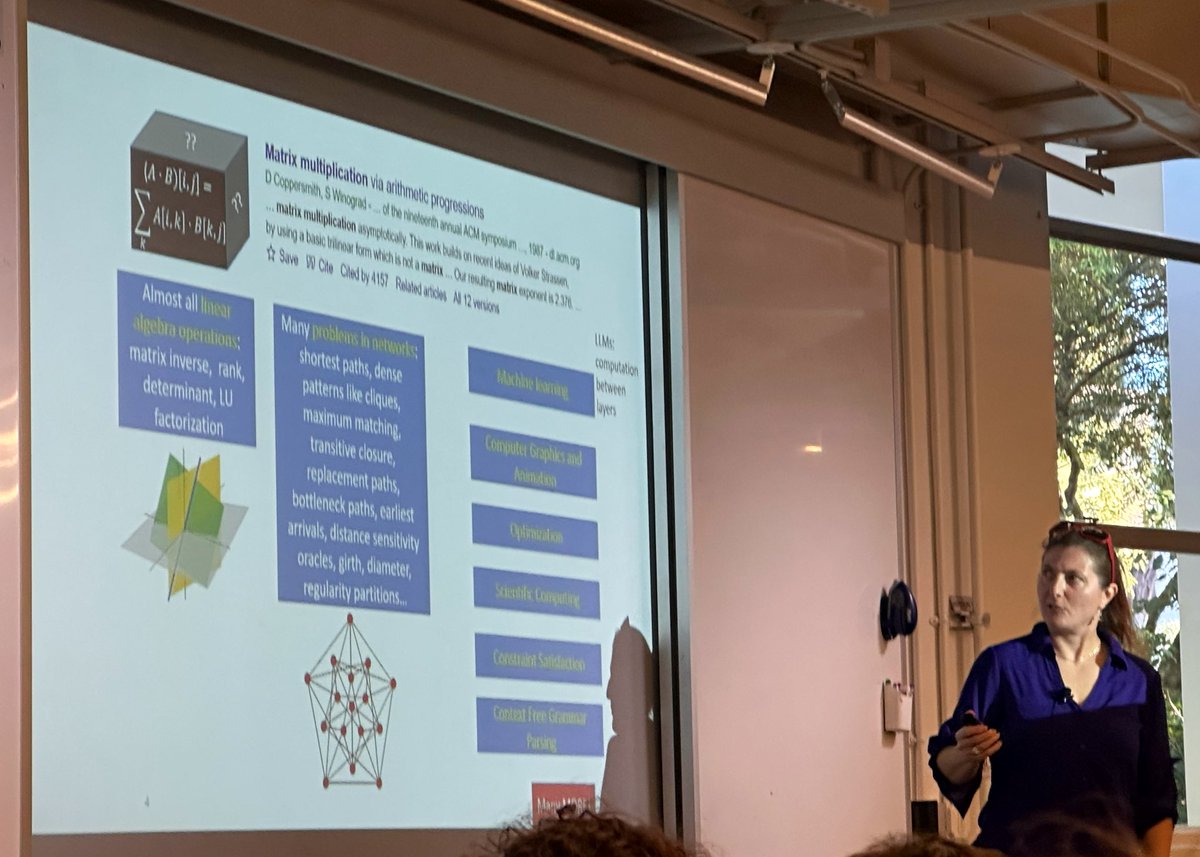
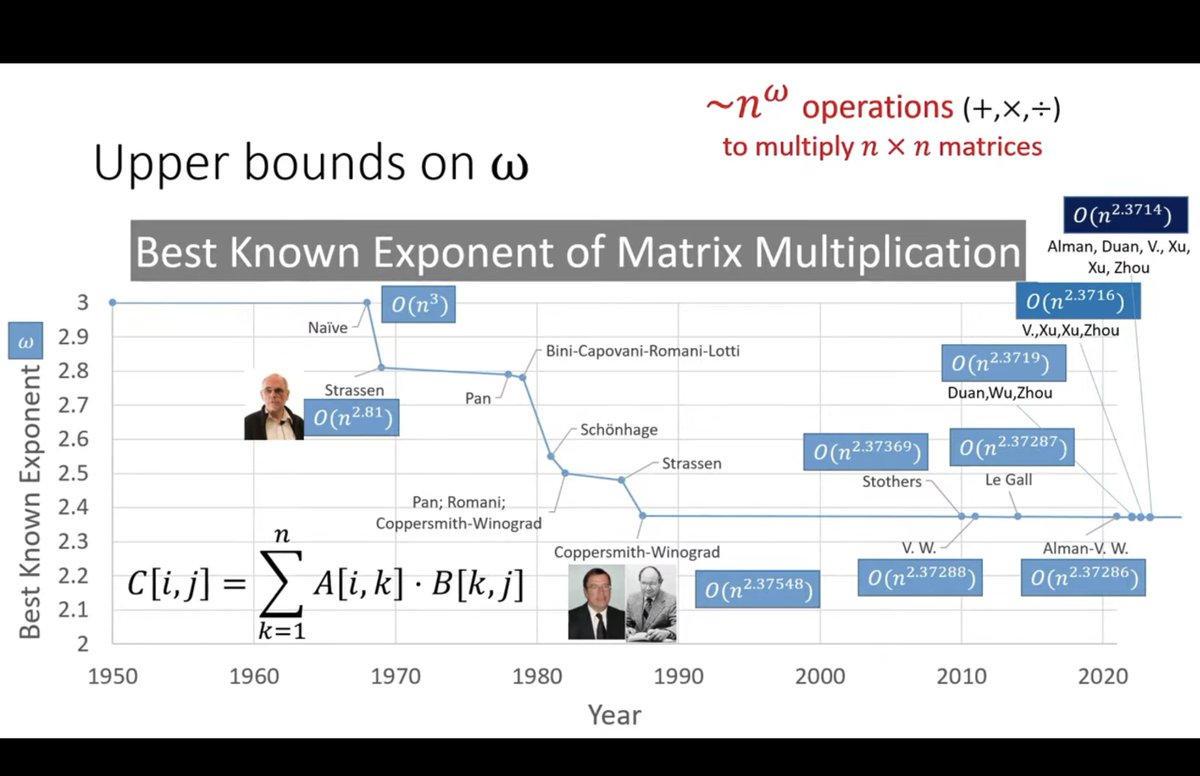
1/2 "It seems silly, but it's a very important problem." Virginia Vassilevska Williams (@MIT) on the progress in matrix multiplication algorithms during her Richard M. Karp Distinguished Lecture On Matrix Multiplication Algorithms at the Simons Institute. simons.berkeley.edu/talks/vi…
1
6
20
1,568
13 Nov 2025
they use c0rpse heads to practice face lift techniques but dont use blood to test tampons/pads...make it make sense!
3
153
10 Nov 2025
🎓 Started my Science Communicator Residency at @UCBerkeley’s @SimonsInstitute ! I'm learning how advances in matrix multiplication shape the future of AI and turning it into a mini documentary.
🎥 A peek into my first day:
2
7
985
28 Oct 2025
Nearly everything in modern computing depends on matrix multiplication and researchers are still chasing the fastest way to do it.
Virginia Vassilevska Williams helped break this speed record, then turned to understanding why some barriers can’t be broken at all.
@SimonsInstitute
2
2
4
683
28 Oct 2025
Prof Williams now studies when speed runs out.
Her field, fine-grained complexity, reveals how close we are to the limits of computation and why some problems resist every shortcut.
@SimonsInstitute #SimonsLive
1
2
613
27 Oct 2025
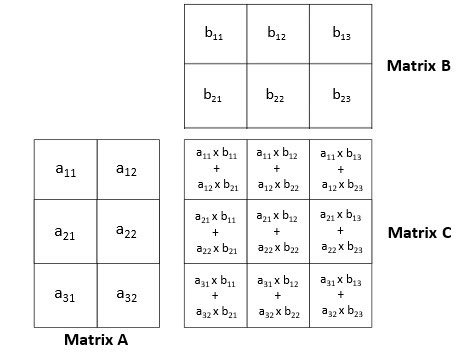
This week I’m at a matrix multiplication workshop (me, not a mathematician or computer programmer) because multiplying matrices of numbers sits behind every single AI model and every big data crunch, and I want to understand these systems better. @SimonsInstitute #SimonsLive
6
1
2
771
27 Oct 2025
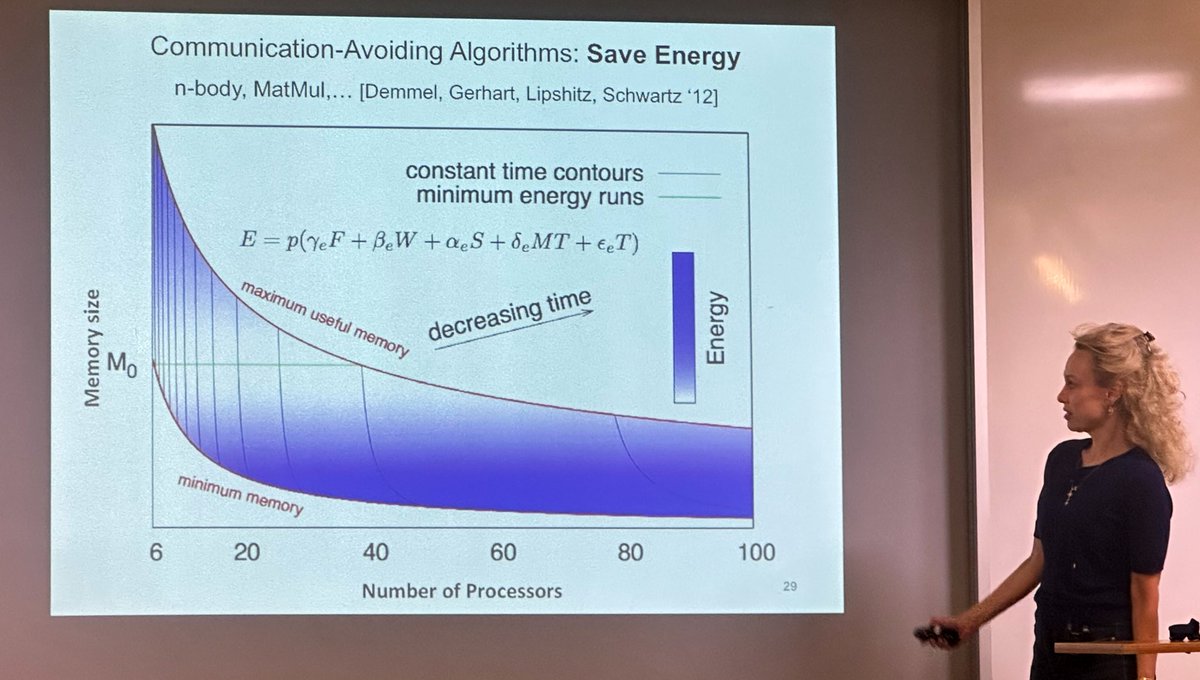
Avoiding unnecessary data movement saves energy too!
Holtz showed how communication-avoiding algorithms can find a sweet spot where less motion —> lower energy use without slowing computation.
@SimonsInstitute #SimonsLive
1
4
677
27 Oct 2025
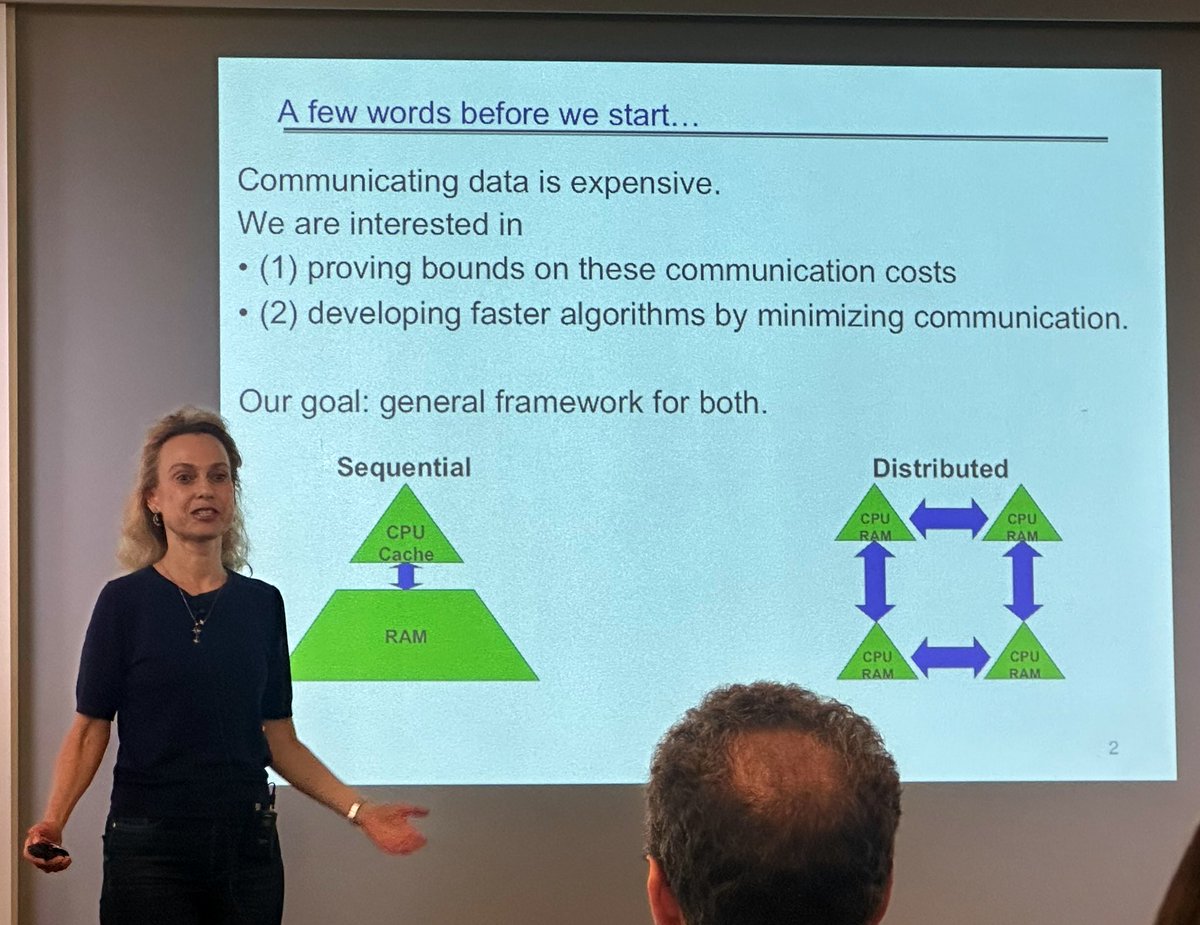
Most of a computer’s effort isn’t doing math, it’s moving data, aka every trip between memory & processor = costs in time & power
This is the communication cost, a framework researchers use to measure and reduce that hidden expense.
from Olga Holtz @SimonsInstitute #SimonsLive
1
3
734
27 Oct 2025
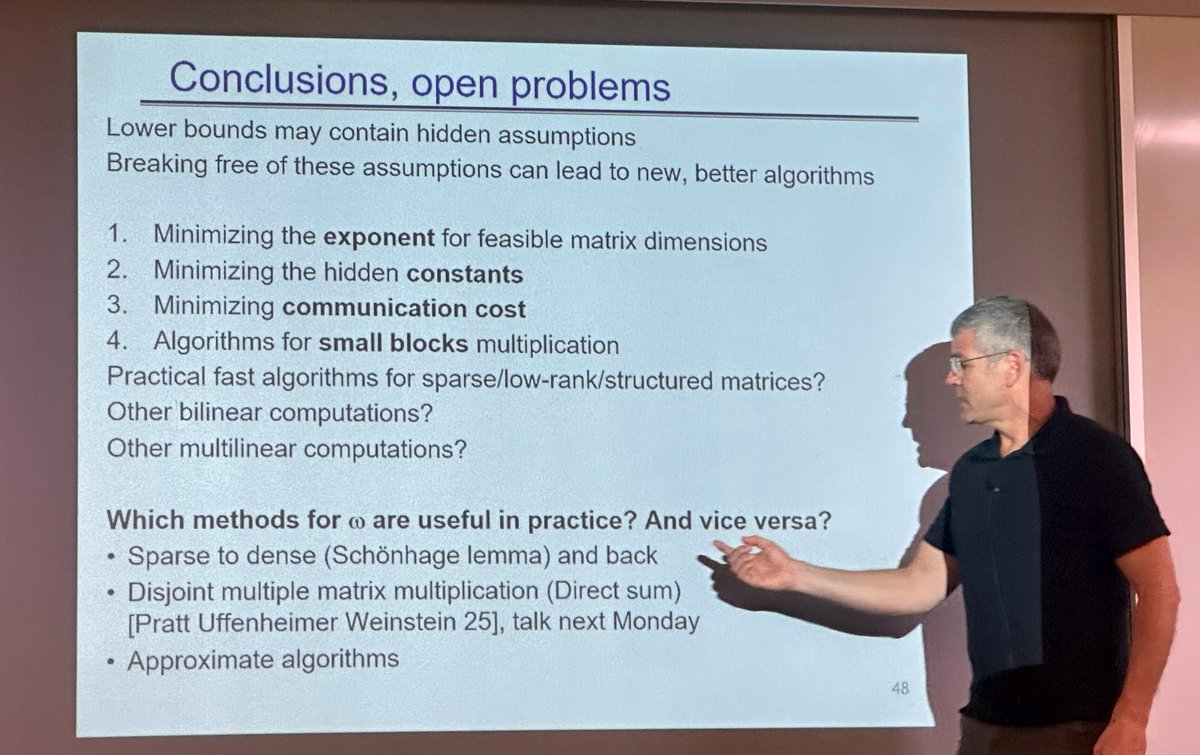
How to make matrix multiplication practical
Mathematically:
- shrink the exponents and constants that set its speed
Hardware:
- move data less
- handle smaller chunks more efficiently
(from Oded Schwartz) @SimonsInstitute #SimonsLive
1
4
685
27 Oct 2025
If we can multiply matrices even a little faster, the effects ripple outward. AI models could train more quickly, supercomputers could run with less energy, and data centers might draw less power from the grid.(Efficiency here is environmental as much as intellectual) #SimonsLive
1
2
674
27 Oct 2025
Matrix multiplication is the engine of modern computation. It powers neural networks, graphics, and massive data analysis. Every improvement changes what computers can do within the same energy and hardware limits. #SimonsLive
1
2
662
27 Oct 2025
I’ll be here for the next month, following how researchers rethink one of the most fundamental operations in computing and how a small tweak in efficiency could reshape technology. #SimonsLive
1
2
674
26 Sep 2025
the signs if i win the lottery:
25 Sep 2025

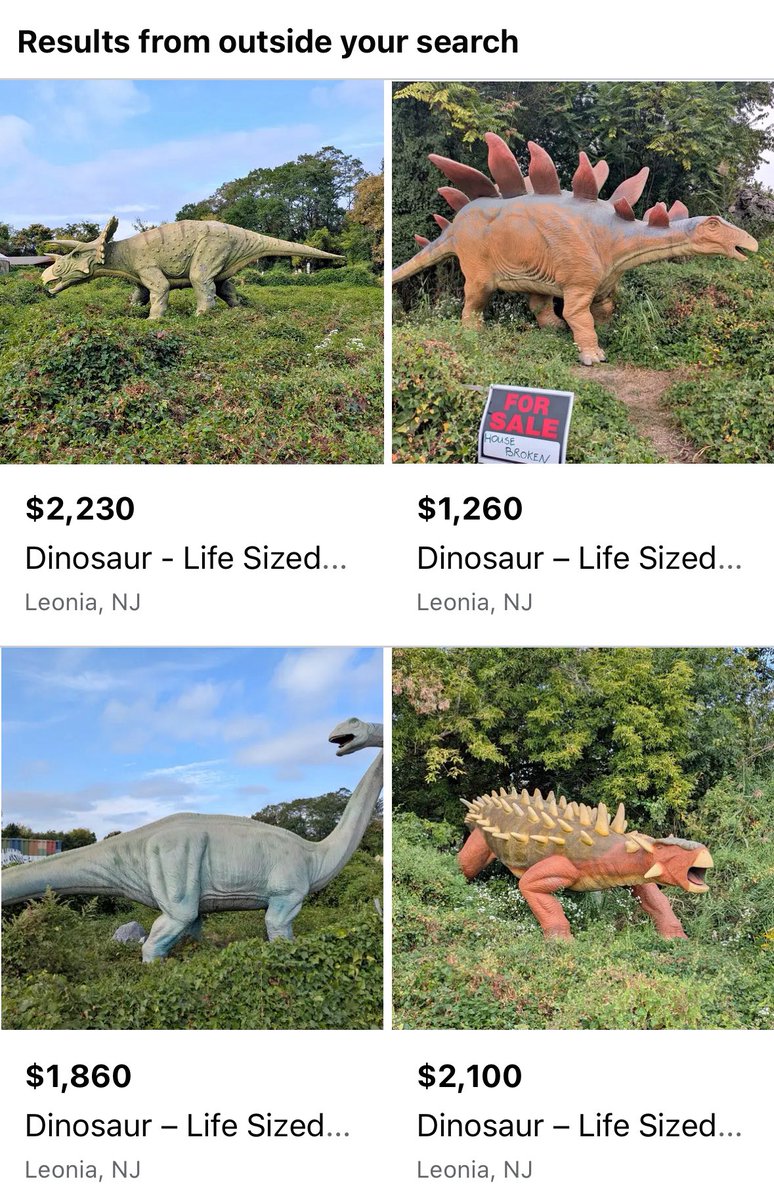
Dinosaur Field Station of NJ is closing and their statues are on fb marketplace
2
189
24 Sep 2025
with all the social media apps slowly morphing into each other, you’d think there’d be more tools to just cross post things everywhere but ohhhh nooooo the kids can’t play together
1
120
27 Jun 2025
from filming SciShow to habit tracking to my banana bday party 🍌 tryna chase perfect productivity but there’s always more to do, so i just gotta ride a wave of momentum 📔 🎬 🧳 #weekinmylife youtu.be/8061mzwrYAQ
483
25 Apr 2025
Lemur skulls at work, skincare at home, and city living in between. 🌙 Oh, and one very sticky bag: youtu.be/2eVJ3JsY4uE
2
394
28 Mar 2025
does that VIRAL anti-bloat tonic really work!? I put it to the test—tracking real results (and some surprises) in hopes of better gut health. 💛🫚🍋 #GutHealth #ScienceOfBeauty
youtu.be/5AXeXDtHlaI?si=mftL…
2
666