
Joined October 2015
- Tweets 8,991
- Following 2,890
- Followers 1,575
- Likes 32,103
161 Photos and videos


Yan Liu retweeted

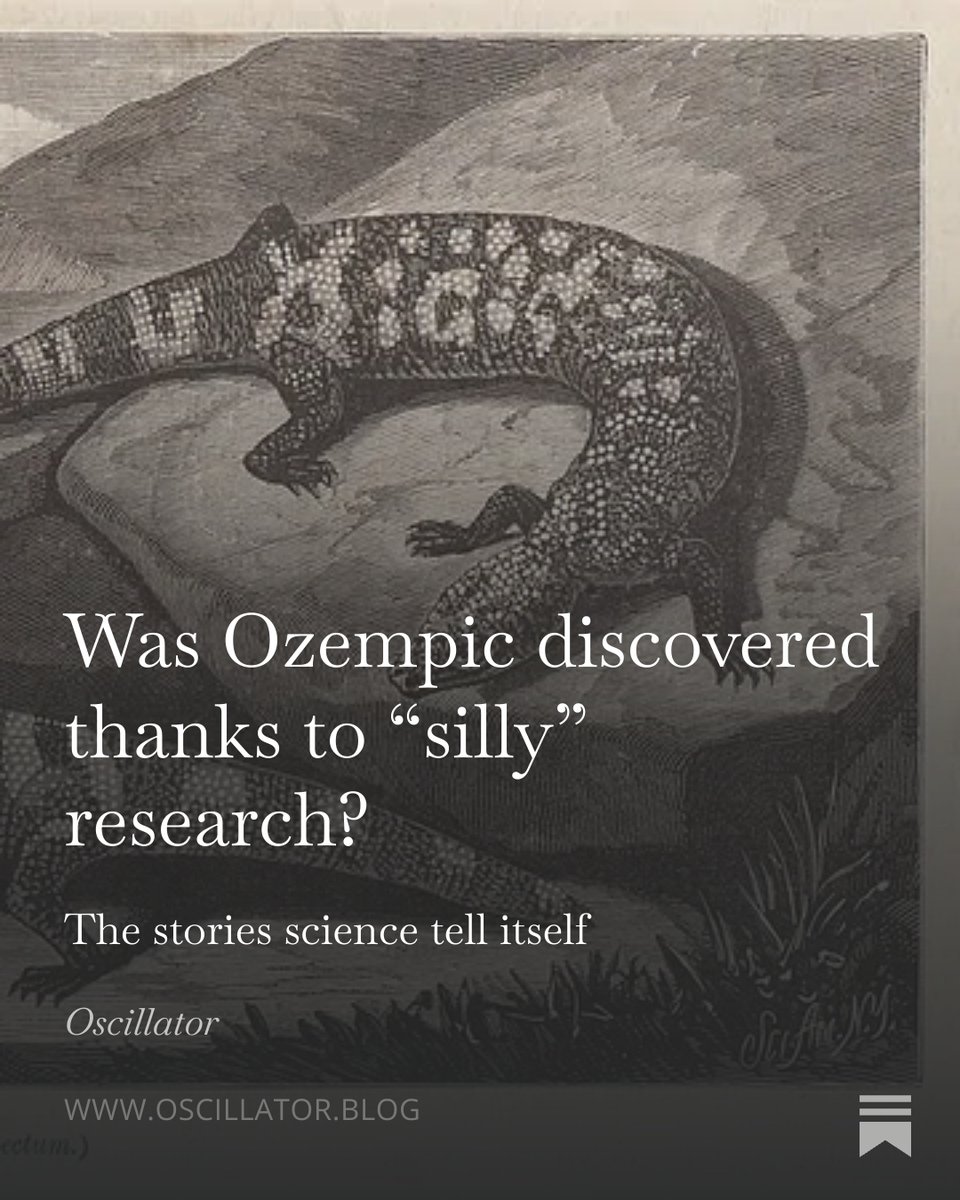
I got curious about the real story of Ozempic Gila monster spit people cite when advocating for basic research funding. The truth is more interesting, and shows us more about the stories we tell ourselves about science than it convinces people to maintain the funding status quo
5
51
358
33,571
Yan Liu retweeted

Jun 8
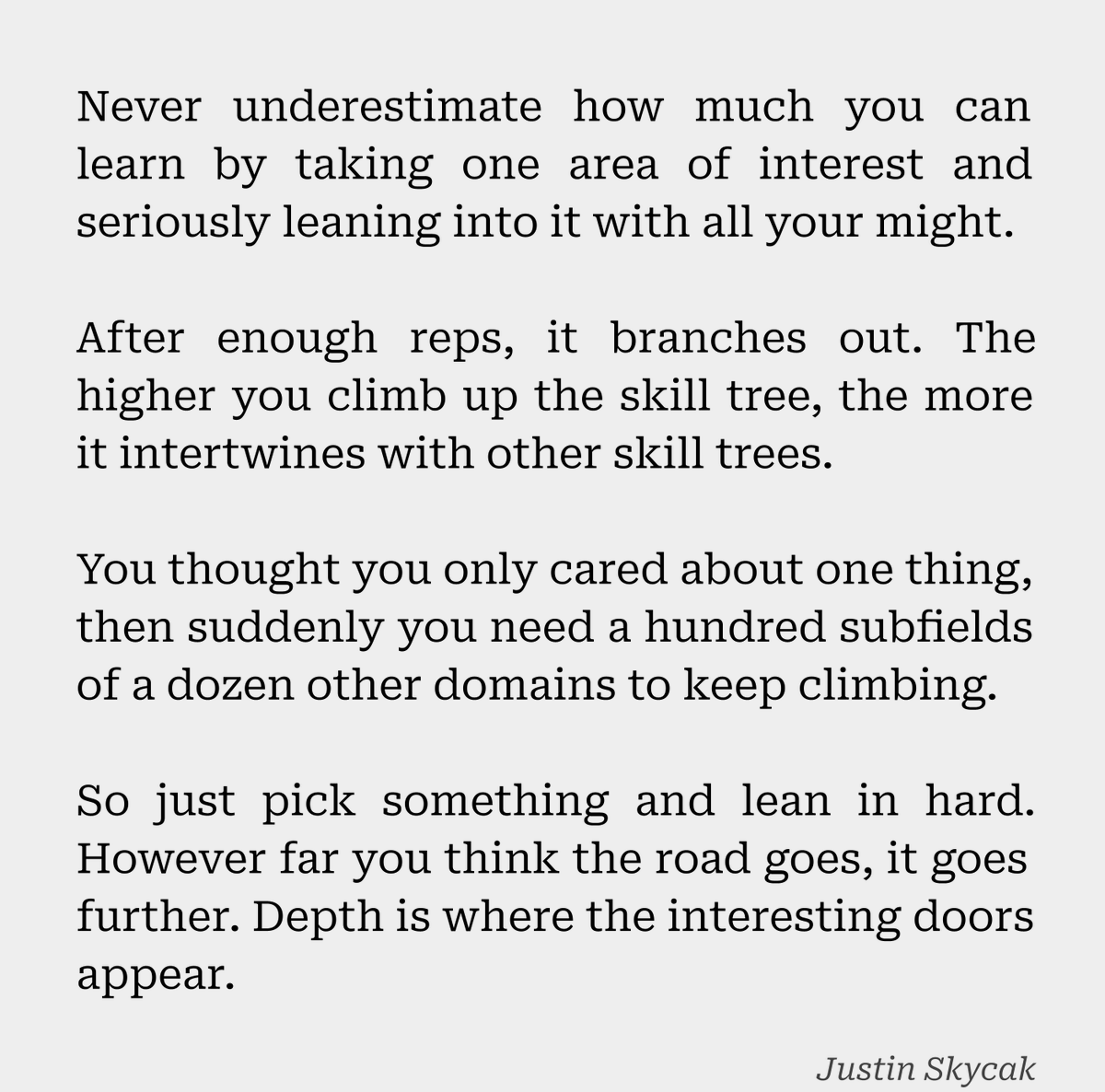
Go deep on one thing long enough, and it becomes a doorway to everything else.
3
54
438
5,984

today i spent 2.5 hours talking to someone in a park. it felt like 15 min.
conversation is the highest order bit of human connection.
shared interests, proximity, activities, & history helps but most of the things we associate with connection are downstream of two people being genuinely interested in what’s happening inside each other’s heads.
50
77
1,664
277,608
Yan Liu retweeted

Jun 4
Science is about opening up possibilities with conjecture. AI’s are trained on data & use probabilities. ‘Doing science’ is way more than statistics.
30
9
88
6,114
Yan Liu retweeted

This is precisely how I feel. LLMs are useful tools, worth evaluating and improving, but they are only one type of tool, one type of statistical model. In saner times, in my field, this was called "machine learning" and was integrated into many scientific tasks. Too much hype now

To be clear, I am not against AI.
I am very optimistic about AI. AI is doing amazing things. My entire career is in AI, as was my PhD.
What I am against is irrational overselling and overhype about AI, which has turned into a dumb tech religion and borderline scam.
1
1
3
153
Yan Liu retweeted

LLMs are extremely impressive tech, but we need to stop pretending that they extend far beyond their NLP scope.
An LLM is great at drafting an email. It however sucks at predicting over large biological knowledge graphs.
21
6
43
2,886
Yan Liu retweeted
Agreed. Yet capital allocators divert endless resources into the idea of a "data panacea" to build a utopia that will never come, while starving most other domains of science and technology of the resources necessary to build a better future for a broad swath of humanity.
"AI will solve biology and reverse ageing, by studying biology better than any human can!"
Oh yeah? Is AI also gonna invent time travel, build wormholes, mathematically solve chess, and write music that hypnotises us into instant nostalgic crying?
You can prophesise and pray to the future AI superintelligence deity as much as you like - it doesn't mean that your wild utopian wishes are feasible or will come true.
1
3
138
Yan Liu retweeted

May 9
I believe we'll achieve ASI, but it will be both narrow and finite in capability.
We already have ASI in Go, Chess, some video games.
In those domains, infinite amounts of training data can be generated; and correctness of output is trivially and quickly validated. Imagine that: Absolutely perfect training data, available in unlimited quantities. This is the stuff of Singularity dreams.
Of course, these are also toy systems. Not like the real world. And even here, our superhuman systems aren't godlike. Give a human Go master 5 stones, and they will likely beat AlphaGoZero. SuperIntelligence, even narrow, isn't infinite.
Math as a domain is possibly as precise as Go, though orders of magnitude more complex and non-finite. If any important domain will show SuperIntelligence next, it's likely to be formal math. Even there, the gains will likely be incremental past those of humans, and comprehensible to humans, for the foreseeable future.
Coding, at first glance, shares many of the characteristics of these SuperIntelligence-plausible domains. Yet it is orders of magnitude more difficult to verify than even pure mathematics, and brings in the complexity of translating human language requirements to formal systems.
Most of human work and thought doesn't resemble these domains at all. The possibility space is infinite. Yet training data is finite or expensive. Verification is slow and subjective. Training data is mostly capped and also full of errors. SuperIntelligence may be possible in broader human domains, but we have no hard evidence that it is, and the hurdles are much higher.
25
19
106
23,271
Yan Liu retweeted

11 Feb 2025
i have a theory that self esteem is not about who you think you are but rather who you think you COULD be
16
60
1,026
28,128
Yan Liu retweeted

May 9
It’s estimated that the Protein Data Bank (PDB) cost around $13B to create. Alphafold was only possible because of it. If we want ML to solve biology, we should be funding the creation of databases and the development of new assay technologies. ML is nothing without data.
40
177
1,268
157,854
Yan Liu retweeted
Many of us, even in STEM fields, still care. I cannot adequately explain how a love of non-science literature has helped me as a scientist, but it has. It's more than "critical thinking training" (though that's a valuable aspect). We will help you hold the line.
1
4
160
4,937
Yan Liu retweeted

May 5
If you really think you can do something special...
Then live like it.
Move in the world like you're on a mission.
Start doing things that support who you really are, instead of settling for the smaller life.
44
147
1,261
25,952
Yan Liu retweeted
Apr 30
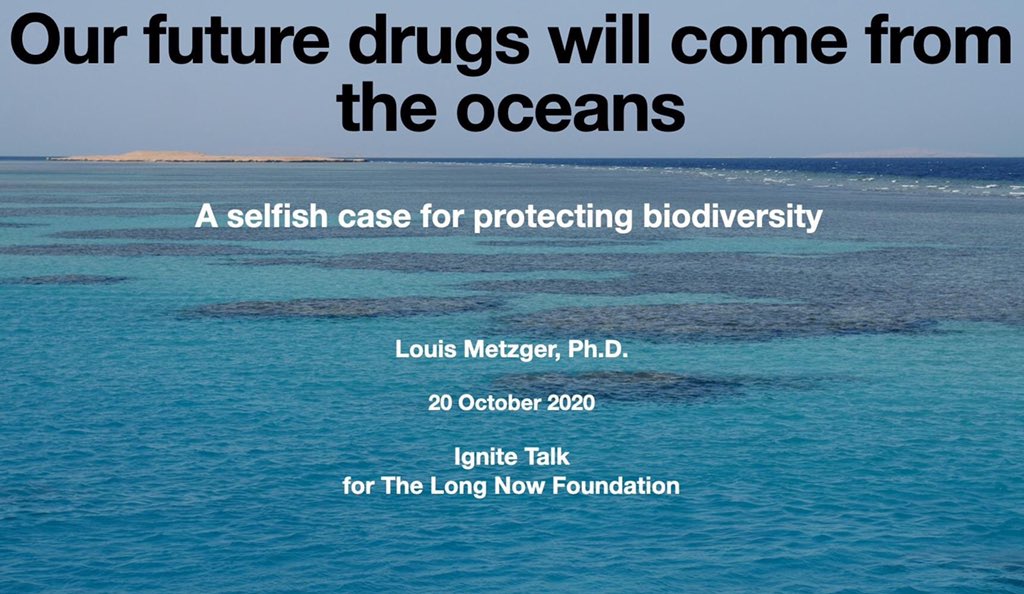
Drug Discovery should be renamed Drug Creation. This is because chemical space is so big you cannot search it, you must instead create.
15
19
153
13,137
Yan Liu retweeted

Apr 30
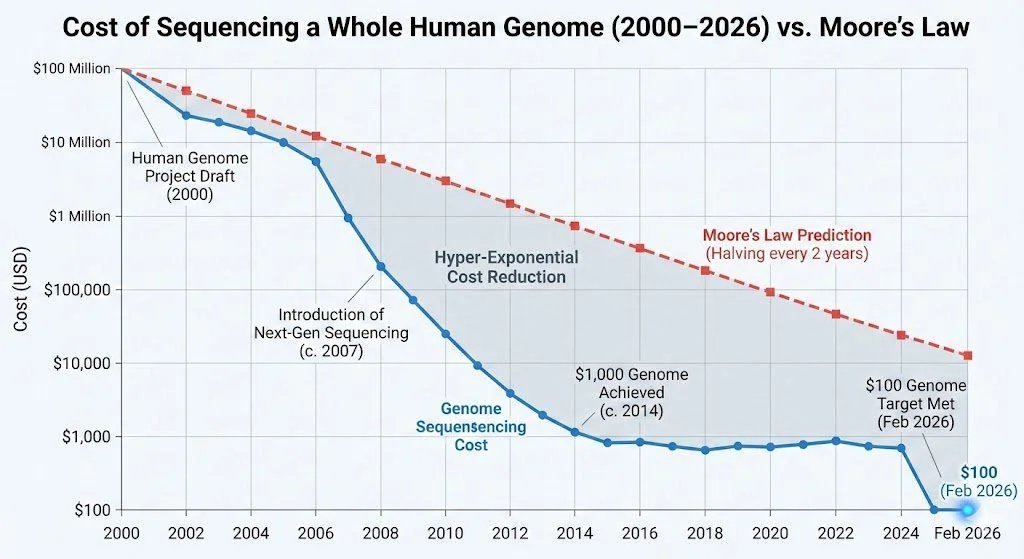
The idea that sequencing more genomes would lead to better medicine and better health was a good hypothesis in 2000. But 26 years later, evidence has quite convincingly disproven that hypothesis.
The answer to most common chronic illnesses that plague us isn't written in genes. Personalized medicine likely cannot come from sequences of nucleic acids. There is more to life's dynamic nature.
Why do we cling onto that hypothesis/dogma like it is truth.
Apr 29

The cost of sequencing a human genome dropped from $100M to less than $100 in about 25 years.
That's a million-fold decrease, which outpaces even Moore's Law.
We're about to enter the era of personalized medicine.
83
82
638
142,474
Yan Liu retweeted

Apr 29
What does long-term thinking look like in practice? Introducing Long Now Labs, a collaborative space to test, prototype, and build long-term tools.
Lab Series 001 is a collaboration with the Protocol Institute to investigate three aspects of civilizational durability that are being radically reshaped by frontier technologies.
-> Lab 001.1: Book of Time - An open call to submit a concept for a new way of marking, experiencing, or making sense of time.
-> Lab 001.2: Epistemic Cycles - Seeking an individual or team to investigate historical patterns of technological disruption that broke down society's ability to discern truth.
-> Lab 001.3: Interspecies Protocols - Exploring the protocols needed to support interspecies ecologies.
If you are a designer, researcher, writer, or technologist interested in the deep future, we want to hear from you. Submissions are now open.
Learn more about Labs and how to apply: na2.hubs.ly/H059wn90
6
29
118
22,757
Yan Liu retweeted
“Speculative bubble,” indeed. I’ve encountered many Theranos-like AI-centric biotechs that are VCs magnets. VCs funding garbage starves honest and non-hype driven startups of funds. It’s a game of VC “musical chairs” (or “hot potato”). Most capital allocation now is gambling.
I first truly fathomed the scale of the AI bubble when I tried Y Combinator's cofounder matching service.
As soon as I wrote that I was an AI PhD guy, I got swarmed with Ivy League MBA founder teams looking for someone to "do the AI magic" for their startup ideas.
One team of three Harvard MBAs told me they had already secured $2M in VC funding to "solve the unit economics problem of AI". They just needed an AI guy to… you know… actually solve it (one of the toughest challenges in AI research right now).
In return, I'd get 20% equity while they handled marketing, pitch decks, and whatever else - after the VCs took their cut.
I still wonder to this day who gave three Harvard MBAs with zero AI expertise $2M to start an aspiring frontier AI lab.
And this is just one of many stories.
The situation is not normal or economically efficient. It is blatantly a speculative tech mania and hype-driven investment bubble.
1
2
131
Yan Liu retweeted
I can guarantee that AI will not "cure cancer" - at least, not in any clean singular way.
Cancer is an umbrella term for many different diseases, affecting different tissues, with different pathologies and treatment pathways - each requiring different cures.
And this is before we discuss the inherent challenges faced by AI drug discovery, which are unlikely to be resolved anytime soon.
This "AI will cure cancer" narrative among AI utopianists, demonstrates a mixture of overconfidence, ignorance, and naivety - about both the capabilities of AI, and the applied domain of biology that they so naively delve into.

87
29
255
26,376
Yan Liu retweeted

Apr 18
The hill I will die on - we have to rethink graduate training.
“Scientists are trained for a world where data speaks for itself. Where misinformation moves slowly. Where scientific expertise naturally rises above noise. That world is gone.”
sciencepolitics.org/2026/03/…
55
232
839
104,616
Yan Liu retweeted
You need to be careful of overconfident scientists and CEOs in the AI/bio space.
Every conference I go to has someone boasting about an AI that is 99% accurate at predicting some bioactivity.
When you ask more questions, it turns out that they used a very easy dataset with a lot of bias, or have completely misrepresented their model's statistics.
I am a trained scientist in the AI/bio domain, and so can sniff out this bad behaviour from a mile away.
But how's about everyday people, investors, industry clients, civil servants, science communicators, and journalists?
Half of them wouldn't stand a chance against these slippery charlatans.
A lot of what you see online, about: "Wow omg this AI just SOLVED ageing in mice!" or "This new AI can design a personalised cancer vaccine just for you!" - turns out to be oversold bogus, when you dig deeper.
Protect your money from these people, and especially don't let them influence your health decisions.
20
17
108
3,622
most people operate on a model of gain, it's almost universal. their usual thought patterns revolve around questions like what do i get out of this? what do i win? what's in it for me, to make this move, start this thing, etc?
i think the inversion is more interesting & way more honest.
my operational model is closer to nothing to lose. especially when you're building a company from zero, you're operating in open territory, or even interacting with anyone new. the downside is almost always capped. the upside is infinite. i guess some ppl might see this as optimism framed another way but i think of it as pure math.
& once you internalize that asymmetry, it becomes a filter for everything. it tells you what actually matters & what's just fear. it will free you to take action.
40
51
547
33,709