
Joined June 2023
- Tweets 1,046
- Following 1,173
- Followers 331
- Likes 6,168
23 Photos and videos

















CHEF | Sphere ⚪ retweeted

Cross-border payments, powered by stablecoins.
@sphere_labs joins us at Telekom & Friends Vol. 3: Blocks & Brews, bringing the next generation of payment infrastructure to Berlin Blockchain Week.
Stay tuned 👀
June 18 | @BerBlockWeek
RSVP👇
luma.com/gu20fy2p

4
8
592
CHEF | Sphere ⚪ retweeted
Back in CDMX this week for Stablecoin Conference with the @sphere_labs team!
DM if you want to talk cross-border payments over tacos 🌮🇲🇽


2
2
22
1,220
CHEF | Sphere ⚪ retweeted

The picks are in! JC 🤝 Jaime = Spain 🇪🇸
Who’ve you got lifting the trophy?
#ppl #propadelleague #fifaworldcup2026
1
3
55
CHEF | Sphere ⚪ retweeted

Jun 11
Finance, Sales, Marketing, IT

133
1,574
18,140
872,521
CHEF | Sphere ⚪ retweeted

Jun 11
My bet: most people won't think about payments anymore by 2030
Bank, fintech, blockchain. The underlying tech won't matter to users. The expectation will be that money moves instantly, securely, and at near-zero cost.
Takeaways from my @WebSummit Rio panel on new money rails👇



2
3
16
1,156
CHEF | Sphere ⚪ retweeted
Right in the heart of New York City 🫡
JC and Jaime took on the Newmark Padel Tournament yesterday, trading shots with the Manhattan skyline as the backdrop🗽
#PPL #Propadelleague
@sphere_labs




1
1
6
270
CHEF | Sphere ⚪ retweeted

Jun 9
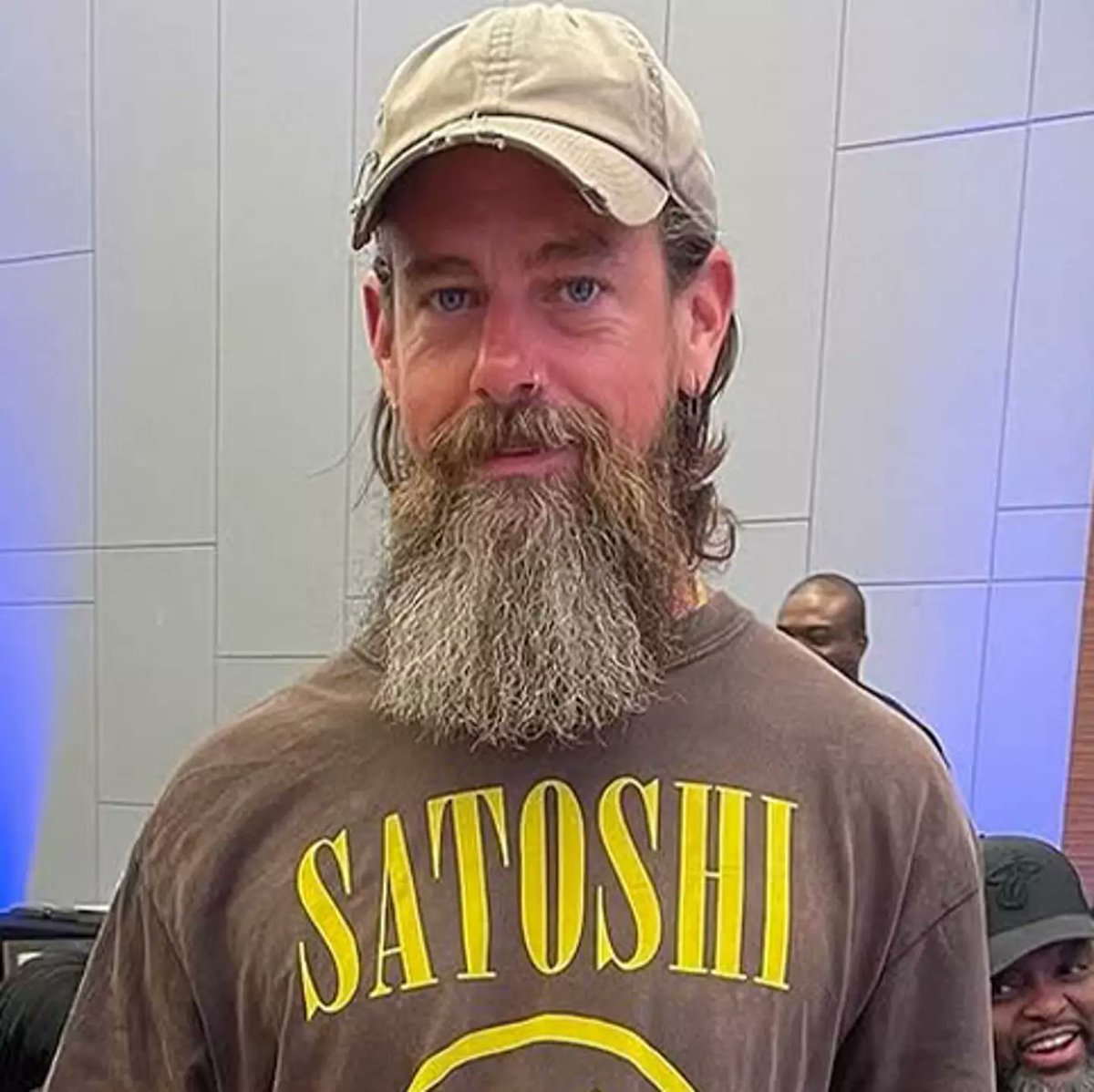
Branding matters.




21
46
2,094
421,215
CHEF | Sphere ⚪ retweeted

Jun 9
May 12

1/ Sphere Labs is now the presenting partner of @NYAtlantics_, the reigning City’s Cup champions.
Why is a cross-border payments company sponsoring a professional padel team?👇

1
2
10
366
CHEF | Sphere ⚪ retweeted
Jun 9
The Sphere dashboard just got a refresh. ✨
Streamlined onboarding, a step-based Transfer flow, and a dedicated Offloader Wallets page.
Full details in the changelog: docs.spherepay.co/changelog#…

2
8
27
1,407
CHEF | Sphere ⚪ retweeted

Jun 8
What started as a hackathon project turned into a payments giant.
In this week's Inside Scoop I interviewed @NADEAU__ from @sphere_labs discussing Sphere, Stablecoins and recruitment in this institutional era.
To read the full interview, click on the quoted post below👇


All past editions:
monkedao.io/newsletter/
8
7
41
4,591
CHEF | Sphere ⚪ retweeted

How could this be perceived as anything but a massive failure in today’s world? Would Stripe even be investable today? Which investors would ever think that only launching after two years of work and with 50 users would ever be the beginning of something gigantic?
I can’t see how anybody would be happy with this today. And yet, almost imperceptibly, Patrick and John were painstakingly laying the foundation for something that was built to last and built to grow strong and immovable like a Sequoia. How can mushroom growth rates produce anything other than mushroom longevity?
I’m not saying that real value CAN’T be built quickly. But I think it’s far more common than we like to talk about that founders work for two, three, four, seven, even fifteen years before something extremely valuable is born into the world and really takes off.
James Dyson worked on the design of his vacuum cleaner for 5 years before he got to a working prototype and 8 years before it became a commercial product.
Dylan Field worked on Figma for four years before launching a *closed* beta.
Tim Leatherman worked on his idea and prototype for 8 years before he had his first multitool design that was ready to sell.
Palmer Luckey spent about 7 years from the time he began working on VR prototypes before Oculus released the first consumer headset.
Jensen Huang started Nvidia in 1993 and it wasn’t until 4 years later in 1997 that they had their first major commercial success with the RIVA 128.
Steve Wozniak was the fastest and went from an idea for a personal computer in 1975 to the Apple II release 2 years later in 1977.
Time and again the reality is that great things take time to build. I’m not saying it doesn’t take hard work. I’m definitely not saying it doesn’t take determination and extreme focus. But it does take time. I think we try and pretend that it doesn’t take time and lift up the seeming exceptions to the rule.
Why not be honest and instead focus on the determination and extreme grit that it takes to keep building for years before any outward success arises or glory is received?
I hope we can be honest with young founders and repeat these stories again and again so that they learn to work thanklessly for years before the outward vindication comes, because that’s what it really takes.

John Collison: We only had 50 users two years after founding Stripe
“We started working on Stripe in the Fall of 2009, and we launched Stripe in September 2011,” John Collison reflects. “I remember right at the beginning when we were starting it I said to Patrick [Collison], ‘Yeah let’s do it. How hard can it be?’ Which gives you a sense of our mindset. And the answer was: two years of difficulty. We had not predicted that.”
John remembers feeling dejected when Stripe only had 50 users two years later:
“When you spend two years getting 50 users, it doesn’t feel like a whole lot of progress. It feels like things are going pretty slow.”
But this is one of the challenges of startups, he argues:
“If you’re working on a startup that’s a bad idea, it’s going to feel like slow-going. But if you’re working on a startup that’s a good idea, it may feel like slow-going too.”
Yet slow growth has a silver lining:
“I think the thing that allowed us to take off in the subsequent years was the fact that since we were spending so much time on each one of those users; since we were hyper-focused on building a great product; and since we weren’t dealing with problems of scale yet, that allowed us to build the product that we wanted. Part of the culture that set in really early on was taking abnormally good care of those early users.”
The Stripe founders would get an email or phone call anytime a user ran into a bug. When they sent the customer an email moments later alerting them that the bug was now fixed, people’s minds were blown.
They set up a Campfire room that any customer could join and use to message John and Patrick at any hour of the day or night. And if a user was based in the Bay Area, the founders would invite them to come by the office and help integrate Stripe for them.
In the Stripe dashboard they would prompt their customers for feedback and feature requests. Then the Stripe founders would reply to that feedback within 10 minutes.
“What this meant was that even though the user growth was happening quite slowly in the early days,” John explains, “it actually had a pretty surprising viral effect where people had a good experience, they told their friends about it, and we were able to spread entirely through word-of-mouth even to this day.”
39
77
944
219,439
CHEF | Sphere ⚪ retweeted

Jun 5
Knicks fan says “My Mayor is Muslim, my bagel is Jewish, my Christian’s Dior”
301
2,567
36,532
2,396,683





CHEF | Sphere ⚪ retweeted

Jun 3
Your CEO should be strong.
Your CTO should be wise.
Your COO should be wicked, cunning, of mysterious origins, fluent in the dark arts, blurry in pictures,
294
2,762
23,852
1,052,838

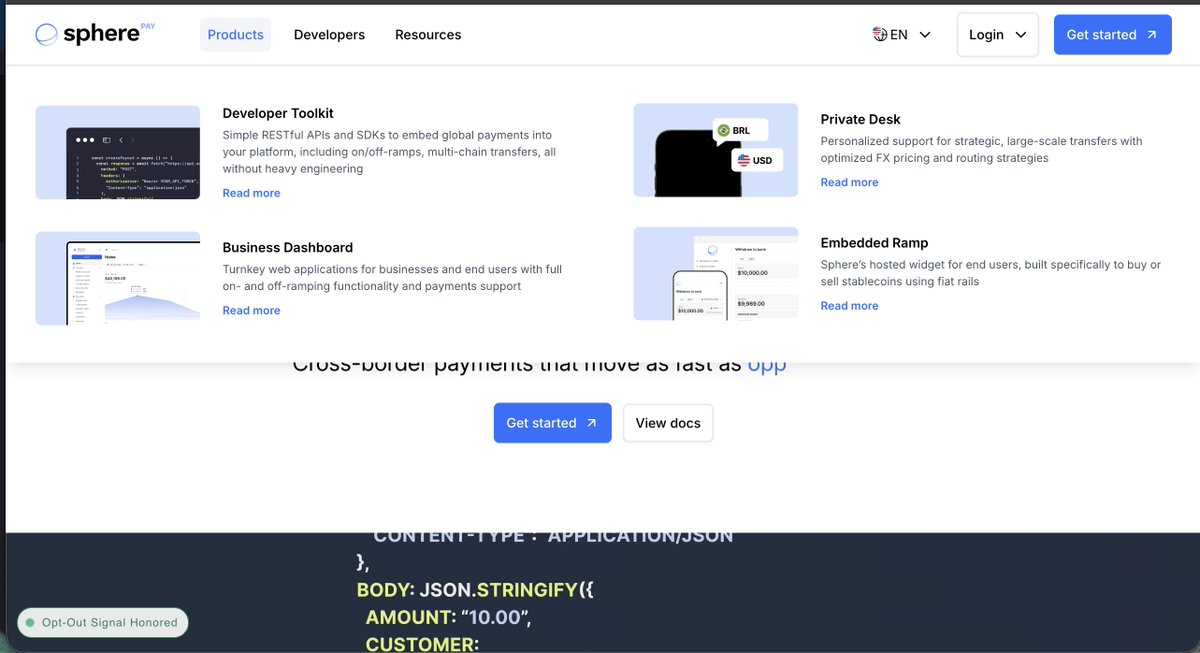
Truly the best way to offramp is @sphere_labs
Can not recommend it enough.
For individuals, no better ramp direct to your bank
For business, for all tools you need to build payment infra
7
7
27
3,386
CHEF | Sphere ⚪ retweeted
Jun 2
Correspondent banking plays hot potato across borders. Variable routes, variable fees, variable timing.
Sphere uses stablecoins to streamline the messy middle for businesses.
Domestic settlement on each end stablecoins between = cross-border payments cut from days to minutes.
3
10
26
2,934
CHEF | Sphere ⚪ retweeted

Jun 1
New @sphere_labs intern just dropped
(I am pet sitting. Meet Ellie. She’s been sitting under my feet all day ready to assist!)


7
2
63
2,078
CHEF | Sphere ⚪ retweeted

May 29
Go move your stake to the @sphere_labs validator! Spheriously!
1
1
7
1,330
CHEF | Sphere ⚪ retweeted

May 28
SF probably has some of the highest talent/capital density in the world, but increasingly the least unique alpha. The most interesting new ideas of this decade will come from the places that the really smart MIT or Waterloo new grad would never think to reside in.
8
3
39
2,316
CHEF | Sphere ⚪ retweeted
May 27
The quiet part out loud is that @airwallex is part of a *very* short list of companies that would be uniquely qualified to evangelize stablecoins - *considerably* more than household names like Stripe.
But why would they, when they've already done a significant chunk of the hard work to get the infrastructure set up that stablecoins short-circuit?
They should understand the hidden gatchas better than most - re: @awxjack's controversial commentary on stablecoins last year (mostly correct, tbh).
Curious to see what they do here, as it will carry immense signal for the industry, although I would guess it's mostly a distraction for their core business.
May 25

Hello. Reminder as you think about compliant on and off ramps etc:
@Airwallex is not a payments app layered on top of existing rails. It is a vertically integrated global financial infrastructure company that spent ~10 years building (and licensing) its own proprietary money-movement network from scratch. It owns the end-to-end stack in a way that most US fintechs simply don’t because building that outside the US is brutally hard and capital-intensive.
1
1
23
5,058