
Core Strategic Architect for Digital Intelligence. Fusing AI & Web3 to reshape governance and scale the “1-10” leap.
Joined May 2018
- Tweets 5,311
- Following 125
- Followers 4,704
- Likes 1,535
709 Photos and videos

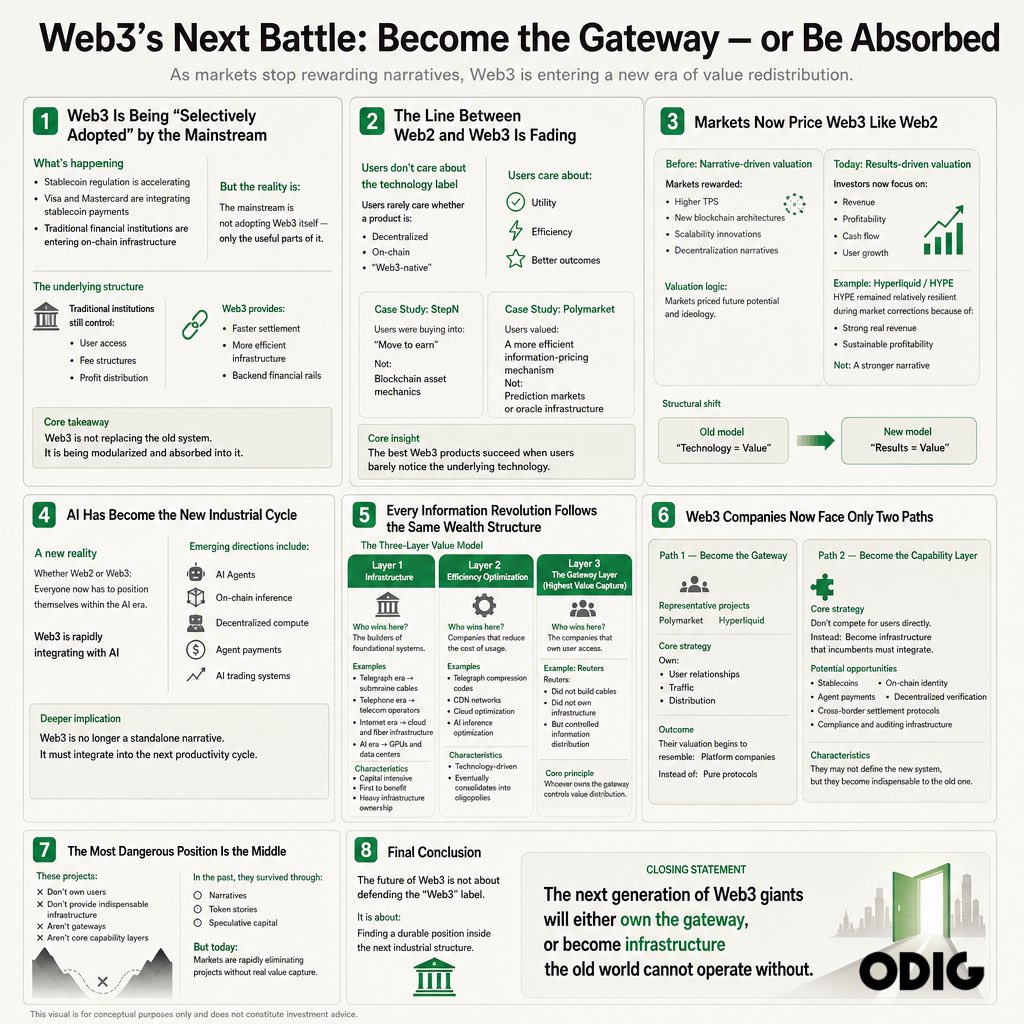









Kaiko buying Cometh isn't just a data company adding protocol coverage.
Cometh is MiCA-compliant DeFi infrastructure built in the EU. Kaiko is the market data layer institutions already use. The combination is a regulated data-plus-execution stack positioned for EU institutional mandates before they fully land.
This is what Web3 M&A starts to look like when regulation is the product feature, not the obstacle.
52
0x just opened its cross-chain API to all developers, with 12 bridge partners on day one.
The number behind that decision: 0x has routed $180 billion in swap volume to date. Opening cross-chain access isn't a product launch. It's the protocol declaring that builder-grade cross-chain execution is now table stakes, not a competitive advantage.
For institutional desks evaluating decentralized execution rails, a cross-chain aggregate with $180B in routing history and 12 simultaneous bridge integrations at launch sets a different baseline than anything the space had six months ago.
#DEX #Web3Strategy
46
$355 million at a $2 billion valuation. That's what a16z just led into Digital Asset, the team behind Canton.
a16z put the thesis publicly: institutional blockchain had three adoption barriers. Performance is largely solved. Regulatory clarity is accelerating. What remains is the governance and privacy infrastructure layer for real capital markets settlement.
When the largest institutional blockchain raise in recent years goes to permissioned settlement rails, what we're seeing isn't adoption momentum. It's architects selecting the plumbing before the mandate cycle formally begins.
Is permissioned infrastructure like Canton a transitional bridge to public execution layers, or the permanent endpoint institutions are actually building toward?
#InstitutionalDeFi #Web3Strategy
1
2
69
Bitwise CIO spoke with over 40 financial advisors in a single day. Their stated priority for digital asset allocation: stablecoins and tokenization, not Bitcoin.
Advisors managing retail wealth are increasingly choosing yield-generating infrastructure over pure market beta. That is a distribution shift we think reshapes capital formation for tokenized assets faster than most expect.
#Tokenization
2
61
US Treasury and NYDFS both dropping stablecoin compliance proposals within 24 hours of each other is not an accident of timing.
Treasury puts stablecoin issuers inside Bank Secrecy Act AML and sanctions screening. NYDFS adds reserve caps and federal alignment requirements on the same track. Two separate regulators, same instrument, same week.
We have been saying stablecoin compliance convergence is the actual unlock for institutional use. This is that convergence, in motion.
#StablecoinCompliance #GENIUS
1
61
Japan is about to bring crypto under the same regulatory framework as equities. Every institutional desk in Tokyo that already runs a stock trading compliance stack just got handed a much shorter path to digital asset exposure.
What interests us is the mismatch the framework creates. Equities come with issuers who have ongoing disclosure obligations. Most tokens don't have that structure.
Does Japan expect intermediaries to solve that gap, or will regulators build token-specific disclosure rules on top of the equities framework?
#CryptoRegulation #AsiaFinance
1
54
Figure just agreed to buy Kiavi for $717 million.
Figure is a blockchain-native lending marketplace. Kiavi is an AI-driven residential real estate lending platform.
A blockchain infrastructure company acquiring an AI lender at this scale suggests the M&A playbook for Web3 financial services is becoming indistinguishable from traditional fintech consolidation.
#Web3MA
1
87
Janus Henderson runs $480B in AUM. They just disclosed a strategic ENA position and plans to use USDe for treasury cash management.
That's a traditional fixed income manager putting synthetic dollar infrastructure into their actual cash stack.
At this AUM level, we stop calling it experimentation.
82
Mastercard's Agent Pay is not a payments product. It's an economic permissions layer for machines.
The design logic embedded in the announcement: AI agents don't just need to transact fast. They need enforceable spending governance, velocity limits, merchant category controls, real-time override switches, because no human reviews the transaction log.
Whether this infrastructure gets adopted by institutions or bypassed via open stablecoin rails is the question that determines who builds the machine economy settlement layer.
Where does institutional agentic payments actually settle three years from now: card network rails, open stablecoin protocols, or something that hasn't launched yet?
#MachineEconomy #AgenticPayments
Jun 10

As AI agents begin to act, payments move into the background — at machine speed and massive scale.
Today we’re introducing Mastercard Agent Pay for Machines — bringing structure, governance, and trust to this new class of payments.
Launching with 30 partners to bring this to life from day one.
This isn’t just more payments. It’s a new operating model for commerce.
👉 Learn more: mastercard.com/us/en/news-an…
162
The CLARITY Act is now four procedural steps and six working weeks from either becoming law or waiting another Congress.
Full Senate floor vote, conference with the House, amendment reconciliation, and presidential signature. Each has real failure modes. The White House is hosting cross-party talks this week to manage exactly that sequence.
For institutions building compliance infrastructure for digital assets, this six-week window isn't procedural noise. It's the timeline that determines which regulatory framing to build toward.
#CLARITYAct #InstitutionalCrypto
117
Etherfi and Plume launching an RWA vault with BlackRock and Fidelity as institutional backing isn't the usual institutional DeFi story.
The prior playbook: TradFi institutions build their own onchain wrappers. This structure has them anchoring yield products run by DeFi-native protocols instead. Whether that model holds beyond the 5 million starting cap is what we're watching.
#InstitutionalDeFi #RWA
170
GSR just paid $57 million to own the structuring and treasury layer for tokenized organizations.
Crypto capital markets firms buying, not building, advisory infrastructure. The consolidation phase is underway.
#Web3Strategy
1
2
193
ING, Worldline, and Mastercard all completing agentic payment infrastructure milestones in the same week, across Europe and ASEAN, is the signal that machine-to-machine payment rails are going operational, not just piloting.
What we're still mapping: at cross-border scale, which settlement layer do AI agents actually clear through? Regulated stablecoins, tokenized bank deposits, or something we haven't finalized?
#MachineEconomy
1
166
Congratulations to @wasabicard on completing their Pre-A round! 💳✨
They are doing the hard, essential work:
- Moving stablecoins from speculation to real-world infrastructure
- Building traditional-to-digital payment rails
- Designing API-native infrastructure for machine commerce & AI agents
Proud to watch your journey, Ray & the team! 🙌
linkedin.com/pulse/building-…
235
Hong Kong just finalized its consultation on virtual asset advisory and portfolio management regulation.
This isn't just an exchange licensing update. The SFC and FSTB are formally extending their regulated perimeter to cover VA investment advisers and discretionary managers.
We'd flag this for asset managers building HK exposure: the compliance architecture question has changed. It's not when you need a license. It's which licensing tier applies to your specific service model.
#HongKong #Web3Strategy
207