
Joined November 2025
- Tweets 340
- Following 197
- Followers 370
- Likes 174
145 Photos and videos


OffbeatEquity retweeted

Jun 15
Conviction is often tested before it is rewarded. Markets have a way of challenging your thesis to the core, and this was a valuable lesson in staying patient and holding firm when the fundamentals remain intact.
#MSTC

This article, "𝑻𝒉𝒆 𝑩𝒖𝒕𝒕𝒆𝒓𝒇𝒍𝒚 𝑰𝒔 𝑹𝒆𝒂𝒅𝒚 𝒕𝒐 𝑭𝒍𝒚", provides a deeper perspective on #MSTC and echoes a view that has been discussed by investors for years, including Sanjay Bakshi.
substack.com/home/post/p-200…
I'm not trying to sound overly bullish, but the article does an excellent job of explaining why some investors see MSTC as a compelling long term opportunity despite the typical challenges of a PSU.
For LT investors, the thesis remains intact, and those looking to gradually build their position may find current levels attractive. Kudos to Gaurav for presenting the story and potential of the business in such a clear and insightful manner.
1
1
13
839
OffbeatEquity retweeted
Jun 15
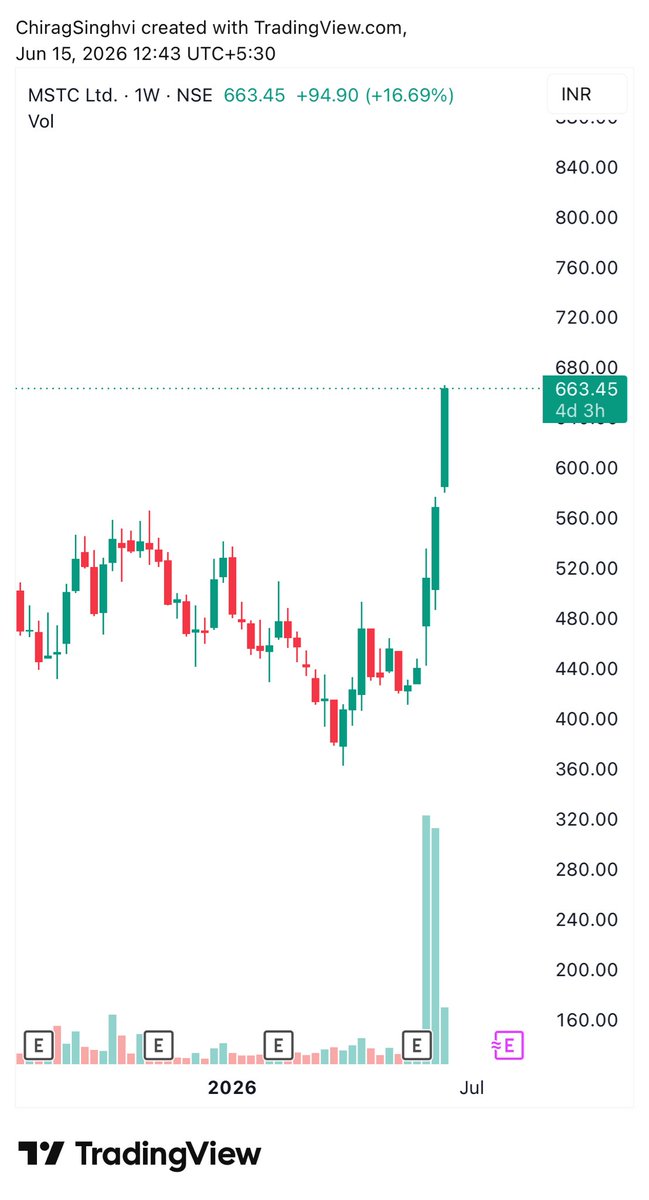
MSTC up 15%.
Conviction is often tested before it is rewarded. Markets have a way of challenging your thesis to the core, and this was a valuable lesson in staying patient and holding firm when the fundamentals remain intact.
#MSTC
1
2
17
547
OffbeatEquity retweeted
Jun 11
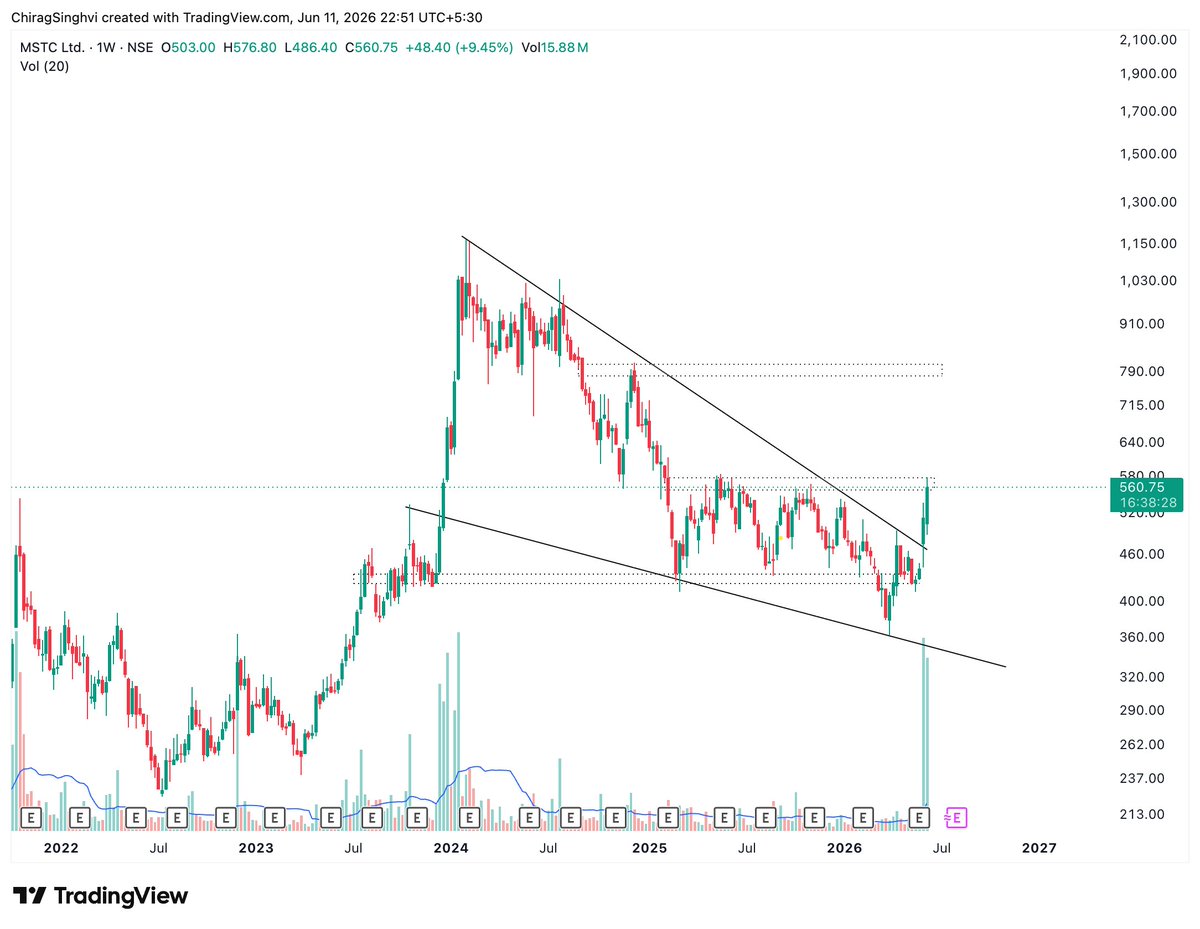
Breaks & Sustains above 570... Path for 800 should be clear..
#MSTC
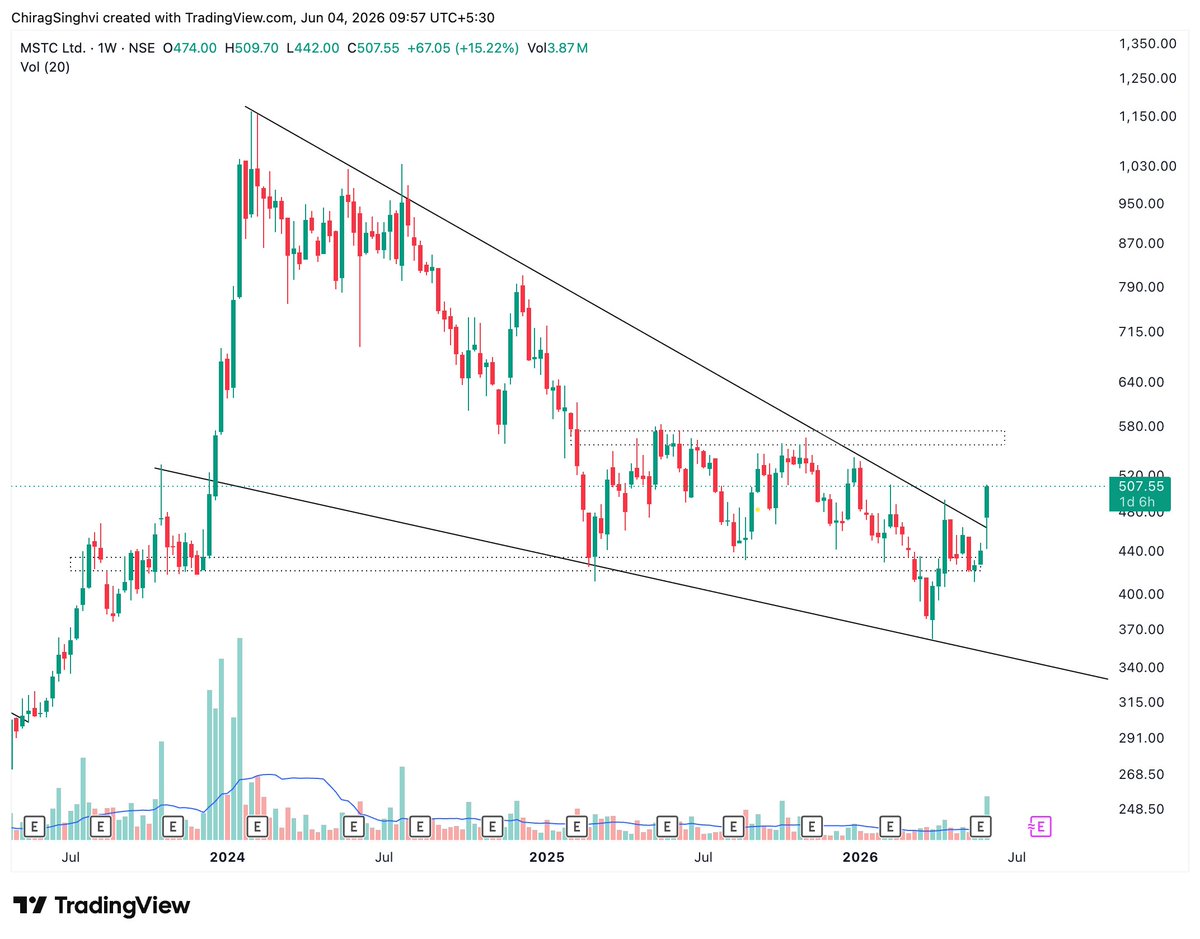
#MSTC
Finally trying to come out of hibernation. Next resistance range 540-560. Above that ghar waapsi on Upside.
This is not retail volume. It is intuitional volume. Hope to see good names in next 3-6 months.
1
1
8
812
OffbeatEquity retweeted
Jun 11
Waste Recycling - A Sector with Endless Growth Potential
In the world of waste recycling, the momentum never stops. This sector continues to showcase green shoots consistently, backed by promising numbers.
In fact, the entire #recycling ecosystem deserves attention water, copper, metals, and vehicle scrapping. As resource scarcity and sustainability become global priorities, recycling is shaping up to be a powerful long-term mega trend.
♻️📈 #WasteRecycling #Sustainability

1
2
9
448
OffbeatEquity retweeted
This article, "𝑻𝒉𝒆 𝑩𝒖𝒕𝒕𝒆𝒓𝒇𝒍𝒚 𝑰𝒔 𝑹𝒆𝒂𝒅𝒚 𝒕𝒐 𝑭𝒍𝒚", provides a deeper perspective on #MSTC and echoes a view that has been discussed by investors for years, including Sanjay Bakshi.
substack.com/home/post/p-200…
I'm not trying to sound overly bullish, but the article does an excellent job of explaining why some investors see MSTC as a compelling long term opportunity despite the typical challenges of a PSU.
For LT investors, the thesis remains intact, and those looking to gradually build their position may find current levels attractive. Kudos to Gaurav for presenting the story and potential of the business in such a clear and insightful manner.
4
7
44
6,717
OffbeatEquity retweeted
#MSTC
Finally trying to come out of hibernation. Next resistance range 540-560. Above that ghar waapsi on Upside.
This is not retail volume. It is intuitional volume. Hope to see good names in next 3-6 months.
2
8
2,018
OffbeatEquity retweeted
May 25
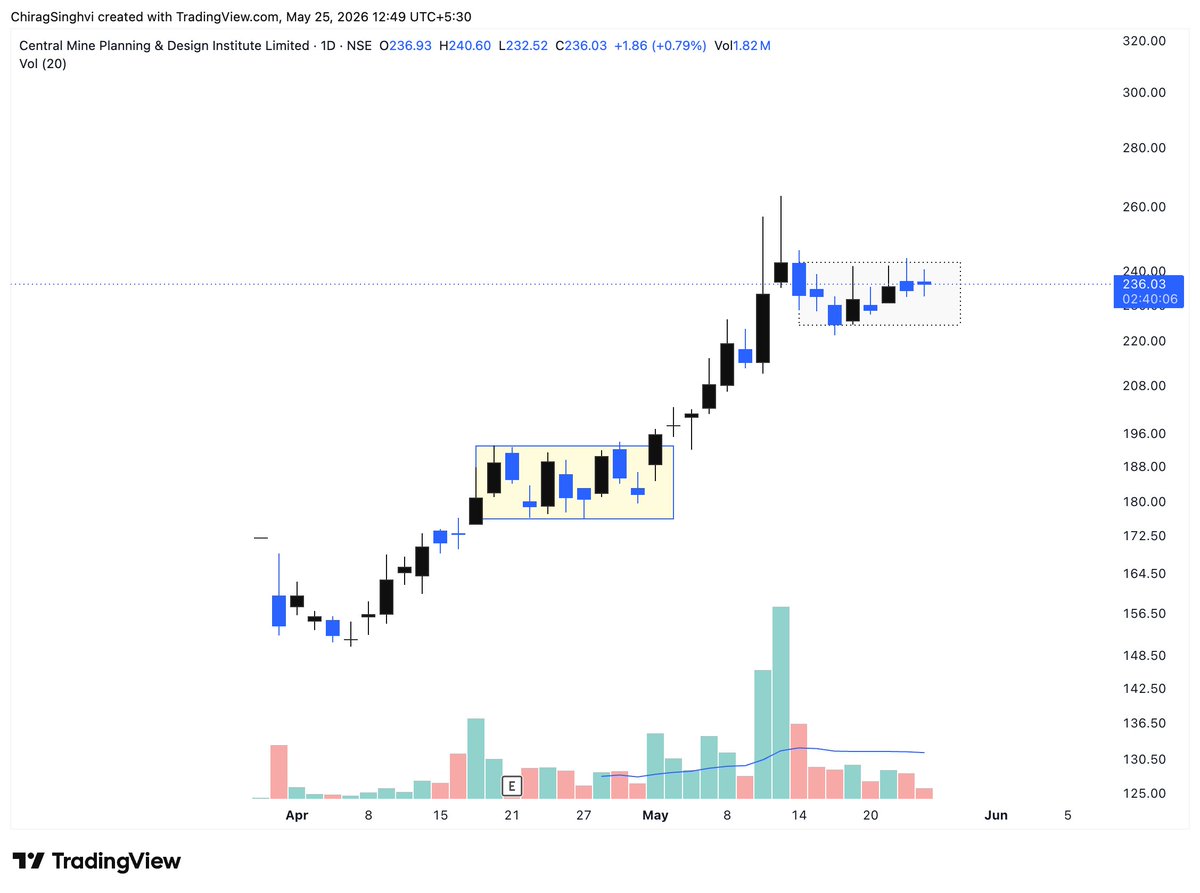
#CMPDI - Mines and Minerals Proxy Play
Government focus on mines and minerals is intensifying, backed by policy reforms, mine auctions, and a strategic push for critical minerals to strengthen long term growth.
1
2
14
1,931
OffbeatEquity retweeted

May 21
Sansera Engineering
1. Order book visibility gives management confidence of reaching ₹8,000 crore revenue in the next few years, with a long-term aspiration of ₹10,000 crore.
2. ADS FY27 revenue guidance remains intact at ₹550-600 crore. The new ADS facility is expected to be ready by July-August, while the current facility is already near full utilization. After FAIs and commercialization, the new plant should start contributing from H2FY27.
3. As utilization ramps up, ADS margins are expected to move towards the 25-30% range. The vertical is also continuously expanding capabilities vertically and horizontally
4. Increased product rates at Boeing and Airbus are further increasing Sansera’s wallet share.
5. Semiconductor segment remains a major growth driver with sharp volume ramp-up, rising content per unit, and great margins. The company is already working with one global leader and is in advanced talks with another, without exclusivity constraints. Machine lead times remain the only key bottleneck, though strong supplier relationships are helping.
6. In aerospace, the company has moved from basic cargo/light parts to complex landing gear, engine casing, and Boeing structural components. A key breakthrough is machining complex engine blisks for a leading engine manufacturer, a capability very few Indian players possess. Upon successful FAI, this could open doors for larger high-value opportunities.
7. The Nichidai JV is moving ahead steadily, with customer introductions completed and RFQs already under discussion. The facility is being set up, and machinery installation is expected by September. Management expects momentum to pick up significantly once operations begin in Q3 FY27.
8. Auto Space - Domestic auto OEMs are in the middle of a strong multi-year CapEx cycle, benefiting precision engineering players. At the same time, rising EV penetration, especially in the 2-wheeler segment, is opening up significant long-term growth opportunities.
FY27 pain areas
9. The operating environment continues to remain challenging, with inflationary pressures across key inputs such as steel, aluminum, energy, tooling, consumables, and freight.
10. Management also highlighted skilled and semi-skilled labor availability, along with rising attrition, as a key execution challenge going into the next year.
3
21
244
16,572
OffbeatEquity retweeted

May 20
Near-Term Noise, Long-Term Systems
antifragilethinking.substack…
Timken
PI Industries
Privi
Viyash

2
19
199
16,747
OffbeatEquity retweeted
May 14
1
3
18
1,358
OffbeatEquity retweeted
May 19
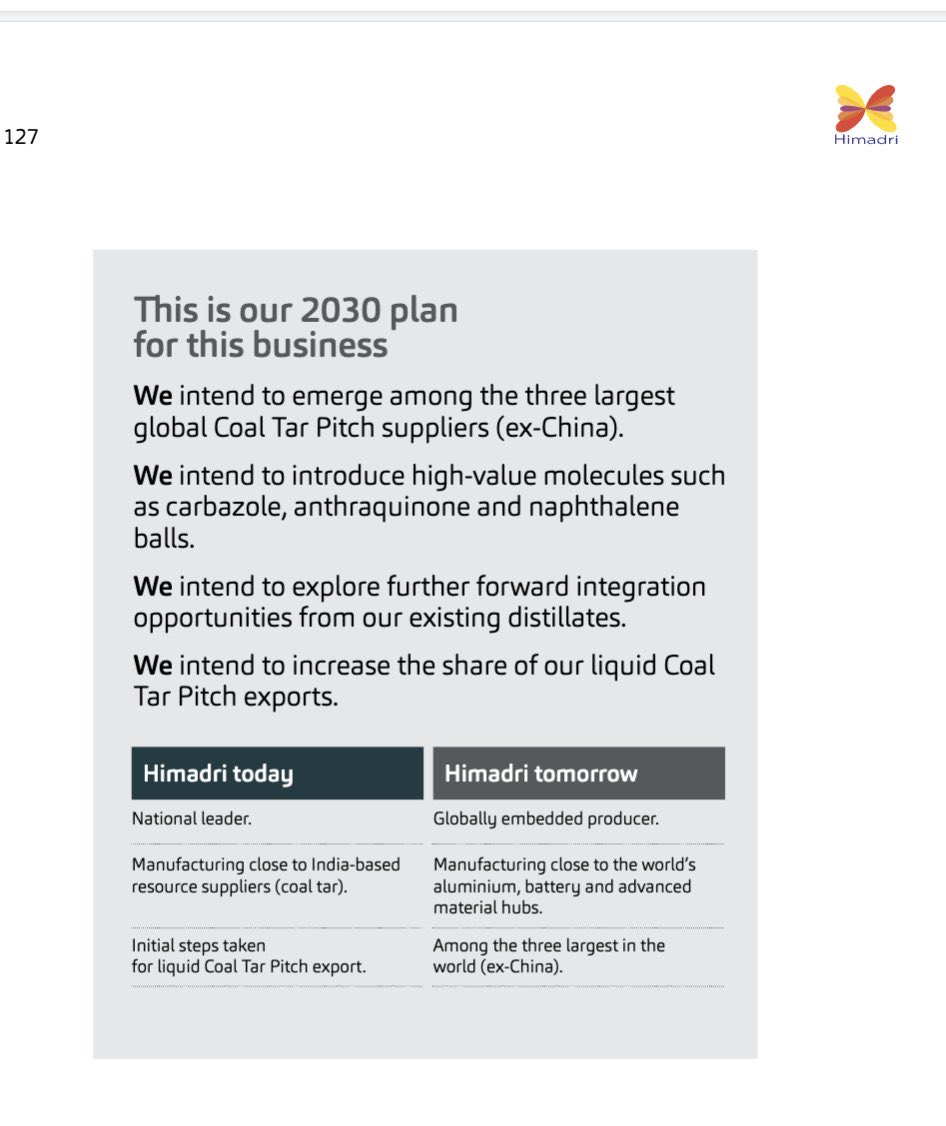
Himadri’s 2030 vision:
• Top 3 global Coal Tar Pitch player (ex-China)
• Expanding into high-value molecules
• Driving forward integration
• Scaling exports
From domestic leader → global powerhouse
#Himadri #HSCL #Chemicals
1
8
553
OffbeatEquity retweeted
May 19
#ApolloMicro
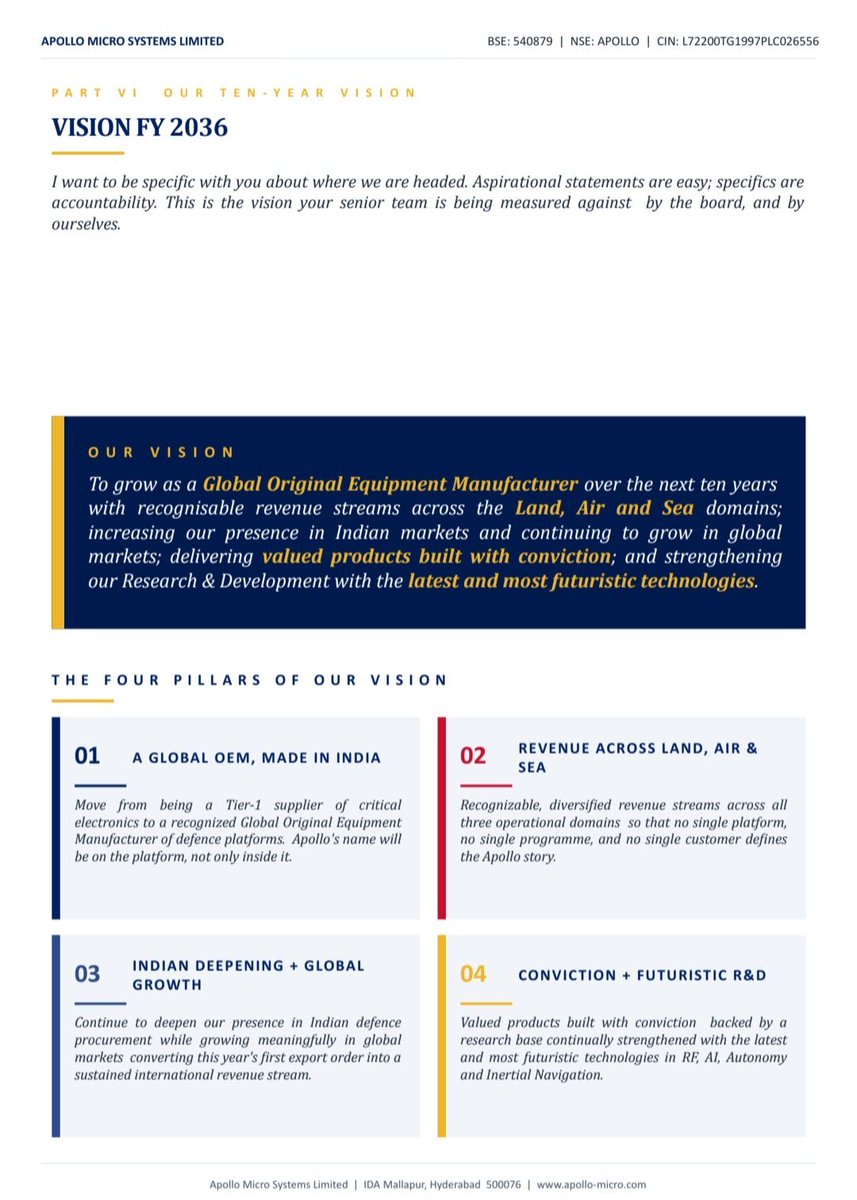
Apollo Micro | Vision FY36
• Global OEM ambition (Land, Air, Sea)
• Shift: Tier-1 → Full platform player
• Diversified revenues, low dependency
• India base global expansion
• Strong R&D in AI, RF, Autonomy
Goal: Tech-led global defence player
1
5
452
OffbeatEquity retweeted
May 19
1
4
142
OffbeatEquity retweeted
May 19
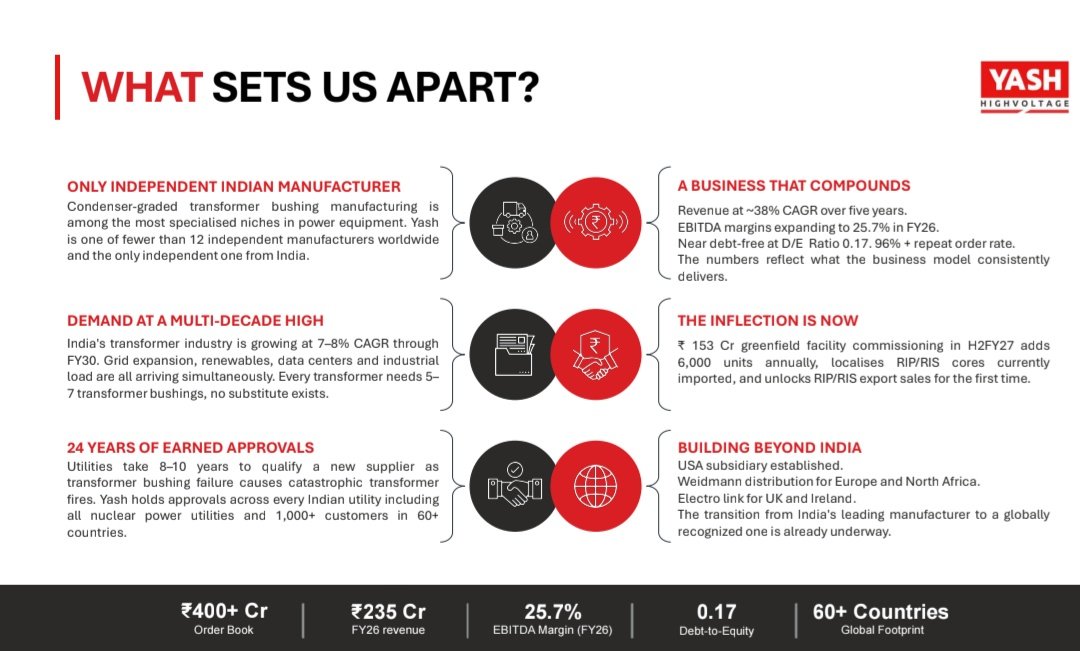
India has only one independent listed player in transformer bushings and it’s quietly becoming a global niche manufacturing story.
High entry barriers, 24 years of approvals, exports to 60 countries, and now entering a fresh capex export inflection phase.
#yashhighvoltage
#power
#InfrastructureWeek
2
6
318
OffbeatEquity retweeted

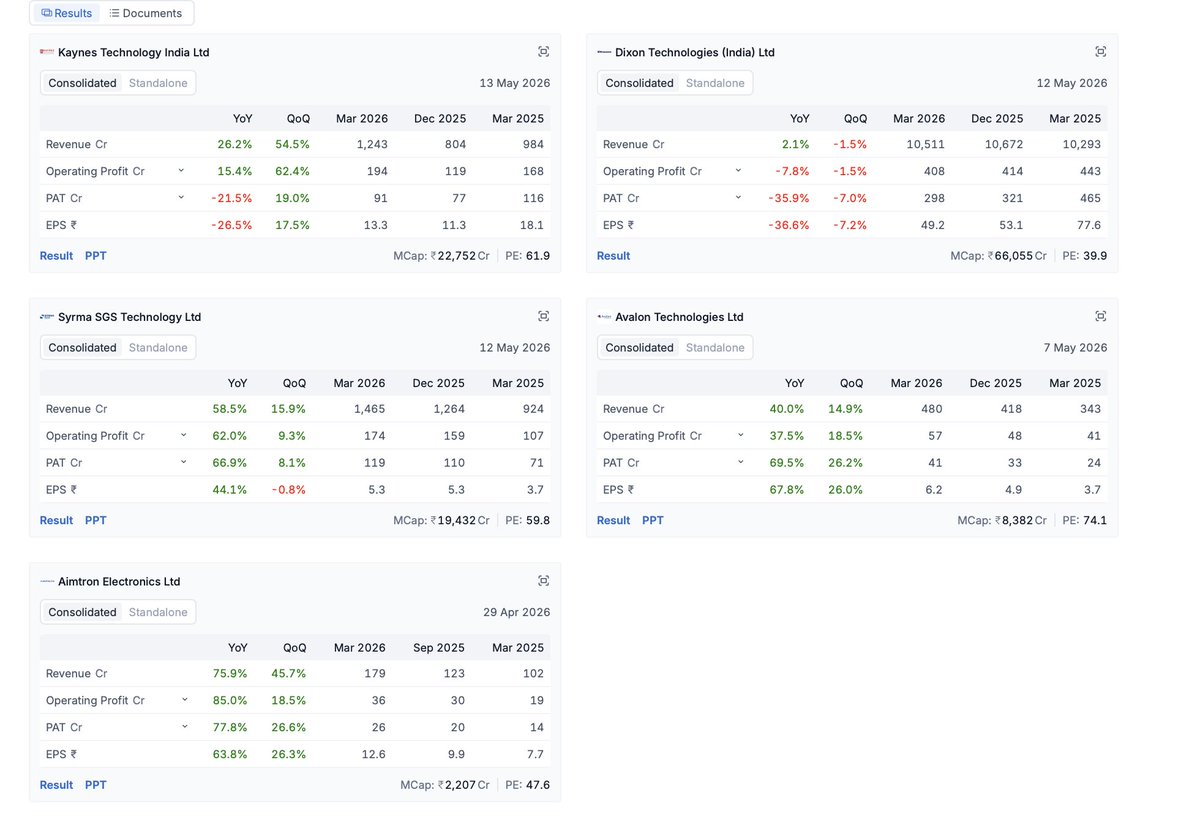
Q4Fy26 till now has largely been broadly very strong for the EMS companies
Every company is telling a version of the same story: the structural opportunity is real, order books are at record levels, and profitability is finally catching up but there also our some bottlenecks in the supply chain where memory chip inflation, middle east supply chain disruptions, tariff uncertainty, and cautious brand procurement behaviour are creating a two-speed reality: massive long-term visibility coexisting with quarterly volatility.
Source - @stockscansin (stockscans.in/result-scans)
4
26
247
24,664
