
Ohio Humanities shares stories to spark conversations & inspire ideas. We support storytellers statewide, from museums to journalists to documentary filmmakers.
- Tweets 3,681
- Following 3,532
- Followers 2,590
- Likes 1,166
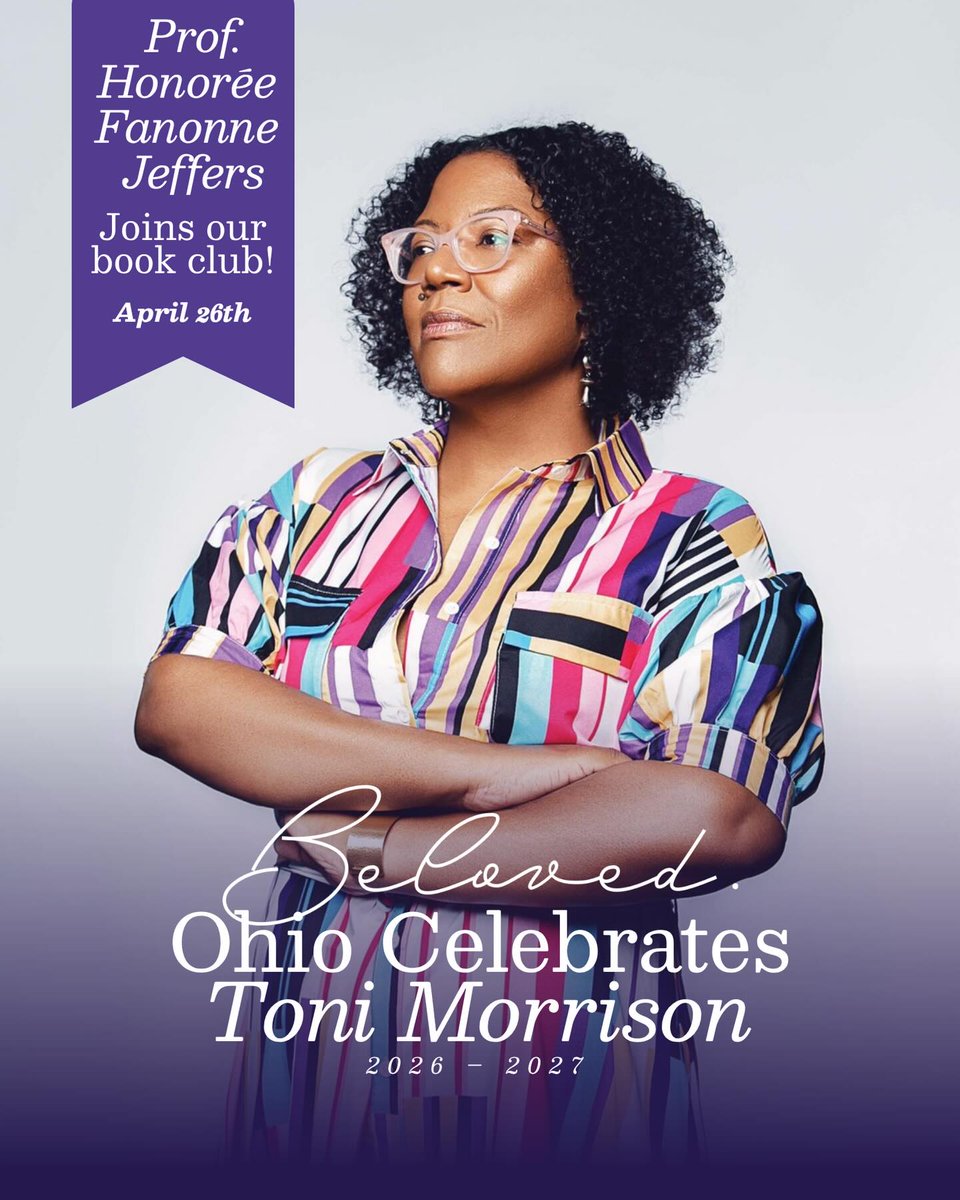
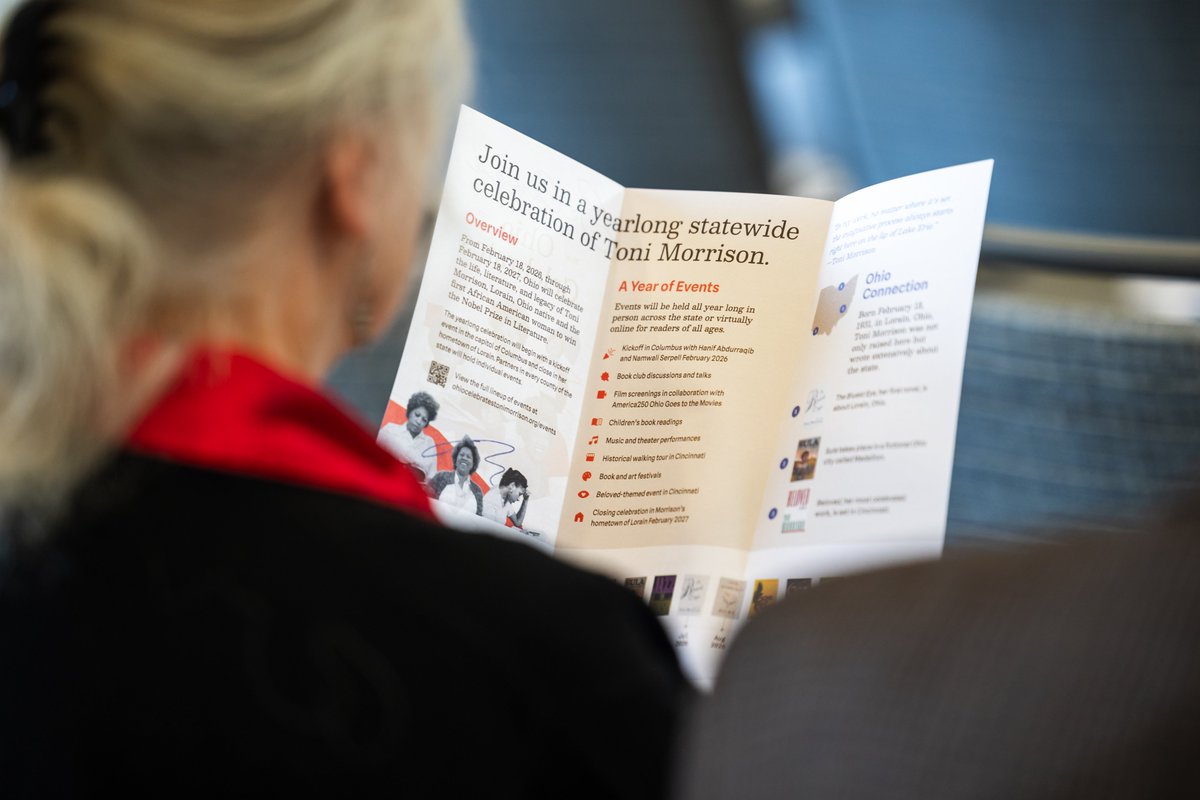
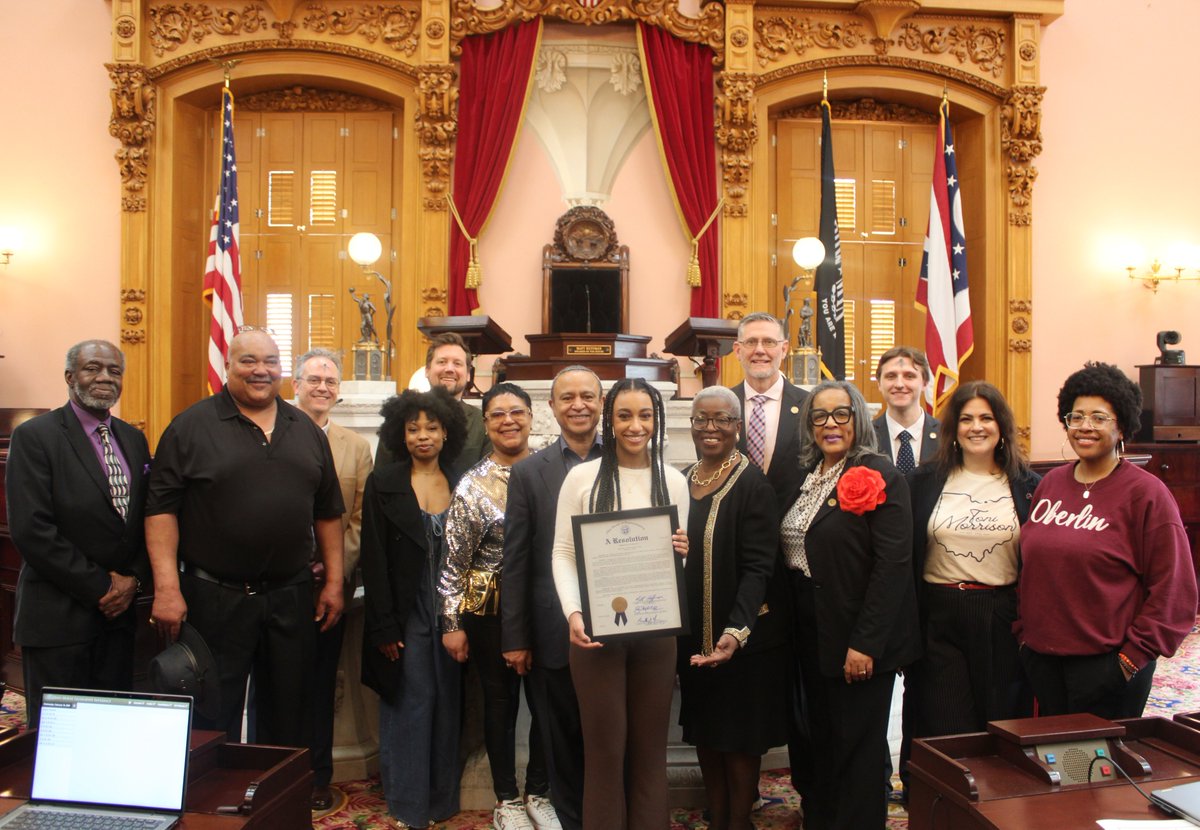
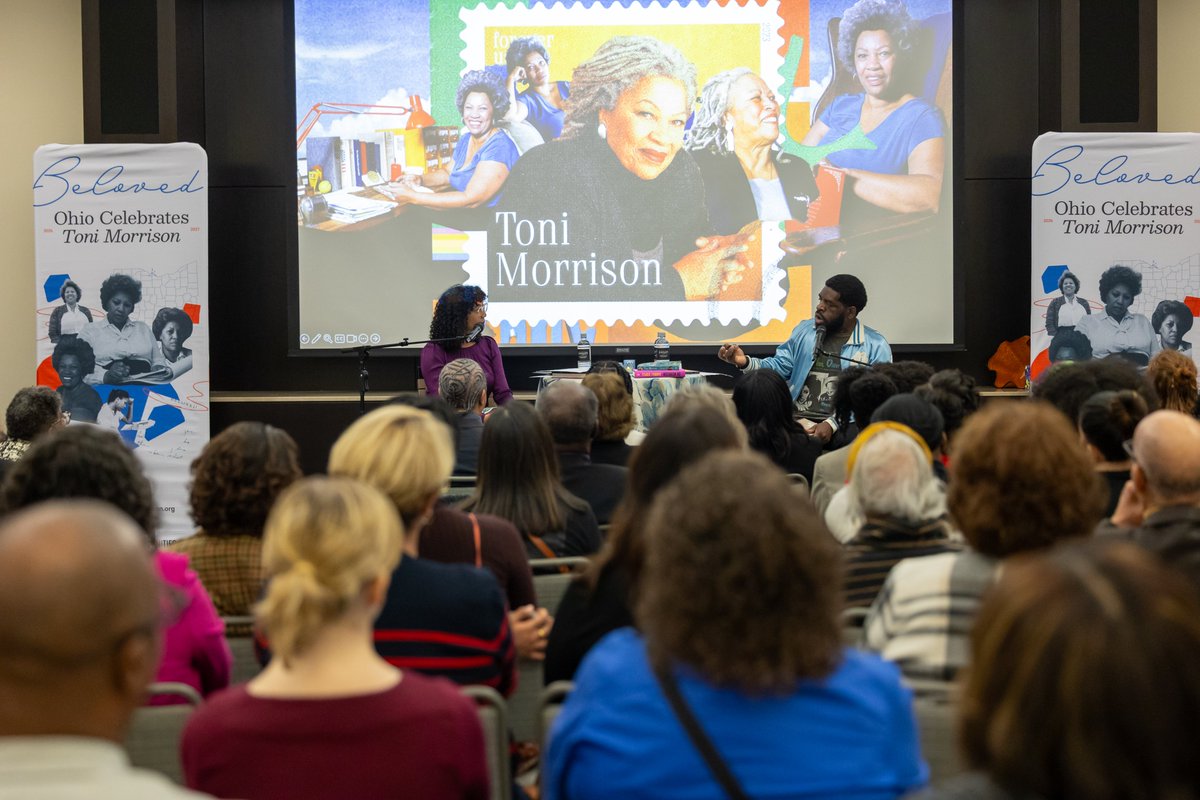

ALT Promotional image for Ohio Celebrates Toni Morrison Book Club on April 26, featuring Honorée Fanonne Jeffers.


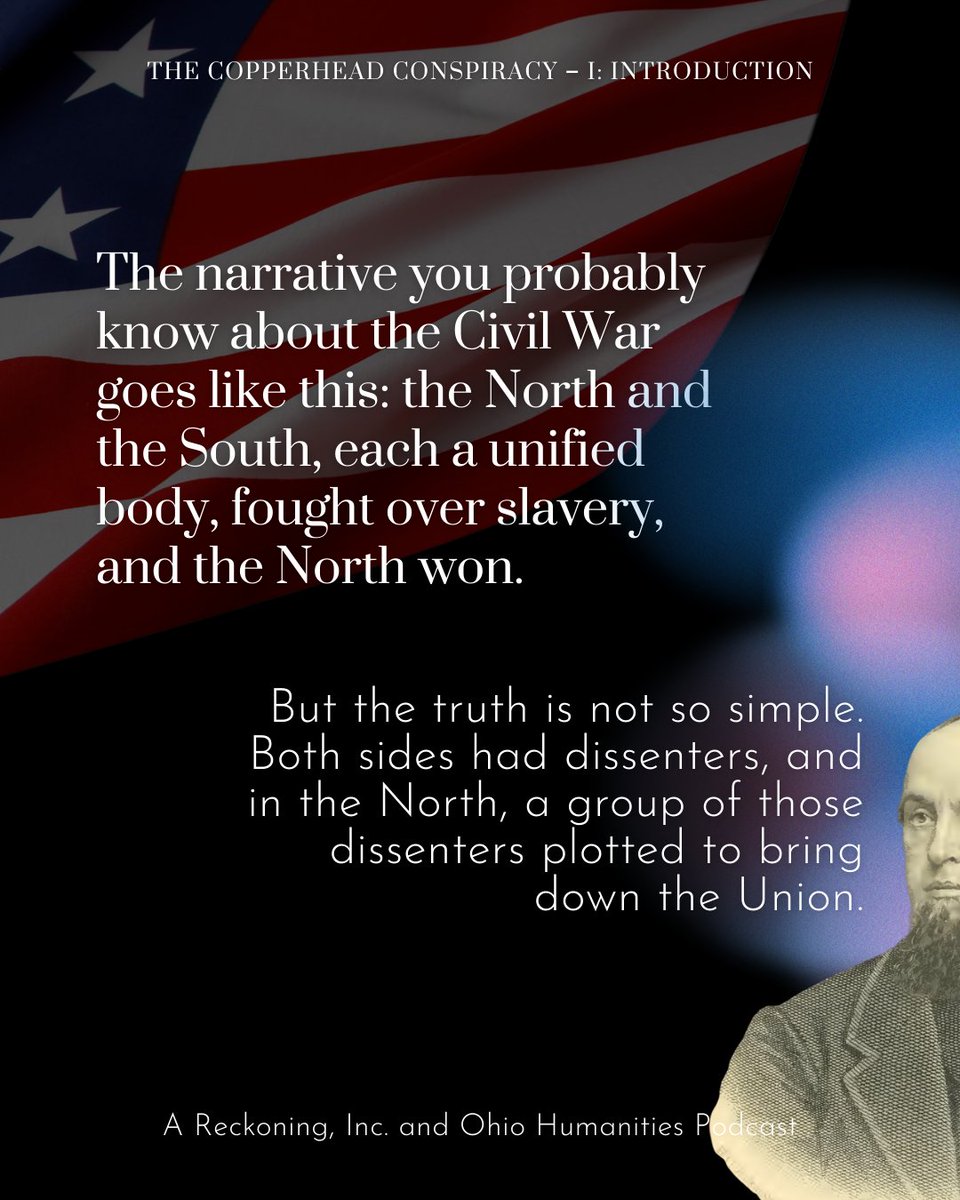
ALT During the Civil War, anti-war Northern Democrats, called Copperheads, actively worked to take down the Union from within. It’s a shocking story. But why is this episode of history so little remembered today?
ALT The story of the Copperheads doesn’t fit into the narratives we know about the Civil War, some of which have been around since just after the war. Lincoln’s assassination transformed him from an embattled figure into a martyr overnight, erasing the dissent he faced.
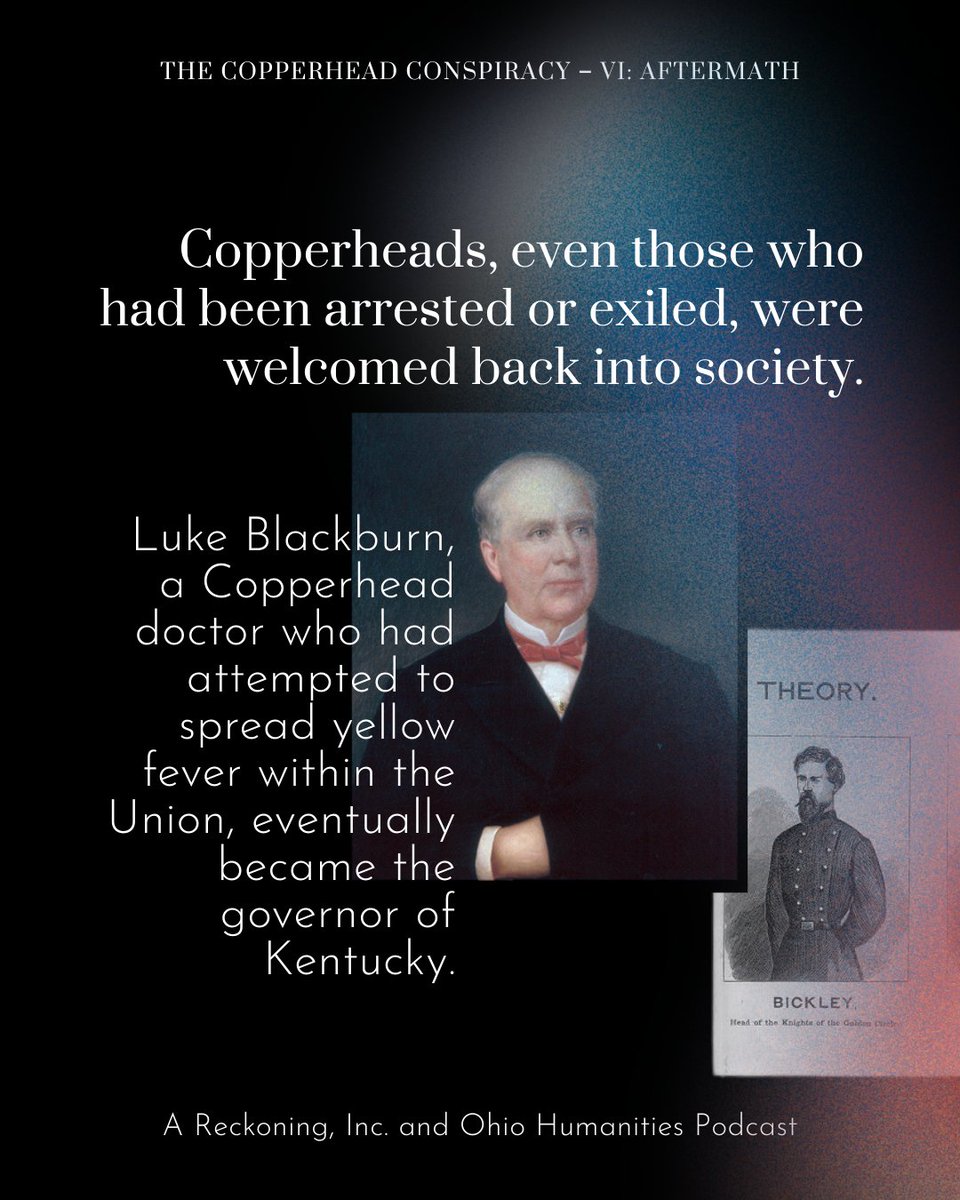
ALT Copperheads, even those who had been arrested or exiled, were welcomed back into society. Luke Blackburn, a Copperhead doctor who had attempted to spread yellow fever within the Union, eventually became the governor of Kentucky.
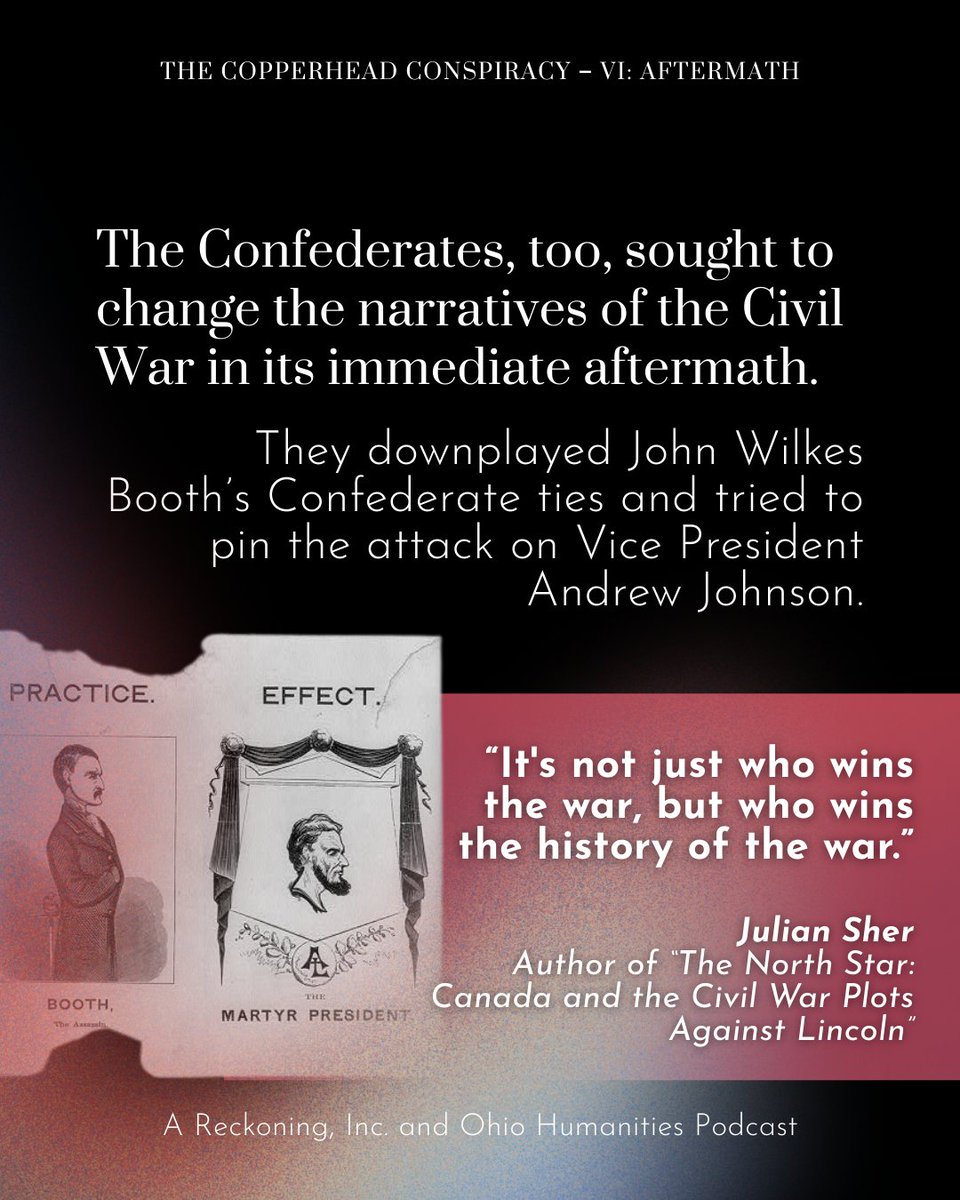
ALT The Confederates, too, sought to change the narratives of the Civil War in its immediate aftermath. They downplayed John Wilkes Booth’s Confederate ties and tried to pin the attack on Vice President Andrew Johnson. “It’s not just who wins the war, but who wins the history of the war,” says Julian Sher, author of “The North Star: Canada and the Civil War Plots Against Lincoln.”
ALT As the Civil War dragged on, the Confederates and their allies in the Union began to deviate more and more from the traditional rules of warfare. Aiming to divert Union soldiers from the battlefront, they launched a series of brazen attacks from Canada.
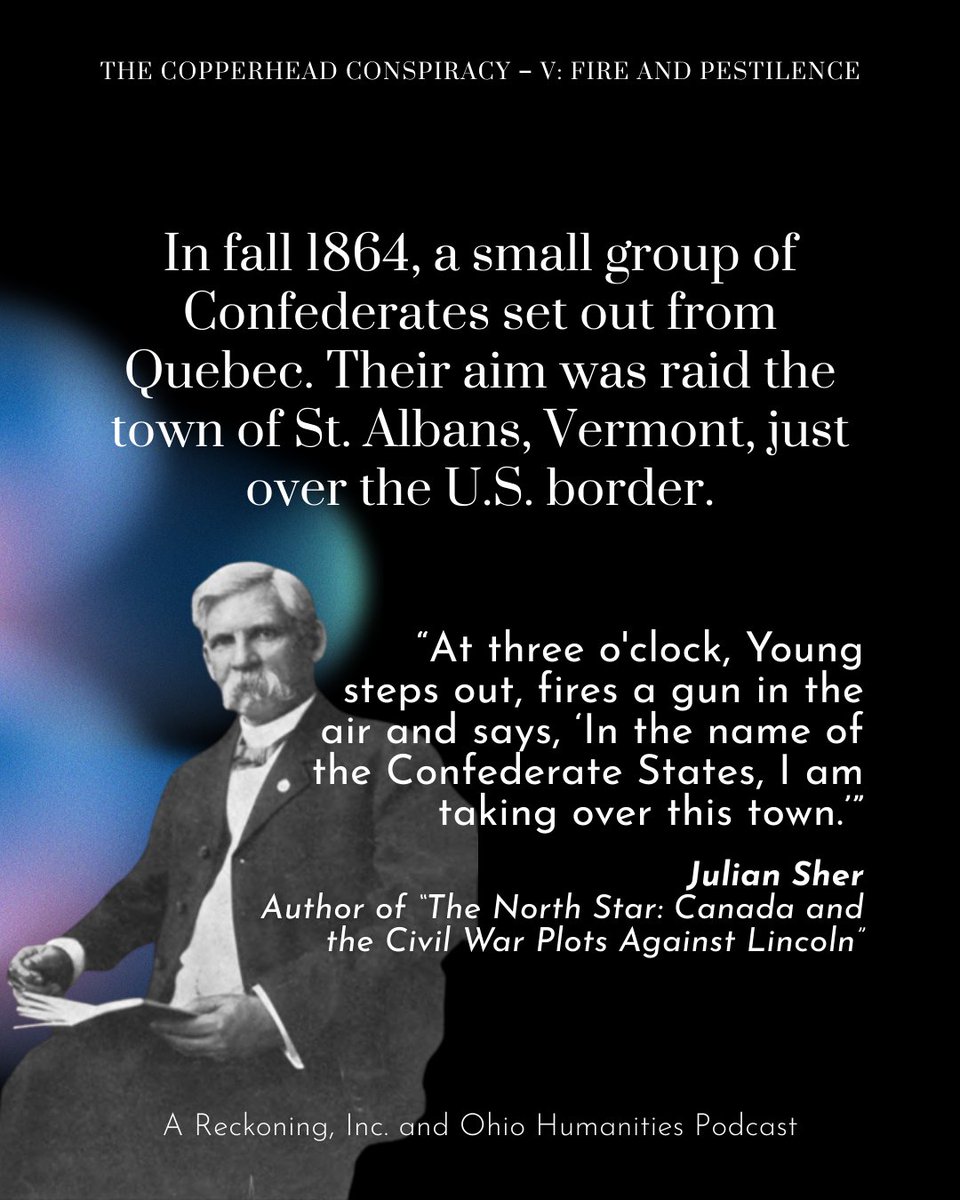
ALT In fall 1864, a small group of Confederates set out from Quebec. Their aim was to raid the town of St. Albans, Vermont, just over the U.S. border. At three o’clock, Young steps out, fires a gun in the air, and says, ‘In the name of the Confederate States, I am taking over this town,’” says Julian Sher, author of “The North Star: Canada and the Civil War Plots Against Lincoln.”
ALT Just a month after the St. Albans raid, the Confederates attempted an even more audacious scheme. A group of Confederates checked into 19 hotels in New York City and lit their rooms on fire. They hoped the fire would spread throughout the entire city, but in the end, the damage was relatively contained.
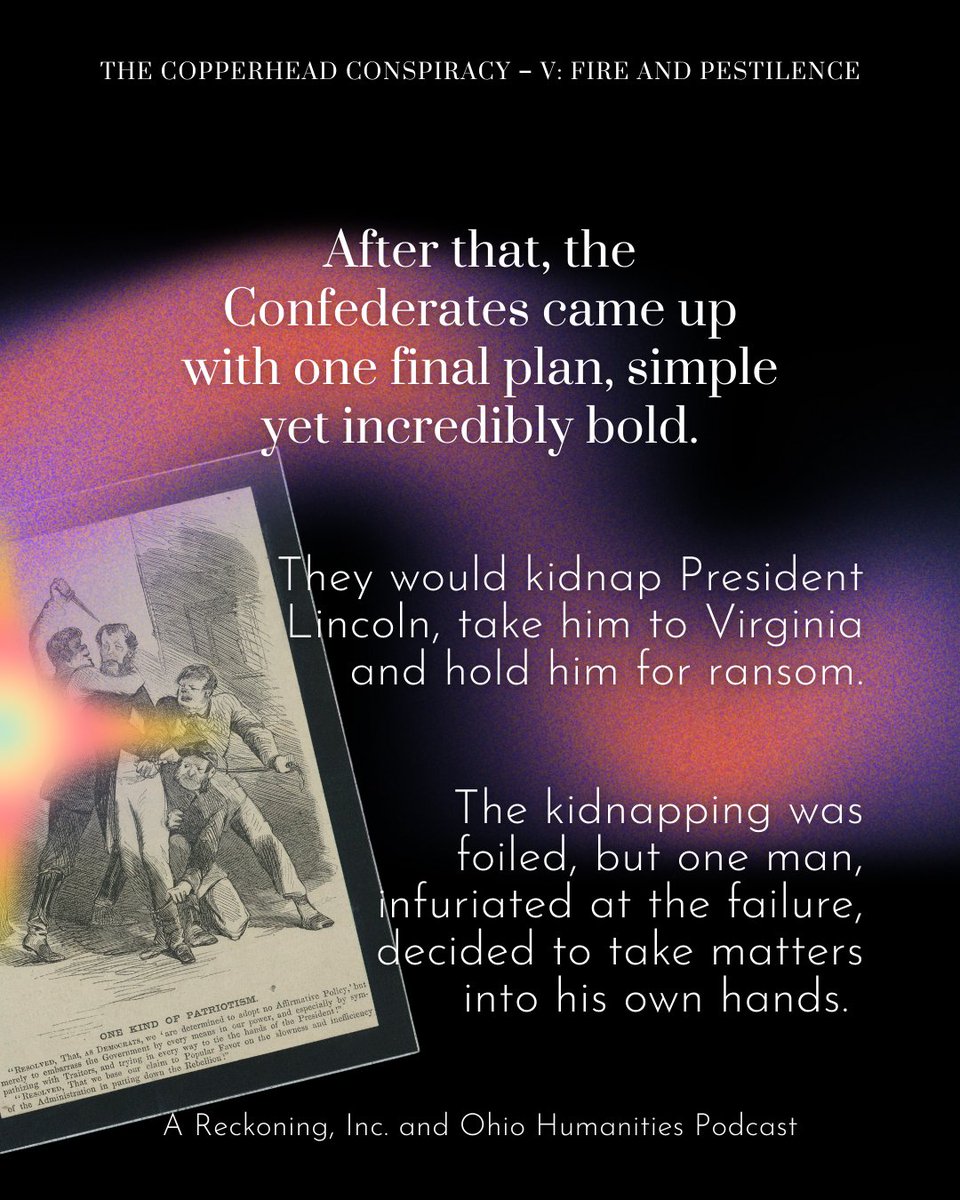
ALT After that, the Confederates came up with one final plan, simple, yet incredibly bold. They would kidnap President Lincoln, take him to Virginia, and hold him for ransom. The kidnapping was foiled, but one man, infuriated at the failure, decided to take matters into his own hands.
ALT During the Civil War, Great Britain declared themselves neutral, despite having abolished slavery in 1833. As part of the Commonwealth, Canada, too, was officially neutral. But that did not stop Canadians from taking sides.
ALT Though Canada was a crucial end point on the Underground Railroad, Canadian elites largely supported the Confederacy. They sympathized with Southern aristocrats and knew there was money to be made in circumventing the Union blockade.
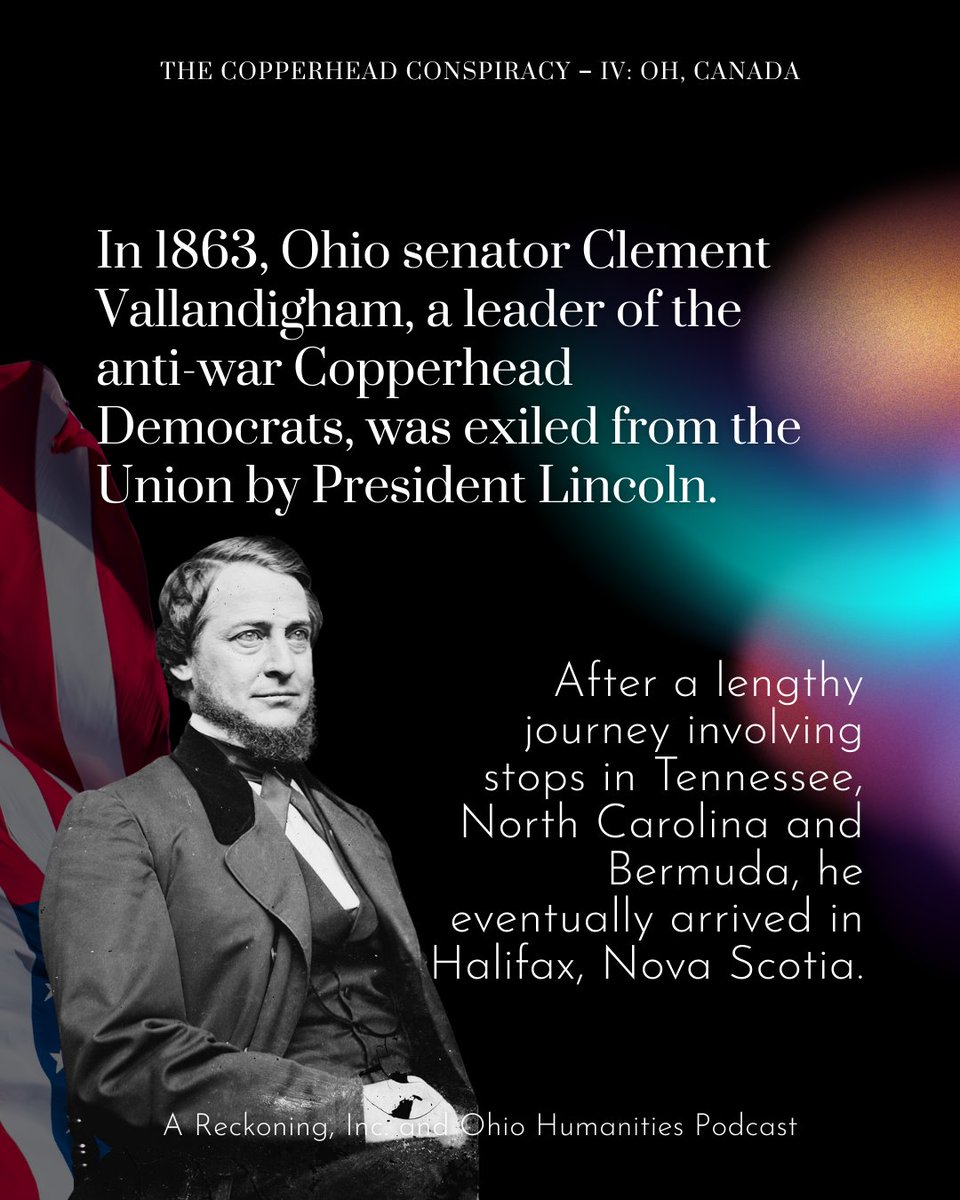
ALT In 1863, Ohio Senator Clement Vallandigham, a leader of the anti-war Copperhead Democrats, was exiled from the Union by President Lincoln. After a lengthy journey involving stops in Tennessee, North Carolina, and Bermuda, he eventually arrived in Halifax, Nova Scotia.
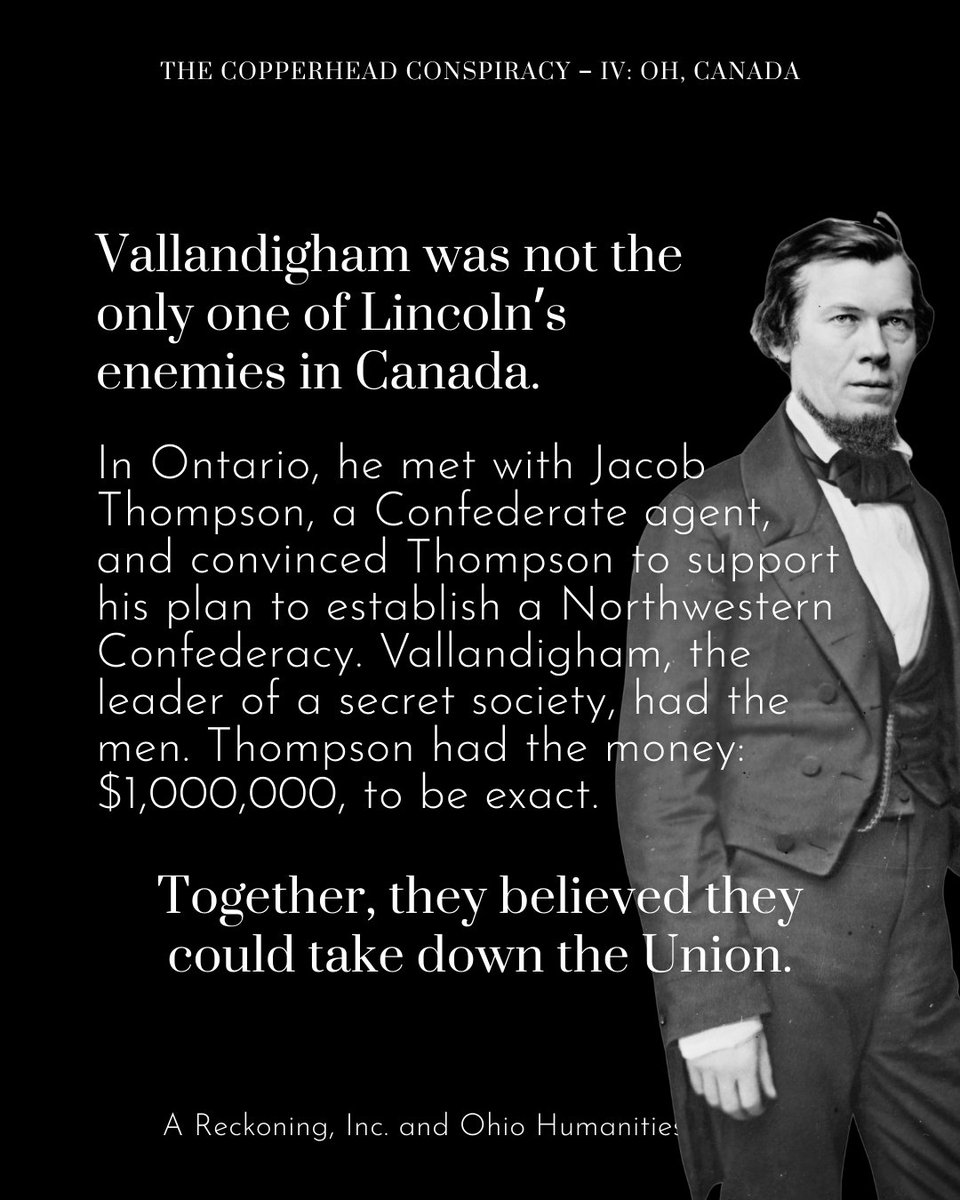
ALT Vallandigham was not the only one of Lincoln’s enemies in Canada. In Ontario, he met with Jacob Thompson, a Confederate agent, and convinced Thompson to support his plan to establish a Northwestern Confederacy. Vallandigham, the leader of a secret society, had the men. Thompson had the money: $1,000,000, to be exact. Together, they believed they could take down the Union.

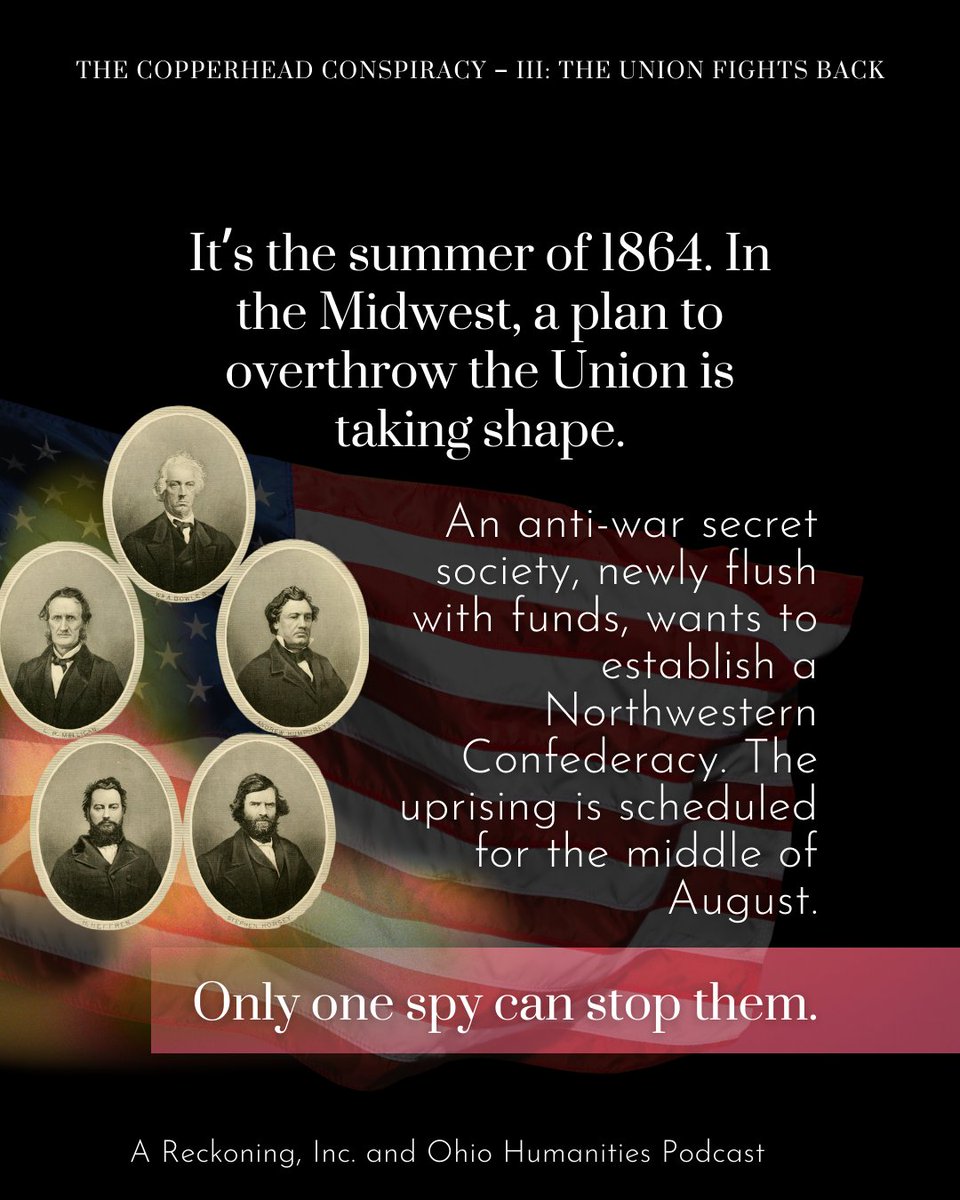
ALT It’s the summer of 1864. In the Midwest, a plan to overthrow the Union is taking shape. An anti-war secret society, newly flush with funds, wants to establish a Northwestern Confederacy. The uprising is scheduled for the middle of August. Only one spy can stop them.
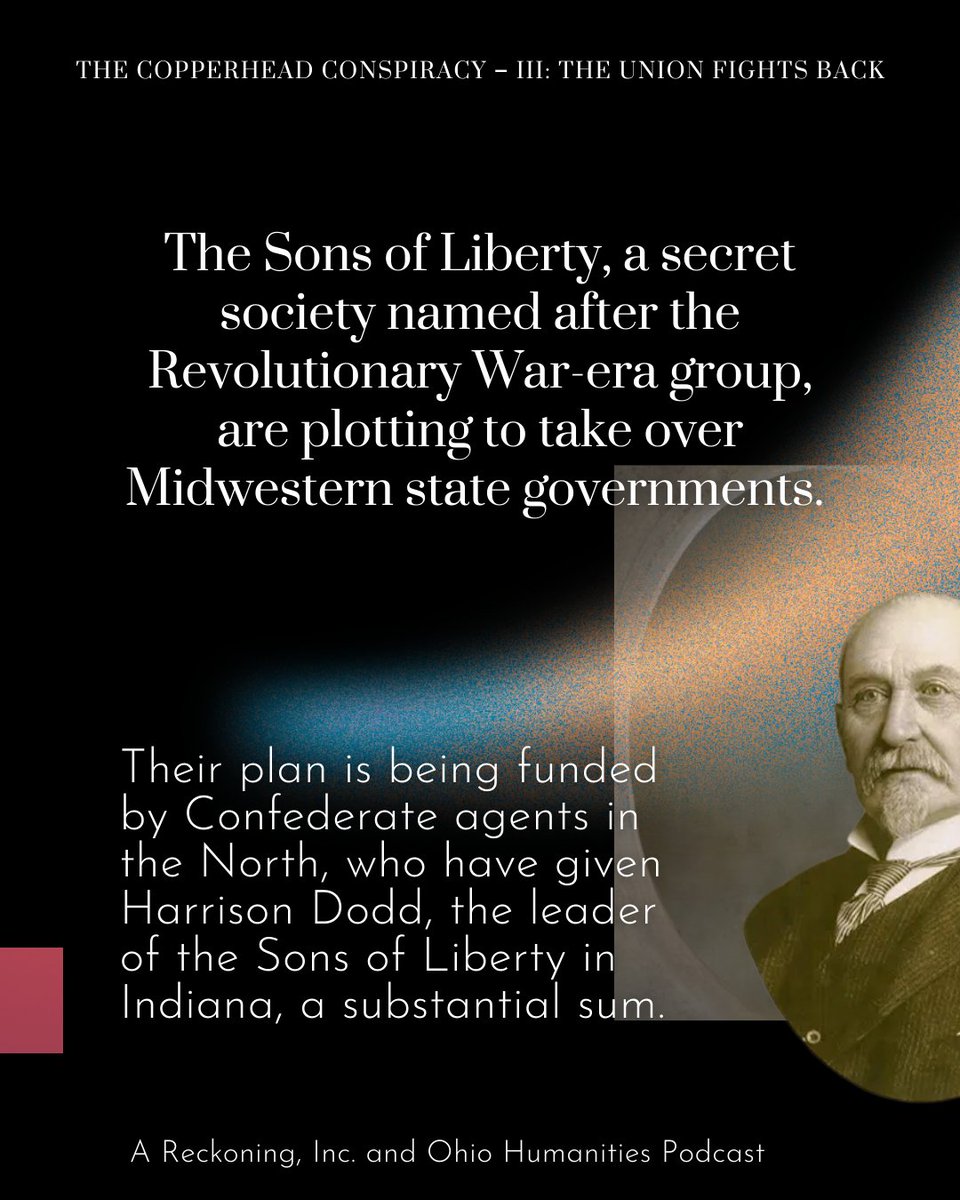
ALT The Sons of Liberty, a secret society named after the Revolutionary War-era group, are plotting to take over Midwestern state governments. Their plan is being funded by Confederate agents in the North who have given Harrison Dodd, the leader of the Sons of Liberty in Indiana, a substantial sum.
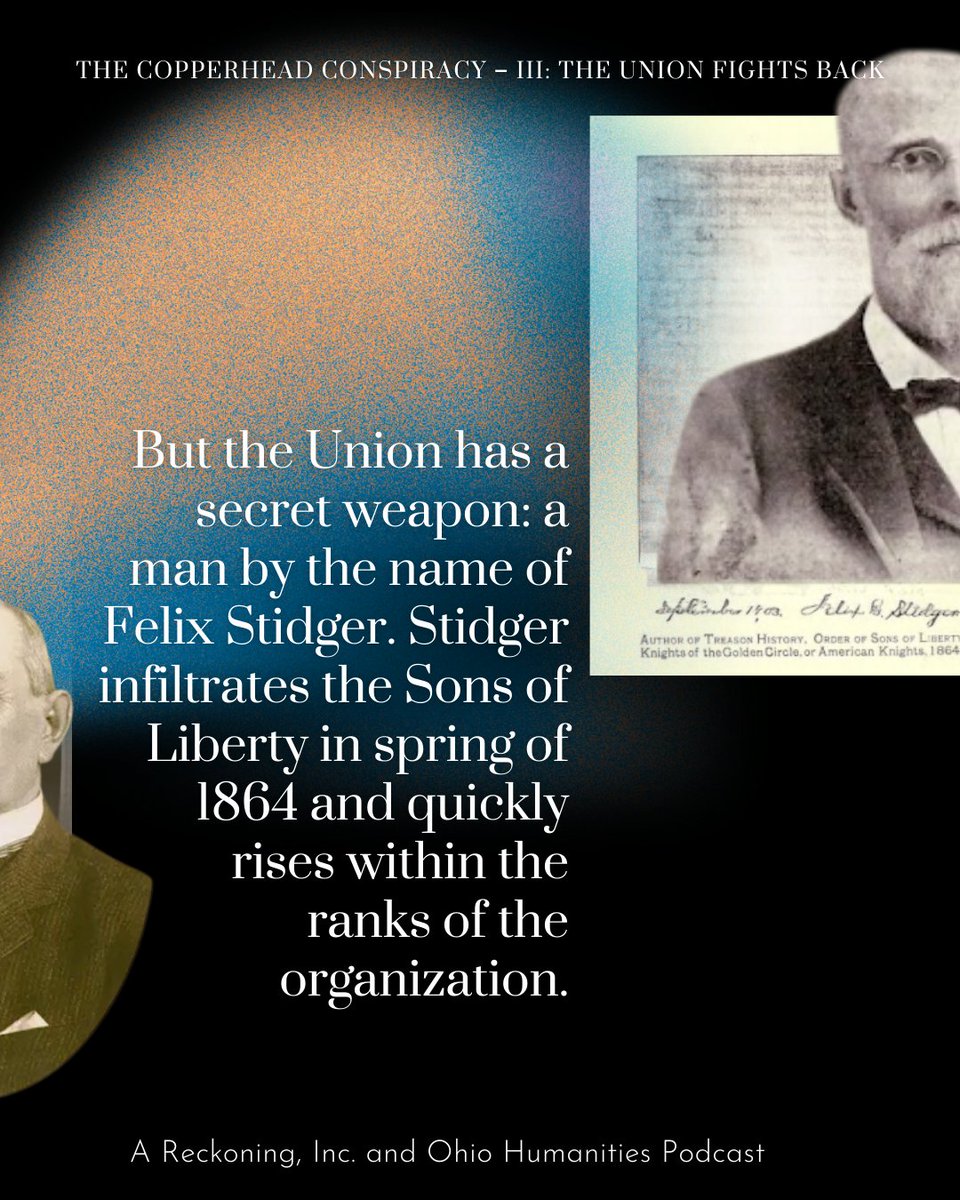
ALT But the Union has a secret weapon: a man by the name of Felix Stidger. Stidger infiltrates the Sons of Liberty in the spring of 1864 and quickly rises within the ranks of the organization.
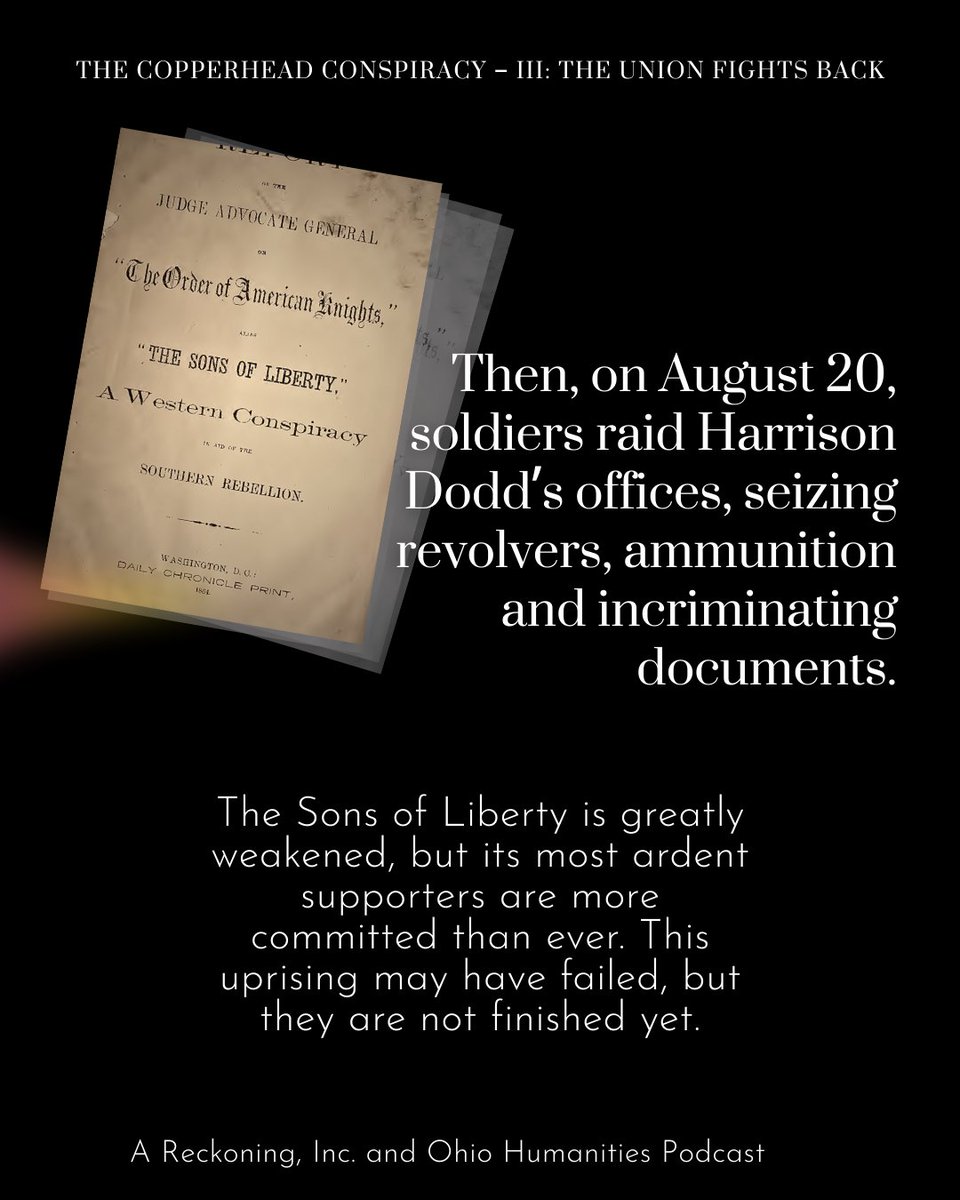
ALT Then, on August 20, soldiers raid Harrison Dodd’s offices, seizing revolvers, ammunition, and incriminating documents. The Sons of Liberty is greatly weakened, but its most ardent supporters are more committed than ever. The uprising may have failed, but they are not finished yet.
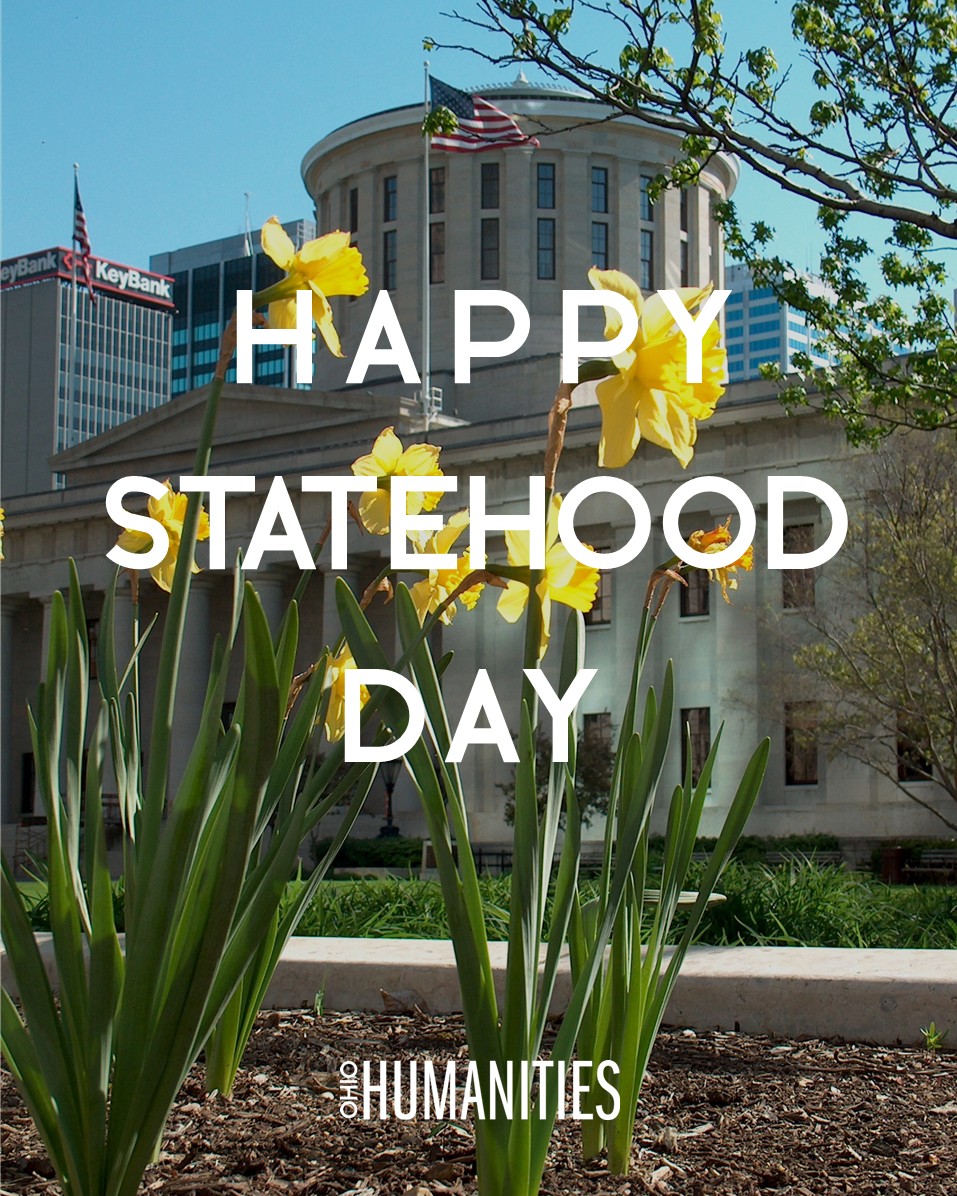
ALT The words “Happy Statehood Day” and the Ohio Humanities logo, both in white, overlaid on a photo of yellow daffodils blooming in Spring on the West side of Capitol Square in Columbus, Ohio. The Statehouse cupola appears in the background.
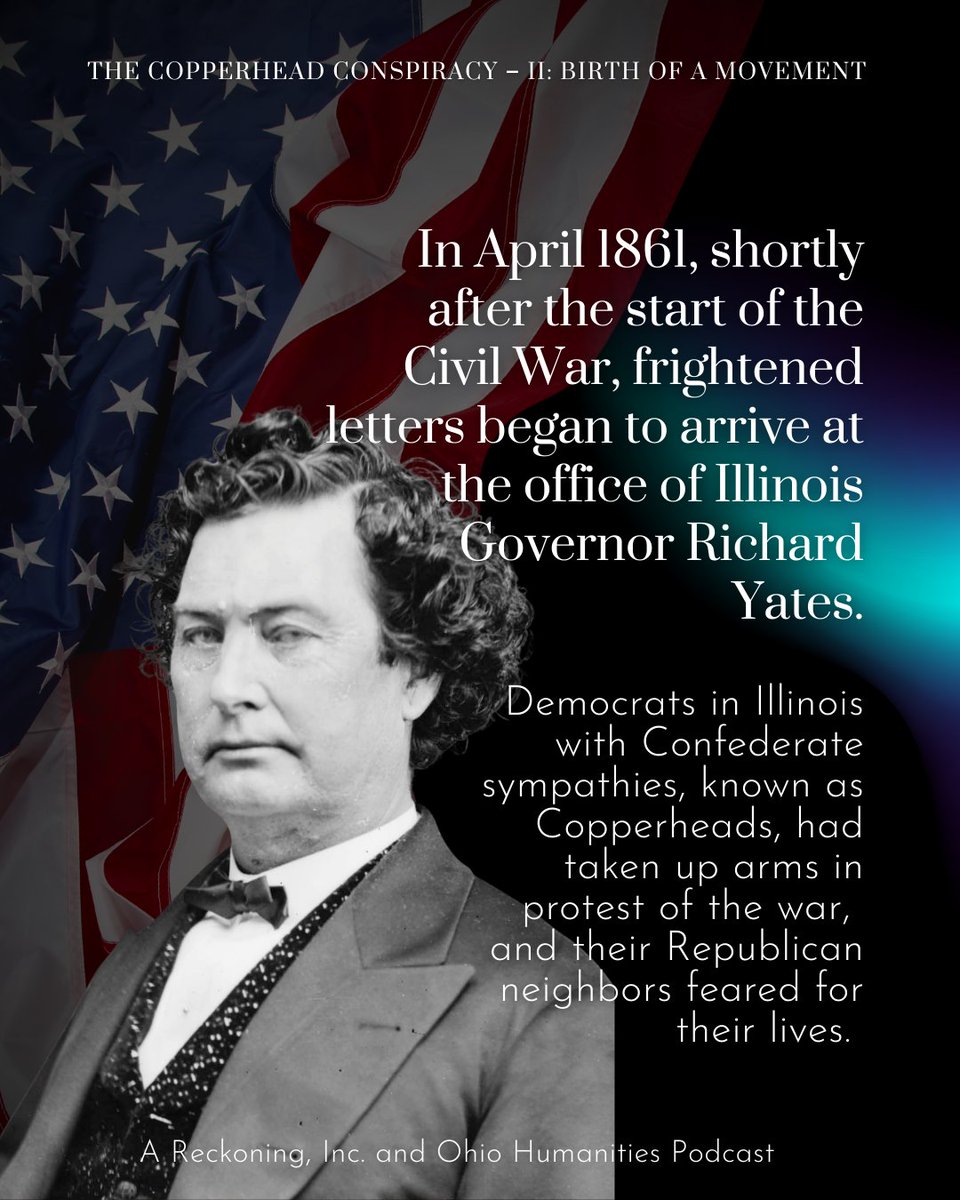
ALT In April 1861, shortly after the start of the Civil War, frightened letters began to arrive at the office of Illinois Governor Richard Yates. Democrats in Illinois with Confederate sympathies, known as Copperheads, had taken up arms in protest of the war, and their Republican neighbors feared for their lives.
ALT In the 1860s, the American parties looked very different than they do today. The brand-new Republican party, led by Abraham Lincoln, was committed to stopping the expansion of slavery. Democrats saw Lincoln as radical and viewed his election as president as the beginning of the end of slavery. From the moment he won, a backlash began.
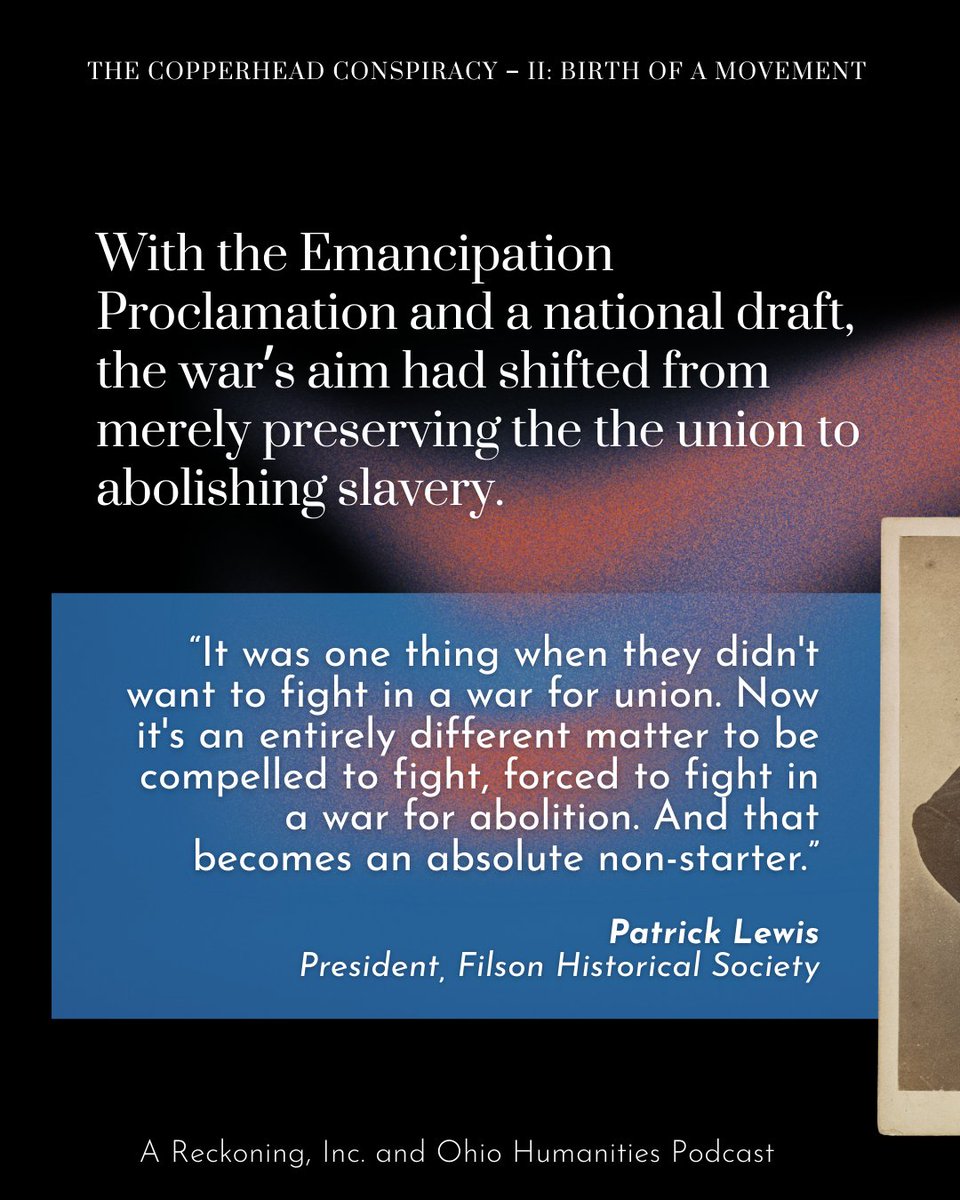
ALT With the Emancipation Proclamation and a national draft, the war’s aim had shifted from merely preserving the union to abolishing slavery. “It was one thing when they didn’t want to fight in a war for the union. Now it’s an entirely different matter to be compelled to fight, forced to fight in a war for abolition. And that becomes an absolute non-starter,” says Patrick Lewis, President of the Filson Historical Society.
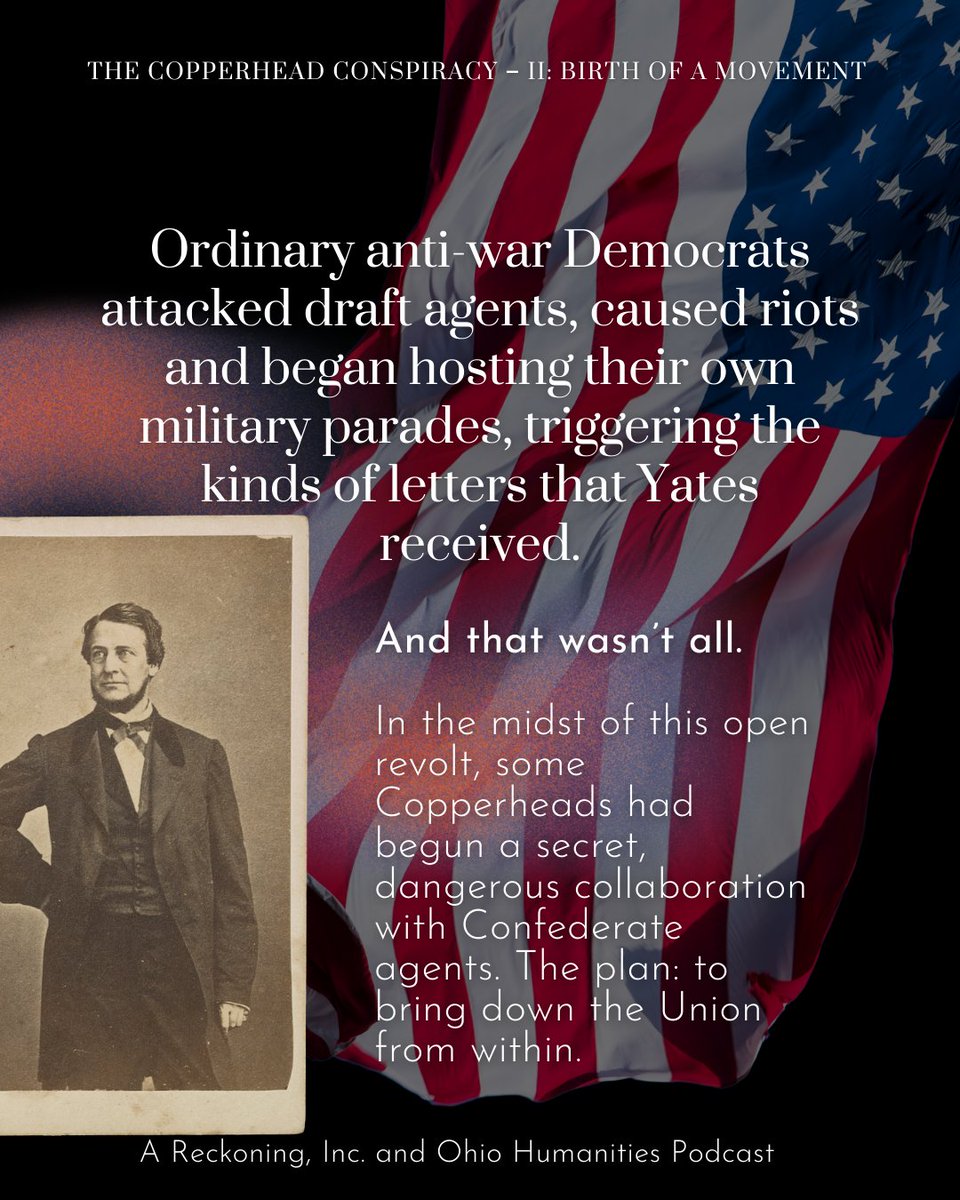
ALT Ordinary anti-war Democrats attacked draft agents, caused riots and began hosting their own military parades, triggering the kind of letters that Yates received. And that wasn’t all. In the midst of this open revolt, some Copperheads had begun a secret, dangerous collaboration with Confederate agents. The plan: to bring down the Union from within.