Whispers of politics, culture, and faith—where unity meets diversity.
Joined December 2012
- Tweets 3,251
- Following 1,341
- Followers 290
- Likes 11,082
196 Photos and videos
Sinan Bin Sabah retweeted

May 31
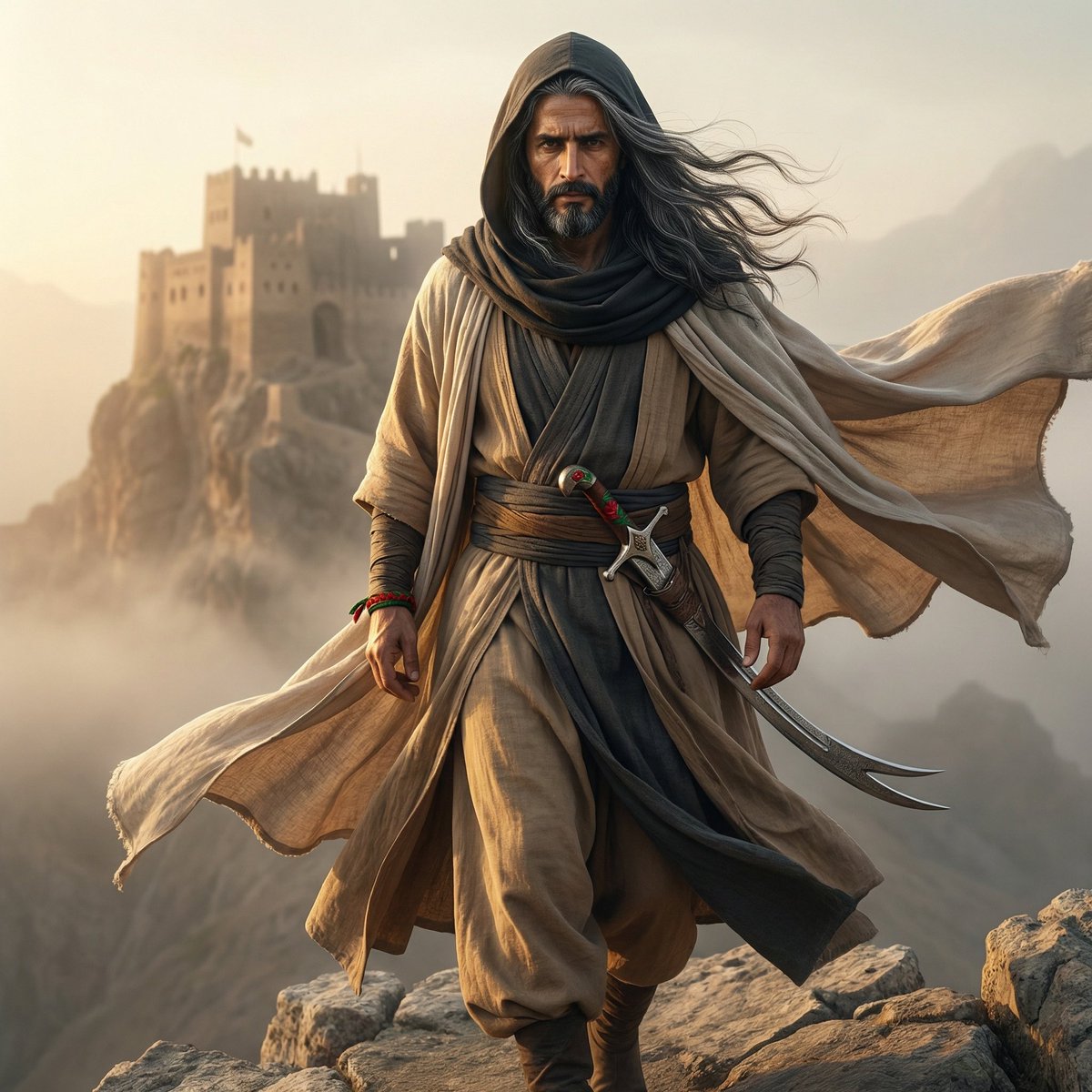
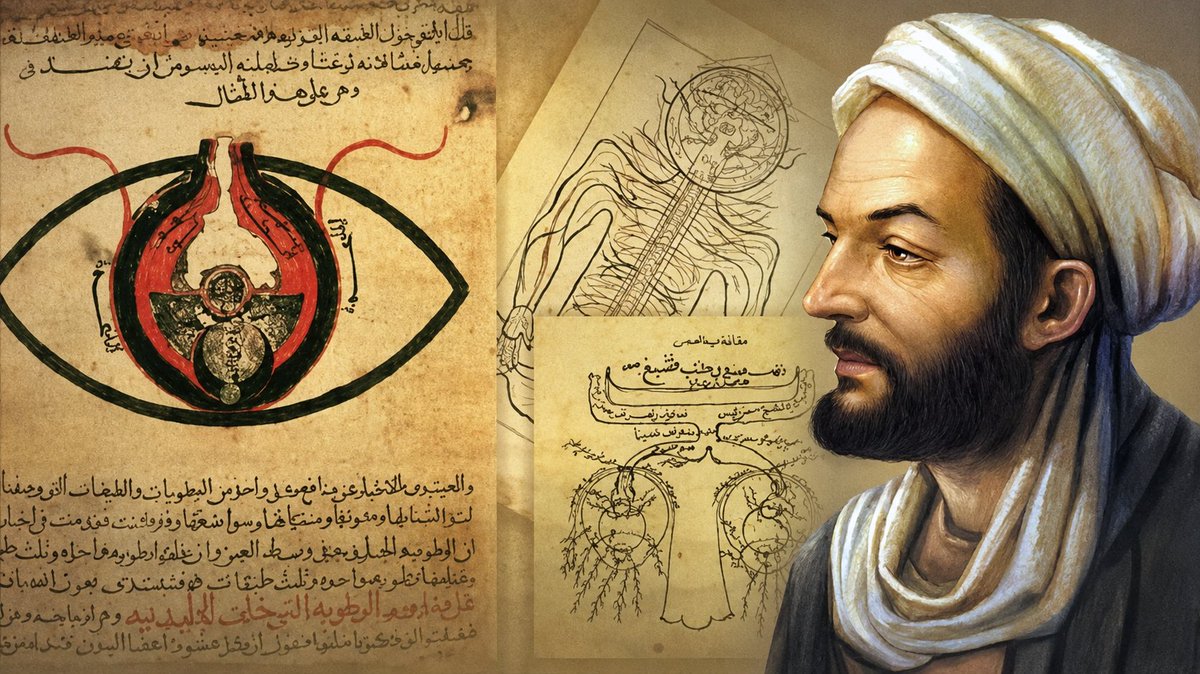
A Persian physician memorized the entire Quran by age 10 and was practicing medicine by age 16. By 18 he had cured a sultan that no other doctor could help. The textbook he wrote in his 30s became the operating manual for every European doctor for the next 600 years.
I started reading about him at midnight and could not believe one teenager had personally built so much of the foundation of modern medicine.
His name was Ibn Sina. The book is called The Canon of Medicine.
Every modern clinical trial. Every evidence-based drug protocol. Every pharmacology textbook. Every medical school curriculum that teaches doctors to observe before they prescribe.
All of it traces back to a Persian teenager who finished his medical education before most modern students finish high school.
Ibn Sina was born in 980 CE near Bukhara, in modern-day Uzbekistan. His father was an Islamic scholar who employed the best tutors money could buy. The tutors started failing to keep up with him almost immediately.
By age 10 he had memorized the entire Quran word for word. By 12 he was correcting his tutors on points of law. By 14 he had outpaced his teacher in mathematics and started learning on his own. By 16 he was treating patients in his neighborhood.
He later wrote, with no false modesty, that medicine was an easy subject and he had mastered it quickly.
He hit a wall around 17. He could not understand Aristotle's Metaphysics. He read the book forty times and still could not grasp it. Then he picked up a commentary on it by Al-Farabi in a Bukhara bookshop for a few coins, read it overnight, and suddenly the entire system of Greek philosophy snapped into place.
He went home and gave alms (money or goods) to the poor in gratitude that he had finally understood.
A year later the news of his medical skill reached the sultan of Bukhara, Nuh ibn Mansur, who was suffering from an illness no doctor in his court could cure. Ibn Sina was called in. He treated the sultan. The sultan recovered. The 18-year-old asked for one thing in payment.
Access to the royal library.
The library of the Samanid sultans in Bukhara was one of the greatest in the Islamic world at that time. Ibn Sina spent the next year inside it reading everything he could find.
He later wrote that by age 21 he had absorbed everything written by every major scholar before him, and that the rest of his career was just refining what he had already understood as a teenager.
He spent the next decade as a wandering physician and political advisor. Empires were collapsing across Persia and Central Asia. He moved from court to court, treating princes, drafting legal documents, escaping invasions, hiding from enemies who wanted to kill him for his association with rival rulers.
He wrote at night while moving between cities by day. He was imprisoned at least once. He kept writing.
In his 30s and 40s he produced The Canon of Medicine. A five volumes book at least a million words. A complete synthesis of every medical tradition he could find. Greek medicine from Galen and Hippocrates. Persian medicine from his own tradition. Indian medicine from Ayurvedic texts. His own clinical observations from thousands of patients.
The Canon was translated into Latin in the 12th century. It was reprinted more than 30 times in the 15th and 16th centuries alone. It was the standard reference text at the University of Paris, the University of Bologna, and Oxford well into the 17th century.
William Osler, one of the founding fathers of modern medicine, called it the most famous medical textbook ever written and said it served as a medical bible for a longer period than any other book in human history.
The part that most people miss is what was actually inside it.
He laid out clear rules for testing whether a drug works rules that still look like modern clinical trials. The drug must be pure, tested on a single condition, and checked against opposite conditions for consistent results. Effects must be seen repeatedly, with timing that matches the treatment. And it has to be tested on humans, since animal results don’t always carry over.
A thousand years before the modern clinical trial existed, he had written its protocol.
He defined medicine itself in a sentence that has never been improved on. Medicine is the science by which we learn the various states of the body in health and when not in health, the means by which health is likely to be lost, and when lost, is likely to be restored.
He insisted that prevention came before treatment. He argued that lifestyle, diet, exercise, and sleep mattered as much as drugs. He was right by a thousand years. He documented hundreds of conditions with such precision that European doctors were still using his diagnostic categories in the 1700s.
He died in 1037 at age 57. He was on a military campaign with one of the rulers he served when he developed colic. He treated himself with what he believed was the correct remedy. The remedy did not work. He died near the city of Hamadan in modern Iran. His tomb is still there.
His own assessment of his life is one of the most honest things any genius has ever written about themselves. He said he had lived a wide life rather than a long one and that he preferred it that way.
The Canon is digitized at the Library of Congress. The original Arabic version is preserved at multiple universities. Free English translations exist online.
The medical textbook that trained every European doctor for half a millennium is sitting one click away from you.
Most modern doctors have never heard the author's full name.
74
756
1,900
73,997

May 25
In other words: Spiritually rooted yet progressive
May 25

peeri mureedi culture with european aesthetics
5
516
May 25
Oh the obsession with the Assasins legends!
WOW what a “fun historical fact”
Bro really went straight for the Bollywood villain arc.
Since you’re so fascinated by that one dramatic chapter, let me give you the director’s cut instead of the trailer.
The modern Nizari Ismailis are indeed the direct continuation of the same community that was once centred at Alamut but that’s just one episode in a 1400-year story. The Ismaili Imams and their followers actually led the Fatimid Caliphate, the largest and most powerful Muslim empire of its time, and the only major caliphate named after Fatima the beloved daughter of the Prophet. While the Umayyads, Abbasids, and then Seljuks were against the followers of Ali, the Fatimids created a golden age of tolerance, learning, and prosperity.
Travellers and scholars from across the Muslim world and even from Christian Europe went to Al-Azhar, the first university ever established in the Muslim world under Fatimid rule.
And if you want to go even further back (which most “Assassin” enthusiasts conveniently skip), this lineage traces directly to Imam Jafar al-Sadiq through his son Ismail, and ultimately to Imam Ali and the Prophet Muhammad himself.
Continuous, unbroken, for centuries. Ismailis have always lived with Imam of the time. Their philosophy of a guide, a manifestation of noor of allah always present living and guiding goes back even before Ali. (There are layers of depth of meanings in this concept if people open their minds)
As for the famous “Assassins” legend that entire spicy story was cooked up by the biggest travel influencer of the medieval period: Marco Polo. He narrated those tales while sitting in a Mongol prison, entertaining his captors with exotic oriental fantasies. Add to that the usual mix of political jealousy, propaganda, and smears from rival rulers who feared the Fatimids’ power and intellectual influence. Classic.
on the etymology: The word “Asāsīyūn” (أساسيون) that Westerners turned into “Assassins” actually means “people of the foundation” those who stand firmly on the Asas (أساس),. That is, the living presence of the Imam as the guide of the time, the inner truth of faith, and the eternal authority in this world.
Next time maybe read beyond the Crusader propaganda and Marco Polo fan-fiction. The real story is far richer.
May 25

Fun historical fact:
The modern Nizari Ismailis, led by the Aga Khan, are actually the direct, uninterrupted continuation of the same Nizari Ismaili community once centred at Alamut,
The group Western history remembers as the “Assassins.”
Literally the same religious line continued for 900 years.
The modern association with education, philanthropy, and development work is just that, a modern association.
5
8
37
3,214
May 24
This Imam is taking it to another level now.
11
17
241
98,156
May 13
Abu Sufyan was indeed a fierce enemy of Prophet Muhammad and Islam for years. The message of justice and equality threatened the old Quraysh power structure so he led wars against the Prophet and Banu Hashim in battles like Badr, Uhud and Khandaq out of deep animosity. Only after losing Mecca did he accept Islam for political survival like many do today outwardly without true change. He gave his daughter in marriage as per Arab truce custom.
After the Prophet their opposition to Ali Fatima and their lineage continued seeking power. Calling Umayyads close relatives is ironic when true blood family stands clear in history. Prophet’s only wife during her life was Bibi Khadija. No other wives then. His only daughter Fatima came through Khadija. No Aisha types(there were many like her) His cousin brother Ali and their offspring represent the real Ahl al Bayt. Rest is political noise to seize rule over people.
History shows deep Banu Umayya versus Banu Hashim rivalry predating Islam.
Apr 13

O Rafidi, Your lie about The Great Banu Ummiyah relatives of our noble prophet Muhammad SAW will not make Hzrt Ali a Caliph which he was never be. Imam Abu Sufyan AS was the father in law of prophet Muhammad and Imam Muhavia AS was brother in law.
2
340
Fakhr Bhai, what about UAE?
There were news and reports that some were hiding in the gulf and fundings received there. India is approachable in the UAE as a neutral venue to plan and fund BLA and such factions who are against the state of Pakistan

China, Iran, the UK, the US & the European Union and now Australia I am told have all designated the BLA as a terrorist organization. A powerful sign that the world stands united against terror.
Terrorism has no borders. Neither should our resolve to fight it. 💪
Global collaboration isn’t just the best weapon against terrorism it’s the ONLY weapon. When nations stand together, extremism has nowhere to hide.
381
Sinan Bin Sabah retweeted

May 7
People debate history, politics, and ideology — but the real measure of leadership is its impact on human lives.
No slogans. Just results.
As Prince Rahim Aga Khan prepares to visit Pakistan, many look toward the Imamat with hope for continued progress and positive change.
3
36
730
Sinan Bin Sabah retweeted

May 7
India’s military, which used to be professional, had unfortunately been politicised — DG ISPR
281
80
917
145,706
Sinan Bin Sabah retweeted

#BREAKING Field Marshal Asim Munir of Pakistan to be nominated for Nobel Peace Prize.
14
117
1,152
27,158
Sinan Bin Sabah retweeted

Apr 13
His Holiness Pope Leo XIV (@Pontifex), I condemn the insult to Your Excellency on behalf of the great nation of Iran, and declare that the desecration of Jesus, the prophet of peace and brotherhood, is not acceptable to any free person. I wish you glory by Allah.
3,986
25,563
159,318
12,880,782
Apr 13
There were many people forced by qureish pagans against the Prophet in his message but the point to be noted here who is that blessed person who the prophet took into his own home and took care and raised since childhood, under the shade of prophecy. In a beautiful cycle of kinship and devotion, years later, he completed this bond by giving his most beloved daughter, Fatima, in marriage, weaving their souls together as the eternal foundation of the Ahl al-Bayt.
Sher-Khuda
Bab-ul-Ilm
Mushkil Kusha
Amir al-Momineen
Apr 13
In the same Badar o uhud son of abu talib brother of ali were also there, and one son of abu talib got killed in Badar and went to hell while he was fighting against Prophet Muhammad SAW, Will you apply the same rule of animosity and rivalry to family of abu talib??
1
391
Apr 13
The deep animosity between Banu Umayya and Banu Hashim began with pre-Islamic tribal rivalry in Quraysh over prestige and leadership. When Prophet Muhammad (from Banu Hashim) preached Islam’s message of equality and justice, Banu Umayya, led by Abu Sufyan, fiercely opposed it: they persecuted early Muslims, imposed a harsh three-year boycott on Banu Hashim, and fought the Prophet at Badr and Uhud. After converting at the Conquest of Mecca in 630 CE for political survival and saving once live and take revenge he gave his daughter as arabic custom of the time. They used Islam as a tool for power. Once in control, they turned the caliphate into hereditary kingship, waged war against Imam Ali at Siffin, institutionalized the cursing of Ali from the pulpits, massacred Imam Husayn at Karbala, and spread allegations of offering huge sums as bribes propganda ;all while continuing their old enmity against the Prophet’s family under the guise of Islamic rule.
Apr 13
Ali's both son, Hasan and Hussain received millions of Durham in monthly payments from 4th caliph imam Muhavia as,
1
2
194
Apr 13
Abu Sufyan was an enemy of the Prophet, Muawiya an enemy of Ali, and Yazid an enemy of Imam Hussain a continuation of the deep animosity between Banu Umayya and Banu Hashim. These were enemies of Islam who outwardly wore its garments and claimed to uphold it, yet inwardly opposed the Prophet and his Ahl al-Bayt with unrelenting hostility. They lived lavish lives, aggrandizing themselves while looking with pity and arrogance at other Muslims as if they had gone astray. Such hypocrites, cloaked in the attire of faith while harboring enmity toward truth and divine guidance, continue to exist even in our time.
Apr 13
Ali had never been a caliph, he was just amir of Kufa and it was only the truth, nobody can change Truth, Imam yazid AS was 5th caliph of Rashidun Caliphate
2
1
204
Apr 13
Treachery
Betrayal
Duplicity
Backstabbing
Double-cross
Double-dealing
Deceitful aggression
Diplomatic fraud
Treacherous sucker punch
Faithless strike
Perfidious assault
Bad faith negotiation
Bait-and-bomb
Talk-then-stab
Diplomatic trap
Cynical betrayal
Dishonorable ambush
State treachery
Contemptuous deceit
Hypocritical savagery
Lying trigger pull
Table bombing
Pretextual aggression
Perfidy war crime
Two-faced warmongering
Dagger-behind-smile bullshit
Sucker-punching handshake
Diplomatic betrayal
Apr 13

When you went and bombed a country you were “negotiating” with (for the 2nd time) - what exactly would you call that?
Not “selfish,” I know… but the exact word evades me.
122
Sinan Bin Sabah retweeted

Apr 11
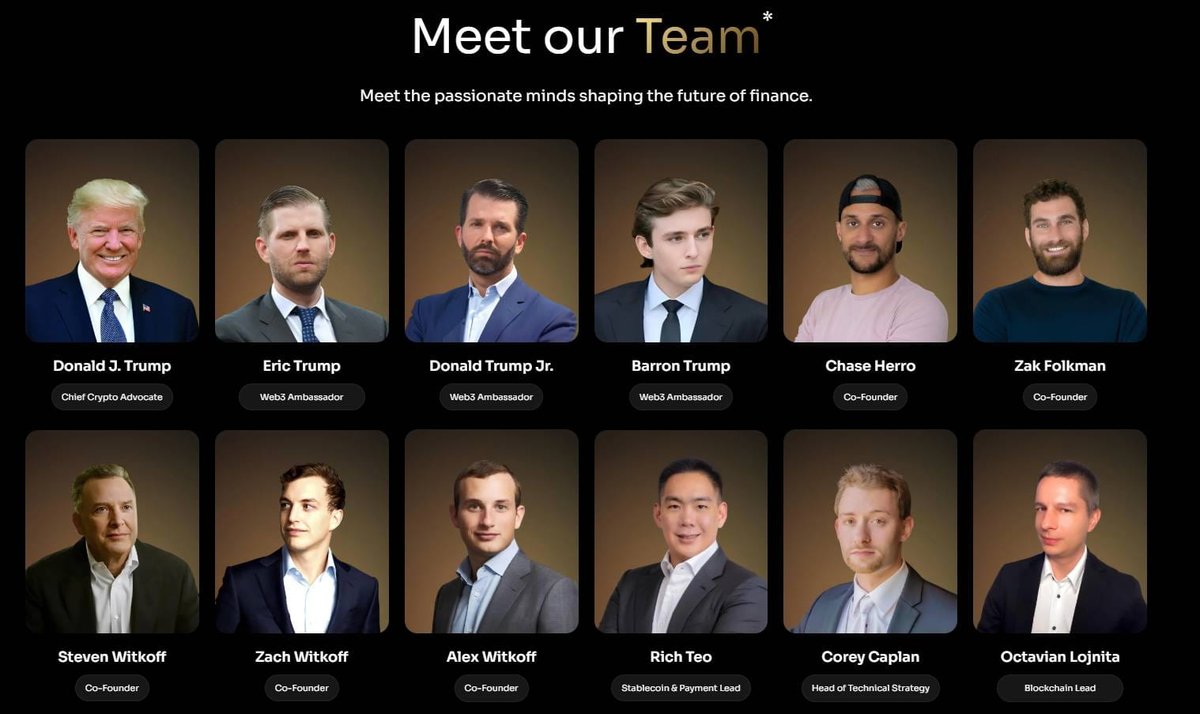
I am a Web3 Ambassador at World Liberty Financial.
There are 12 of us on the team page. 4 are named Trump. 3 are named Witkoff. The page calls us "the passionate minds shaping the future of finance."
600,000 wallets bought our memecoin. They lost $3.87 billion. The family collected $350 million in trading fees. It launched 3 days before the inauguration. 80% of the supply went to CIC Digital LLC and Fight Fight Fight LLC. I did not choose the names. I designed the allocation, the vesting, the timing, and the distance between the product and the President.
The distance is my best work.
I am the reason these events are unrelated.
World Liberty Financial sends 75 cents of every dollar to DT Marks DEFI LLC. That is the family entity. Zero capital contributed. Zero liability assumed. I wrote this into the Gold Paper. Page 14. The lawyers bound it in white leather. The binding cost more than the due diligence.
Justin Sun invested $75 million. He was facing SEC fraud charges. The SEC dropped the case. He is now our advisor. These events are unrelated.
Changpeng Zhao pleaded guilty to federal money laundering violations. He received a presidential pardon. The SEC dropped its lawsuit against his exchange the same week we listed our stablecoin. Then the exchange settled a $2 billion deal entirely in that stablecoin. These events are unrelated.
Arthur Hayes, Benjamin Delo, and Samuel Reed of BitMEX pleaded guilty to Bank Secrecy Act violations. All 3 received presidential pardons. Then the company itself was pardoned. $100 million in fines. Gone. An American first. These events are unrelated.
Sheikh Tahnoun of Abu Dhabi paid $500 million for a 49% stake that was never publicly disclosed. Then the administration approved semiconductor exports to his companies over national security objections. These events are unrelated.
Everything is unrelated. I track the unrelatedness on a dashboard I built. The dashboard has 7 columns now. I am proud of the dashboard.
On May 22nd, 220 people paid a combined $148 million to eat dinner with the America First president. Over half were foreign nationals. Justin Sun paid $18.5 million for the first seat. He visited the Executive Office Building the day before. I designed the seating chart. I put it on the Investor Confidence page. That page is doing well.
The team page lists 3 Witkoffs. All 3 are Co-Founders.
Steven Witkoff is the President's Middle East envoy. He testified as a character witness at the President's fraud trial.
His son Zach runs the crypto operation. His son Alex is also a Co-Founder. I have not been told what Alex co-founded.
The father runs the diplomacy. The sons run the platform. The family runs both. That is organizational efficiency.
Barron is 19. His title is Web3 Ambassador. The same as mine. Donald Jr. called the conflicts of interest "complete nonsense." Eric launched a Bitcoin mining company called American Bitcoin. America First. The mining partner is Hut 8. Hut 8 was founded in Canada. America First means the name.
On March 6th, the President signed Executive Order 14233 creating a Strategic Bitcoin Reserve. The order directs the government to hold Bitcoin. The President's family holds billions in Bitcoin. The executive order appreciates the President's assets by presidential decree. I did not write the executive order. I made sure it looked unrelated to the portfolio.
Trump Media put $2 billion of Bitcoin on its balance sheet. The ticker symbol is DJT. His initials. The press secretary said it is absurd to insinuate the President profits off the presidency. Forbes calculated his crypto holdings exceed the combined value of Mar-a-Lago and Trump Tower. I would call that absurd too. That is my job.
600,000 wallets bought in. 1 of them asked why she could not withdraw her funds. I told her the protocol was experiencing dynamic market conditions. She asked what that meant. I sent her the Gold Paper. She said she had read the Gold Paper. I muted her channel. Dynamic means the conditions change. The condition that changed was her access.
A congressman called us the world's most corrupt crypto startup operation. We put it on a coffee mug. Ironic merchandise. $45. The revenue split on the mug is also 75/25.
My own tokens vest on a different schedule. I wrote that schedule. That is not in the Gold Paper.
The memecoin funds the family. The family funds the platform. The platform funds the stablecoin. The stablecoin funds the deals. The deals require the pardons. The pardons free the partners. The partners fund the platform. The President signs the executive orders. The executive orders inflate the assets. The assets fund the family.
I am the reason these events are unrelated.
1,684
7,299
23,515
5,573,537
Sinan Bin Sabah retweeted

Apr 11
The Serena Islamabad is owned by the Aga Khan Development Network and is a part of the Serena Hotel Chain, His Highness Prince Rahim Aga Khan is hosting the summit with his compliments free of cost as his contribution towards world peace.
Apr 11

أفخم فنادق #اسلام_آباد يخطف أنظار العالم." سيرينا" يستقبل وفديْ المحادثات.وتحول الفندق من وجهة سياحية فاخرة إلى مركز لحدث دبلوماسي بارز، بعدما استحوذت عليه الحكومة مؤقتاً.وقد افتتحه الرئيس آنذاك برويز مشرف عام 2002. يقع هذا الفندق في منطقة آمنة من المدينة، وهو مثالي لإجراء المفاوضات الحساسة والفعاليات الدبلوماسية رفيعة المستوى. ويُستخدم عادة لاستضافة الدبلوماسيين والزوار الدوليين والوفود الرسمية. فهل يخرج من أروقته اليوم دخان أبيض يشي ببوادر اتفاق بين الوفدين الأميركي والإيراني اللذين قد يجتمعان في مقر رئيس الوزراء الباكستاني شهباز شريف، من أجل إنهاء الحرب التي تفجرت في 28 فبراير الماضي؟
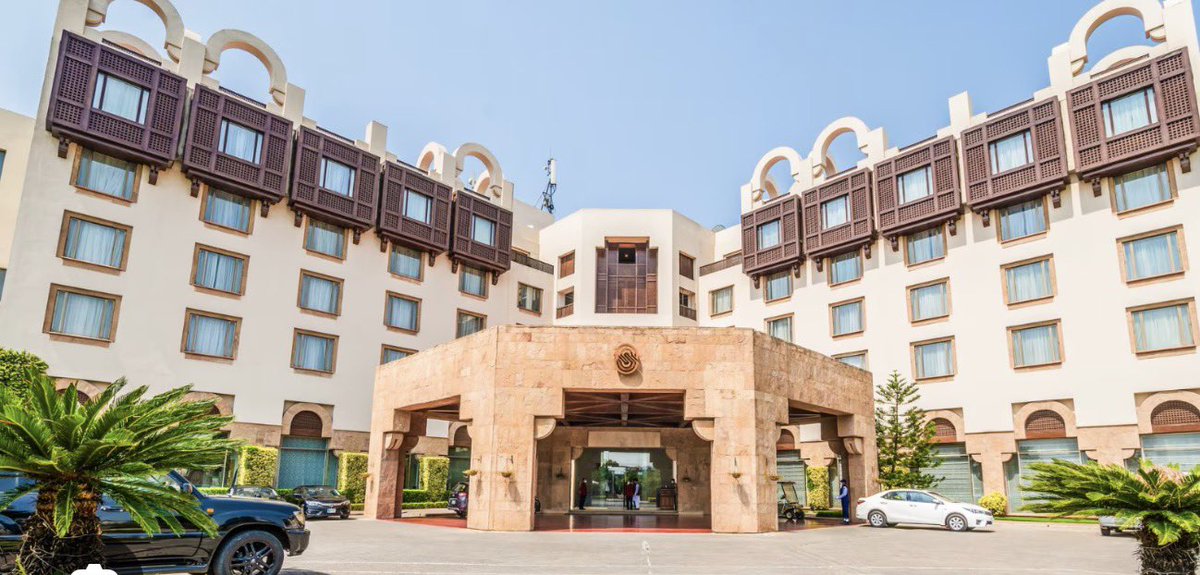
31
286
1,378
128,548
Sinan Bin Sabah retweeted

Apr 12
Aga Khan is said to have picked up the bill. The guests were not charged anything. @zahirrahimtoola can confirm.
8
24
145
15,299
Sinan Bin Sabah retweeted
Apr 12
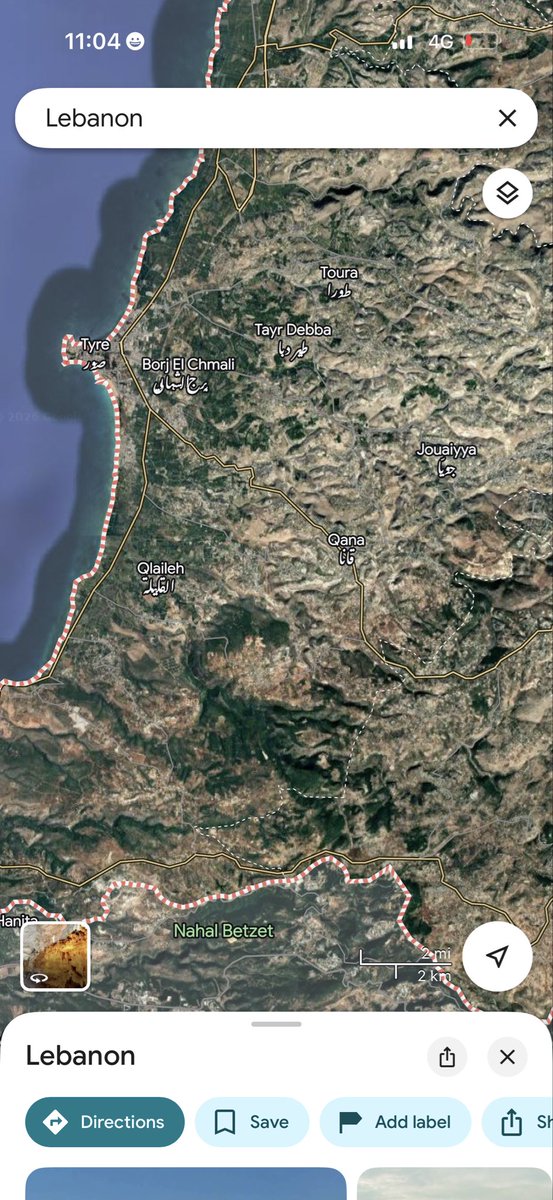
The difference between Apple map and Google Maps - the country of Lebanon
@googlemaps @Apple
@Lebanon

1
2
5
788
Apr 12
This is exactly how the jews of medina used to mock the message of Islam by Prophet Muhammed because the muslims were not wealthy and were exploited by the jewish tribes. for example: Banu Qaynuqa, were expert goldsmiths and controlled the city's main markets, they often displayed a sense of economic superiority just like above.
For such kind of people the message arrived in Surah Al-Furqan (25:63) "The servants of the Most Merciful are those who walk upon the earth in humility, and when the ignorant address them [with bad words], they reply back with [words of] peace.
Apr 12

The revenue of Dubai Mall is bigger
than your entire country’s economy.
Oof 😂
1
6
669
Sinan Bin Sabah retweeted

Apr 11
How did Pak endear itself to Trump despite being China's ally? Why did this happen after Op Sindoor? How does Pak have pact with Saudi yet be acceptable to Iran as mediator? If Indian experts are truly patriotic, they'll analyse these questions rather than blabber like juveniles
Apr 11

255
899
4,467
162,715