
Author | Speaker | Blogger | Tech Passionate | Oracle Expert | Cloud ( AWS, Oracle, Azure, Alibaba) | DevOps Geek
Joined June 2009
- Tweets 27,281
- Following 372
- Followers 2,317
- Likes 143
1,212 Photos and videos






Pinned Tweet

20 Aug 2022
"قل الحمدلله حتى وإن باتت أيامك مُمتلئة بالخيبات، فلا شيء يساوي العافية."
3
Osama Mustafa retweeted

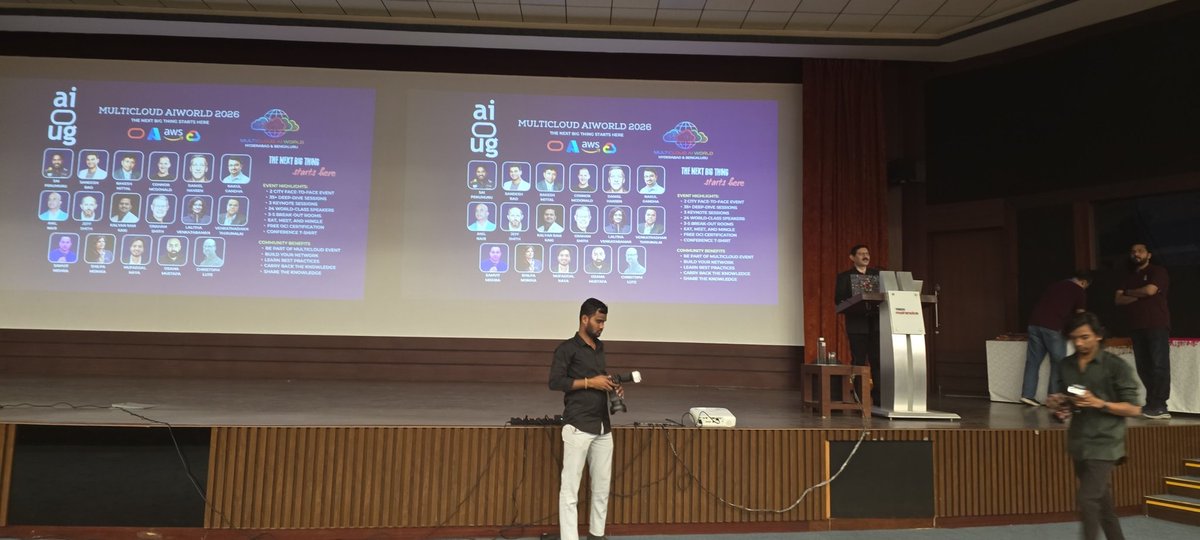
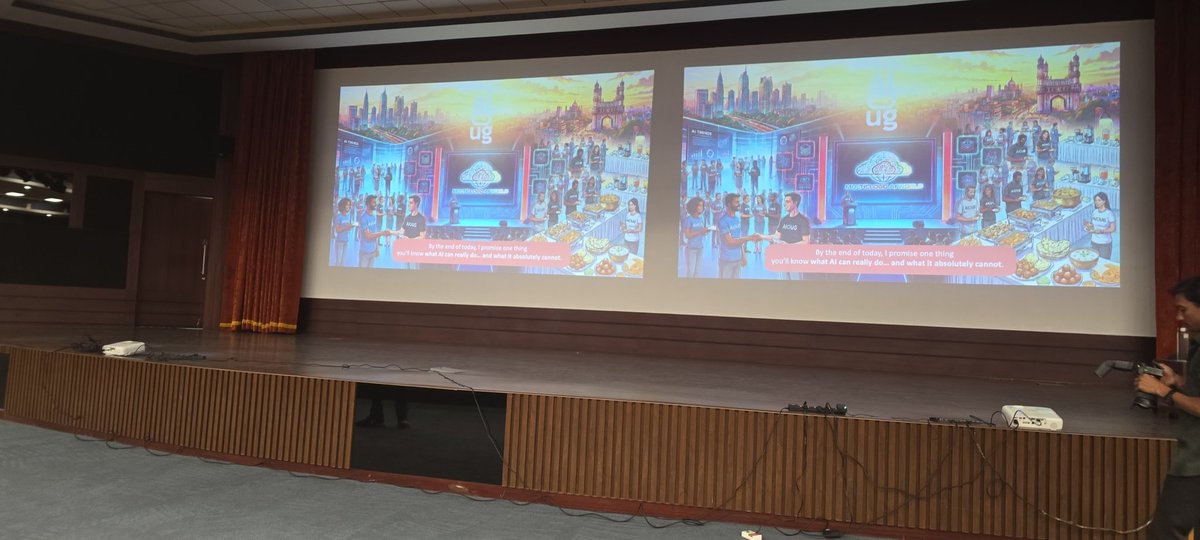
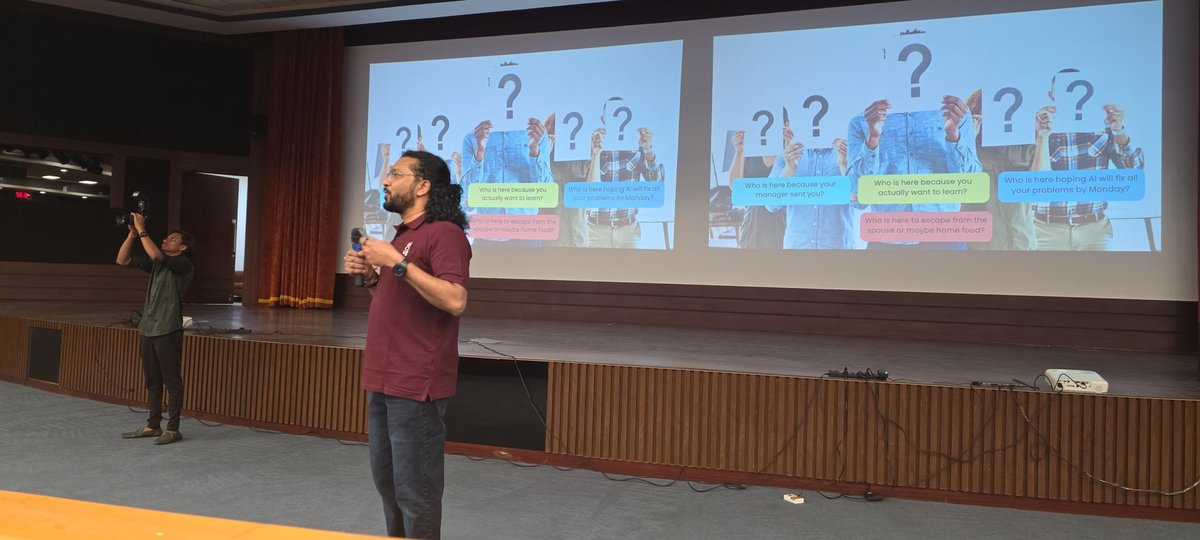
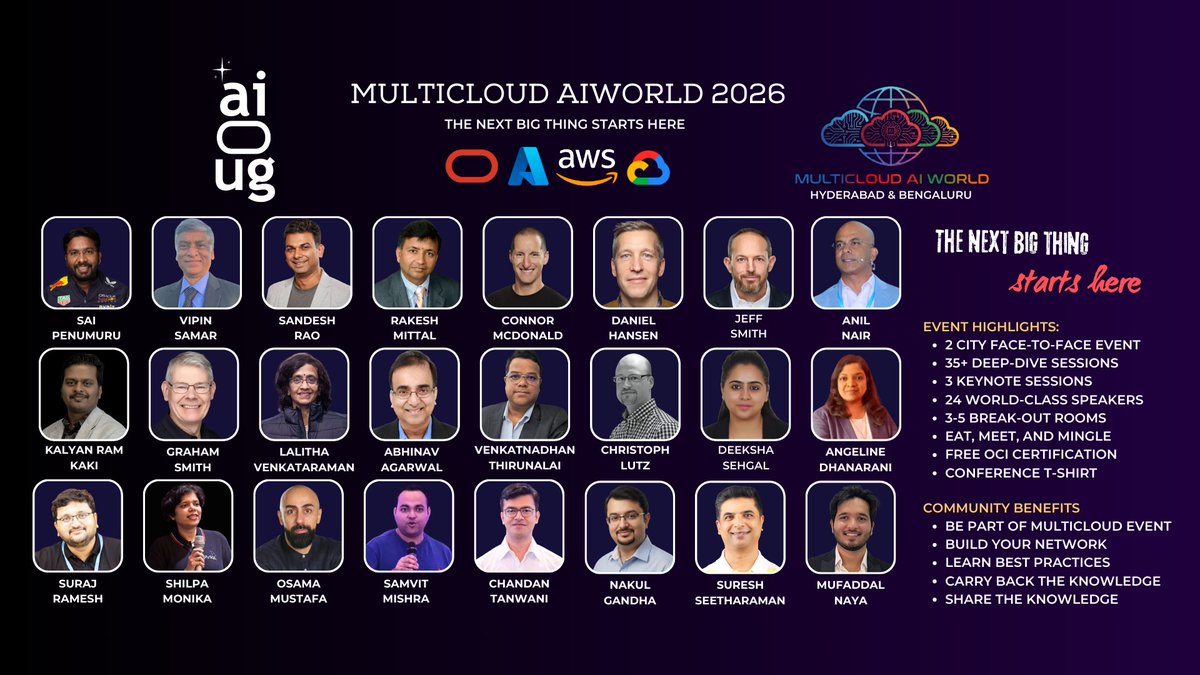
🚀 Multicloud AIWorld 2026 — Hyderabad Begins Today
Hyderabad, today we kick off Multicloud AIWorld 2026.
A full day of deep technical sessions, real-world architectures, and future-facing conversations on AI, databases, multicloud, security, and modernization—all under one roof.
From keynotes to hands-on insights, today is about learning what’s real, what’s next, and what actually works in production.
If you care about building resilient systems, AI-ready data platforms, and multicloud strategies that scale—this is your day.
Let’s get started.
Learn. Connect. Build smarter.
#MulticloudAIWorld #MCAIW2026 #Hyderabad #AIOUG #Oracle #Multicloud #AI #Databases
3
9
210
Osama Mustafa retweeted
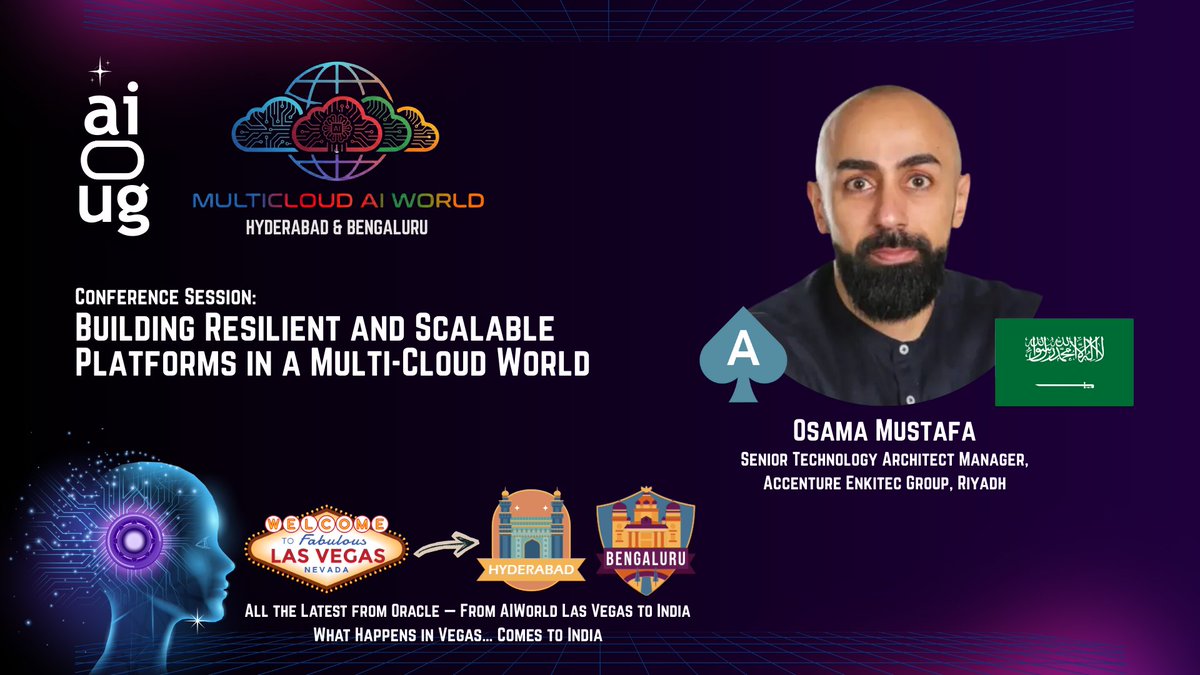
🚀 Session Spotlight | Multicloud AIWorld 2026
Building Resilient and Scalable Platforms in a Multi-Cloud World
Is multi-cloud giving you flexibility—or operational chaos?
As enterprises move beyond a single cloud, the real challenge is not adoption but designing platforms that scale, stay resilient, and remain governable across providers. This session offers a practical, experience-driven playbook for building multi-cloud platforms across AWS, Azure, OCI, and GCP—without duplicating effort or losing control.
🎯 What You’ll Learn
• Core architectural patterns for scalable, fault-tolerant multi-cloud platforms
• Practical approaches to consistent networking, identity, and security
• How to standardize deployments and observability across clouds
• How to balance flexibility with operational simplicity and cost control
🎤 Featured Speaker
Osama Mustafa @OsamaOracle
Senior Technology Architect Manager, Accenture Enkitec Group | Oracle ACE
A multi-cloud and DevOps architect with 10 years of experience across AWS, Azure, OCI, and Terraform. An active author, speaker, and community leader with deep expertise in building reliable hybrid and multi-cloud platforms.
📍 Multicloud AIWorld 2026 | Bengaluru (08 Feb 2026, Sunday)
🎟️ Free Registration | Limited Seats
aioug.org/mc/2026
Design once.
Operate everywhere.
#MulticloudAIWorld #MultiCloud #CloudArchitecture #PlatformEngineering #Resilience #Scalability #DevOps #AIOUG #mcaiw2026
@Oracle @oracleugs @oracleace @OracleDevs @oracledevcomm @OracleDatabase @OracleCloud
1
3
135
Osama Mustafa retweeted

30 Oct 2025
🎉 Exciting news! Meet the new #OracleACE Associates for September 2025—20 leaders from around the world recognized for their expertise, technical contributions, and community spirit.
Discover their stories and get inspired! Interested in joining the ACE Program? Now’s your chance!
Read the blog 👉 social.ora.cl/601271kLK
2
8
337
Osama Mustafa retweeted

30 Oct 2025
Only one more day to submit for
OUGN 2026
CfP ends TOMORROW!
Take this final chance to be part of this event and enter your abstract on sessionize.com/ougn2026.
#ougn2026
See all Events and CfPs on clocwise.org.
1
73
Osama Mustafa retweeted
14 Oct 2025
New - or updated - event
RMOUG Training Days 2026
on clocwise.org.
CfP ends on 24-OCT-2025, but dont wait and head over to technicalconferencesolutions… now and submit!
#TD2026 #RMOUG
1
1
99
Osama Mustafa retweeted

15 Jul 2025
Previously on thatJeffSmith: ORDS and DATES in your TEMPLATEs thatjeffsmith.com/archive/20…
2
4
510
Osama Mustafa retweeted

15 Jul 2025
CPAT – How to Use a Parameter File
alexzaballa.com/cpat-how-to-…

2
3
214
Osama Mustafa retweeted
27 May 2025
Just one week to submit for
DOAG 2025 Conference Exhibition
CfP ends 03-JUN-2025!
So enter your submission today at anwenderkonferenz.doag.org/e… - and we might see you in Nuremberg.
@doag #DOAG2025
See all Events and CfPs on clocwise.org.
1
2
101
Osama Mustafa retweeted

28 Apr 2025
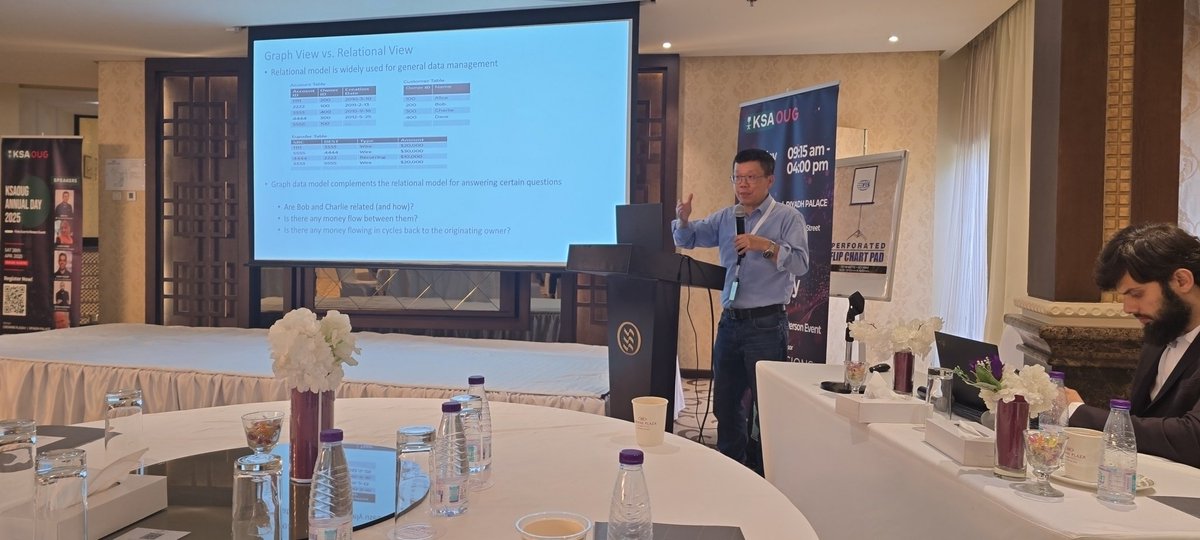
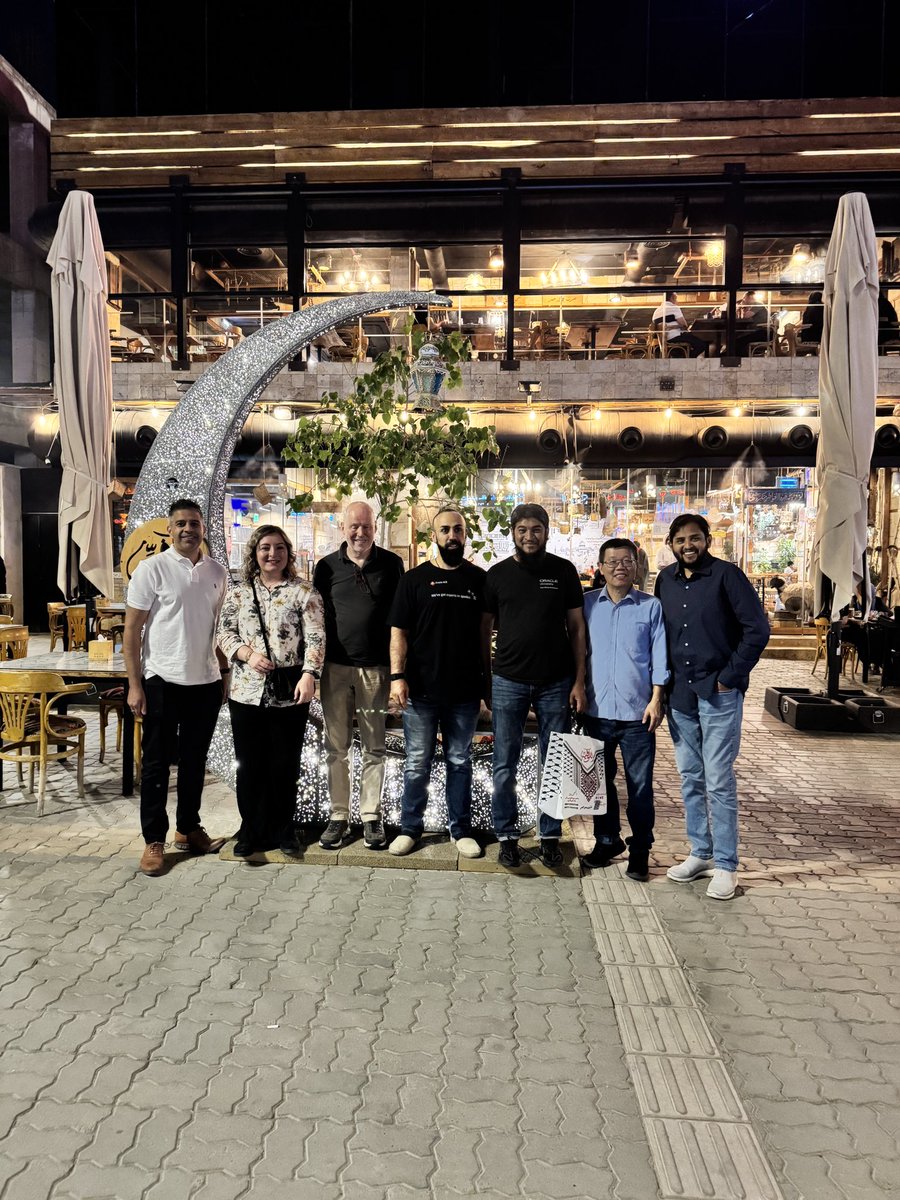
KSAOUG Post event Dinner at Palestinian Al-Kofeia Restaurant in Riyadh, Saudi Arabia.
@iamkirantailor @LauraAPana @Niall_McP @OsamaOracle @ora_tec @KyAustin1 @oracleugs @oracleace
1
7
168
Osama Mustafa retweeted
2 May 2025
The official video recap of KSAOUG Annual Day 2025 is live!
Special thanks to all our speakers and lovely Oracle community .
@Niall_McP @KyAustin1 @LauraAPana @iamkirantailor @OsamaOracle @oracleace @oracleugs @ora_tec #oracle
3
4
183
Osama Mustafa retweeted
26 Apr 2025
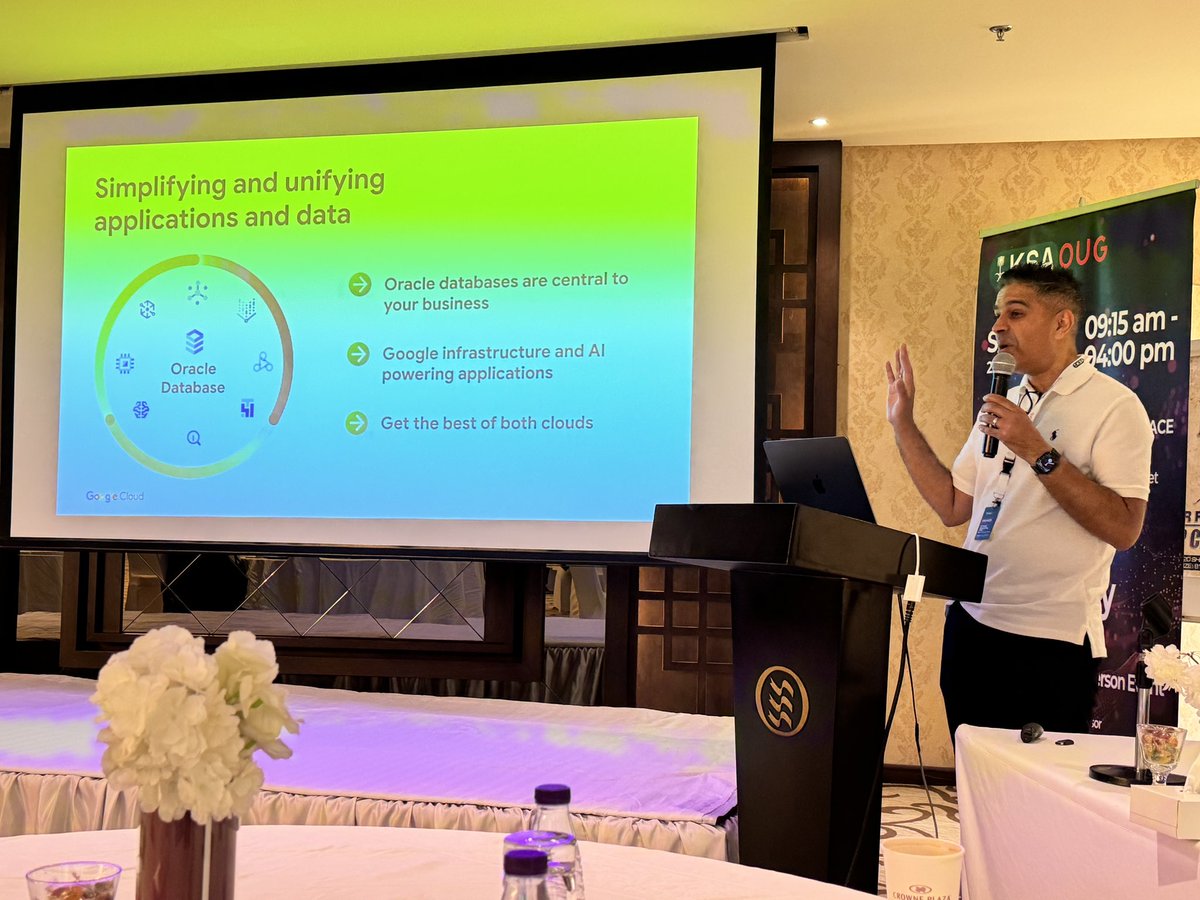
KSAOUG Session 3 just started from @iamkirantailor
Session: Under the Hood of Oracle Database@Google Cloud
#oracle #google #multicloud @oracleugs @oracleace
5
6
219
Osama Mustafa retweeted
26 Apr 2025
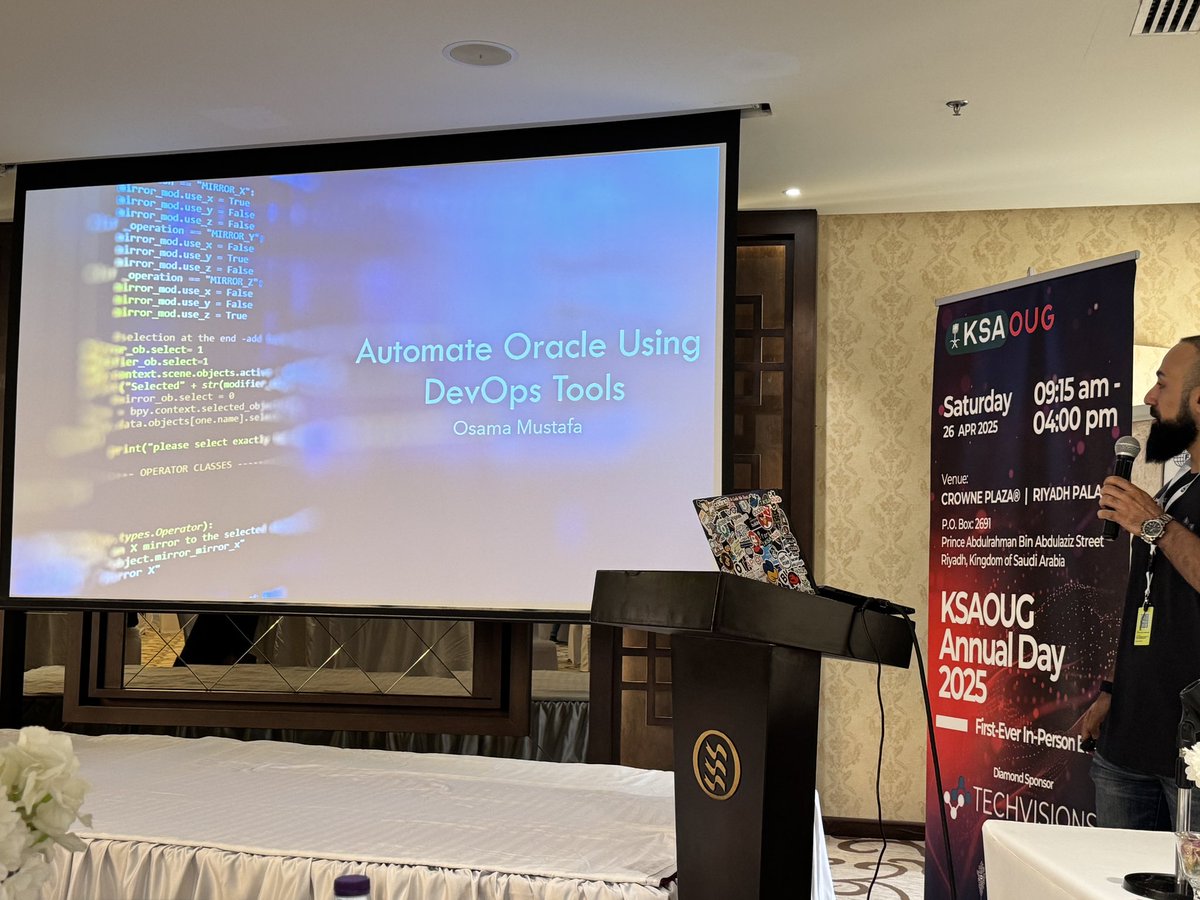
KSAOUG just started session 4 with @OsamaOracle
Session: Your Ansible Guide for DBA
#oracle #ansible #devops @oracleugs @oracleace
2
4
164
Osama Mustafa retweeted
4 Mar 2025
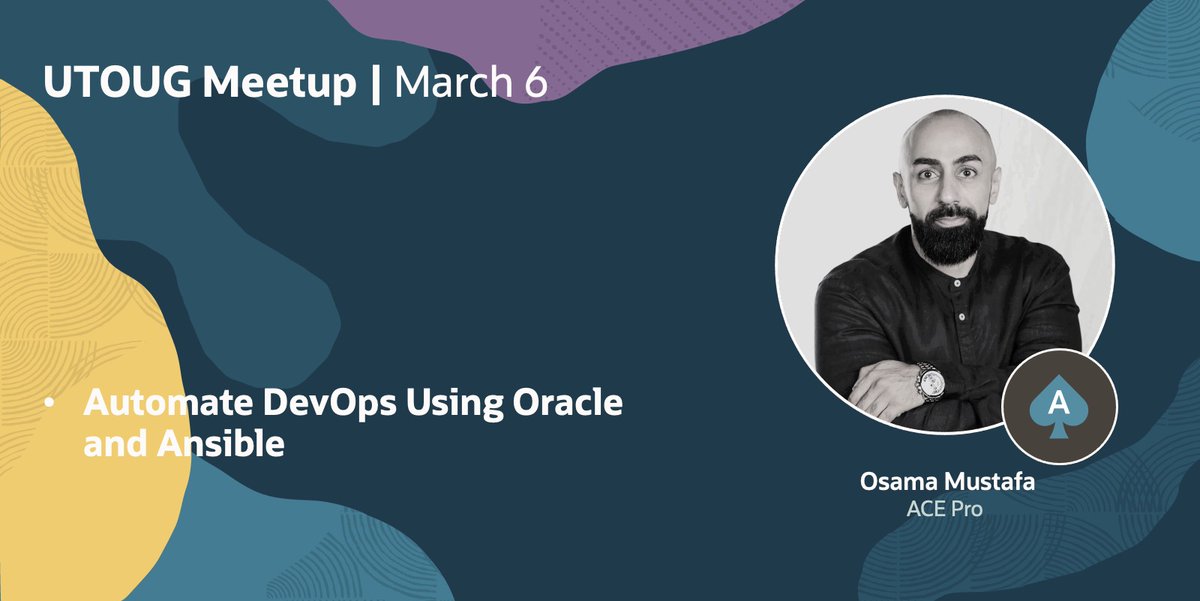
On March 6, join the UTOUG meetup and learn more about how to Automate DevOps Using Oracle and Ansible from Oracle ACE Pro @OsamaOracle 👉
social.ora.cl/6016Lr61Y
#OracleACE
4
13
437
Osama Mustafa retweeted
4 Nov 2024
Congratulations to the latest additions to the Oracle ACE Program! ♠️
18 people were recognized and awarded for their expertise and technical contributions to the Oracle community in October. Check out who they are 👉
social.ora.cl/6017SbxTT
#OracleACE
3
14
602
Osama Mustafa retweeted

4 Nov 2024
Elasticsearch explained.
Elasticsearch stands out as a key tool in search and analytics, valued for its real-time data processing.
This open-source engine is part of the ELK stack (elastic stack). It integrates seamlessly with data visualization tools and log processors which enhance its utility.
How elasticsearch works.
Elasticsearch uses an inverted index to facilitate rapid full-text searches, enabling fast and efficient data access. It works similarly to how a book index works.
Its distributed architecture not only enhances speed but also ensures high availability by sharding and replicating data across multiple nodes. Its powerful query DSL and efficient indexing mechanism support a wide range of search requirements, from simple to complex.
To get a better picture of how it works, let's look at its workflow:
1) Data ingestion
Elasticsearch begins by importing data in JSON format, whether directly inputted or processed via tools like logstash and beats.
2) Indexing
It then indexes this data, creating an inverted index to enable rapid text searches by linking terms to their locations in documents.
3) Sharding and replication
The system distributes data across nodes through sharding, with replication enhancing fault tolerance and availability.
4) Searching
The query DSL allows users to perform searches, accessing the inverted index to find relevant documents quickly.
5) Analysis and aggregations
Analysis of data and compilation are also made possible by elasticsearch, offering insights into trends and patterns.
6) Results retrieval
It retrieves and returns query results in near real-time.
Some key advantages of elasticsearch include exceptional scalability, real-time search capabilities, and an intuitive RESTful API, which enables effective large-scale data analysis.
Through its extensive log and event data analysis capabilities, it supports enhanced monitoring and diagnostics, which can help facilitate improvements in application security and performance.
Elasticsearch's applications are diverse, from enabling instant product searches on e-commerce platforms to facilitating real-time transaction analysis on financial systems. It's also crucial in monitoring and logging systems, where it aggregates and analyzes logs, offering a detailed view of system health and potential security threats.
Elasticsearch’s capabilities go beyond search. Supporting real-time data indexing and basic analytics through aggregation features makes it part of a toolset for big data analysis.
~~
Thank you to our partner Postman who keeps our content free to the community.
The 2024 State of the API Report just got released.
Check it out for key trends and insights in API development: drp.li/state-of-the-api-repo…
11
161
788
47,052
Osama Mustafa retweeted

30 Oct 2024
I've tried every AI Coding agent and IDE,
As someone who's been coding for 20 years,
I think coding as we know it is cooked 🧵 :
191
540
4,453
1,260,342