Dermatologist | Cofounder, @impiricus
Joined March 2009
- Tweets 365
- Following 1,162
- Followers 3,344
- Likes 3,184
20 Photos and videos





Osama Hashmi retweeted

19 Dec 2025
Those who shared photos of a current Brown student, suggesting he was the shooter, should take a long look in the mirror tonight.
"Why did they delete the page?" Because of people like you.
68
123
1,804
97,711

22 Jul 2025
When people choose who to work with in B2B, they often look for three things:
• Brand
• Speed
• Quality
Healthcare leaders have mastered talking about brand and quality, but they've completely forgotten about speed.
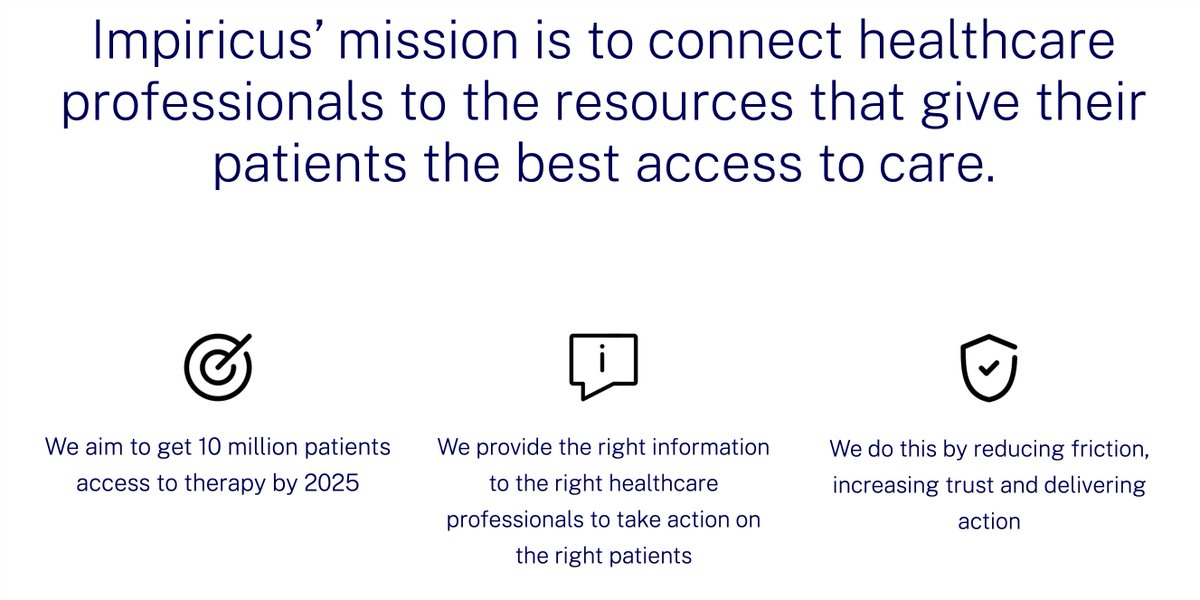
As someone who's been in both medicine and technology for years, I know that speed matters in healthcare more than any other industry.
When you can get the right patient the right medicine, you can save lives.
But instead of moving with urgency, healthcare leaders hide behind "too many stakeholders" and "it's too hard to solve."
They act like there's no real consequence to delays.
The best healthcare leaders understand that every day you spend in meetings instead of solving problems is another day patients go without the receiving care they need.
Speed isn't just a nice-to-have in healthcare. When lives are on the line, it's everything.
309
3,264
20,484
1,499,297
21 Jul 2025
Impressions really don't matter in healthcare. You see leaders obsessing over getting their logo out there, getting visibility, making noise.
But that's missing the point entirely.
Real healthcare leadership comes down to one question: how do you turn noise into signals?
Here’s why this is so critical in healthcare: 🧵
12
17
208
38,447
21 Jul 2025
The signal is simple:
Does this make a patient's life better?
Does this solve a real problem for doctors?
Does this create actual value?
Everything else is just noise.
1
1
22
3,766
21 Jul 2025
The best healthcare leaders I know don't chase visibility.
They chase results.
They focus on the signal that matters, real impact for patients and doctors.
Because when you get the signal right, the noise takes care of itself.
2
17
1,536
20 Jul 2025
Starting a company in college while selling to hospital systems teaches you things you can't learn anywhere else.
I was just trying to be a college kid, building technology and selling it to hospitals.
Looking back, there were lots of really good lessons from those early days.
When you're young and approaching massive healthcare institutions with solutions, you learn quickly that having a good idea is only the beginning.
You have to figure out how to communicate with people who run complex systems.
The experience taught me that healthcare needs leaders who aren't afraid to try unconventional approaches, even when they don't fit the typical mold.
Now as a physician who's been in technology for 12 years, I still use those lessons every day.
Sometimes the best perspectives come from people who are willing to challenge how things have always been done.
Healthcare leadership requires understanding both the clinical reality and the business side.
Starting that company gave me a foundation that most people in healthcare simply don't have.
12
25
276
63,736
19 Jul 2025
94% of pharma executives believe their field teams effectively deliver scientific information to doctors, but only 47% of doctors actually agree.
Where's the gap coming from?
Pharma leaders need to start thinking like doctors and patients instead of making assumptions.
The reality is that doctors don't have the bandwidth for irrelevant, spammy, or overly clinical messaging.
They’re juggling too many things and don't have time for fluff.
What doctors actually want is clear information about what helps their patients, delivered in a way that doesn't require extra steps, forms, or phone calls.
That's what effective HCP engagement looks like.
7
17
348
120,137
18 Jul 2025
I recently joined the MM M podcast to talk about how we’re reimagining the pharma to HCP relationship…
And why the future belongs to companies that prioritize signal over noise.
For decades, the pharma playbook has looked like this:
- Push reps to hit as many HCPs as possible
- Track vanity metrics like brand impressions
- Focus more on reach than relevance
But here’s the truth from the front lines of care:
Physicians don’t want another dinner invite.
They want clinical clarity.
They want speed, access, and trust.
They want real solutions for their patients.
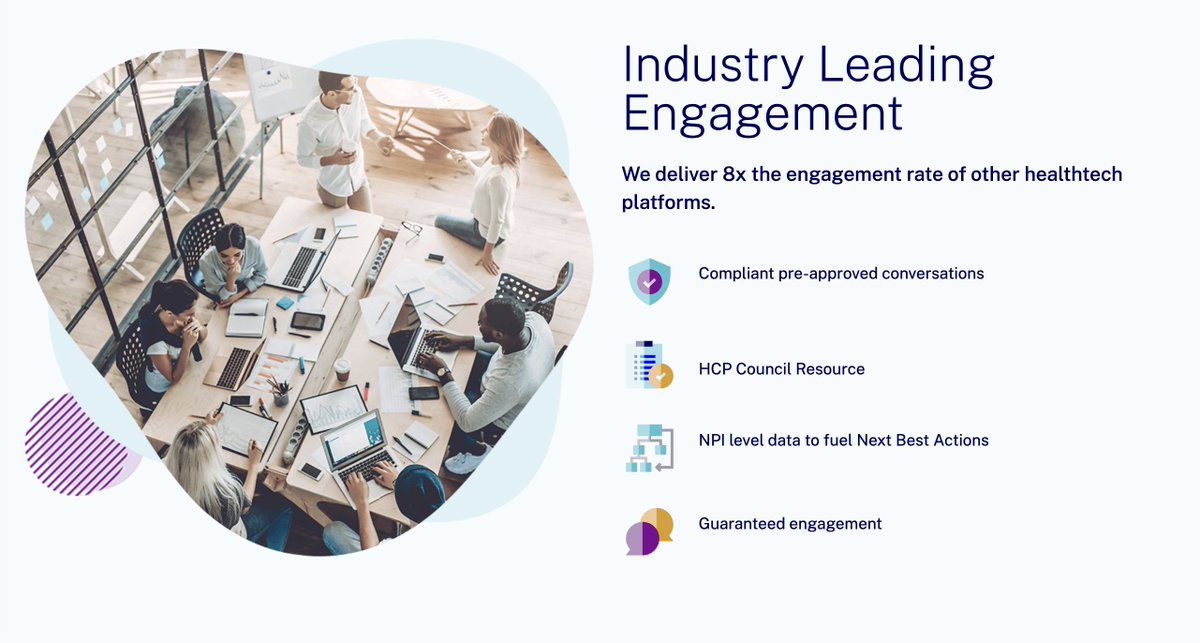
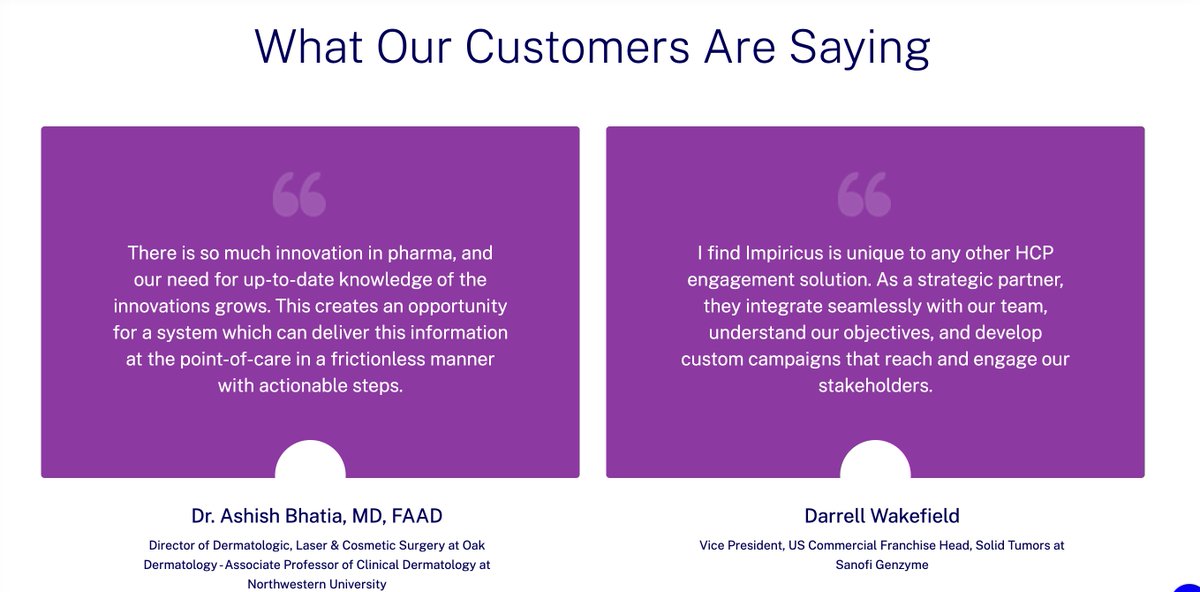
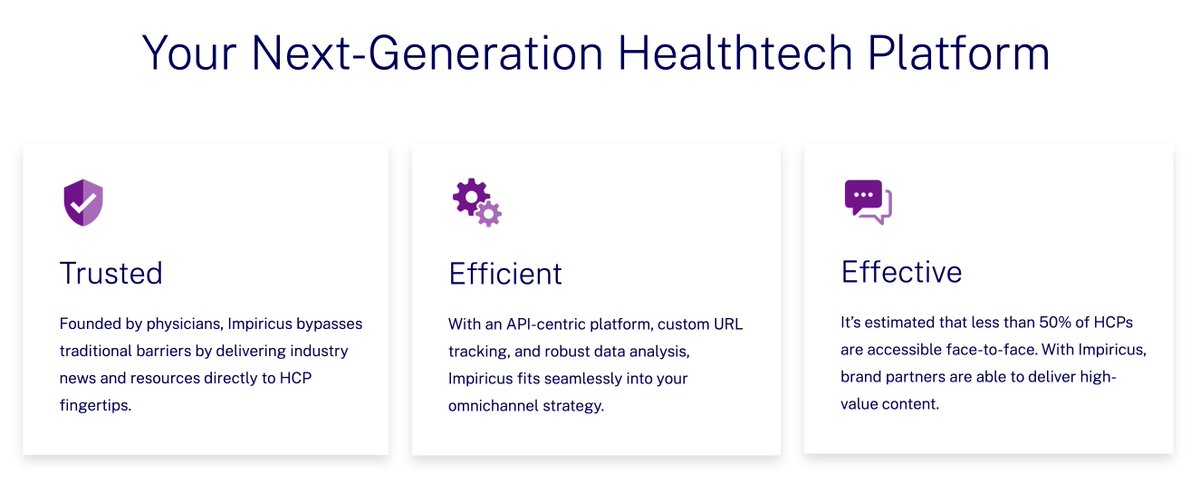
@impiricus has built the first AI-powered field force enhancement platform that connects HCPs and pharma with the right information at the right time through the channels physicians actually prefer (like SMS).
What we’ve learned from working with the top 30 pharma brands and over a million HCPs:
→ HCPs are drowning in irrelevant outreach. AI allows us to personalize down to the individual level of who they are, what they treat, how they engage.
→ Rural physicians are often invisible in legacy field force models. We’re seeing 8,000 dermatologists activate with brands they’d never heard from before because we reached them with context and clarity.
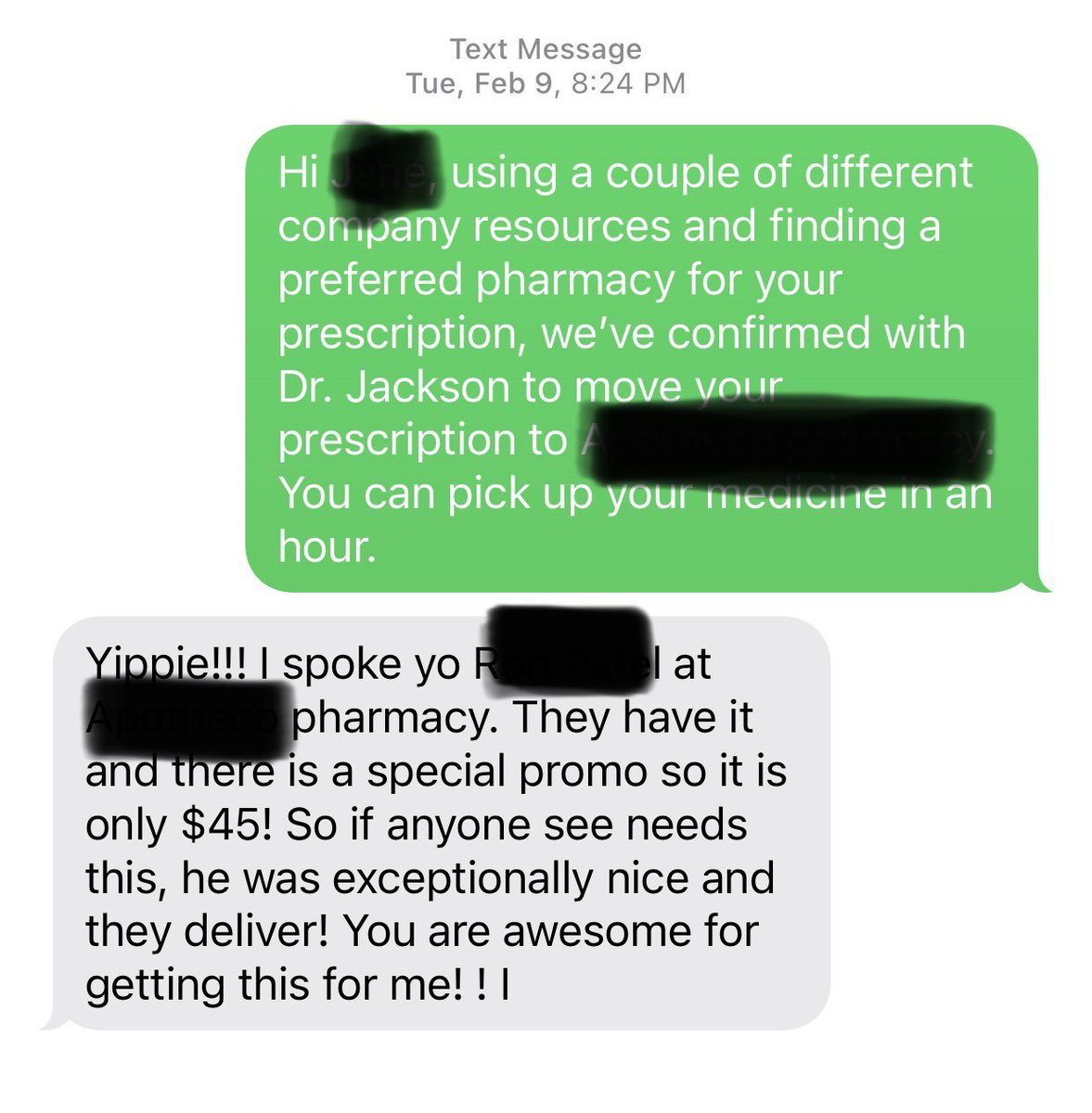
→ When a physician knows how to help a patient afford a med and access it quickly, trust is built and care improves.
This isn’t about replacing the rep.
It’s about evolving the rep.
Giving them superpowers.
Helping them deliver value on demand.
In the next 5 years, the most successful pharma companies won’t be the ones with the biggest field teams.
They’ll be the ones that operate like real partners in care built on trust, data, and timing.
Let’s build something better.
If that vision resonates, the full conversation is worth a listen. You can find the link to the podcast in the comments below.
2
1
9
1,025
18 Jul 2025
1
3
563
Osama Hashmi retweeted

11 Jul 2025
Last month, I had the opportunity of a lifetime to perform Hajj in Mecca.
It was a powerful time to reflect on how I show up—in work and in life—especially in my interactions with founders, guided by values deeply rooted in my faith.
Thanks to @jaltma for our conversation and thanks to @ariannahuff for capturing this bit. 🙏🏼
10 Jul 2025

Kleiner Perkins Partner — and @Thrive Global board member — @mamoonha recently returned from Hajj, the annual Islamic pilgrimage to Mecca.
In his own words: “Faith is really important to me, and it’s also deeply rooted in every encounter I have with every person. Part of the beauty of Hajj is that it’s two million people who come from all walks of life, with all the different skin tones in the world. Yet in front of God, we’re all one and we’re all the same. It roots you in the question: how do you treat each other as human beings? That has become a moral compass for me. Every interaction matters—whether it’s with a six-year-old child or a thirty-year-old billionaire founder. How do you treat each other? How do you give them respect, dignity, and attention in that moment in time? I’ve tried to live my life that way. Faith reminds me of it every day.”
While the world provides plenty of insistent, flashing, high-volume signals directing us to climb higher up the ladder, there are almost no worldly signals reminding us to stay connected to the essence of who we are, to take care of ourselves along the way, to reach out to others, to pause to wonder and to connect to that place from which everything is possible.
Thank you, Mamoon, for reminding us there is more to life than our jobs, our ambitions and our to-do lists. And that, in the end, life is shaped from the inside out.
56
32
567
98,335
Osama Hashmi retweeted

6 Jul 2025
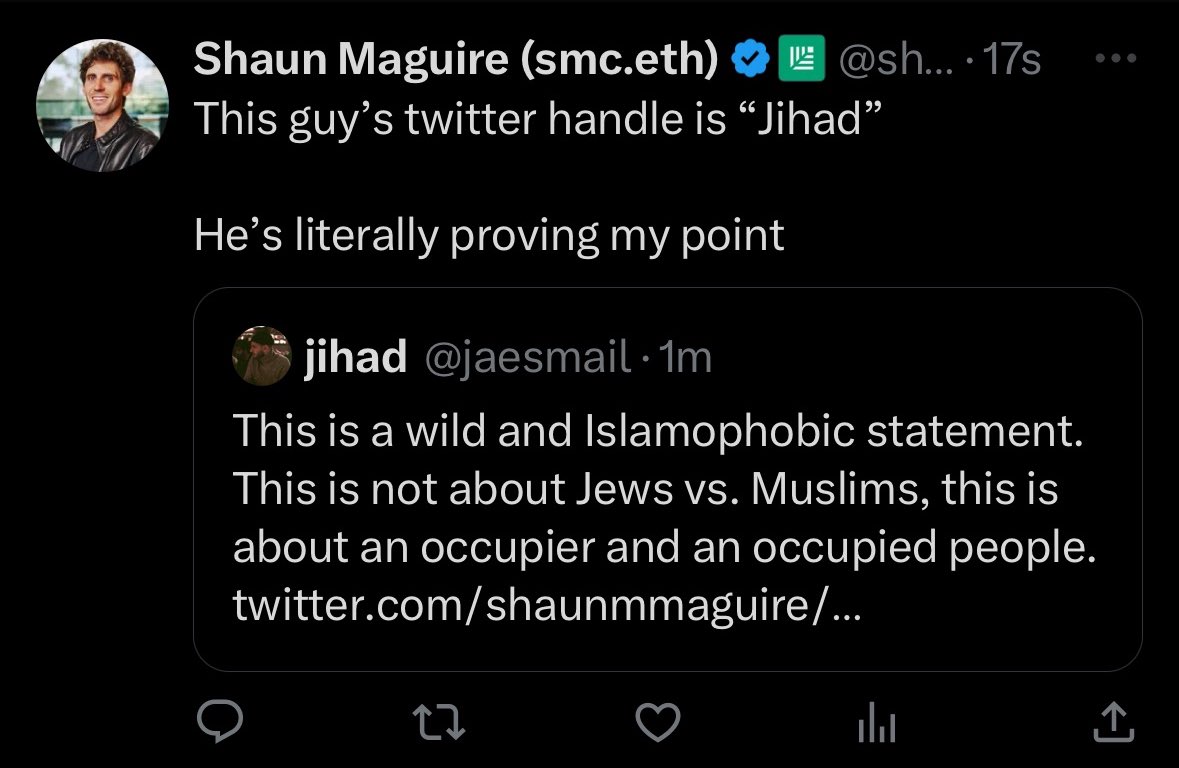
This post alone shows how @shaunmmaguire is either a) completely ignorant / misinformed or b) actively malicious and Islamophobic
The guy’s name is literally Jihad.
Jihad means “to struggle” and it’s mainly applied to your personal struggle (e.g. to struggle against doing sin etc. … I.e. jihad al-nafs) but can be applied for war too.
A VERY well known hadeeth:
“A man came to the Prophet ﷺ and asked his permission to go out for jihad. The Prophet ﷺ asked him, ‘Are your parents alive?’ He said, ‘Yes.’ The Prophet ﷺ said, ‘Then your jihad is with them.’”
(Sahih al-Bukhari 5972, Sahih Muslim 2549)
This is the Islam that Shaun and co actively suppress and try to tell the world the complete opposite.
They have exactly ZERO interest in the truth.

29
43
604
49,125
Osama Hashmi retweeted

6 Jul 2025
Nobody wants to say it publicly, but from talking to other founders it’s crazy how much Sequoia’s reputation has fallen off because one guy won’t stop 4chan-level shitposting.
111
227
5,288
624,439
5 Jul 2025
Healthcare executives have one favorite excuse.
"We can't do anything because there's too many stakeholders."
I've heard this exact phrase more times than I can count after 12 years in technology.
But the thing is, innovation and collaboration challenges like this have been solved in other industries.
Let me explain: 🧵
58
246
3,437
793,291
5 Jul 2025
You can still keep track of all the important stuff with security, privacy, and regulatory compliance.
But we need a little bit scrappier mentality, more like how startups approach building solutions.
People like to hide behind, "But we can't do anything because it's too hard to solve or there's too many stakeholders."
I don't think that's actually true.
1
2
13
2,754
5 Jul 2025
The difference comes down to whether you just want to talk about problems or actually solve them.
Healthcare needs more people willing to take action instead of finding reasons why something can't be done.
We need more builders and action takers.
2
17
1,673
4 Jul 2025
Medical school teaches you to make careful, evidence-based decisions with plenty of time to think…
Then you hit the real world.
In school, patient cases are neat and organized. You have time to research, consult textbooks, and make thoughtful decisions.
In practice, you're making critical choices while being pulled in 10 different directions. Real patients don't present like textbook cases, and you rarely have the luxury of perfect information.
Now, after 12 years building tech solutions for healthcare, I see the same disconnect everywhere.
Most healthcare innovations are designed for the medical school version of medicine, which is calm, methodical, with unlimited time.
But they fall apart when they meet the reality of actual clinical practice.
The best healthcare tools are built by people who understand that medicine is messy, chaotic, and nothing like what they teach you in training.
4
23
292
47,428
3 Jul 2025
There's little urgency in pharma even though we're talking about people's lives. I see this constantly.
There are people getting paid a bunch of money to sit around and talk, but not a lot of action.
Meanwhile, the right medicine to the right patient in a timely manner can save lives.
And here's what's funny, a lot of pharma companies never even have conversations with doctors.
They're afraid to get the real feedback from the people who actually see patients.
So you have all this waste while doctors know what's actually helping patients.
We should really be trying to do this correctly instead of just phoning it in.
But that means having doctors be part of the conversation, not pushing them to the sidelines.
5
8
258
77,705