
PFIR is a nonprofit working for fair, equitable solutions to environmental and overpopulation issues, and the unintended consequences of mass migration.
Joined May 2009
- Tweets 24,580
- Following 1,042
- Followers 15,087
- Likes 10,569
1,995 Photos and videos






Project for Immigration Reform retweeted

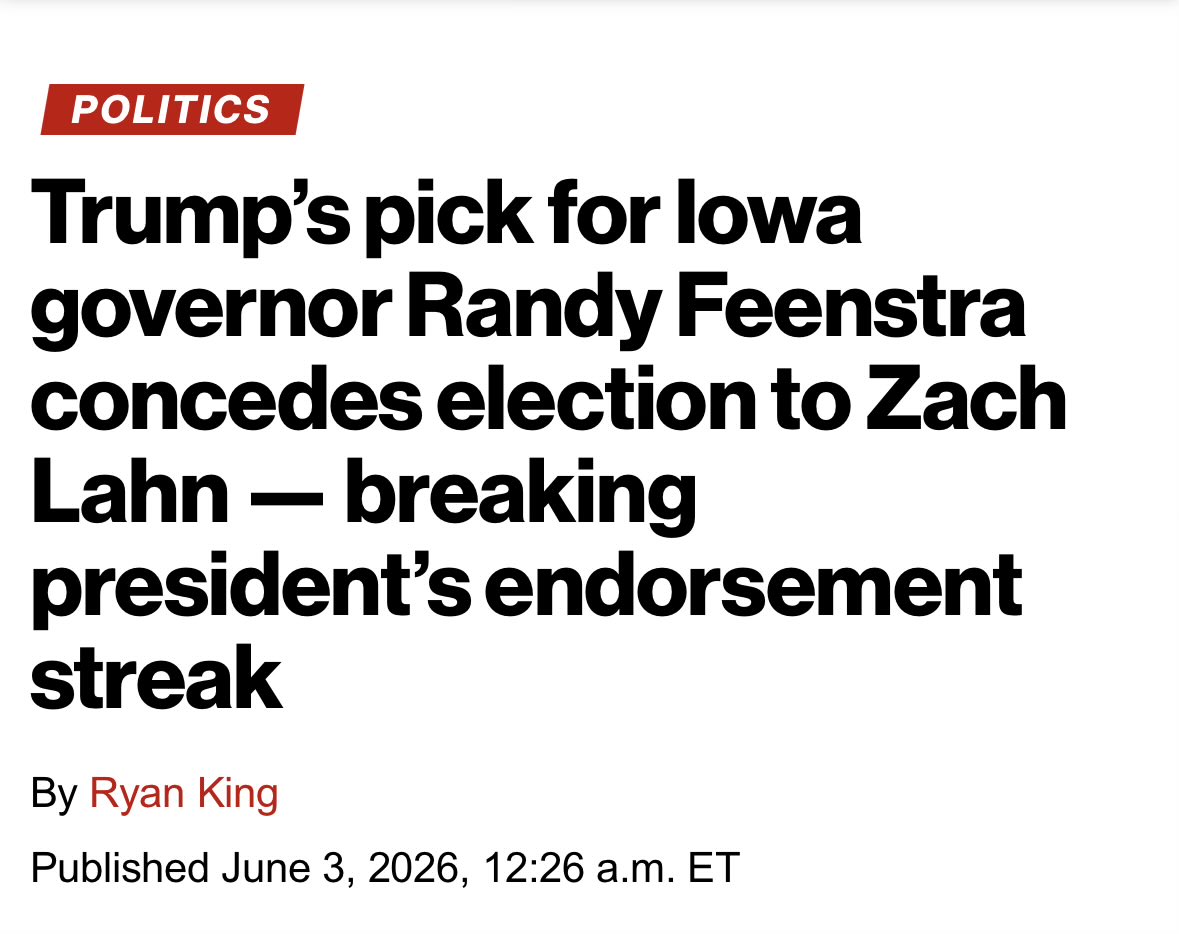
In 1980 Ronald Reagan convincingly won the presidency against Jimmy Carter, and also tipped the Senate. But the democrats maintained control of the House and Tip O’Neill remained speaker. That meant a lot of people voted for Reagan, but then voted democratic down ballot. They could do this knowing bipartisanship was possible - that the country had a coherent population, and differences were not so wide that people would refuse to work together.
Reagan was able to push his tax reduction plan through Congress. Tip O’Neill basically said ‘this is what the people voted for, so we will work with you.’ That could not happen today.
The US electorate is balkanizing because of too much immigration too fast - which is exploited by unscrupulous politicians. We will probably not see the kind of bipartisanship of the early 1980s again in our lifetimes - if ever. And this is why a 1924 style moratorium on immigration is necessary, coupled with aggressive assimilation policies and deportations of those who don’t really want to be American. And it’s why birthright citizenship is a disaster in present circumstances.
86
480
3,030
94,779

The collapse of higher ed is being framed as a problem of population decline—the “demographic cliff.” And mass immigration is being proposed as the solution.
The economic arguments for mass immigration are increasingly like this; they don’t even bother to pretend mass immigration on its own has any net positive value, but only that it’s a temporary palliative to delay the death of failing institutions and business models that refuse to adapt to the market.
The institutions deserve to die, and mass immigration won’t save them anyway.

Jun 12

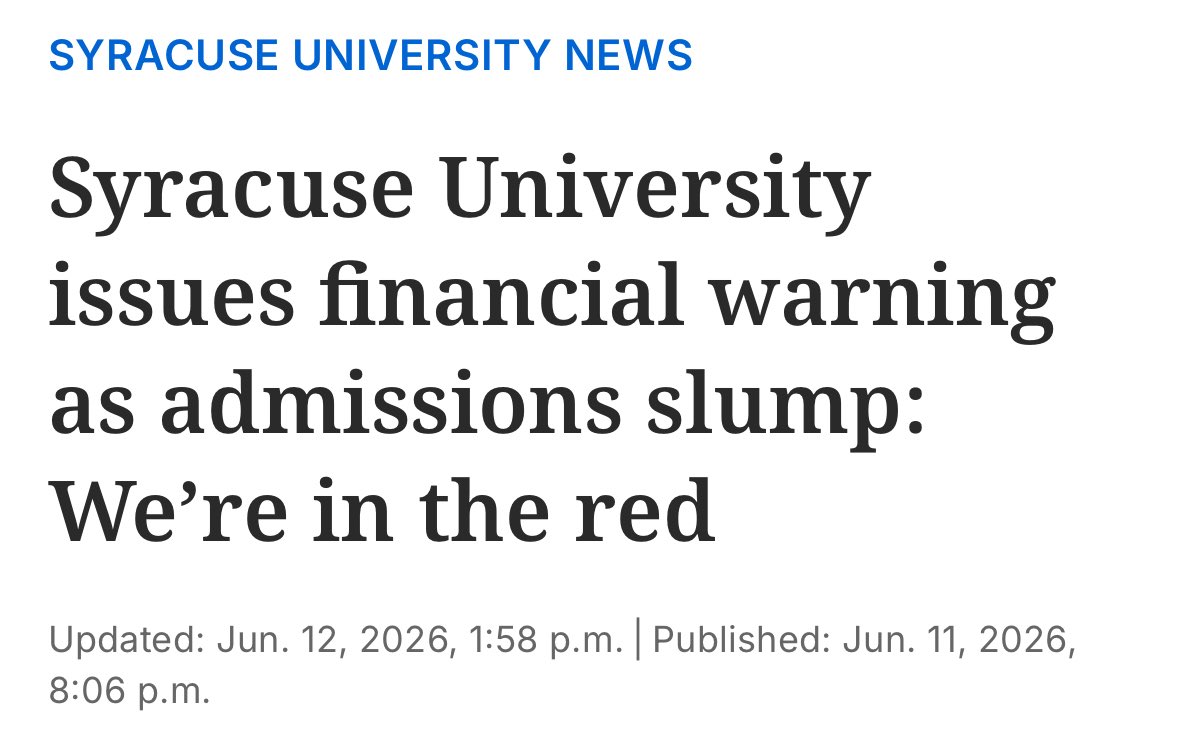
The demographic cliff is here.
Syracuse offered students significant discounts to attend but still ended up under-enrolled.
The university has already offered buyouts to 175 professors and closed 93 majors.
And the pop. of 18-year-olds “will decline for the next 15 years.”
71
191
1,616
59,401
Project for Immigration Reform retweeted

15h
He destroyed our entire country economically, culturally - facilitating mass migration & further ethnic fragmentation (Surrey looks like India & parts of Burnaby are indistinguishable from China, sorry!)
I can say this even as an immigrant with proud Indian heritage.
Immigration without integration is an invasion!
Better he not show up at Canada's games.
(Didn’t even mention his Covid lunacy or attacks on free speech)
17h

Justin Trudeau is facing criticism for showing up to the FIFA World Cup game in the United States instead of watching Canada’s game.

74
44
501
63,127

People will always find one outlier to justify a bad policy. Soccer, more than almost any other sport, is highly transactional. Flo Balogun never grew up in the United States and had shown little interest in representing the U.S. until it became his best option. He also considered England and Nigeria, but ultimately chose the United States because it offered the most attractive opportunity.
Jun 13

A reminder that Flo Balogun would not be on the US Men's National Team if Trump's birthright citizenship order was in place when he was born in NY. The first US man to score more than one goal in a World Cup match since the very first World Cup in 1930.
5
15
143
3,766
Balogun may score goals for the United States, but there is no American story attached to him of the kind that once allowed spectators to see their own aspirations reflected in an athlete’s success. Michael Phelps, Michael Jordan, and now Caitlin Clark became more than performers because their achievements were woven into a broader national narrative. Balogun’s connection to the United States is different. It is professional rather than biographical. Americans may cheer his goals, but few will form the kind of parasocial attachment reserved for athletes they regard as distinctly their own. When the tournament ends, he returns to Monaco, and life goes on much as before.
2
24
462
Project for Immigration Reform retweeted

Jun 12
"My diversity stress — and ours"
I wrote a long essay for UnHerd trying to describe the pervasive, low-level anxiety associated with mass-migration societies:
a constant sense that everything is in flux, that we have no right to the familiar.

12
27
162
38,281
Project for Immigration Reform retweeted

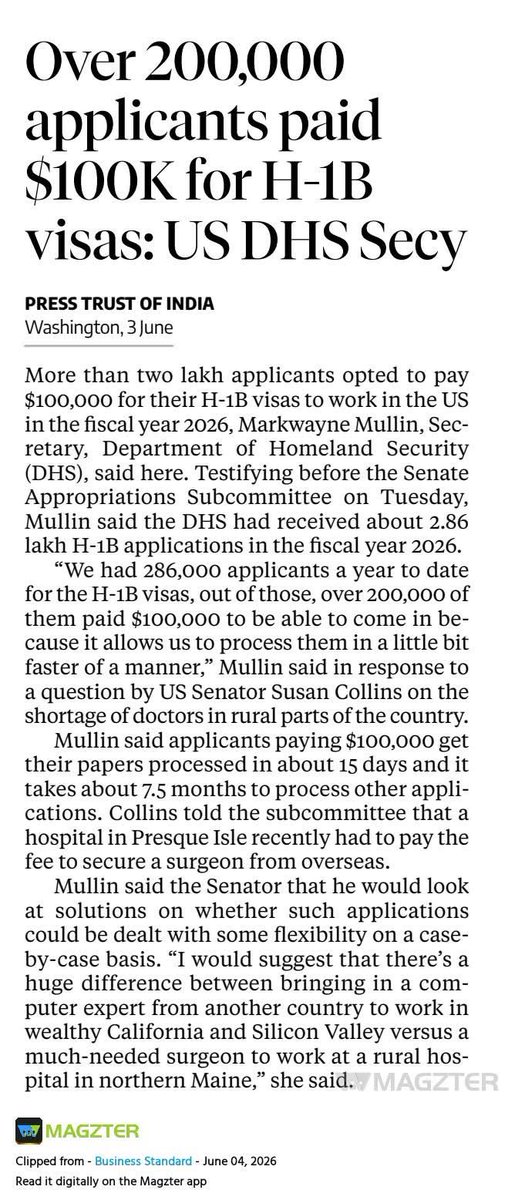
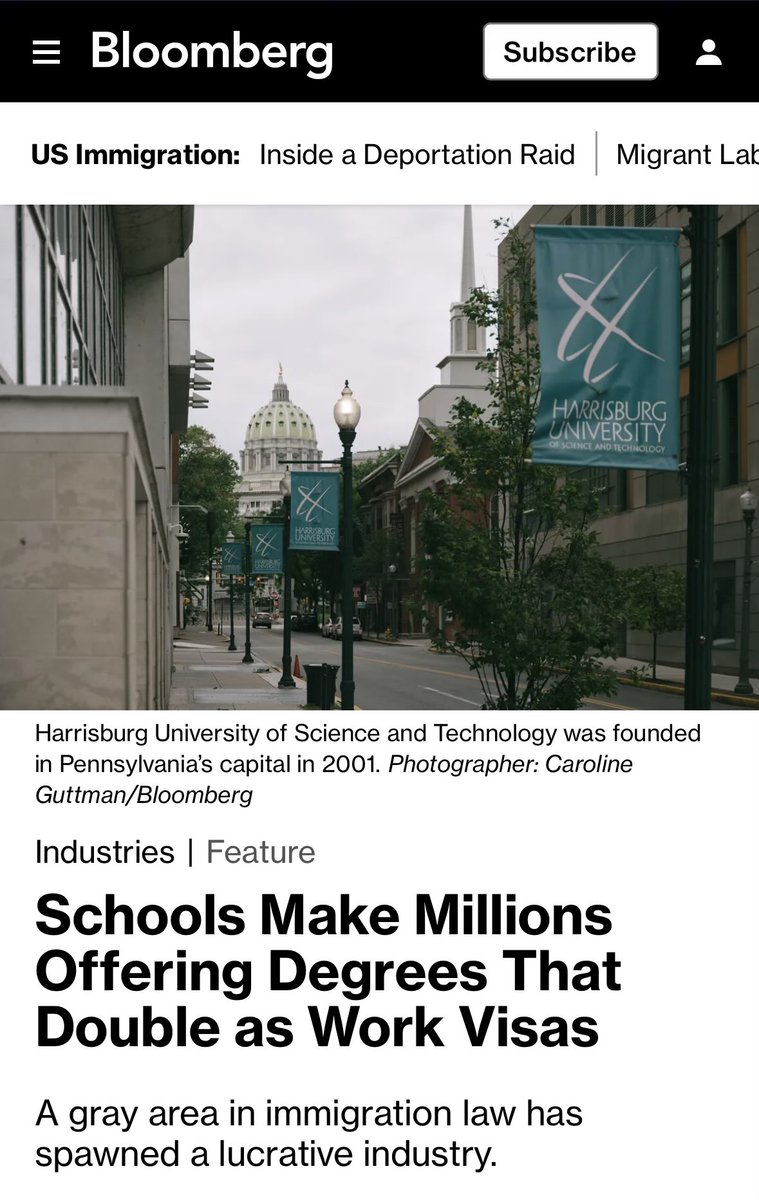
it would be very funny if the american tech job market were saved by broad export controls on advanced models that forced companies to choose between (1) hiring only us citizens or (2) not using ai tools

What did you think "Overhauling H1B" meant? Vibes? Essays ? Papers? Losers.

52
181
3,417
110,933
Project for Immigration Reform retweeted

Jun 12
There were over 15,000 “super sponsors” that we identified. 15,000 people that took 3 or more children from the border. I talk about it with @Heritage here.
Jun 12

After incentivizing the crossings of unaccompanied alien children, the Biden admin handed over thousands of them to ‘super sponsors,’ people who took in three or more children. In many cases, the super sponsors were looking to exploit the children for labor or sex trafficking.
5
48
124
3,519
Switzerland wants to restrict immigration and is coming closer to doing so than any other Western nation. So, of course, the mainstream media is working overtime to run propaganda in favor of the cheap labor business lobby, hoping that doesn’t become a reality.

Is Switzerland about to cap its population?
This weekend, Switzerland will vote in a referendum on whether to cap its population size. Those in favour say it will help curb immigration, but critics say it will leave key sectors understaffed.
@AliBunkallSKY reports
12
33
697
Project for Immigration Reform retweeted

Jun 13
🚨 SNAP FRAUD ALERT 🚨
Rajan Babbar, owner of Taste of India grocery store in Lynchburg, VA, has been sentenced to 33 months in federal prison for a multi-year SNAP (food stamp) fraud scheme.
His store, authorized as a SNAP retailer in 2016, saw sales surge from $2,600/month in 2018 to $65,000/month by 2023, amounting to a roughly 2,500% increase!
Prosecutors say he processed fake transactions allowing customers to exchange SNAP benefits for cash (typically 50% of the benefit value). The scheme, running from at least 2019 to 2025, involved between $550,000 and $3.5 million in fraudulent transactions.
justice.gov/usao-wdva/pr/lyn…
166
880
2,149
26,230
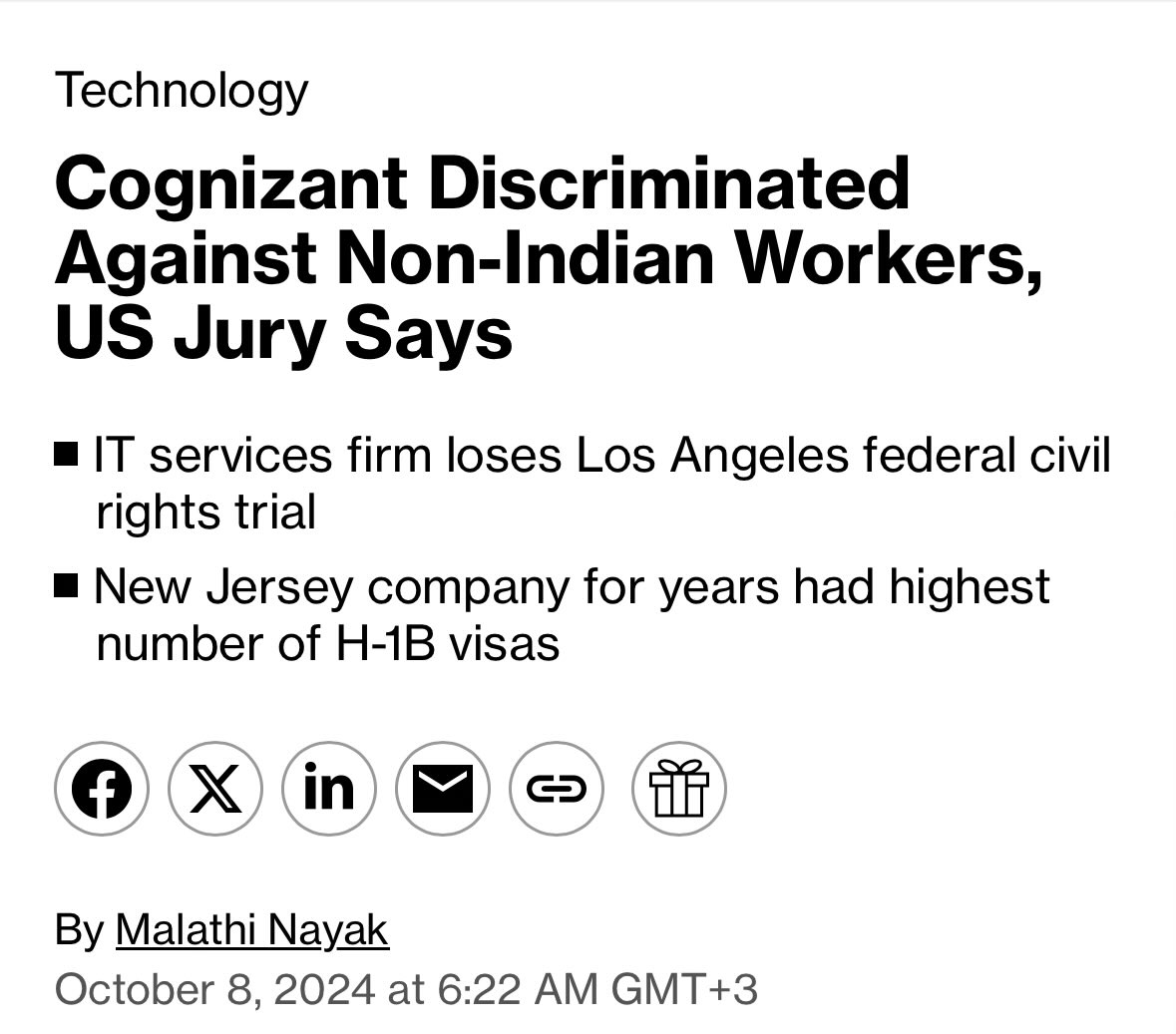
Progressives will make statements like this, yet defend the very system that allows wealthy CEOs to extract wealth through wage arbitrage using foreign labor. They’ll argue that we’re nothing without the foreigners who helped build the tech industry that is now being criticized as “barely innovates” in the tweet below. If a Pakistani-born immigrant became a trillionaire through that same system, these people would probably celebrate it rather than question how the wealth was accumulated.
Jun 13

And when we say Tech we don’t mean they invented a cure to cancer. Tech is increasingly a synonym for a particular industry that these days barely innovates
x.com/Joeyrandomguy/status/2…
19
62
873
Democrats believe that the federal government investing in the healthcare & education of *non-citizens* will make America prosperous & productive.
Fixed it for you.

This the basic difference.
Republicans believe that that if you let the wealthy spend capital it will make Americans prosperous.
Democrats believe that the federal government investing in the healthcare & education of our people will make America prosperous & productive.
1
4
26
484
Project for Immigration Reform retweeted

Jun 12
The mass immigration debate feels roughly where the free trade debate was a while back, with the thin facade of "this is fine" economic dogma beginning to buckle in the hot flame of reality.
It’s that moment when a few economists and business leaders start to take the reputational risk of saying “yes, we understand the abstract models, but they are woefully incomplete, and when you widen the aperture to consider the dynamic, long-term, political-economic picture, well…”
I mean my gosh, look at these lines in a news story from the @WSJ global economics correspondent @TomFairless this morning: 👀
The referendum reflects a broader shift in sentiment among rich countries that is upending the long-held consensus that open borders are the key to economic growth.
…
A historic influx of foreigners across the West, especially since the Covid-19 pandemic, doesn’t appear to have solved those economic problems. In some cases, it might even have made them worse: raising demand, and therefore prices, for things like housing and adding pressure on social services like healthcare.
…
Governments like Canada’s “pushed the idea of immigration to solve problems, and it just didn’t do anything,” said Mikal Skuterud, an economics professor at the University of Waterloo in Canada.
Immigration can provide an economic boost if migrants are more highly skilled than the general population, Skuterud said. But if their skills broadly match the population, it will likely have little impact on productivity or labor shortages.
…
While immigration can buy time for politicians to address the challenges of aging populations, they don’t solve the problem for good since the newcomers also age, said Alan Manning, economics professor at the London School of Economics. To avoid the economic effects of aging altogether would require implausible and rising numbers of immigrants, Manning said.
…
Immigration, they say, allows companies to simply import lower-cost workers instead of investing in locals or in new technologies like artificial intelligence to make their existing workers more productive.
…
Required investments for the newcomers—in new roads, homes, hospitals and machinery—can hurt overall economic productivity, according to Manning, because that capital could have been used to better equip the existing population.
…
Suzanne Thoma, a business executive who grew up locally, said a population cap would be like performing open-heart surgery on the export-oriented Swiss economy.
Nonsense, retorted Thomas Matter, a wealthy banker and SVP lawmaker who helped initiate the referendum. Mass immigration is a Ponzi scheme, he said, because newcomers also need goods and services, including, eventually, caregivers.
He argued that immigration was like a sugar high for an economy: It lifts top-line growth, but has struggled to lift GDP per capita, the more important metric.
…
“Immigration is the lazy solution,” said Peter Letter, a Zug businessman leading the local business lobby’s No campaign against the population cap. Access to the vast European labor market means that businesses can fail to look closer to home, he said.
…
But the economic debate about immigration isn’t “entirely honest,” said Sebastian Dullien, a prominent German economist. While the overall economic impact for a country might be positive, certain parts of the population lose out, especially lower-skilled workers, he said.
…
Switzerland, the large number of EU immigrants has likely held down Swiss salaries and weighed on productivity growth, said Bertschi Group Executive Chairman Hans-Jörg Bertschi, whose logistics company has around 3,000 employees.
“The pressure to improve productivity in industries and the service sectors has disappeared,” he said.
…
Local firms can generate growth without more workers thanks to AI, he argues. And with less foreign competition, local workers might benefit from greater opportunities, he said. Switzerland, for example, imports thousands of doctors even though “I know many who would like to study medicine but can’t” because of local medical-school quotas.
wsj.com/world/europe/switzer…
6
9
26
2,890
Project for Immigration Reform retweeted

Jun 12
Weeks of violent anti-migrant protests in South Africa have led to successful remigration efforts where other African nations are remigrating their citizens back home.
Many black South Africans are demanding foreigners get out, blaming them for taking jobs, sending money out, destabilising the host country and contributing to crime.
128
417
2,242
79,736
Project for Immigration Reform retweeted

Jun 12
Three defendants associated with H-2A farmworker labor trafficking operation based in Georgia sentenced to federal prison justice.gov/usao-sdga/pr/thr…
1
28
62
2,877
Project for Immigration Reform retweeted

Jun 12
City Council meeting in Hamtramck, MI
Hard to believe that this is America
3,179
6,382
31,438
4,379,062
Project for Immigration Reform retweeted

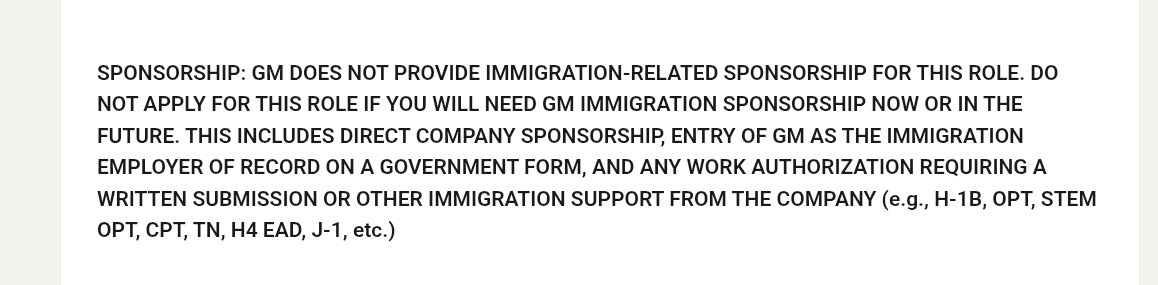
GM job posting. The first such statement I have seen out of them.
9
31
233
8,809
Project for Immigration Reform retweeted

Jun 12
“Anti-immigration sentiment that has simmered for years across Europe is boiling over, aggravated by the soaring costs, overburdened social-welfare systems and lackluster economic prospects.”
Jun 12

WSJ: Switzerland’s Radical Proposal on Immigration: Cap the Population - A referendum Sunday on keeping permanent residents below 10 million people reflects a growing discontent in the West; ‘Most people are left behind’ wsj.com/world/europe/switzer…
1
4
32
1,846
Project for Immigration Reform retweeted

Jun 12
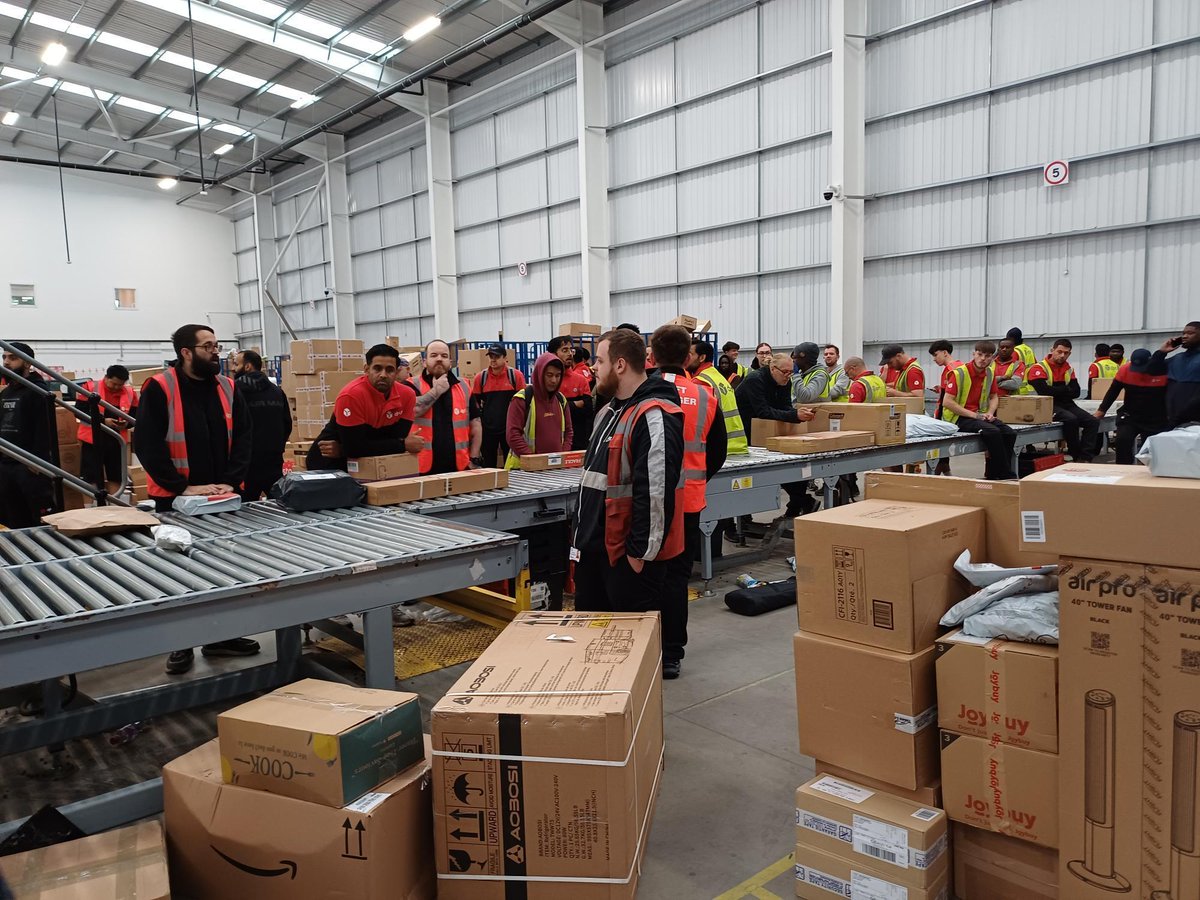
🚨 NEW: Immigration officers raided DPD depots in Newbury and Basingstoke yesterday
7 Indian nationals, 1 Ghanaian national and 1 Pakistani national were arrested for suspected illegal working

489
1,210
8,493
1,364,611
Project for Immigration Reform retweeted

Jun 12
This is why vetting of foreigners from much, if not most, of the world is literally impossible.
Jun 12

"There is no trace of this suspect
on any of our national security databases."
That was the PSNI chief constable,
offered almost as reassurance.
Think about what it actually means.
A man crosses from Sudan — a state in civil war,
where records burn with the buildings —
and the check is: does OUR database know him?
Of course it doesn't.
No database in Britain can contain
what happened in Khartoum.
"Not known to police" is not a clean record.
It is an empty page,
and the system read the emptiness as safety.
A vetting process that can only see
what a collapsed state wrote down
is not vetting.
It is hoping, with paperwork.
3
13
75
3,450