Joined April 2014
- Tweets 11,771
- Following 456
- Followers 3,579
- Likes 4,471
5,561 Photos and videos






May 5
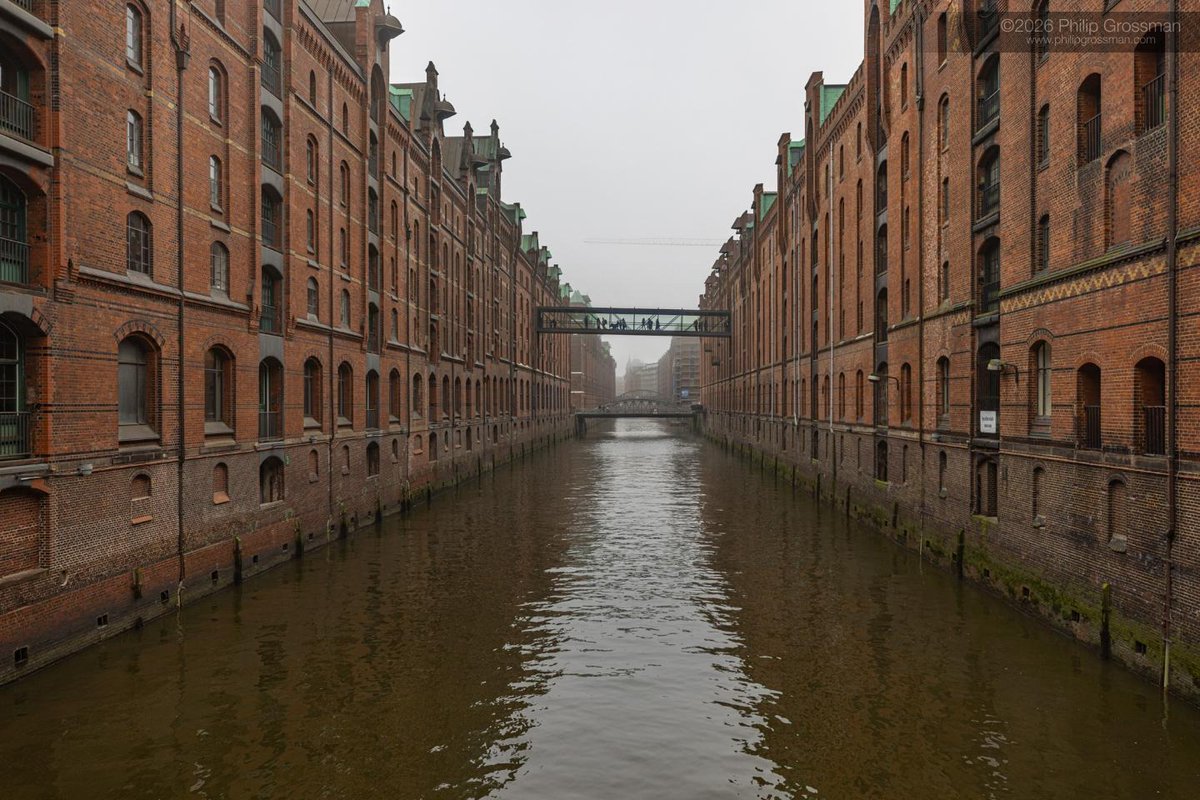
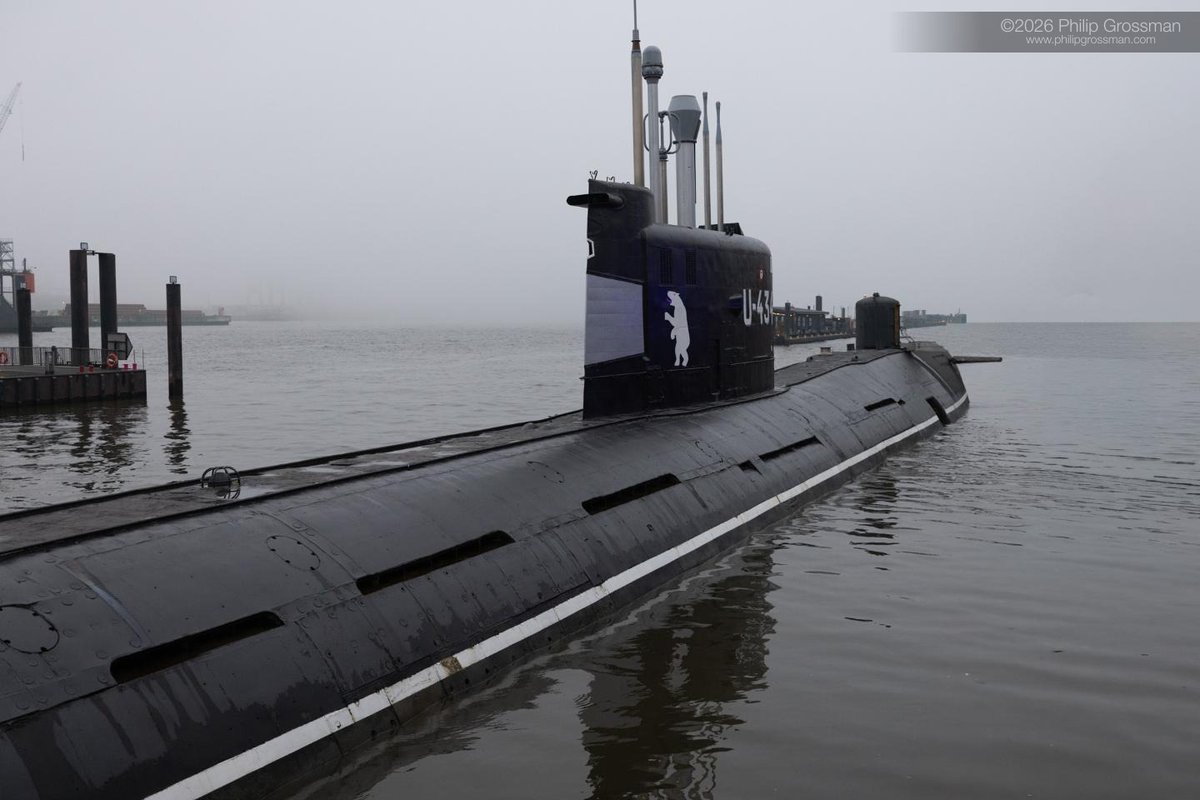
In December of 2024 between Christmas and New Year's, I went to Hamburg, Germany to visit friends from the States and also a few German friends.
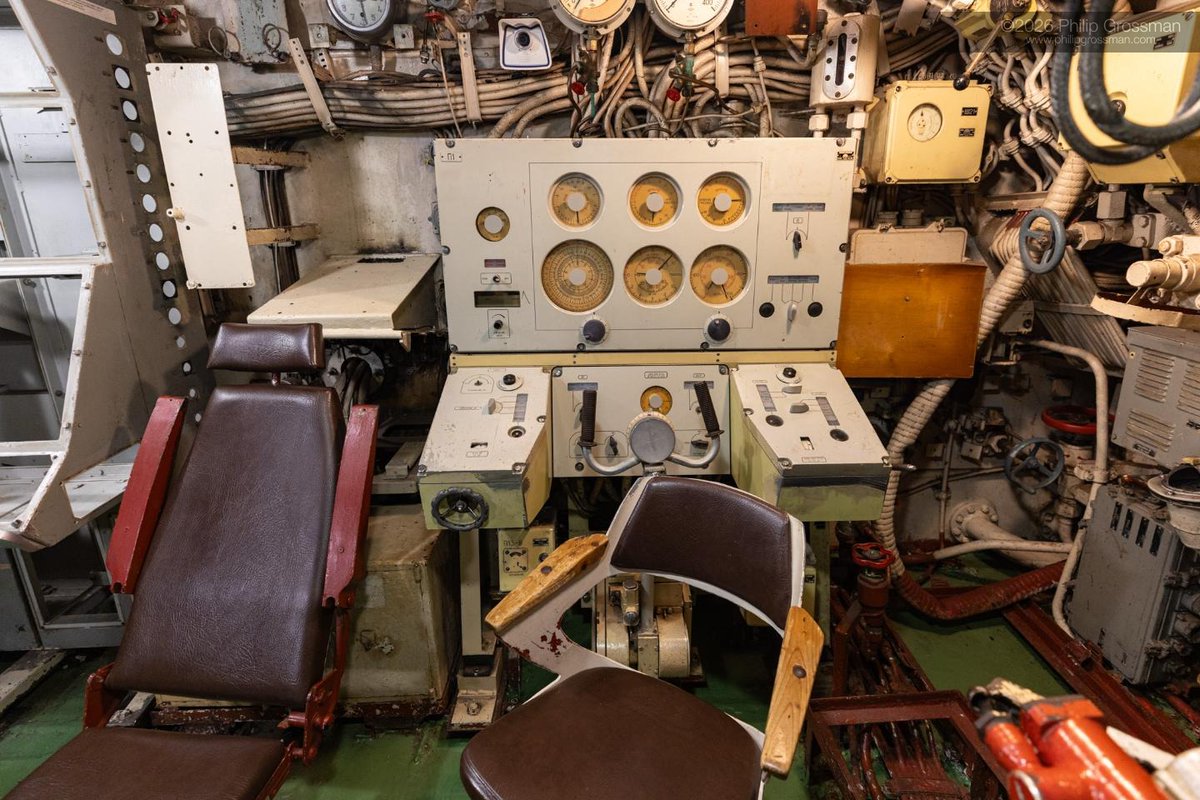
Dropping into the primary command center felt like entering a brass and steel pressure cooker. The main tactical station is completely dominated by analog readout panels and exposed high-voltage conduits. Soviet designers clearly didn't give a damn about knee space.
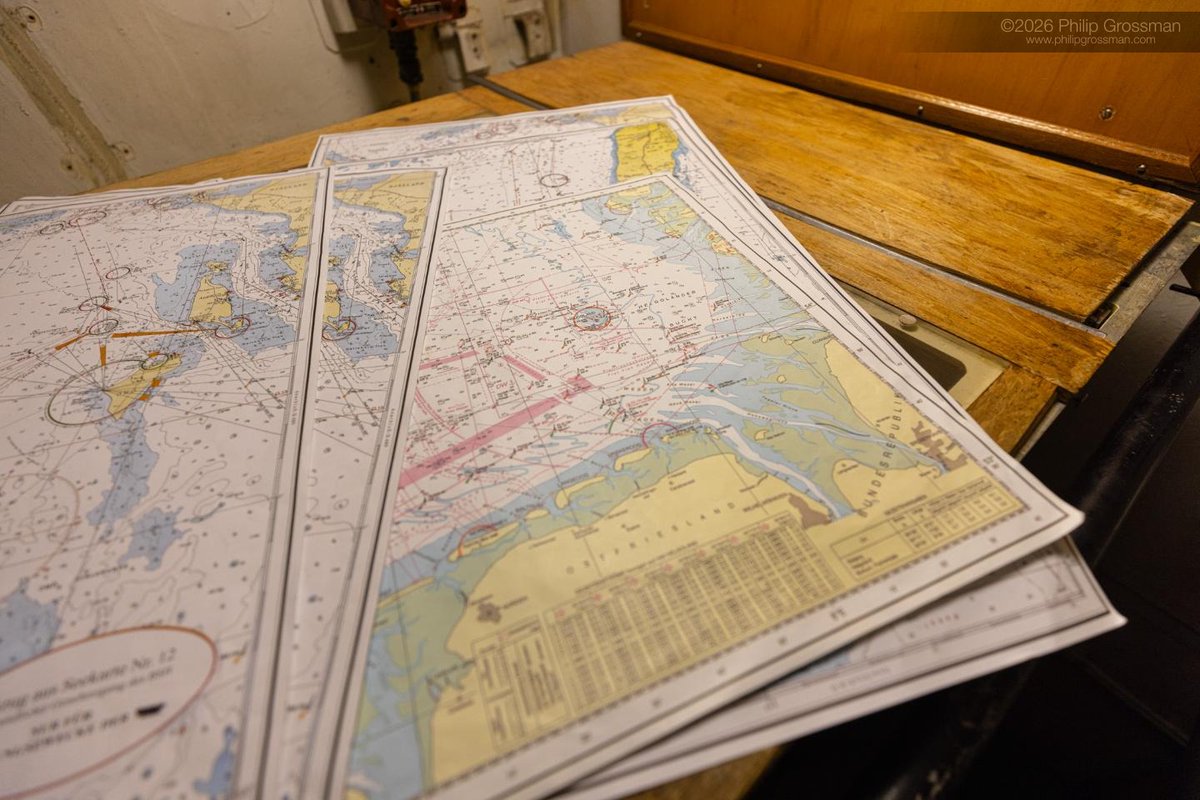
I found spread paper charts showing coastal depth measurements. Geometry over digital logic. My neck still hurts from clearing those low clearance hatches. #SovietEngineering #U434
1
185
May 1
In the summer of 2024 I went to Italy to meet up with some new European urbex friends that I first met about a year before in Svalbard. It was great seeing them all, and I wanted to share some images of one of the locations we explored. We entered this 18th-century estate in Empoli at 5:00 AM.
The primary roof structure had already failed. Massive brick and tile accumulations on the main floor. I had to dodge 1958 Italian magazines scattered across the terracotta just to set up my tripod. The joists above were completely waterlogged. I didn't stay long under that hole.



2
158
Apr 27
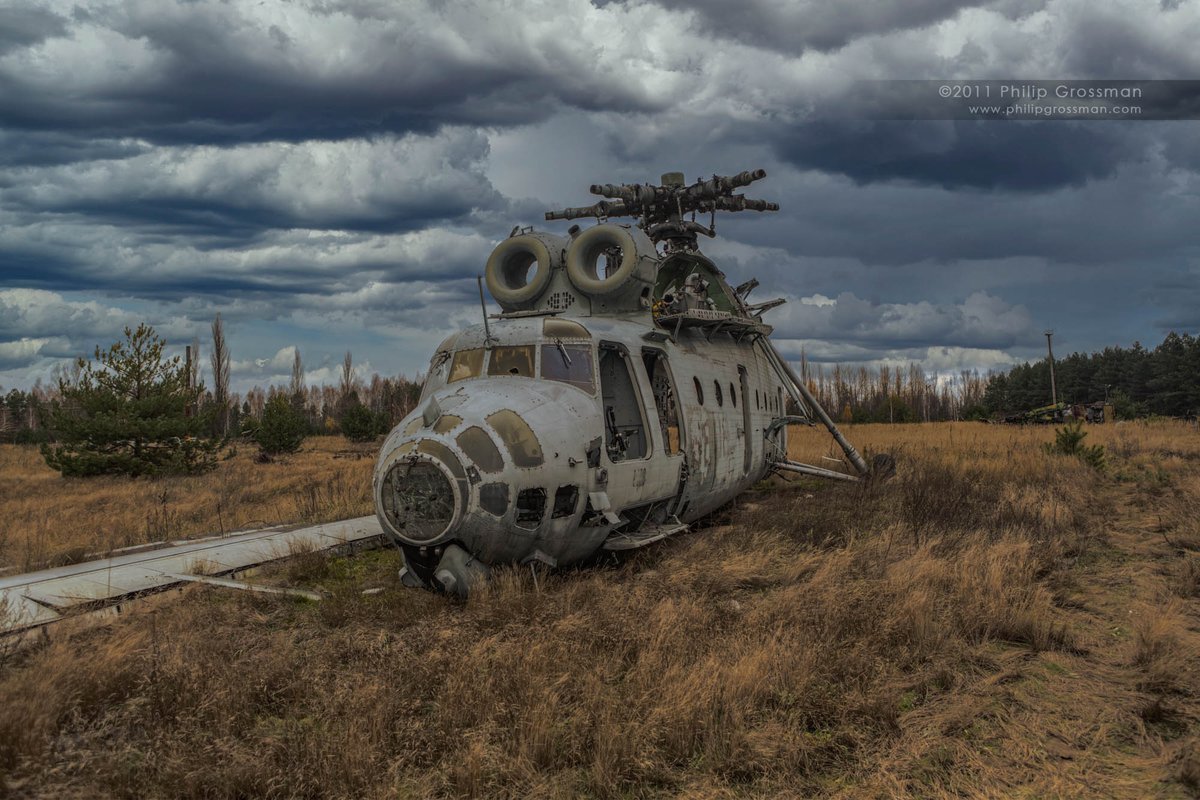
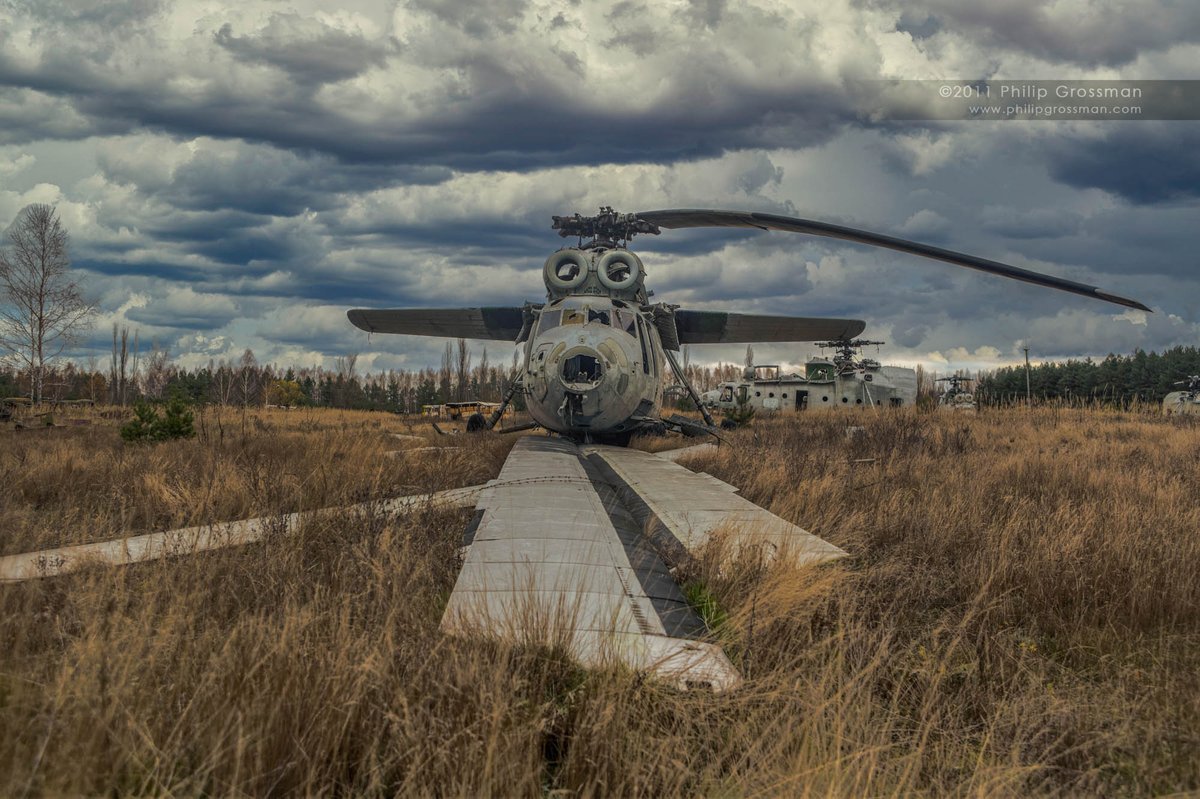
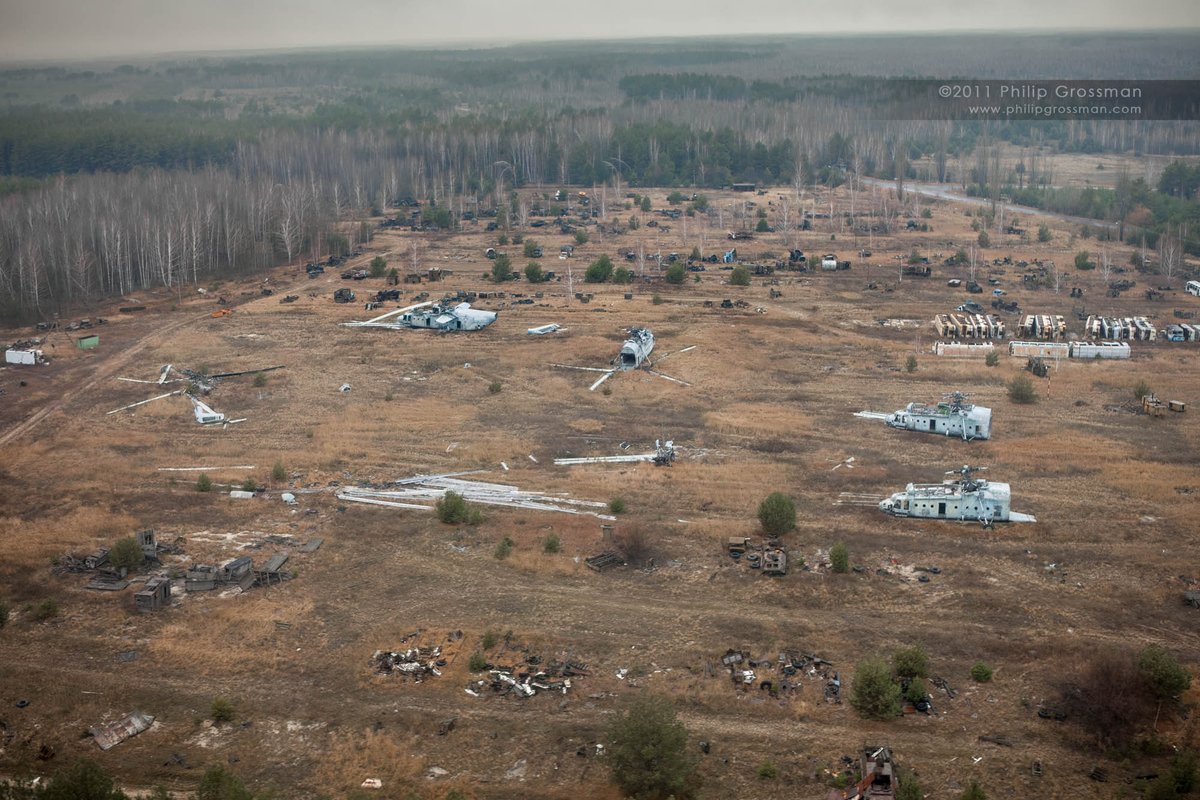
Rotary-Wing Operations & The Rassokha Graveyard in Chernobyl (for my aviation friends)
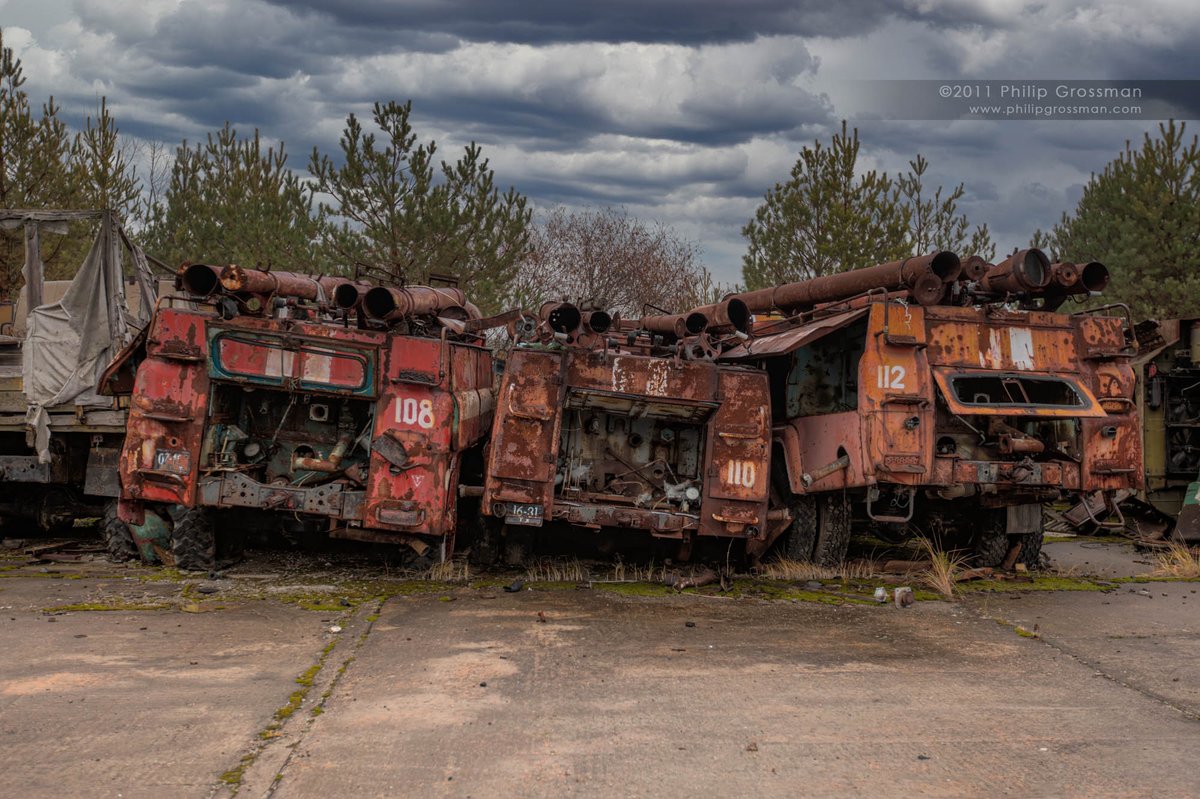
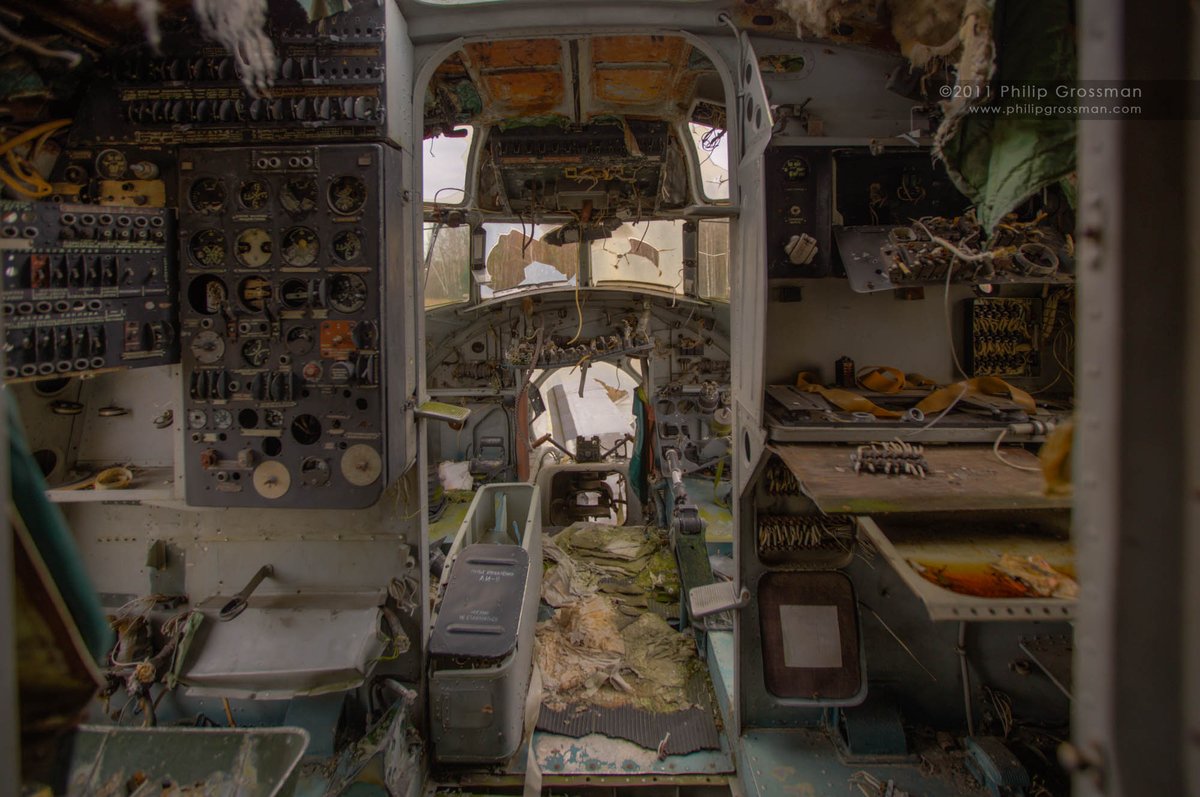
The destruction of Unit 4 required an immediate airborne logistical response. Soviet military aviation deployed Mi-6, Mi-8, and heavy-lift Mi-26 helicopters directly into the radioactive plume.
The primary objective was to smother the exposed, burning graphite core. Payloads consisted of boron carbide to absorb neutrons, lead for radiation shielding, and dolomite, sand, and clay to act as a heat sink and filter. Over 5,000 tonnes of material were dropped.
The airspace above the reactor was hostile. Pilots hovered at 200 meters, facing extreme thermal drafts that altered the aerodynamics of the helicopters. Ionizing radiation in the plume reached upward of 1,800 roentgens per hour. Crews flew blind without adequate dosimetry and improvised by placing lead sheets under their seats.
Beyond bombing the core, these assets were utilized for aerial dosimetry and spraying polymer liquids to suppress radioactive dust across the zone.
The airframes absorbed massive amounts of particulate contamination. Decontamination was impossible. The fleet was ultimately abandoned at the Rassokha vehicle graveyard.
I documented these highly contaminated airframes in 2011. By 2013, the entire inventory at Rassokha had been dismantled, scrapped, or buried.
#Chernobyl #AviationHistory #RotaryWing #Mi6 #Mi8 #NuclearEngineering #Rassokha #History #Engineering
4
2
7
275
Apr 27
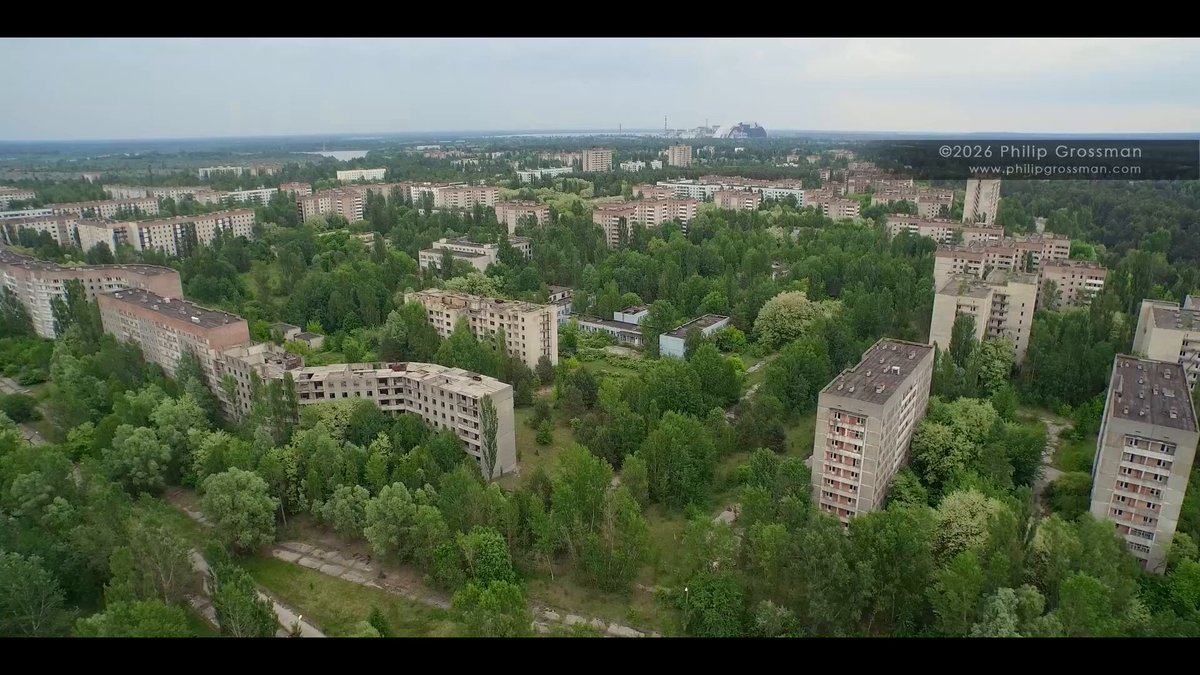
The final perspective. In 2015, I captured this continuous drone flight traversing the entire city of Pripyat from the westernmost edge to the easternmost edge.
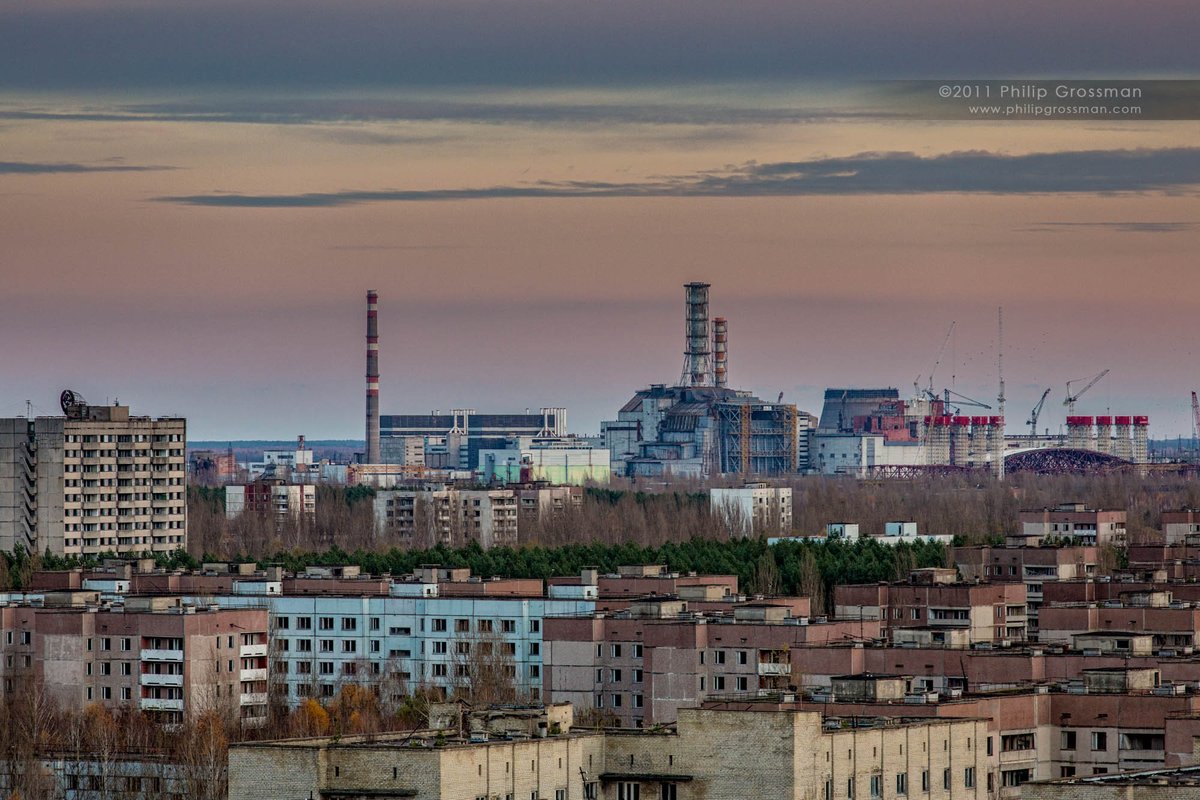
Beneath the canopy lies the footprint of an atomgrad designed for 50,000 residents. It was completely evacuated in a single afternoon. The urban grid is systematically dissolving into the forest. On the horizon, the V.I. Lenin Nuclear Power Plant remains the anchor of the Exclusion Zone. The ultimate cost of a systemic engineering failure is the permanent erasure of a city.
#Chernobyl40 #Pripyat #NuclearEngineering #DronePhotography #History #EngineeringFailure #Documentary
4
34
2,294
Apr 26
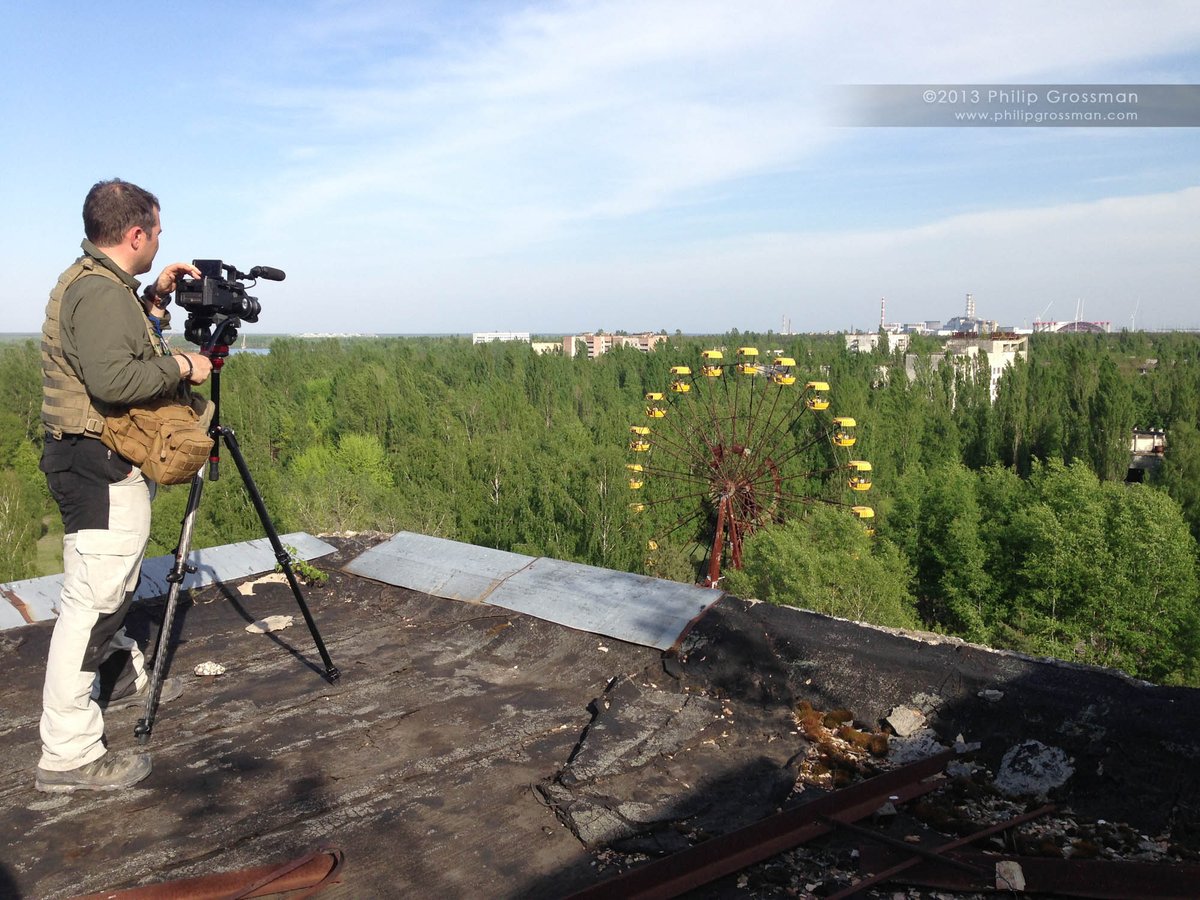
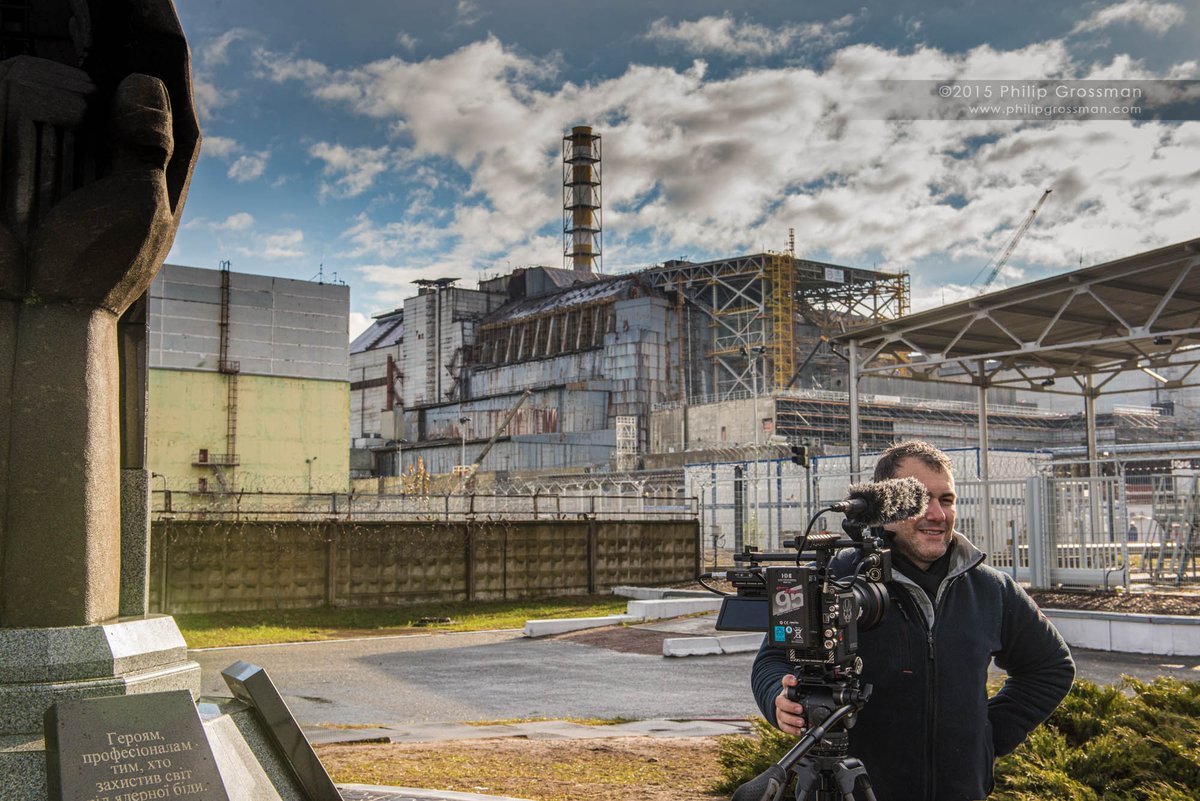
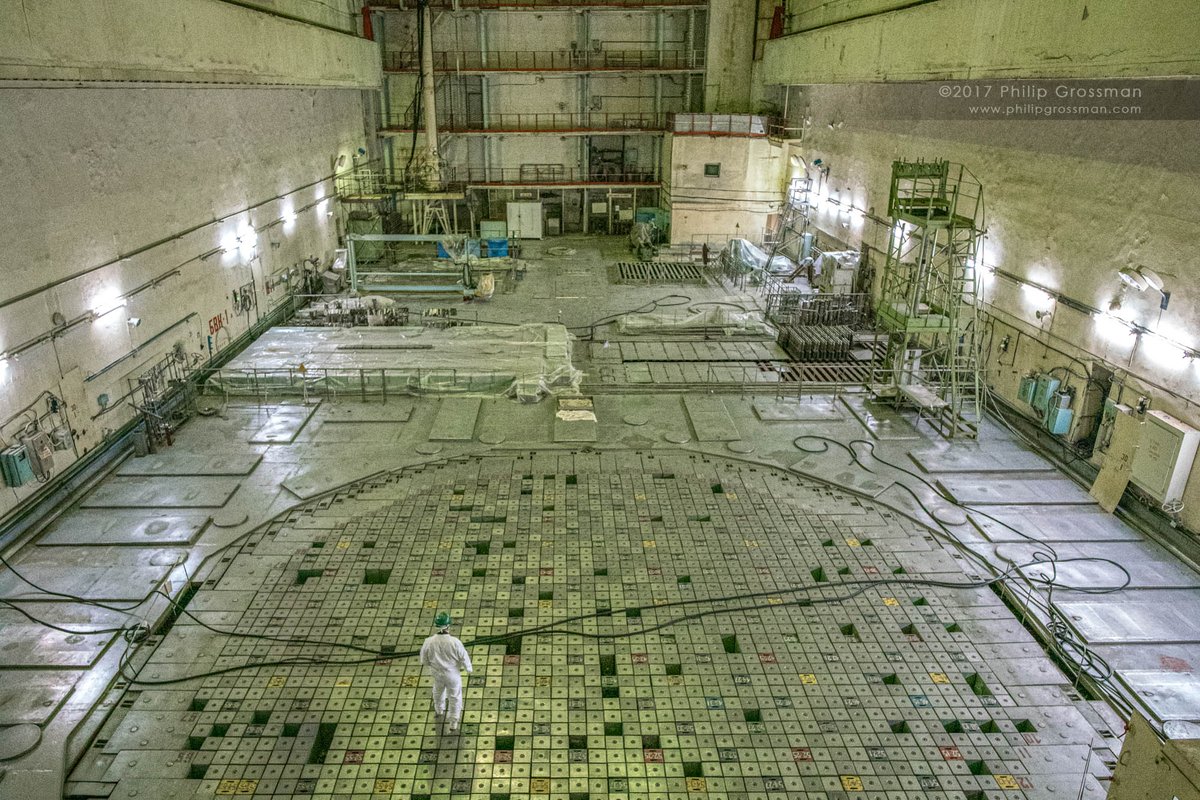
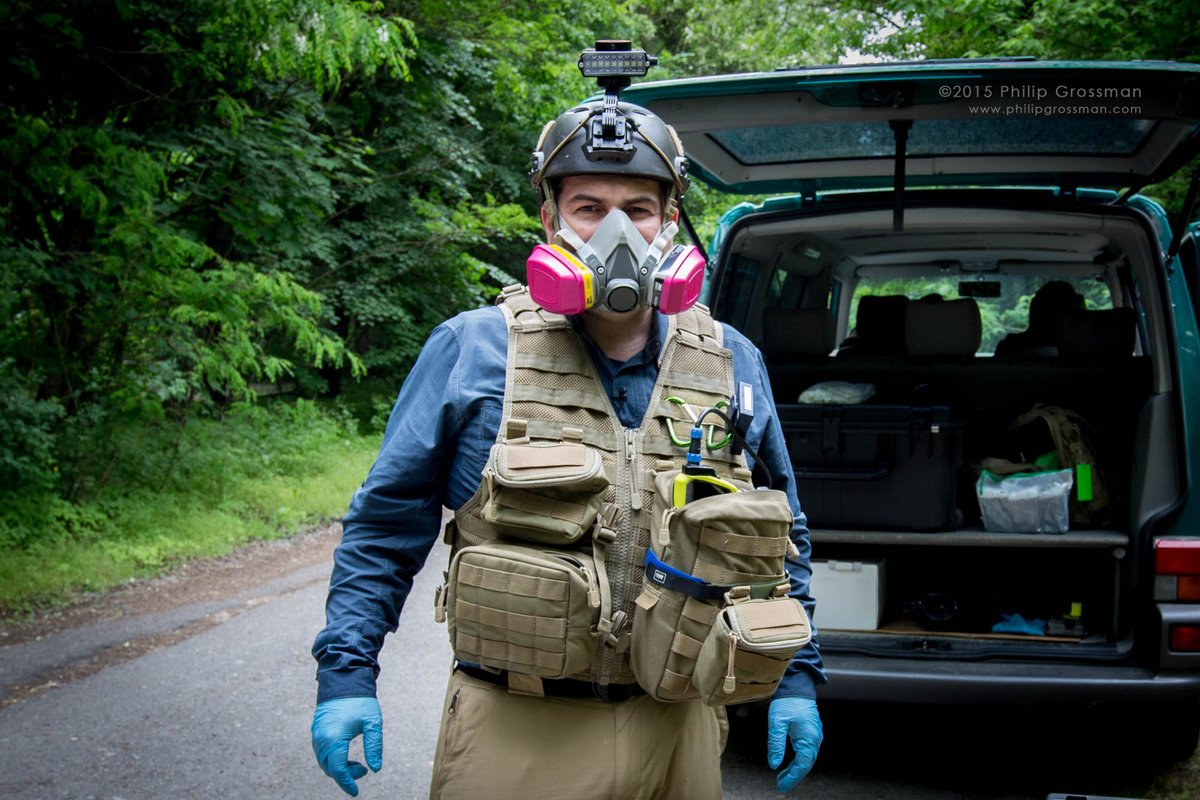
Documenting the aftermath of the April 26, 1986 disaster requires strict logistical protocols. Over the past decade, I have spent 180 days inside the 30-kilometer Exclusion Zone, building the definitive visual archive of the largest engineering failure in history.
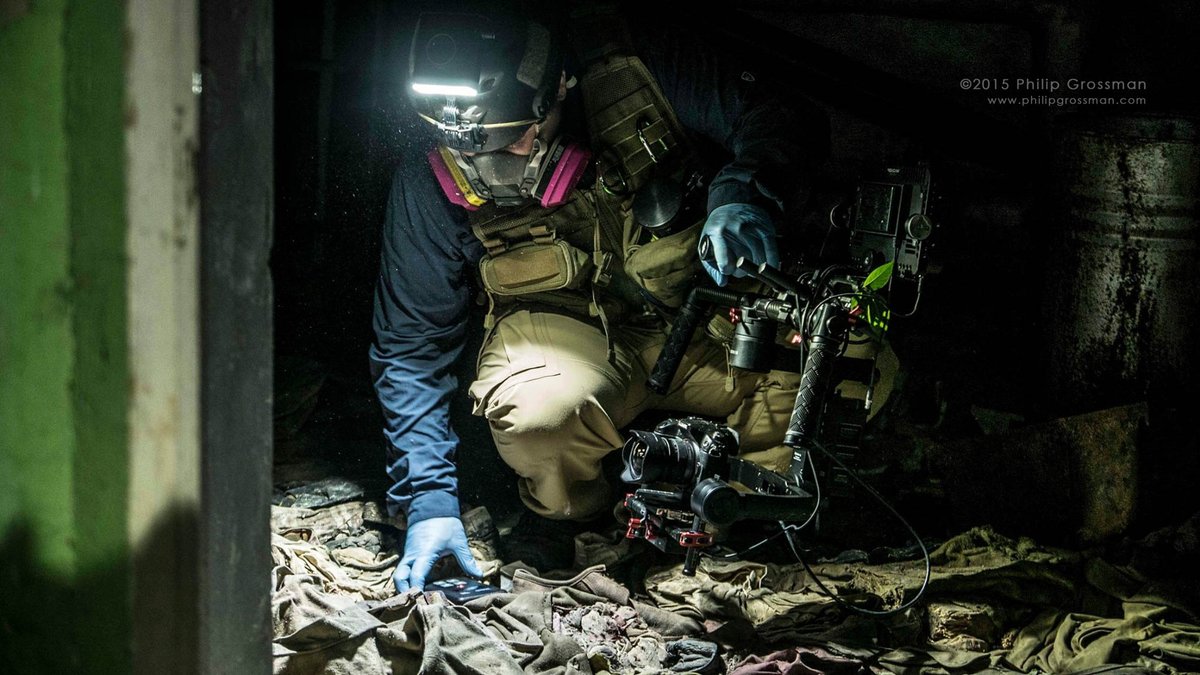
The methodology is dictated by the radiological reality. Working in structurally compromised areas and highly contaminated zones, such as the MSCh-126 hospital basement, requires constant dosimetry and precise exposure management.
The objective is architectural forensics. From operating cinema rigs in the shadow of the degrading Sarcophagus, to tracing the original schematics left in abandoned control rooms, to physically walking the RBMK reactor block lids.
The facility is decaying. The primary accounts are fading. Capturing this data before the site collapses is essential for the historical and engineering record.
#Chernobyl #Chernobyl40 #NuclearEngineering #DocumentaryCinematography #History #Pripyat #EngineeringFailure #Radiation
1
2
215
Apr 26
This our”little man” Spicoli he turns 5 months tomorrow. This is a king sized bed…he is going to be huge :-)
1
6
162
Apr 26
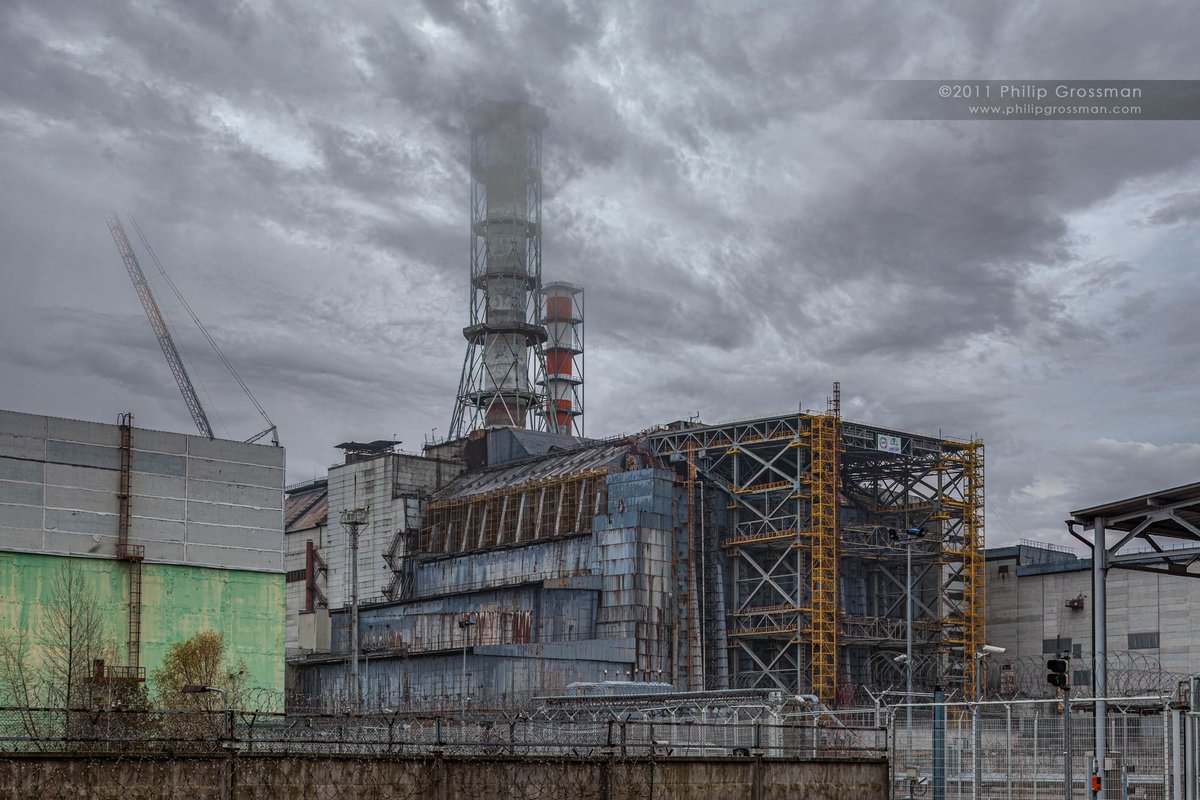
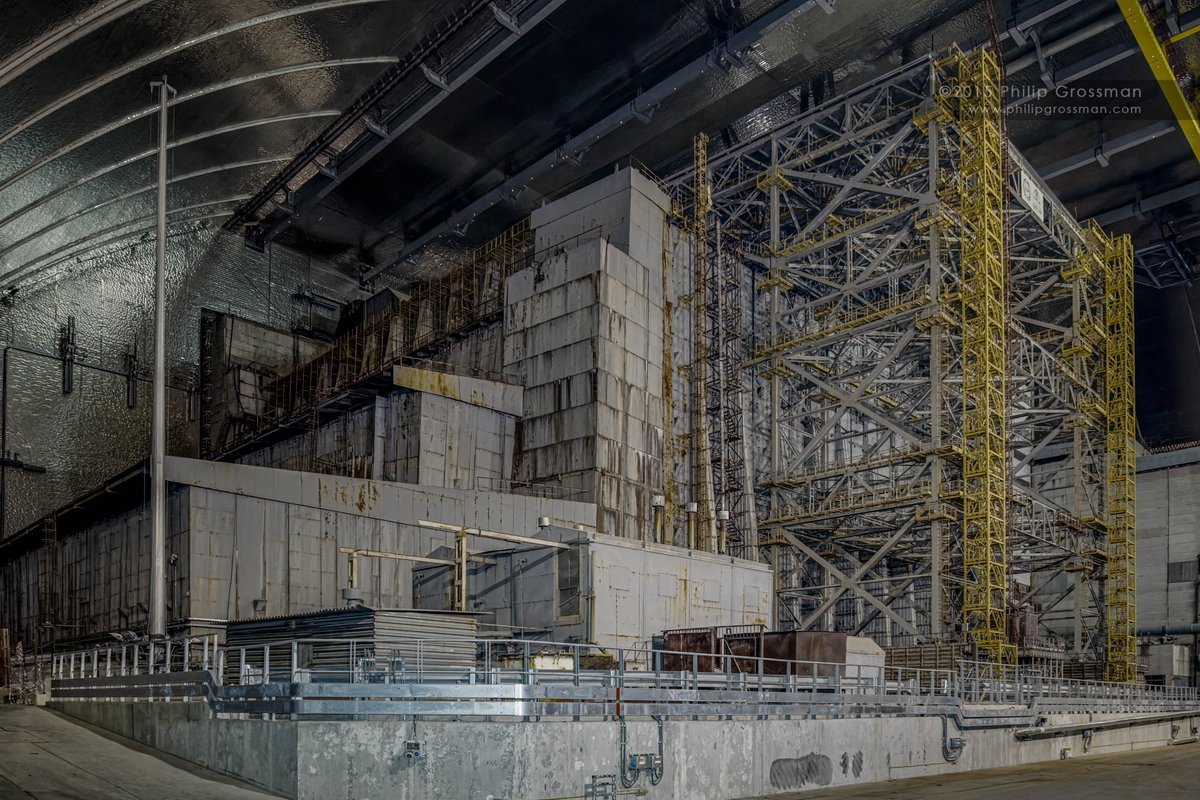
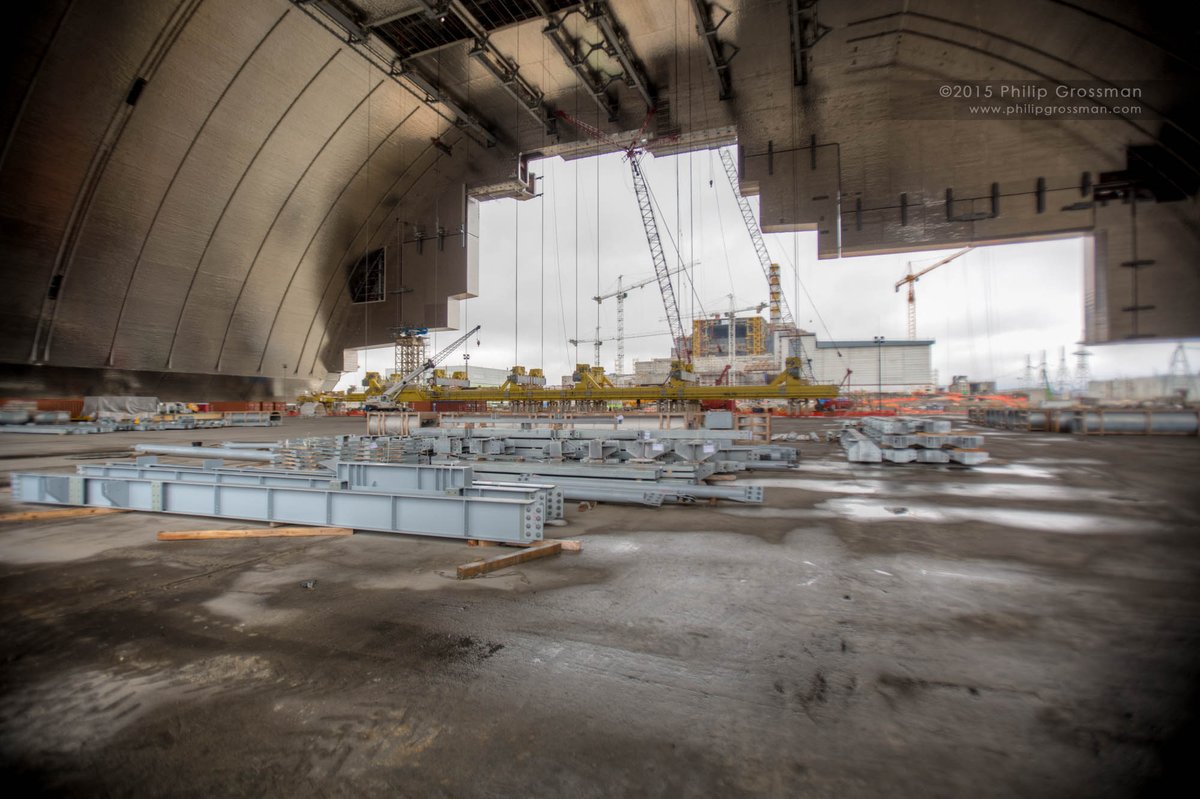
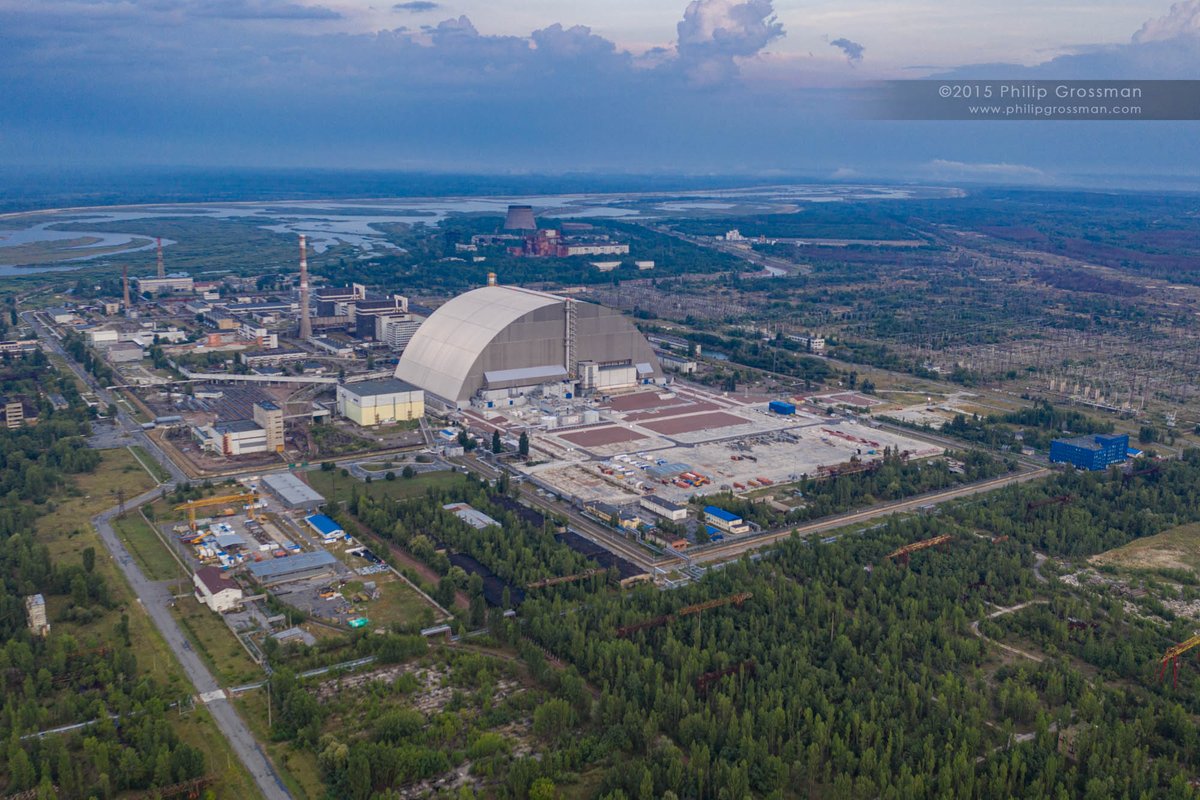
Following the disaster, the objective was stabilization. Engineers and liquidators had seven months to build a containment structure over the highly radioactive ruins of Reactor 4. The original Object Shelter—the "Sarcophagus"—was an engineering patch built under extreme duress.
The structural reality was grim. 400,000 cubic meters of concrete and 7,300 tonnes of metal were pieced together using remote-controlled cranes in lethal radiation fields. It was never designed for permanence. By the 2000s, the structure showed significant degradation. Leaks and structural instability necessitated a modern solution.
Today, the New Safe Confinement (NSC) arch encases the ruins. It is the largest movable land-based structure in history—a 36,000-tonne arch designed for a 100-year lifespan. Inside the NSC, the juxtaposition is absolute: pristine modern steel shielding the decaying 1986 concrete.
This arch allows for the eventual, robotically-controlled dismantling of the original Sarcophagus and the unstable reactor remains beneath it. Engineering has moved from emergency management to long-term environmental containment.
#Chernobyl #NuclearEngineering #Sarcophagus #NewSafeConfinement #History #EngineeringFailure #Infrastructure
2
8
284
Apr 26
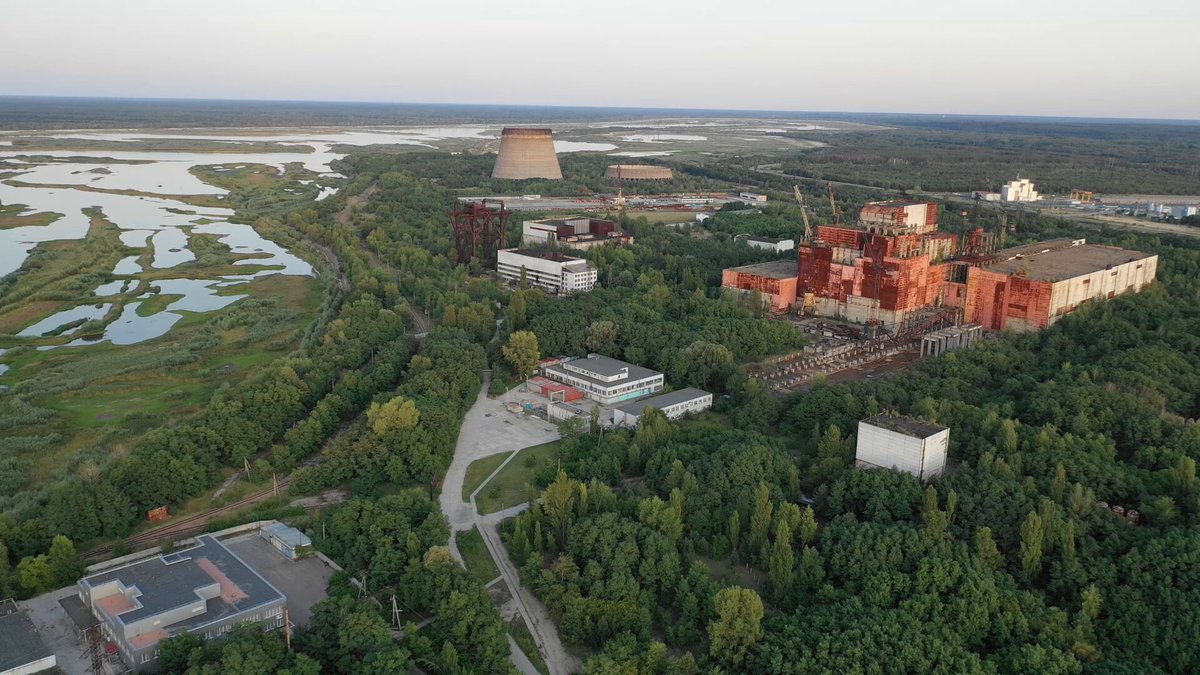
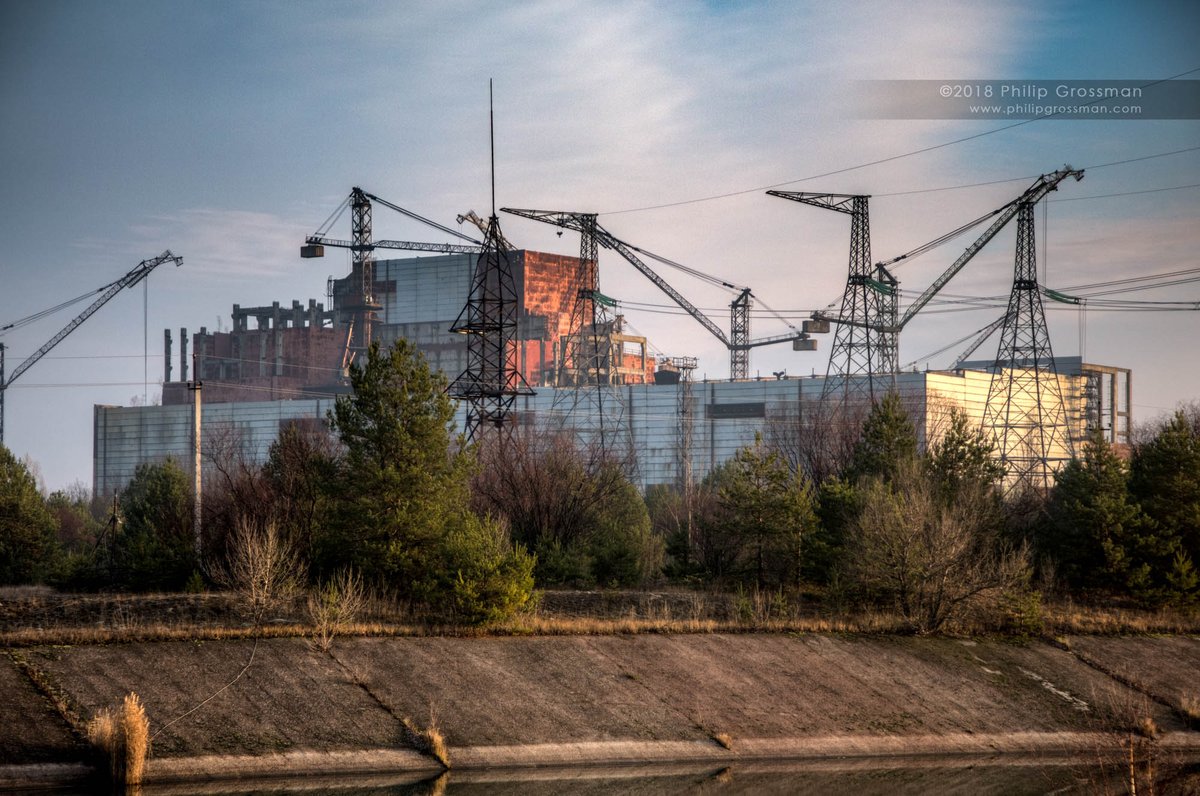
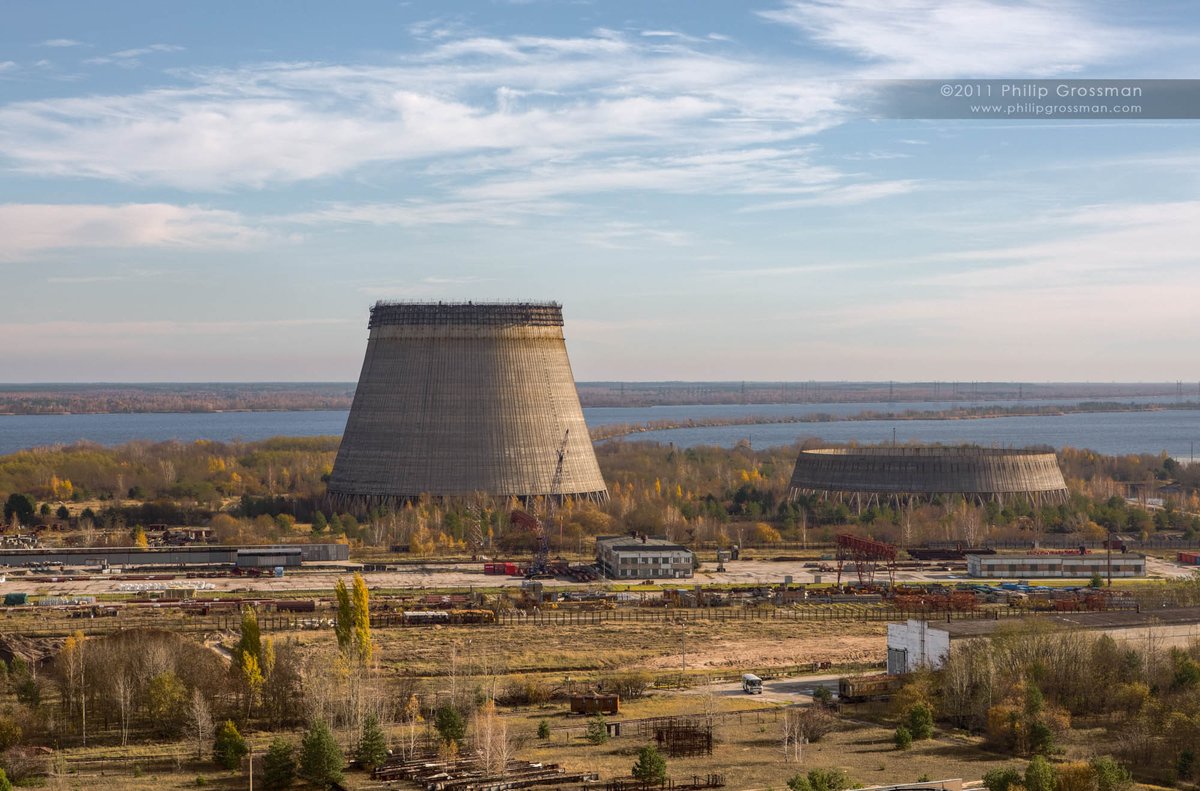
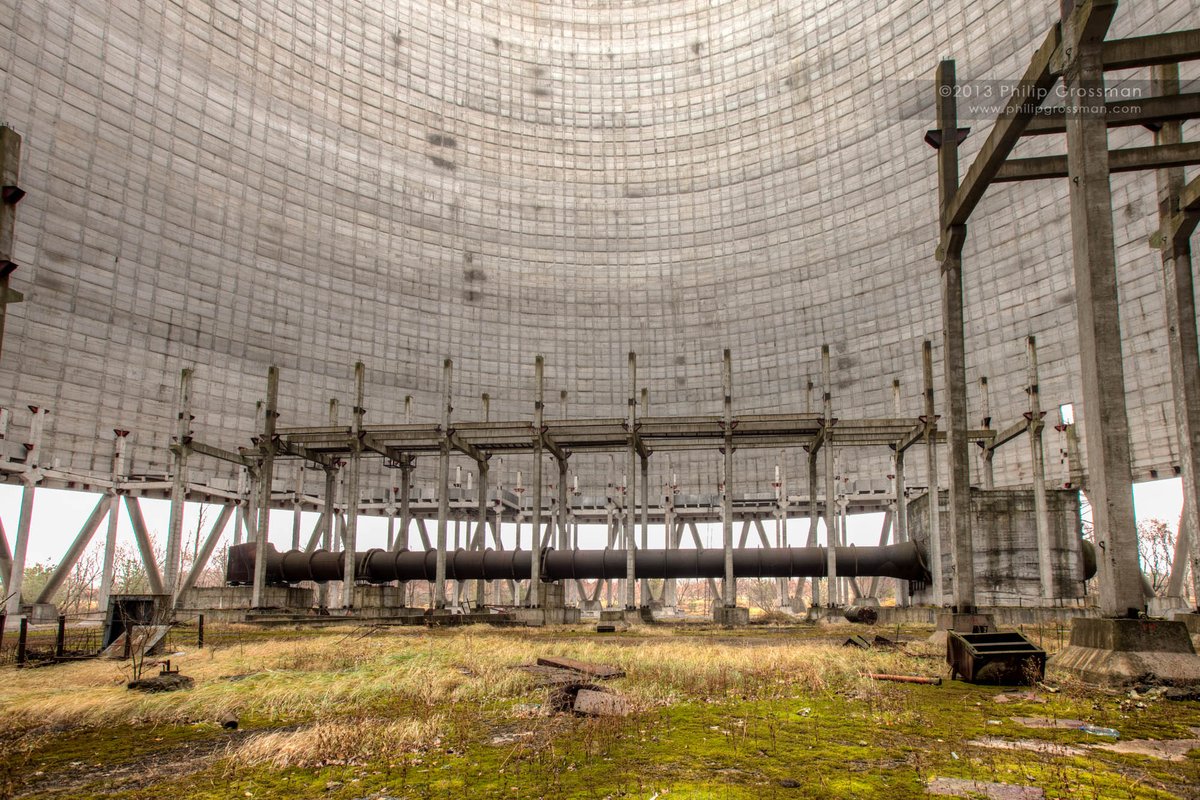
Understanding the magnitude of the Chernobyl disaster requires viewing the infrastructure that was abandoned. This drone footage captures Phase III of the V.I. Lenin Nuclear Power Plant, consisting of Reactors 5 and 6. The heavy cranes above Reactor 5 remain exactly where they were positioned on April 26, 1986. The adjacent cooling towers were abandoned mid-construction.
The logistical reality of this engineering failure meant that the adjacent city of Pripyat was emptied of 50,000 residents in a single afternoon using a fleet of 1,200 buses. The site transitioned immediately from a massive power generation expansion to a static exclusion zone.
#Chernobyl #NuclearEngineering #Infrastructure #EngineeringFailure #DronePhotography #IndustrialDesign
5
4
16
449
Apr 26
The disaster at Unit 4 permanently halted a massive infrastructure expansion. Phase III of the V.I. Lenin Nuclear Power Plant consisted of Reactors 5 and 6.
The heavy cranes above Reactor 5 remain exactly where they were positioned on April 26, 1986.
Adjacent to this expansion, the city of Pripyat was emptied of 50,000 residents in a single afternoon using a fleet of 1,200 buses. The site transitioned from a base-load power engine to a static exclusion zone.
#Chernobyl #NuclearEngineering #Pripyat #RBMK1000 #History #Infrastructure
7
225
Apr 26
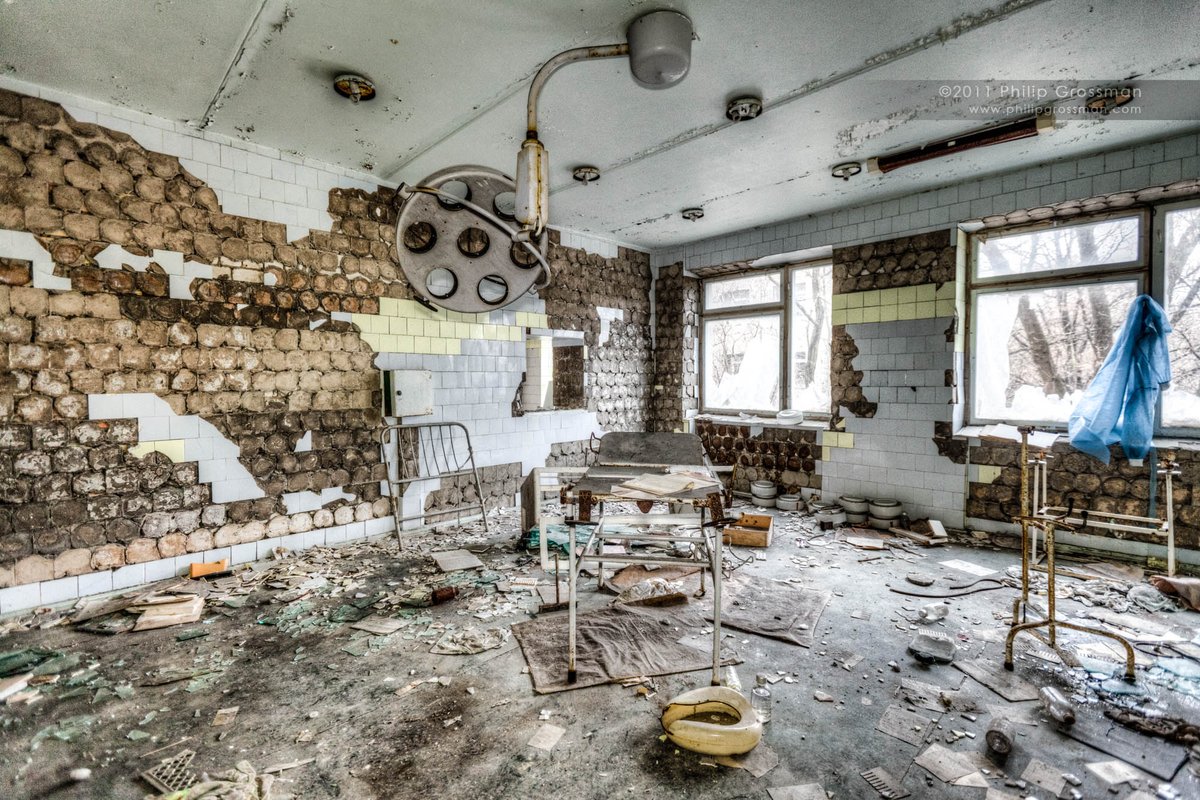
The aftermath. First responders arrived with standard gear and zero shielding from ionizing radiation.
Triage was conducted at Pripyat Hospital (MSCh-126). The facility was contaminated immediately.
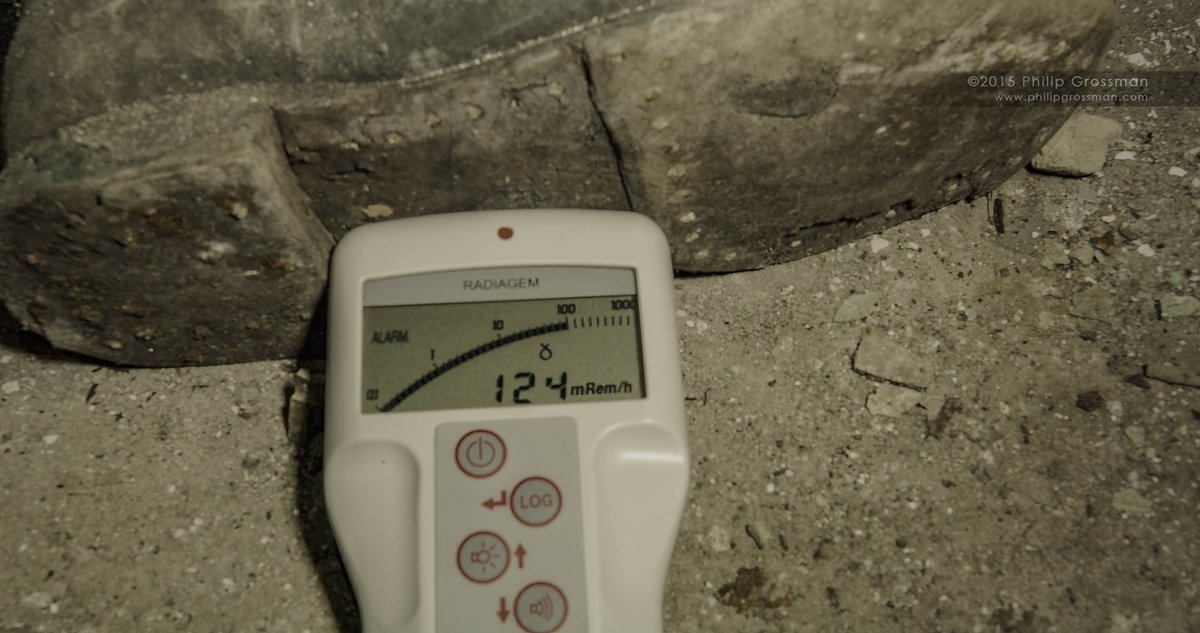
The hospital basement remains lethal. I conducted a radiological survey of the discarded gear; a single boot still emits 124 mRem/h.
The first responders were blind. Their dosimeters were insufficient for the magnitude of the core failure.
#Chernobyl #History #Engineering #Pripyat #NuclearFailure
4
438
Apr 26
Obrazhej Savva Gavrilovich and his wife Elena are "samosely," self-settlers in the Chernobyl zone. Evacuated to Borodyanka, they returned to their home after just two weeks. Observing beavers and swans returning to the river, they concluded humans could survive the radiological environment too.
Despite looting and government pressure, they refused to leave. Savva told authorities, "I want to die here". Primary accounts are essential to the historical record. Watch the rare interview today. #Chernobyl40 #Samosely #Documentary #History
2
187
Apr 26
April 26, 1986. 7:45 AM. Paramedic Pyotr Alekseyevich arrives at the Pripyat ER facility. He is given two pills of potassium iodide and a shot of pure alcohol. The radiological reality of the morning is already escalating. Today, the 40th anniversary, I am releasing my full 35-minute interview with him.
We walk the exact triage corridors and decontamination showers where he brought the first responders from the nuclear plant. He details the logbooks of colleagues who did not survive. History is preserved in primary accounts. Watch the full interview. #Chernobyl40 #Pripyat #History #Documentary
2
4
212
Apr 26
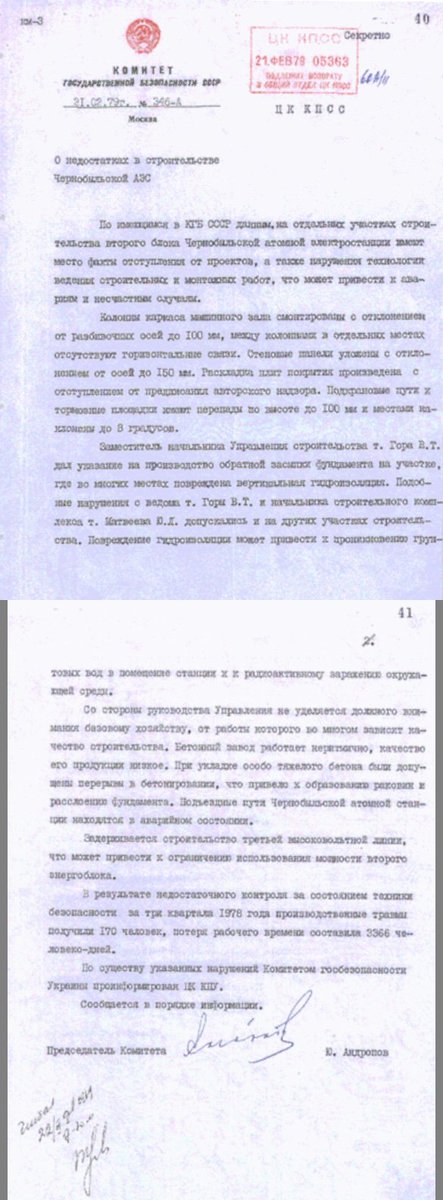
Over the many years of my travels to Ukraine and my work at the United Nations I have collect copies of various KGB documents relating to Chernobyl. This is a secret KGB document drafted in 21 FEB 1979 being sent to the Central Committee of the Communist Party of the Soviet Union from Yu. Andropov, Chairman of the Committee
The topic of this letter:
Regarding shortcomings in the construction of the Chernobyl NPP
Secret CC CPSU [Central Committee of the Communist Party of the Soviet Union] Date: 21 FEB 79 05363 Subject to return to the General Department of the CC CPSU
[Header] COMMITTEE FOR STATE SECURITY OF THE USSR February 21, 1979. No. 346-A Moscow
[Addressee] To the CC CPSU
[Subject] Regarding shortcomings in the construction of the Chernobyl NPP
According to data available to the KGB of the USSR, deviations from design specifications and violations of construction and installation protocols are occurring at distinct sectors of the construction of the second unit of the Chernobyl Nuclear Power Plant. These deviations risk causing structural failures and personnel injuries.
The machine hall structural frame columns have been installed with deviations from the reference axes of up to 100 mm; horizontal bracing between columns is missing in specific locations. Wall panels are installed with deviations from the axes of up to 150 mm. The layout of the roof slabs was executed in violation of designer supervision directives. Crane tracks and braking platforms exhibit elevation disparities of up to 100 mm and are inclined up to 8 degrees in certain places.
The Deputy Head of the Construction Directorate, Comrade V.T. Gora, issued a directive to proceed with foundation backfilling in a sector where the vertical waterproofing is compromised in multiple locations. Similar violations, acknowledged by Comrade V.T. Gora and the Head of the Construction Complex, Comrade Yu.L. Matveev, were permitted in other construction sectors. Waterproofing degradation introduces the risk of groundwater infiltrating the station premises, leading to potential radioactive contamination of the surrounding environment.
[Page 2]
The Directorate leadership is failing to allocate sufficient attention to the foundational support facilities, which dictate overall construction quality. The concrete plant operates erratically, yielding substandard product quality. Interruptions were permitted during the pouring of ultra-heavy concrete, resulting in the formation of voids and foundation delamination. The access infrastructure for the Chernobyl Nuclear Power Plant is in a critical state of disrepair.
Construction of the third high-voltage line is delayed. This delay constrains the operational power output limits for the second power unit.
Due to inadequate enforcement of occupational safety protocols, 170 personnel sustained workplace injuries during the first three quarters of 1978, resulting in 3,366 man-days of lost productivity.
The KGB of Ukraine has briefed the CC CPU [Central Committee of the Communist Party of Ukraine] regarding the substance of the identified violations.
Submitted for informational purposes.
Chairman of the Committee [Signature] Yu. Andropov
126
Apr 25
Historical footage from the early 1990s inside the original Object Shelter (Sarcophagus). The 300,000-tonne structure was a provisional barrier erected in just seven months. Inside, the molten fuel mixture solidified into highly radioactive lava-like masses. The video reveals the 2,000-ton Upper Biological Shield, "Elena," resting at an unnatural angle with snapped fuel channels dangling from its base. A stark look at the physical reality of the destroyed reactor core. #Chernobyl #NuclearEngineering #History #RBMK1000
1
4
311
Apr 25
1:23 AM. April 26, 1986. Control Room 4.
The rundown test is hours behind schedule. Xenon-135 poisoning has severely suppressed the core's power output. To force the power back up and proceed with the test, operators extract the boron carbide control rods.
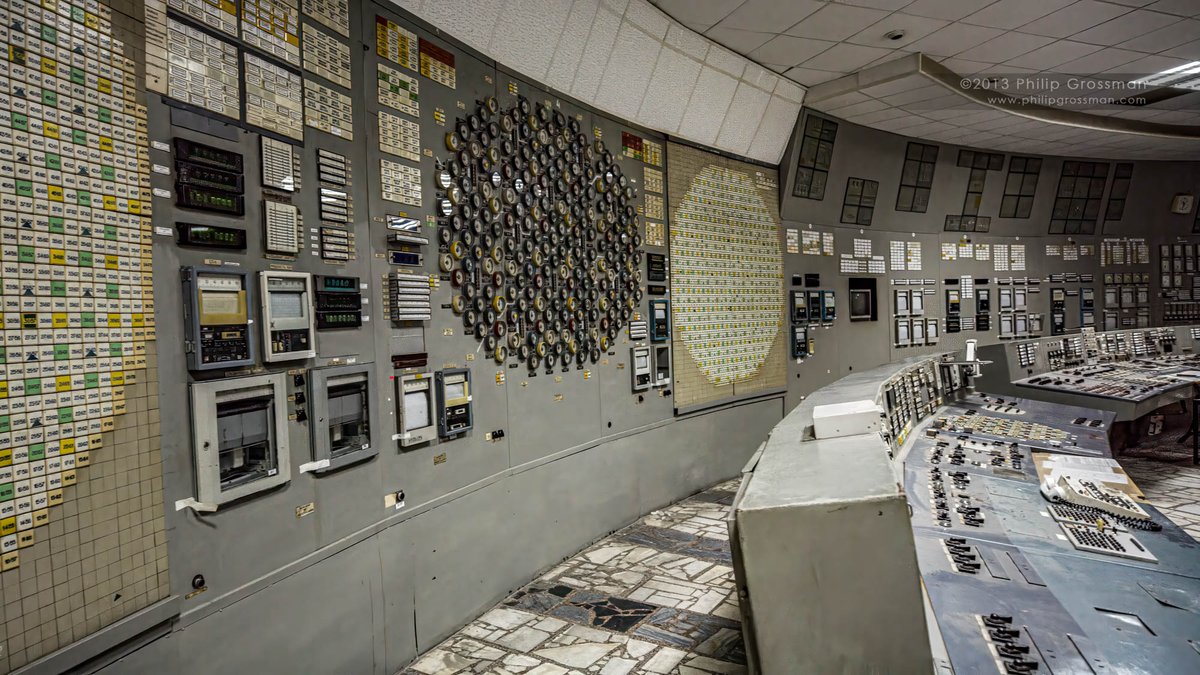
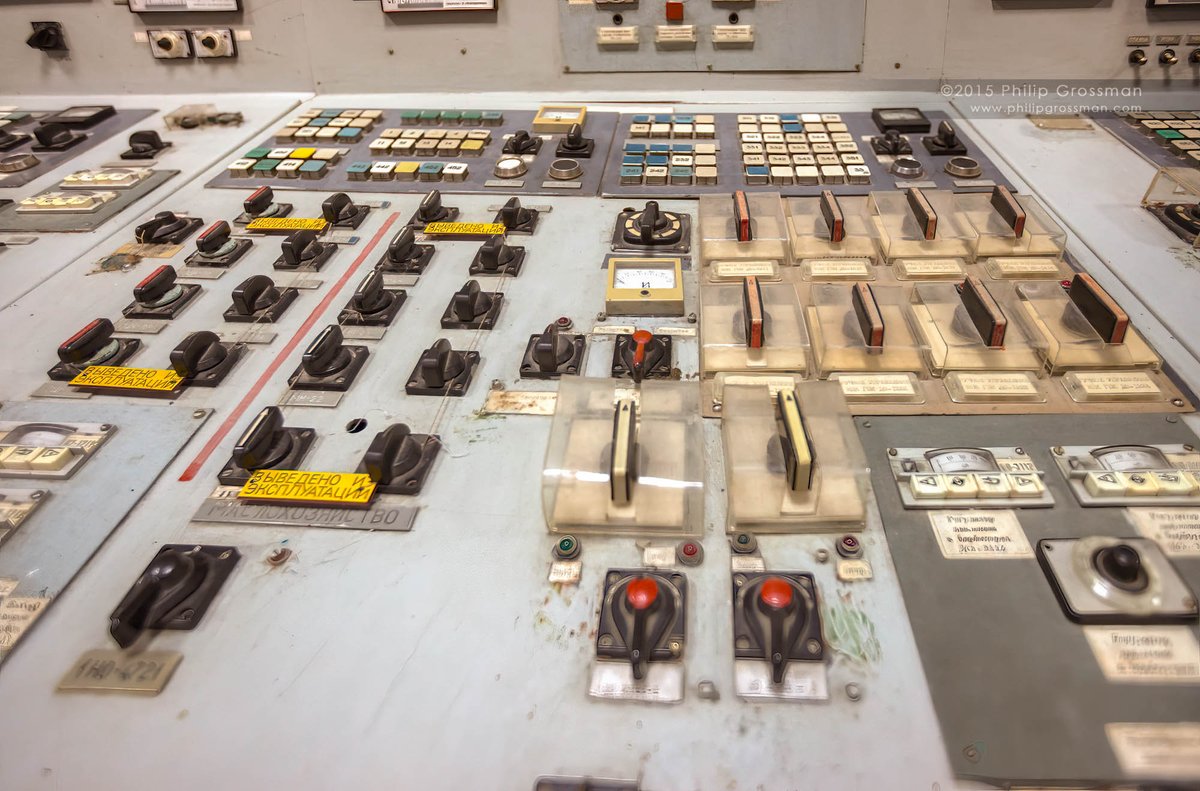
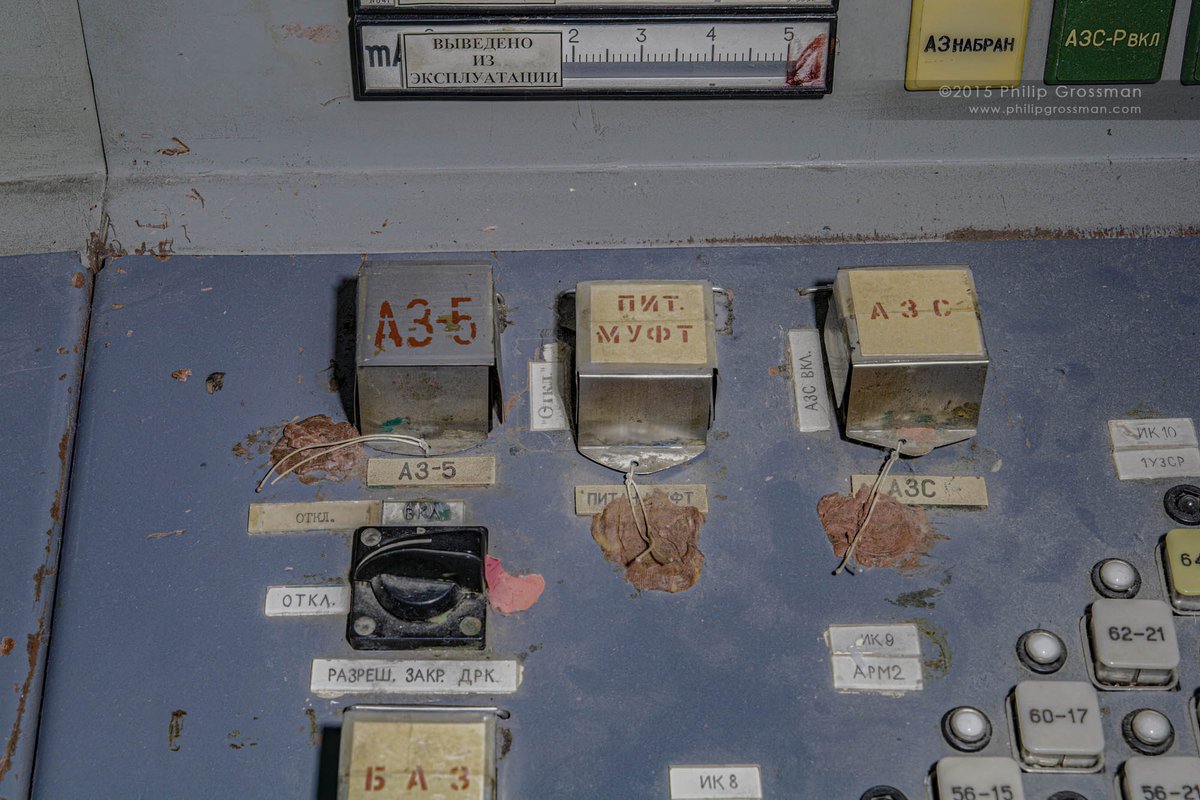
The RBMK-1000 requires a strict Operational Reactivity Margin (ORM) of 15 inserted rods to maintain baseline control. The crew pulls the rods far past this limit. The synchro map on the wall displays the reality: the reactor is effectively stripped of its brakes.
The analog instrumentation in the room fails to convey the severe positive void coefficient developing inside the core. The thermal mass is highly volatile.
At 1:23:40 AM, the AZ-5 emergency shutdown button is pressed. The control rods begin to descend. The graphite tips of the rods enter the core first, displacing water and causing an instantaneous, massive spike in reactivity.
Control is lost. The physics of the machine take over.
#Chernobyl #NuclearEngineering #ControlRoom4 #RBMK1000 #NuclearPhysics #EngineeringFailure #Pripyat
3
163
Apr 25
The physical architecture of the V.I. Lenin Nuclear Power Plant dictated its operational limits. The transition from the massive exterior infrastructure to the internal control systems reveals the core vulnerability of the RBMK-1000 design.
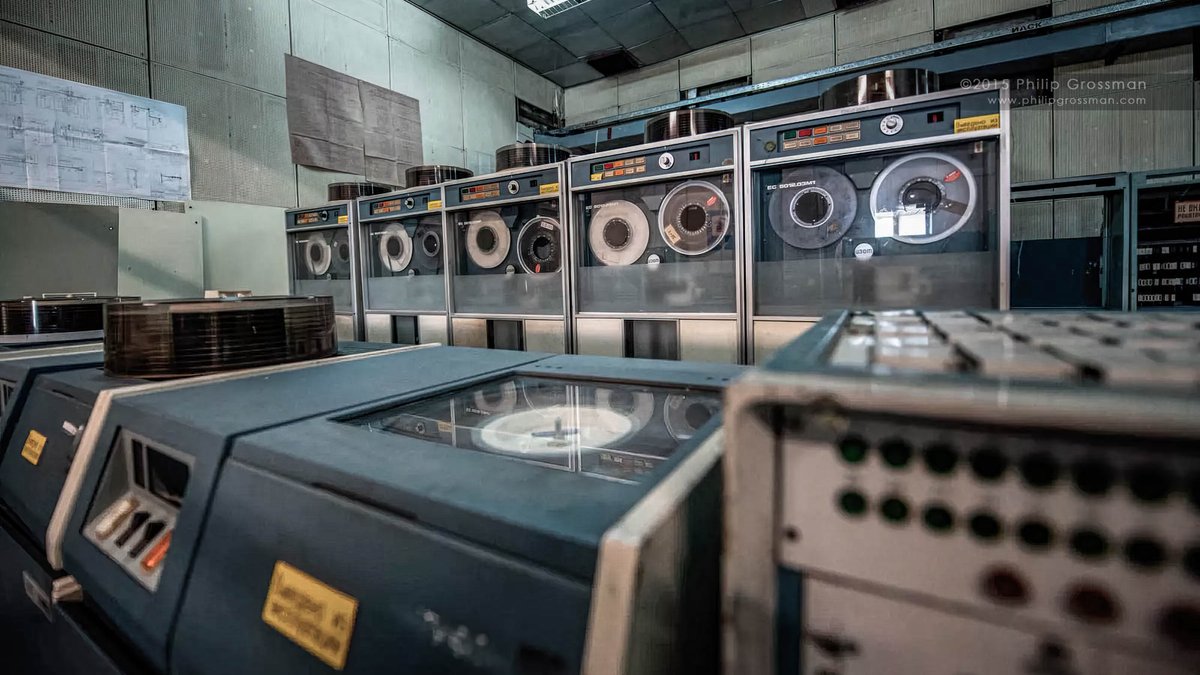
The plant relied heavily on analog instrumentation to manage immense thermal output. The SKALA mainframe, the synchro map, and the manual gauge arrays were the primary interfaces between the operators and the nuclear reaction.
On April 25, 1986, these systems lacked the computational processing speed to provide real-time diagnostic feedback. They were tasked with monitoring a rapidly fluctuating thermal-hydraulic mass during a delayed rundown test.
The operators were evaluating a highly volatile core using lagging data. The control environment itself was a critical point of failure.
#Chernobyl #NuclearEngineering #RBMK1000 #SystemsArchitecture #EngineeringHistory #Pripyat #NuclearSafety #IndustrialDesign
5
216
Apr 25
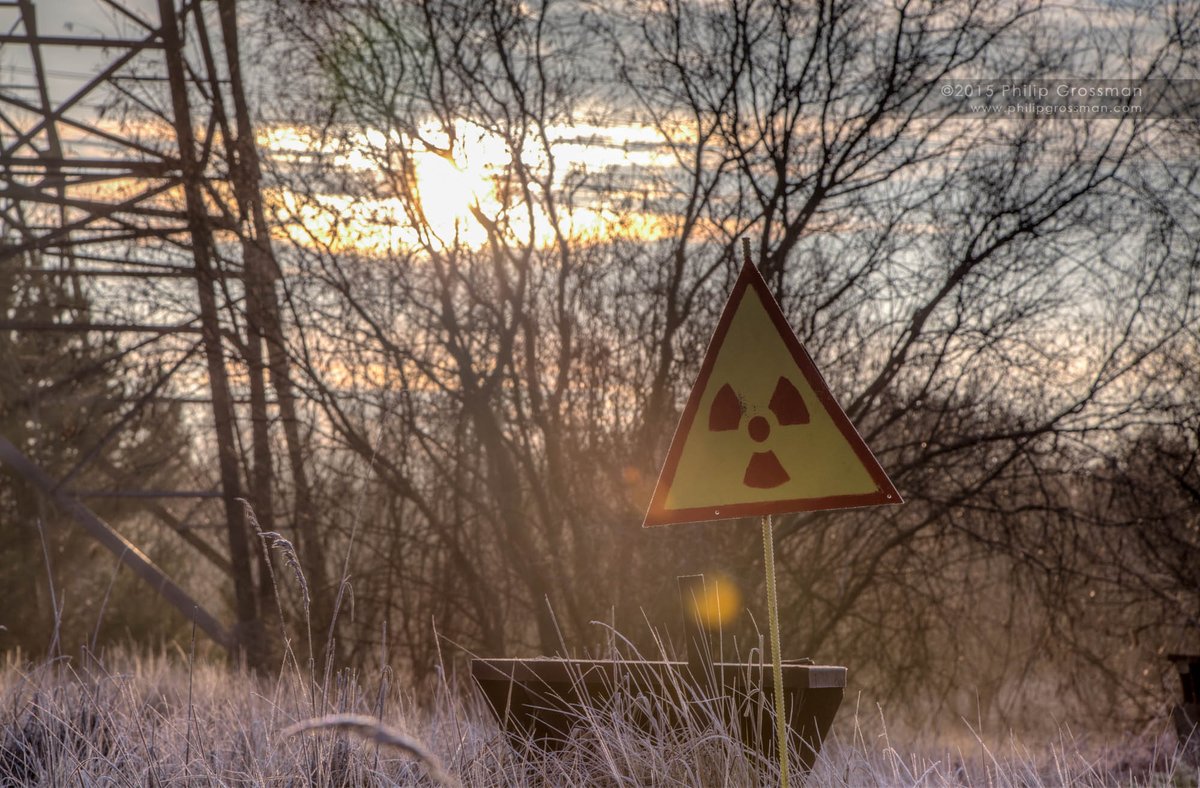
Tomorrow marks 40 years since the failure of Reactor 4 at the V.I. Lenin Nuclear Power Plant.
I have spent over 180 days inside the Chernobyl Exclusion Zone documenting the degradation of this facility. As an engineer and documentarian, my objective is to dissect the mechanics of this disaster. Over the next several hours, I will provide some insight and overview into the failures that occurred,
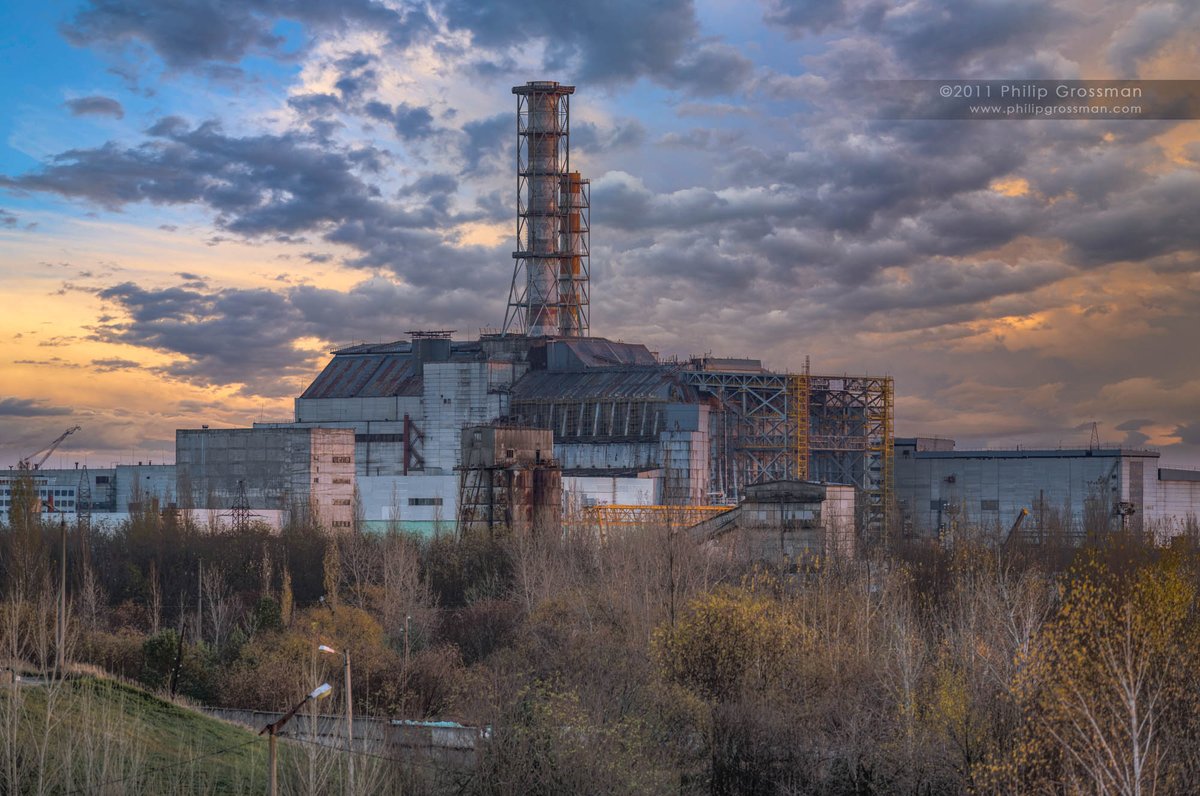
The plant was a pinnacle of Soviet utilitarian engineering. Four operational RBMK-1000 reactors operated at a combined thermal capacity of nearly 13,000 MWt.
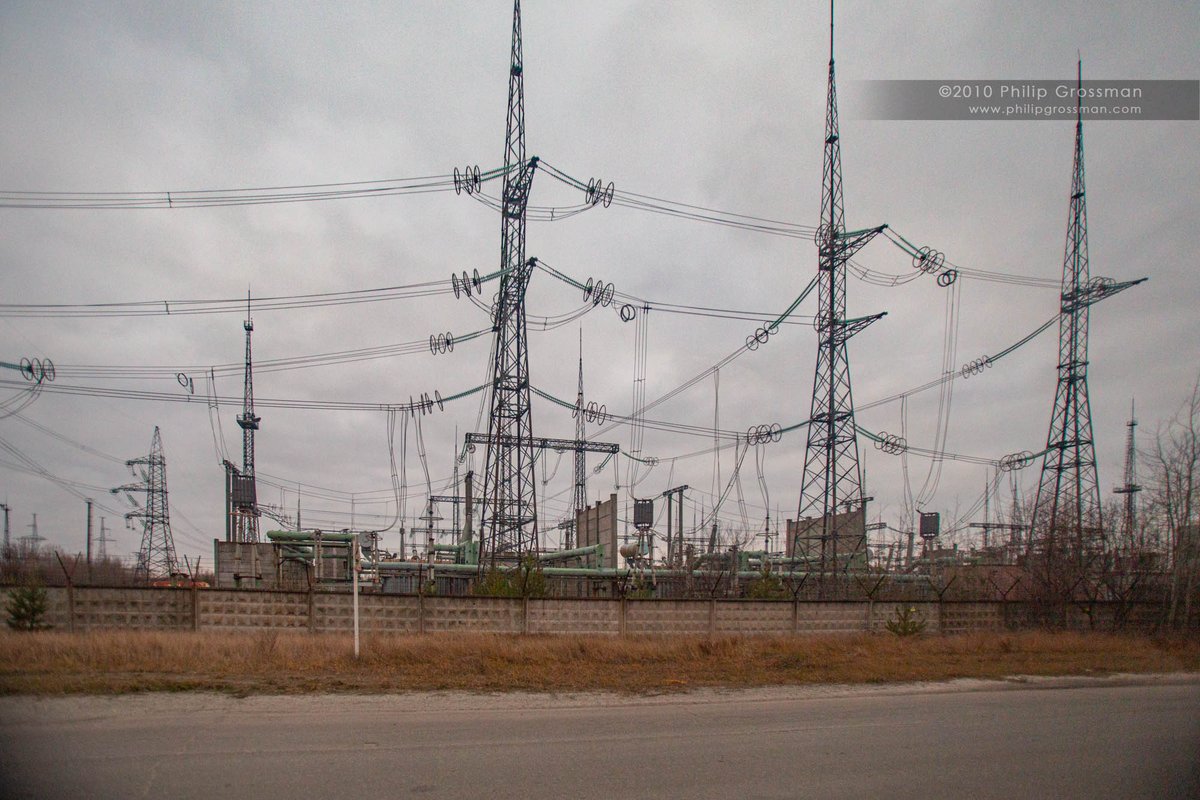
The electrical switchyard alone illustrates the massive footprint required to integrate this base-load power into the Soviet grid. The sheer mass of the concrete, steel, and high-voltage infrastructure dictated the magnitude of the consequences when the system failed.
It was an isolated, closed ecosystem. The architecture was imposing and brutalist, designed for maximum output with minimal redundancy. The physical mass of the plant directly correlates to the scale of the containment problem we continue to manage 40 years later.
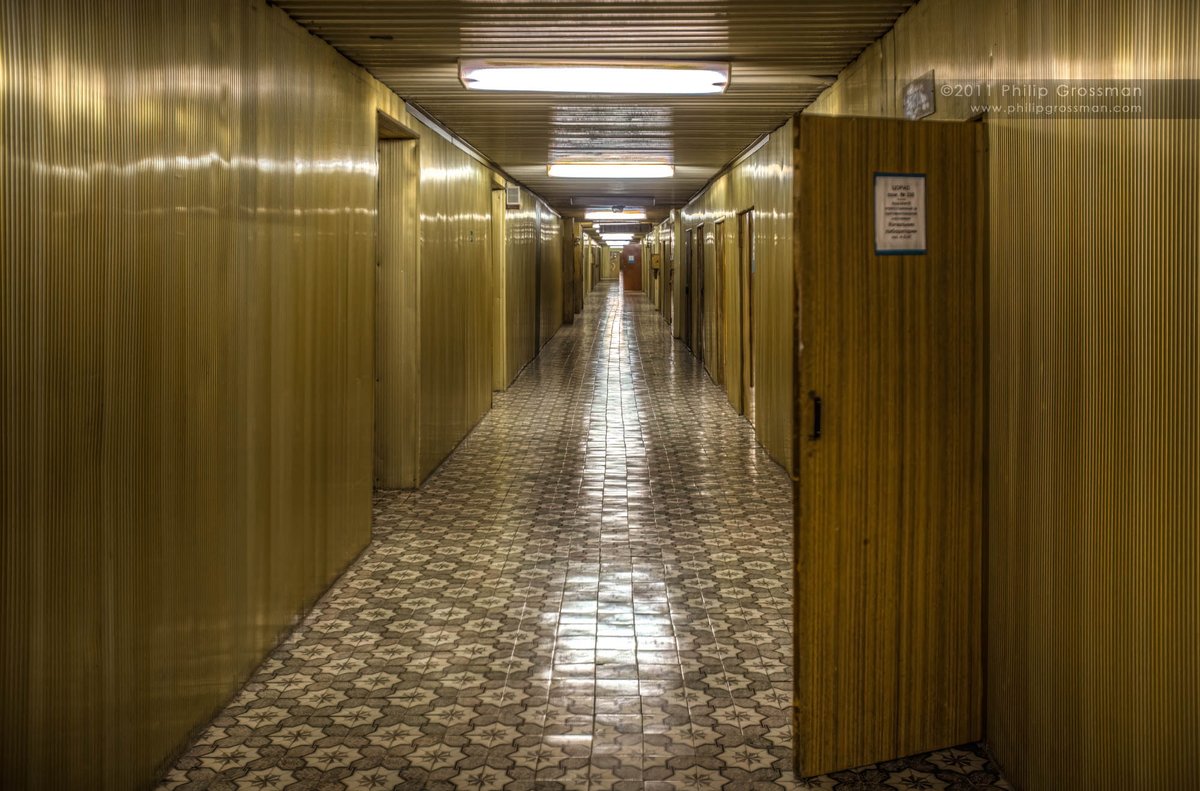
The Golden Corridor was the central artery connecting the administrative sectors to the reactor blocks. It is the path inside the machine.
#Chernobyl #NuclearEngineering #RBMK1000 #IndustrialDesign #ChernobylDisaster #EngineeringHistory #Pripyat
1
11
283
Apr 23
NAB 2026 is in the books. Always a great time catching up with friends @phfx @alexlindsay @filmgeek , Brandon Talbot and Donnie the service dog




1
110
Apr 17
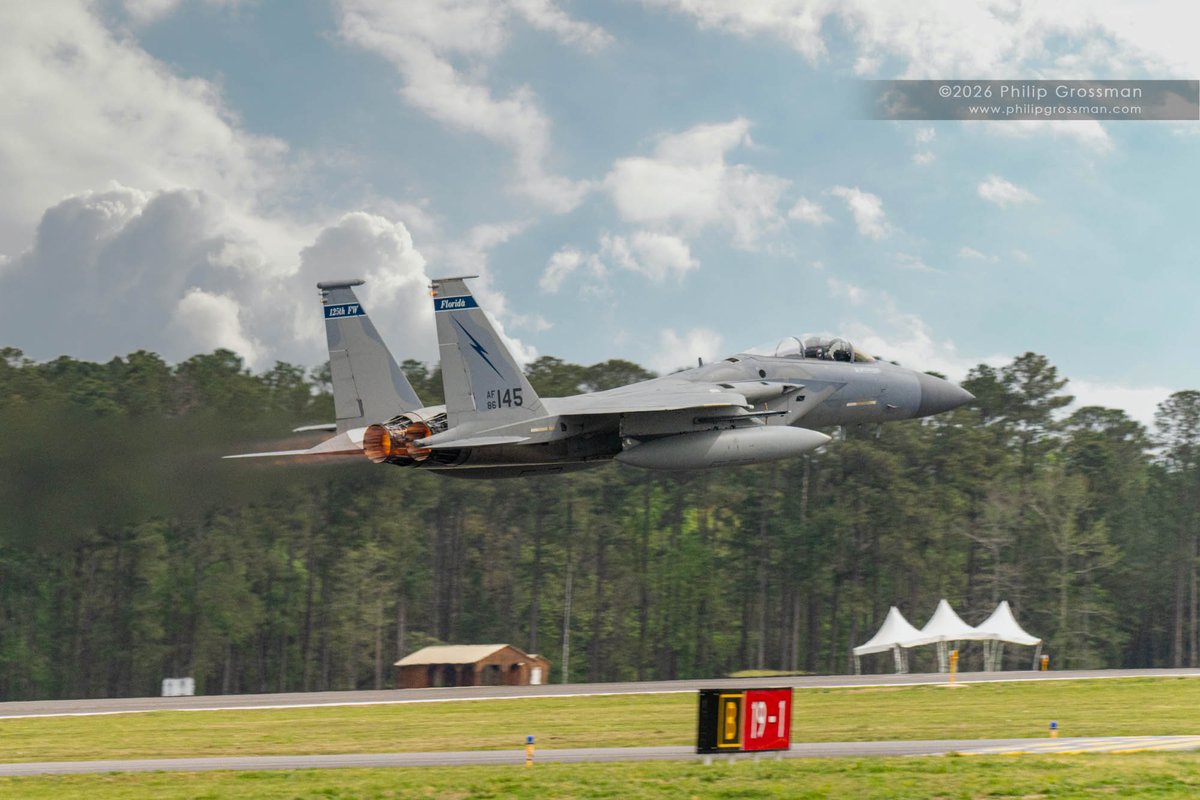
The Bayou Militia F-15 Eagle rotates for departure under full afterburner. Achieving an immediate climb out requires converting highly combustible Jet-A fuel into roughly 47,000 pounds of thrust.
Historically, the 159th Fighter Wing was established to intercept sovereign threats across the Gulf of Mexico. Today, keeping these F-15 models flight-ready requires exacting mechanical preservation. The structural integrity of the wing roots is constantly monitored for stress—the inherent cost of repeated supersonic friction.
Tracking a 40,000-pound aircraft accelerating past 150 knots requires precise predictive autofocus. The Nikon ZR sensor captured this at ISO 3600, pushing the 14-bit RAW data pipeline to its architectural limits.
- Subject: F-15 Eagle Demo
- Thrust: ~23,500 lbf per engine
- Optics: Sigma 60-600mm at 244mm
- Exposure: 1/1000s at f/8, ISO 3600
#BayouMilitia
#F15Eagle
#AviationPhotography
#Engineering
#NikonZR
#AirNationalGuard
#Aerodynamics
#AviationHistory
171
Apr 6
There are normal daily commutes, and then there are the USAF Thunderbirds treating 18 inches of separation at 500 mph like a casual Tuesday :-)
If you want to talk about doing crazy shit in the sky, these pilots are pulling up to 9 Gs during these maneuvers. That means a 200lb pilot temporarily weighs 1,800 lbs while trying to perfectly thread the needle in an opposing knife-edge pass. For the aero-nerds: they’ve been doing this in the General Dynamics F-16 Fighting Falcon since 1983. The "Viper" is built with relaxed static stability, meaning the airframe inherently wants to flip out of control, but the fly-by-wire computers keep it flying straight so the pilot can focus on not swapping paint with their wingman.
Meanwhile, I’m down on the ground complaining that my camera bag is getting a little heavy...
This video is just a quick rough edit I threw together, but I really wanted to see how the footage held up. I was testing the Nikon ZR, specifically looking at how it handles the RED R3D RAW codec at 120 FPS. Pulling this kind of high-frame-rate RAW data out of a mirrorless body to freeze a jet ripping through the sky is incredible. It’s a massive leap from the days of burning through 400ft loads of 16mm film just hoping you kept their famous "sneak pass" somewhere in the frame.
Gear:
Nikon ZR
RED R3D RAW
120 FPS
#NikonZR #Thunderbirds #USAF #REDR3D #AviationHistory #Cinematography #F16Viper #aviationphotography
208