
Everything I send out from Twitter are my opinions and only my opinions.
Joined April 2010
- Tweets 2,451
- Following 1,000
- Followers 17,729
- Likes 489
95 Photos and videos









Peter Lavelle retweeted

19h
I have fought the neocons and warmongers in Washington for more than 25 years. Throughout, they have tried to silence, discredit, slander, and cancel me. Only recently, however, have they tried to deport me.
At least, that appears to have been the aim of a hit piece in Bari Weiss’s The Free Press, which claimed that Marco Rubio’s State Department was “investigating” me for allegedly seeking to “undermine the U.S.”—presumably because of my opposition to war with Iran.
Yet just hours later, the State Department issued a statement to reporters clarifying that “the State Department has no plans to revoke the green card of Mr. Parsi at this time.” Nor did it provide any confirmation for the central premise of the Free Press story—that an investigation of me existed in the first place.
So here’s what I think happened.
Read the full piece on my Substack: tritaparsi.substack.com/p/so…

451
2,244
7,855
589,512
Re: US-Iran deal: I don’t buy any of this - the only agreement the two sides could sign is that they disagree
14
12
102
3,119

Jun 12
1
2
10
301
Peter Lavelle retweeted

Jun 12
#RadioMoskva
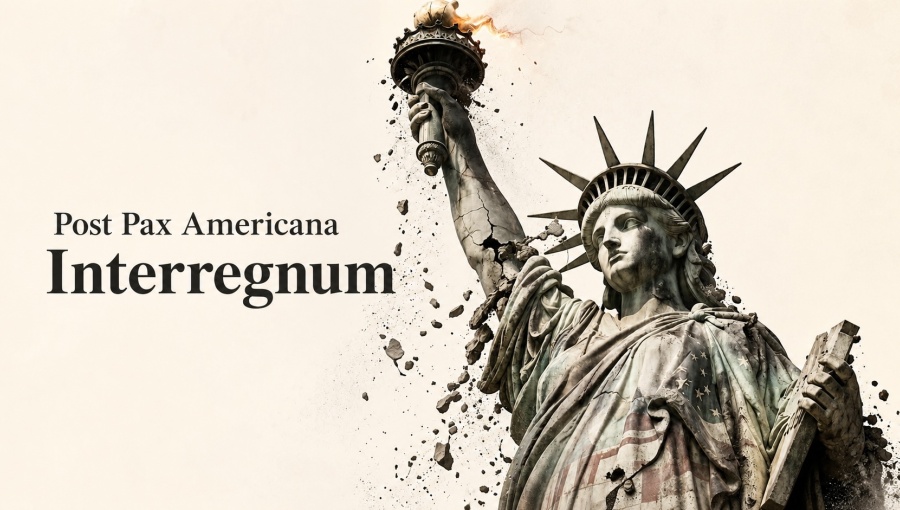
The post pax Americana interregnum has started
Every empire dies, usually after 100 years. Yesterday, I did a deep dive into the end of the pax Americana that has ruled the world since 1945. It has lasted a little bit less than the previous empires of Portugal, Holland and Britain – 80 years -- but the signs of the US decline are clear, not least America’s failure to win the Iran war.
What follows is an interregnum that should last a few decades, and will be marked by increased isolationism, protectionism, the breakdown of international organisations, slower growth and more wars. Two new wars have already started with US President Donald Trump in charge. More could happen.
And this end-of-empire moment is not just affecting the US. The pax Americana also includes European dominance in the global set up as Global North partner. The US provides the security umbrella (which is now snapping shut after Trump released the National Security Strategy (NSS) in December) but the shared values with Europe meant a financial and trade dominance that is also breaking down.
Flick down our list of top stories today and it’s obvious that the EU is also falling to pieces. The EU’s role in supporting Ukraine has been reduced to the E3, one of which is not even an EU member, from 27 members during the Biden administration. The E3 leaders did finally call for a meeting with the Kremlin yesterday, but, as I predicted, that meeting in Moscow lasted as long as it takes to drink a cup of tea.
The three ambassadors from the UK, France and Germany didn’t say much as they came out of the iconic Russian Ministry of Foreign Affairs building on Smolenskaya Square, but it seems clear they read out their five-point list of demands and were told to get knotted.
The Kremlin’s position on Europe trying to negotiate is that it is an active participant in the war in Ukraine, supplying Kyiv with long-range missiles for use against Russian targets for example, and so disqualified from playing a mediation role.
It’s not entirely clear what Europe’s position is. It keeps telling the Kremlin what it “has to do” to end the war, but has no leverage over the Kremlin at all. Brussels’ strategy is little more than to send as much money and weapons as it can to Kyiv and keep piling halfhearted sanctions on Russia in the hope that this will somehow “force” Russian President Vladimir Putin into making concessions. That hasn’t worked so far. Until the EU actually cuts off all imports from Russia – last year Europe imported €60bn worth of goods, about a third of the pre-war levels – the sanctions won’t work. Trouble is without the Russian imports – especially gas – Europe doesn’t work either.
The mounting economic pressure on Europe and its failure to make any progress in ending the Ukraine war are leading to bigger and more visible cracks in the EU. Polish Prime Minister Donald Tusk and Italy’s Prime Minister Giorgia Meloni complained about being excluded from the E3 talks and are proposing an E5 summit in the coming weeks.
EU foreign policy chief Kaja Kallas is also under attack after France and Germany floated the idea of a deep reform and stripping her of control over the External Action Service (EEAS), the EU’s diplomatic service. As IntelliNews reported, Kallas is becoming a liabilitythanks to her incompetence and idee fixe focus on trying to destroy Russia at any cost.
Stepping back, all this is part and parcel of a classic inter-empire interregnum. As the old order breaks up, the world becomes more multipolar, national interests supersede shared values, politics drifts towards popular nationalism, trade gets disrupted as supply chains breakdown and economic growth slows as the end-of-empire system gets bloated by a combination of corruption and increasingly public spending as the old regime attempts to cling to power. All of that is going on very clearly in the Global North.
As for the up-and-coming powers, inter alia the emerging BRICS bloc, they are doing the right thing: keeping their heads down and getting on with the business of building up their economies. Part of the changeover is the rising powers will draw geopolitical red lines and push back at the hegemons on certain issues. That just happened when Chinese President Xi Jinping opened his summit with Trump, drawing a bright red line under Taiwan. His “Thucydides Trap" comment was an explicit threat, a promise that China was prepared to go to war with the US if it interferes in Taiwan. But of course, Beijing is playing a long game with Taiwan and working towards some sort of political reunification that eventually probably rests on a referendum.
The reserve currency also usually changes in an interregnum. The pound sterling was the currency of choice during pink globe days of the pax Britannia and made London the financial capital it still is today. De-dollarisation is already well underway as a new interregnum gets going, but it will take a long time for a new global currency to emerge. One of the features of the end-of-empires is that the use of its currency can long outlast the empire itself. Rome's gold aureus coins became the dominant currency throughout the Mediterranean world and its dominant role in trade persisted for centuries after the Roman empire itself disappeared.
In the modern era there is a good chance the process will go much faster as the successor currency is likely to be digital – a gold-backed stable coin? Certainly, Global South governments are anticipating something like this and all putting digital versions of their currencies in place.
Is the end of the pax Americana a bad thing? It doesn’t really matter. This is history in action and there is little we can do about it. While most of the commentary at the moment concerns the two big wars, there are actually three revolutions going on in parallel which get a lot less attention: the Climate Crisis, Demographic Crisis, and the Technology Revolution. All three are going to have monumental impacts on global societies.
We have written about the Climate Crisis extensively, so I won’t go into it here, but the main features are the impact it will have on food security and the mass migrations it will force as large parts of the world become uninhabitable for humans due to wet-bulb effects.
The Demographic Crisis is getting a lot less attention but is equally monumental. As IntelliNews reported, the global population has passed a baby-bust peak and every major region in the world, except Africa and Central Asia, is now in population decline. Moreover, we have just passed a tipping point where there are now physically not enough mothers – women of childbearing age – to keep populations stable, even if governments fixed their natal policies to boost fertility rates.
More positively, the AI/robot revolution could help with some of these problems. AI could be the equivalent of the invention of stone tools for humanity and the advent of quantum computing, due in the next 5-10 years, should take things to the level of Ian M. Bank’s “Culture” where “Minds” run the world. Equally important, in my book, will be the mass deployment of robotswhich is already happening. This solves the manpower problem caused by the Demographic Crisis and will have who-knows-what impact on human societies. Issac Asimov would be lovin’ this.
With the size of these changes already on the doorstep, it kind of makes sense that an empire built on the foundations of the world in the 1940s should fade away to be replaced by something else.
This article originally appeared in Editor’s Picks, a free daily email digest of bne IntelliNews’ best stories from the last 24 hours. Sign up for free here.
to989.infusionsoft.com/app/f…
open.substack.com/pub/bneedi…
4
8
30
1,757
Jun 10
So pathetic to observe the liberal interventionists/democracy industrial complex folks lament Trump’s failed Iran policy only because it didn’t succeed.
3
17
94
1,666
Jun 10
1
10
31
453
Jun 10
There is no evidence a deal was to be made with Iran. Trump is trapped. A trap he walked into with eyes wide open.
8
55
271
12,868
Peter Lavelle retweeted

Jun 9
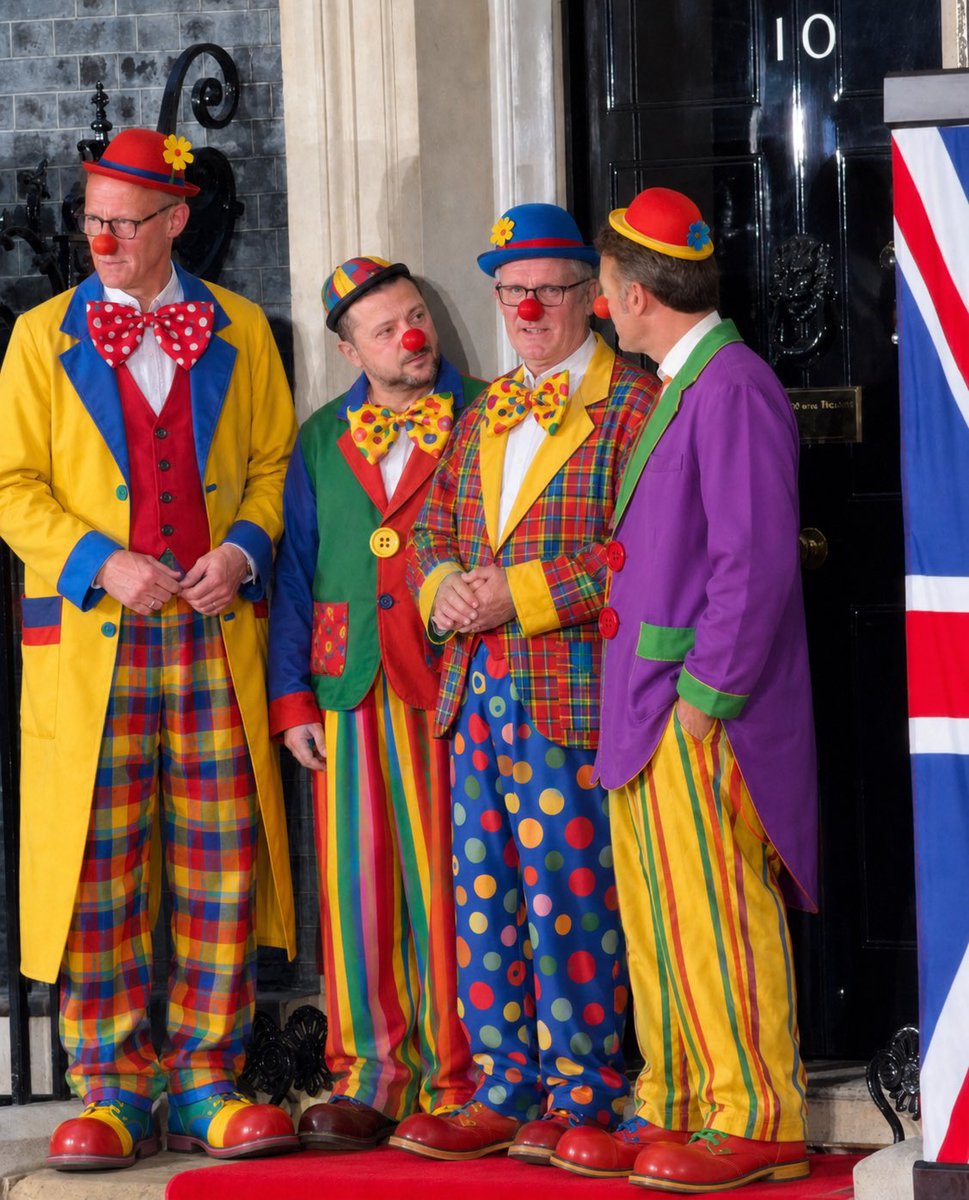
C'est quand même nettement plus crédible ainsi non??
649
6,401
23,130
155,268
Peter Lavelle retweeted

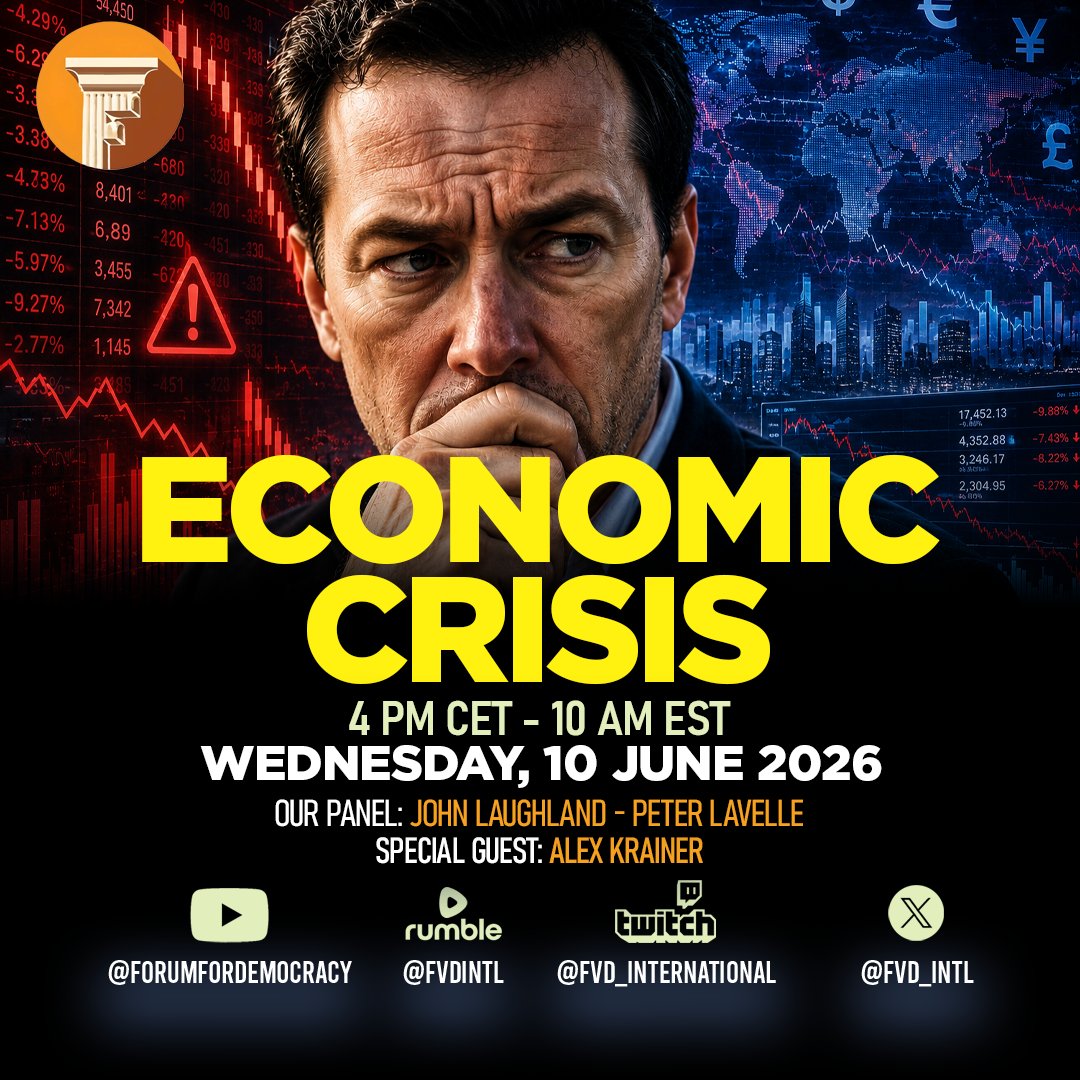
🏛 The Forum & Friends: Economic Crisis
🗓 Wednesday | 4:00pm CET
🎙️ Our panel: @john_laughland and @PLCROSSTALK
🚨 Special guest: Alex Krainer (@NakedHedgie)
7
18
3,607
1
11
34
607
“Finish the job” has multiple interpretations it would seem.
3
31
1,779
7
30
507
Peter Lavelle retweeted

The Real Politick - Community Weekly Q&A 03/06/26
Exclusive content for The Real Politick subscribers on Boosty
- Fate of Ukrainian Land Bought by Western Capitalist Vultures
- Global Fertilizer Crisis
- Russian Opinion on US
- Anti-Satellite Weapons
boosty.to/therealpolitick/po…
1
6
5
990
For those paying attention, Iran has quickly established itself as one of the Great Powers. Trump and Bibi have Made Iran Great Again.
6
55
244
2,767
Peter Lavelle retweeted
🏛 The Forum & Friends: Russia and Europe with Dr. Alexey Gromyko
🚨 We are LIVE! 🚨

🏛 The Forum & Friends: Russia and Europe with Dr. Alexey Gromyko x.com/i/broadcasts/1yxBeemWZ…
3
7
677
3
5
33
506
From time to time this must be asked. For the those who believe the illusion Ukraine is winning we apply the 5 stages of grief: So where we now: Denial, Anger, Bargaining, Depression (but certainly not yet) Acceptance. Feel free to continue your public humiliation.
19
13
74
4,939