#OpenScience#DigitalHealth journal, accelerating boundary-breaking research that uses digital tools, tech & data science to advance every aspect of health care
With this week's #PeerReviewWeek theme ‘Innovation and Technology in Peer Review’ we’re curious to know what kinds of innovations you think would most improve the peer review process?
#PeerReviewWeek is here! For an overview of this week's events from @PeerRevWeek, and quick access to PLOS peer review resources, check out our latest post on The Official PLOS Blog: plos.io/4et8UAl
🔎 Researchers from Zarqa University and @METU_ODTU share findings offering actionable insights for drug design, formulation, and prioritization of molecules with optimum properties, potentially reducing reliance on costly experimental testing plos.io/3JYcZyP.
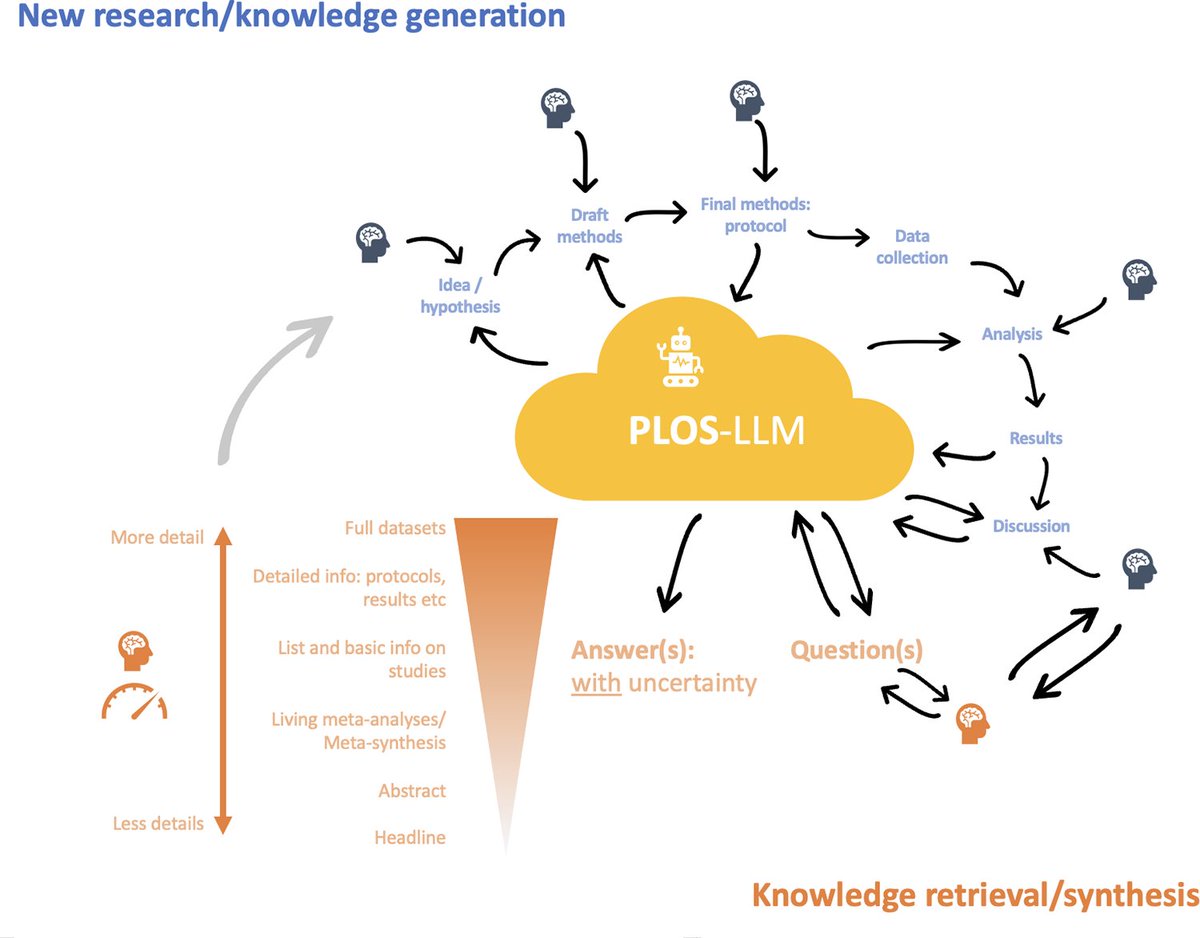
Can and should #AI enable a new paradigm of scientific knowledge sharing? Researchers @R_Hughes1 of @LSHTM and Alastair van Heerden of @WitsUniversity discuss in this recent Opinion article: plos.io/3UxU9mI.
ALT Fig 1. Schematic illustration of how “PLOS LLM” could interact with humans, considering both knowledge generation and retrieval/synthesis processes.
Text in blue illustrates how new research/knowledge generation could interface with PLOS-LLM, and the steps in orange illustrate how knowledge retrieval/synthesis could work, for example allowing users to ‘zoom in and out’ from looking at headline answers to a question, all the way down to exploring the datasets of individual studies.
🔎 Researchers from Zarqa University and @METU_ODTU share findings offering actionable insights for drug design, formulation, and prioritization of molecules with optimum properties, potentially reducing reliance on costly experimental testing plos.io/3JYcZyP.
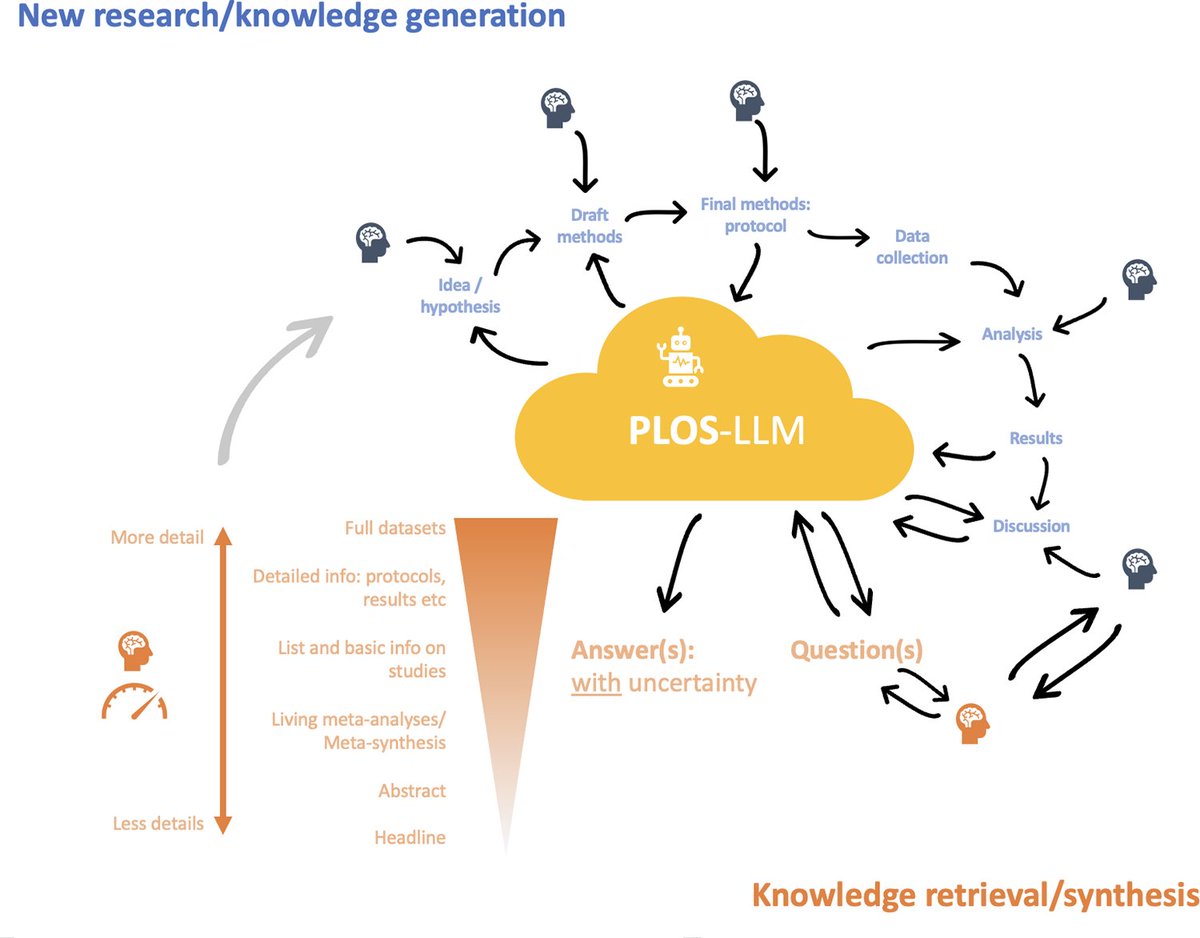
Can and should #AI enable a new paradigm of scientific knowledge sharing? Researchers @R_Hughes1 of @LSHTM and Alastair van Heerden of @WitsUniversity discuss in this recent Opinion article: plos.io/3UxU9mI.
ALT Fig 1. Schematic illustration of how “PLOS LLM” could interact with humans, considering both knowledge generation and retrieval/synthesis processes.
Text in blue illustrates how new research/knowledge generation could interface with PLOS-LLM, and the steps in orange illustrate how knowledge retrieval/synthesis could work, for example allowing users to ‘zoom in and out’ from looking at headline answers to a question, all the way down to exploring the datasets of individual studies.
We're breaking down barriers in open and inclusive #healthliteracy research. Our health literacy & healthcare studies empower patients, combat health inequities, & foster global health improvements 🌍 Discover leading and latest papers at plos.io/4br7XpZ
In this recent study, researchers from @nyuniversity discuss harnessing the open access version of ChatGPT for enhanced clinical opinions. plos.io/4cMycZr
This recent study protocol from researchers at @unitartu discusses developing a methodology for comparing digitally delivered treatment with conventional treatment. plos.io/3xmgfRn
In this recent study, researchers from @nyuniversity discuss harnessing the open access version of ChatGPT for enhanced clinical opinions. plos.io/4cMycZr
This recent study protocol from researchers at @unitartu discusses developing a methodology for comparing digitally delivered treatment with conventional treatment. plos.io/3xmgfRn
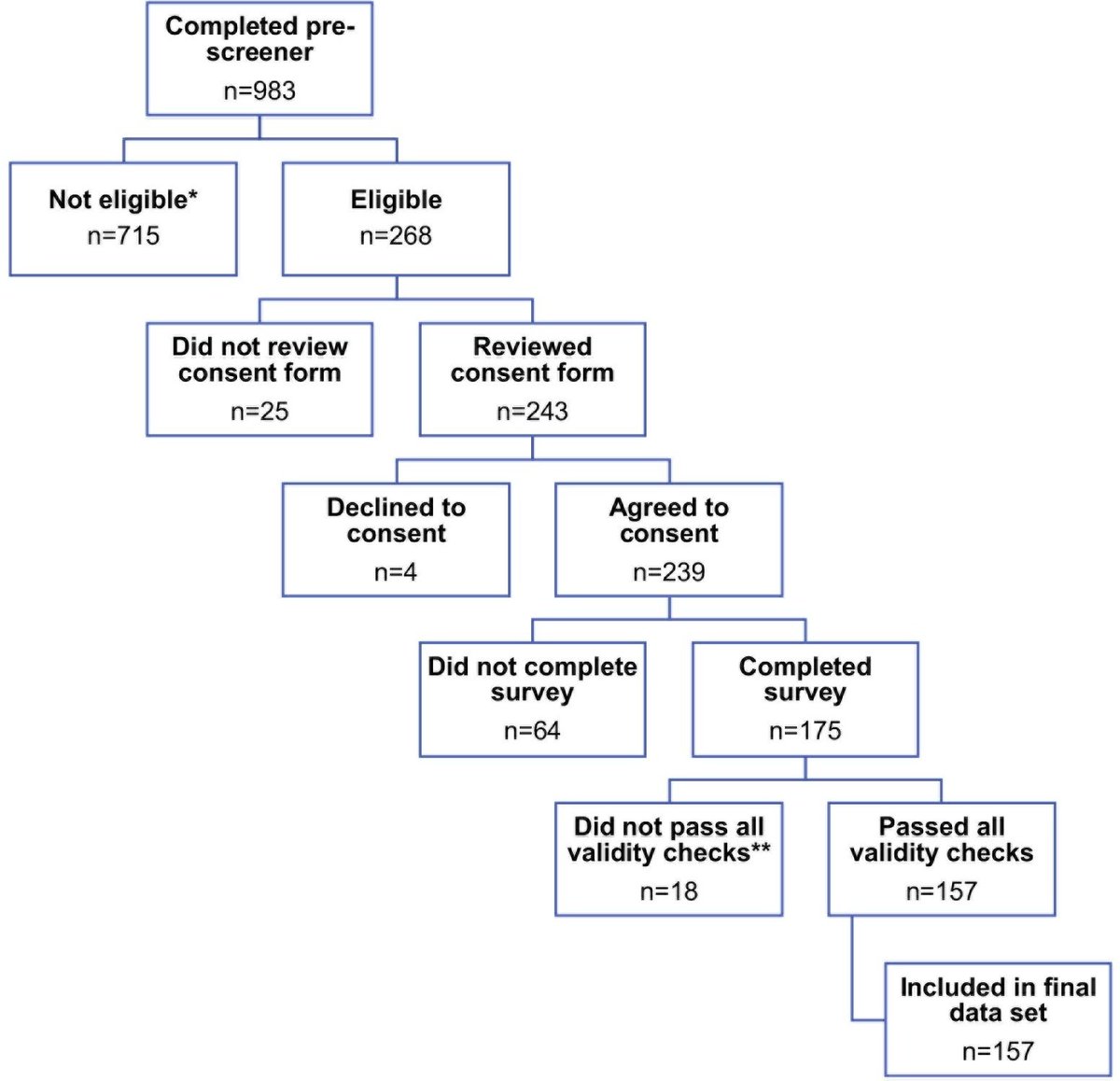
This recent article from researchers with @FenwayHealth explores the willingness of men who have sex with men (MSM) with substance use to share digital phenotypic data and interact with ancillary systems in the context of DPS-measured PrEP adherence: plos.io/3van3Rq
ALT Fig 1. Study design and methods.
* Of 715 ineligible individuals, 343 were ineligible for more than one reason. Reasons for ineligibility included: not ≥18 years old (n = 2), not cisgender or transgender male (n = 79), does not have sex with cisgender or transgender males (n = 37), not HIV-negative (n = 101), not on PrEP (n = 367), not sexually active in the last three months (n = 67), and CAGE-AID score <2 (n = 562). ** Of 18 participants who did not pass all validity checks, 1 participant failed to pass more than one validity check. Reasons for not passing all validity checks included: age and date of birth did not match (n = 15), home zip code and home state did not match (n = 2), and IP address did not confirm current location in the US (n = 2).
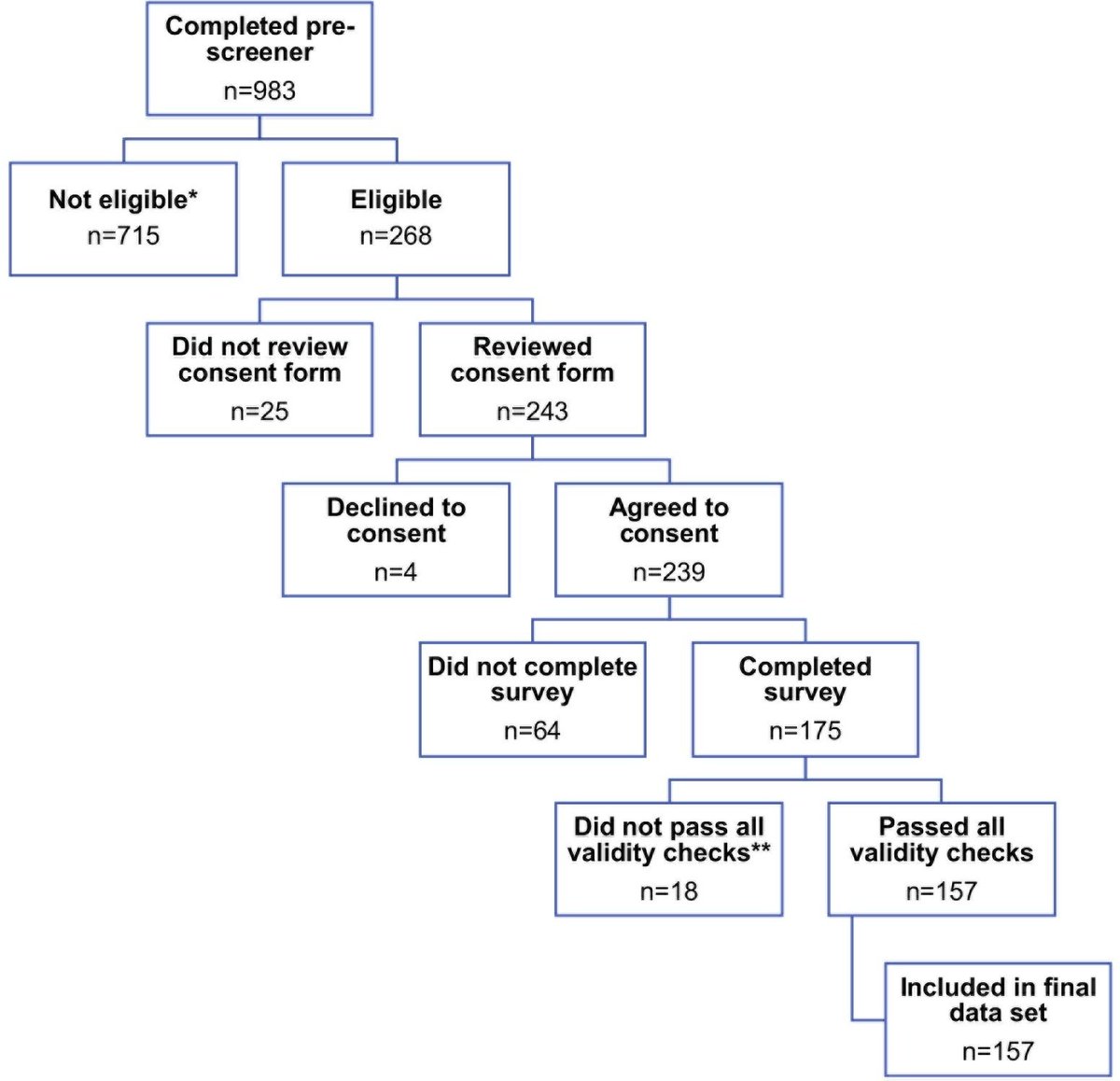
This recent article from researchers with @FenwayHealth explores the willingness of men who have sex with men (MSM) with substance use to share digital phenotypic data and interact with ancillary systems in the context of DPS-measured PrEP adherence: plos.io/3van3Rq
ALT Fig 1. Study design and methods.
* Of 715 ineligible individuals, 343 were ineligible for more than one reason. Reasons for ineligibility included: not ≥18 years old (n = 2), not cisgender or transgender male (n = 79), does not have sex with cisgender or transgender males (n = 37), not HIV-negative (n = 101), not on PrEP (n = 367), not sexually active in the last three months (n = 67), and CAGE-AID score <2 (n = 562). ** Of 18 participants who did not pass all validity checks, 1 participant failed to pass more than one validity check. Reasons for not passing all validity checks included: age and date of birth did not match (n = 15), home zip code and home state did not match (n = 2), and IP address did not confirm current location in the US (n = 2).
Our pioneering Open Access health literacy research covers the full breadth of public health and clinical medicine. Read the latest #HealthLiteracy and #HealthcareSystems research at plos.io/3PhhQOw