
4,080 Photos and videos










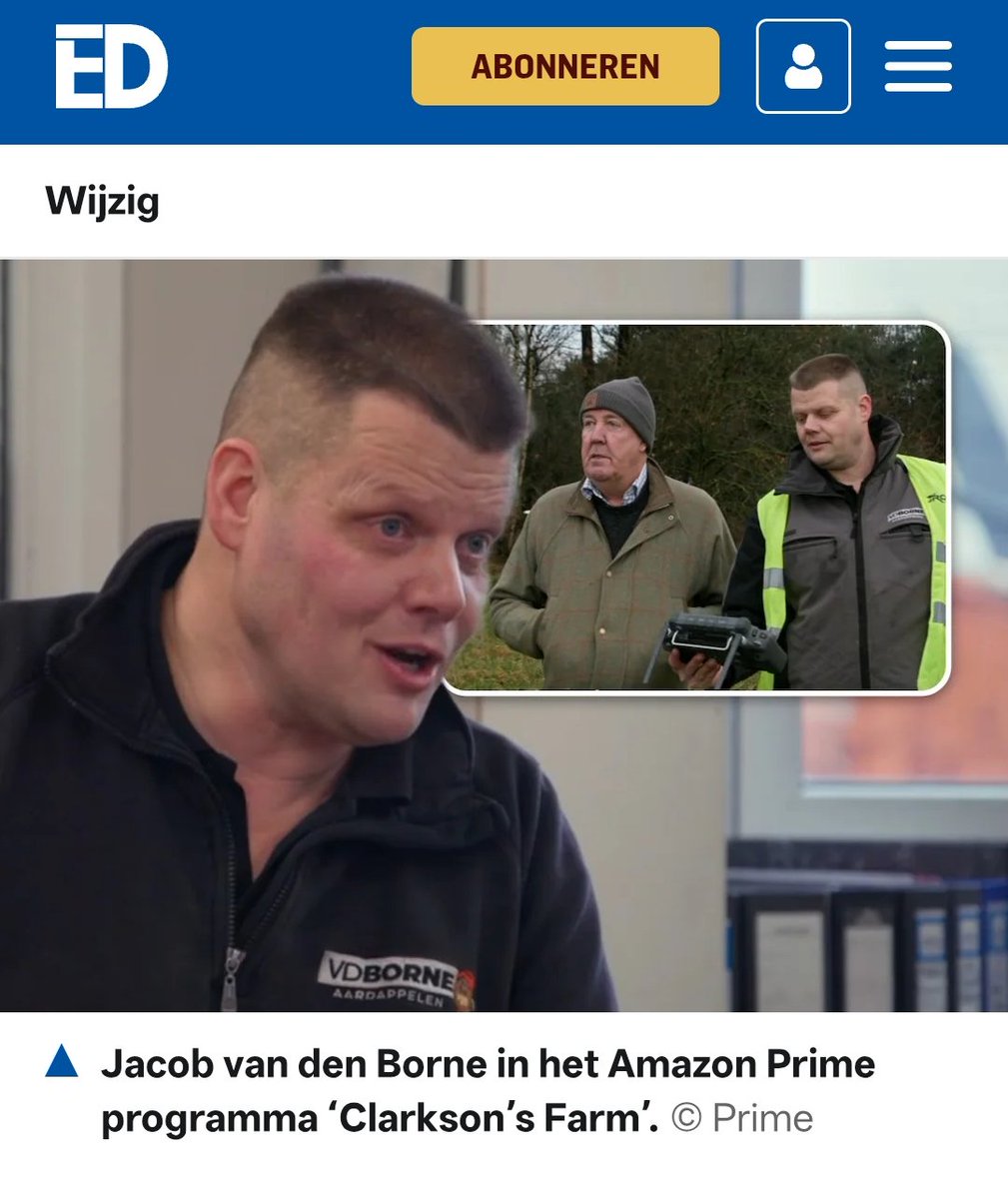



Still think of the film crew of swiss nationalist that were at the European parliament in Straßburg doing a video with an expensive camera dressed as braunhemden never was able to find them. "Defendswiss" or something was on their shirt.
Very professional for a group that doesn't have any online presence.
32
Pindo 🇪🇺 retweeted

“We're part of the New World Order
51st state is bad, but 28th EU country is good
Palestine is sovereign but not Alberta”

Tough to keep track:
* China is a strategic threat but also a strategic partner
* We're pivoting away from the US but helping to make it great again
* We're part of the New World Order
* 51st state is bad, but 28th EU country is good
* Palestine is sovereign but not Alberta
6
49
660
29,779

Tomorrow at 22:00 Isar will launch their first test-flight of Spectrum with a payload intended for Space!
The mission carries five CubeSats and one experiment and aims to validate the vehicle’s critical systems under operational conditions.
The EU's Space Renaissance 🇪🇺🚀

We are targeting NET 15 June to launch Mission 'Onward and Upward' during the available launch window opening at 8:00 pm UTC (10:00 pm CEST), subject to weather, safety, and range infrastructure.
Follow the launch live: youtube.com/live/Ss1DUqLjecc

5
16
141
4,259
Pindo 🇪🇺 retweeted

Finally, a comment correctly naming the issues!
Without a Capital Markets Union, 27 fragmented markets have no chance to properly fund frontier tech.
Our startups can't fund themselves as the US or the Chinese ones can.
AI/frontier tech is a funding game.

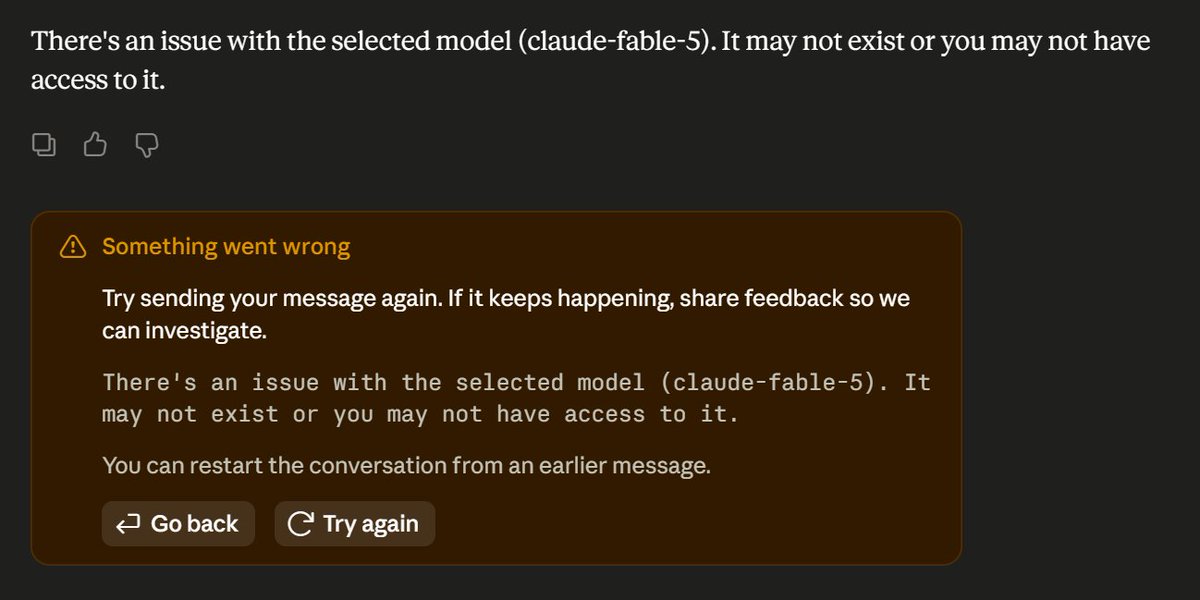
🇺🇸🇪🇺🇫🇷 Moment Sputnik : la suspension de Fable 5 et Mythos 5 par Anthropic met l’Europe au pied du mur. En 1957, le bip du satellite russe Sputnik dans l’espace a réveillé les USA. Dix ans plus tard, les Américains atterrissaient sur la lune.
Le même défi s’impose à l’Europe . Rester dans la course, ou s’effacer.
Notre continent a des atouts :
▶️ quasi monopole des machines de photolitographie avec ASML
▶️ qualité de ses modèles, @MistralAI par exemple
▶️ excellence de ses cerveaux
Mais des handicaps majeurs :
▶️ Pas de fonderies de semi-conducteurs où nous dépendons d’entreprises comme TSMC (Taiwan)
▶️ Pas de concepteurs de puces Fabless comme @nvidia (USA)
▶️ Retard dans le nombre de supercalculateurs pour faire tourner les modèles sur nos territoires quand la décision du gouvernement met en lumière l’importance du fait territorial et de la nationalité des acteurs.
L’échelle d’investissement est inouï . Elle se compte en centaine de milliards de dollar, à investir très vite car la course s’accélère. La mobilisation des capitaux est la clef du succès ou du déclin.
Quel que puisse être notre attachement à la souveraineté nationale, la solution ne peut être qu’européenne. Même avec des finances publiques saines, un pays ne peut le faire seul. L’urgence est à la création d’un marché européen des capitaux et à l’application , au moins partielle des rapports Draghi et Letta. Elle est aussi à une régulation qui ne bride pas l’innovation. Le temps des querelles souverainistes versus européistes est dépassé.
En revanche ce qui dépend des États est l’investissement massif dans les agents IA dans l’administration pour assurer un chiffre d’affaire qui rentabilise le développement et l’entraînement des modèles. C’est aussi le soutien aux énergies décarbonnées , en particulier nucléaire et l’attractivité fiscale qui draine l’épargne et booste l’investissement.
Faire face à ce moment Sputnik est l’enjeu de la présidentielle. C’est l’élection de la dernière chance pour éviter un retard irrattrapable. La démagogie et la politique de l’Autruche serait l’autre nom de la capitulation.
franceinfo.fr/internet/intel…
1
1
9
341
Pindo 🇪🇺 retweeted

After the Anthropic situation, one thing feels clear to me.
Europe needs digital independence.
AI is becoming infrastructure. If access to advanced models can change overnight because of foreign decisions, Europe cannot stay only as a customer.
We have talent, universities, researchers, founders, open source communities, and public compute. But we need coordination, capital, and people willing to build.
That is why I started Limes Labs.
It is early. We are not claiming capability yet. We are organizing capability.
Open source. Open weights. European AI sovereignty.
If you are a researcher, engineer, designer, founder, investor, student, institution, or journalist, join us.
Europe has crossed the Rubicon.
Now Europe must build.
limeslabs.eu
8
7
31
2,117
Pindo 🇪🇺 retweeted

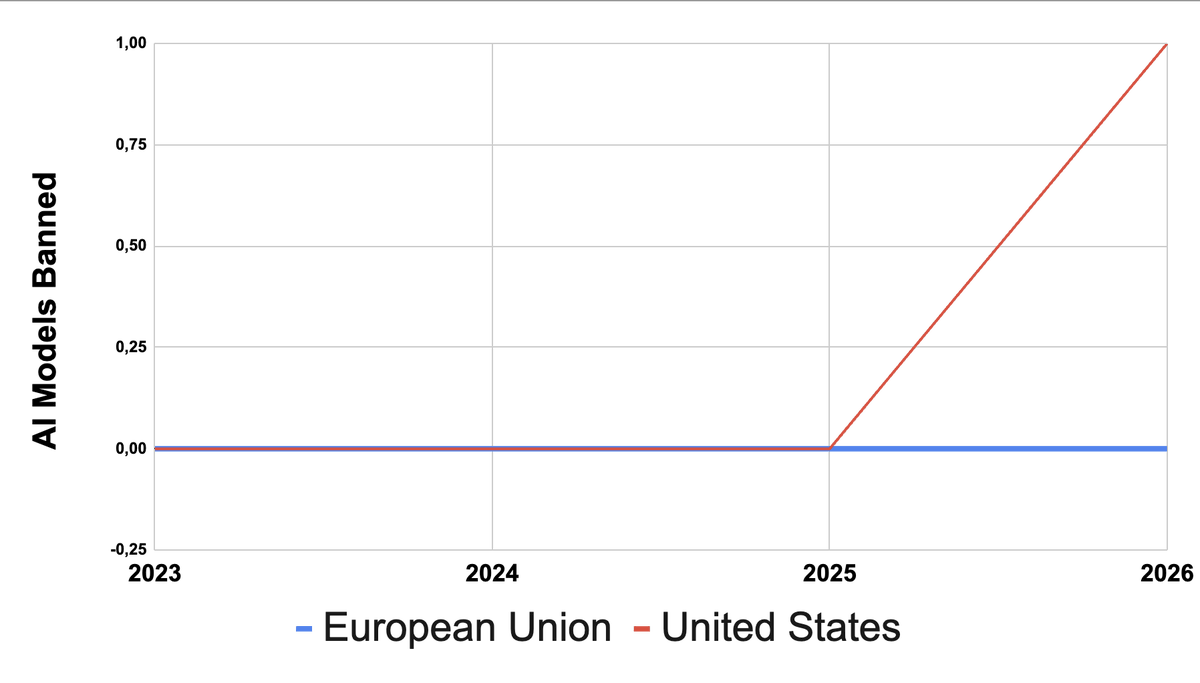
The US is achieving levels of growth that leave Europe in the dust.
If it doesn't change track soon the EU will lose its status as the world's pre-eminent regulatory superpower.
8
5
124
4,916
-1. Create a European national security and intelligence agency

4. remove anyone older than 45 from decision making positions on frontier problems
5. treat this as a national security threat, override regulation and involve intelligence and military assets as needed
1
9
290

how can you be serious about european competitiveness and then oppose this, like come on

Jun 13

France opposes ‘anglicisation’ of EU trade talks ft.trib.al/LDzpHHi
41
155
4,009
160,641
Pindo 🇪🇺 retweeted

We are targeting NET 15 June to launch Mission 'Onward and Upward' during the available launch window opening at 8:00 pm UTC (10:00 pm CEST), subject to weather, safety, and range infrastructure.
Follow the launch live: youtube.com/live/Ss1DUqLjecc
35
165
848
57,471
Americans even out regulate Europe now, what do we still have left 😔

I’ve had a number of conversations with folks inside and outside government about the current situation with Anthropic, and here is what I believe to be true:
— As we know, Anthropic publicly released its Mythos class models earlier this week under the commercial name Fable.
— Fable is Mythos with guardrails. But if those guardrails fail, then you’ve exposed Mythos and its advanced cyber capabilities to people who shouldn’t have them. (Keep in mind that Anthropic itself widely promoted the idea that Mythos was a cyberweapon and needed to be regulated as such. They asked for government regulation of Mythos and championed the guardrails on Fable. If there is a vulnerability — big or small — it is Anthropic’s responsibility to patch.)
— A highly credible trusted partner of both Anthropic and the USG who was testing Fable came forward with a jailbreak of those guardrails. The Admin asked Dario to fix the jailbreak or de-deploy the model. Dario refused.
— In their blog post, Anthropic defended its decision by saying the jailbreak isn’t serious. That is not what the trusted partner and the USG believe; nor is that kind of minimizing language consistent with Anthropic’s brand as the AI safety company. It’s difficult to fathom how they could claim a jailbreak allowing operability of a cyber weapon could be defined as not “serious.”
— In the past, Anthropic has always said that safety must be top priority and taken super seriously. In this case, Anthropic prioritized the continued offering of the consumer model over safety.
— In reaction, the Admin issued the export control. The Admin did this reluctantly. It’s been very surprised that Anthropic hasn’t wanted to cooperate with a reasonable safety request (ie fixing the jailbreak issue). Anthropic’s reaction is very much at odds with their branding and ethos as a safe AI research community.
— The Admin’s hope now is that Anthropic remediates the safety issue, the export control is lifted, and Fable goes back into general release. The Admin wants all of this to happen as soon as possible. It is frankly bewildered that Anthropic hasn’t wanted to comply with safety requests that it previously said were its highest priority.
— Those trying to misdirect and tie this action to the prior DoW/Anthropic issues are wrong. The Admin values Anthropic’s technical capabilities and feels that this issue, while serious, should be easily resolved. The ball is in Anthropic’s court.
2
195
Pindo 🇪🇺 retweeted

Jun 13
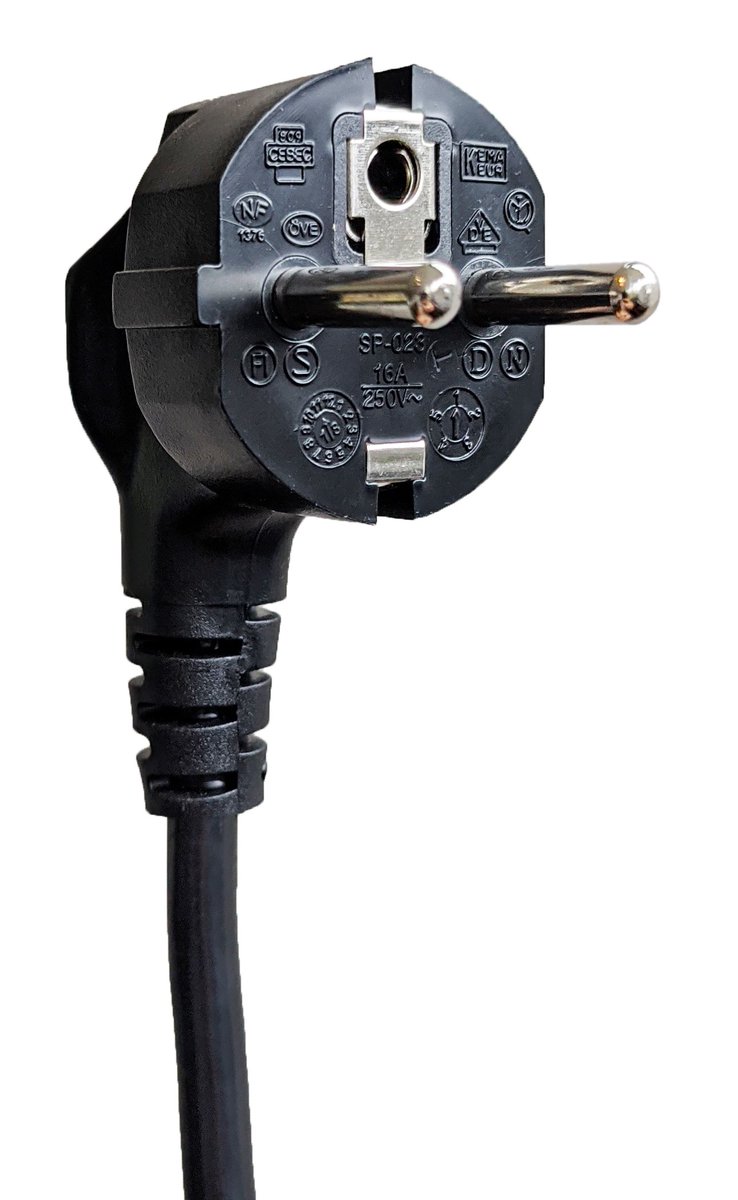
You won't believe what I'm about to tell you...
Jun 12

It's hilarious that the EU forcibly standardized on USB-C but won't bother doing a darned thing about this.
6
6
218
6,573
i really really think at all costs we should open the groningen gas fields again.
i need to know who specifically decided it was a good idea to close it, instead of any other solution.
however it was joint ventured and fully owned by Shell and Exxonmobil, now two foreign entities, of which one is american.
3
13
575
"Brussels is NOT our friend. Brussels is our Enemy. Brussels wants to take away National Sovereignty of the Nations of Europe."
Jun 13

🚨🇭🇺HUGE! Orbán Viktor DECLARES the European Union Leadership as an Enemy of Hungary.
"Brussels is NOT our friend. Brussels is our Enemy. Brussels wants to take away National Sovereignty of the Nations of Europe."
1
1
22
459
him speeching in french is so eurobased, i welcome canada to europe.
the last bastion of freedom in the world.
Jun 13

Carney: The new world order will be built from Europe. Canada is the most European of non-European countries, and we are transforming our cooperation with the EU ... In a more dangerous and divided world, Canada has chosen to build and work in partnership with Europe.
3
1
69
1,137
Pindo 🇪🇺 retweeted

Great article! Must read.
It triggered some reflections on the game theory behind 🇪🇺European integration.
Beyond the specific topic of the North Sea Power Plant, the article highlights what is, in many sectors, a recurring pattern in the EU: a coordination game that would be beneficial, potentially allowing lower costs, greater security, and higher payoffs overall, but that struggles to materialize because of governance issues.
In other words, there is a lack of the institutions, rules, or even informal compromises that make the necessary trade-offs and their respective gains visible, acceptable, and achievable for all parties involved.
This is highly instructive and one of the pillars of game theory applied to European integration.
To better understand how it works, consider a textbook example: the adoption of the telephone at the beginning of the XX century.
In a city where nobody yet owns a telephone, each citizen reasons as follows:
">Buying a telephone costs money, installing it takes time, and learning how to use it is a hassle.
>If I'm the only one who has one, it is practically useless.
>Therefore, I refuse to adopt."
From an individual perspective, the decision is rational. Yet there is an alternative equilibrium: everyone buys a telephone. At that point, everyone can communicate rapidly, the value for each individual far exceeds the initial cost, and so on.
In practice, this second equilibrium produces a higher payoff for everyone.
The problem is that players clearly see the immediate cost ("I have to spend money and time"), while they struggle to perceive the emerging collective benefit ("I will gain access to a network of thousands of people").
In game theoretic terms, they are stuck in an inferior equilibrium because the payoff of the coordination game depends on the simultaneous choices of others.
Now let us introduce a new element: a telephone company that installs telephones free of charge for the first 10,000 users and publicly demonstrates a functioning network (or a software company that operates at a loss for years to spread adoption of its product, the standard Silicon Valley strategy).
This radically changes the perception of the game. Previously, the citizen saw a certain cost today and an uncertain benefit tomorrow. Now they see almost no cost today and concrete proof that others are joining.
[NB: The company has not changed the final payoff of the coordination game; it has changed the players' ability to see and believe in the high-payoff equilibrium.]
In many historical cases, the role of institutions, entrepreneurs, platforms, or political leaders is precisely this: making visible a coordinated equilibrium that already existed in theory but that players could not imagine as realistically attainable.
Of course, we see the same dynamic in the construction of EU integration, so much so that one could view the entire process of European integration as a single coordination game of historical proportions.
But take the Single Market: each state clearly sees what it must concede: trade openness, common standards, limitations on certain national policies. These are immediately observable costs.
Much harder to visualize is the emerging payoff of a market of hundreds of millions of people, with integrated value chains, greater investment, and stronger global bargaining power.
For this reason, political debate often focuses on the sacrifices required by coordination rather than on the surplus generated by the coordinated equilibrium, across all sectors, from the common currency to the construction of a power plant in the North Sea.
As @POTFES notes, the element that can unlock the game is the presence of one or more mechanisms that make the future payoff credible and tangible: common institutions, pilot projects, guarantees, compensation mechanisms that facilitate compromise, concrete examples of success, etc.
Coordination games, and this is particularly clear in Europe, do not fail because the cooperative payoff is too low, but because the cooperative payoff is too distant, abstract, or uncertain relative to the immediately visible costs that the compromises of cooperation require.
Uncertainty about the detailed distribution of future costs and gains is the hidden cost that slows integration and pushes states to focus on short-term equilibria.
The most efficient and effective form of institutional innovation often consists of making the future sufficiently visible to coordinate expectations in the present, not by forcing outcomes that would not otherwise emerge, but by building the mechanisms that allow their full realization.

3
4
14
1,360