Joined November 2022
- Tweets 20,211
- Following 1,123
- Followers 1,598
- Likes 31,484
2,156 Photos and videos






Pinned Tweet

10 Sep 2025
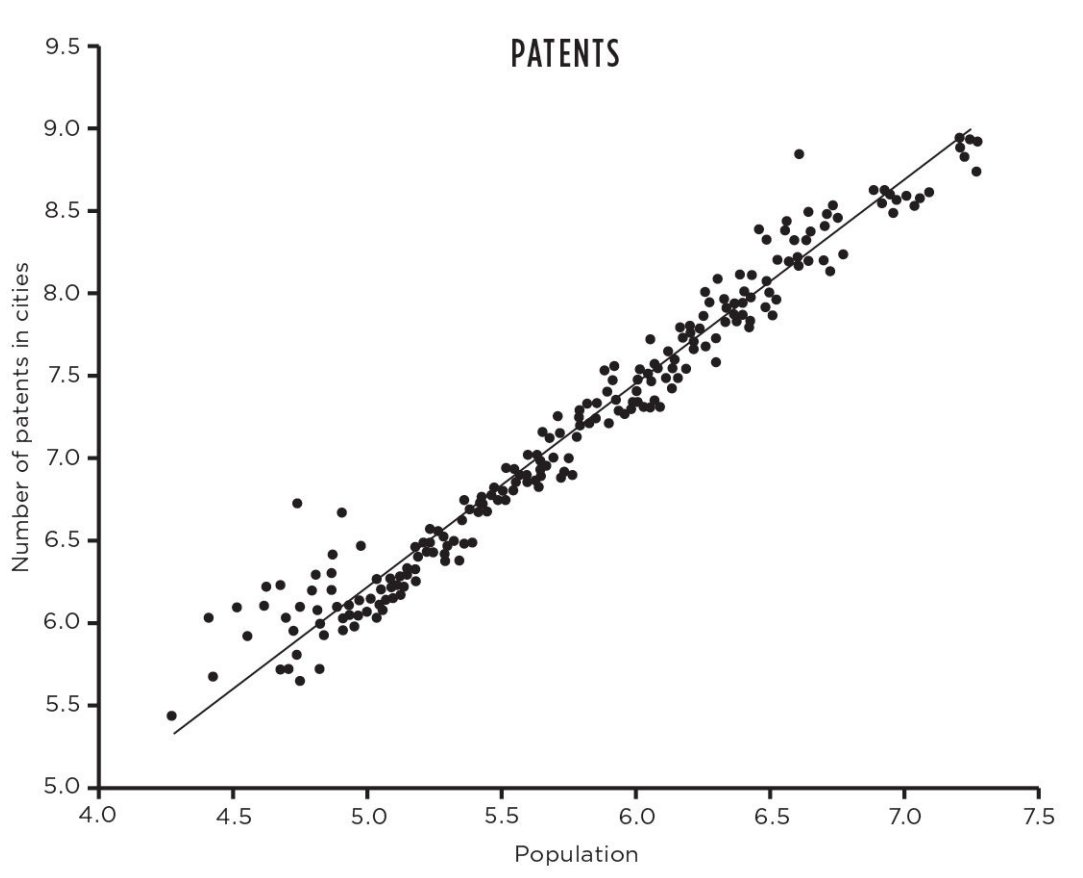
Every evolving natural system follows fractal dynamics, and the most common fit is a power law:
A) Ideas Networks;
B) Metabolic Networks;
C) Economic Networks;
D) Bitcoin Network.
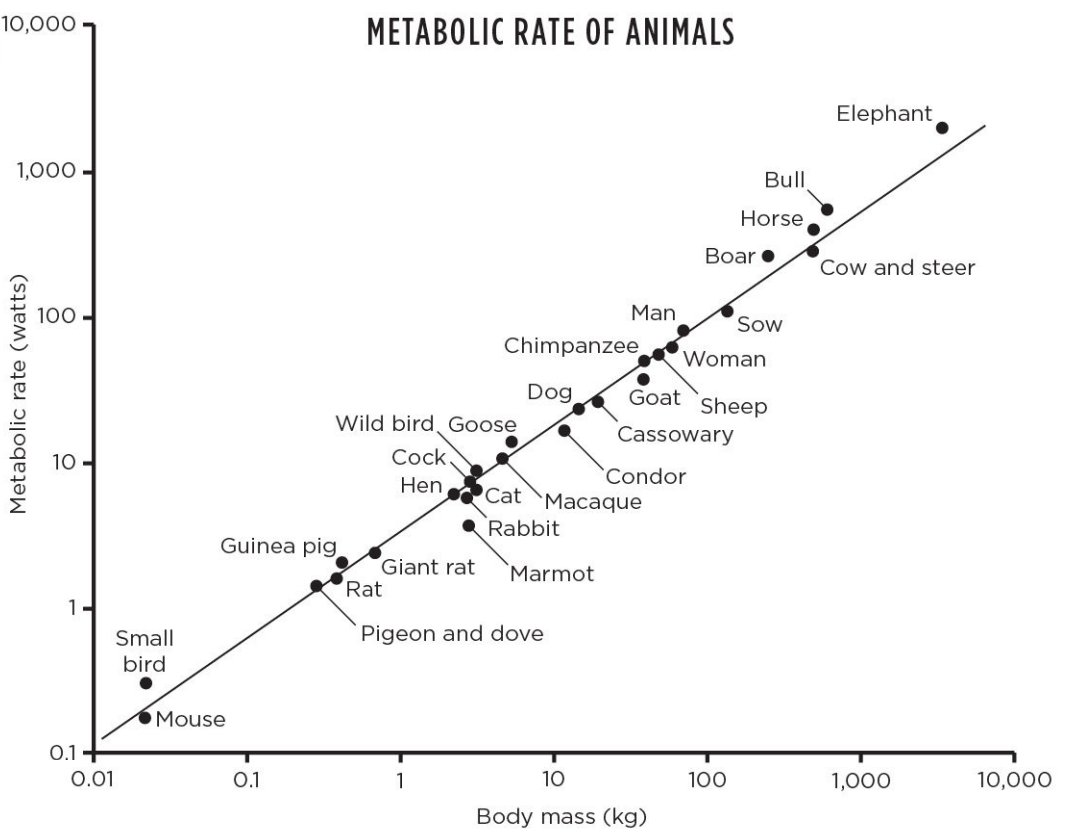
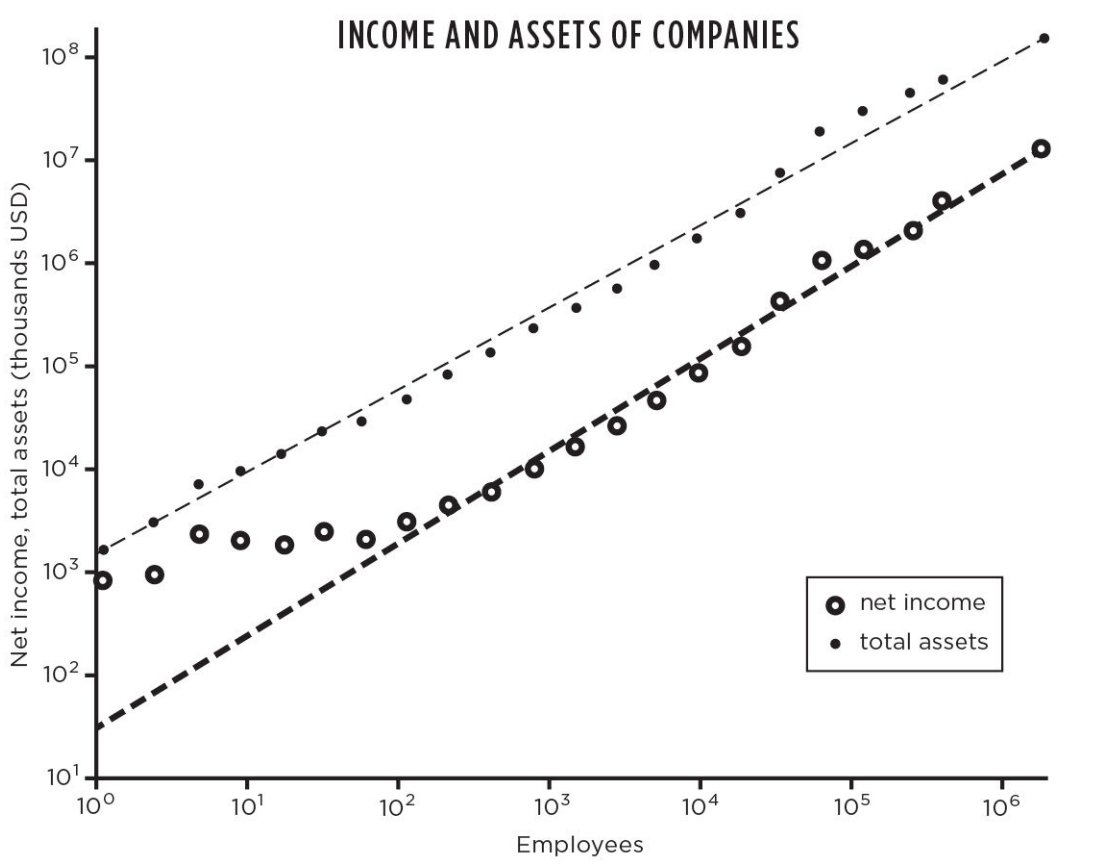
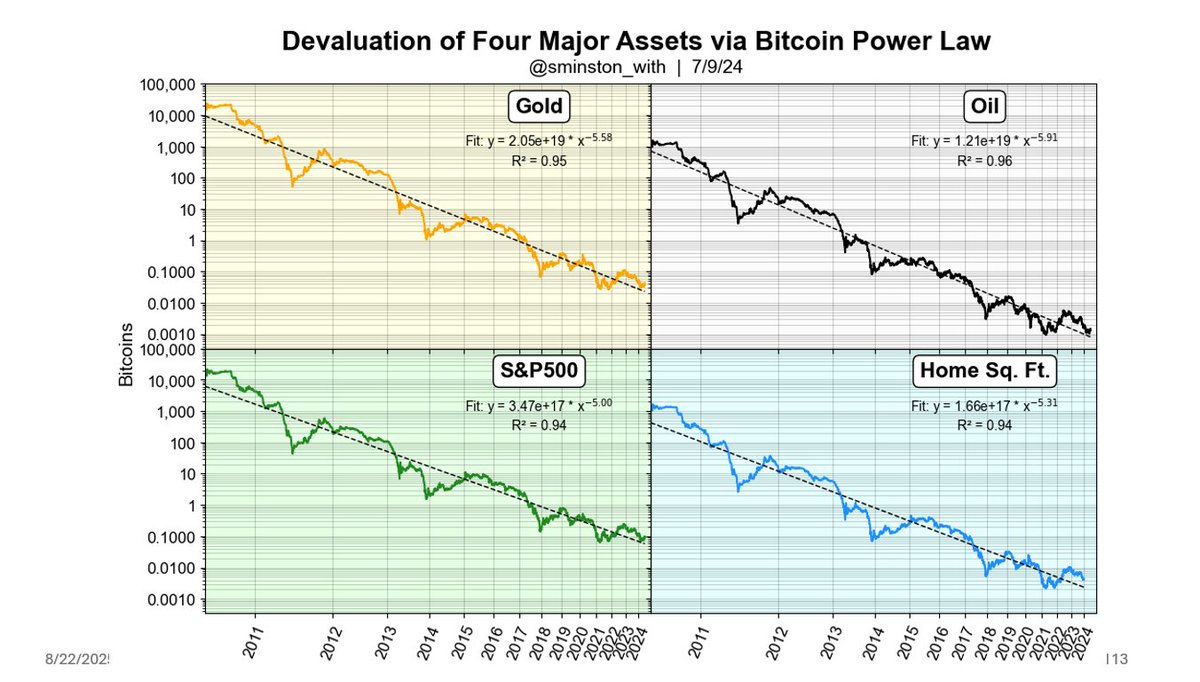
3
5
44
12,393
Zeitgeist Explorer⚡ retweeted

Here it is, the widely anticipated, most detailed US electoral simulator. It includes:
-Fully interactive swing-o-meter including all Demographics (Race, Education, Income, and Age)
-Block Group/County/State level map
-Beautiful maps and different modes
Link in the comment:
25
103
626
28,148
Zeitgeist Explorer⚡ retweeted

I am reaching the conclusion that shares of companies like SpaceX and Tesla are social media products: people invest in them because millions of others also invests in them.
That "meme stock" logic makes sense of the astronomical value their stocks, even if the actual company doesn't produce earnings or revenues of the order of magnitude to justify such market capitalizations.
That is, their value is derived from being a widely acceptable store of value to millions of people, like gold and bitcoin are.
It IS a bubble but that doesn't justify shorting it: Gold is also a "bubble" but it has lasted thousands of years.

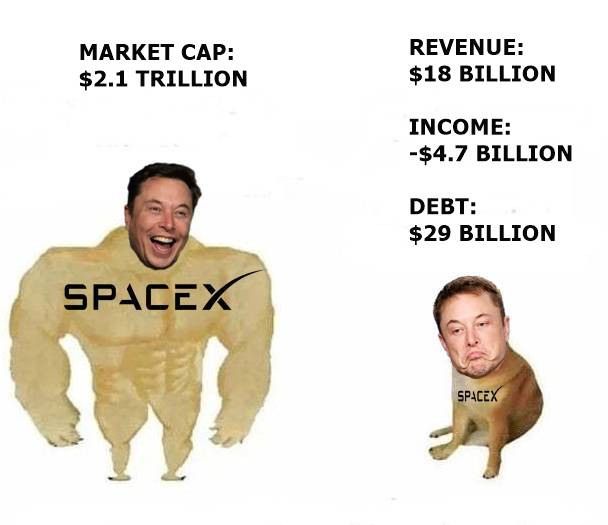
10
1
57
8,284
Zeitgeist Explorer⚡ retweeted

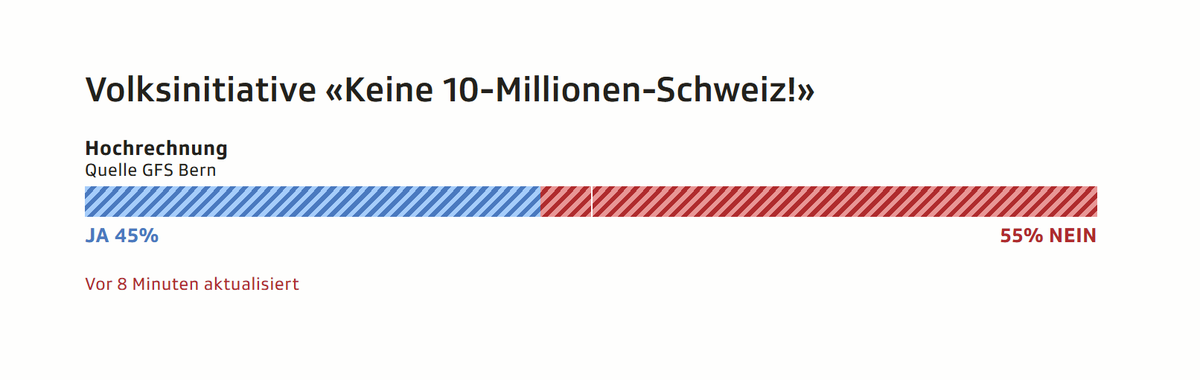
>swiss think immigration is too high
>propose referendum to limit immigration
>government accepts proposals
>holds referendum to limit immigration
>politicians, activists, companies and the tourism sector mobilise and explain that it would be very bad for the economy
>limit immigration vote LOSES
>government doesn't limit immigration
>central issue of C21st western politics not solved
>it’s not simple at all
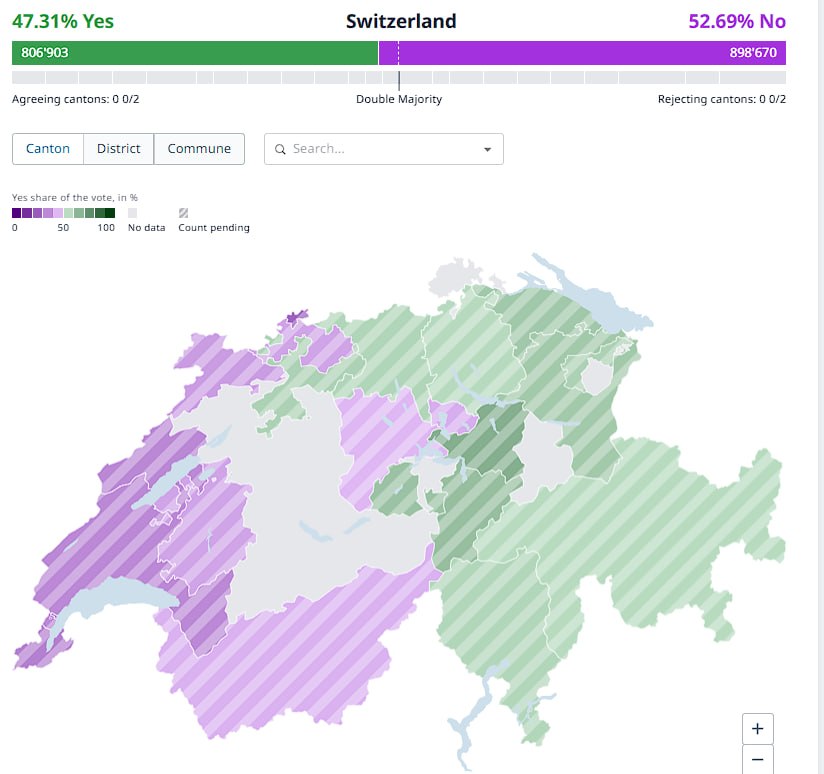
13 Dec 2025

>swiss think immigration is too high
>propose referendum to limit immigration
>government accepts proposals
>holds referendum to limit immigration
>limit immigration vote wins
>government limits immigration
>central issue of C21st western politics instantly solved
>it’s that easy

63
73
1,911
251,514
Zeitgeist Explorer⚡ retweeted
You can't build the European Federation by trying to convince people with technocratic babble.
Nobody seriously disagrees in principle with the idea that a common stock exchange would be good, that the euro makes trade more efficient, that a common army would be more efficient etc.
There's not a lot of people who are like "Wow. I never thought about it like that, it IS more efficient to unite Europe, I will become a Eurofed now."
You're just presenting arguments that would convince YOU, not that convince the sceptics.
Do you think Germany and France weren't realising that on a technocratic level building a common fighting jet would be good for Europe? Of course they knew that. So why did it fall apart anyway?
A project as grand as Eurofederalism can only be built by appealing to some kind of existential, emotional core. By presenting it as the only possible path towards continued existence. That without it, there's no path forward for any of us. It can't be a "nice to have", it will only win if we understand it's "federalise or die". The nations losing sovereignty to the Federation is not a small thing. Nobody really wants to give up power unless they have to. Living alone is in general inefficient, but you're not going to give up the peace, quiet and self determination of living alone just to allow a rando to move in with you, are you? You'd do it only out of necessity or true love.
True political eurofederalism needs to present it as an answer to an existential question over the survival of Europe as such and not bother with techno babble.

8
19
74
3,231

About 30% of current NYC residents are descendants (at least in part) of New Yorkers who witnessed the Knicks' last NBA championship in 1973, while roughly 70% either descend from later arrivals or moved to the city themselves afterward.
Although NY is itself a city with extraordinary integrative capacity, it is remarkable how sports institutions can bring together such large groups of people so pervasively and so quickly. At the local level, they are often even more successful than other major community institutions, such as religious ones.

1
114
Zeitgeist Explorer⚡ retweeted

How many of you think European Industry is in crisis?
That EU industry is bedeviled by Chinese industry, American tariffs and Russian energy weapon seems to be the prevailing sentiment.
So....Europe's clean tech industry must be dead right? WRONG. Ember report:
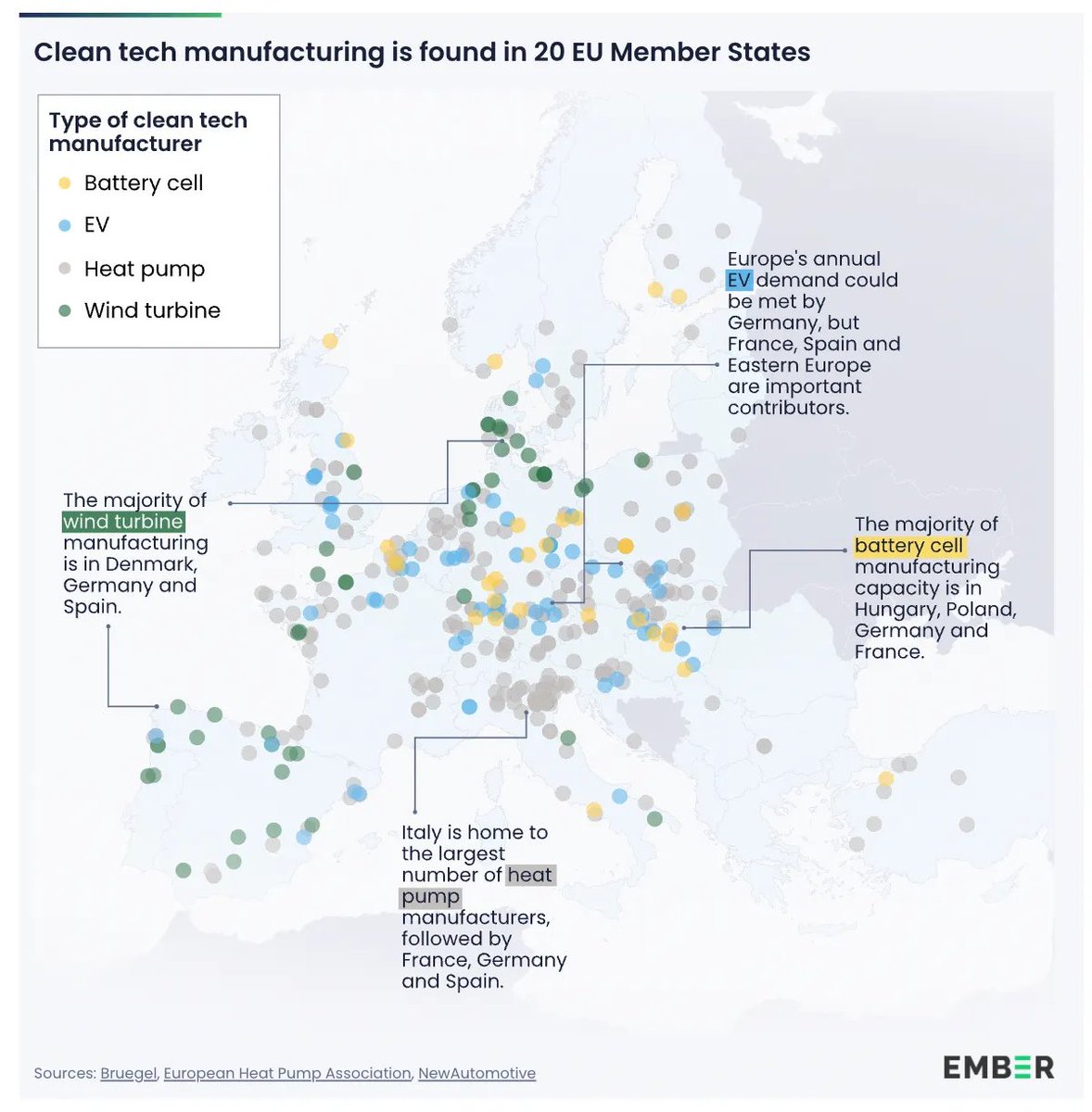
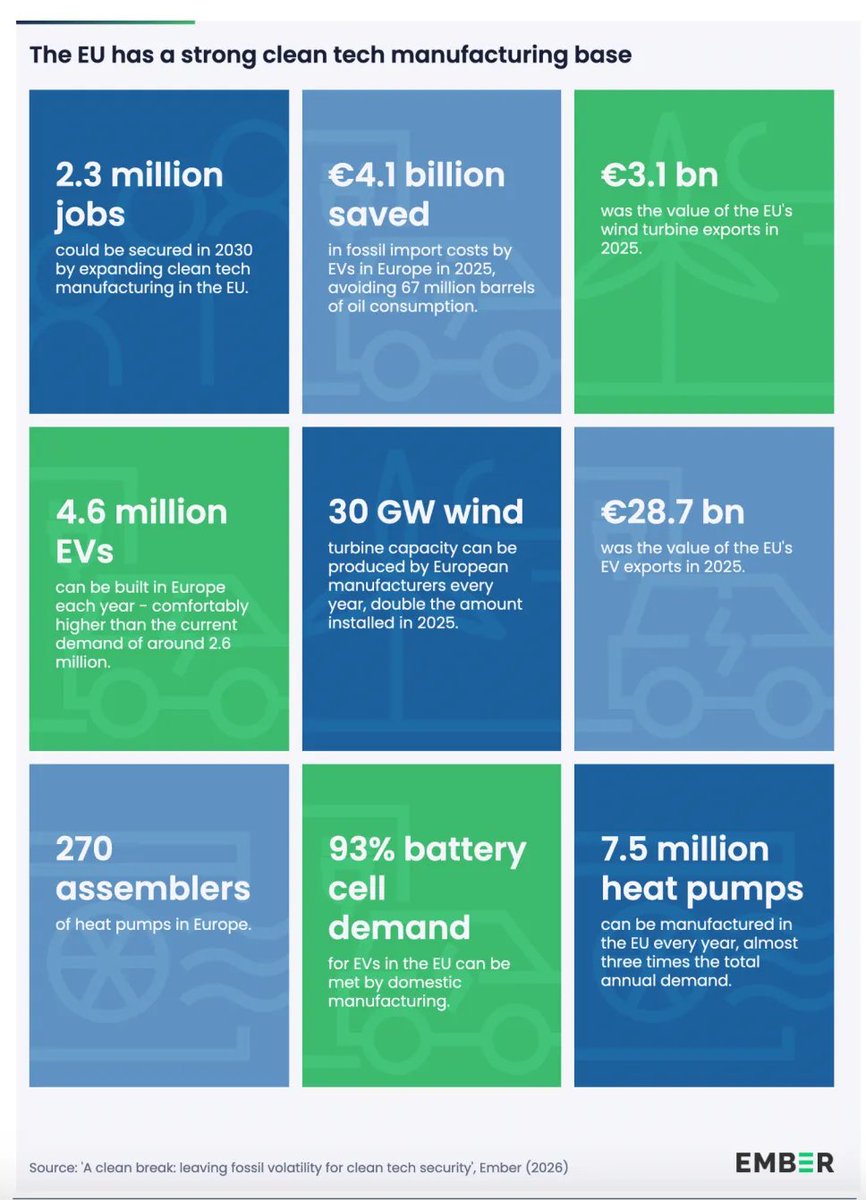
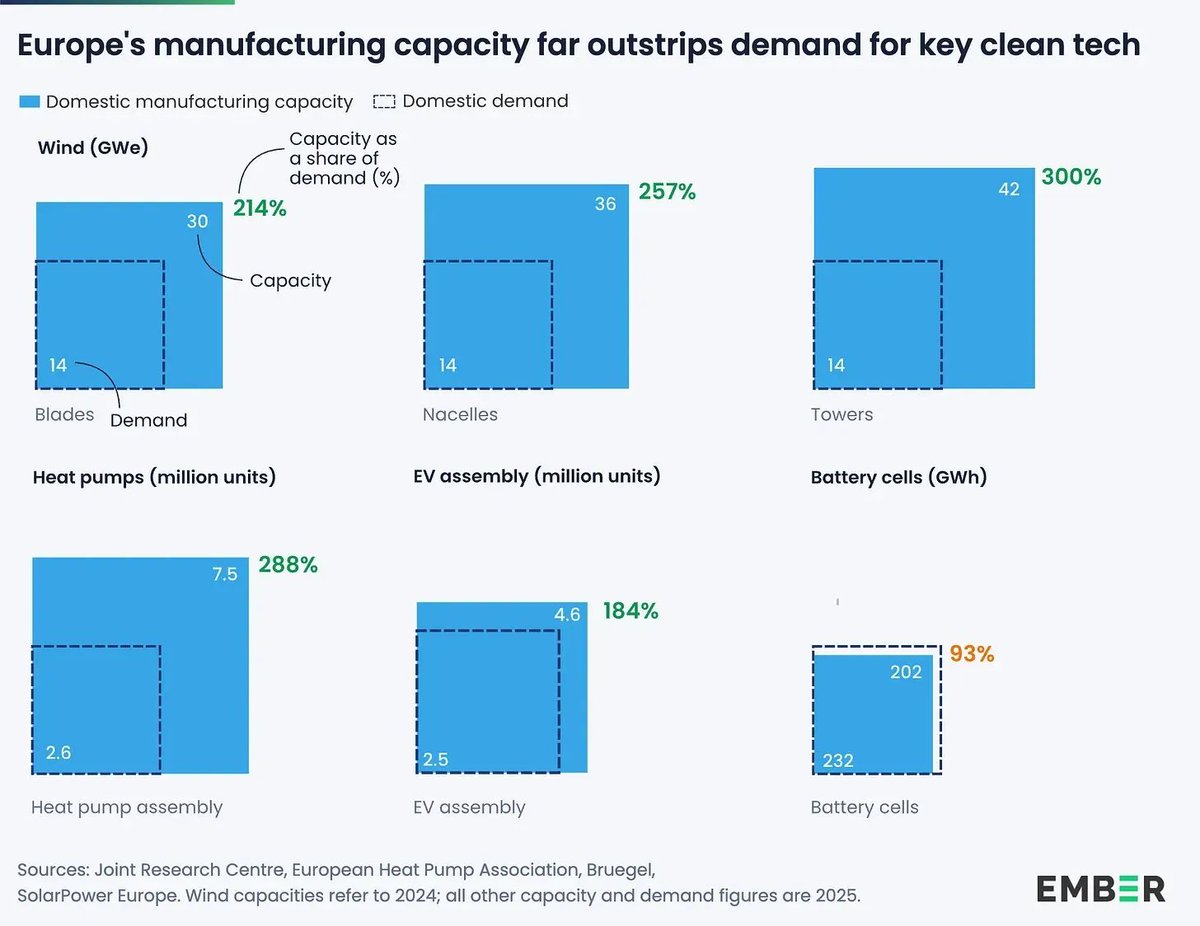
4
25
71
3,914

In a world of populist darkness, the Swiss continue to reliably fold mystical hands and manage the noise coming from the world’s giants in the name of a charming hyper-materialist, transcendental soul.
5
142
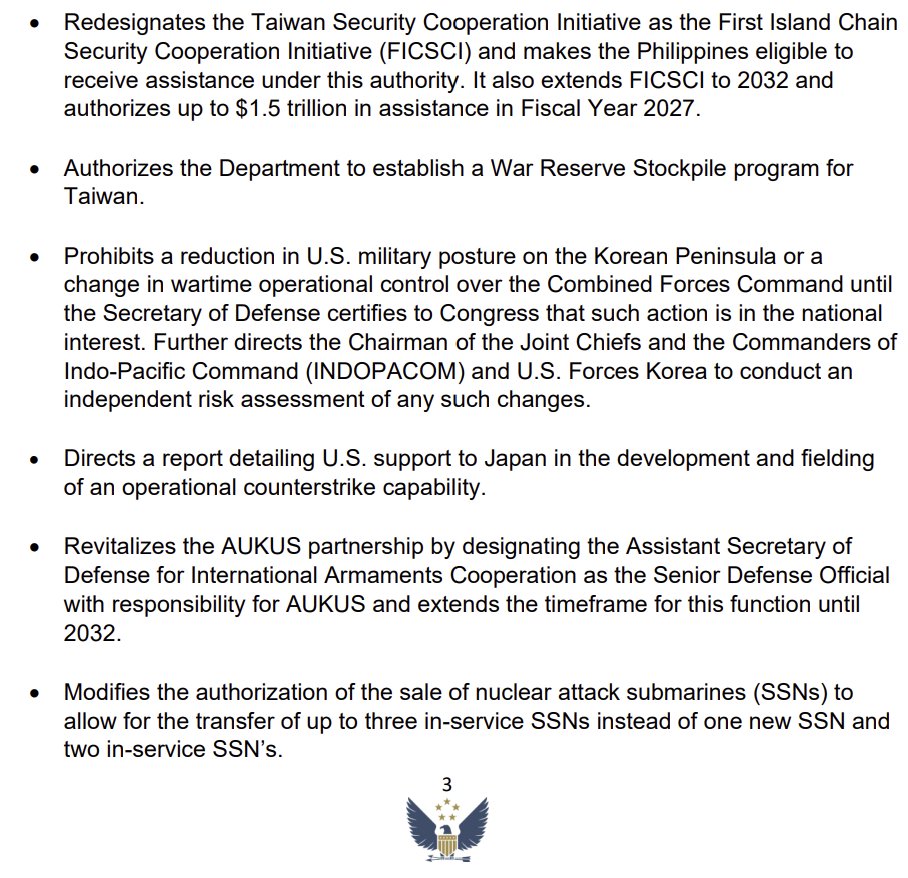
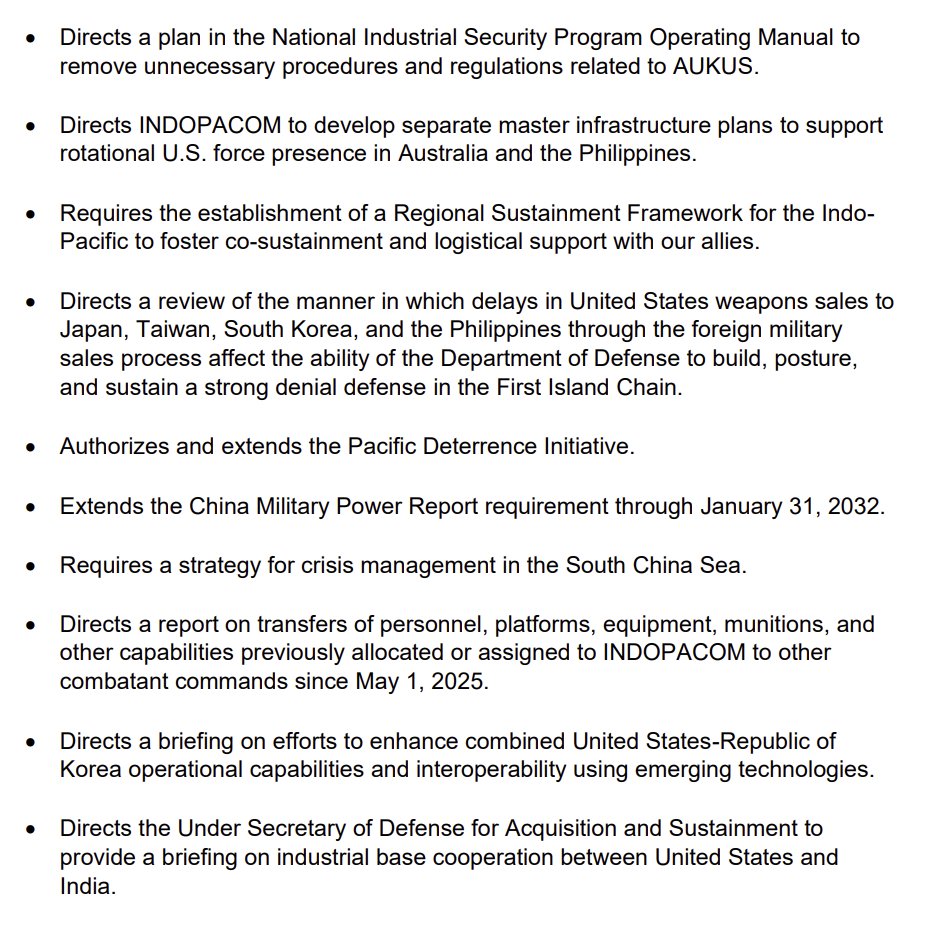
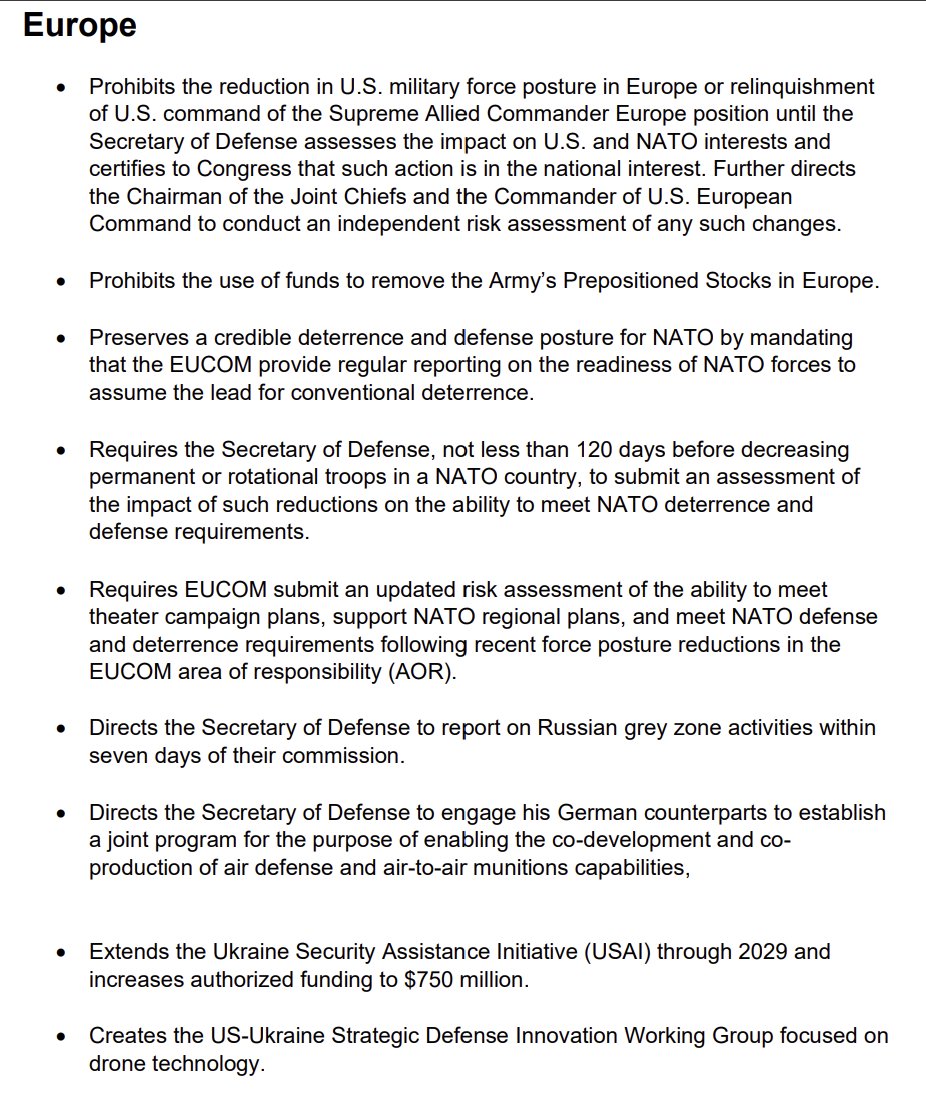
The 🇺🇸US National Defense Authorization Act for FY2027 is very juicy, many interesting points on the Indo-Pacific and Europe.
Some highlights:
INDOPAC:
-The First Island Chain Security Cooperation Initiative (🇺🇸🇹🇼🇯🇵🇰🇷🇵🇭) is being established, with the Philippines joining the new framework.
-A War Reserve Stockpile program for Taiwan will be built up. This will consist of combat-ready weapon systems under US control, kept on the ground (mainly in 🇯🇵 🇰🇷) and offshore on maritime prepositioning ships. This will be in addition to weapons deliveries to Taiwan and will help ensure rapid deployment and supply replenishment in the event of a major conflict.
-Streamlines procedures to reduce delays in weapons deliveries to 🇹🇼🇯🇵🇰🇷🇵🇭.
-Reinforces AUKUS (🇺🇸🇬🇧🇦🇺) and extends the Pacific Deterrence Initiative, the largest regional deterrence investment since the Cold War (and modeled after the European Deterrence Initiative).
🇪🇺EUROPE:
-Prohibits the use of funds to remove the Army’s Prepositioned Stocks in Europe and imposes numerous constraints on any reduction of the US military force posture in Europe. The US military presence in Europe remains above pre-2022 levels and far above pre-2014 levels.
-Directs the Secretary of Defense to engage with his 🇩🇪German counterparts to establish a joint program aimed at enabling the co-development and co-production of air defense and air-to-air munitions capabilities. (I've already made memes about this, right?)
-Extends the 🇺🇦Ukraine Security Assistance Initiative (USAI) through 2029 and establishes the US–Ukraine Strategic Defense Innovation Working Group, focused on drone technology.
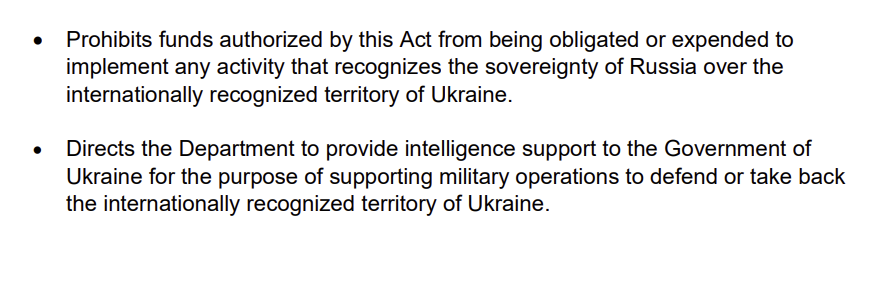
-Prohibits funds authorized under the NDAA from being used to implement any activity that recognizes 🇷🇺Russian sovereignty over the internationally recognized territory of Ukraine.
-Directs the Department to provide intelligence support to the Government of Ukraine for the purpose of supporting military operations aimed at defending or retaking the internationally recognized territory of Ukraine.
1
2
164
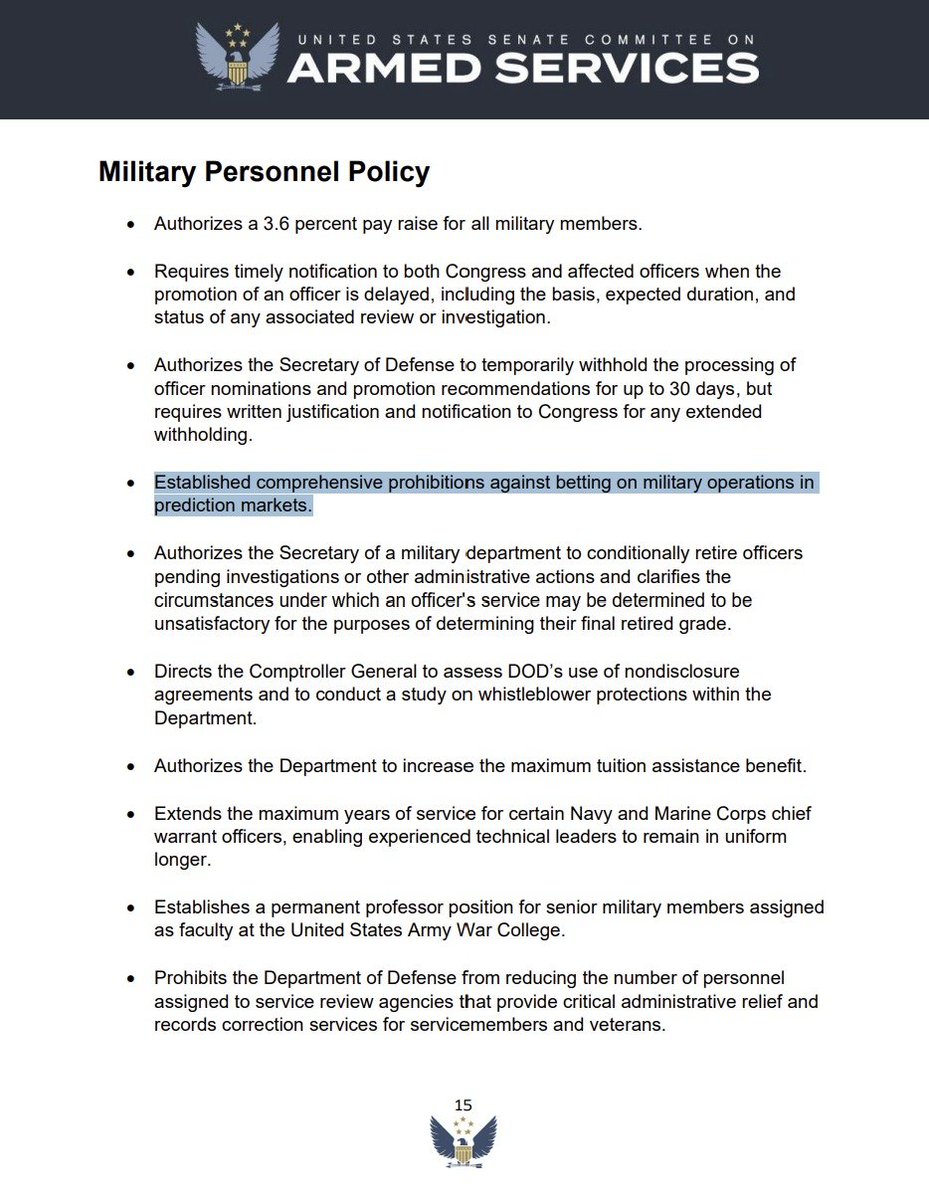
There's also the comic-line prohibiting betting on military operations.
98
Zeitgeist Explorer⚡ retweeted

"In 1971 there came, under the presidency of Nixon in Washington, the final complete disavowal of the concept of a linkage between the US dollar and gold. This was naturally also the beginning of a period of strong inflation in terms of dollar prices."
buff.ly/3eDxjo2

1
3
90
We’re all going to be trillionaires the way we're heading.

Elon Musk just became the world’s first trillionaire.
Let’s make sure he’s also the last.
4
2
8
204
Zeitgeist Explorer⚡ retweeted
I know this is difficult for many people on the right to grasp because it's so dialectical, but many of you are trying to extinguish the flame that makes Europeans world historical and unique. Europeans are WEIRD. WEIRDs are what makes us different from everyone else.
The majority of us are uniquely non clan oriented, uniquely tolerant, uniquely universally minded, uniquely cultured. Christianity is an essential part of what made us this way, even if I criticised it the past few days. This culture produces the Gretas.
The majority of the problems we are facing with immigration is because of these characteristics. And the more universally minded a nation is, the more problems with immigration (France, England, Ireland, etc)
BUT if your solution to it is to destroy liberalism and universalism in Western Europe, you're destroying precisely what is THE MOST EUROPEAN THING EVER. And the EU and the libtards are very much right here when you criticise them for being against "mun values" because they really are our values.
Yes, it's precisely these universal values that are destroying Europe from within and are threatening our societies. But if your solution is to destroy the values, then you've achieved the same goal of destroying Europe. You will have saved the "race" but only by destroying the spirit. Who wants that?
We cannot go back. We cannot turn back the clock to 1950. We cannot just become tribal and stop caring entirely about some kind of human rights and just deport away. It's just not going to happen. Trump found out the hard way. He gave up on violent deportations when he was opposed by hundreds over hundreds of ... WHITES! Even if you see a poll and it says 50% want mass deportations, the moment it actually happens, the Euros will find it cruel, etc.
The only way to get out of this mess is to build something new. The right has to build something universal, uplifting and moral that is inspiring and makes people feel like they're part of a great mission that improves the world — NOT Christianity — but simultaneously allows us to justify our self preservation & acting ruthlessly to protect our continent from threats, ecological, Russian, Islamic and whatever else; these latter things must be done for some kind of higher purpose, because that's just how Europeans are. It's why I also think it's totally vital that the right wing has something to say about Palestine, but that's for another essay...

Nick Fuentes defends Greta Thunberg and her European Universalist spirit. This is the blueprint for the empire of the future.
58
28
315
38,381
😅

Rheinmetall's CEO sees a risk that France will exit a joint tank project with Germany, following this week’s collapse of a fighter jet program between the two countries, according to an interview with Welt am Sonntag bloomberg.com/news/articles/…
1
6
267
Zeitgeist Explorer⚡ retweeted

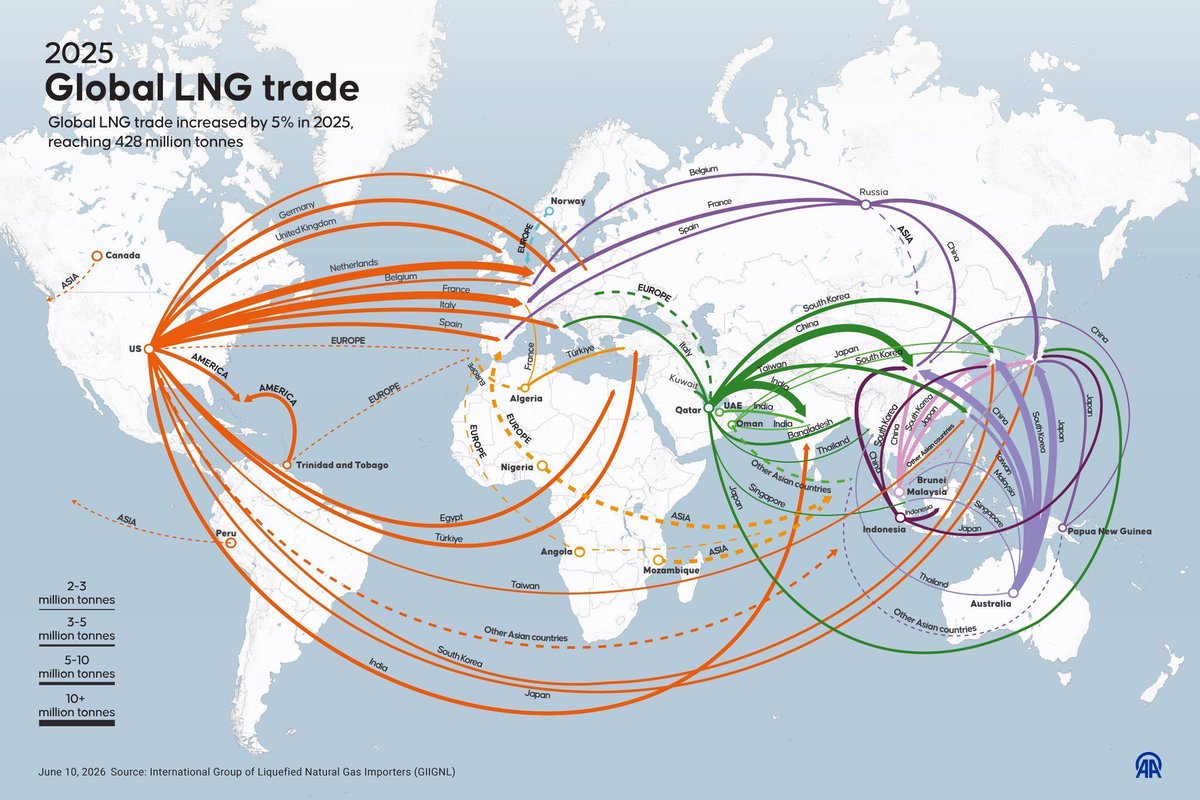
Global LNG trade map. If prices are high the exporters benefit and folks in the importing nations pay big bucks. Have a look at which importers see their gas travel through maritime choke points. Great map to ponder when thinking about geopolitics.
9
35
97
8,689
Great article! Must read.
It triggered some reflections on the game theory behind 🇪🇺European integration.
Beyond the specific topic of the North Sea Power Plant, the article highlights what is, in many sectors, a recurring pattern in the EU: a coordination game that would be beneficial, potentially allowing lower costs, greater security, and higher payoffs overall, but that struggles to materialize because of governance issues.
In other words, there is a lack of the institutions, rules, or even informal compromises that make the necessary trade-offs and their respective gains visible, acceptable, and achievable for all parties involved.
This is highly instructive and one of the pillars of game theory applied to European integration.
To better understand how it works, consider a textbook example: the adoption of the telephone at the beginning of the XX century.
In a city where nobody yet owns a telephone, each citizen reasons as follows:
">Buying a telephone costs money, installing it takes time, and learning how to use it is a hassle.
>If I'm the only one who has one, it is practically useless.
>Therefore, I refuse to adopt."
From an individual perspective, the decision is rational. Yet there is an alternative equilibrium: everyone buys a telephone. At that point, everyone can communicate rapidly, the value for each individual far exceeds the initial cost, and so on.
In practice, this second equilibrium produces a higher payoff for everyone.
The problem is that players clearly see the immediate cost ("I have to spend money and time"), while they struggle to perceive the emerging collective benefit ("I will gain access to a network of thousands of people").
In game theoretic terms, they are stuck in an inferior equilibrium because the payoff of the coordination game depends on the simultaneous choices of others.
Now let us introduce a new element: a telephone company that installs telephones free of charge for the first 10,000 users and publicly demonstrates a functioning network (or a software company that operates at a loss for years to spread adoption of its product, the standard Silicon Valley strategy).
This radically changes the perception of the game. Previously, the citizen saw a certain cost today and an uncertain benefit tomorrow. Now they see almost no cost today and concrete proof that others are joining.
[NB: The company has not changed the final payoff of the coordination game; it has changed the players' ability to see and believe in the high-payoff equilibrium.]
In many historical cases, the role of institutions, entrepreneurs, platforms, or political leaders is precisely this: making visible a coordinated equilibrium that already existed in theory but that players could not imagine as realistically attainable.
Of course, we see the same dynamic in the construction of EU integration, so much so that one could view the entire process of European integration as a single coordination game of historical proportions.
But take the Single Market: each state clearly sees what it must concede: trade openness, common standards, limitations on certain national policies. These are immediately observable costs.
Much harder to visualize is the emerging payoff of a market of hundreds of millions of people, with integrated value chains, greater investment, and stronger global bargaining power.
For this reason, political debate often focuses on the sacrifices required by coordination rather than on the surplus generated by the coordinated equilibrium, across all sectors, from the common currency to the construction of a power plant in the North Sea.
As @POTFES notes, the element that can unlock the game is the presence of one or more mechanisms that make the future payoff credible and tangible: common institutions, pilot projects, guarantees, compensation mechanisms that facilitate compromise, concrete examples of success, etc.
Coordination games, and this is particularly clear in Europe, do not fail because the cooperative payoff is too low, but because the cooperative payoff is too distant, abstract, or uncertain relative to the immediately visible costs that the compromises of cooperation require.
Uncertainty about the detailed distribution of future costs and gains is the hidden cost that slows integration and pushes states to focus on short-term equilibria.
The most efficient and effective form of institutional innovation often consists of making the future sufficiently visible to coordinate expectations in the present, not by forcing outcomes that would not otherwise emerge, but by building the mechanisms that allow their full realization.

3
4
14
1,365
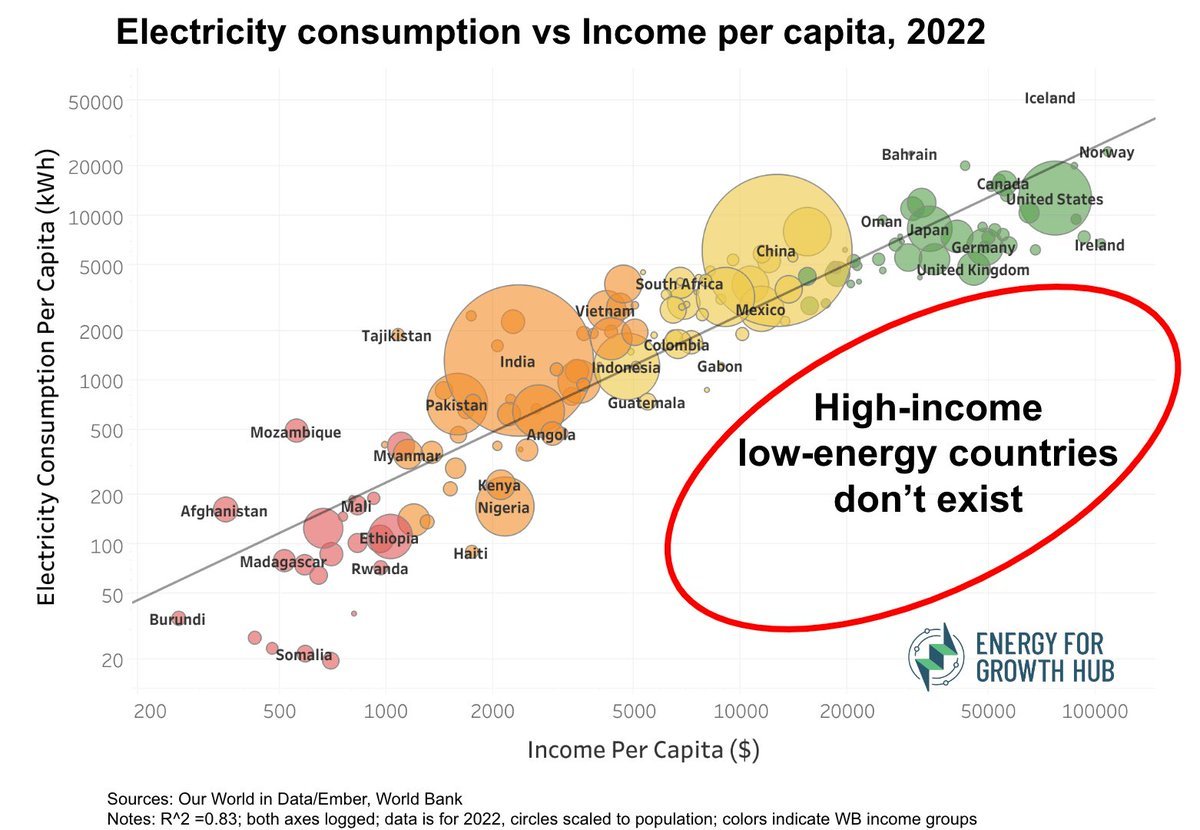
For instance, in 2024, Iran consumed more energy per capita than Denmark and Switzerland.
People should definetly be prepared to observe high-income countries consuming less per capita energy than most mid-developed countries at peak industrialization over the next 50 years.
Everything looks like a line on a log chart. What this chart shows is that Mexico and South Africa consume roughly the same amount of electricity per capita as the UK, yet the UK's GDP per capita is 5–8 times higher. Likewise, Rwanda consumes 23 times less electricity than Tajikistan despite having a similar GDP per capita. Many such cases. So we're dealing with errors spanning orders of magnitude here.
A more refined analysis shows that electricity consumption per capita is linked to the presence of energy-intensive sectors in the economy, mainly industry. As a consequence, as the agricultural share of the economy declines, you generally observe a strong correlation between development and industrialization.
However, that correlation starts to weaken in developed countries as manufacturing employment declines and high-volume, low-value-added sectors such as steel are offshored, while services and complex manufacturing expand.
In fact, all developed countries are producing a dollar of GDP with 20% to 50% less energy consumption than just 20 years ago: a semiconductor plant can be less energy-intensive than a steel mill while producing output worth 20 times more; engines and grids become more efficient; heating and cooling systems become more efficient; many services (eg financial) earn from energy intensive sectors in other countries; and so on.
So no, while of course there is no developed country that consumes less energy than Afghanistan, as just having electrified homes and urbanization is enough, that alone is not enough to imply that you cannot "do more with less" in terms of energy consumption-GDP per capita. Nor is it implausible that, in the future, most developed countries will have lower per-capita energy consumption than many underdeveloped countries at their peak manufacturing-employment share.
2
9
423
NB: Denmark and Switzerland are not only rich; they are also, respectively, the sixth and first countries in the world by manufacturing value added per capita.
7
139
Zeitgeist Explorer⚡ retweeted

Jun 12
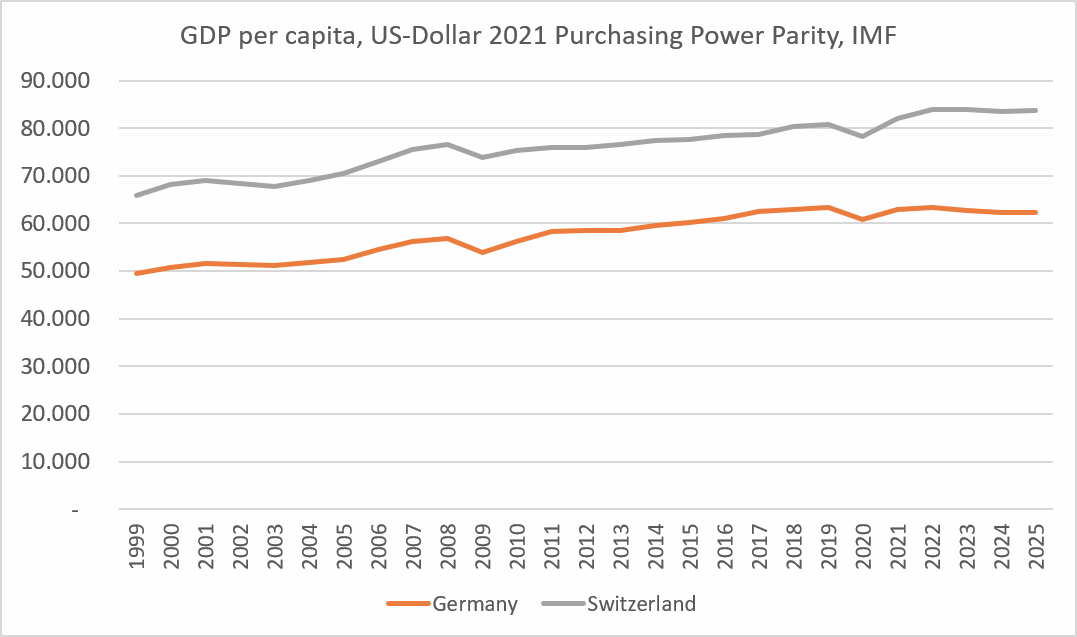
This is how you confuse people. Industry is a relatively small part of the whole economy in both countries. If you look at per capita GDP the development in both countries is rather similar. Growth rates are 26 and 26,8% from 1999 to 2025
Jun 12

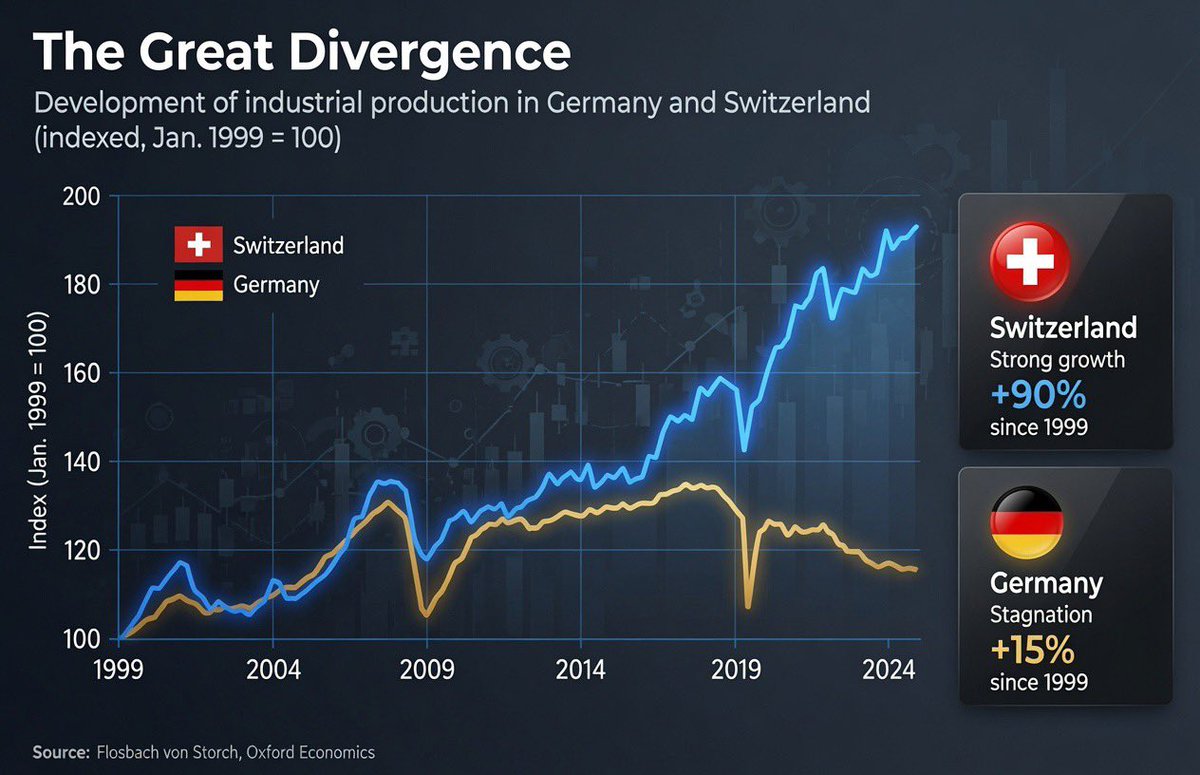
This is eye-opening. Even the weak Euro didn’t prevent the self-inflicted collapse of German industry.
All the bad policies will one day be seen as the largest self-sabotage of an advanced economy ever.
If the left can ruin Germany, imagine what they could do to your country.
3
4
23
1,767