
Financial news for the curious. Real-time financial market data powered by @perplexity_ai Computer
Joined January 2025
- Tweets 1,250
- Following 28
- Followers 44,086
- Likes 2,913
442 Photos and videos

Pinned Tweet
Financial data from Perplexity Finance is now available in the Perplexity Agent API.
Finance Search gives agents access to live prices, fundamentals, earnings, estimates, filings, and market context.
May 6

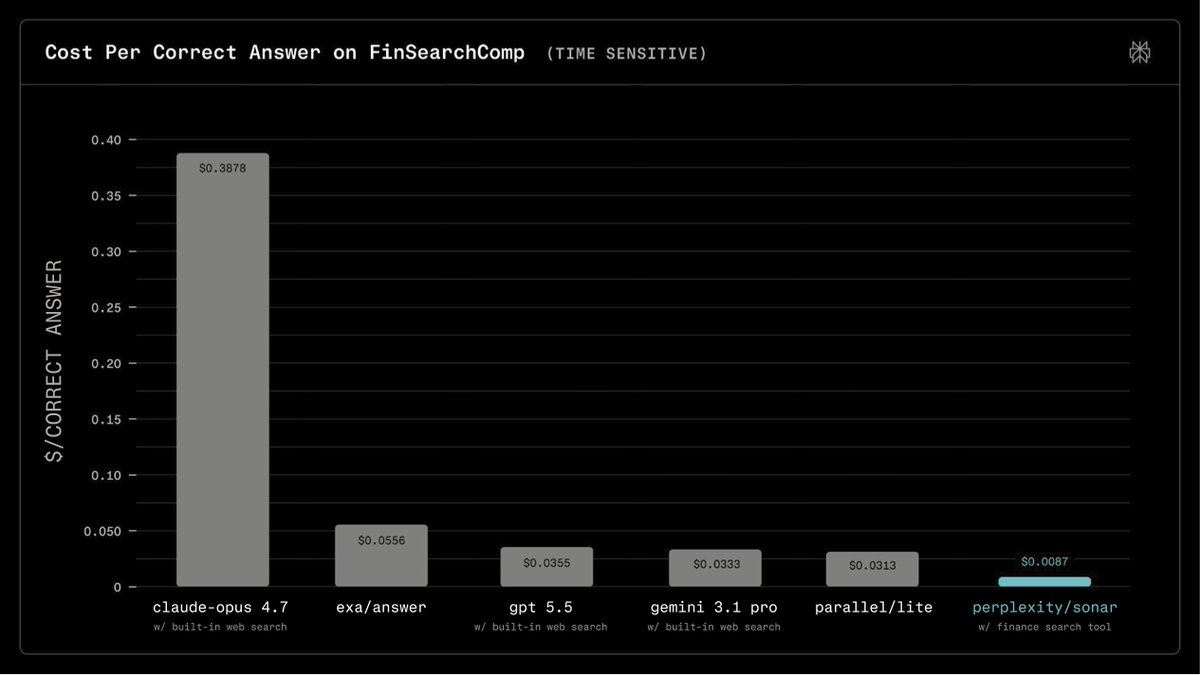
Finance Search is now available in the Perplexity Agent API.
In one tool call, developers can now retrieve licensed financial datasets, real-time market data, and cited web sources for agents that need current, verifiable financial answers.
6
2
57
11,009
Perplexity Finance retweeted

Jun 8
First-party data from 15,000 public companies, structured for AI.
Quartr is now available in Perplexity Computer via MCP.
1
49
9,029
Perplexity Finance retweeted

Jun 3
Personal Computer is coming to Windows.
Personal Computer for Windows runs on your machine and orchestrates across the apps and files you use every day.
We'll roll out first to paying Max and Enterprise Max subscribers on the waitlist.
101
81
796
99,962
Perplexity Finance retweeted
May 28
Perplexity Computer is now available inside Microsoft Excel, Word, PowerPoint, and Outlook.
Orchestrate across work with Computer directly in the side panel of your app to draft documents, model, build decks, and handle email.
Available now: perplexity.ai/hub/products/i…
48
84
715
99,234
Perplexity Finance retweeted

May 5
Today we launched Perplexity Computer for Professional Finance. We have four principles:
1. Make it easy to access trusted data. Connect your own license via MCP, or use Computer's extensive off-the-shelf tools.
2. Focus on getting work done. We have 35 workflows tailored to specific finance segments like PE, wealth management, and investment banking.
3. Data must be traceable. You can hover over any number in a Computer answer to see the SEC filing or earnings transcript it was pulled from, and any calculations that were done on top of it.
4. Computer must be portable wherever you work: Excel add-in, live finance data in the Agent API, Microsoft Teams access, and more coming soon.
May 5
Today we're launching Perplexity Computer for Professional Finance.
Finance teams can bring licensed data from providers like Morningstar, PitchBook, Daloopa, and Carbon Arc into Computer.
We’ve also added 35 dedicated finance workflows for the work analysts repeat every week.
9
27
393
81,365
Financial data from Perplexity Finance is now available in the Perplexity Agent API.
Finance Search gives agents access to live prices, fundamentals, earnings, estimates, filings, and market context.
May 6
Finance Search is now available in the Perplexity Agent API.
In one tool call, developers can now retrieve licensed financial datasets, real-time market data, and cited web sources for agents that need current, verifiable financial answers.
6
2
57
11,009
Blog:
perplexity.ai/hub/blog/intro…
Developer Docs:
docs.perplexity.ai/docs/agen…
9
1,811
Perplexity Finance retweeted
May 5
Every output is traceable.
Computer shows where the data came from and links directly to the source behind key numbers.
Click any citation or hyperlinked number to open the underlying SEC filing, earnings transcript, market data page, or licensed source.
6
5
94
48,314
Perplexity Finance retweeted
May 5
Today we're launching Perplexity Computer for Professional Finance.
Finance teams can bring licensed data from providers like Morningstar, PitchBook, Daloopa, and Carbon Arc into Computer.
We’ve also added 35 dedicated finance workflows for the work analysts repeat every week.
159
322
3,315
877,953
Perplexity Finance retweeted
Apr 16
Today we're releasing Personal Computer.
Personal Computer integrates with the Perplexity Mac App for secure orchestration across your local files, native apps, and browser.
We’re rolling this out to all Perplexity Max subscribers and everyone on the waitlist starting today.
770
1,297
13,716
13,476,965
Perplexity Finance retweeted
Apr 11
Over the past two weeks, students researched and prepared stock pitches with Perplexity Computer.
Now the top 5 finalists will present live for $17,500 in prizes to our panel of judges.
Watch today’s live pitches from 9–10:30 AM PST: pplx.ai/pitch/finals
57
36
421
455,236
You can now connect bank accounts, credit cards, and loans alongside your brokerage accounts through Plaid.
Head to the portfolio page in Perplexity Finance and click "Connect Accounts."
Apr 9
Computer now connects with Plaid to link bank accounts, credit cards, and loans.
Track spending in detail, build custom budget tools, and visualize your net worth alongside your investment portfolio.
10
12
257
19,625
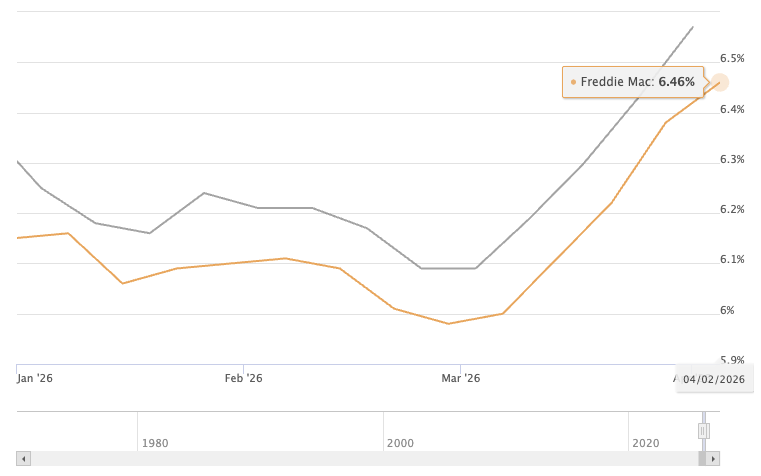
🚨 BREAKING: US mortgage rates just rose for the FIFTH straight week as the Iran war keeps pushing borrowing costs higher.
1. Freddie Mac says the average 30-year fixed mortgage rate is now 6.46%, up from 6.38% last week.
2. That's the highest level since early September.
3. Before fighting began, the 30-year rate was 5.98% on Feb. 26.
4. For a $398,000 home with 20% down, the monthly payment at 6.46% is $2,383, per Zillow's calculator.
5. That's roughly $100/month MORE than late February rates, or ~$36,000 more interest over the life of the loan.
It is unclear how much it'll continue to increase as conflicts escalate.
4
4
39
83,595
Perplexity Finance retweeted
Apr 2
Perplexity Computer can now help prepare your federal tax return.
Select “Navigate my taxes” on Computer to give it a shot.
334
418
4,222
3,376,149
Perplexity Finance retweeted

Mar 30
I'm pleased to announce we've expanded our partnership between @Perplexity_ai and @Fiscal_ai.
Fiscal AI's Data API now gives investors on Perplexity and Perplexity Computer accurate, source-backed financial data when performing research or vibing customized dashboards.
62
41
619
61,008
Perplexity Finance retweeted

Mar 24
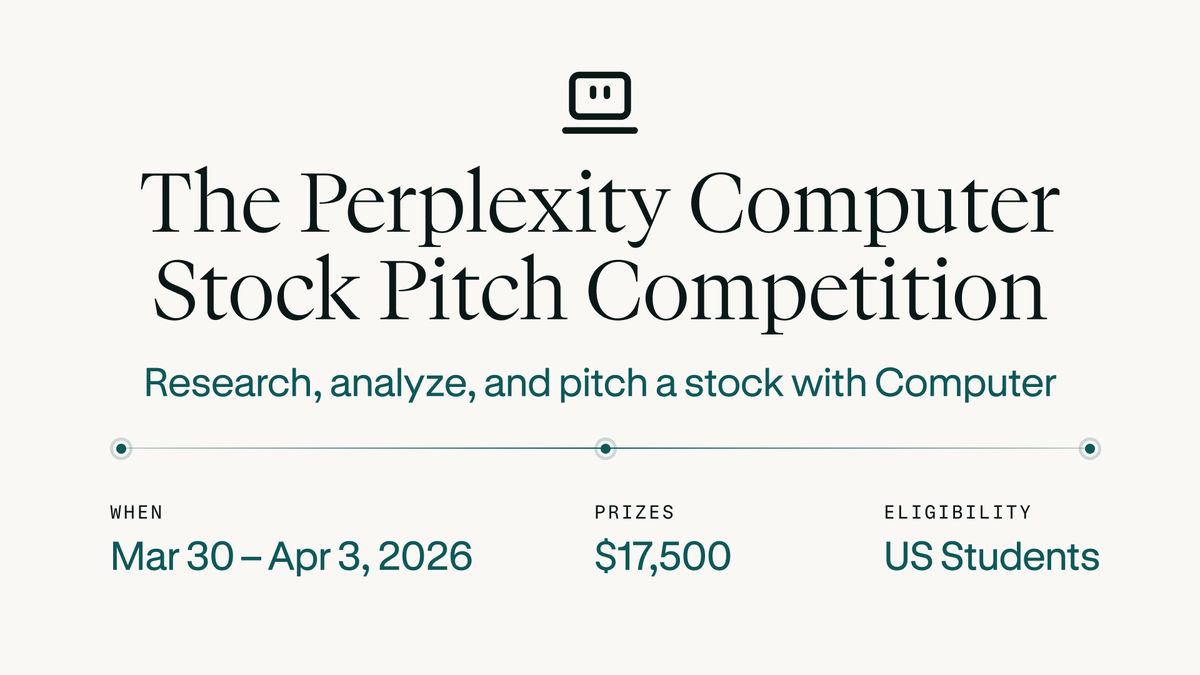
We're hosting a Perplexity Computer stock pitch competition starting on March 30th for students enrolled in a US undergraduate or graduate program.
Students will have 1 week to research, analyze, and pitch a publicly-listed stock, using only Perplexity Computer.
58
80
1,479
779,051

Mar 23
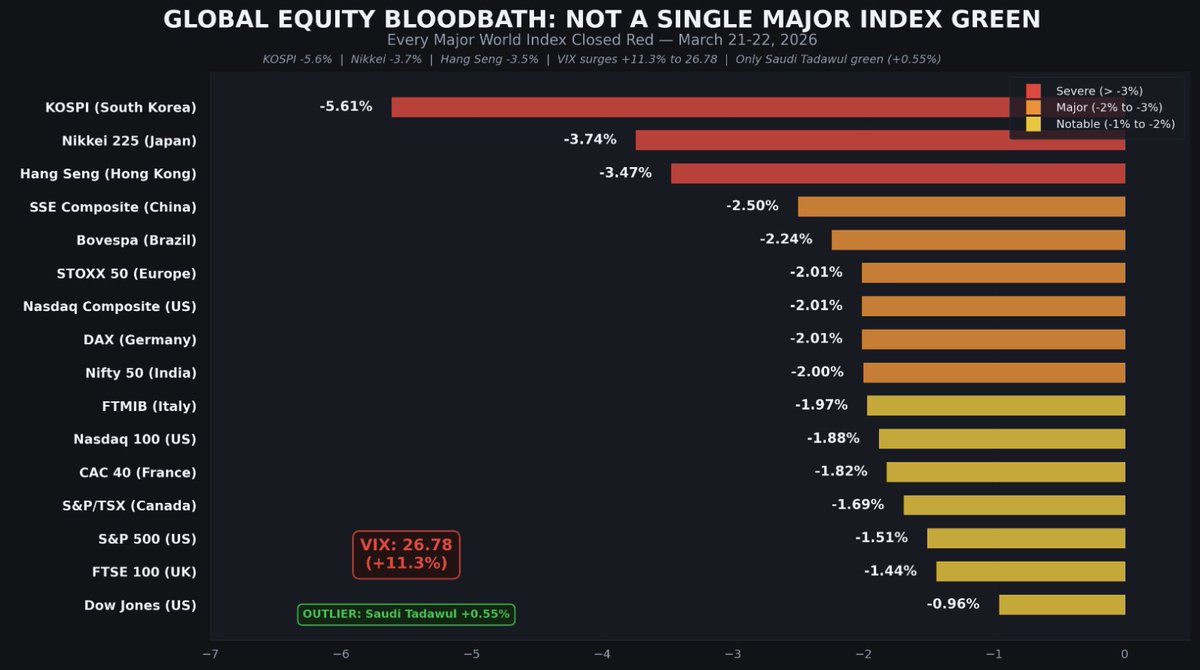
Every single major index on the planet closed red over the weekend. Some having its worst day since 2024:
> KOSPI: -5.61% (worst since Sep 2024)
> Nikkei: -3.74% (worst since the Aug 2024 carry trade unwind)
> Hang Seng: -3.47%
> SSE Composite: -2.50%
> Nasdaq Composite: -2.01%
> S&P 500: -1.51%
> VIX: 11.3% to 26.78
4
23
159
38,702
Mar 23
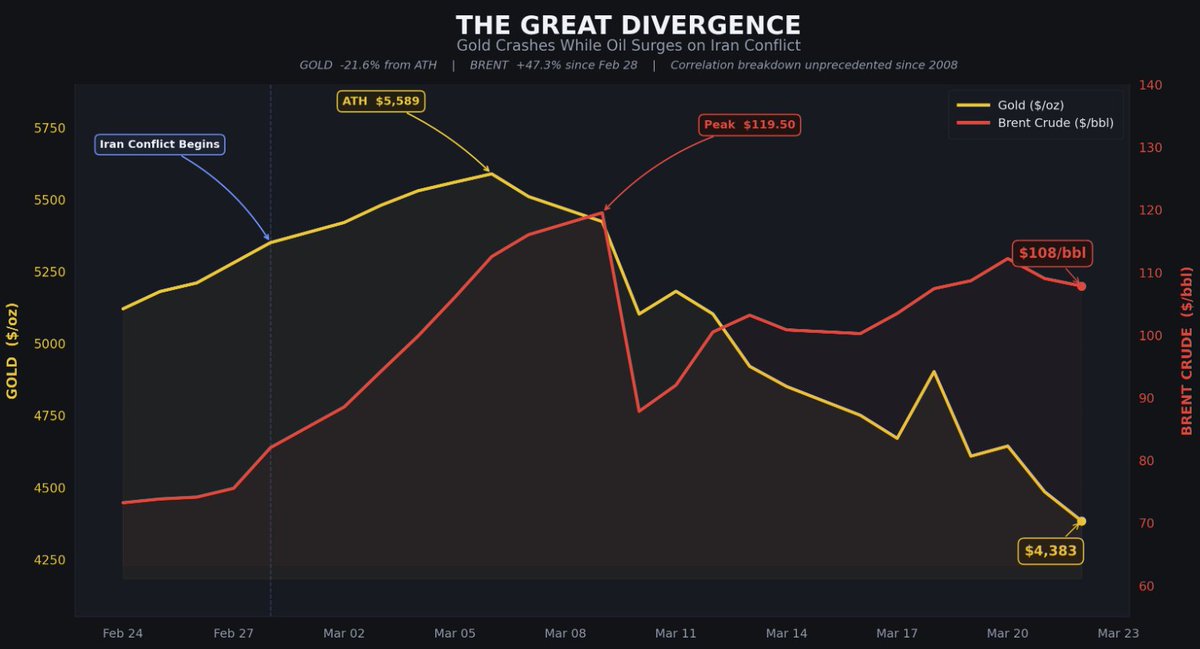
Why are gold and oil diverging right now?
Since the Iran conflict began on February 28, Brent crude has surged 40.7% to $108/bbl.
Gold, the asset you're supposed to own during a war, has crashed -22.3% from its all-time high of $5,589 to below $4,383.
That's a combined -$3.5 TRILLION wipeout across gold and silver in 3 weeks.
A stronger US dollar, surging 10Y yields at 4.40% ( 45 bps in 3 weeks), and forced liquidations by leveraged paper traders created the largest safe-haven correlation breakdown in decades.
Goldman now sees headline PCE peaking at 4.5% this spring. They've pushed their first rate cut to September and raised recession odds to 25%.
The Iran war isn't just an energy shock. It's a full-spectrum macro repricing.
9
27
209
33,549
Perplexity Finance retweeted
Mar 16
Even with the best inputs, financial research must be traceable.
Perplexity Computer and Deep Research are both equipped with over 40 tool calls to realtime financial data, with no license or setup required. And now, you can trace every number back to its original authoritative source, whether it was disclosed or derived.
Mouse over any number to see where it came from. This works for stock prices, financial line items, earnings call excerpts, institutional holdings, insider activity, analyst price targets, and many more tools.
Available now in Deep Research queries on web and mobile. Coming soon to Computer.
You are going to see much more of this from Perplexity answers. Data traceability is a foundational principle of what we are building.
8
9
176
16,934
Perplexity Finance retweeted
Mar 11
Perplexity Computer now runs on your portfolio.
Connect your brokerage accounts securely through @Plaid, then ask Computer to make a personal terminal that's always on.
147
380
4,698
647,078
Mar 11
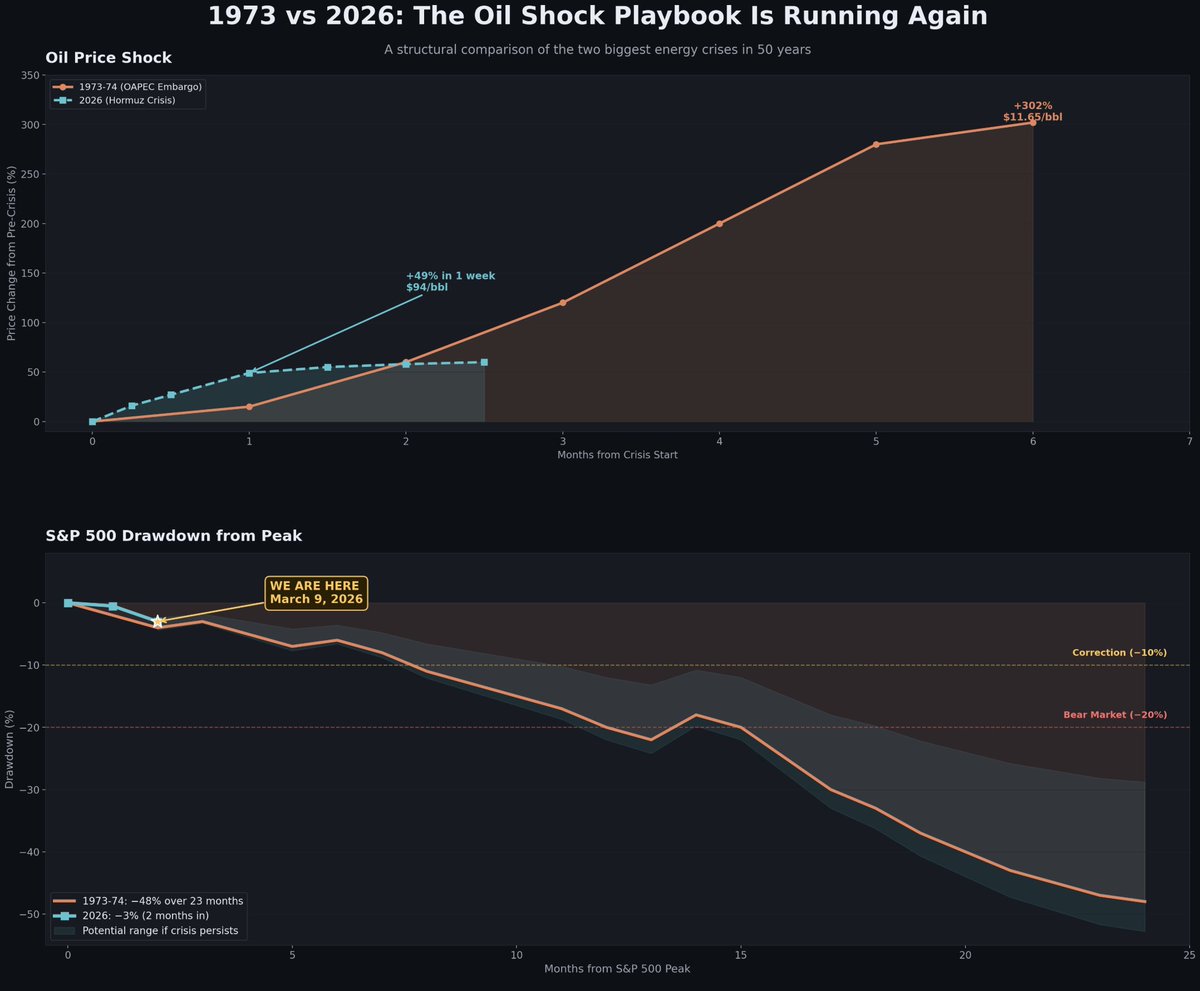
The current Middle East conflict impact on oil and the markets are rhyming again with the 1970s.
Here's why Perplexity Computer says this current crisis is the closest structural replay of 1973 we've ever seen:
THE TRIGGER
1973: Nixon sends $2.2B in emergency aid to Israel during the Yom Kippur War. OAPEC retaliates with an oil embargo. Prices quadruple — $2.90/bbl to $11.65.
2026: US and Israel strike Iran. Iran shuts the Strait of Hormuz with cheap drones. Insurers refuse to cover tankers. 20% of global oil supply paralyzed overnight. Oil surges from $63 to $94 in one week — a 49% spike.
RBC Capital Markets: "The most significant energy crisis since the oil embargo of the 1970s."
THE SETUP
Both shocks hit after years of loose monetary policy. The 1970s had Vietnam War spending and two dollar devaluations. Today we're unwinding the most aggressive monetary expansion in history — zero rates through 2022, trillions in QE.
When a supply shock hits an economy flooded with money, inflation doesn't tick up. It spirals.
THE INFLATION MATH
1973-74: CPI went from 3.4% to 12.3% in two years. Burns, the Fed Chair, blamed everything except monetary policy.
2026: CPI was at a comfortable 2.4% in January. Then oil ripped. RBC estimates if crude sustains $100/bbl — which Qatar's energy minister says is imminent — inflation stays above 3% all year. We went from "mission accomplished" on inflation to staring down a second wave in two weeks.
THE MARKET
1973-74: S&P 500 fell 48% from peak to trough over 23 months.
2026 so far: S&P hit 7,002 in January, now ~6,796. Down 3%. The question is whether this is a garden-variety correction or the opening act.
WHERE IT COULD GET WORSE
The 1973 embargo lasted 5 months and was a political decision that could be reversed. The Hormuz shutdown is insurance-driven — ships can't get coverage. Even if Iran stops attacking, rebuilding insurer confidence takes time. Trump is hinting the conflict could last "weeks or even months."
And like the 1970s had two oil shocks (1973 and 1979), we're already dealing with elevated energy costs from Russia-Ukraine since 2022. This is the second shock in sequence.
THE FED'S IMPOSSIBLE CHOICE
Bernanke said it best: "Monetary policy cannot offset the recessionary and inflationary effects of increased oil prices at the same time." In the 1970s, Burns kept rates too low. Volcker had to raise them to 20% to kill the resulting inflation.
Powell now faces the same dilemma — cut into a softening economy and risk reigniting inflation, or hold firm and watch the economy crack.
BOTTOM LINE
Middle East war → oil supply shock → inflation surge → market sell-off → Fed in a bind. This is the 1973 playbook in real time.
We're early. In 1973 the S&P peaked in January and didn't bottom until December 1974. If Hormuz resolves quickly, this is a correction.
Watch oil. That's the variable that decides whether this rhymes with 1973, or forgotten in a few months.
Mar 8

This is exactly the copy cat of 1970s.
Middle East wars .
20% inflation.
Oil shock.
Stocks cut by 50% in one year.
1
10
58
9,812