
Research and public resources monitoring the state of democracy. Founder/Director @seanjwestwood and co-director @ylelkes.
Joined March 2023
- Tweets 478
- Following 512
- Followers 1,955
- Likes 87
27 Photos and videos
Polarization Research Lab retweeted

Jun 10
There is actually considerable evidence against claims that the variation in electoral institutions across US states have a meaningful effect on the level of fraud in elections. (As I explain below, institutions do matter for perceptions).
Here is one example: one common argument is that voter ID laws prevent the fraudulent casting of ballots. If that were true, then imposing a voter ID law should reduce turnout.
A consistent finding, across many studies, is that voter ID laws have zero or a minute effect on turnout. This fact is hard to reconcile with a lack of voter ID laws facilitating the fraudulent return of ballots.
Likewise, all-mail elections have small effects on turnout and no consistent effect on vote share for candidates from a particular political party.
I'm not aware of a careful study on "ballot harvesting", but we have good reason to be skeptical the effect is large. The total effect of all mail elections or no excuse absentee voting on turnout necessarily bounds the ballot harvesting effect. Also, an individual must have their ballot in hand to have it harvested.

Bret Weinstein cuts straight to the chase:
"We are going to have an endless battle in which those of us who see what we believe is clear evidence of some kind of election rigging or fraud are faced with indignation from a vast array of people portraying themselves as more rigorous and careful who say, 'Where is your evidence? Where exactly is your evidence that there was something wrong with this election?' And we are gonna be caught in the following predicament.
No piece of evidence is sufficient to establish that case. And the sum total of all of the evidence contains true things and false things. So it is also no good.
So the question is, can you logically deduce that something has gone wrong? I believe you can easily.
Can you prove it? No.
And not being able to prove it means that the election will proceed. It will be validated by all of the structures, including the courts. And that means that those who take on the power that derives from these elections will be the result of whatever process we just went through, whether it was an election that happened to be anomalous through organic means, or it was the result of some kind of fraud or election rigging. That is not an accident.
That is not an accident.
And the point that I wanna make primarily is the primary evidence against elections that look like this being organic is not actually in the trickle of evidence that we are actually able to see, the moment by moment vote count that does something strange during the night when some large tranche of ballots is suddenly counted or something like that.
The evidence is in the structure of how the elections are actually carried out. These elections are designed to allow fraud that cannot be detected and will not be prosecuted. And that's really the thing that we must focus on."
@BretWeinstein
3
8
20
3,475
Polarization Research Lab retweeted

May 31
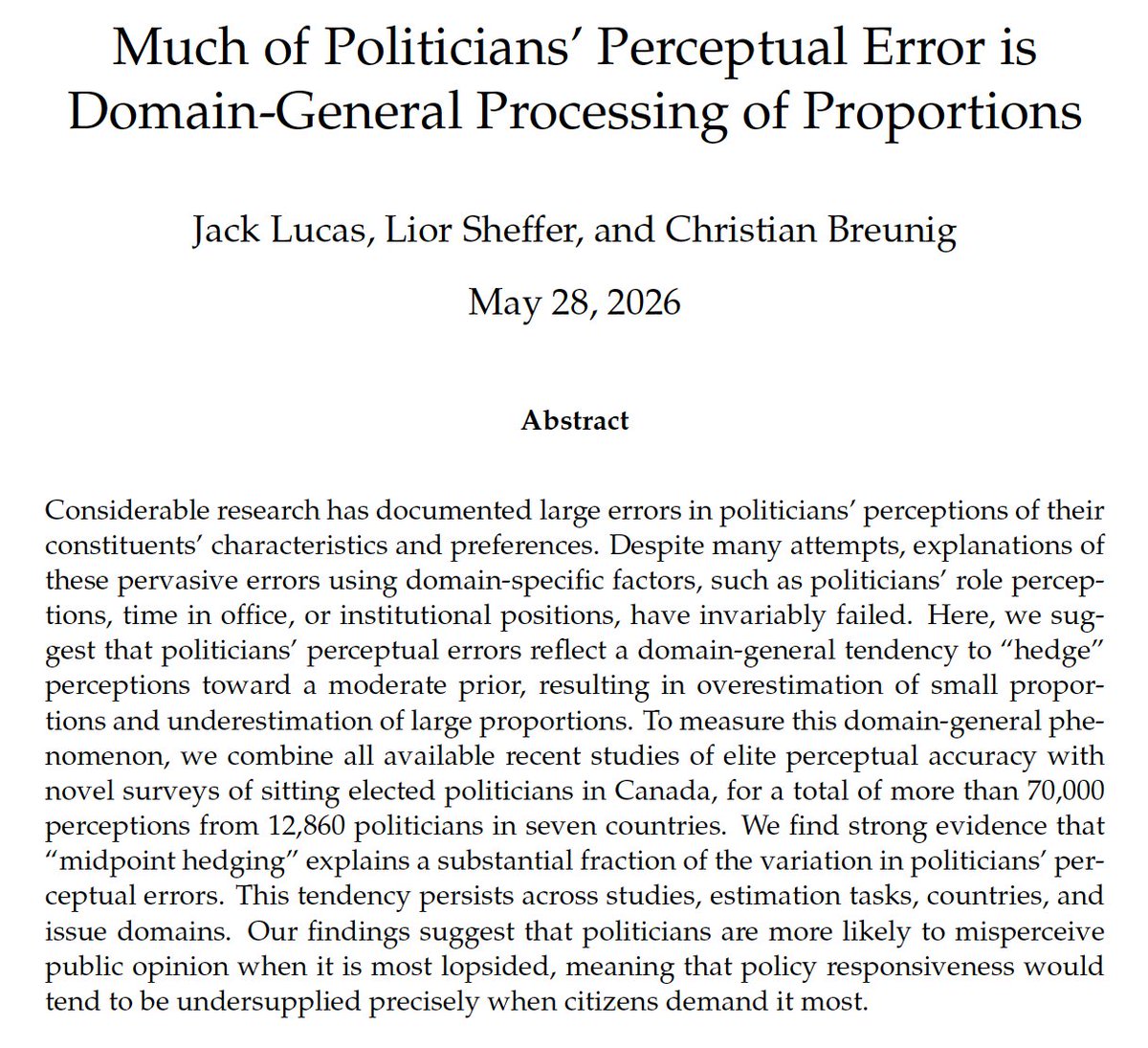
New preprint: Jack Lucas, Christian Breunig and I reanalyze 70,470 assessments made by 12,860 politicians about their constituents' positions and demographics, from every available published study of elite perceptual accuracy and our own original data. /1
osf.io/preprints/psyarxiv/pa…
2
6
23
2,069
Polarization Research Lab retweeted

Jun 1
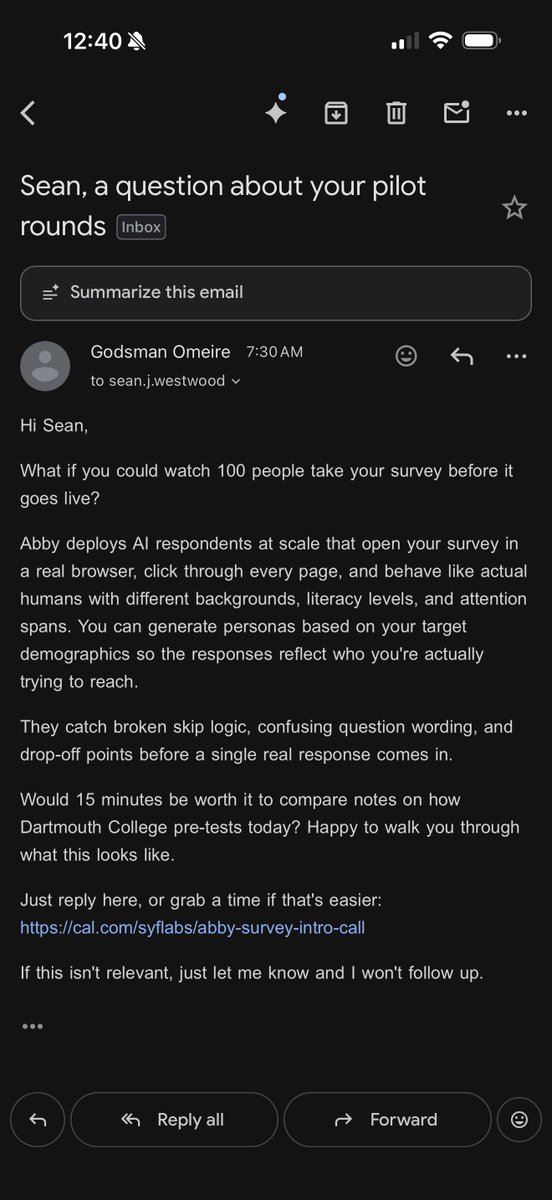
Companies are already monetizing AI survey respondents. Not silicone sampling, but AI completing surveys designed for humans. Not nefarious... yet.
2
19
3,998
Polarization Research Lab retweeted

May 29
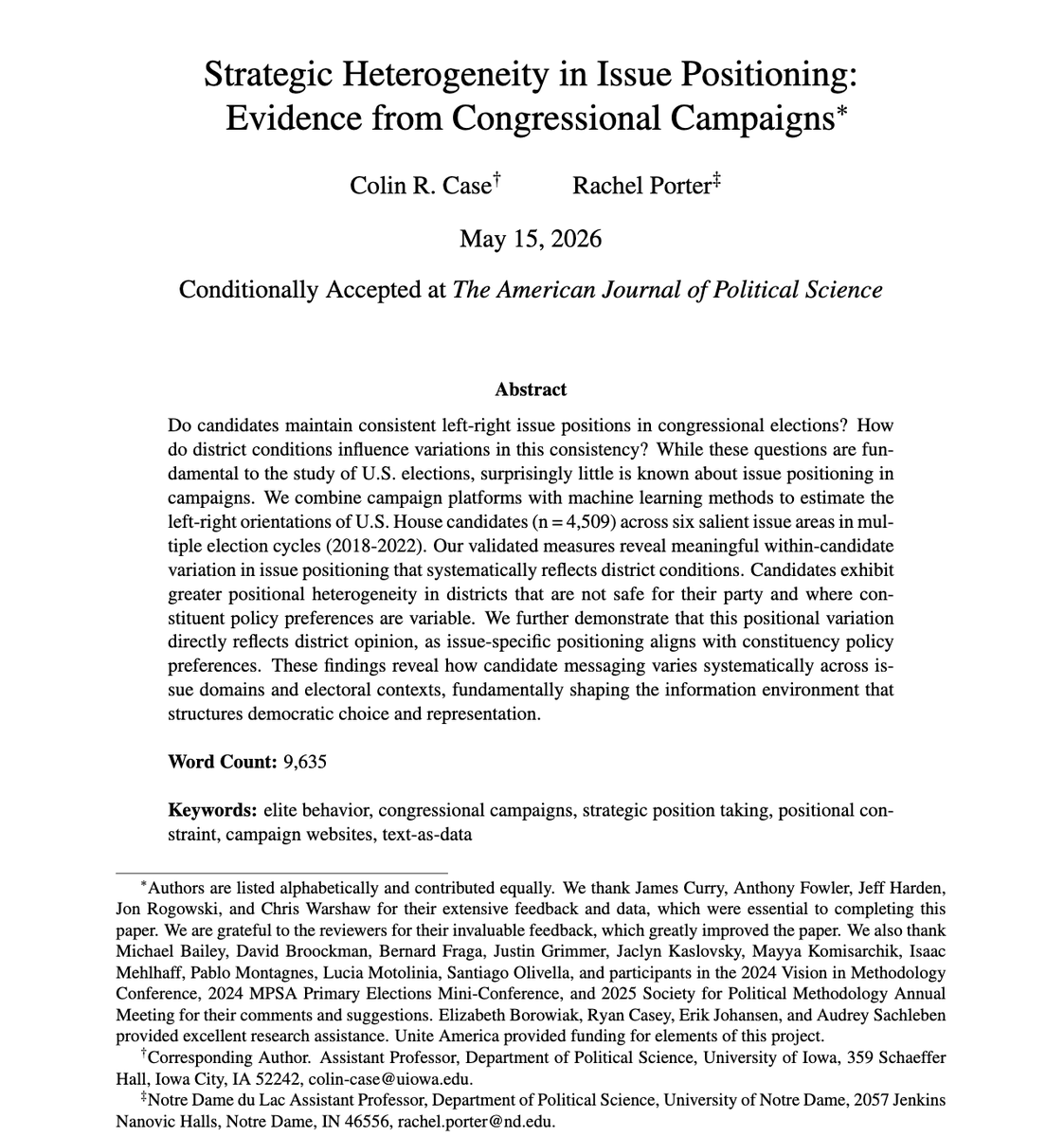
Very excited that my paper with @colinrcase has been conditionally accepted for publication at @AJPS_Editor!
Using our CampaignView data, we produce measures for candidates' left-right positioning across six salient issue areas
Big takeaways below ⬇️⬇️
2
18
93
8,429
Polarization Research Lab retweeted

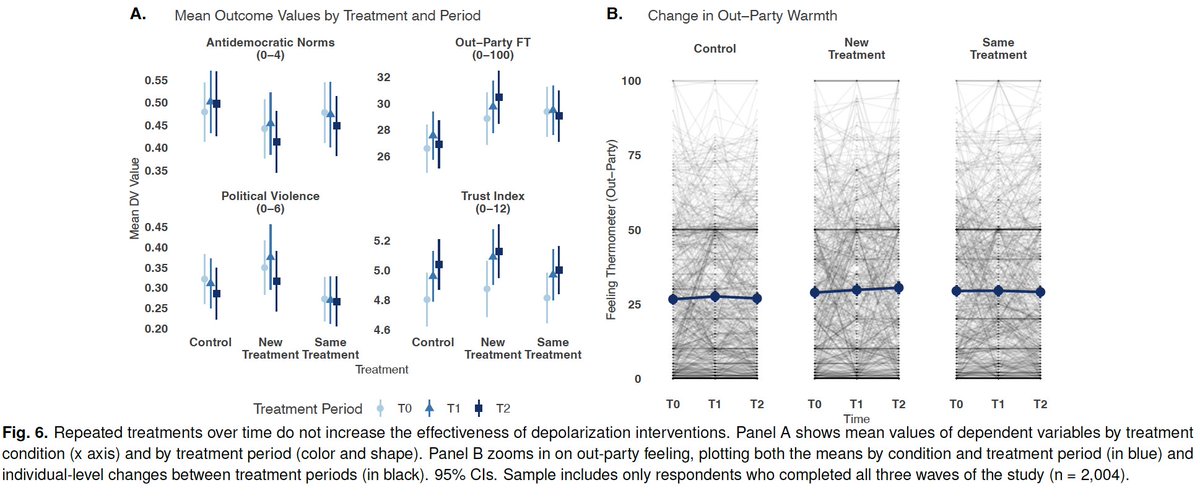
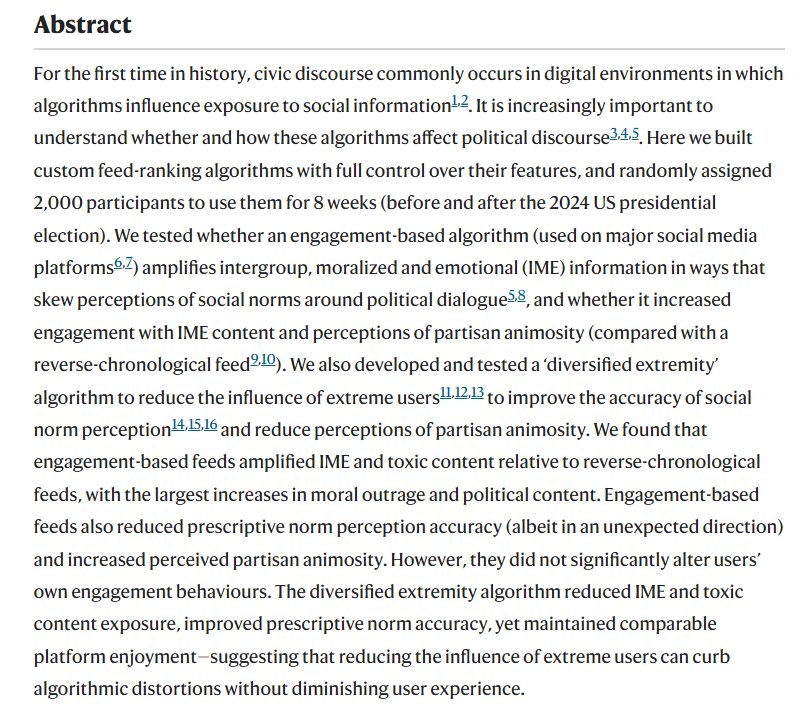
✨New paper out @SpringerNature✨ For 8 weeks around the 2024 US election, we randomly assigned 2,000 people to use social media algos we custom-built. Do engagement-based algorithms amplify intergroup, moral & emotional content does that distort how we see political norms? 🧵
3
27
111
13,813
Polarization Research Lab retweeted

May 20
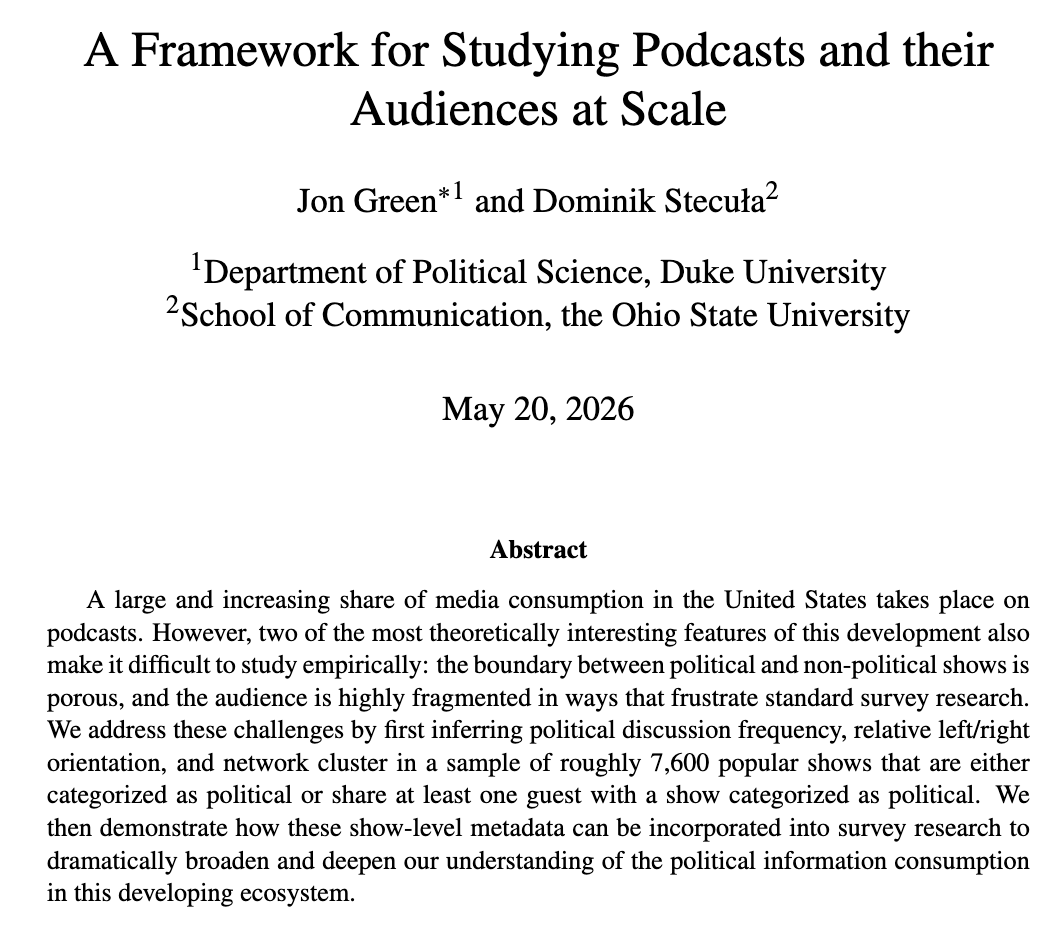
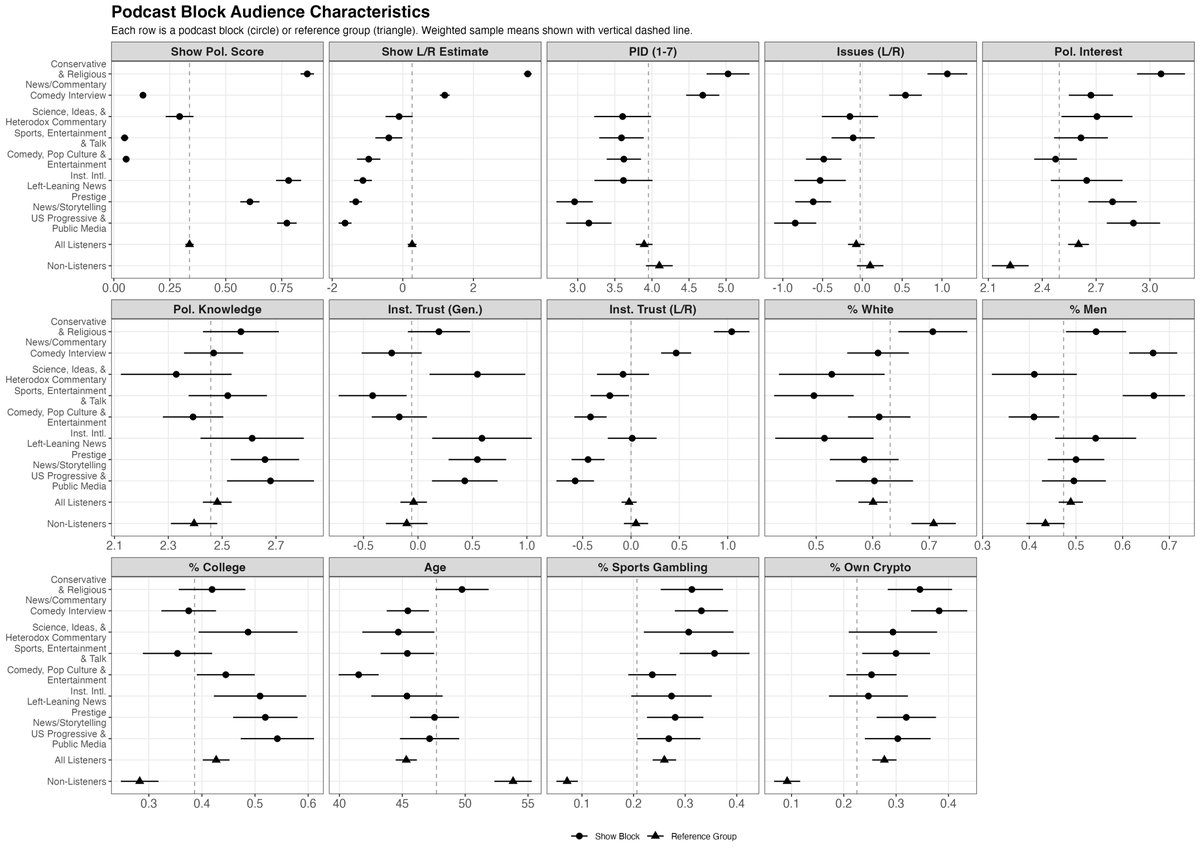
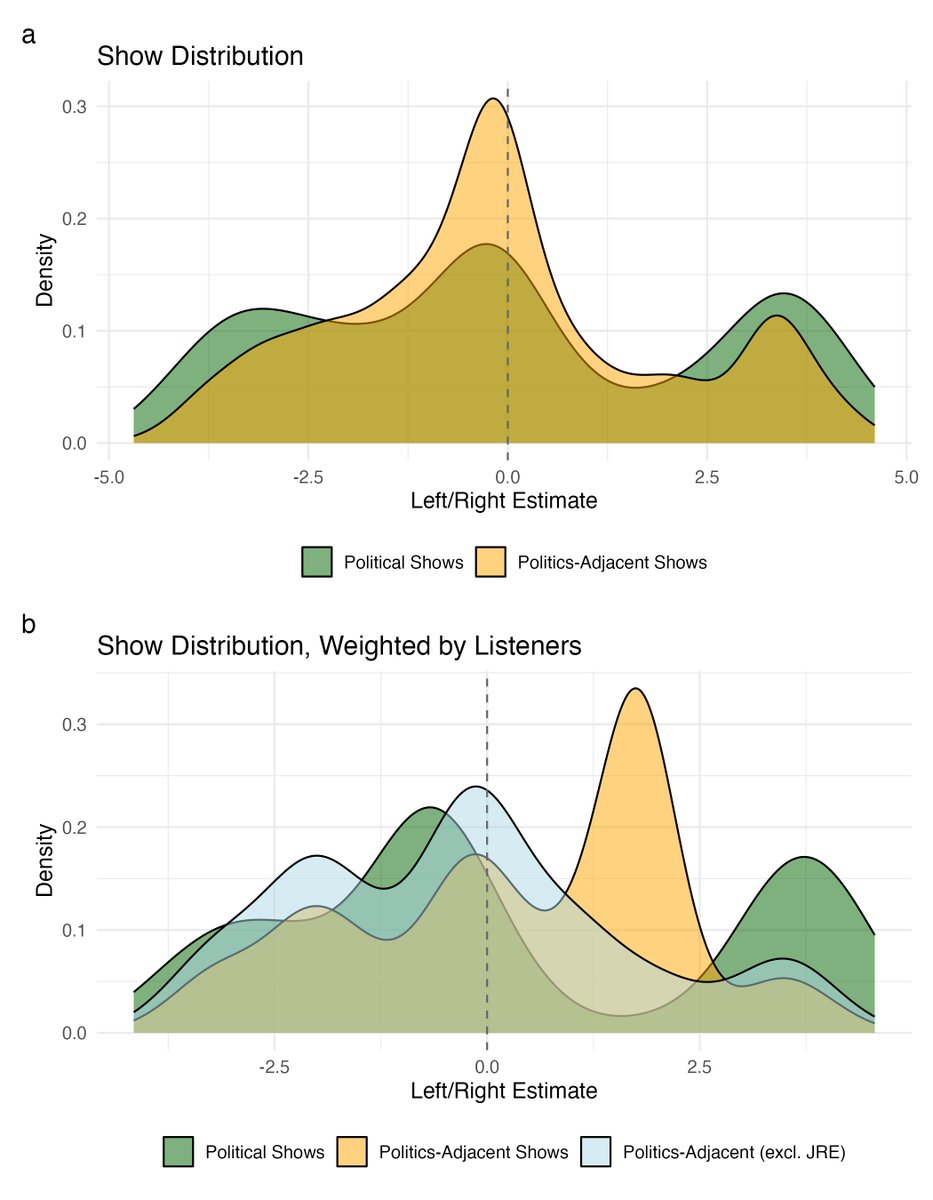
new (w/ @decustecu): we infer show-level metadata for a large sample of popular politics and politics-adjacent podcasts, then merge it with survey data to characterize political information exposure for their audiences

3
14
55
13,631

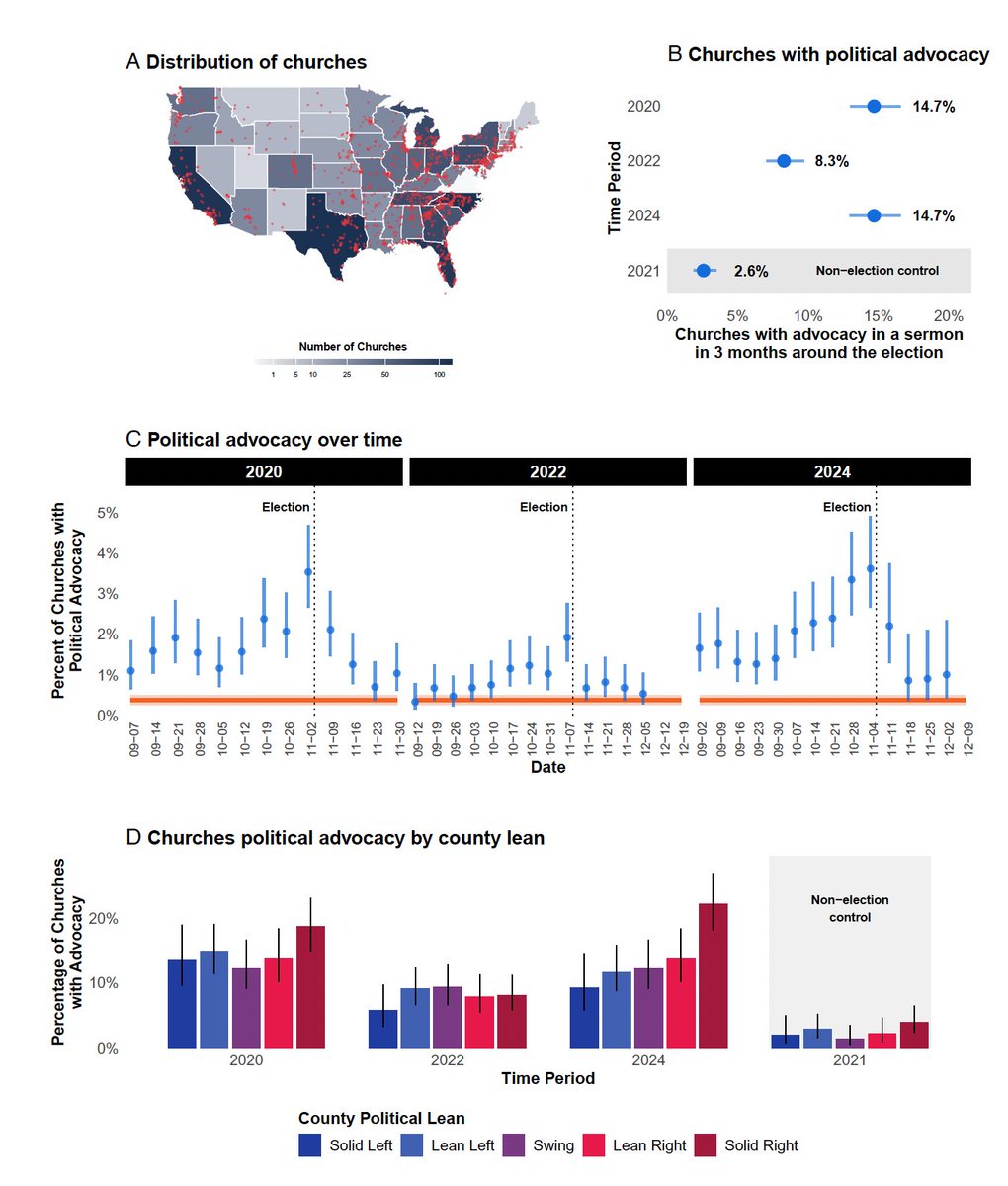
How common is political advocacy from the pulpit? We find it is both more common and more geographically dispersed than previously understood. The American pulpit now functions as a significant channel for partisan base mobilization.
pnas.org/doi/10.1073/pnas.26…
1
4
8
1,244
87.5% of references to Republicans were favorable, and 71.3% of references to Democrats were in opposition. Donald Trump comprised 52.4% of discussion.
1
1
1
81
Place also matters: churches in pro-Trump counties were more likely to engage in advocacy than those in more liberal areas. In R-leaning and swing states, advocacy levels were relatively stable: local partisan context is a stronger driver than national electoral strategy.
1
1
78
Polarization Research Lab retweeted

May 13
New in Nature: LLMs give "the party line" in the languages of authoritarian regimes. This works when they control the media, which feeds pretraining data. We show more state control over media means less critical LLMs. 6 studies w 38 languages & 13 models. Details ↓
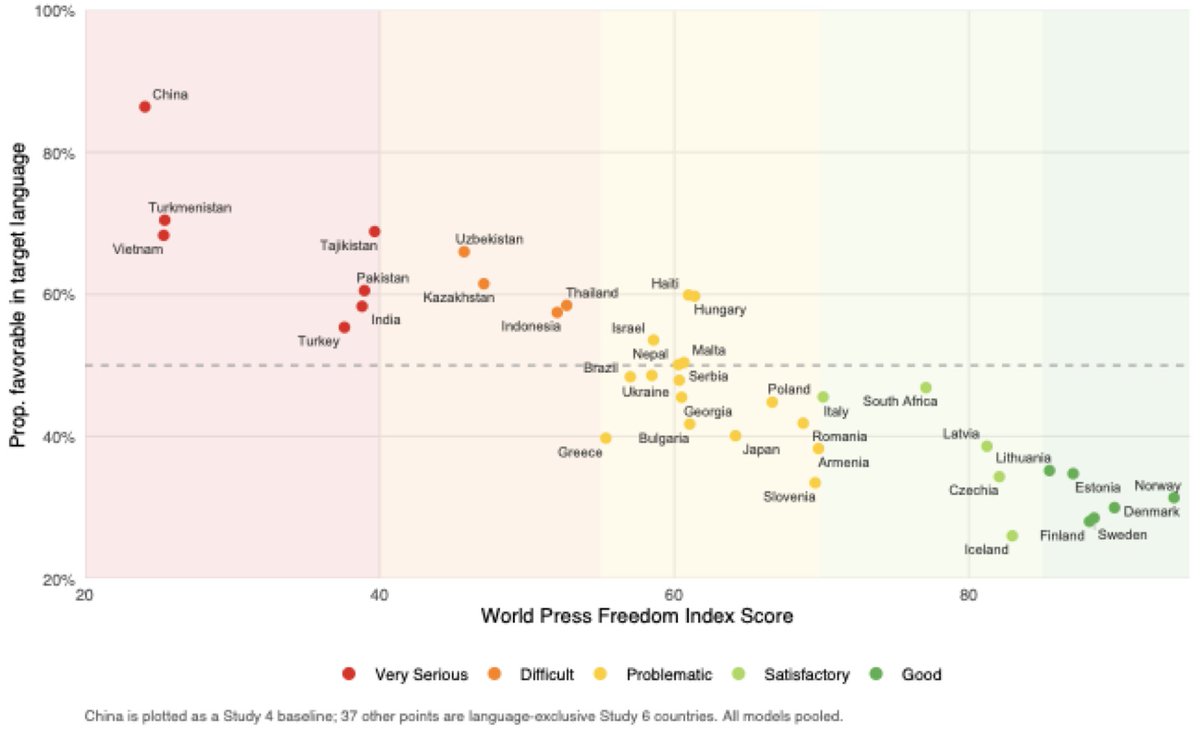
ALT Scatter plot of 38 countries plus China showing the proportion of LLM responses favorable to the regime in the local language vs. World Press Freedom Index score. Lower press freedom predicts more regime-favorable responses; all production models pooled.
8
60
147
20,751
Polarization Research Lab retweeted

May 12
Researchers who study political violence say that the U.S. is in a period of more intense political rhetoric, but there have been far darker periods in the nation’s history
spklr.io/6012EzdBM
4
11
16
5,443
Polarization Research Lab retweeted

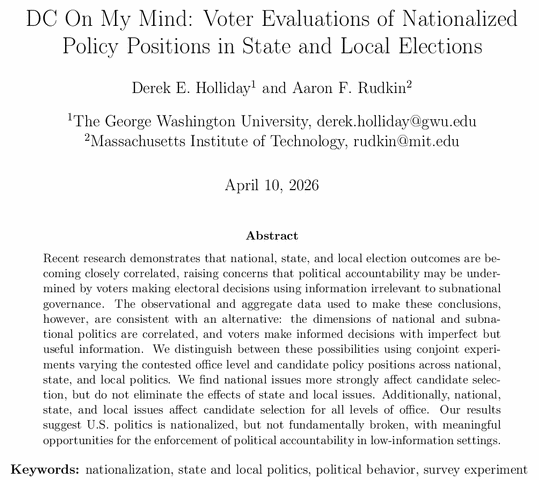
In increasingly nationalized elections, how do voters use policy information to choose candidates?
In a paper just accepted at @The_JOP (with @aaronrudkin), we provide experimental evidence of nationalized information-processing in the electorate, but with a few nuances
🧵1/8
1
15
64
5,950
Polarization Research Lab retweeted

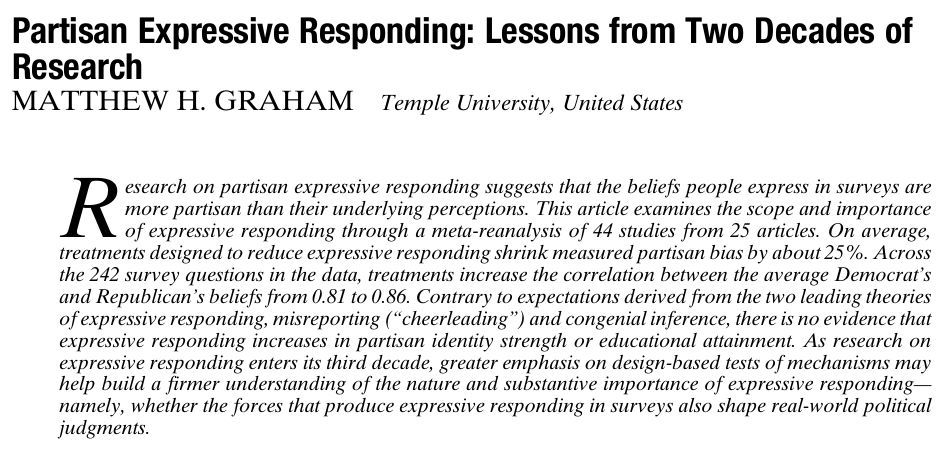
From our FirstView: Partisan Expressive Responding: Lessons from Two Decades of Research by MATTHEW H. GRAHAM doi.org/10.1017/S00030554261…
15
43
3,728
Polarization Research Lab retweeted

Apr 29
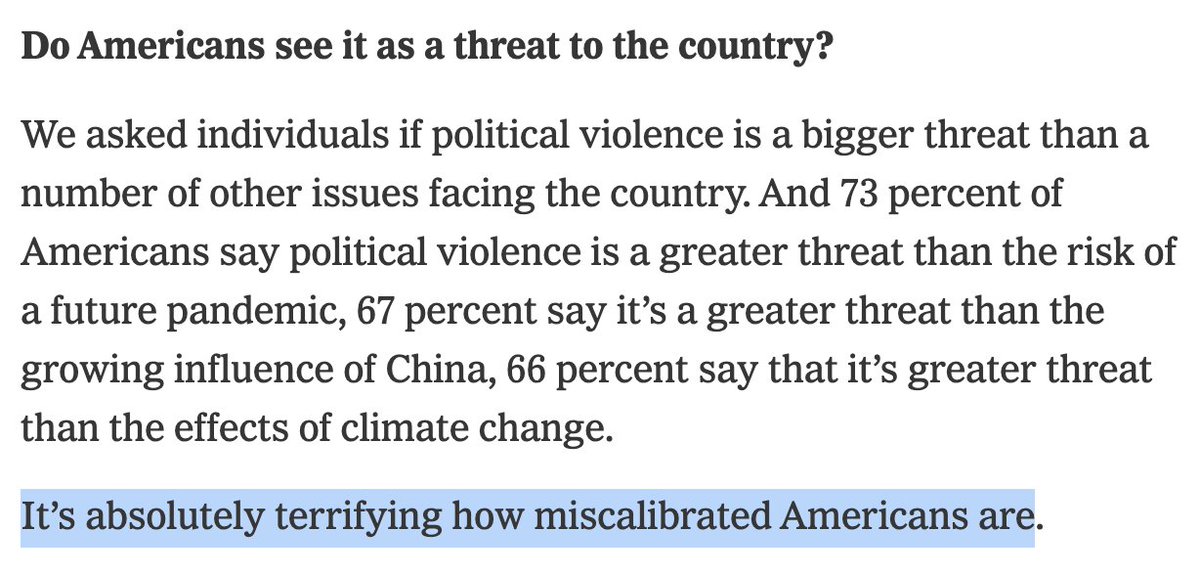
“The number of incidents of political violence is small, a couple of dozen, maybe three dozen incidents over the four years ending in 2024. But over the same period, we’ve had more than 9,000 religious hate crimes — about 5,700 were antisemitic — and more than 25,000 racial hate crimes. I would strongly argue that it’s these other cleavages, these other acts of violence that are hurting us.” tinyurl.com/yw6u4cnw
2
2
704
Polarization Research Lab retweeted

Apr 28
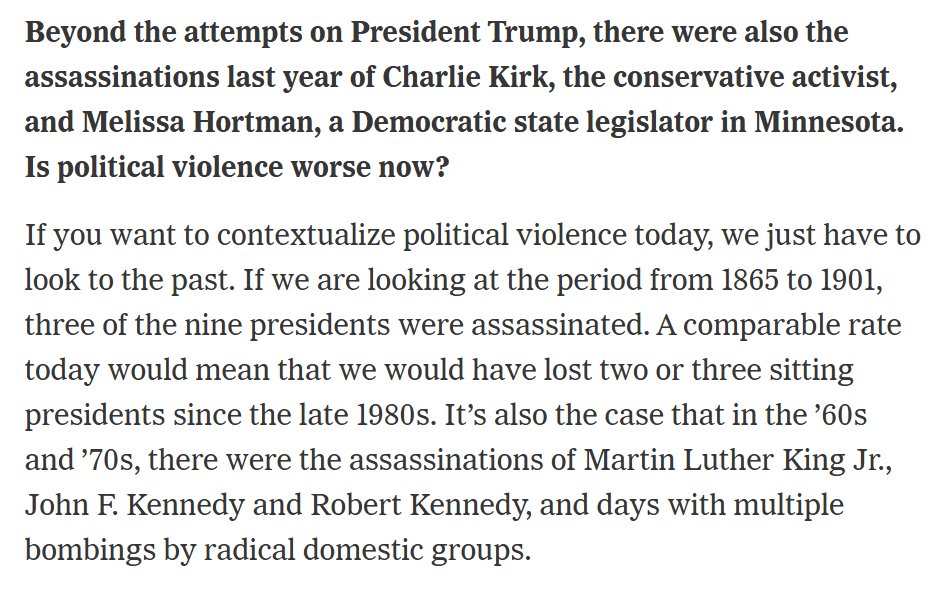
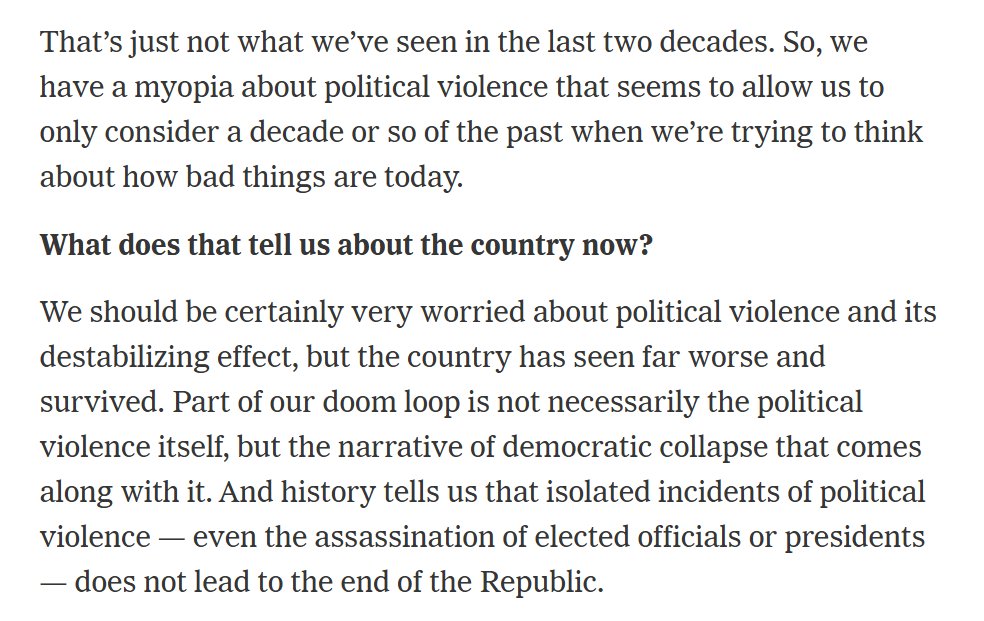
Political violence is not worse now than at other points in US history, nor are we at the precipice of democratic collapse, says @seanjwestwood, who tracks such violence & the reaction to it.
An informative & thought-provoking interview by @stavernise. nytimes.com/2026/04/28/us/po…
10
35
81
23,574
PRL's Sean Westwood interviewed in the NYT about political violence, Americans' support for political violence, and how the fear of violence can be exploited. PRL has continuously tracked support for partisan violence for the past 4 years.
nytimes.com/2026/04/28/us/po…
2
97
Polarization Research Lab retweeted

@stavernise A counterintuitive take on whether we are in an age of exploding political violence. History says no.
nytimes.com/2026/04/28/us/po…
10
11
20
49,740
Polarization Research Lab retweeted
Apr 26
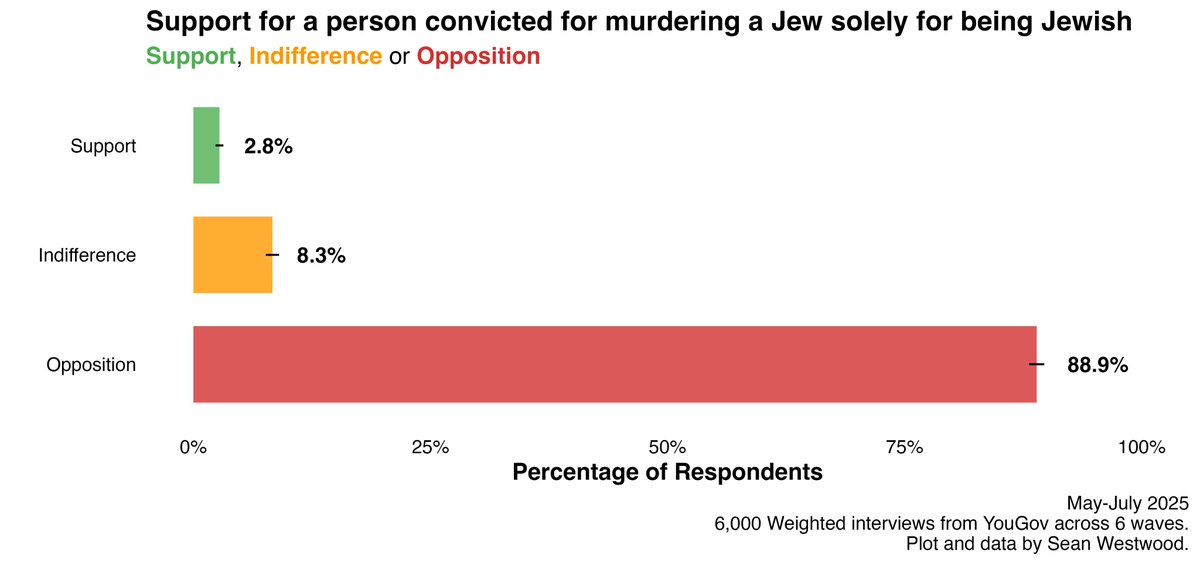
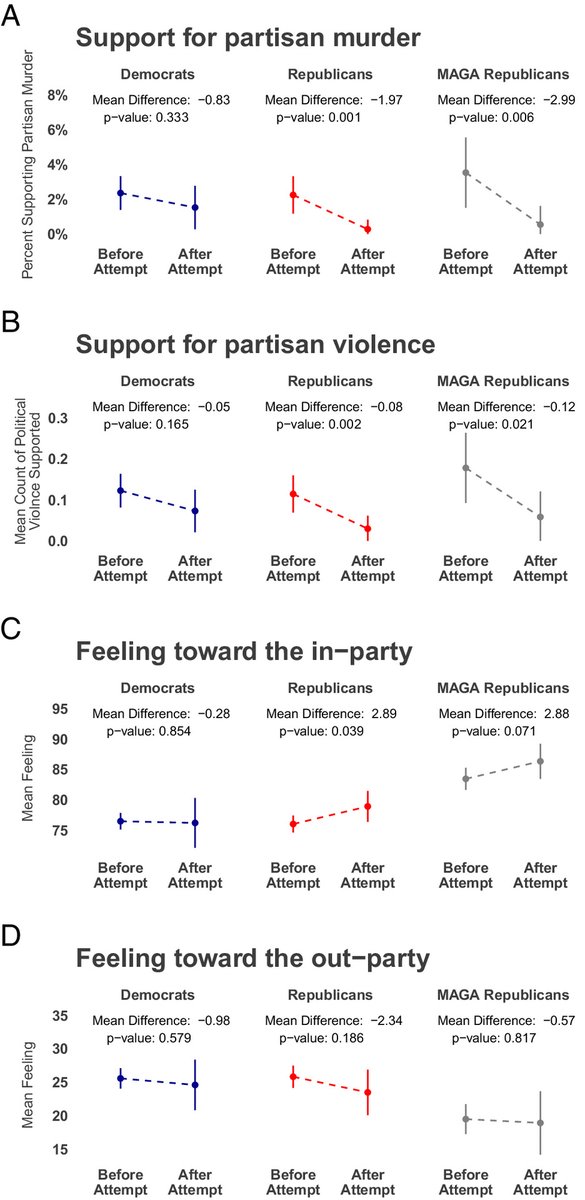
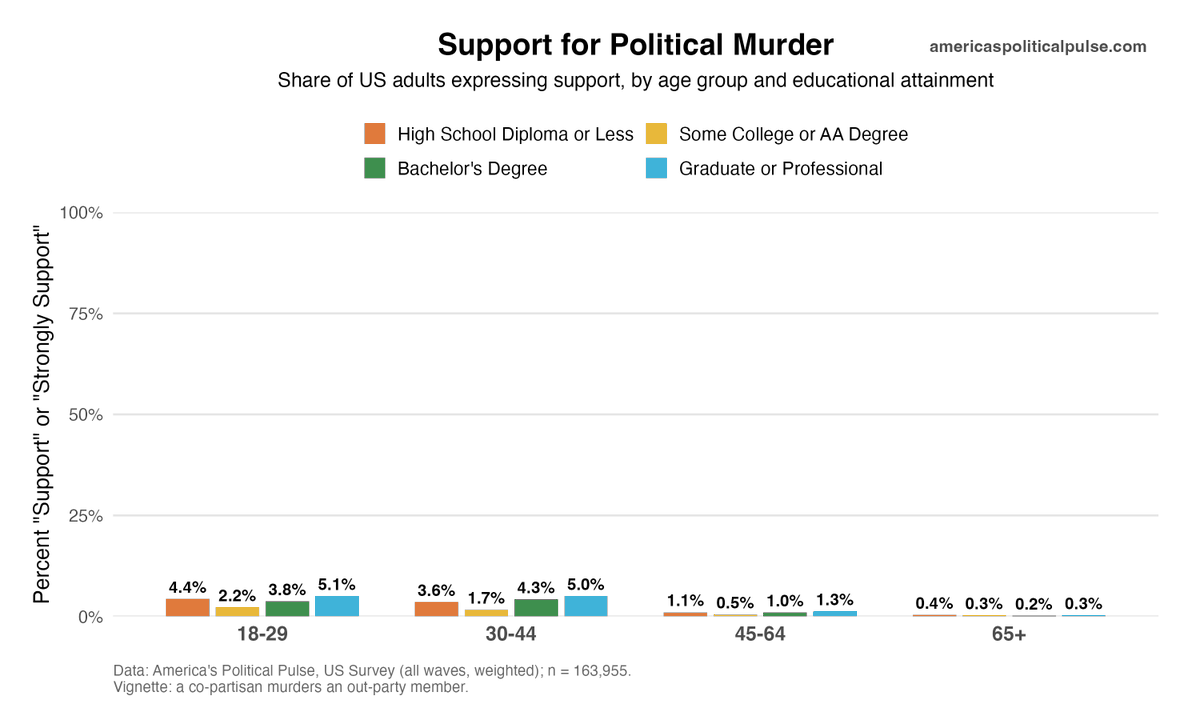
The rank order replicates with better data, but the % supporting partisan murder is much lower.
Importantly, this is passive support and not willingness to actually murder.

1
5
19
5,464