
Joined May 2020
- Tweets 40,459
- Following 1,693
- Followers 4,588
- Likes 141,023
4,130 Photos and videos

Pinned Tweet

Apr 19
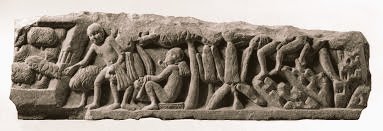
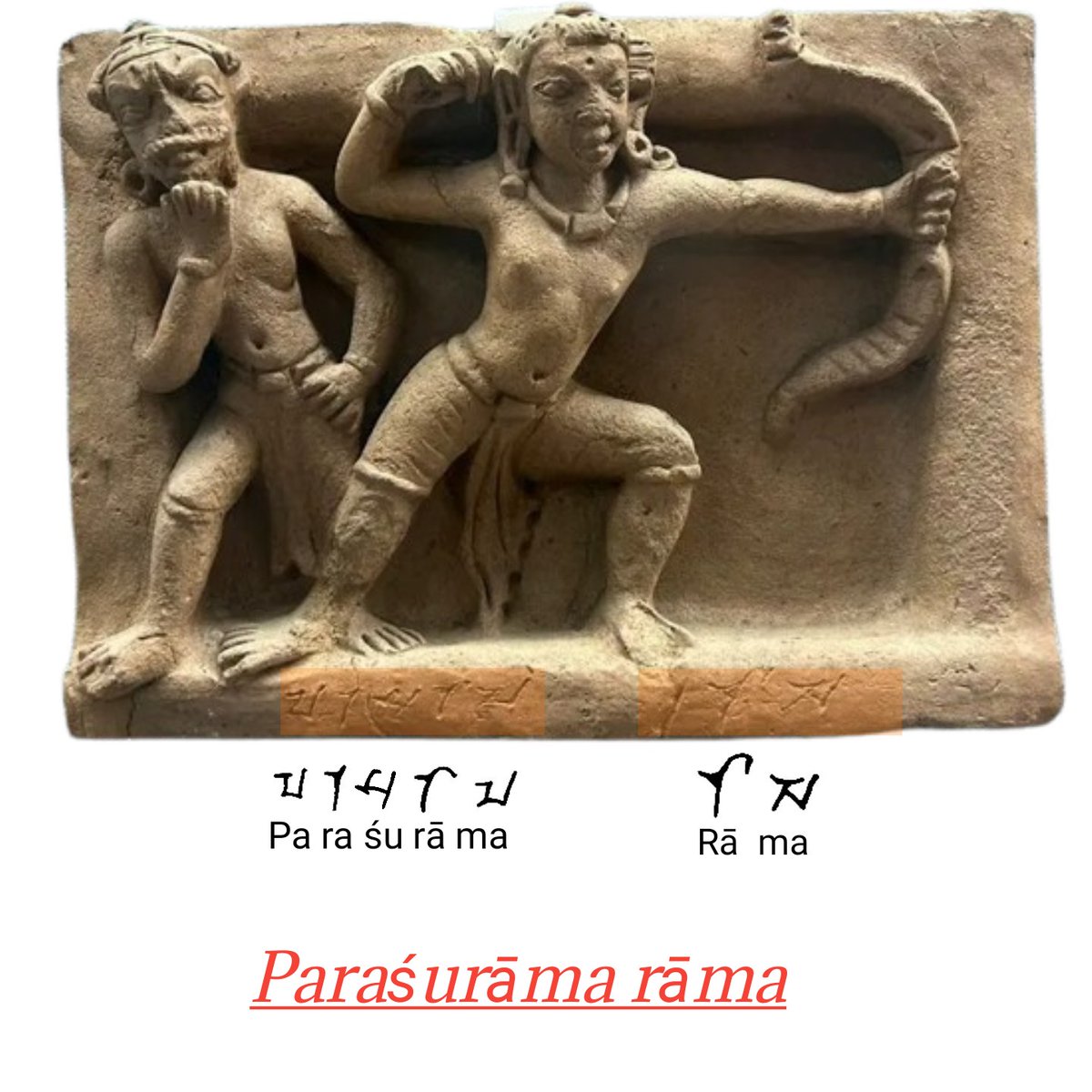
Paraśurāma testing Rama's skills, a terracotta plaque from Palashbari, Bangladesh.
Pc @chronicle_watch
8
132
652
10,514
Chaitanya retweeted

Pamheiba: The Conqueror of the Mayangs(Mayang-Ngampa) and the Aawas (Burmese) ( A Thread 🧵)
When Pamheiba alias Meitingu Mayampa (or popularly known as Garib Niwaj) ascended the throne of the Meitei Kingdom in 1709 at the age of 20, relations between the Meiteis and the

5
13
44
2,415
Chaitanya retweeted

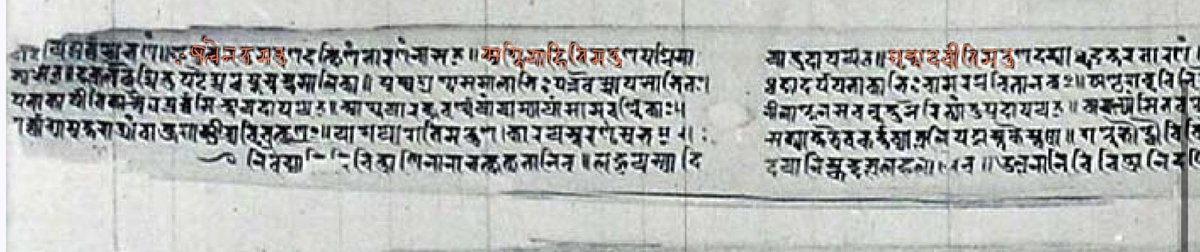
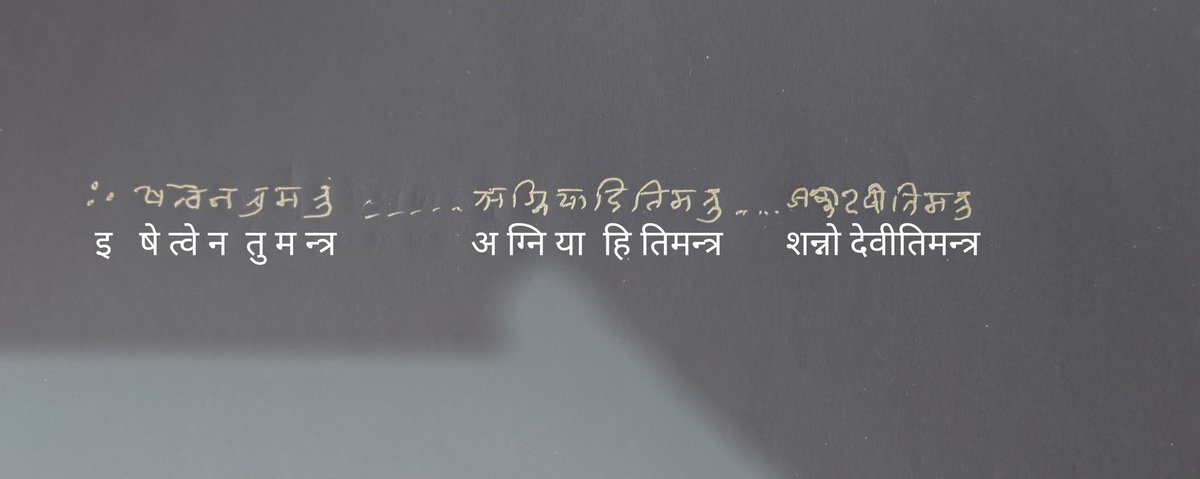
11 th century manuscript.
In which the half-verses (ardha-richas) of the first mantra of all the four Vedas have been quoted
(१) अग्निमीळे - ऋ.१.१.१
(२) इषे त्वे... यजु. १.१
(३) अग्ना याहि..- साम. १.१
(४) शन्नो देवी.. - अ.पै. स. १.१.१
@Aatma_the_soul4 @AbhayK70627 @anshikashukla_ @Param_Chaitanya @yajnadevam @MumukshuSavitri @monidipadey @sarvamedha @SanjeevSanskrit
2
15
41
1,344
Jun 14
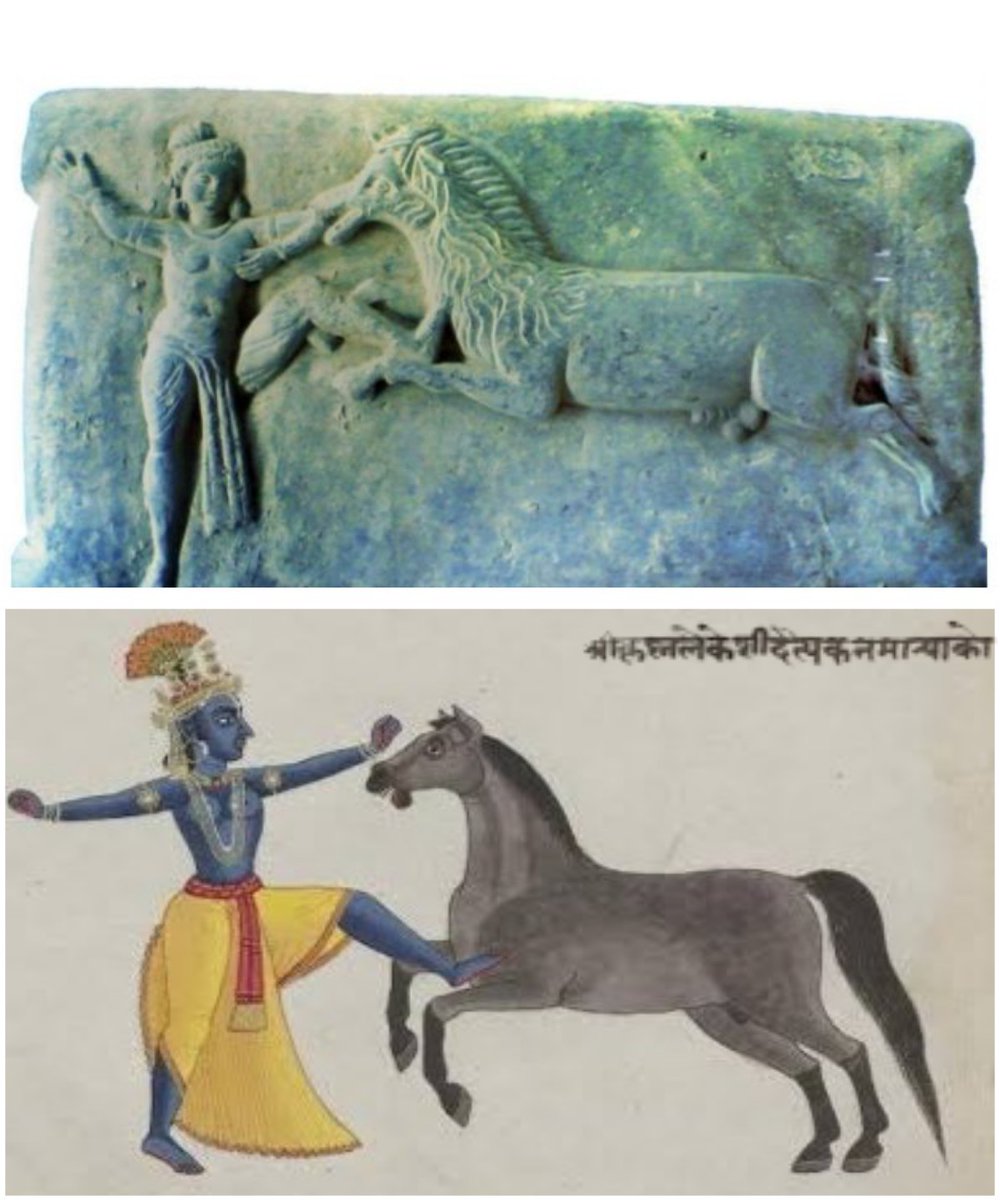
Lord Krishna ki||ing the horse-demon 'Keshi', a 4th century panel from Taxila, Gandhara, and a medieval painting from Nepal.
12
228
1,744
17,844
Chaitanya retweeted

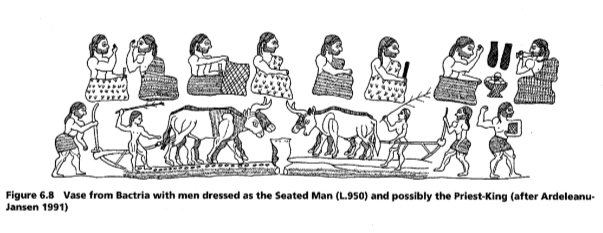
Additionally, from a brass cup discovered from BMAC, these priests can be seen conducting the Soma rituals. Notice the similarity in the clothing and the headband on both the Mohenjodaro and BMAC priests.
2
4
21
696
Chaitanya retweeted
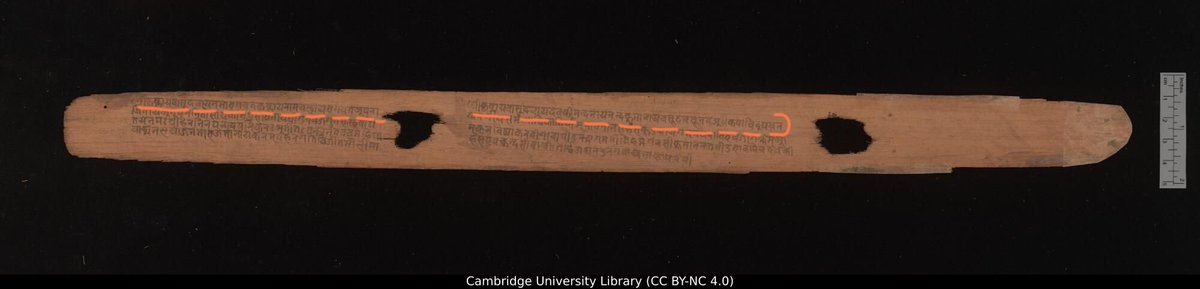
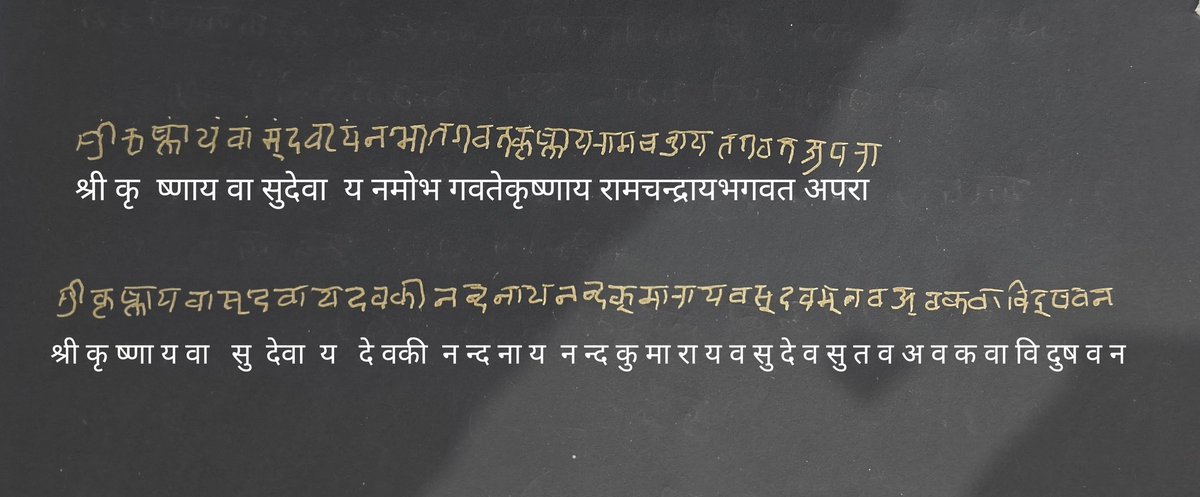
An incredible find from a 12th-century manuscript of the Shivadharmashastra, where Lord Krishna is explicitly praised and identified as Shri Ramachandra.
First Line (Side A)
"Shri Krishnaya Vasudevaya Namo Bhagavate Krishnaya Ramachandraya Bhagavata Avara..."
First Line (Side B)
"Shri Krishnaya Vasudevaya Devaki Nandanaya Nanda Kumaraya Vasudevasuta Va Avakava Vidushavana..."
@Aatma_the_soul4
@AbhayK70627 @ancientadarsh @Param_Chaitanya @historiakayasth @MonaADhar @MumukshuSavitri @monidipadey @anshikashukla_ @sarvamedha @SanjeevSanskrit
3
26
96
2,257
Chaitanya retweeted
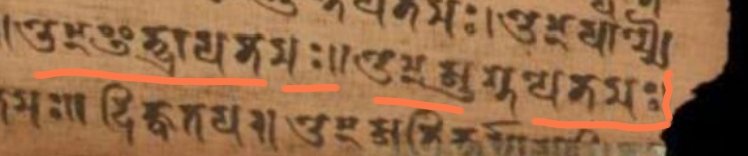
The mantras 'Om Indraya Namah' and 'Om Agnaye Namah,' chanted during the daily Havana, are found in the manuscript dating back to 823 AD.
@Aatma_the_soul4
@AbhayK70627
@sarvamedha @tapeshyadav_usa @yajnadevam @Param_Chaitanya
14
30
556
Chaitanya retweeted
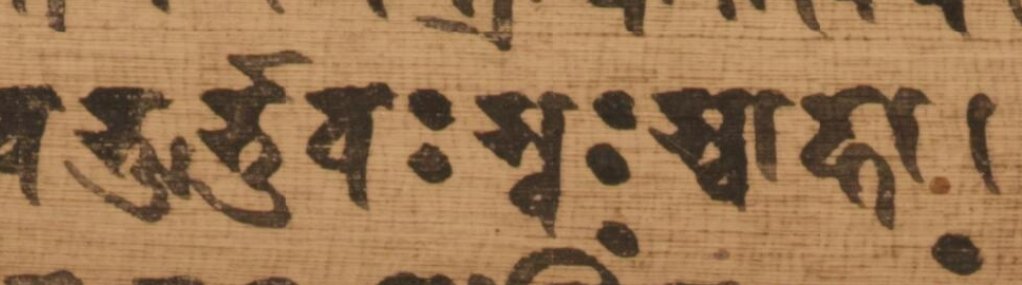
The manuscript of 823 AD mentions the Mahavyahriti, recited in conjunction with the Gayatri Mantra, as 'Bhūr Bhuvaḥ Svaḥ Svāhā'."
@Aatma_the_soul4 @AbhayK70627 @anshikashukla_ @sarvamedha @vedik_Arya_ @hamsanandi @Param_Chaitanya
@kalyan97 @yajnadevam
13
29
904
Jun 13
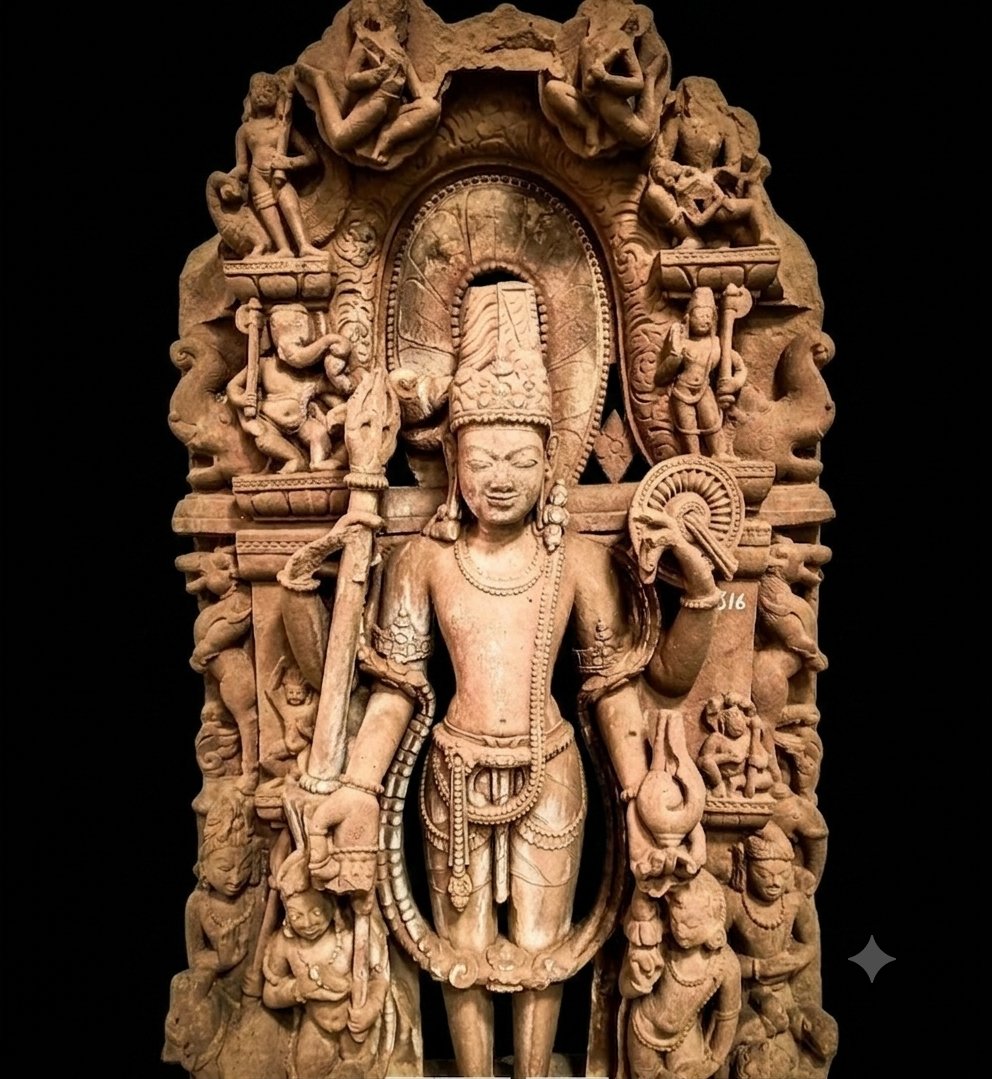
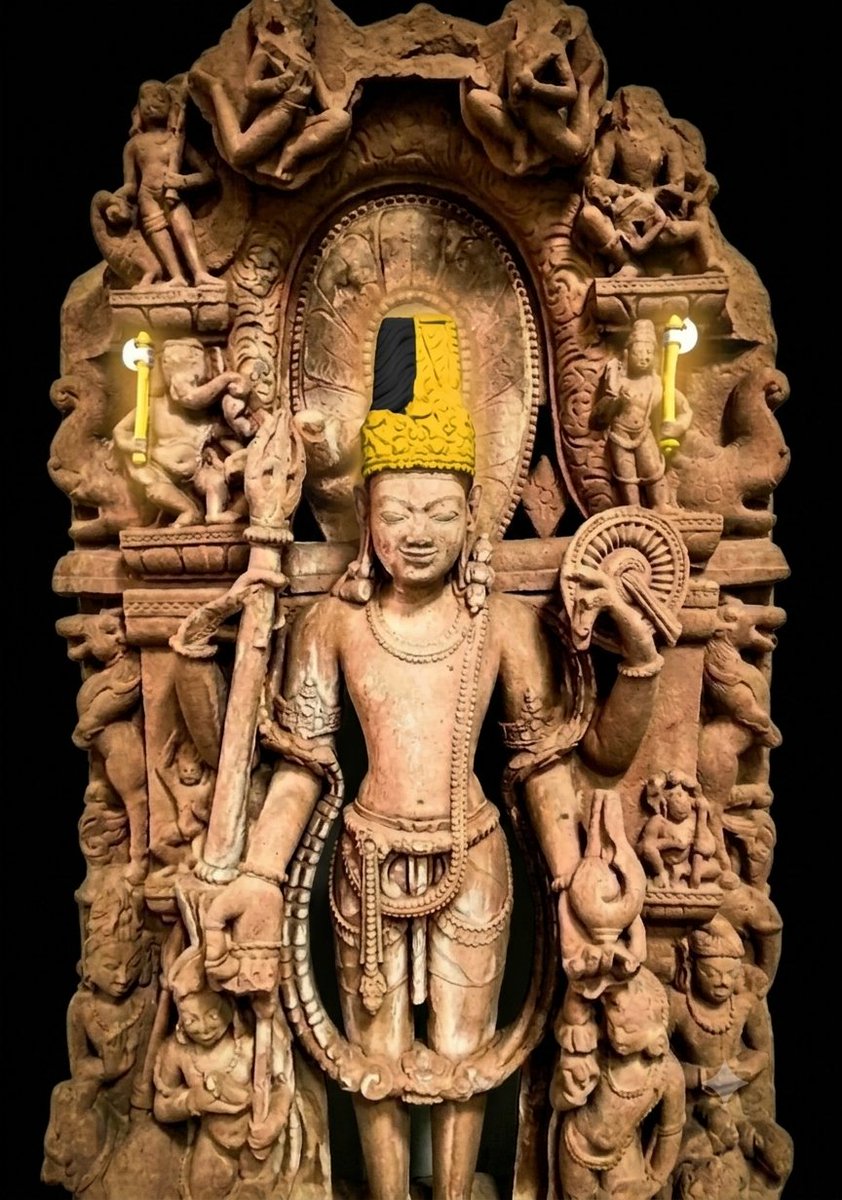
This 10th-century Harihara image from Khajuraho depicts lord Ganesha and Parashurama holding axes as their attributes.
1
10
76
1,149
Jun 13
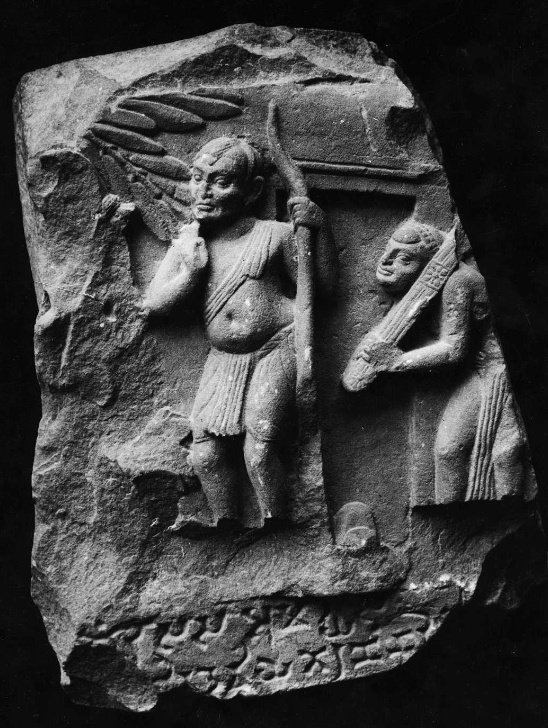
The master Archer tracking his target, a sandstone panel from Kushana period, Mathura
[Virtual museum]
1
12
40
806
Chaitanya retweeted

Jun 13
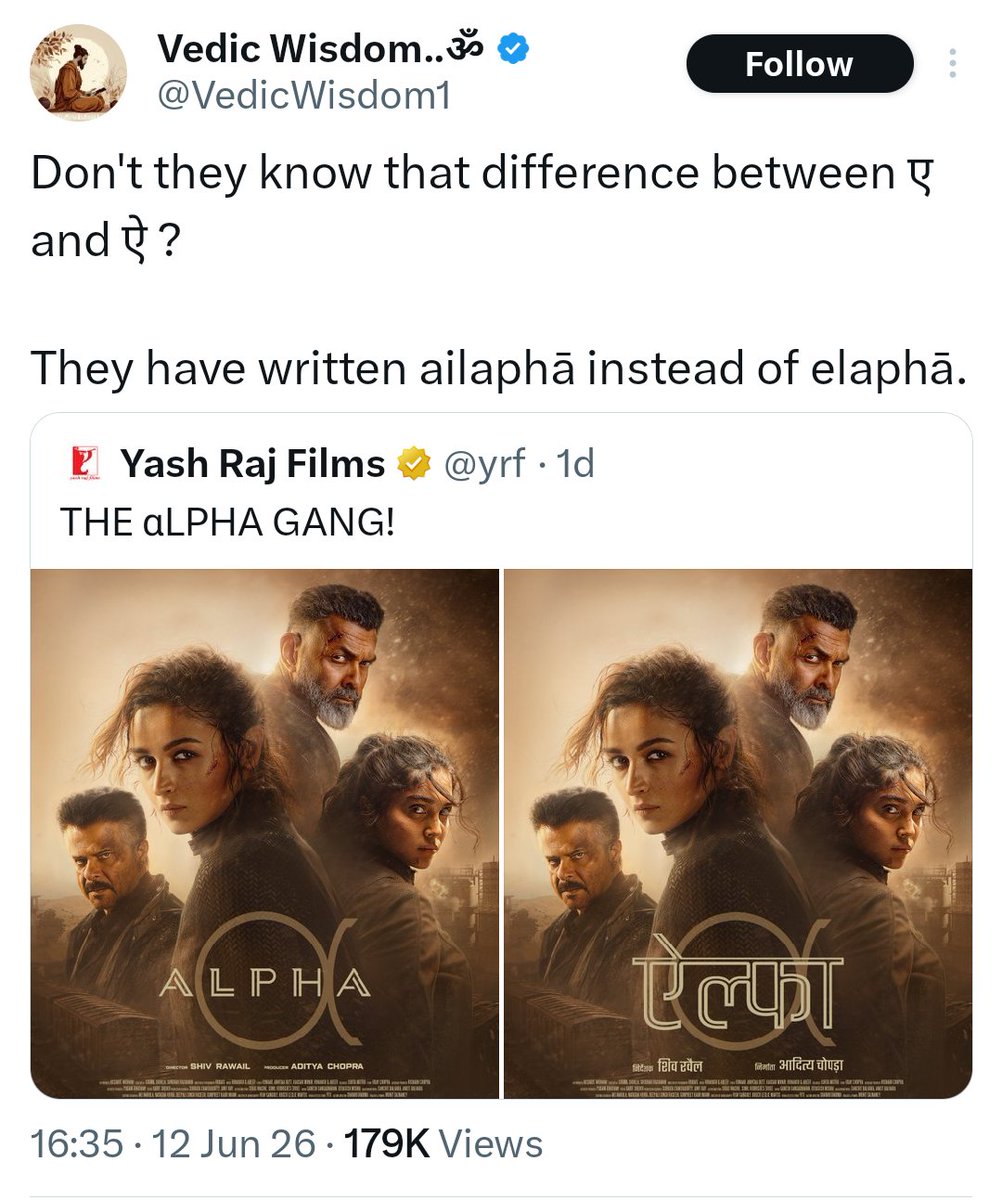
"Poet" and "Lyricist" does not know the difference between ए and ऐ
What I said is 100% correct, I can prove it with evidence from Shiksha Shastra that tells us how to pronounce these sounds.
अल्फ़ा would be the closest, एल्फ़ा would be with slight accent, but under no case it can be ऐल्फा (Ailpha)
Jun 12

This account is called Vedic Wisdom and has over 55,000 followers. 😐
32
161
1,688
76,070
Chaitanya retweeted

Jun 12
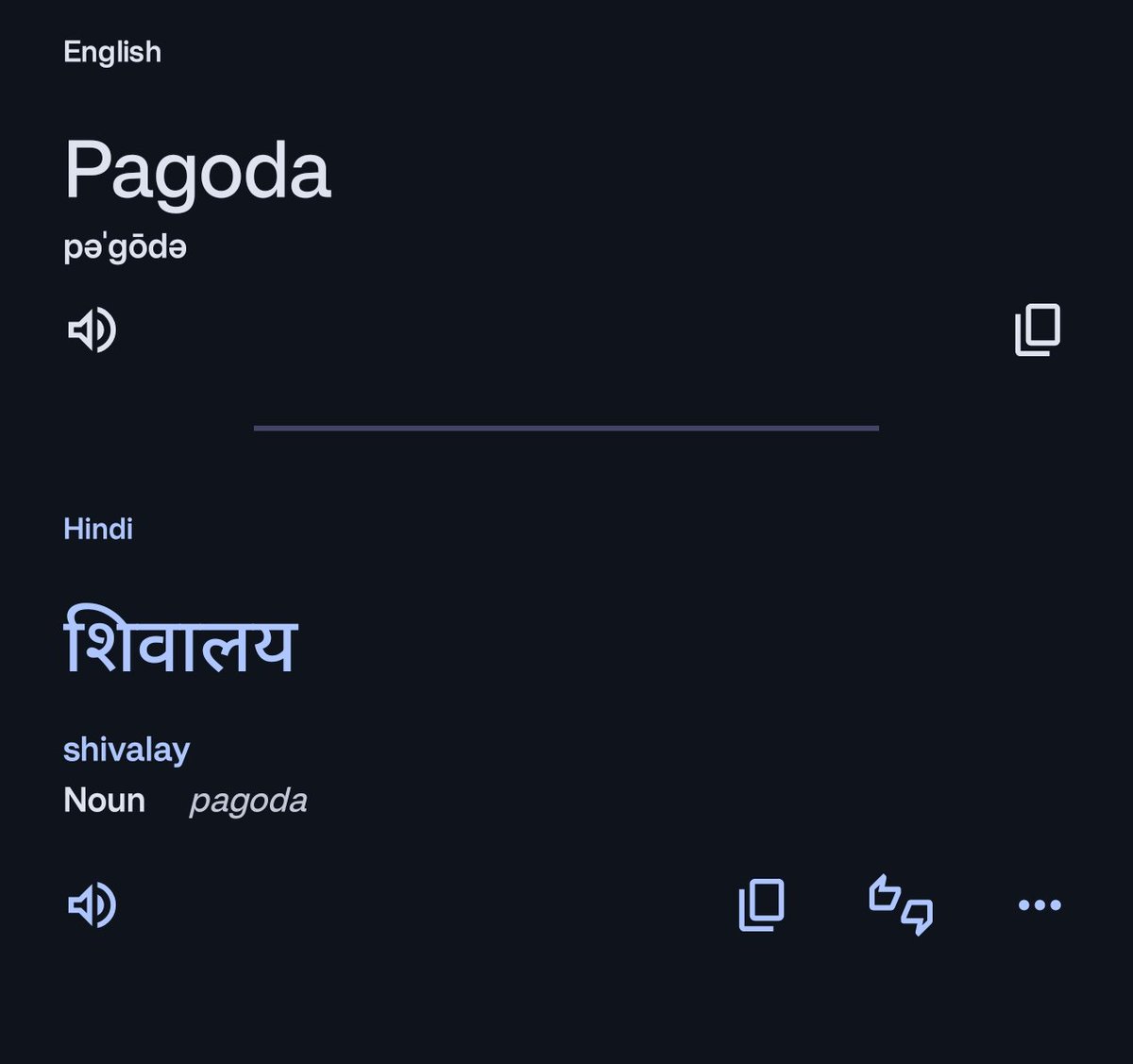
The Buddhist structures known as "Pagoda-s" do indeed refer to structures derivative of the Stupa and associated with Buddhism as a religion.
However the word itself is a 16th c. Portuguese borrowal of Malayalam/Tamil pakōti/pakavati (referring to shrines for Bhagavatī)...
Jun 11

Google Translate literally translates Buddhist word "Pagoda" as "Shivalya".
Hindus have "Hinduised" everything:
12
37
222
8,650
Chaitanya retweeted

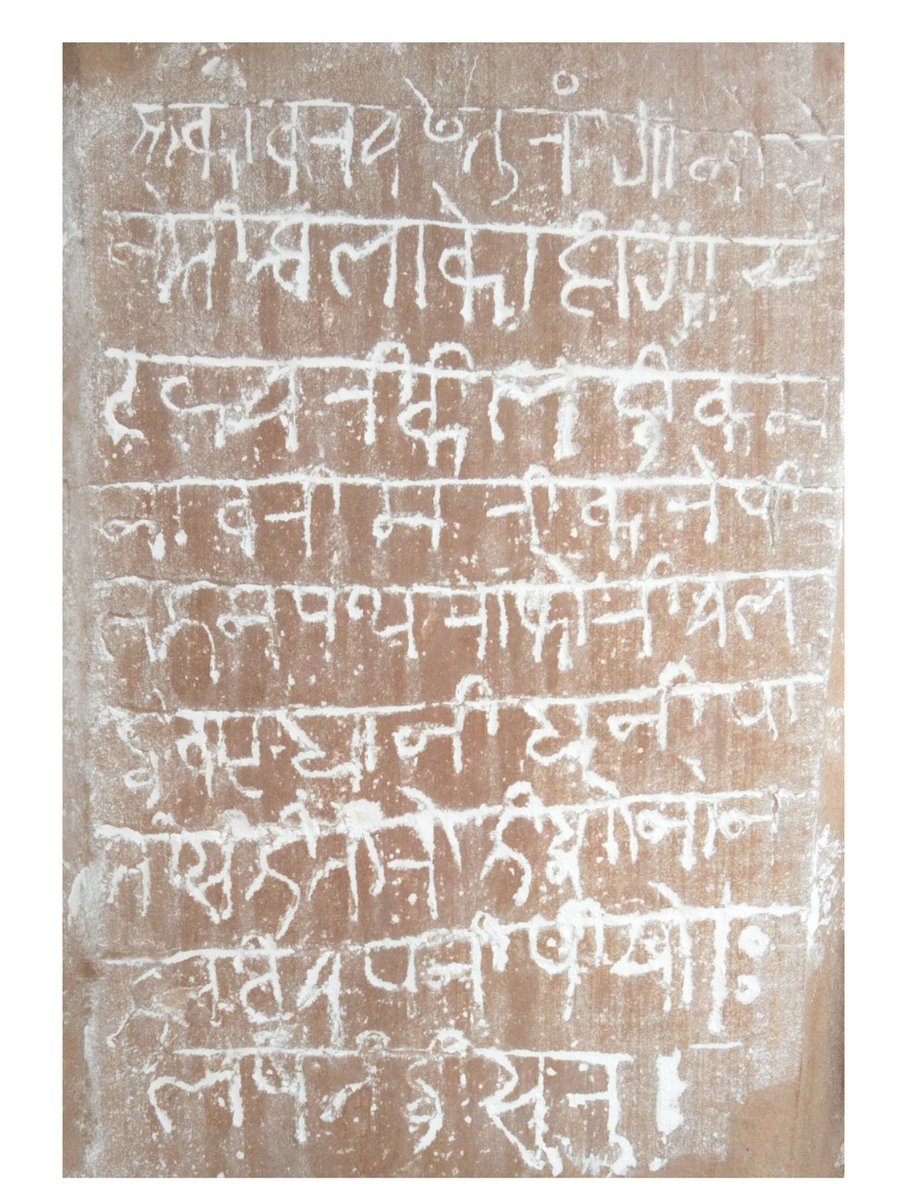
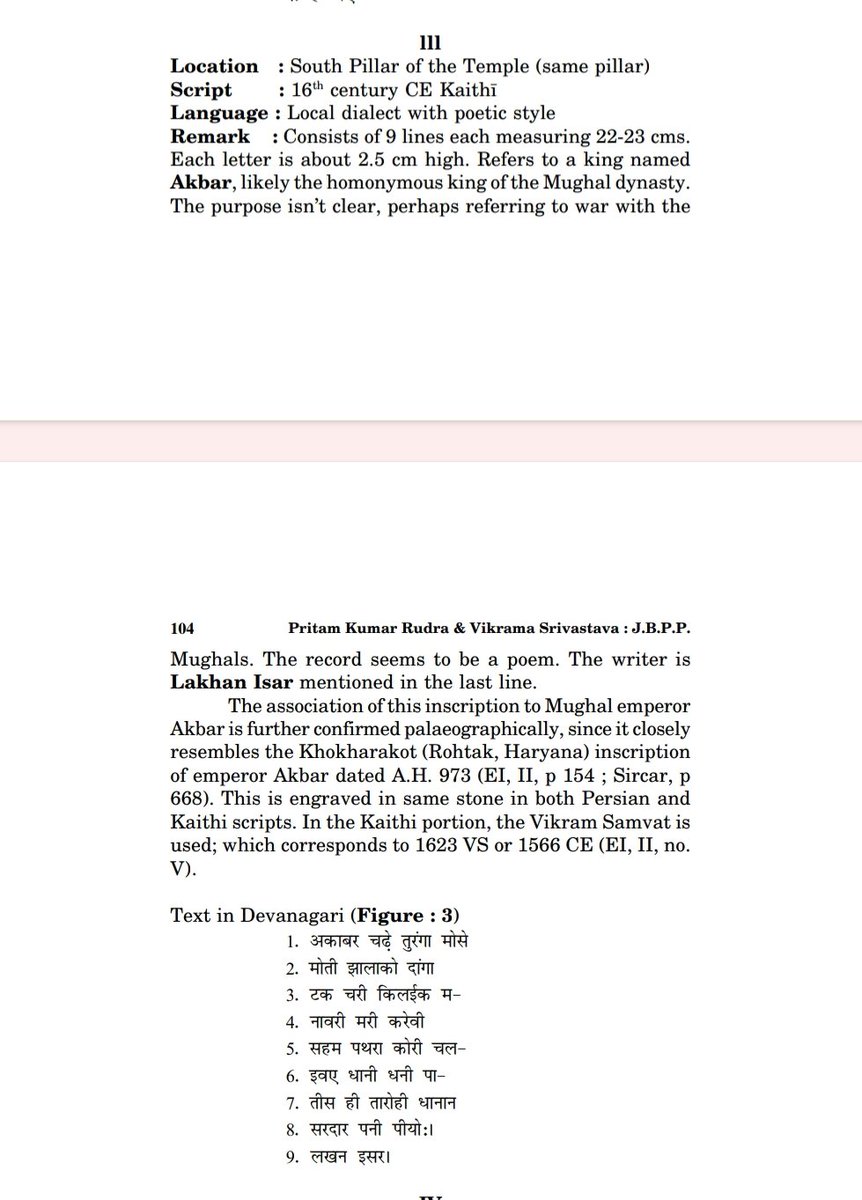
Our paper titled "Revisiting Barha Kotra (Chitrakoot) : Epigraphic Descoveries and Their Historical Implications" was published in
The Journal of Bihar Puravid Parishad Vols. XXXI-XXXII. I discovered the inscription last year and it was deciphered by @pritam_kum97203 . The most important inscription in this paper belongs to the reign of Akbar, circa 16th century CE, in Bundeli language and Kaithi script. The photograph of the inscription and the edited texted is attached herein.
3
26
123
5,111
Chaitanya retweeted

Jun 12
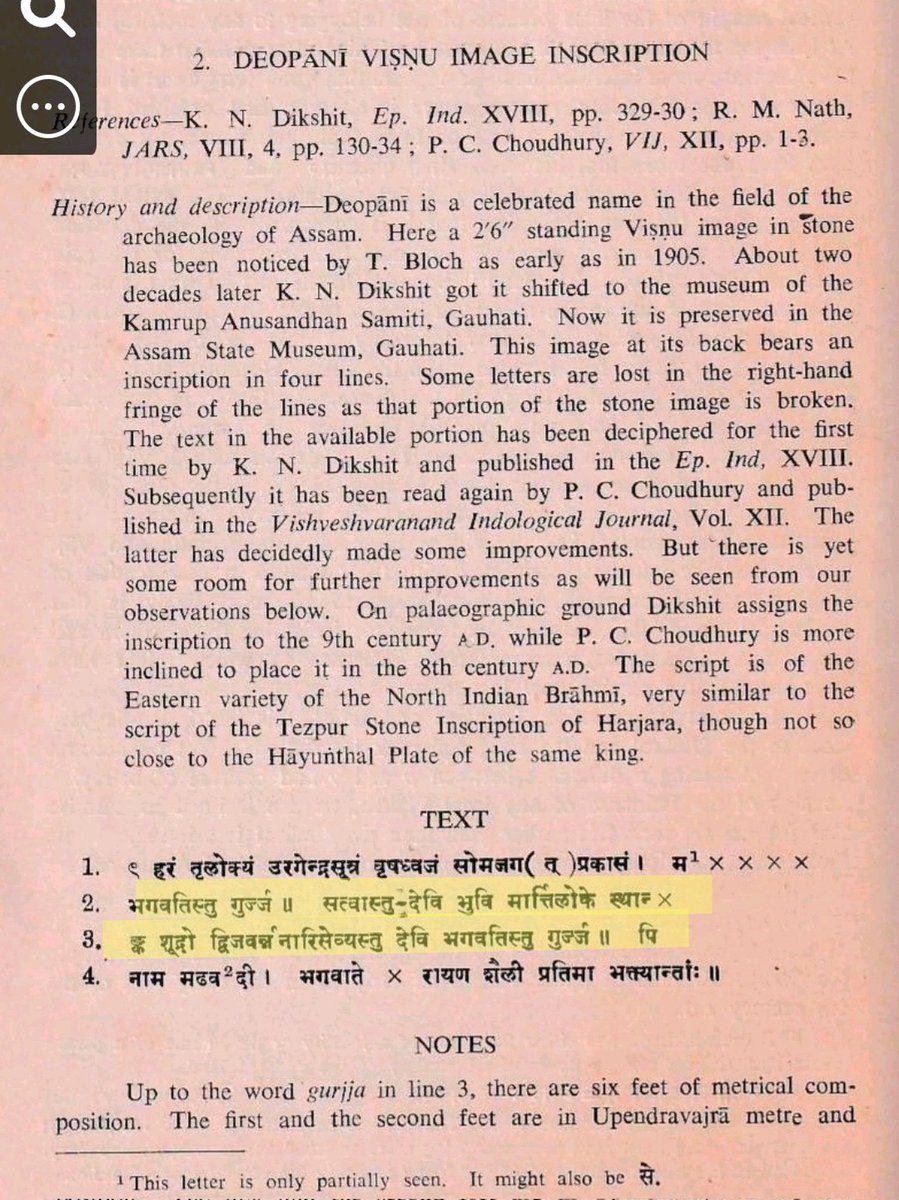
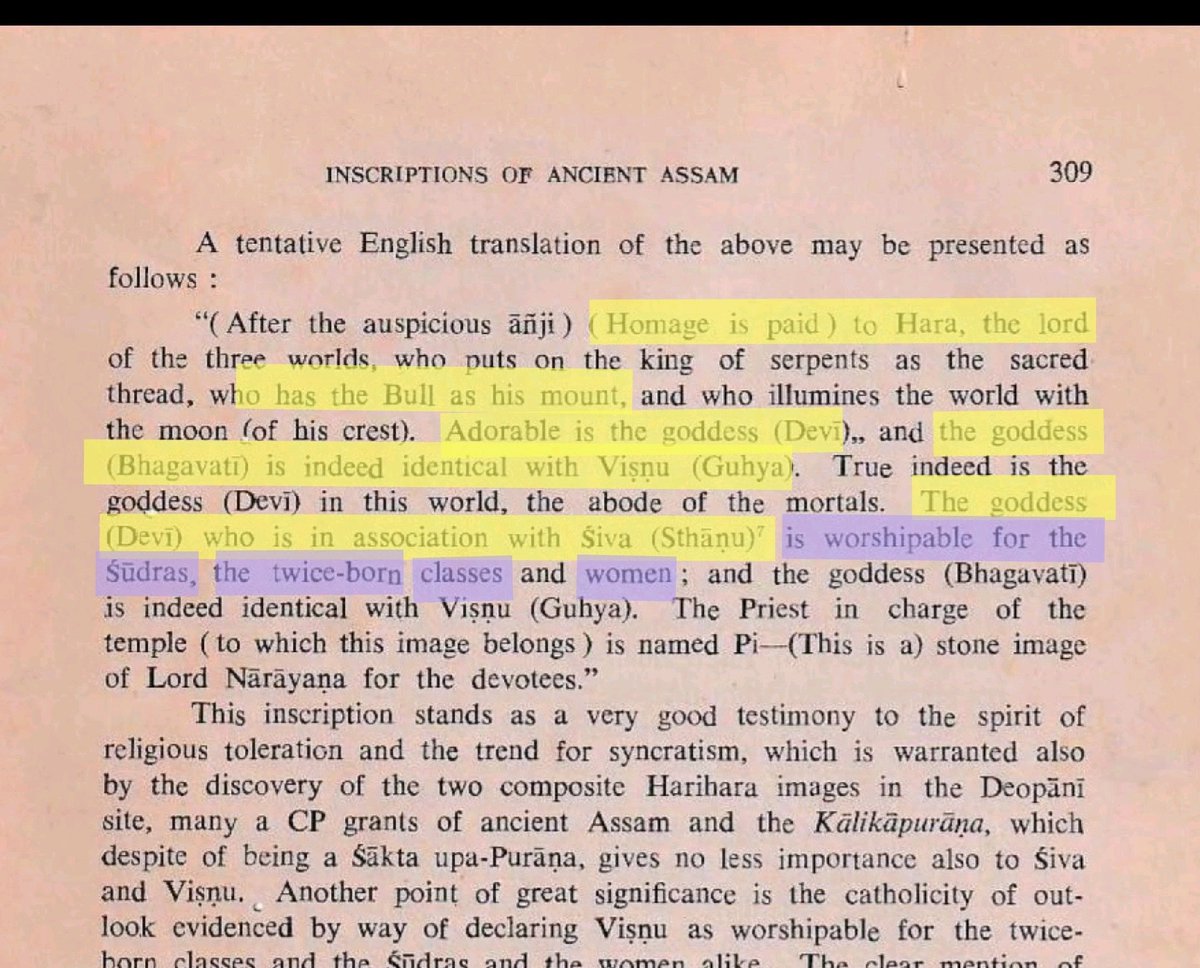
Found on the pedestal of a Viṣṇu idol, the 8-9 th century Deopāni inscription explicitly states that the Goddess is:
"worshipable for the Śūdras, the twice-born classes and women"
A powerful testament to equal spiritual rights.
2
15
47
985
Chaitanya retweeted
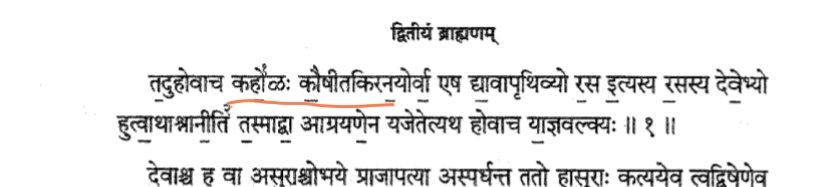
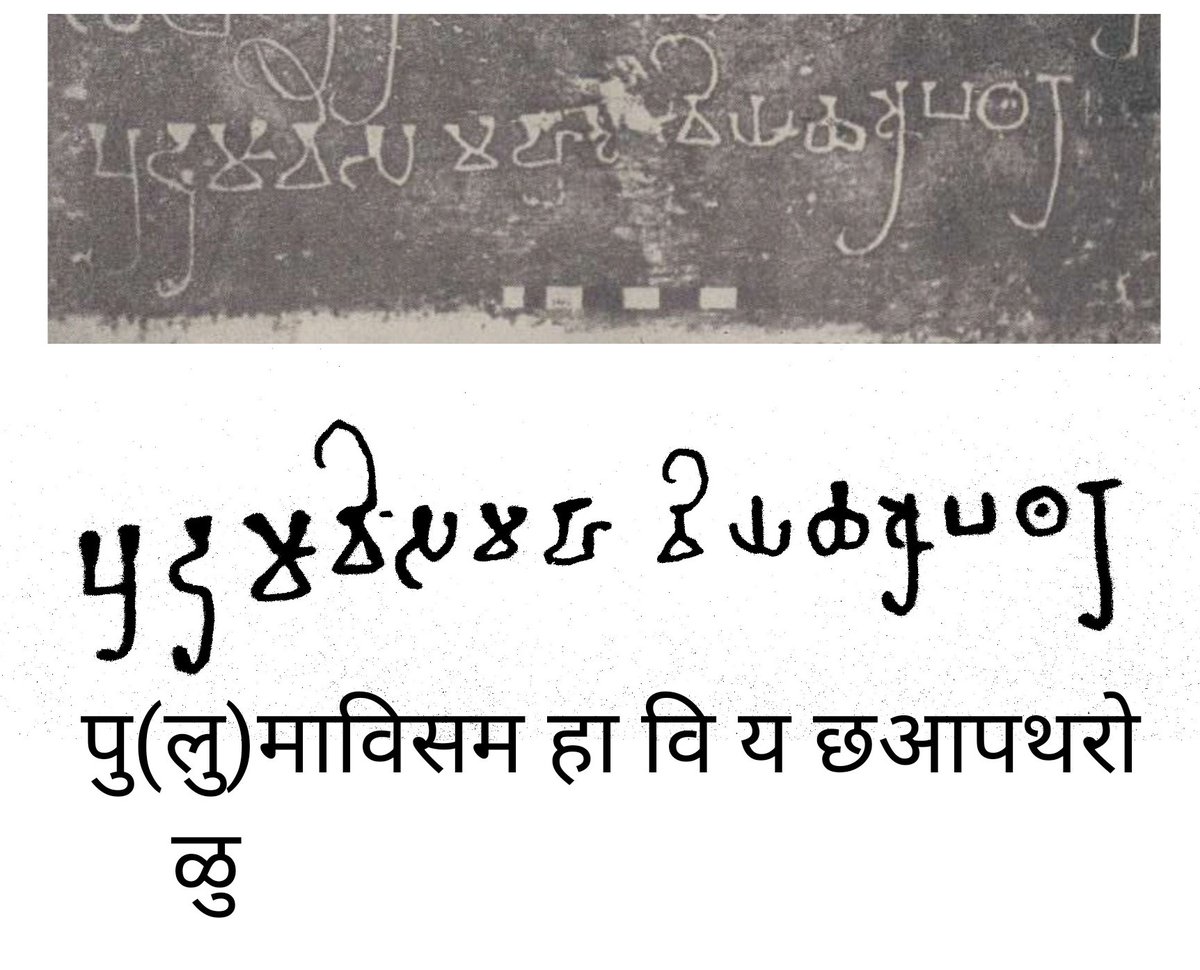
Nowadays, the letter 'ळ' has virtually disappeared from Hindi names and even from common Indian names. Earlier, this letter was used in personal names. For example, in the Kāṇva recension of the Shatapatha Brāhmaṇa, there is a sage named Kahoḷa Kauṣītakī. Similarly, a king of the Satavahana dynasty was named Puḷumāvi.
Perhaps this letter is still used in names in Maharashtra and South India today?
@Aatma_the_soul4 @AbhayK70627 @anshikashukla_ @Param_Chaitanya @sarvamedha @sanjeevku @monidipadey @MumukshuSavitri
8
16
48
3,903
Chaitanya retweeted
Jun 11
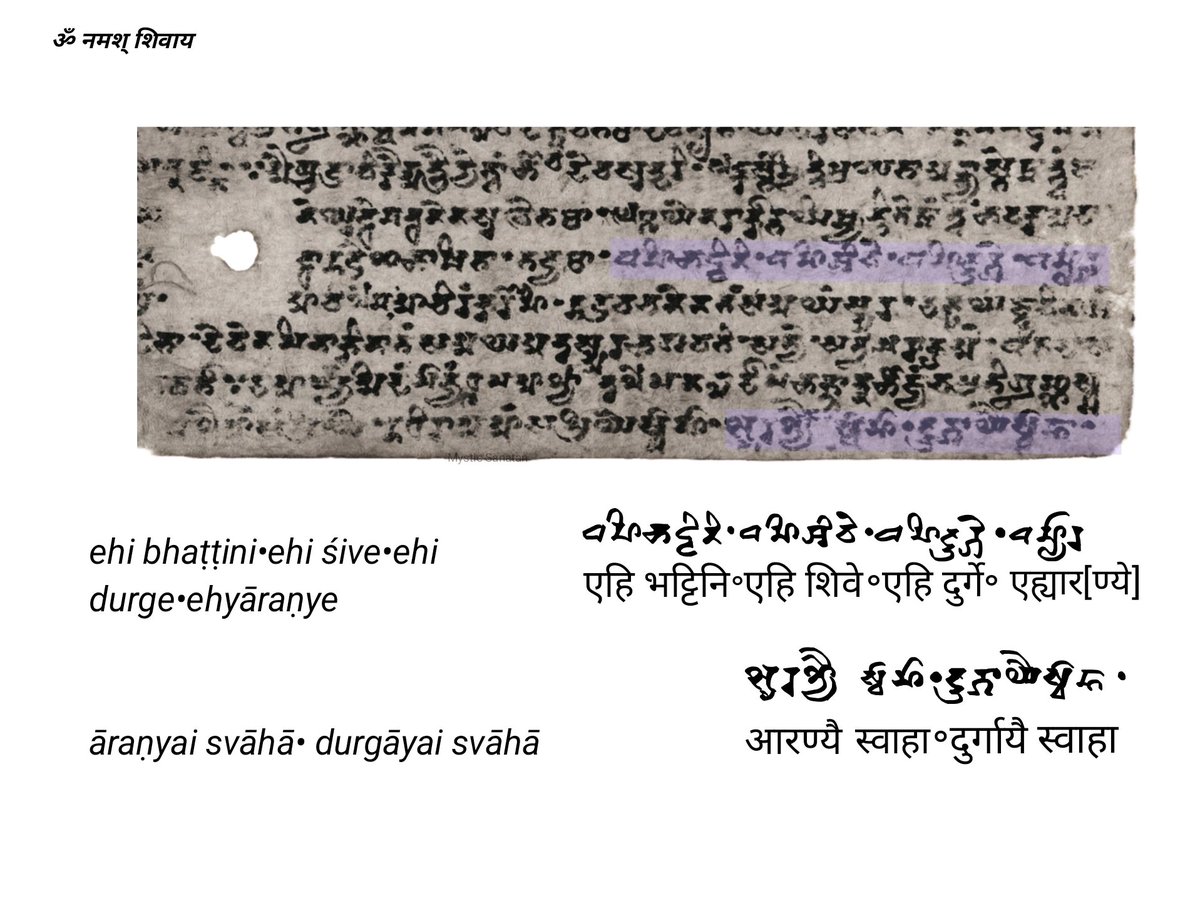
The Weber Manuscript describing Goddess Pārvatī (Satī) as Bhaṭṭinī, Śivā, Durgā, and Āraṇyā (Vana-Durgā).
@chronicle_watch @Aatma_the_soul4 @Param_Chaitanya @ancientadarsh
@monidipadey @MumukshuSavitri
2
21
41
809
Chaitanya retweeted

Earliest evidence of a Vedic deity discovered so far 🔥
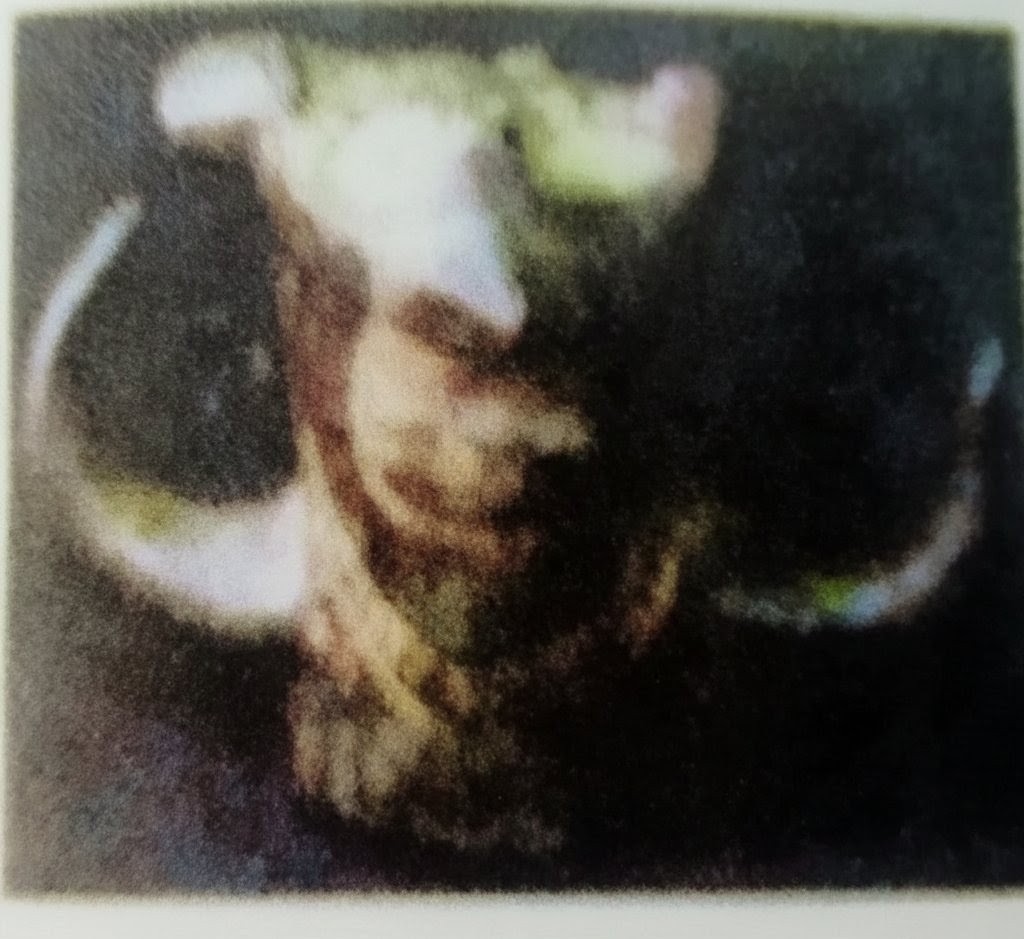
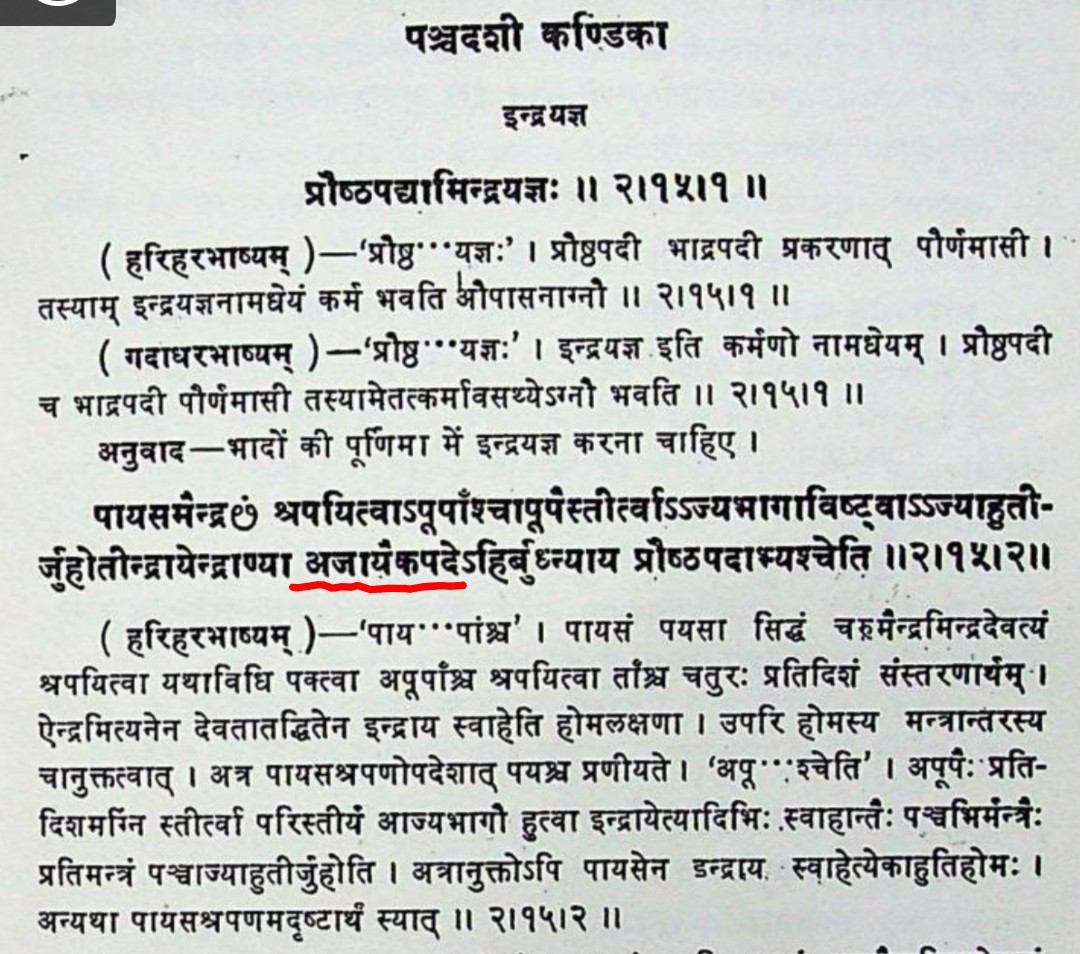
This sword from the Ganga–Yamuna Doab belongs to the Copper Hoard Culture (c. 2000–1500 BCE). Archaeologists L. M. Wahal and K. S. Shukla identified the goat figure on it as the Vedic deity "अज एकपाद".
8
67
359
6,925
Chaitanya retweeted

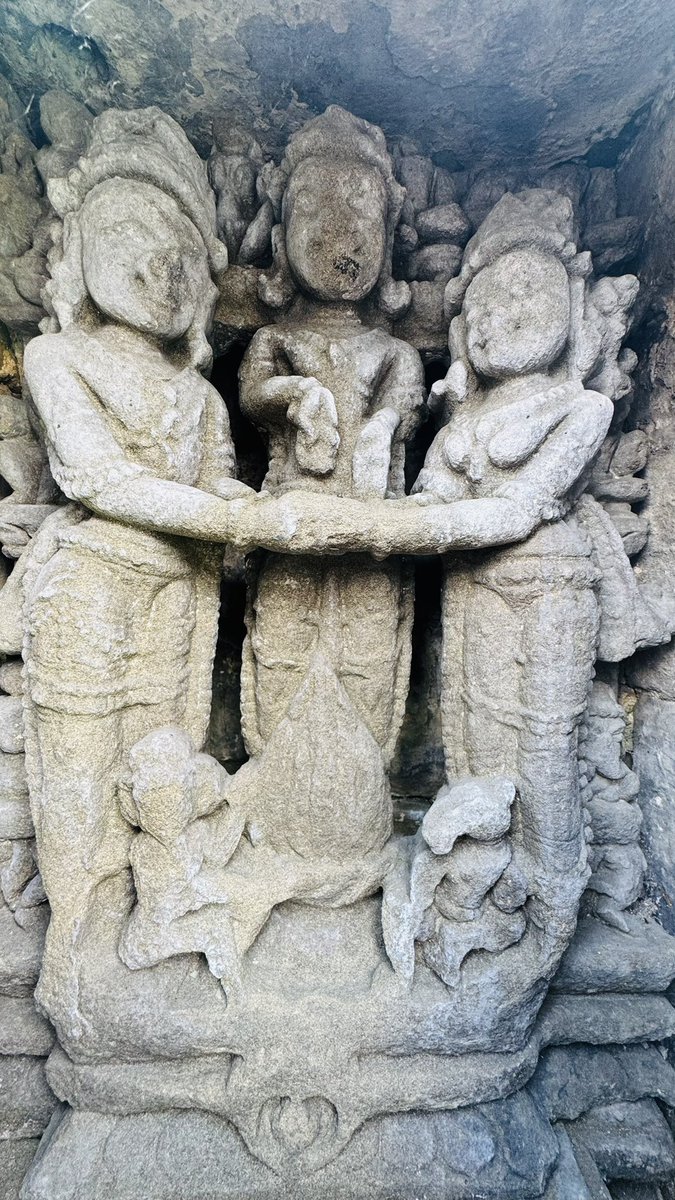
Shiv Parvati pani grahan
Vishnu performing his brotherly duties
Brahma performing hawan
2
7
70
770
Chaitanya retweeted

Did you know that Harappa was not the first site discovered in SSVC (Sindhu-Saraswati Valley Civilization)?
What we call Indus Valley Civilization today should have been named the Sindhu Saraswati Valley Civilization & the core of it should have been Kalibangan NOT Harappa. Italian scholar L.P. Tessitori found evidence of it in Kalibangan in 1917, a full 7 years BEFORE discovery of Harappa.
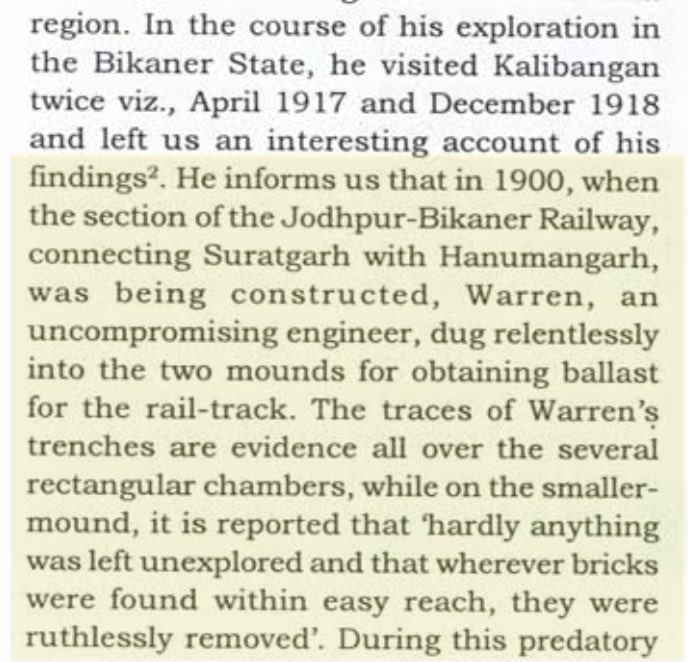
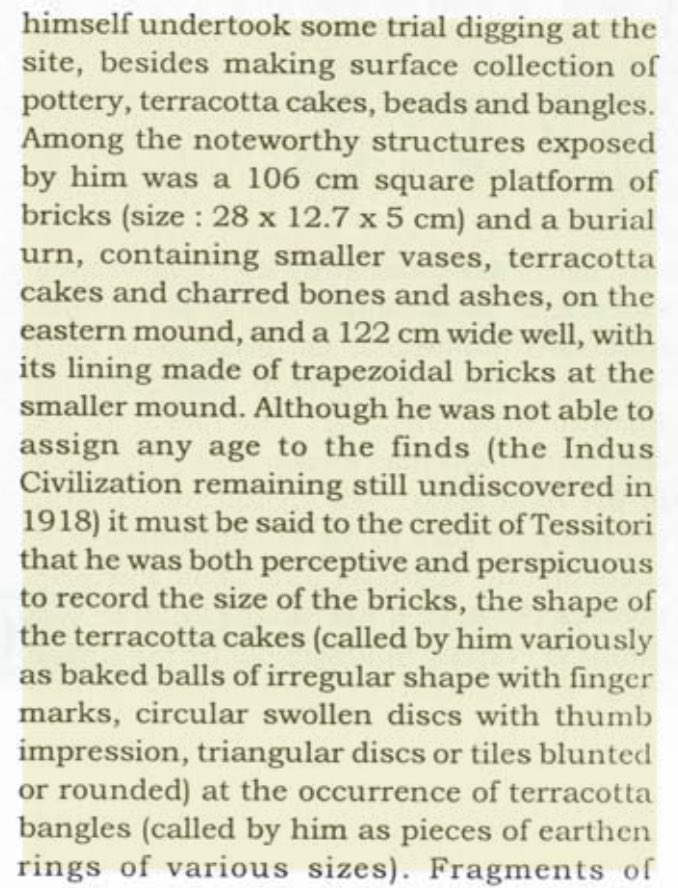
Shockingly, Tessitori's findings reveal that in 1900, British engineer Warren was constructing a section of the Jodhpur-Bikaner Railway. He ruthlessly dug up ancient bricks & terracotta artifacts from 2 large mounds of Kalibangan, which were smashed into gravel for the tracks!
Thankfully Tessitori was curious enough to dig himself at the site. What he found was incredible - pottery, terracotta cakes, beads, bangles, brick platforms, burial urns, vases, charred bones, tiles, rings, perforated jars, bull figurines, disc beads, buttons & copper objects!
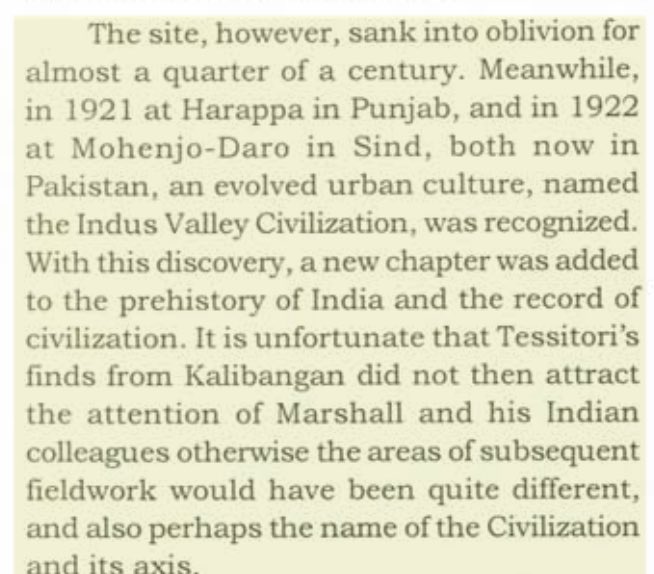
Though he had no idea how old the artifacts were, Tessitori was dedicated & recorded all the evidence. Yet, inexplicably Kalibangan was IGNORED by ASI's Marshall & in 1923-24 the lies of Pakistan as the cradle of "Indus Valley civilization" with type site Harappa was born.
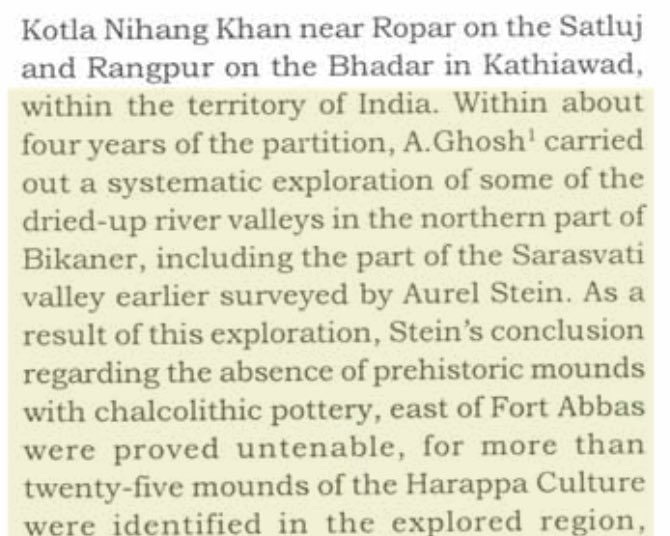
In December 1947, Hungarian British archaeologist Aurel Stein surveyed the area & read Tessitori's records, but reported there were no remains of Chalcolithic period. Stein who was fascinated with finding Greco-Buddhist traces of Alexander just didn't find Kalibangan worthy enough.
It was only after 1951, 4 years after Partition, that A. Ghosh carried out systematic explorations in the region & found 25 mounds of "Harappan culture" of which Kalibangan stood out for its twin mound complex, which resembled the urban structures of Mohenjodaro & Harappa.
If the Kalibangan evidence of Tessitori in 1919 had been explored, we would call it Saraswati Valley Civilization today with a crucial extra detail, Kalibangan not only has all the elements of advanced urban design, plumbing, etc. but Fire altars in a ritual citadel & within homes too. Radiocarbon dating by ASI has verified that Kalibangan dates back to 3000 BCE.
Had Kalibangan been excavated thoroughly in 1920s, it would have been clear that the rituals of Vedic civilization were already an integral part of the SSC culture, & undermined the British lies of a mythical Aryan Invasion theory that has plagued Hindu history for far too long
15
403
987
12,508