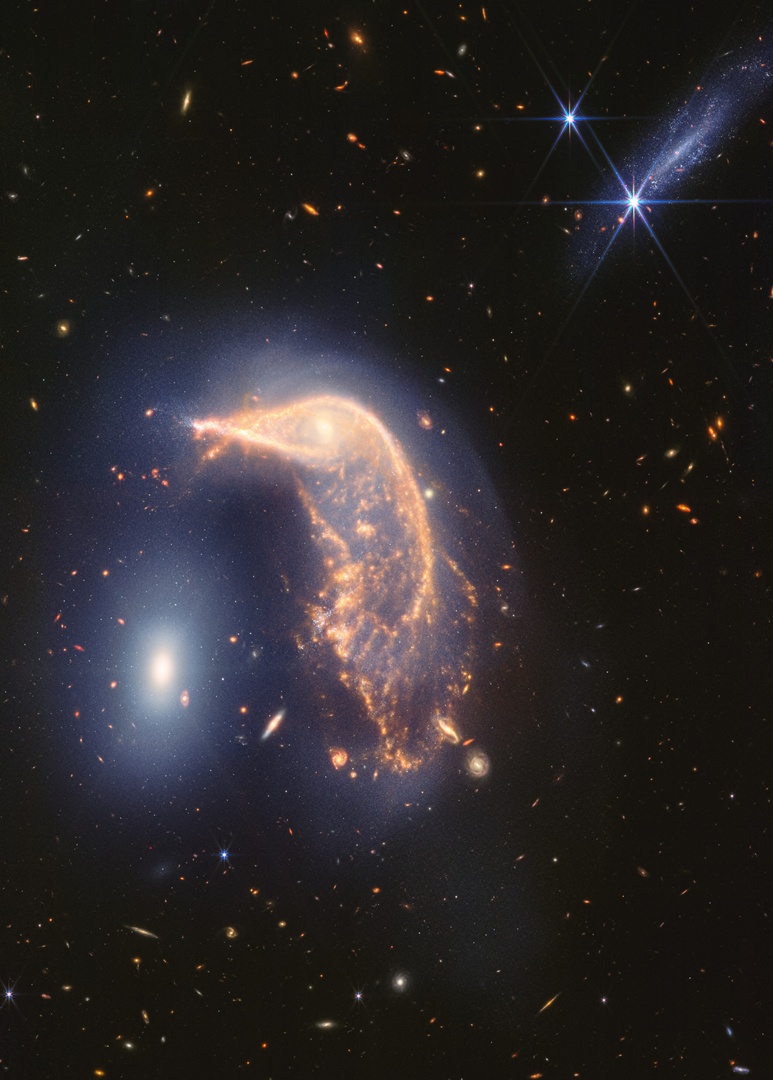
🆕 A penguin portrait to mark Webb’s second science anniversary! 🎉
This duo of interacting galaxies – the Penguin and the Egg 🐧🥚 – are locked in a cosmic dance, and will merge into a single galaxy over hundreds of millions of years. 1/4
Read more: esawebb.org/news/weic2420/ 👇
ALT Two interacting galaxies known as Arp 142. At left is NGC 2937, nicknamed the Egg for its appearance. At right is NGC 2936, nicknamed the Penguin for its appearance. The latter’s beak-like region points toward and above the Egg.
Gaia spots Milky Way's most massive black hole of stellar origin! It's 33 solar masses, dormant, 2nd closest to Earth at ~2000 light years away, part of a wide binary with an old giant star, with estimated age of 11 Gyr: youtu.be/cU00B-6DeSQ#GaiaBH3cosmos.esa.int/web/gaia/iow_…
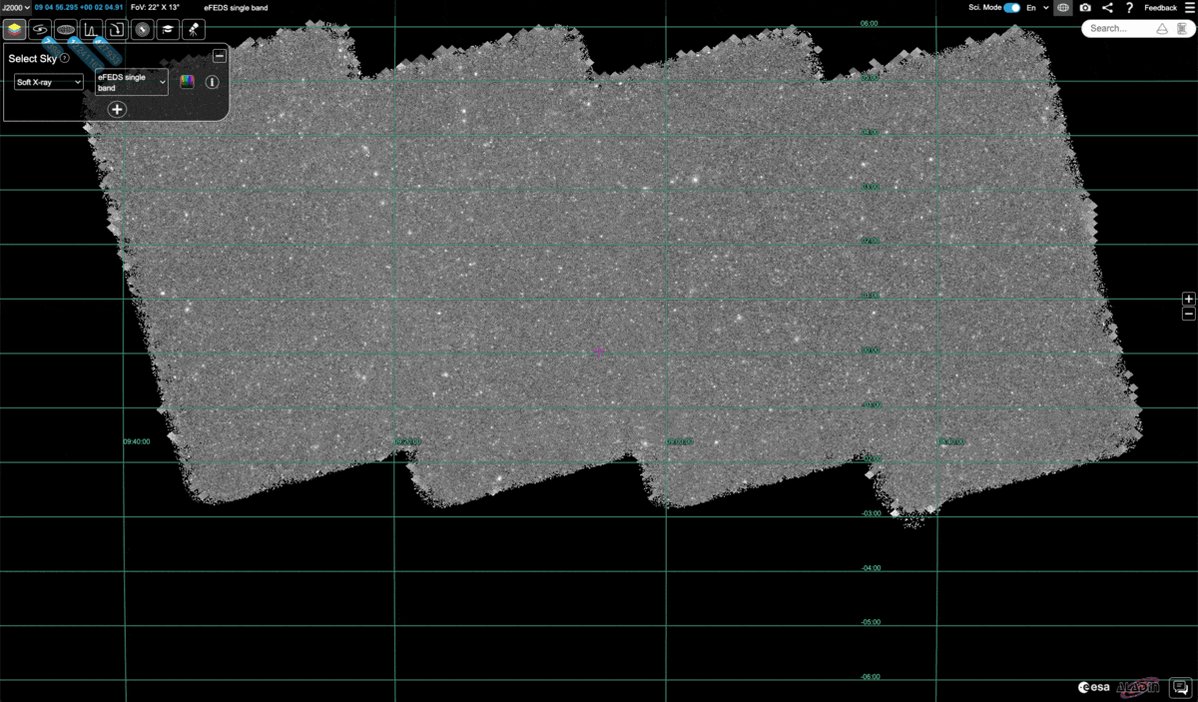
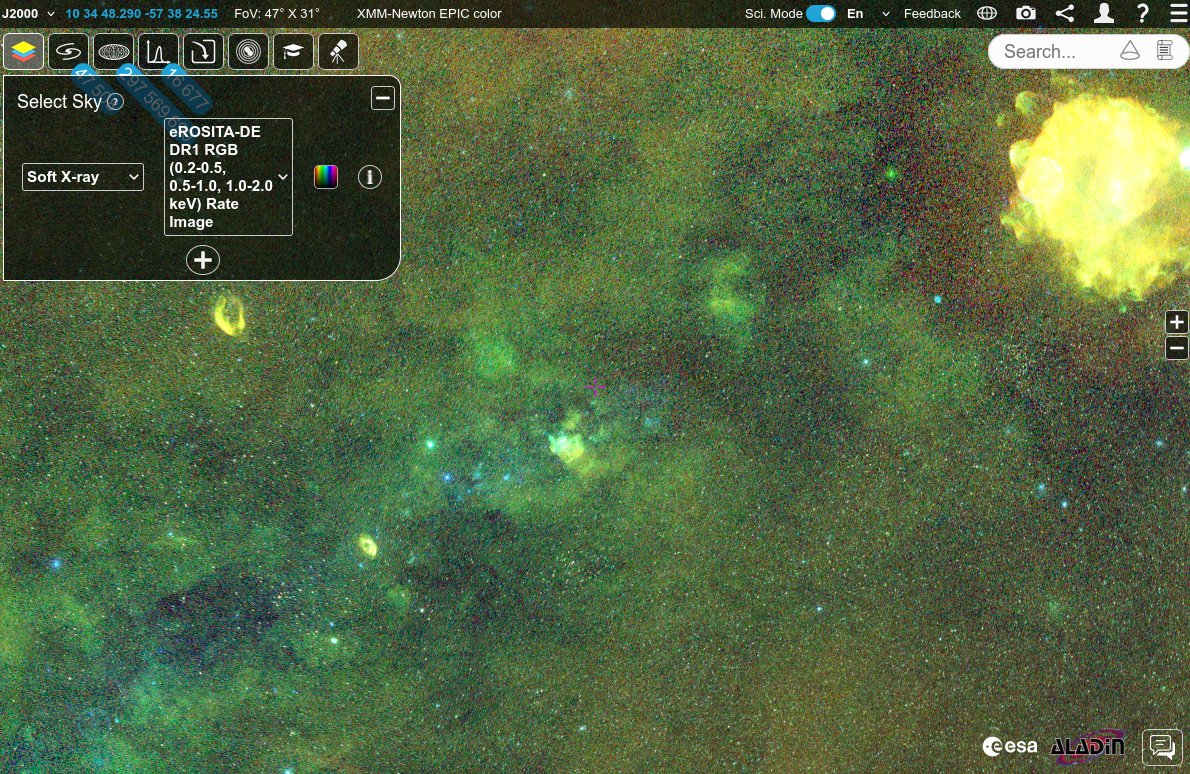
This #eRASS1 animation shows the #Xray sky as seen by #eROSITA. The X-ray bands are colour-coded according to their energy (red: 0.3-0.6 keV, green: 0.6-1 keV, blue: 1-2.3 keV). And a number of prominent sources have been highlighted. 4/9
CC: Jeremy Sanders/eROSITA consortium
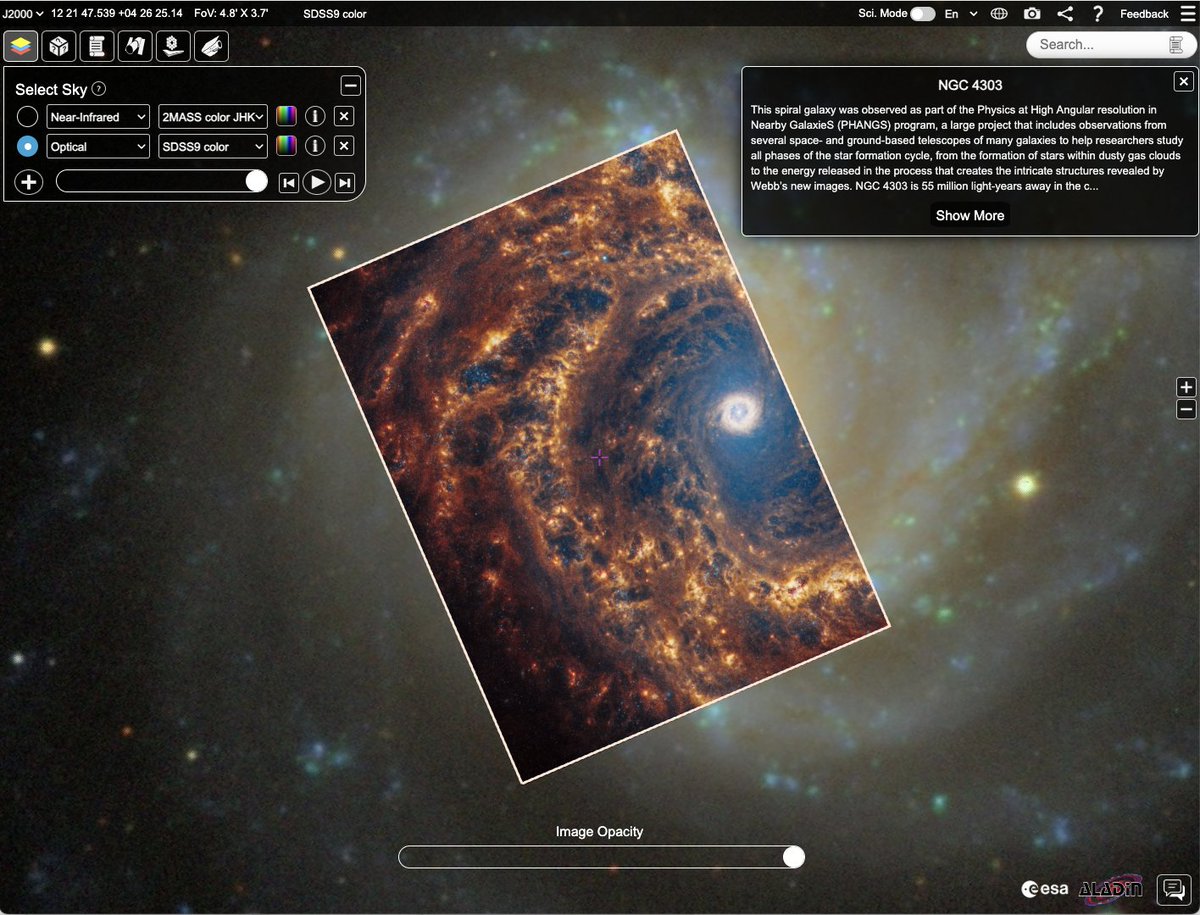
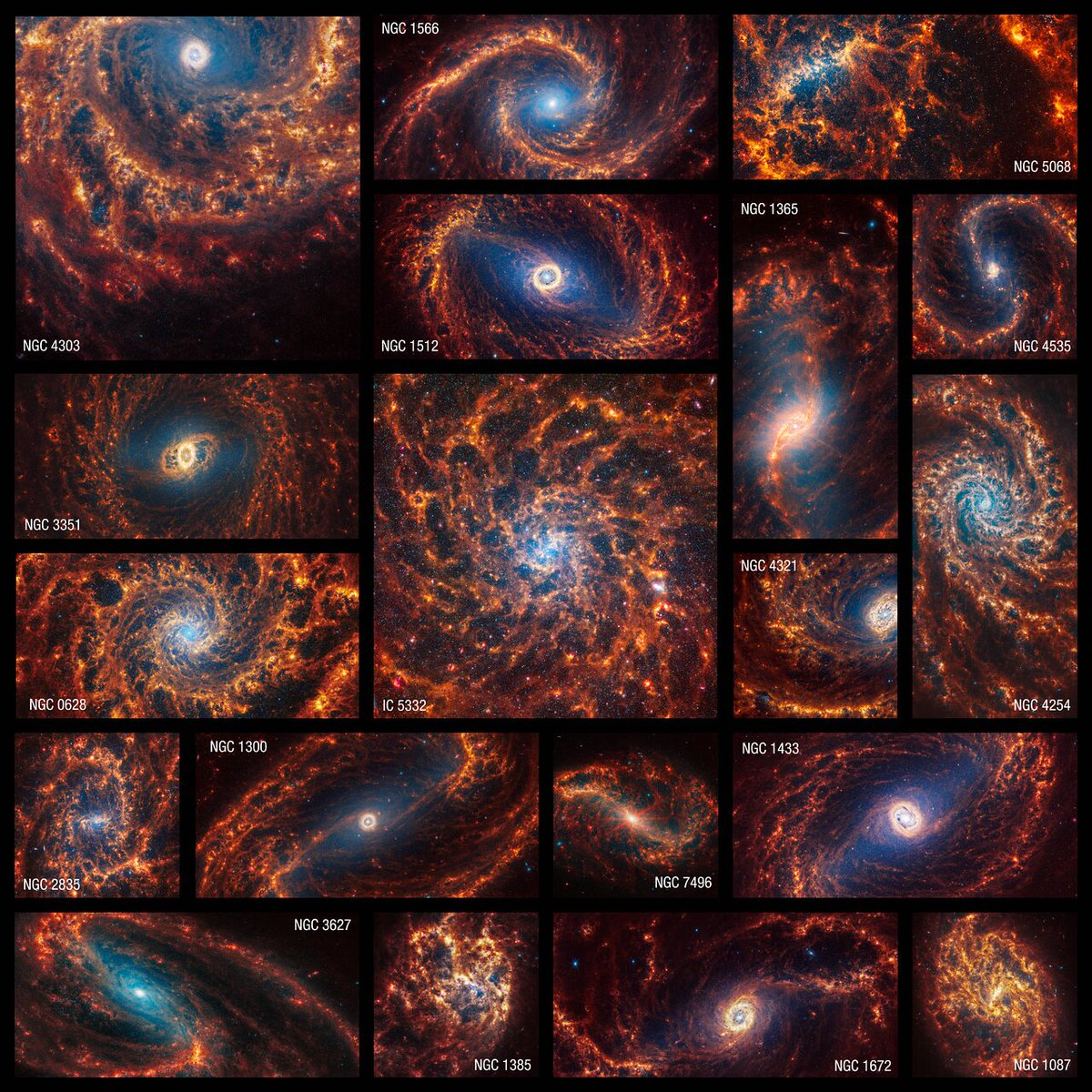
🆕 Spiral galaxies galore! Webb has snapped portraits of 19 spiral galaxies, showing stars, gas, and dust on the smallest scales ever seen beyond our own galaxy ⭐. Read more: esawebb.org/news/weic2403/ or 🧵👇
ALT Nineteen Webb images of face-on spiral galaxies are combined in a mosaic, some within squares, and others horizontal or vertical rectangles. Galaxies’ spiral arms appear in shades of orange, and many of their centres have light blue hazes.
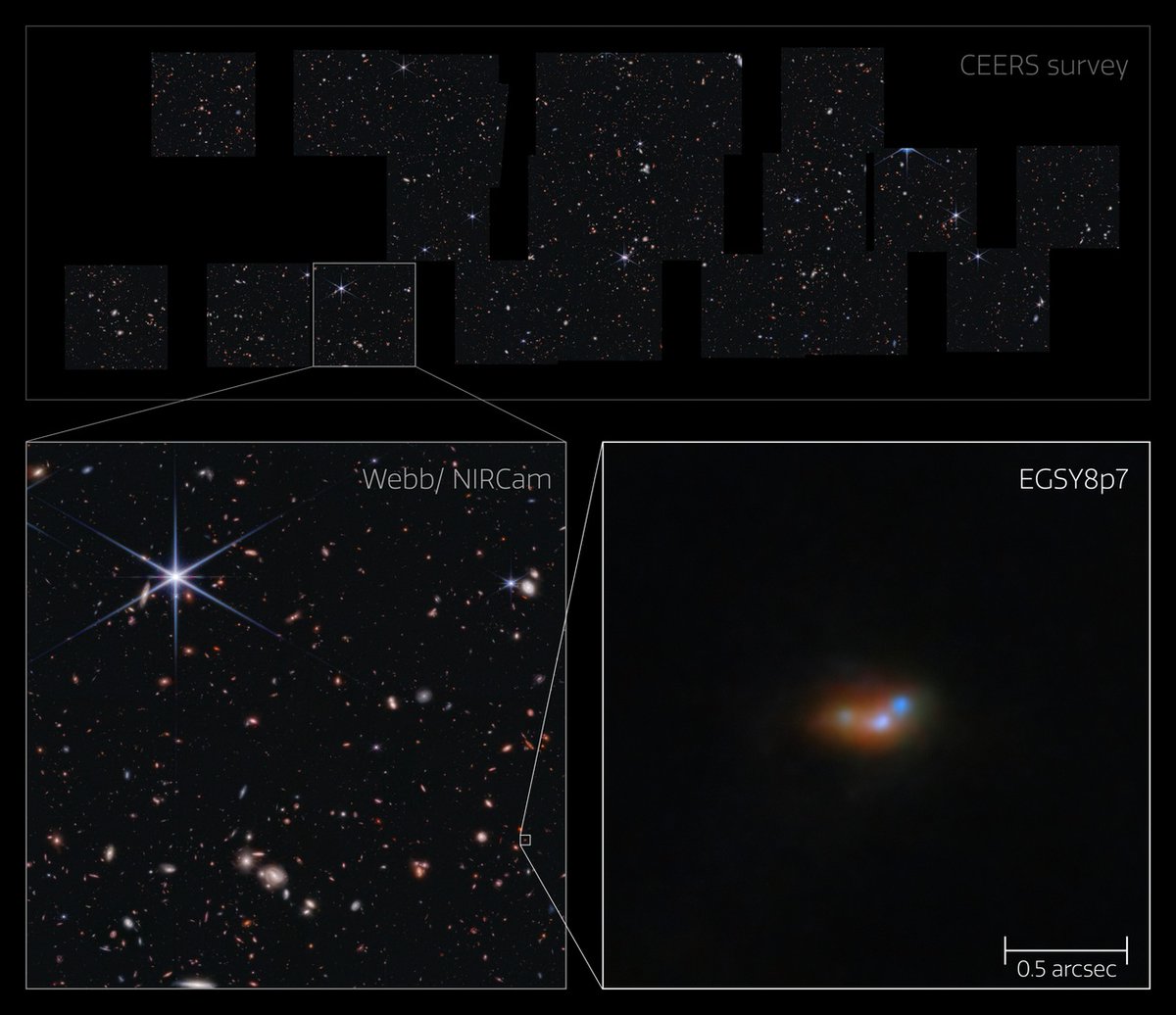
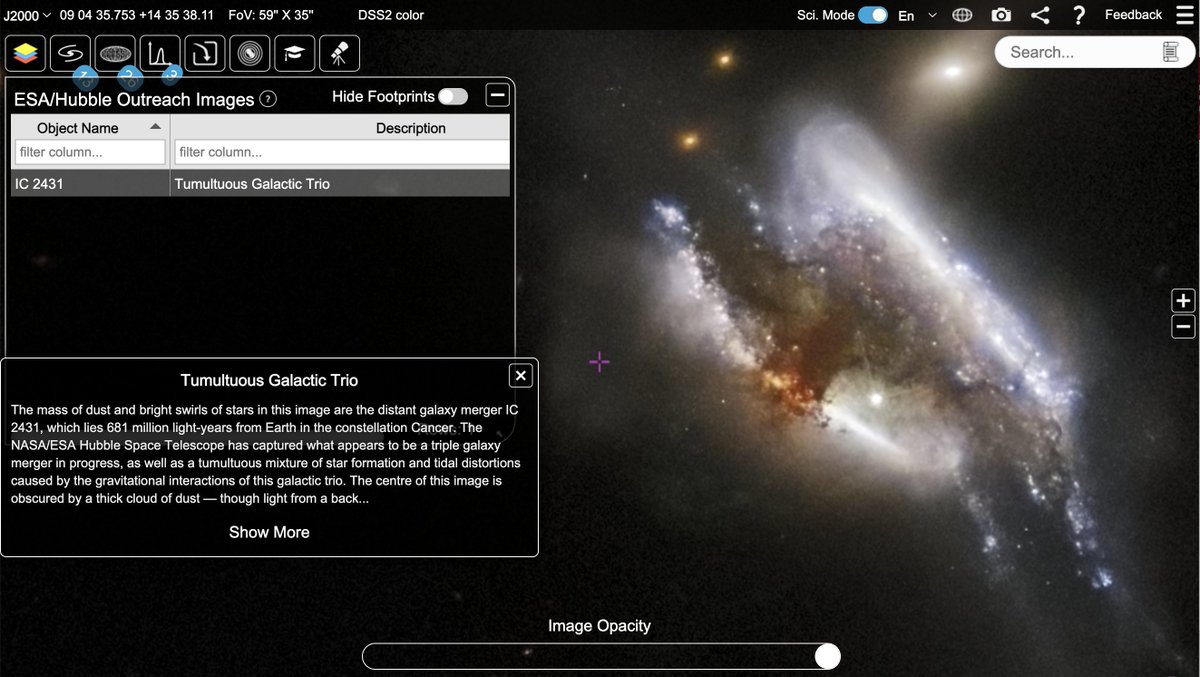
Wow, so if you want your mind blown today, this is an image from the Webb telescope of 3 interacting galaxies at redshift great than 7 (i.e. what was happening 13 billion years ago)!
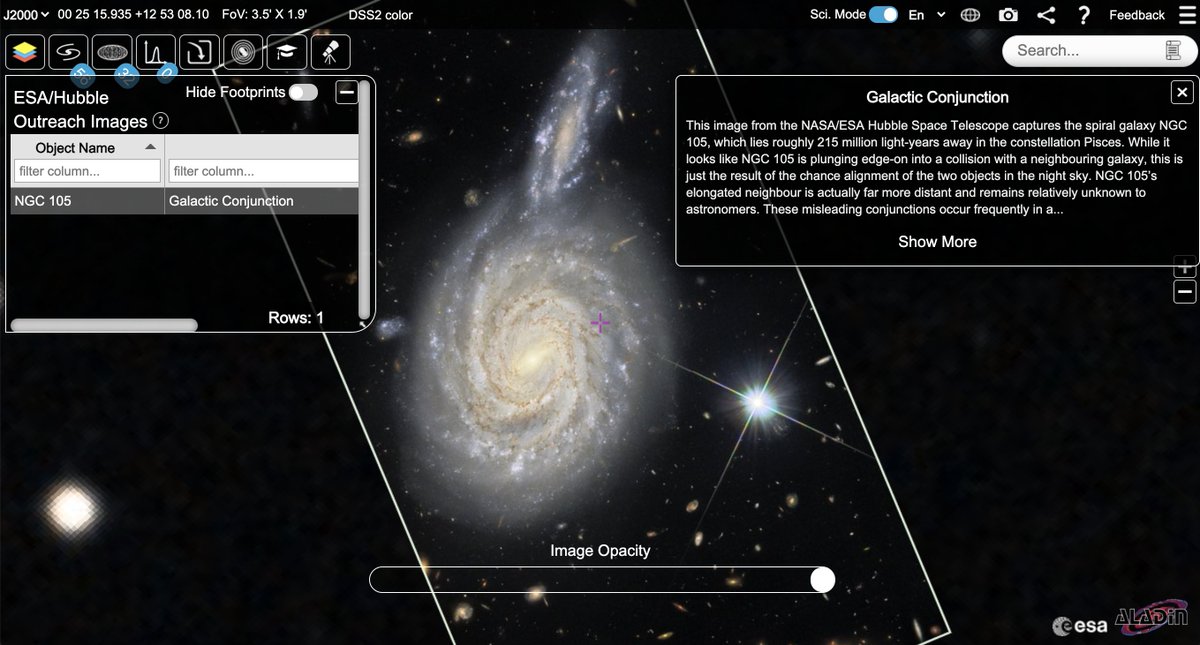
sky.esa.int/esasky/?jwst_ima…#astronomy#webb#ESASky
🆕 Webb has found the origin of a mysterious light from some of the earliest galaxies 🕯️🌌. Read more: esawebb.org/news/weic2402/ or 🧵👇
ALT A graphic with three images. The top image, labelled “CEERS survey”, shows many square images of stars and galaxies, stitched together according to their locations in the sky. One square is highlighted, and a cutout on the bottom left shows it enlarged, labelled “Webb/ NIRCam”. A tiny spot is shown zoomed-in to the right, labelled “EGSY8p7” with a scale marker of “0.5 arcsec”. Here it can be seen that the spot is three neighbouring galaxies, appearing as coloured blobs with bright, distinct cores.
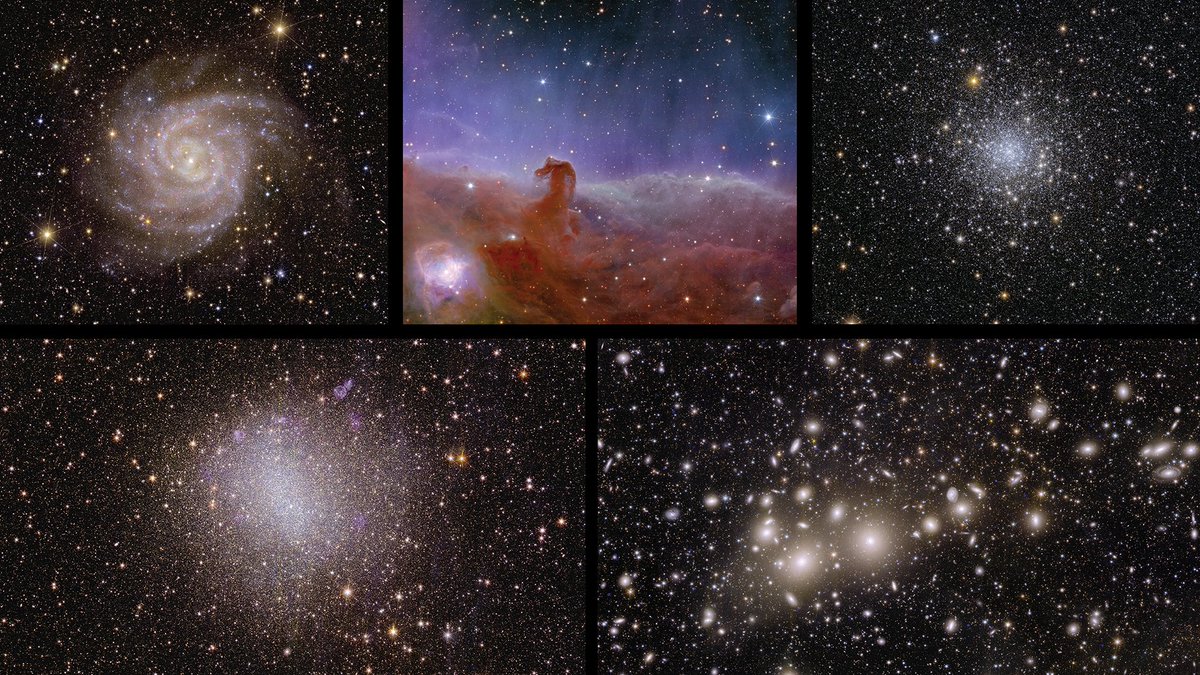
🤩Who would have thought the edge of darkness would be so dazzling?
🥁Introducing the first images from @ESA_Euclid!
5⃣ razor-sharp, wide & deep images that show Euclid is ready to uncover the secrets of the Universe.
esa.int/Science_Exploration/… and 🧵 👇
Welcome to the dazzling edge of darkness!🤩
The first images from #ESAEuclid are here:
razor-sharp, wide & looking far into the distant Universe. A trifecta never before achieved.
Explore these 5⃣ cosmic portraits that show Euclid's full potential esa.int/Science_Exploration/… and👇
ALT A collage of all five Euclid images showing: the Perseus Cluster of galaxies, spiral galaxy IC 342, irregular galaxy NGC 6822, globular cluster NGC 6397 and the Horsehead Nebula
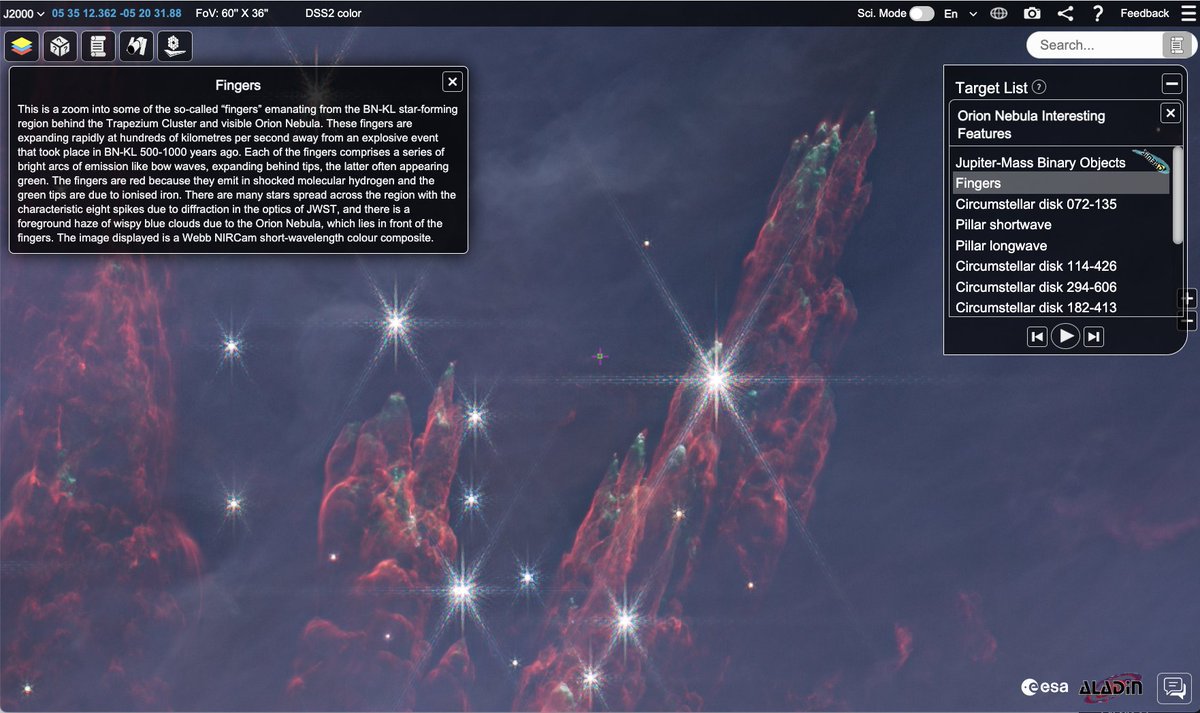
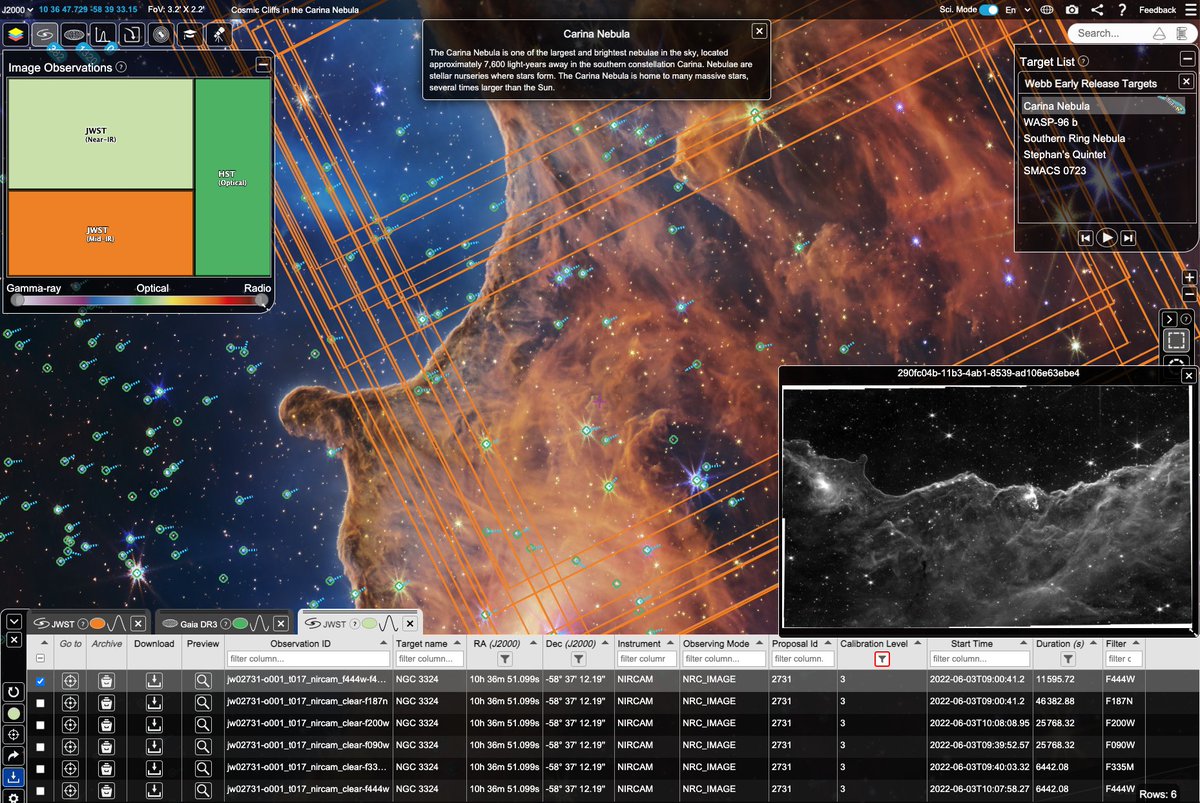
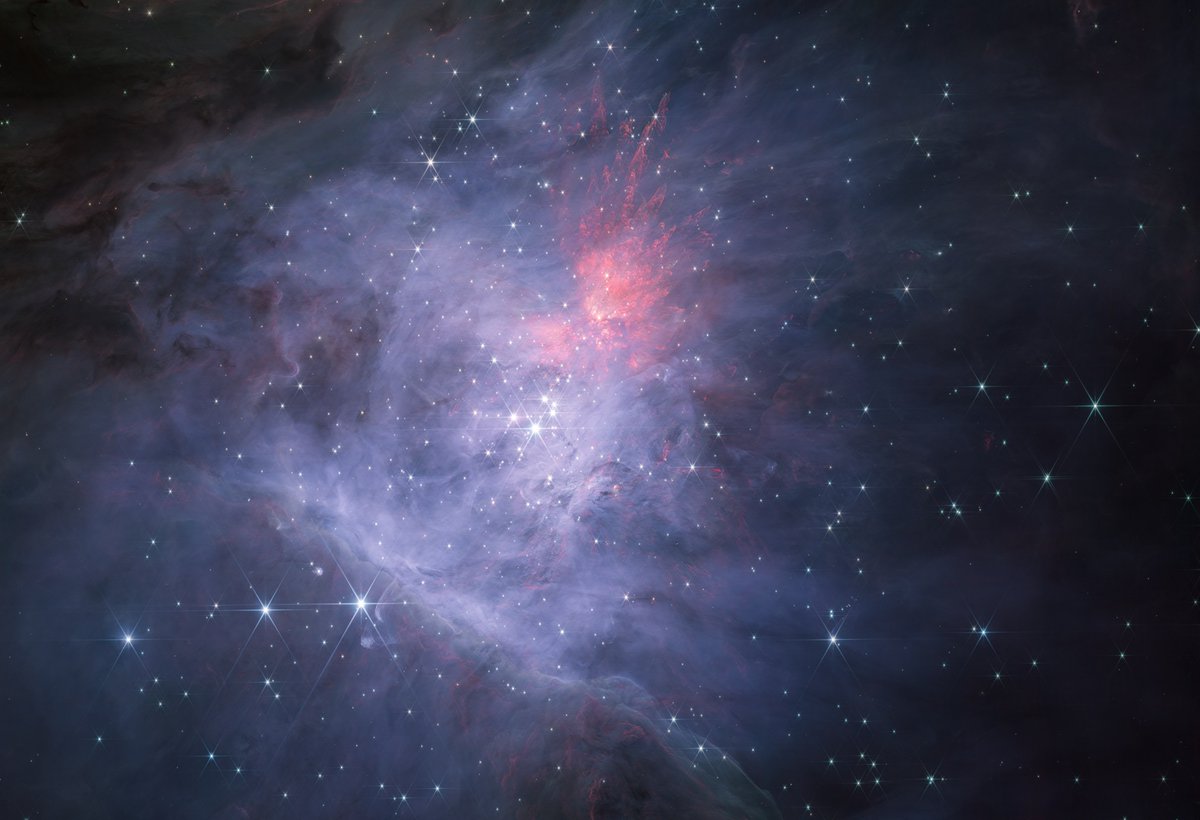
🆕 Images of the #OrionNebula from Webb have been included in @ESA ’s #ESASky application.
These two mosaics are among the largest Webb mosaics observed to date.
The full images on ESASky measure 21,000 x 14,351 pixels, and 10,446 x 7,109 pixels respectively. 🧵👇
A sumptuous new image of the #OrionNebula from @ESA_Webb. Tonnes of new detail, but the big surprise are the JuMBOs: Jupiter Mass Binary objects. These are pairs of planet-like objects wandering free in space. bbc.co.uk/news/science-envir…
🥁 🤩 Explore two new massive @ESA_Webb mosaics of the #OrionNebula with the #ESASky application!
💎 The images measure 21,000 x 14,351 pixels, and 10,446 x 7,109 pixels respectively and are full of treasures waiting to be discovered!
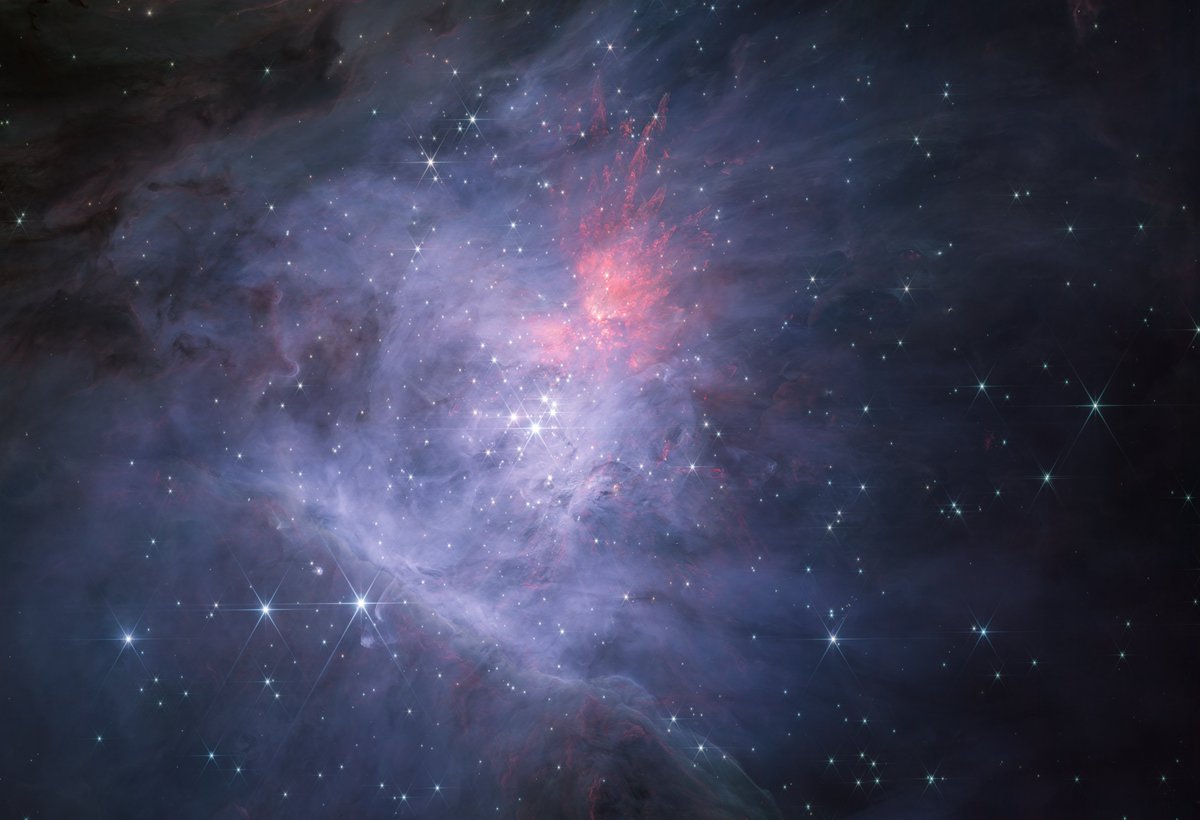
ALT An image of a young star-forming region filled with wispy blue, grey, green, and red nebulosity that is brightest towards the centre and fainter towards the edges, especially in the top left corner and on the right side. Thousands of stars are seen sprinkled across the field, concentrated towards the centre, and the brightest stars show the eight spikes due to diffraction that are characteristic of Webb images.
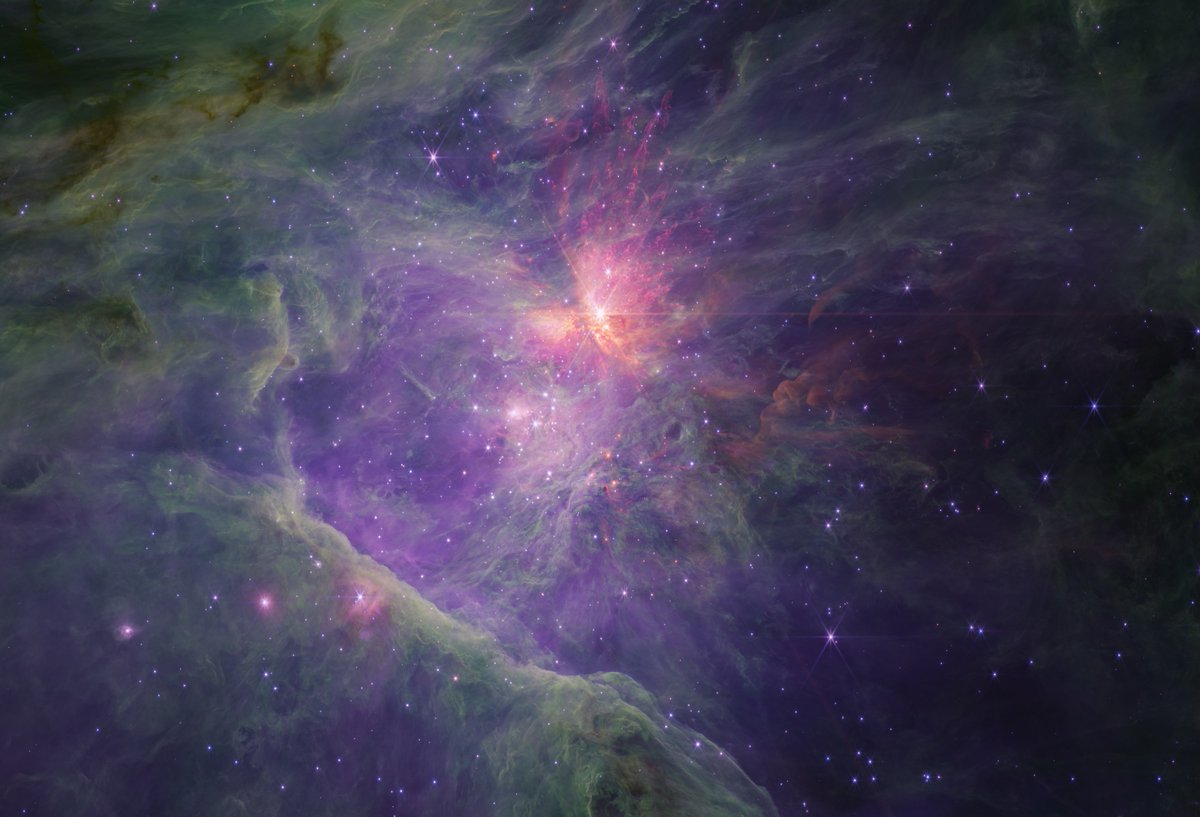
ALT An image of a young star-forming region filled with with wispy purple, green, and red nebulosity. The purple ionised gas is seen mostly towards the centre, with browns, greens, and reds behind, while the periphery is mostly bright green and darker brown to the left. There is a large spray of yellow, orange, red, and purple towards the top centre, and the nebula fades to near black to the right. There are thousands of stars sprinkled across the field, concentrated towards the centre, but they generally appear fainter at longer wavelengths, with some exceptions. The brightest sources in the field have extensive diffraction spikes characteristic of Webb.
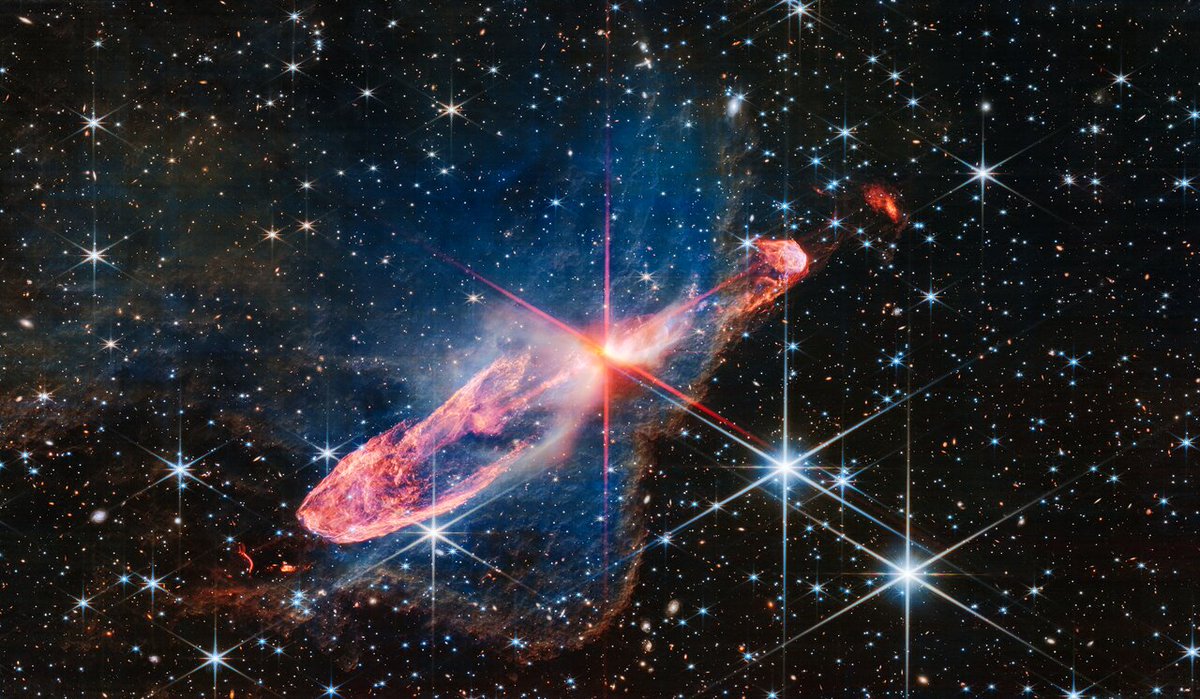
🆕 Webb has captured the ‘antics’ of a pair of actively forming young stars, known as Herbig-Haro 46/47. This is the most detailed portrait of these stars. Read more: esawebb.org/news/weic2319/ or 🧵👇
ALT At the centre is a thin horizontal orange cloud tilted from bottom left to top right. It takes up about two-thirds of the length of this angle, but is thin at the opposite angle. At its centre is a set of very large red and pink diffraction spikes in Webb’s familiar eight-pointed pattern. It has a central yellow-white blob, which hides two tightly orbiting stars. The background is filled with stars and galaxies.
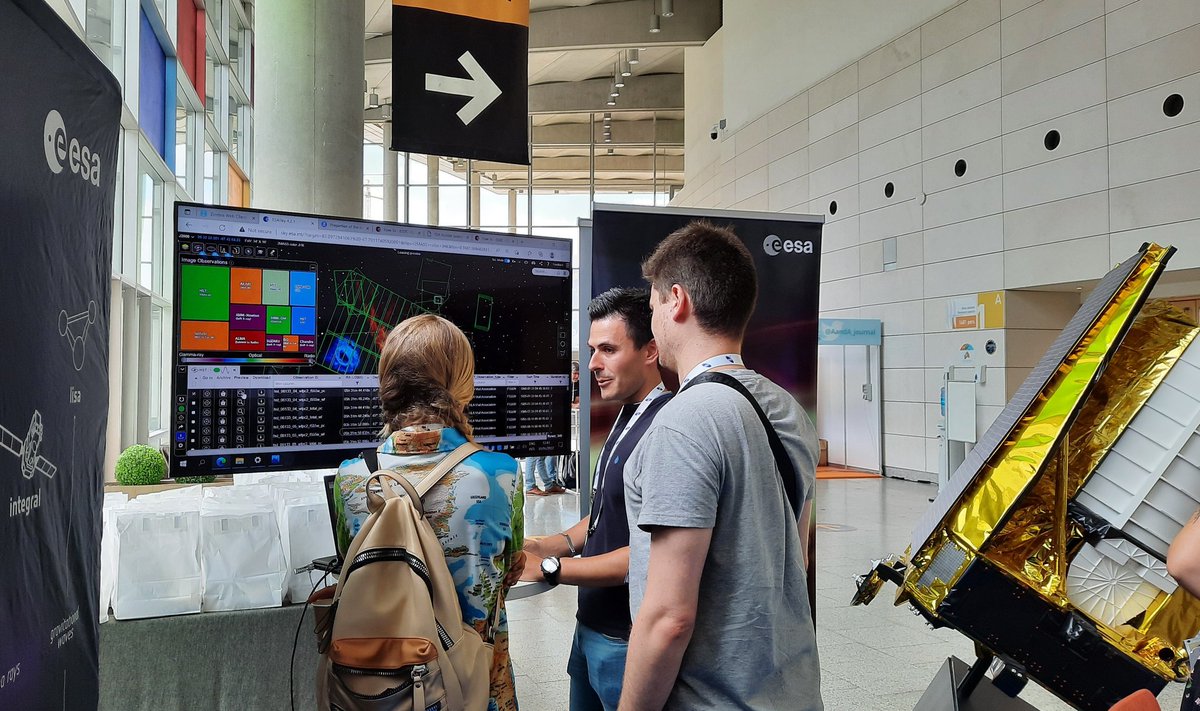
#EAS2023@EAS_meeting schedule now online; join us at lunch on Day 1 for our community session on #JWST: eas.unige.ch/EAS2023/session…, incl. highlights & lessons learned from some of the ERS programmes, & an introduction to the eJWST archive & ESASky from @ESAesdc
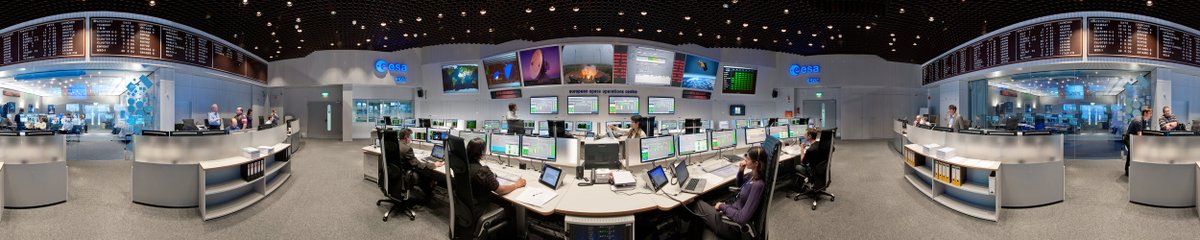
Welcome to the official @ESA_Euclid launch countdown live from #MissionControl!
We'll be keeping you informed as teams here get their hands on the cosmic detective @ESA_Euclid, that will soon uncover the secrets of #DarkMatter and #DarkEnergy
We are L-08:30:00 til liftoff.