Management pro. keen to promote global unity of mankind transcending differences.ex The HindustanTimes.Humanlife optimisation& maximisation prime aim .
Joined July 2009
- Tweets 49,749
- Following 6,910
- Followers 582
- Likes 29,924
8,219 Photos and videos













PARTHA ROY retweeted

Jun 14
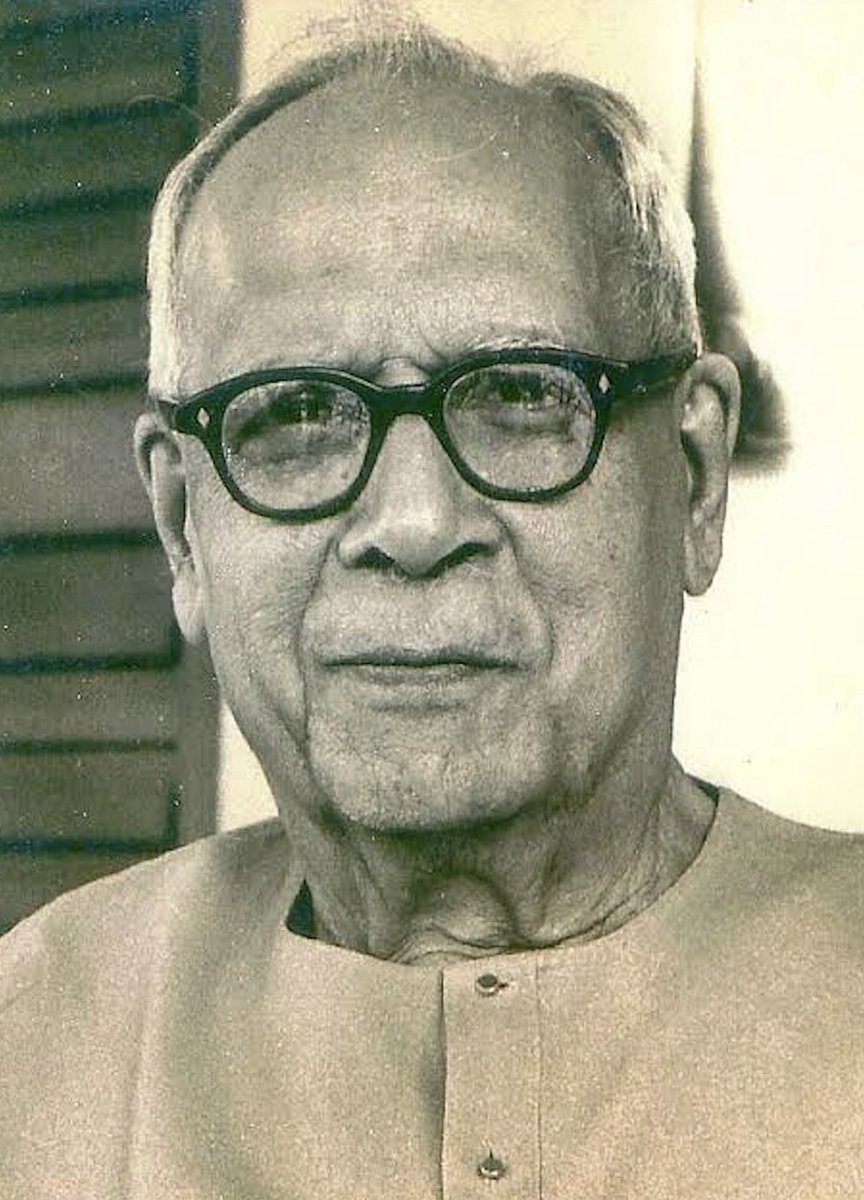
Do you know about this man?
He is R.C. Majumdar, who built an 11-volume, 9,000-page history of India using inscriptions, numismatics & Sanskrit texts.
Zero British colonial bias. Zero post-independence political tailoring. Just evidence.
Read on this 🧵
43
732
1,924
34,980
PARTHA ROY retweeted

Surprise fact. 🤯
Almost the entire internet runs on fibre optic cables.
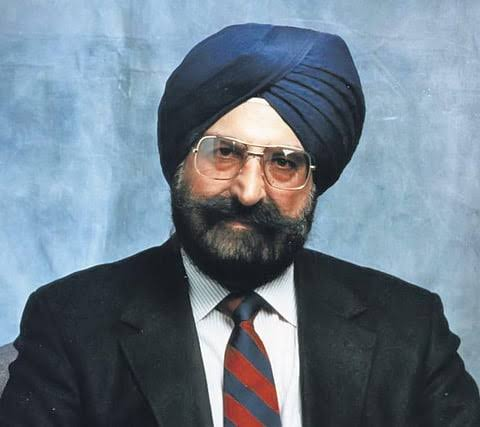
The "Father of Fibre Optics"?
Narinder Singh Kapany — born in Punjab, India.
You're reading this tweet because of his work.
🇮🇳🇬🇧 #BritishIndians
25
87
309
4,123
PARTHA ROY retweeted

THE NEW CYCLE HAS BEGUN ✨ WHAT YOU PLANT NOW MAY SHAPE THE MONTH AHEAD ✨ JUNE 14, 2026
Dear friends, today’s Gemini New Moon marks the beginning of a new lunar cycle. While much attention is often given to the moment of the New Moon itself, what follows may be just as important. A seed does not become a tree overnight. A new chapter does not fully reveal itself in a single day. Every beginning requires time, space, and nurturing before its potential can be fully expressed.
Over the past several weeks, many people have experienced important realizations, emotional healing, changing priorities, new ideas, and growing awareness about the direction they wish to take moving forward. Some may already be sensing new possibilities emerging. Others may simply feel that something has shifted without yet knowing exactly what comes next.
The Gemini New Moon invites curiosity, openness, communication, learning, and exploration. It encourages us to remain receptive to new information, new perspectives, and new opportunities. Yet this does not mean we need to rush. Sometimes growth happens most naturally when we stop trying to force outcomes and instead allow life to reveal the next step at the appropriate time.
The coming days may bring conversations that open doors, insights that create clarity, or opportunities that were not previously visible. What appears small now may become significant later. The Divine often begins with a whisper before speaking more clearly.
As we move into this new week, perhaps the invitation is simple. Stay open. Stay curious. Stay present. Trust the process that is unfolding. The future rarely arrives all at once. More often, it reveals itself one step, one realization, and one opportunity at a time.
The New Moon has opened the door. What you choose to nourish during the coming days and weeks may have a greater influence on your future than you realize today. New possibilities are emerging, new pathways are revealing themselves, and this cycle may bring exactly the insights, connections, and opportunities needed to support your next stage of growth. Have a beautiful day and new week. Much love 💖
WE ARE ONE ♡
Diego E. Berman ©2026

2
16
80
2,793
PARTHA ROY retweeted

1
1
1
18
PARTHA ROY retweeted

Jun 13
India is the absolute first to achieve this and every Indian should be extremely proud of how clever this is.
Let me explain what you are even looking at.
That video shows a freight train carrying shipping containers stacked two high, one box on top of another, running under live overhead electric wires.
Sounds simple. But it is not. No other country in the world has pulled this off. India is the only one.
Here is why it is so hard.
When you stack two containers on a wagon, the train becomes very tall. Around 7 metres. Normal electric train wires in India sit much lower, around 5.5 metres. So the two cannot share the same track. The train would smash straight into the wire.
That leaves you with a choice. Go electric and stack only one container. Or stack two containers and pull the train with a diesel engine.
The US, China, Canada and Australia all run double-stack trains. But they mostly do it with diesel, or on routes that were never electrified in the first place. Nobody bothered raising electric wires that high on old tracks.
India did both electric and double-stack together. That is the world first.
The reason India could do this is a decision from the early 2000s.
So, Indian Railways had a basic problem. Goods trains and passenger trains shared the same tracks. Passenger trains always get priority.
So freight trains crawled at 25 to 30 km/h. For a growing economy, moving goods that slowly is a major problem.
So we built separate tracks only for freight. No passenger trains allowed. These are the Dedicated Freight Corridors.
The government approved the project around 2006 and set up a company called DFCCIL to build two corridors.
The Western one runs from near Delhi to the port near Mumbai, around 1,500 km. The Eastern one runs from Punjab down to West Bengal, around 1,875 km.
Because they were building from zero, the engineers were not stuck with old bridges, old tunnels or old wire heights. They could decide the clearances themselves.
So they made a deliberate call to build the whole corridor tall enough for two stacked containers. And electrify it.
Then they had to solve two hard problems.
First, the wire. On a normal Indian line the wire hangs around 5.5 metres. On the freight corridor they raised it to about 7.5 metres. This is called high-rise OHE.
No railway in the world had run a regular freight wire that high before.
Second, the engine. If the wire is way up high, a normal loco cannot reach it. The arm on the roof that touches the wire, called the pantograph, would be too short.
So India needed a new locomotive. A taller reach. And enough power to drag thousands of tonnes.
This is why we built a new loco called the WAG-12.
It is a beast.
12,000 horsepower. Double the power of the old WAG-9 it replaced. It can haul trains over 6,000 tonnes, and up to 15,000 tonnes in some setups, at 100 km/h. That is roughly three times the old freight speed.
The WAG-12 has its own backstory. In November 2015, Indian Railways signed a deal worth about ₹19,604 crore, around 3.4 billion dollars, with the French company Alstom.
They built a new factory in Madhepura, Bihar. Indian Railways holds 26 percent, Alstom holds 74 percent. It was the largest foreign investment ever in Indian Railways.
Over time the factory reached close to 90 percent local manufacturing. So most of each loco is now made in India.
So, the government approved an infrastructure decision in the mid 2000s, then it got built over almost two decades by DFCCIL, Indian Railways and RDSO. The locomotive came through the Alstom joint venture.
The first double-stack train ran under high-rise wires in June 2020, from Palanpur and Botad in Gujarat. The corridor sections were opened in stages after that.
And finally, why only India can do this.
Three things stack up together.
One, broad gauge.
India runs on a wider track than most of the world, 1,676 mm. A wider track gives a bigger loading box. So India can run plain flat wagons with two containers on top. Many countries need special low well-cars to manage height, and those still do not fix the wire problem.
Two, the fresh corridor.
India built new track with no height limits baked in. Old networks in Europe and the US are full of low tunnels and bridges never meant for 7 metre trains. Rebuilding all of that is close to impossible and crazy expensive.
Three, the system.
The tall wire, the high-reach pantograph and the powerful WAG-12 were all designed to work together as one package. You cannot copy just one piece. You need the whole thing.
Put those three together and other railways simply cannot recreate it without rebuilding from scratch.
But the part I keep thinking about is that India approved this in 2006 and ran the first train in 2020.
Fourteen years. :)

🚨 India is the first and only country to operate double- stack container trains with electric locomotives.
67
752
3,439
195,381

Jun 13
May the festive rhythm of the swings, the joyous melodies of folk songs, and the sweetness of traditional pithas fill your heart with warmth. Wishing you and your family a very
Happy #RajaParba!
Let us celebrate womanhood and the beautiful bounty of Mother Earth.
7
PARTHA ROY retweeted

Jun 12
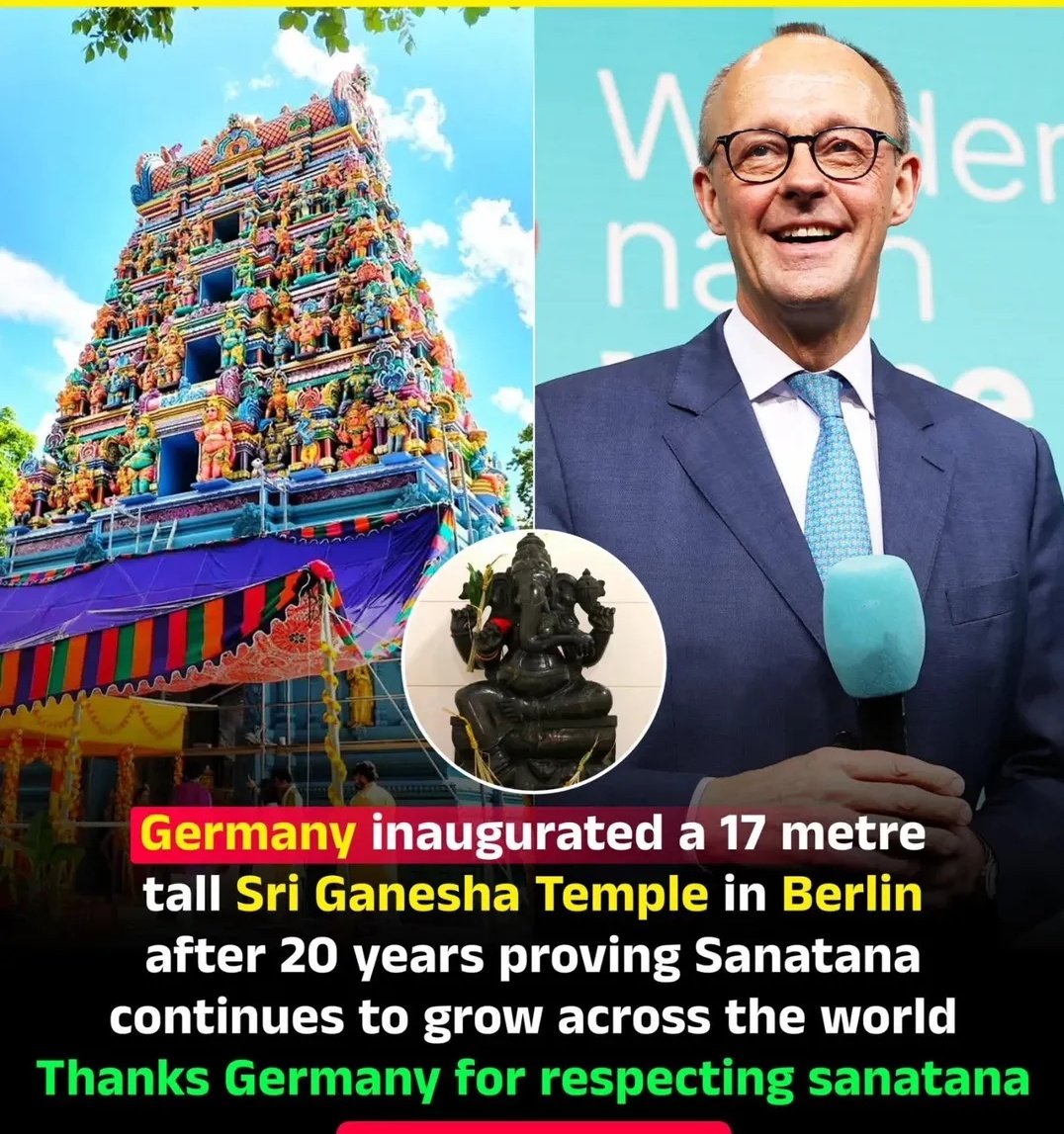
While some politicians continue targeting Sanatan Dharma, the world is embracing it.
Germany has inaugurated a 17-metre-tall Sri Ganesha Temple in Berlin, now one of the largest Hindu temples in the country.
Sanatan Dharma is not shrinking,
it is reaching every corner of the world. 🙏🚩
8
180
659
4,019
PARTHA ROY retweeted

Jun 10
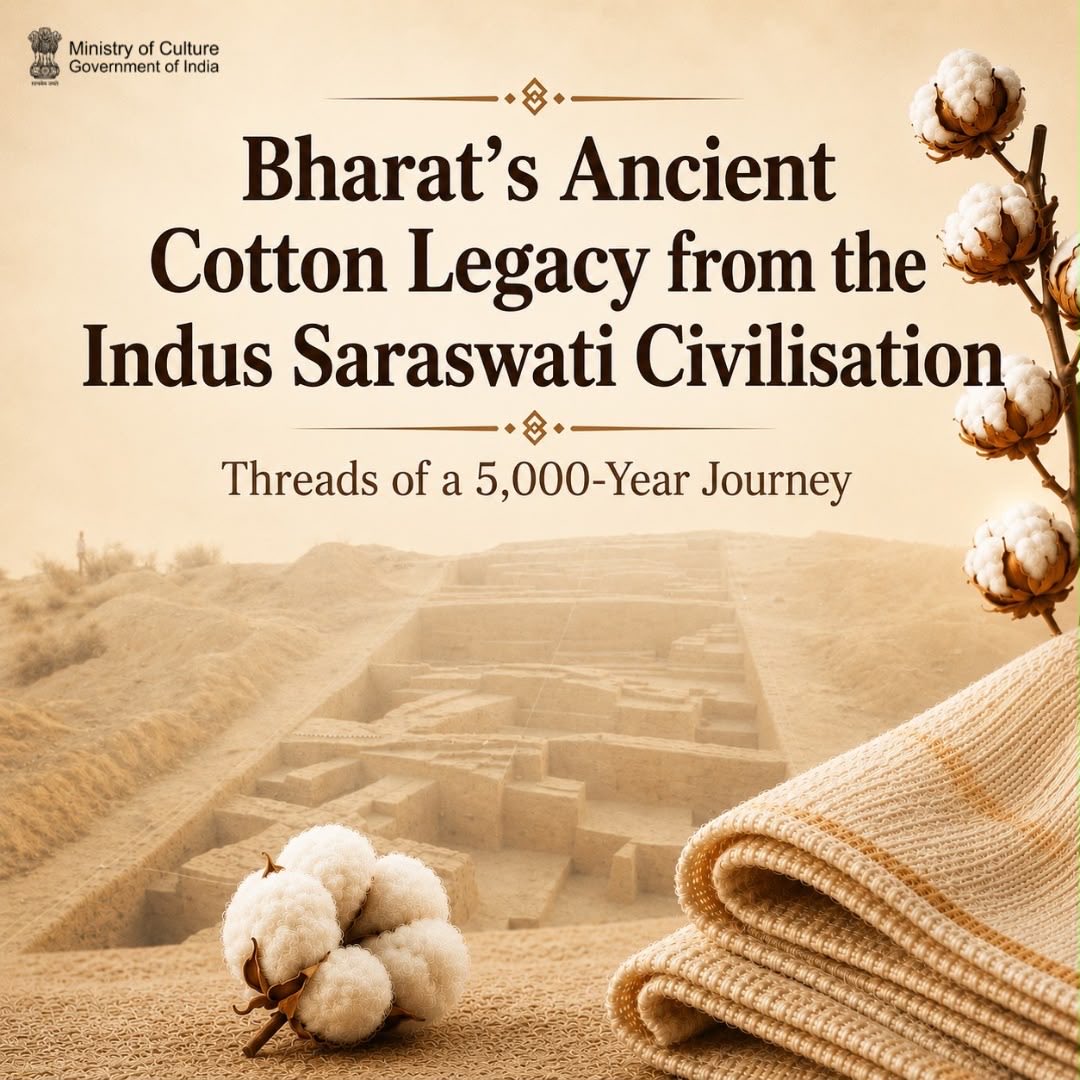
From charred cotton seeds of Mehrgarh to the timeless elegance of Khadi & handloom weaves - India’s textile story is a 5,000-year thread of innovation, artistry & civilizational continuity! 🇮🇳🌿✨
#IndusSaraswatiCivilisation #LivingIndianHeritage #CultureUnitesAll

Over 5,000 years ago, the people of the Indus-Saraswati Civilisation developed extensive methods of cultivation and processing cotton. Archaeological evidence from Mehrgarh, Mohenjo-daro, Lothal, and Rakhigarhi including charred seeds, delicate woven threads, and production tools highlights a specialized, region-wide textile economy.
This ancient expertise continues unbroken in India’s rich handloom traditions from Khadi and regional weaves to the timeless beauty of cotton sarees and fabrics used across the country every day. The thread of innovation and craftsmanship from the Indus-Saraswati Civilisation remains woven into the very fabric of Bharat’s living heritage.
#IndusSaraswatiCivilisation #LivingIndianHeritage #CivilisationalContinuity
1
17
37
941
Jun 10
Jai Sri Ram
Let's celebrate Bharatiya culture & work every day to promote Bharatiya culture in every sphere of life #CelebrateBharateverywhere Wear Indian clothes in formal meetings in office/workplaces wherever feasible . Serve Indian dishes to persons from other cultures @UN
PARTHA ROY retweeted

Jun 9
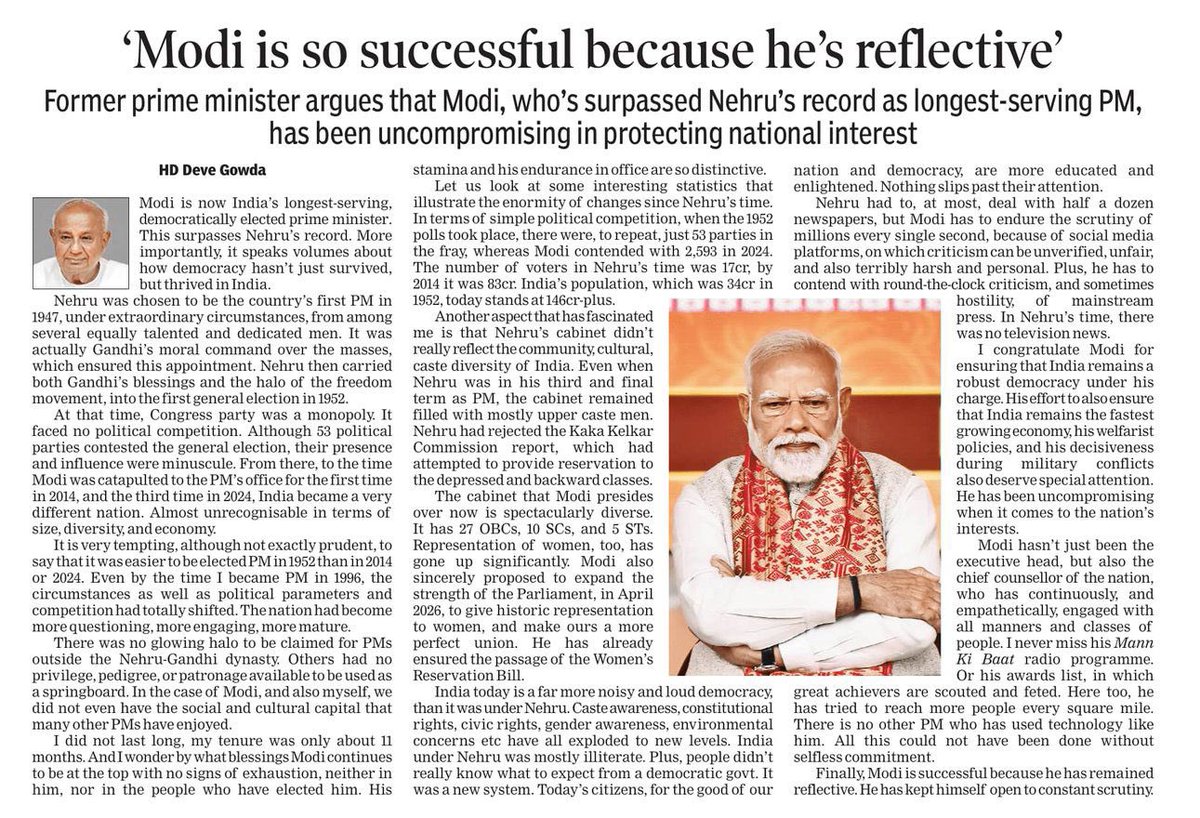
When a former Prime Minister speaks, the nation listens.
H.D. Deve Gowda ji’s article on Prime Minister Modi becoming India’s longest-serving continuously elected Prime Minister is not merely about a record. It is a reflection on how India’s democracy has evolved and matured.
He notes that Prime Minister Modi has achieved this milestone in a far more competitive, scrutinised and demanding political environment than ever before. From governing a nation of 140 crore people to facing relentless public scrutiny in the age of social media, every day in office is earned through performance and public trust.
Particularly noteworthy is Deve Gowda ji’s observation that Prime Minister Modi has expanded representation in governance, strengthened women’s participation, remained uncompromising in protecting India’s national interests, and stayed deeply connected with people across every section of society.
His concluding remark is perhaps the most profound:
“Modi is successful because he has remained reflective. He has kept himself open to constant scrutiny.”
A remarkable tribute from a veteran statesman who has witnessed India’s political journey from close quarters.
The people of India have renewed their faith in Prime Minister Modi time and again. This historic milestone is a testament to that enduring trust.
#12YearsOfSeva
218
1,084
3,142
40,918

PARTHA ROY retweeted

Jun 7
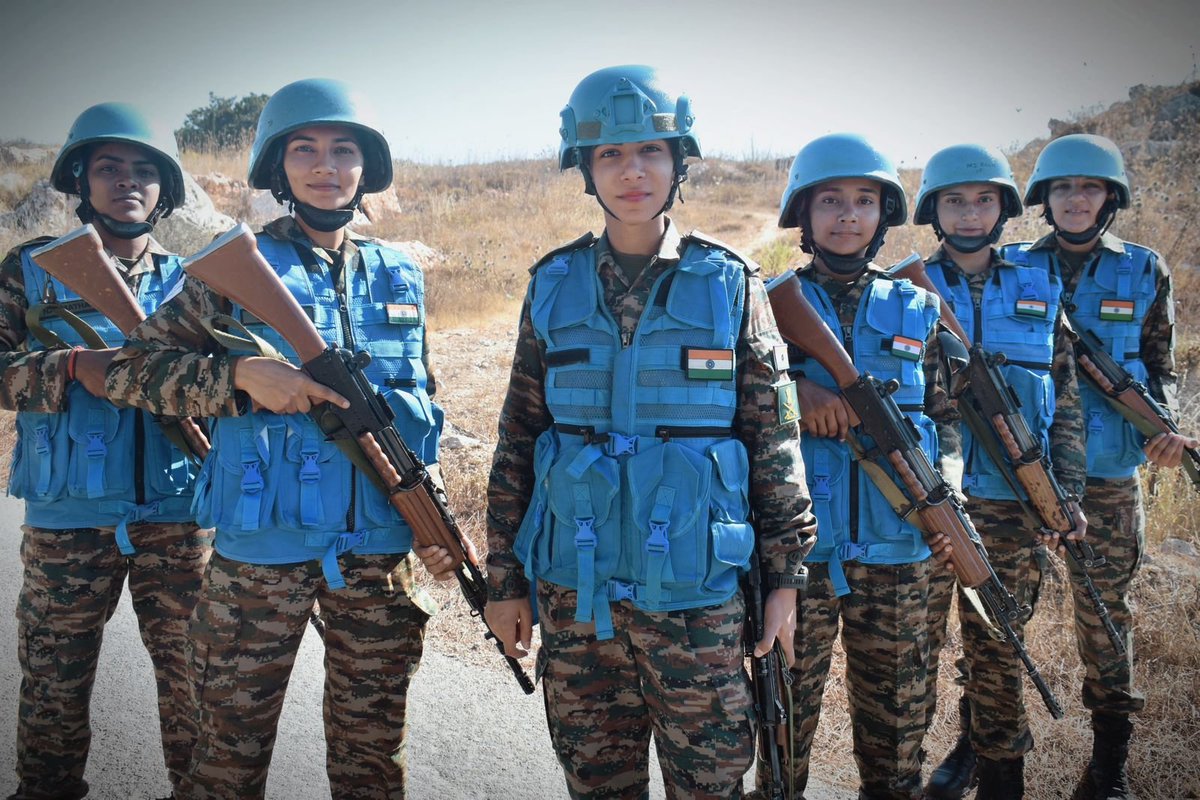
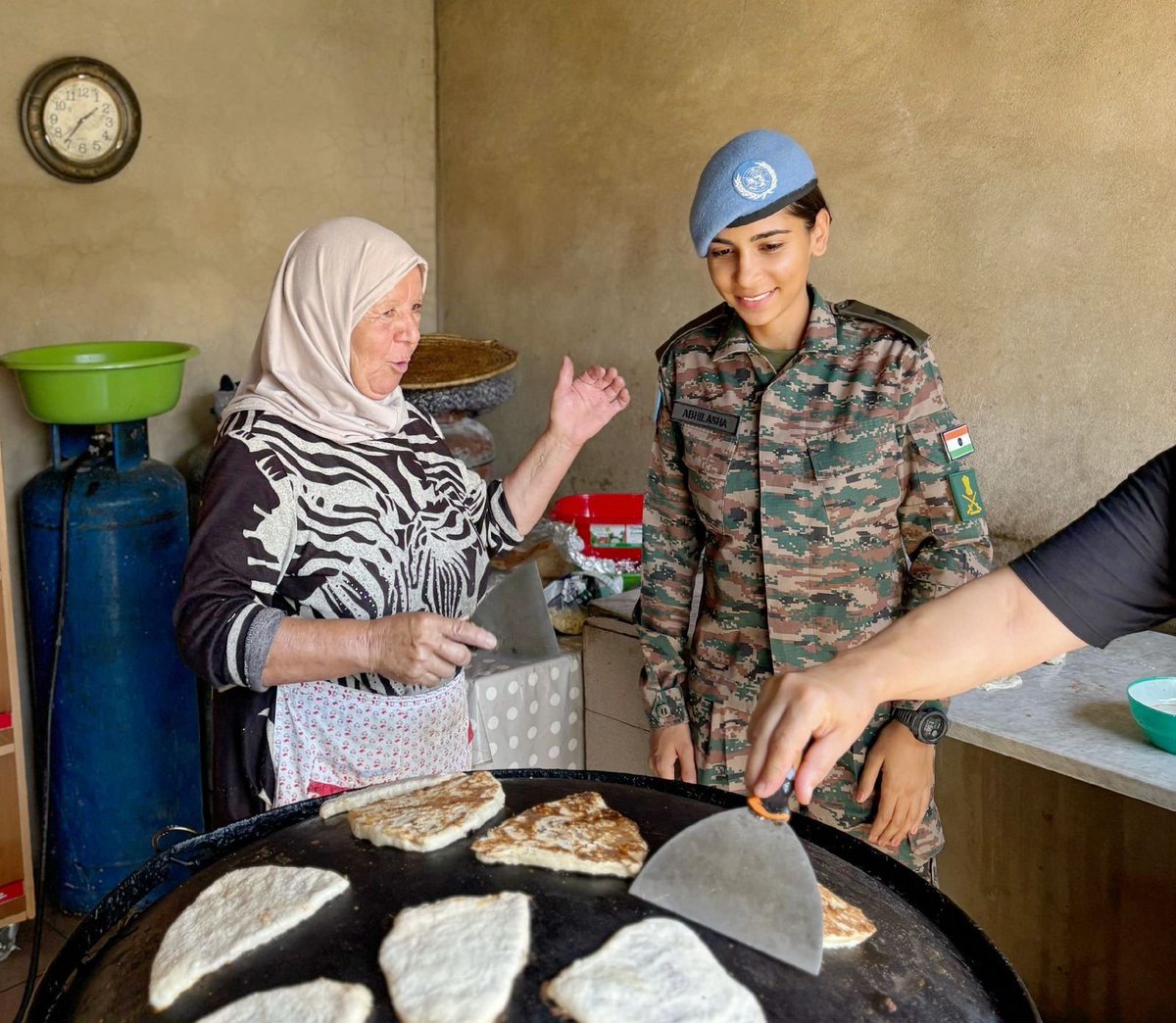
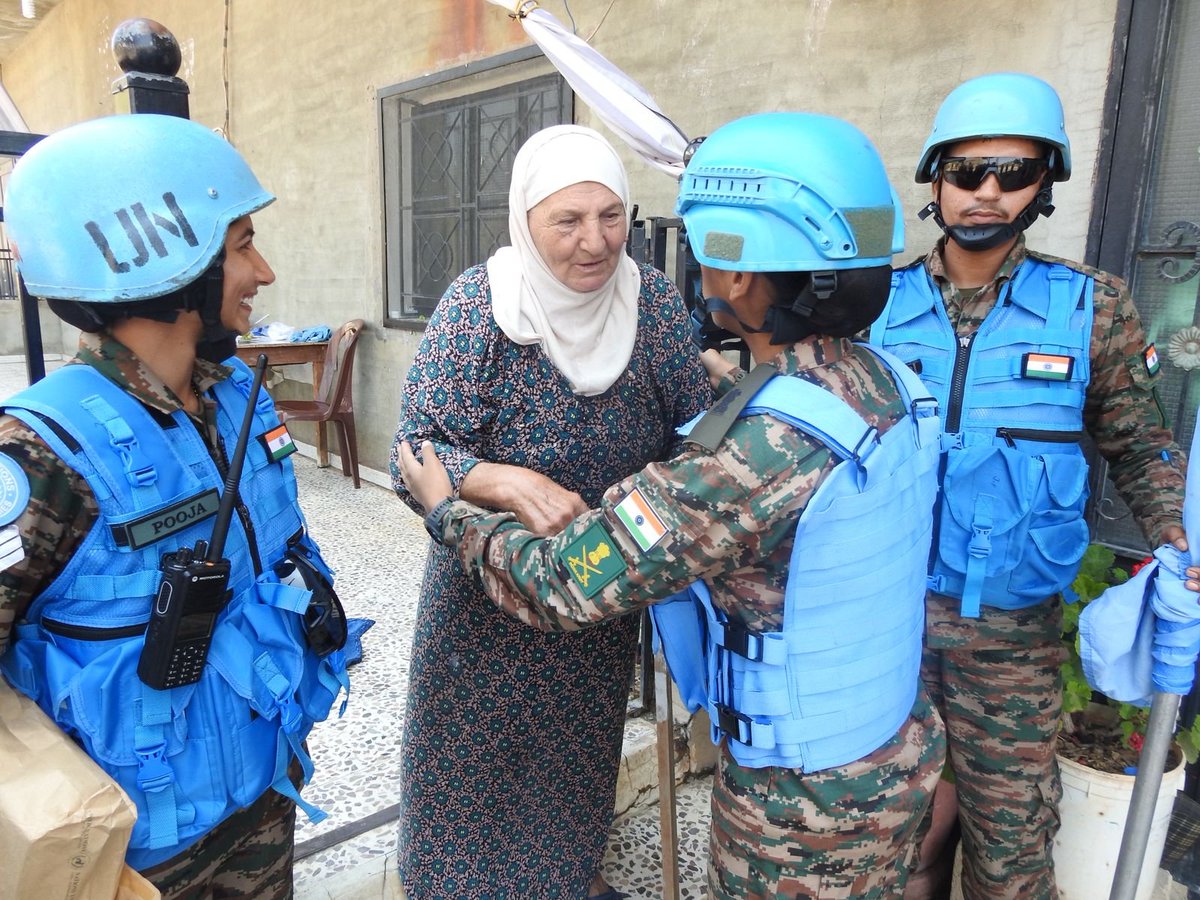
Congratulations to Major Abhilasha Barak on being conferred the UN Military Gender Advocate of the Year Award. Major Barak is serving as an Engagement Team Commander and Gender Focal Point within the United Nations Interim Force in Lebanon (UNIFIL). This honour is a recognition of her exemplary service and also of India’s longstanding contribution to United Nations peacekeeping efforts. Her achievement is also an inspiration to countless young Indians, especially our daughters, who aspire to serve the nation and humanity.

981
6,140
40,774
1,466,610
PARTHA ROY retweeted

Jun 7
Vehicles floating on water..? 😲
Not an illusion of the camera, but the magic of Veliyanad, Alleppey, Keralam, where narrow roads cut through shimmering backwaters and lush greenery…! 😍
44
290
1,566
121,690
PARTHA ROY retweeted

Jun 7
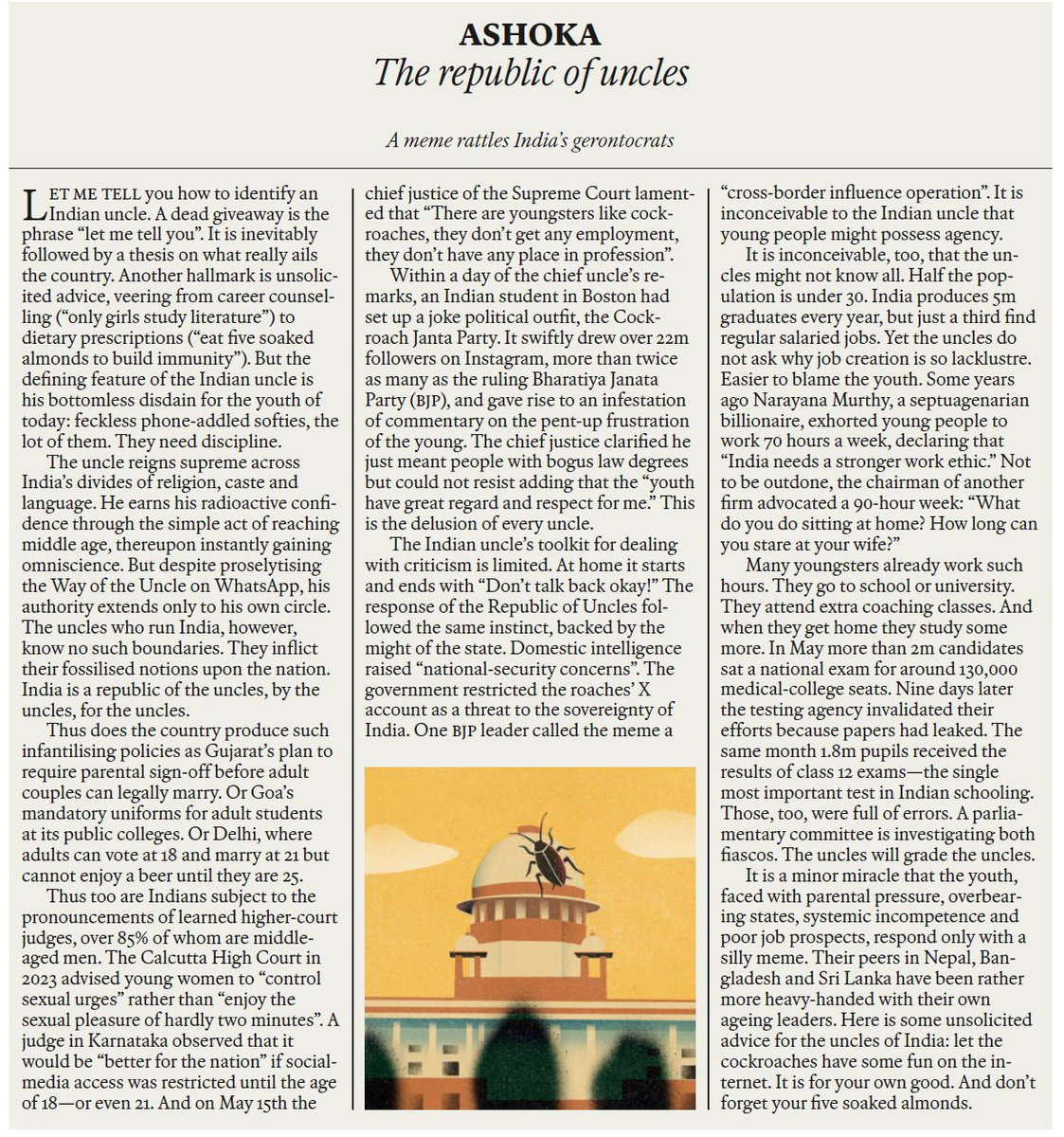
One more borderline racist opinion piece from @TheEconomist ...... here making fun of the Indian "uncle". Now, north Indians like making fun of the proverbial "phuphaji" - the bane of every family wedding. In Bengal, it is the eternally annoyed "pishi". I am sure other parts of India have their equivalent. However, the Economist is trying to convert this into some sort of political Gen Z thing by mocking the older generation. This is a serious cultural misunderstanding. We make fun of "phupha-ji" as a default - and this was true of all previous generations. Even phuphajis make fun of phuphajis. The journalist at Economist is trying to force fit their "angry, white male" stereotype that is a staple of the Western Left in their home market; tone deaf and contrived when applied to India.
125
753
2,610
88,037
PARTHA ROY retweeted
Jun 7
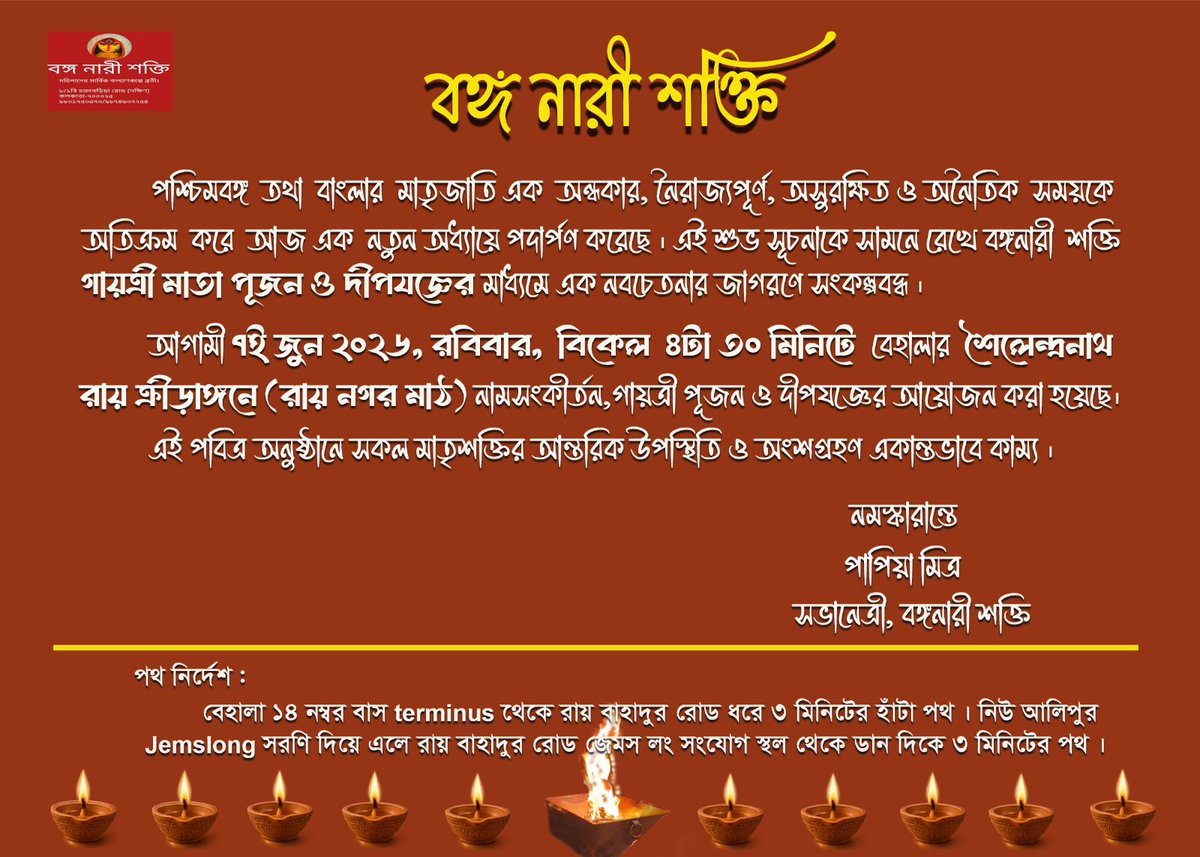
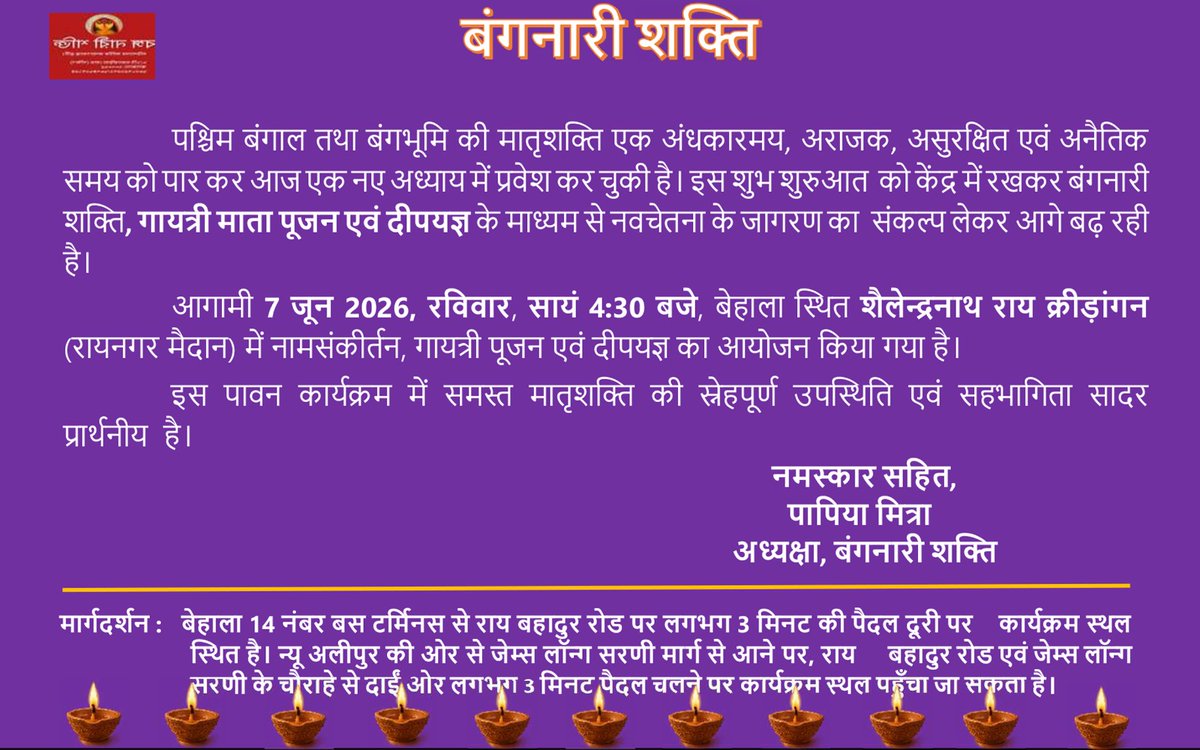
This program is being organised by Smt. Nilanjana Roy National Secretary of Sanskar Bharati. @Sanskar_Bharati
For any information , please contact
Smt. Nilanjana Roy : 919831020035
@BJP4Bengal @BJMM4Uluberia @BJPWomenSupaul @paulagnimitra1 @anirbanganguly @DilipGhoshBJP
2
4
32
PARTHA ROY retweeted

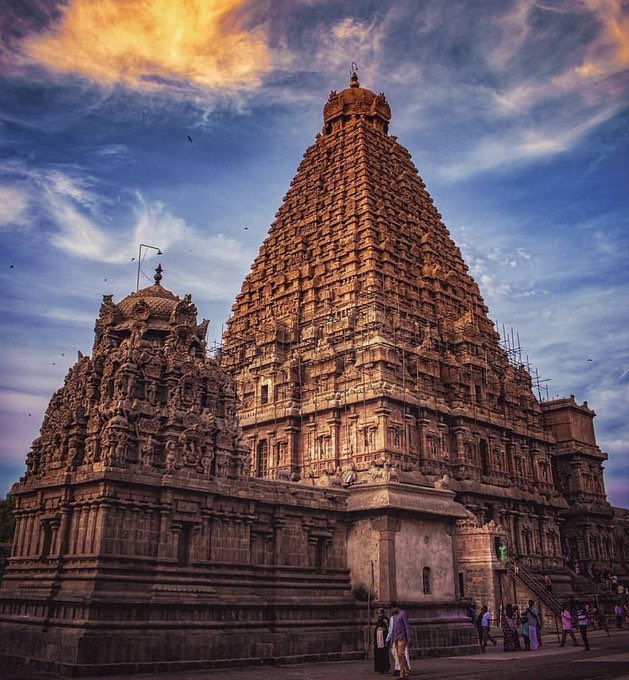
Comparisons are futile but for me one of India's greatest engineering achievements remains the 217 feet tall shadowless Brihadisvara Temple built by Raja Raja Chola I in 1010.
Crafted with giant interlocked stones and crowned by an 81 ton kumbam, it was built within six years.
292
4,227
17,469
155,143
Jun 7
This program is being organised by Smt. Nilanjana Roy National Secretary of Sanskar Bharati.
@Sanskar_Bharati
#BangaNariShakti
For any information , please contact
Smt. Nilanjana Roy : 919831020035
6
PARTHA ROY retweeted

Jun 6
🌿 Breathe Nature’s Goodness with NIISTEAM
Formulated with essential oils from medicinal plants, NIISTEAM offers anti-inflammatory, decongestant, antitussive, expectorant, and bronchodilator benefits for a soothing steam inhalation experience.
#HerbalInnovation #RespiratoryHealth #Ayush @CSIR_IND @DrJitendraSingh

2
10
677