
PostDoc @penneconomics @Penn_Exchange | PhD @MasonEconomics | Economic History, Political Economy, and Economic Growth
Joined March 2018
- Tweets 253
- Following 985
- Followers 658
- Likes 7,899
29 Photos and videos
Patrick Fitzsimmons retweeted

May 29
Recently accepted by #QJE: “Codification, Technology Absorption, and the Globalization of the Industrial Revolution,” by Juhász (@juhreka13), Sakabe, and Weinstein (@deweinstein): doi.org/10.1093/qje/qjag021
1
83
287
93,037
Patrick Fitzsimmons retweeted
May 29
Recently accepted by #QJE: “Praying for Rain,” by Espín-Sánchez (@JosespinSanchez), Gil-Guirado and Ryan: doi.org/10.1093/qje/qjag026
2
50
205
130,384
Patrick Fitzsimmons retweeted

May 19
6
11
13,045

New CEPR Discussion Paper - DP21495
Climate and Prehistoric Migration
Peter Huybers @Harvard, Marco Tabellini @HarvardHBS, Charles A. Taylor @Kennedy_School @Harvard, Francesco Toti @umich
ow.ly/pIqo50Z17o0
#CEPR_EH #CEPR_LE #CEPR_CCE

2
8
1,078
Patrick Fitzsimmons retweeted

May 12
"Law & Economics" goes beyond the courtroom.
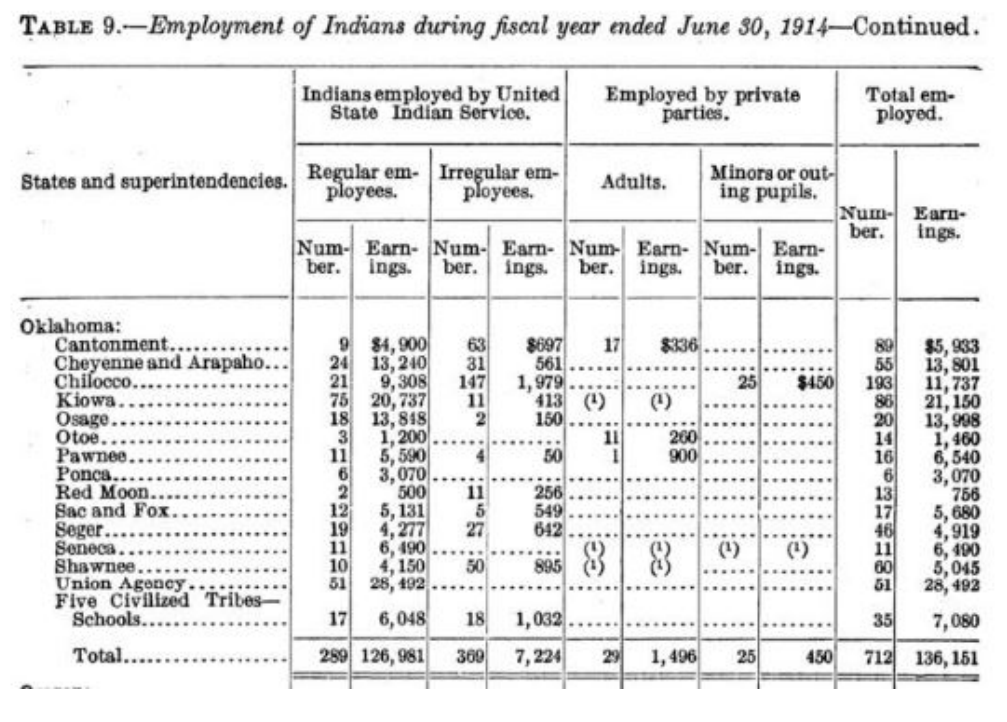
In their 1994 paper, Anderson & McChesney took a model of why legal disputes "settle out of court" and used it to explain why relations between frontier settlers and Indian tribes devolved over time.
tinyurl.com/mwwbxddv
1
11
22
1,471
Patrick Fitzsimmons retweeted

Last night I listened to David Reich’s interview with @dwarkesh_sp on his new Nature paper, “Ancient DNA reveals pervasive directional selection across West Eurasia.”
dwarkesh.com/p/david-reich-2
Reich and his team present a method for detecting directional selection in ancient DNA time series, testing for consistent trends in allele frequency over time. They find that hundreds of alleles have been under strong directional selection, including alleles correlated with measures of cognitive performance.
I have followed David Reich’s work for over a decade now and cite him in my economic history courses all the time. Nothing has changed my view of ancient history as much as his research, and the research his methods have triggered.
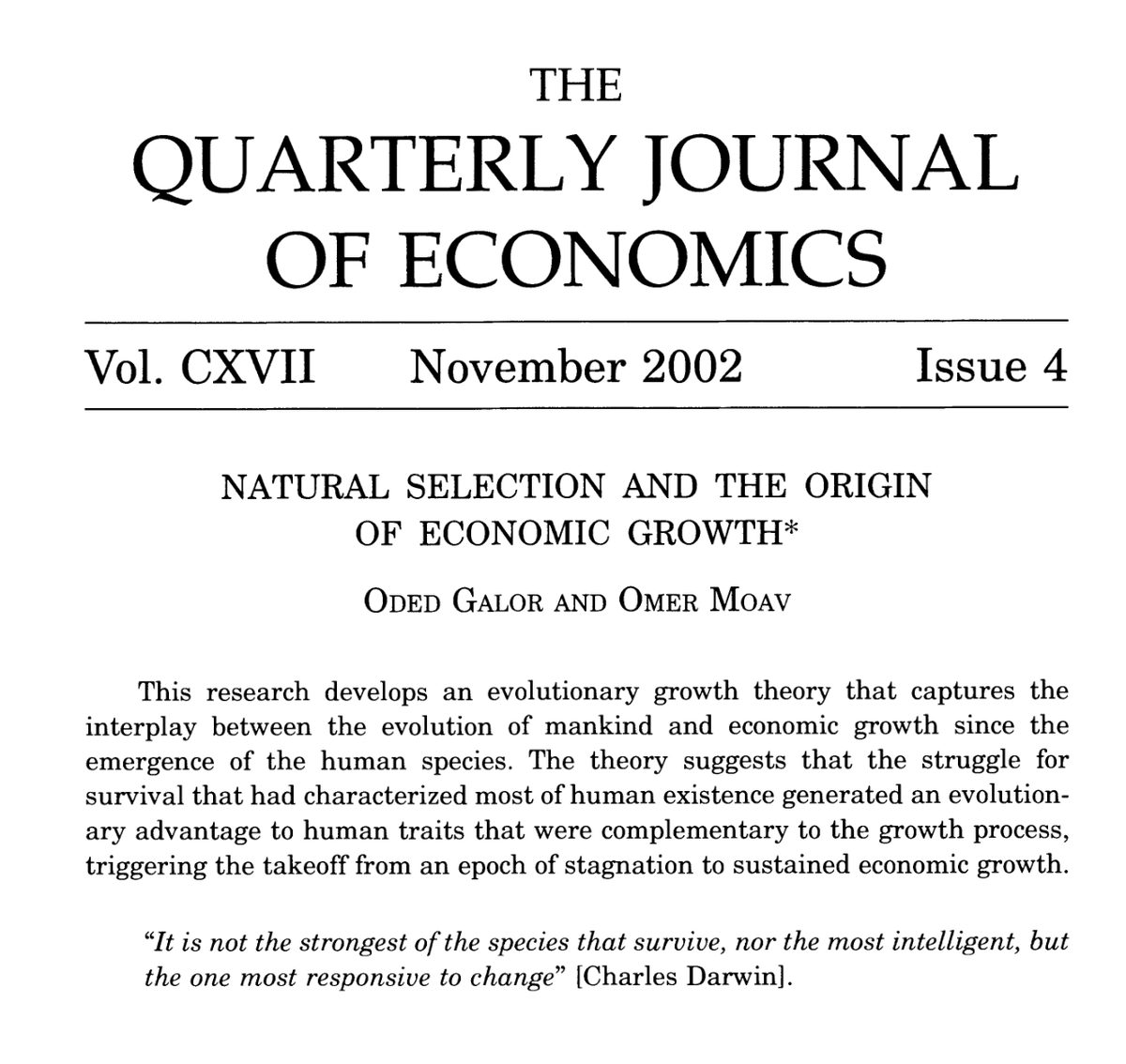
His findings also bear directly on another line of work, “Natural Selection and the Origin of Economic Growth” by @GalorOded and @Omer_Moav at the Quarterly Journal of Economics, which proposes a similar mechanism. Reich’s results give a serious empirical boost to Galor and Moav's research agenda.
Reich returns several times in the interview to behavior related to what economists call the discount rate (without using such a term). The evidence suggests that humans began discounting the future less with the advent of agriculture, because directional selection favored patience.
I’ve long thought modern schooling serves this same function, training people to defer immediate rewards for long-term gains, and that such training is the most valuable trait one can have in daily life. Contrary to the Foucaults and Freires of the world, that schools are boring is a feature, not a bug. I don’t expect anyone at the schools of education to get this.
24
149
719
79,918
New CEPR Discussion Paper - DP21428
Violence, Political Selection, and State Formation: Evidence from Post-Unification Italy
Paolo Buonanno, Giampaolo Lecce @giamp85, Laura Ogliari, Giacomo Plevani @UniBergamo
ow.ly/SvmE50YRBYY
#CEPR_EH #CEPR_PoE #EconTwitter

4
8
803
Patrick Fitzsimmons retweeted

Apr 29
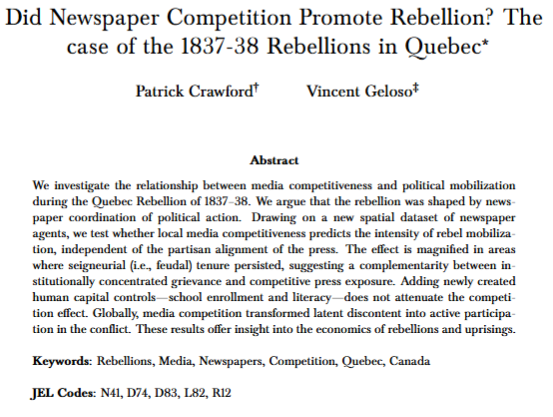
🧵 What caused the 1837–38 rebellions in Canada?
Was it nationalism? Poverty? Institutions?
We (Patrick Crawford and I) argue: it was the newspapers. And the result flips how we think about rebellions
6
16
50
5,189

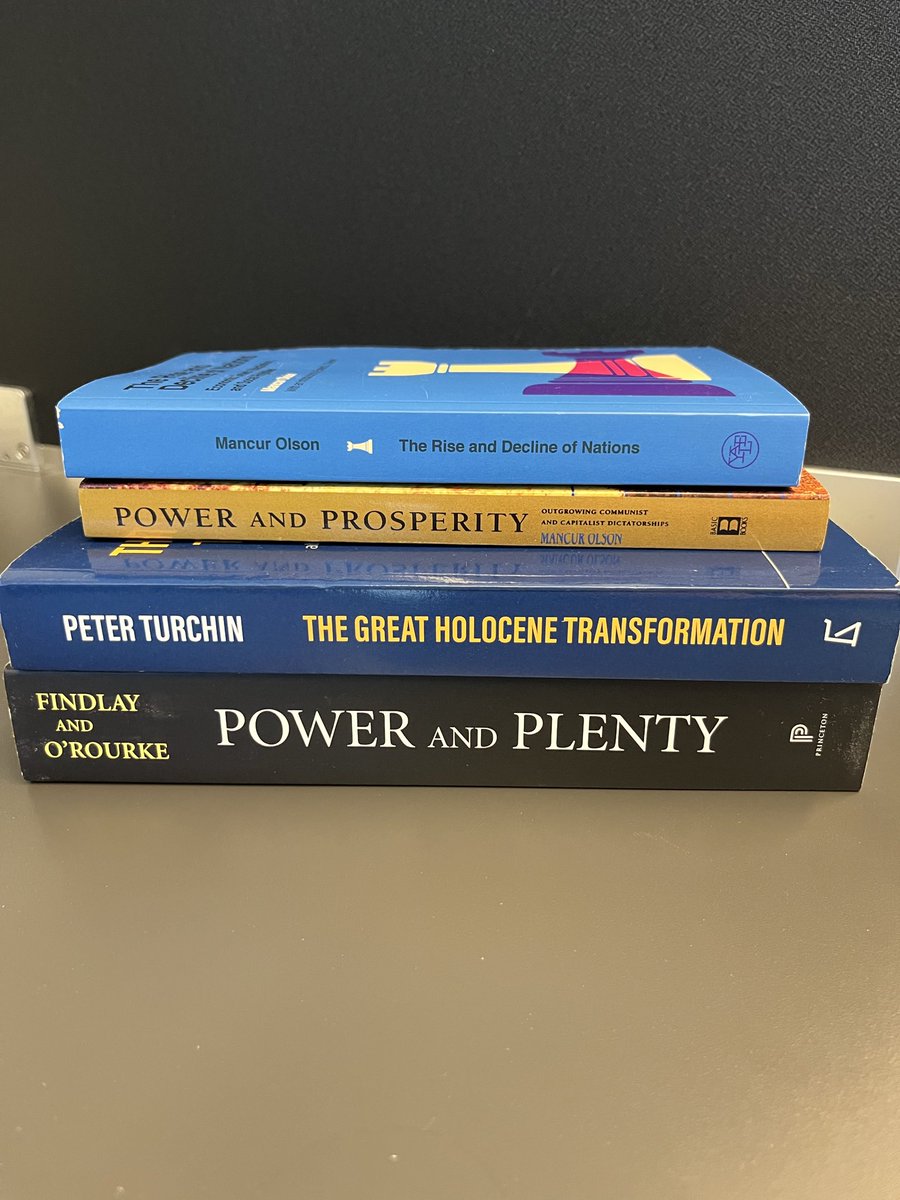
Book haul for the summer project reading. Looking forward to working my way fully through the Olson books.
3
47
1,584
Patrick Fitzsimmons retweeted

Apr 22
Very excited to announce that @desireedesierto and I will be joining the Hamilton School at the University of Florida hamilton.ufl.edu/ in Fall 2026.
43
19
290
107,415
Patrick Fitzsimmons retweeted

Apr 22
In preindustrial Japan, the widespread distribution of land among peasants led to lower wages and GDP per capita than in England, says @YuzuruKumon of @OfficialUoM. #ResearchHighlight aeaweb.org/research/equality…
48
122
16,743
Patrick Fitzsimmons retweeted
Apr 21
Forthcoming in AEJ: Macroeconomics: "Long-Distance Trade and Long-Term Persistence" by Sebastian Ellingsen. aeaweb.org/articles?id=10.12…
9
37
4,381
Patrick Fitzsimmons retweeted
Apr 17
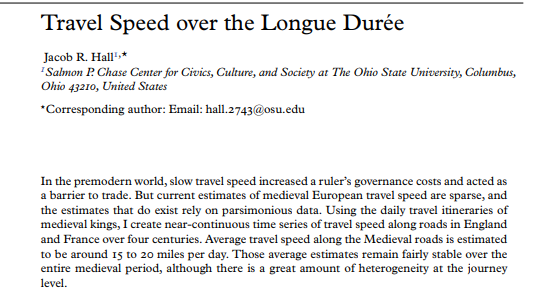
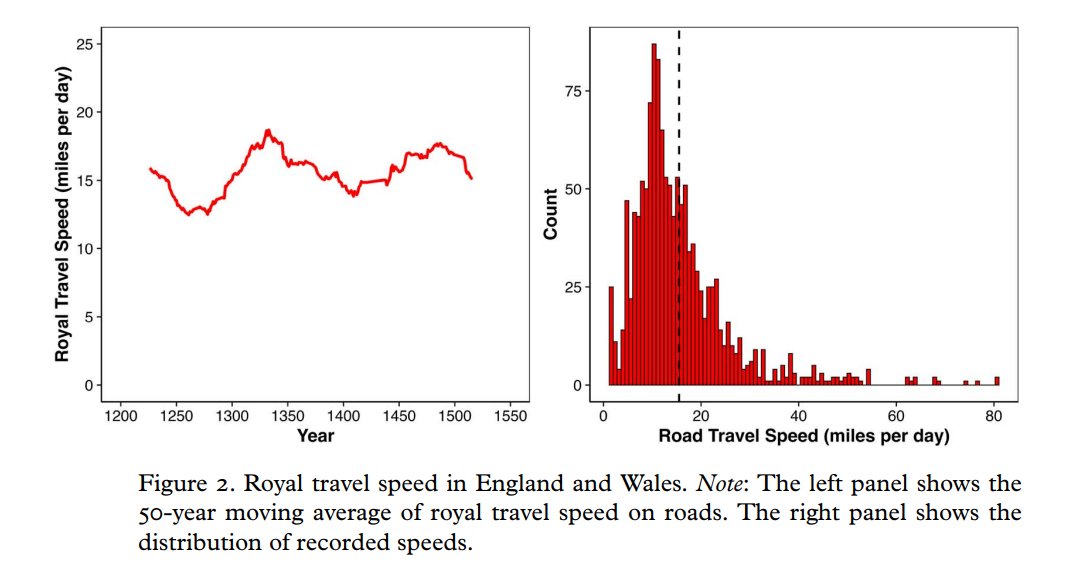
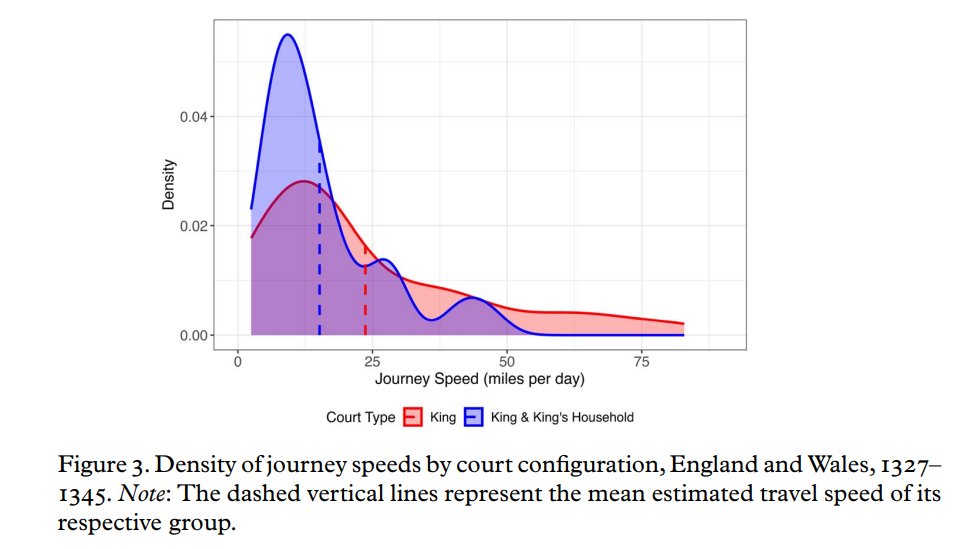
My former student Jacob Hall has a piece out in the European Review of Economic History where he measures travel speeds in Medieval Europe using "itinerant kings" who moved around with their courts.
The TLDR is that they travelled at roughly 15 miles per day -- insanely slow. There was huge variance but globally pretty slow.
31
116
819
96,099
Patrick Fitzsimmons retweeted
Apr 11
For those who missed the earlier posts, my 3 parter on the role of castles in medieval Europe is now complete:
Part 1: (open.substack.com/pub/markko…)
Part 2: open.substack.com/pub/markko…
Part 3:
open.substack.com/pub/markko…
1
18
70
8,959
Patrick Fitzsimmons retweeted
Apr 7
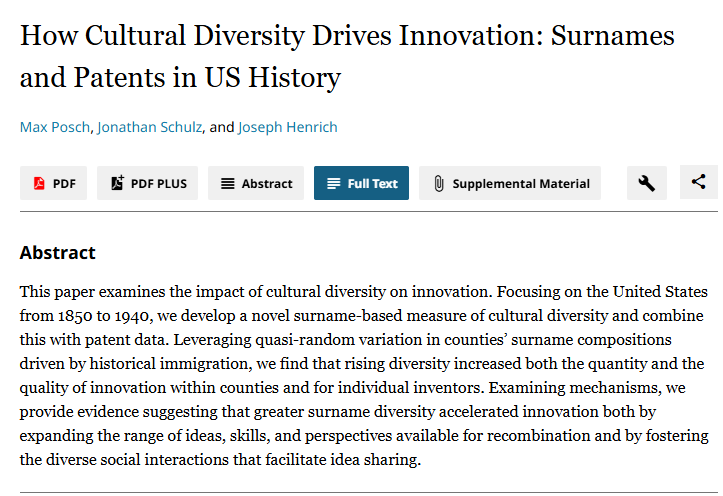
My colleague Jonathan Schulz has a piece just out at Journal of Political Economy showing that cultural diversity boosts innovation. Using surnames and their composition (by linguistic distance), they find that rising diversity explains America's big innovation boost.
Years ago, Leonard Dudley (my first EH prof at UdeM) compared ideas to states of matter. Solids don’t mix--orthodoxies just sit there. Gases mix effortlessly, but nothing sticks--lots of talk, little structure. Liquids sit in between: fluid enough to recombine, structured enough to crystallize into something usable. That middle state is where progress actually happens. And progress happens if more liquids are mixed.
In his case, he was talking about the importance of language (something that is rarely discussed in economics -- but totally on point for someone who grew up or evolved in Quebec), but it applies to what Jonathan did.
Also, on a related note, this is proof that GMU is the better place to be to do economics
Apr 7

How Cultural Diversity Drives Innovation: Surnames and Patents in US History journals.uchicago.edu/doi/ab…
48
47
215
78,945
Patrick Fitzsimmons retweeted

Apr 7
How Cultural Diversity Drives Innovation: Surnames and Patents in US History journals.uchicago.edu/doi/ab…
4
47
133
43,926
Patrick Fitzsimmons retweeted

Highly relevant!
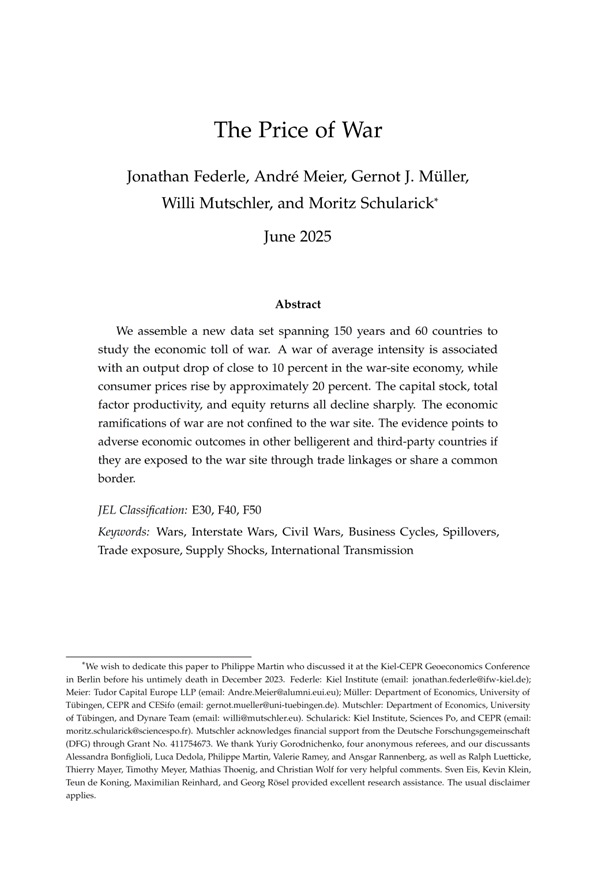
"The Price of War" by Jonathan Federle, Andre Meier, Gernot J. Müller, Willi Mutschler, and Moritz Schularick.
"We assemble a new data set spanning 150 years and 60 countries to study the economic toll of war. A war of average intensity is associated with an output drop of close to 10 percent in the war-site economy, while consumer prices rise by approximately 20 percent. The capital stock, total factor productivity, and equity returns all decline sharply. The economic ramifications of war are not confined to the war site. The evidence points to adverse economic outcomes in other belligerent and third-party countries if they are exposed to the war site through trade linkages or share a common border."
American Economic Review:
aeaweb.org/articles?id=10.12…
Working paper:
drive.google.com/file/d/15q0…
3
71
257
13,236
Patrick Fitzsimmons retweeted

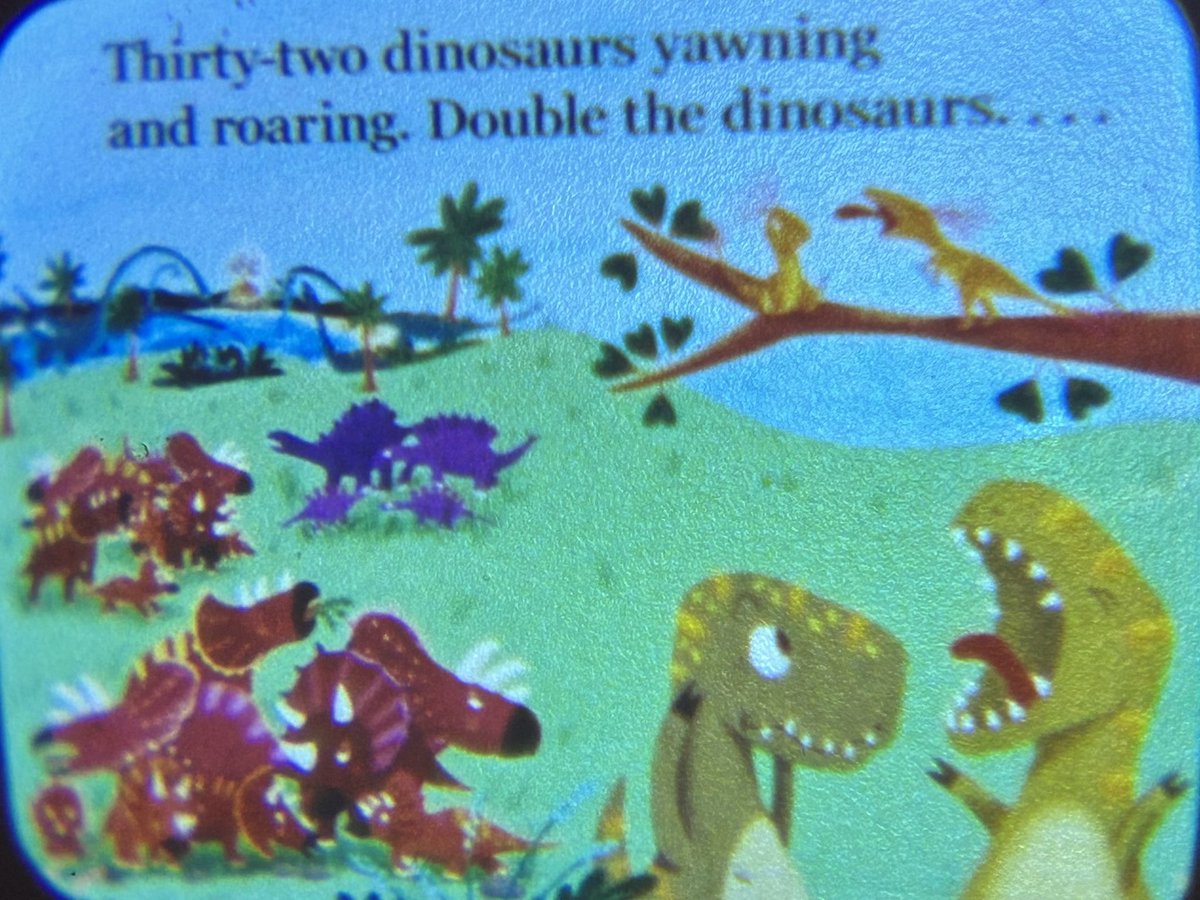
“Malthusian migrations” (NBER WP 33542) in “Double the dinosaurs”

1
2
18
3,899
Patrick Fitzsimmons retweeted

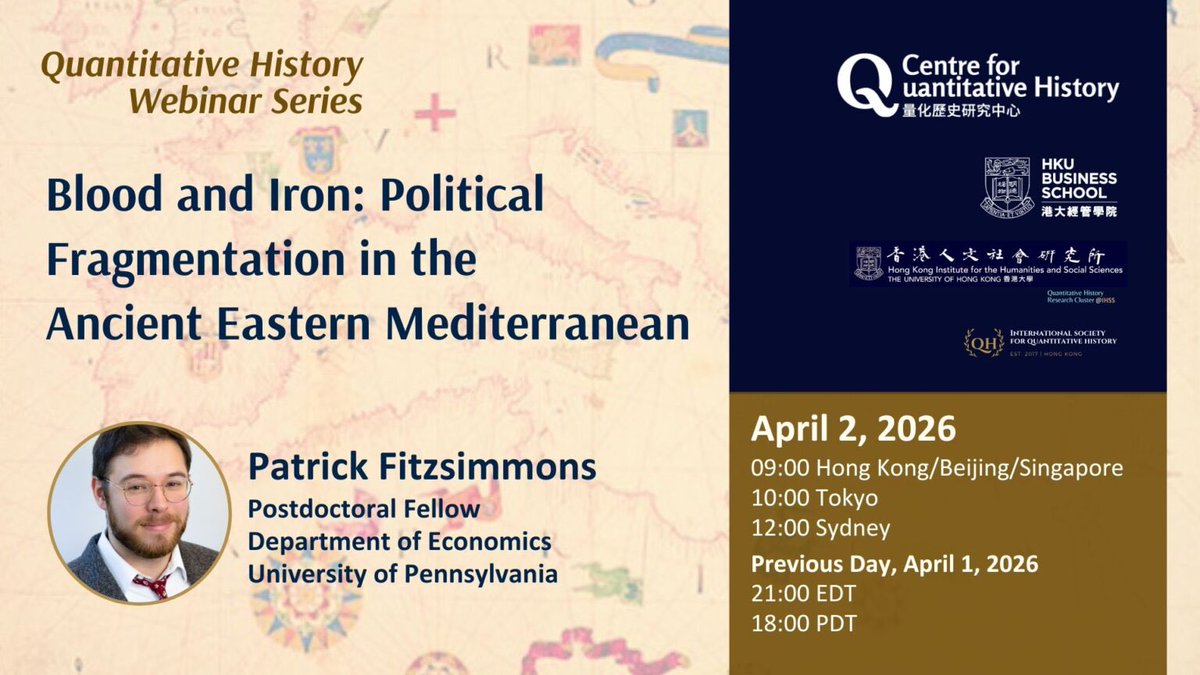
We are honoured to have @PatRubenFitz — Join his Quantitative History webinar: "Blood and Iron: Political Fragmentation in the Ancient Eastern Mediterranean" on Apr 2, 09:00 HKT (Apr 1, 21:00 EDT) via Zoom. Patrick will show how iron adoption increased political fragmentation using novel century-level shapefiles and causal tests. Register: hku.zoom.us/webinar/register…
#QuantitativeHistory #AncientEasternMediterranean
#Politics #Webinar #Research #Insights #HKU #UPenn #HKUBusinessSchool
@HKUniversity @penneconomics @HKUFBE @hkihss @QuantHistoryHKU

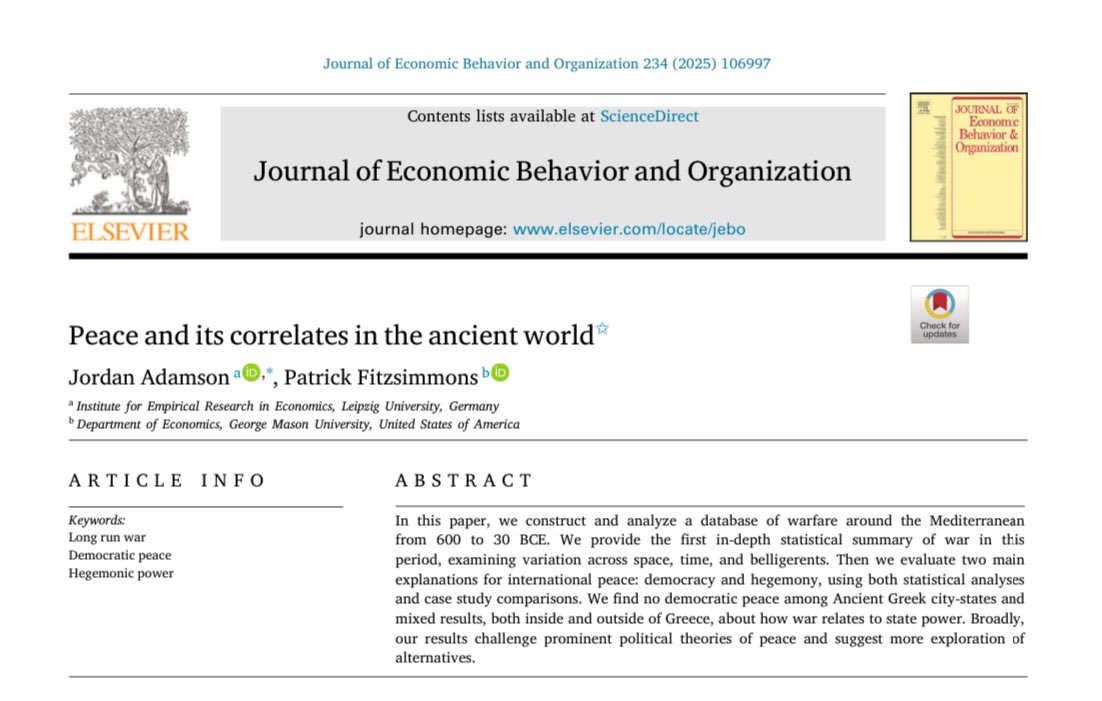
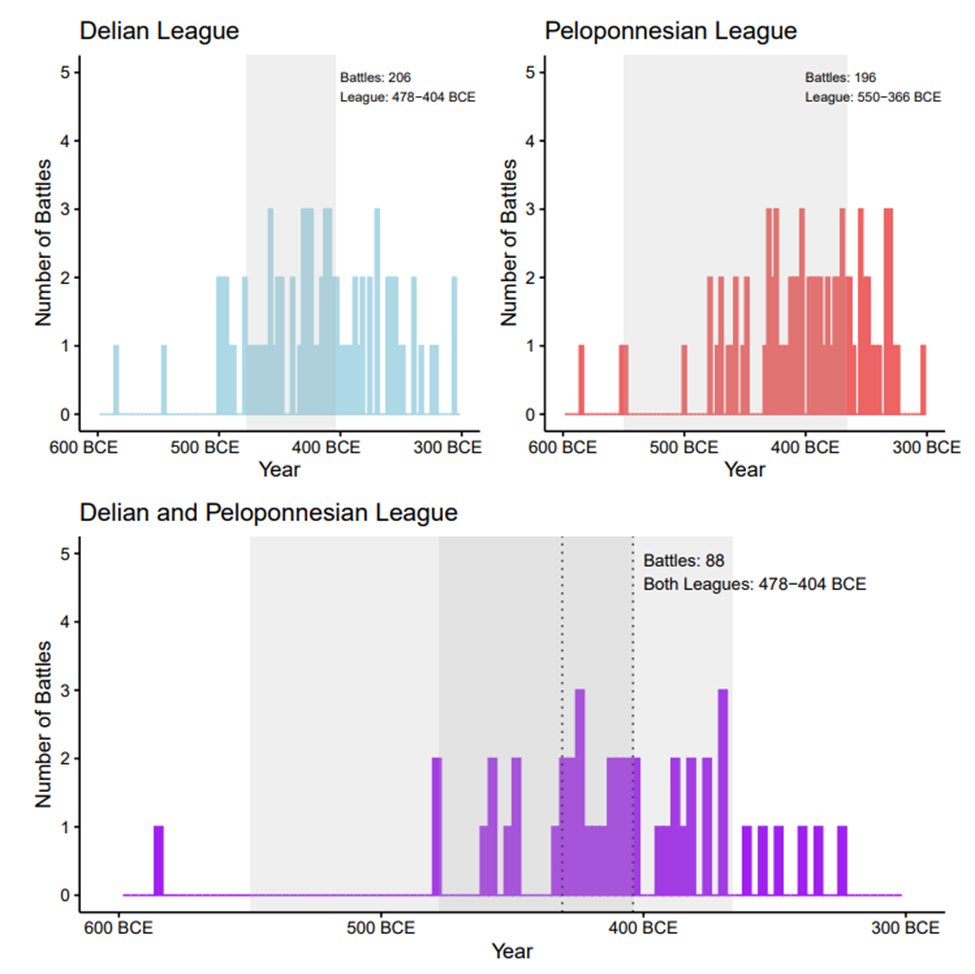
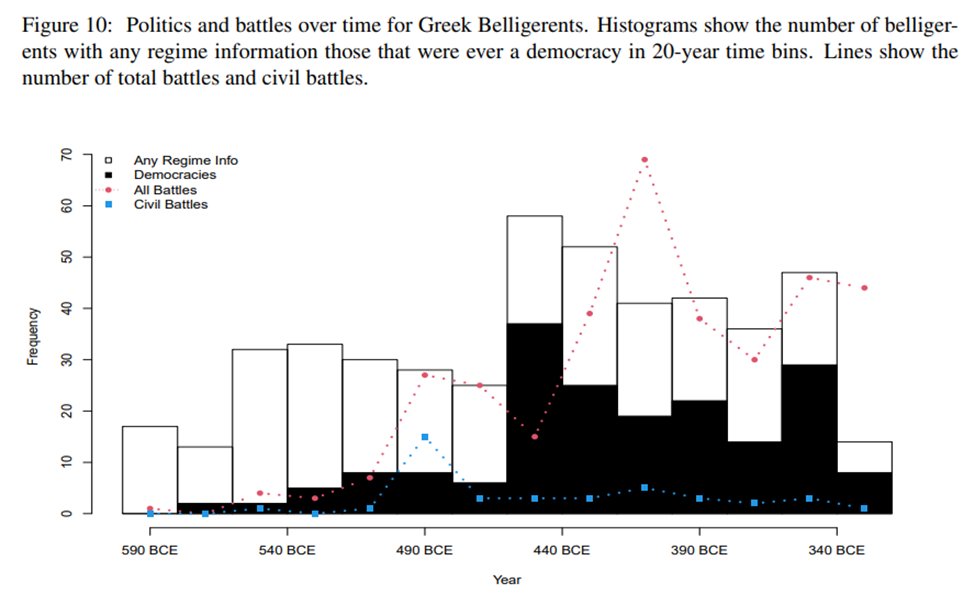
In a little over a week I will be giving a webinar with @QuantHistoryHKU. The topic will be centered on ancient history and the political economy of violence for those who are interested.
1
2
4
635
In a little over a week I will be giving a webinar with @QuantHistoryHKU. The topic will be centered on ancient history and the political economy of violence for those who are interested.
2
8
1,108