
Electrical Engineer at @PermitZIP. Making electrical systems make sense for CRE professionals. The Blueprint Tour Co-host (thebptour.com). Jiu-Jitsu.
Joined April 2024
- Tweets 888
- Following 239
- Followers 381
- Likes 1,874
139 Photos and videos

Pinned Tweet

23 Sep 2024
Here's a quick breakdown of the 3 most common types of electrical services:
🔌 120/240V Single Phase: Mostly residential, but can power light commercial spaces like small offices or retail shops.
🔌 120/208V 3 Phase: The go-to for most commercial spaces, suitable for a variety of tenant types. Office, restaurant, brewery, multi-family
🔌 277/480V 3 Phase: A good option for larger buildings (20,000 sq ft), speciality use, industrial spaces, and locations with high electrical loads.
As with anything, the answer on which service works for you is “it depends” but this is a summarized breakdown. Let me know if you have a specific use case and would like some input.
2
3
21
1,831
Feb 12
Most electrical issues don’t start in the panel.
They start with what you don’t notice in the field.
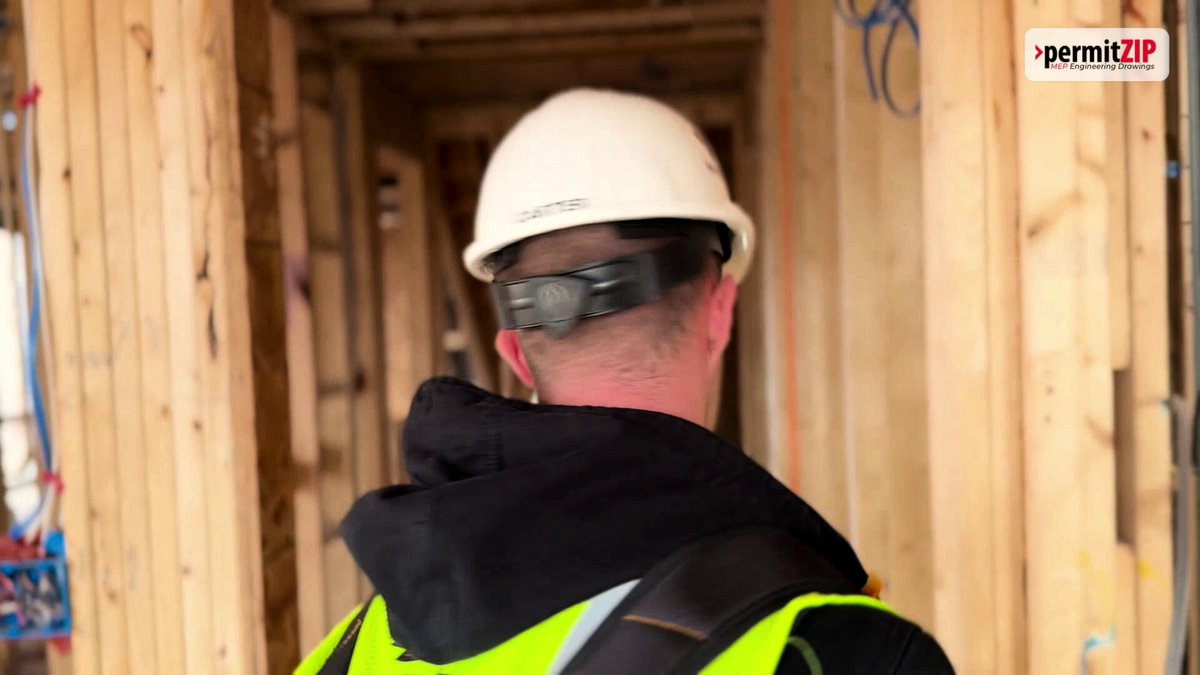
In this episode of Field Notes, we’re on site in D.C., walking a multi-unit building and documenting what’s actually there.
🔻 150A single-phase load centers in each unit
🔻 SER cable leaving the building
🔻 Limited wall space for a meter stack
🔻 Mostly three-wire… but one four-wire plus ground
Small differences matter.
Three-wire vs four-wire changes how you think about the service.
Meter layout changes what’s feasible.
Field verification changes everything.
If you work in MEP, you already know that existing conditions tell the real story.
Take a look at the latest Field Notes episode and see what we found.
#ElectricalEngineering #MEPEngineering #CommercialConstruction #ArchitectureAndDesign #MEP #SiteVisit
1
8
228
Awesome time in Vegas with the mechanical homies
Feb 4

Not a bad place to talk construction with a few fellow nerds. #theblueprinttour #ahr #ashrae @PermitZIPelec


1
81
Jan 26
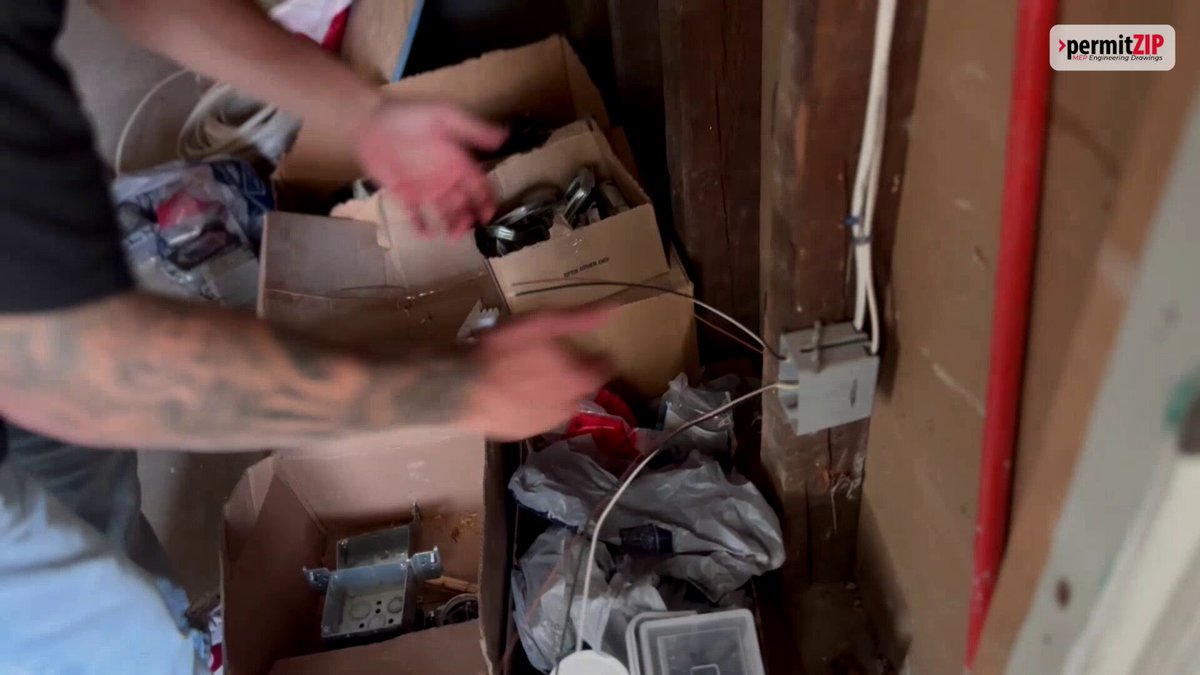
Most people walk past an outlet without ever thinking about what’s behind it.
But inside that wall is a small decision tree of power, safety, and intent.
In this episode of Site Unseen, we step onto an active jobsite and look at:
🔹 What “electrical rough-in” really means
🔹 Why two sets of cables land in one box
🔹 How a simple receptacle fits into a larger circuit
🔹 What’s happening before drywall hides everything
If you’ve ever wondered how power actually moves through a building, this one’s for you.
#ElectricalEngineering #ConstructionLife #MEPDesign #BuildingSystems #Construction #Engineering #MEP
1
4
94
26 Dec 2025
Why is this labeled if the directory already exists? ⚡
That small detail often gets ignored.
But in the field, it matters more than people think.
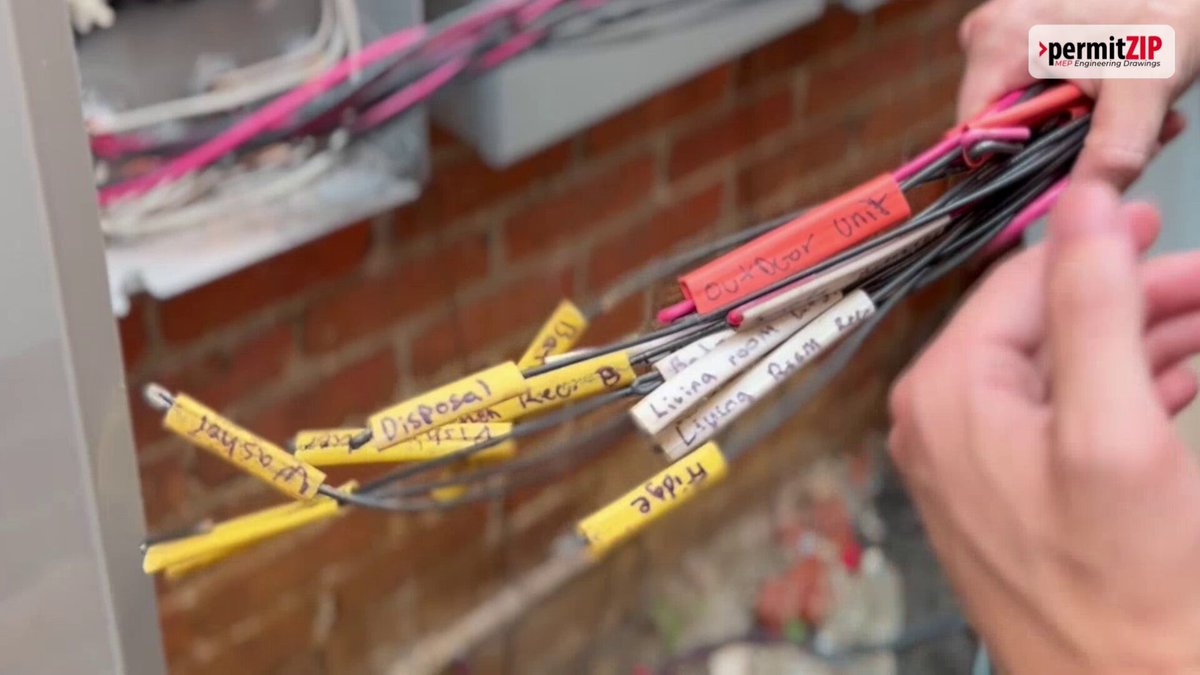
In this #SiteUnseen episode, we look at a real panel on site and talk through why conductors are sometimes labeled right at the breaker.
🔻 What happens when the dead-front cover is off
🔻 How electricians quickly identify circuits
🔻 Why this helps during maintenance and additions
Nothing theoretical.
Just what’s actually happening in the field.
If you work around electrical systems or design them, this one will feel familiar.
Take a look.
#Construction #MEP #ElectricalEngineering #MEPEngineering #ConstructionIndustry #ArchitectsAndEngineers
43
16 Dec 2025
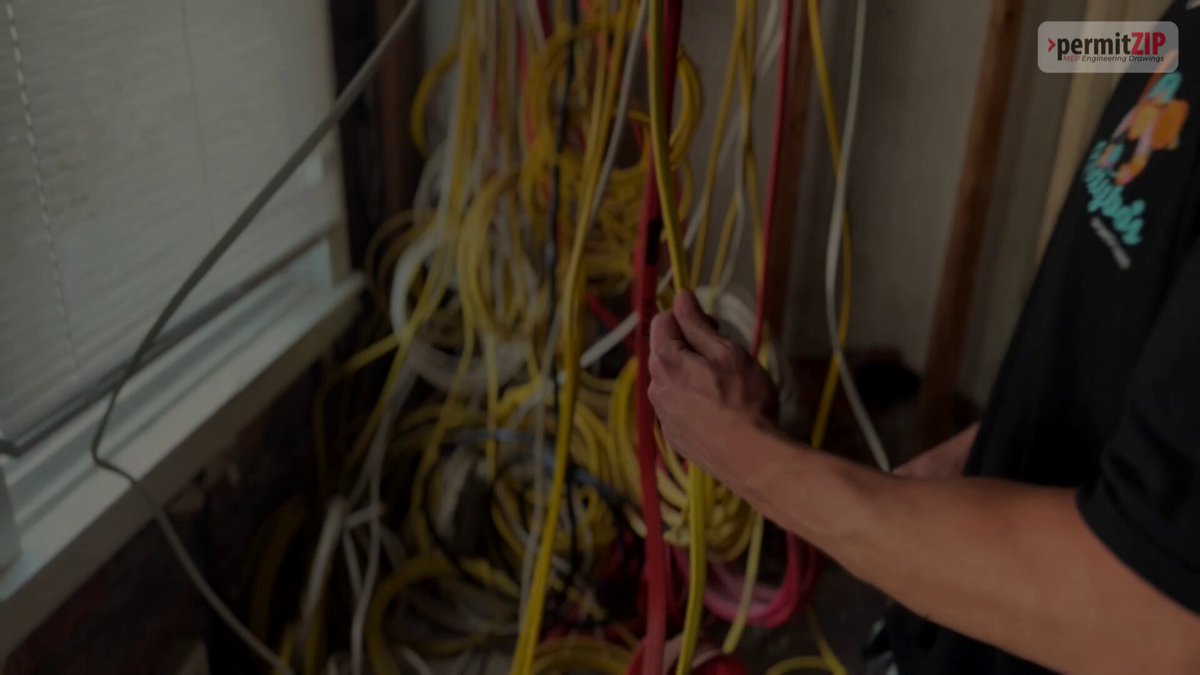
Yellow, white, orange: what they actually mean.
Which gauges match which breaker sizes.
And where the NEC draws hard limits on small conductors.
Simple concepts. Common mistakes. Real-world context.
If you work in residential or multifamily construction, this one is worth a few minutes.
#ConstructionEducation #ElectricalContractors #MEPEngineering #BuildingDesign #RealEstateDevelopment #ResidentialConstruction
📘 The discussion in this video ties back to NEC Article 240, specifically 240.4(D) on small conductor overcurrent protection, along with 240.6 for standard breaker sizes.
43
8 Dec 2025
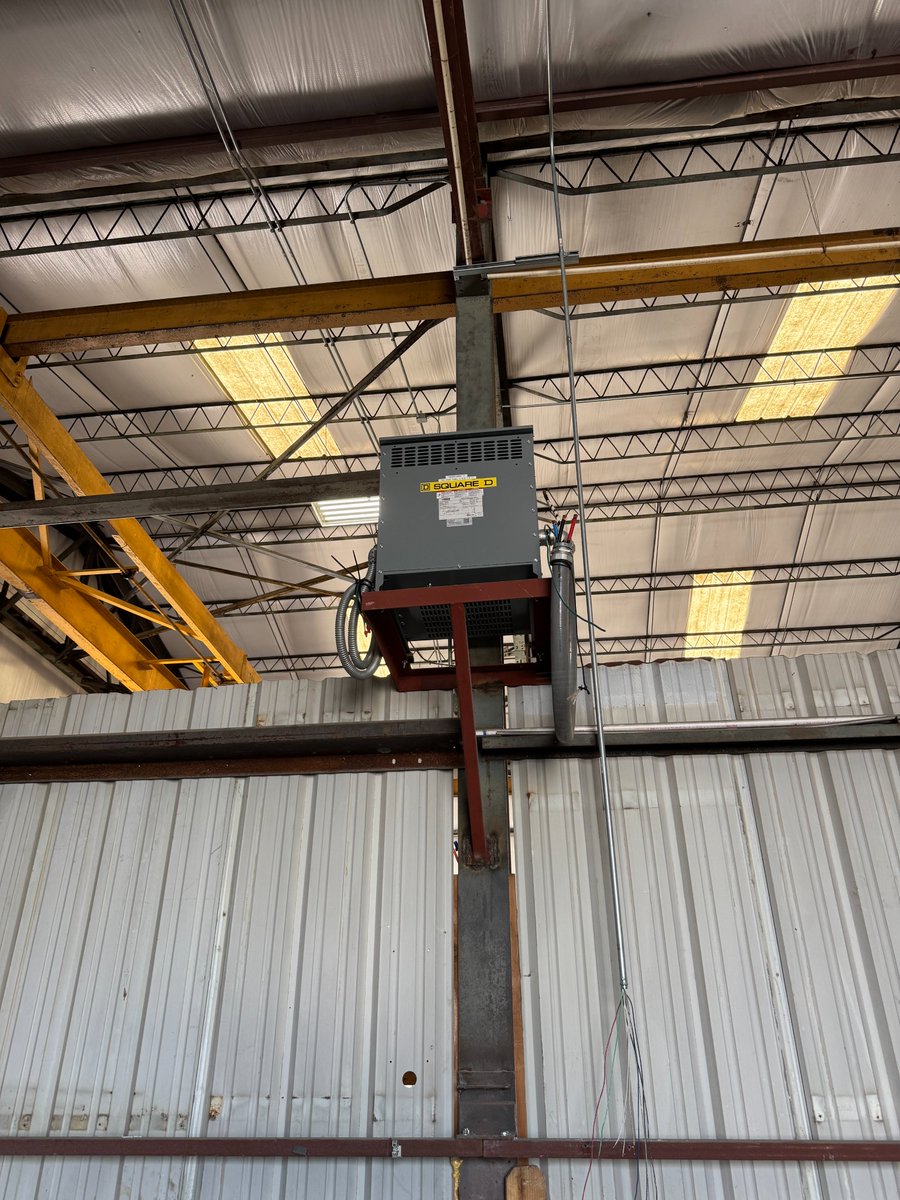
Ever wonder what an engineer looks for inside an existing electrical room? ⚡
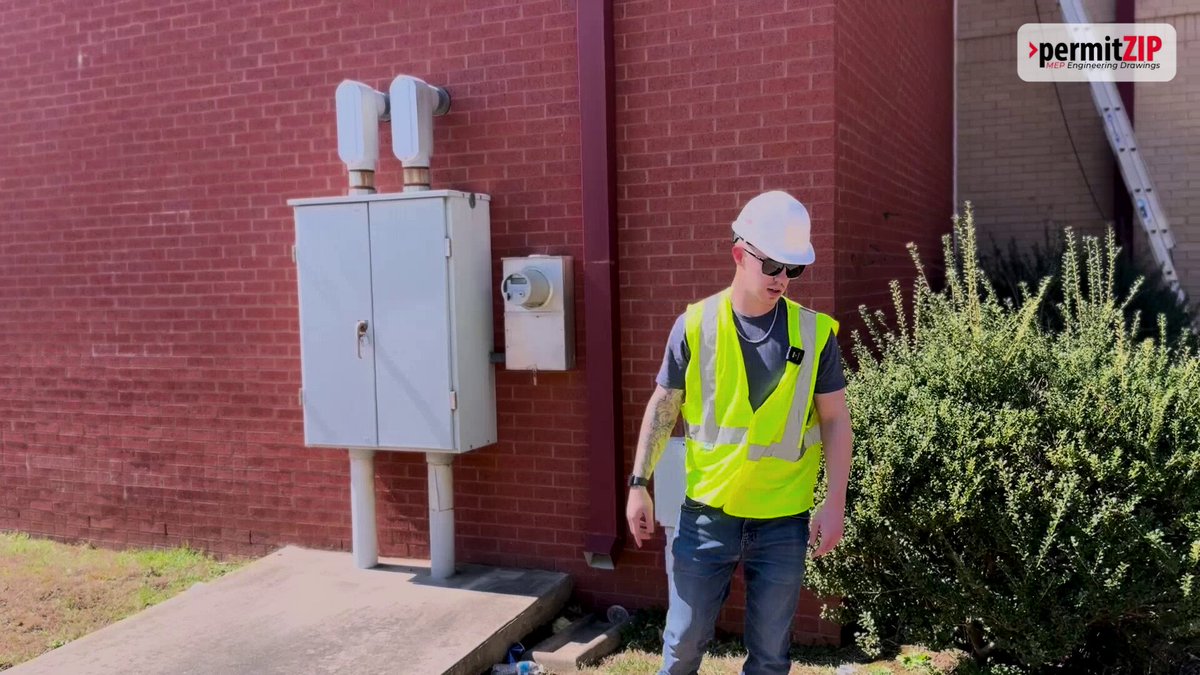
Out on-site, walking through the transformer, CT cabinet, MDP, and panels.
This is the kind of fieldwork that keeps projects accurate and designs grounded in real conditions.
A quick look at how we document existing electrical systems before any redesign. 👇
#Engineering #ElectricalEngineering #ConstructionTech #FieldNotes
56
5 Dec 2025
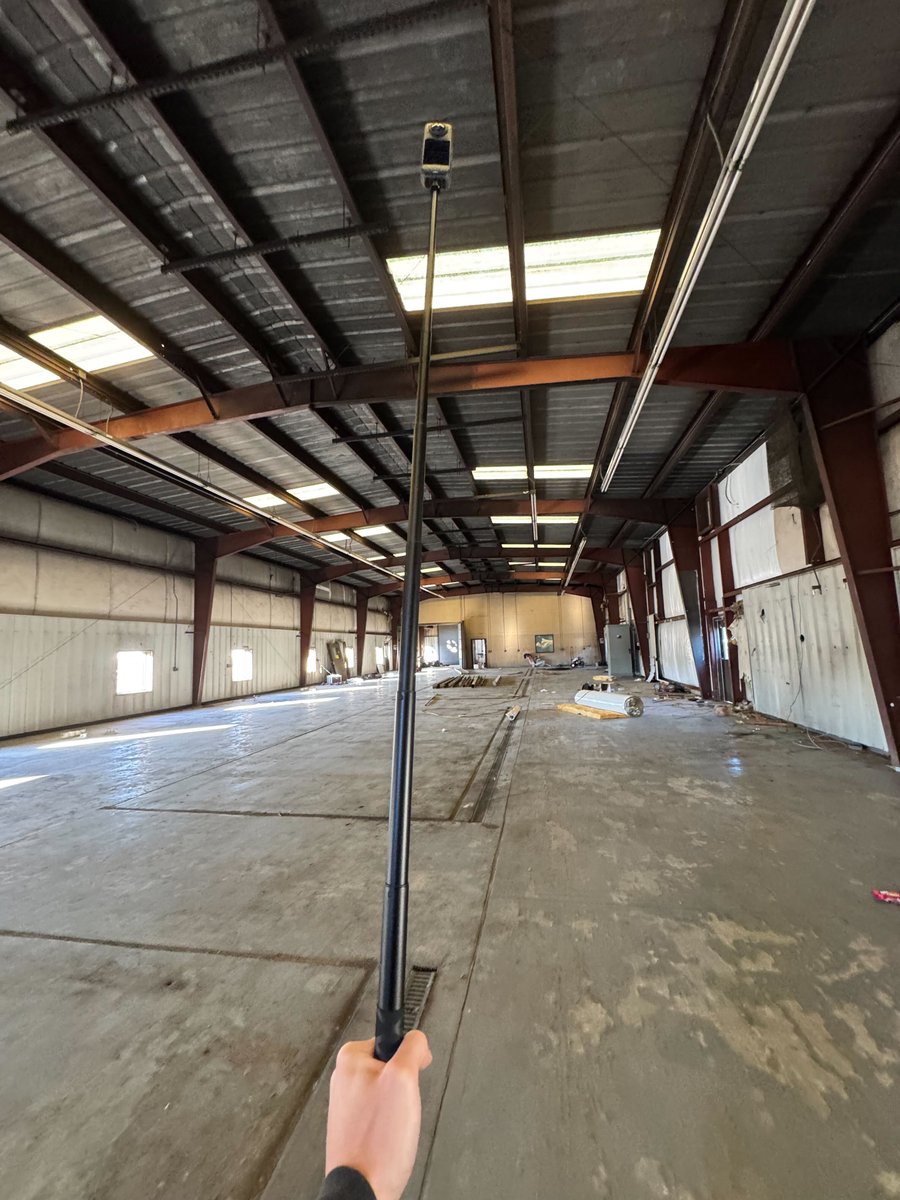
Kicked off our first site survey using the Insta360.
A quick 360 walk-through video like this makes it much easier for our engineers to understand existing conditions without multiple trips on-site.
Fast to capture. Easy to review.
Simple upgrade. Big impact on clarity and coordination.
More to come as we refine how we capture field data.
#MEPEngineering #SiteSurvey #360Video #Engineering #Construction
ALT PermitZIP Engineer holds an extended pole with an Insta360 camera inside a large, empty warehouse during a site survey.
2
4
93
25 Nov 2025
Even something as simple as a single spare conduit or an unverified power feed can shift major design decisions. Your electrical design only stands up if it reflects what’s truly in the field.
The earlier you validate assumptions, the fewer surprises you face downstream.
#ConstructionEngineering #MEPDesign #SiteVisit #BuildingSystems
1
31
21 Nov 2025
Spotted an open-delta high-leg service at an old gas station getting a full upgrade.
Two transformers on the pole.
208V to neutral on one phase.
Panel marked “high-leg.”
Catching this early keeps design clean and avoids costly surprises. ⚡
What field finds have you seen lately?
#ElectricalEngineering #Construction #MEP #FieldNotes
57
Carter Huddleston retweeted

18 Nov 2025
No way I’m visiting SAT without checking in with @bethanyjbabcock and the homies.
Shout out to #UTSA!

1
2
292
Carter Huddleston retweeted

18 Nov 2025
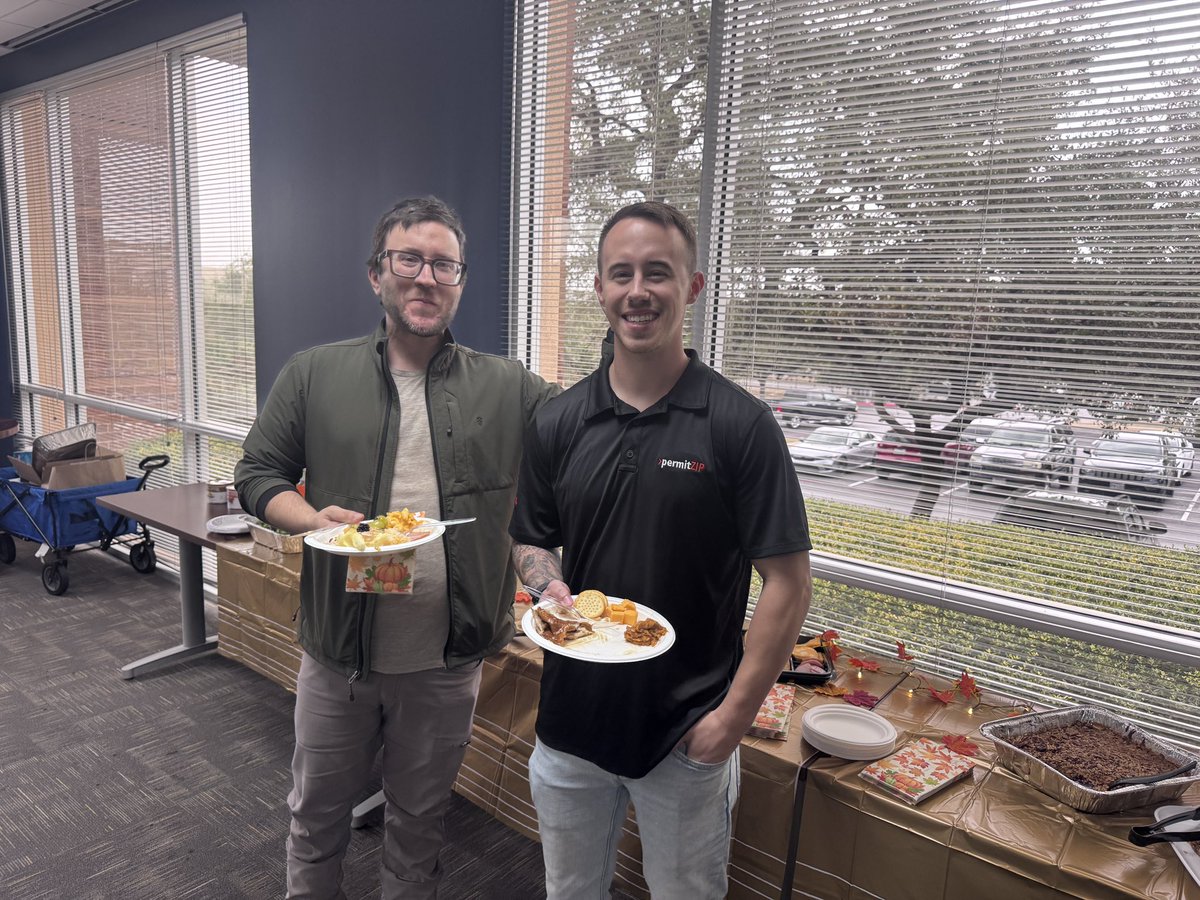
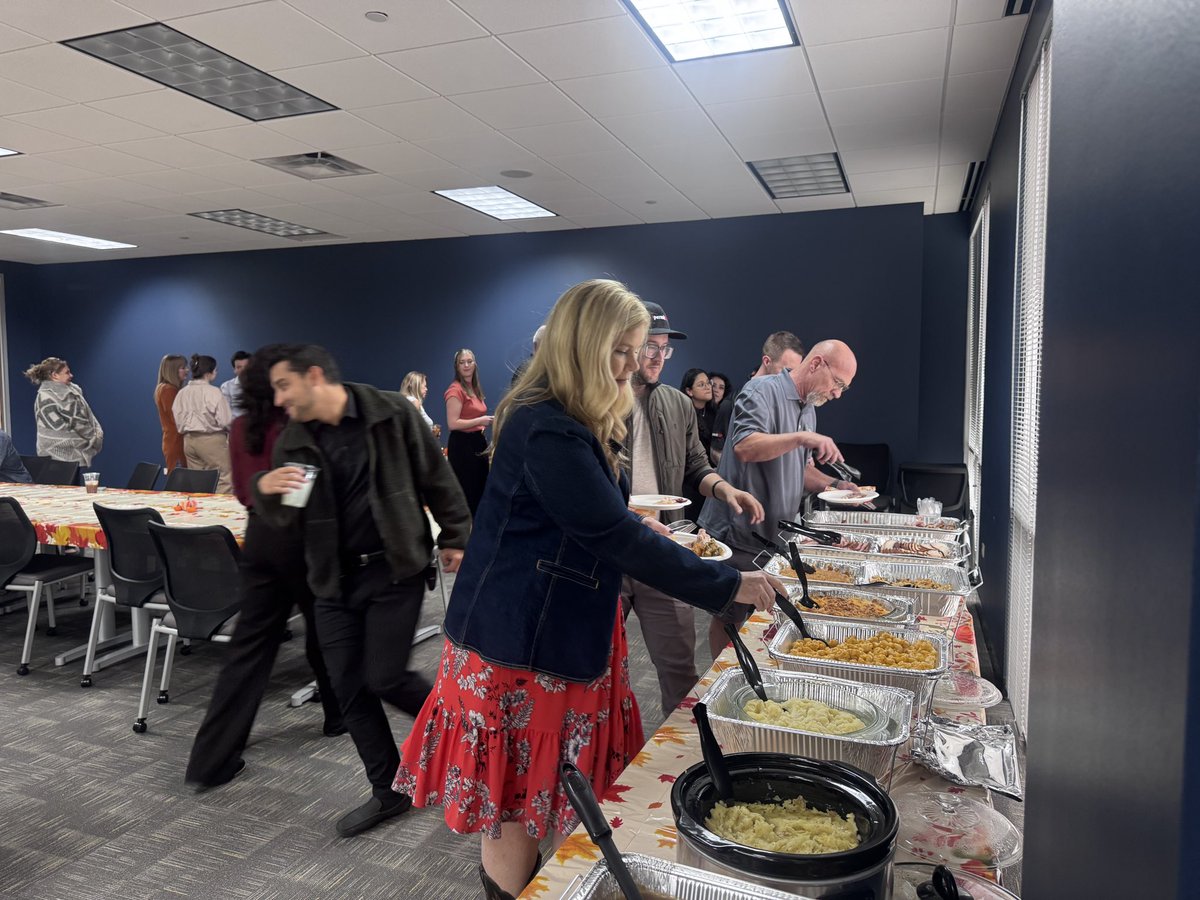
Look who crashed out company Thanksgiving lunch! @PermitZIPelec @PermitZIPhvac !
1
1
17
1,739
Carter Huddleston retweeted
2 Oct 2025
@PermitZIPelec and I finally got our business cards ordered. We haven’t had them since 2020, back when the whole office went fully remote.
Now they’re here...gold chains and all.


1
2
69
Carter Huddleston retweeted
28 Aug 2025
If you avoid AI because it sometimes makes mistakes or “hallucinates,” ask this: how often would a human make the same mistake? And if challenged, who is more likely to correct themselves? AI has no ego. It adjusts. Humans often resist or avoid admitting mistakes.
2
2
7
313
28 Aug 2025
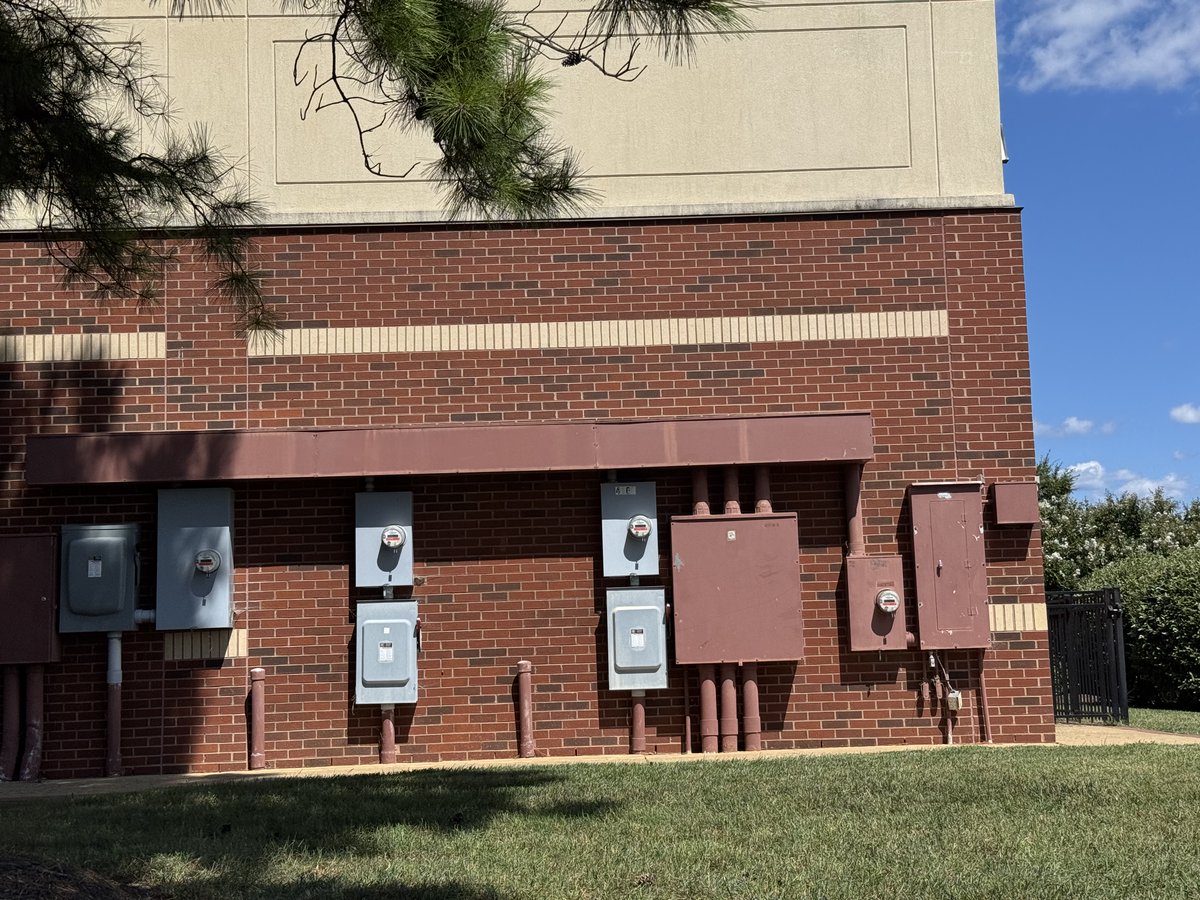
A look at what I like to call "the Walmart meter mod"
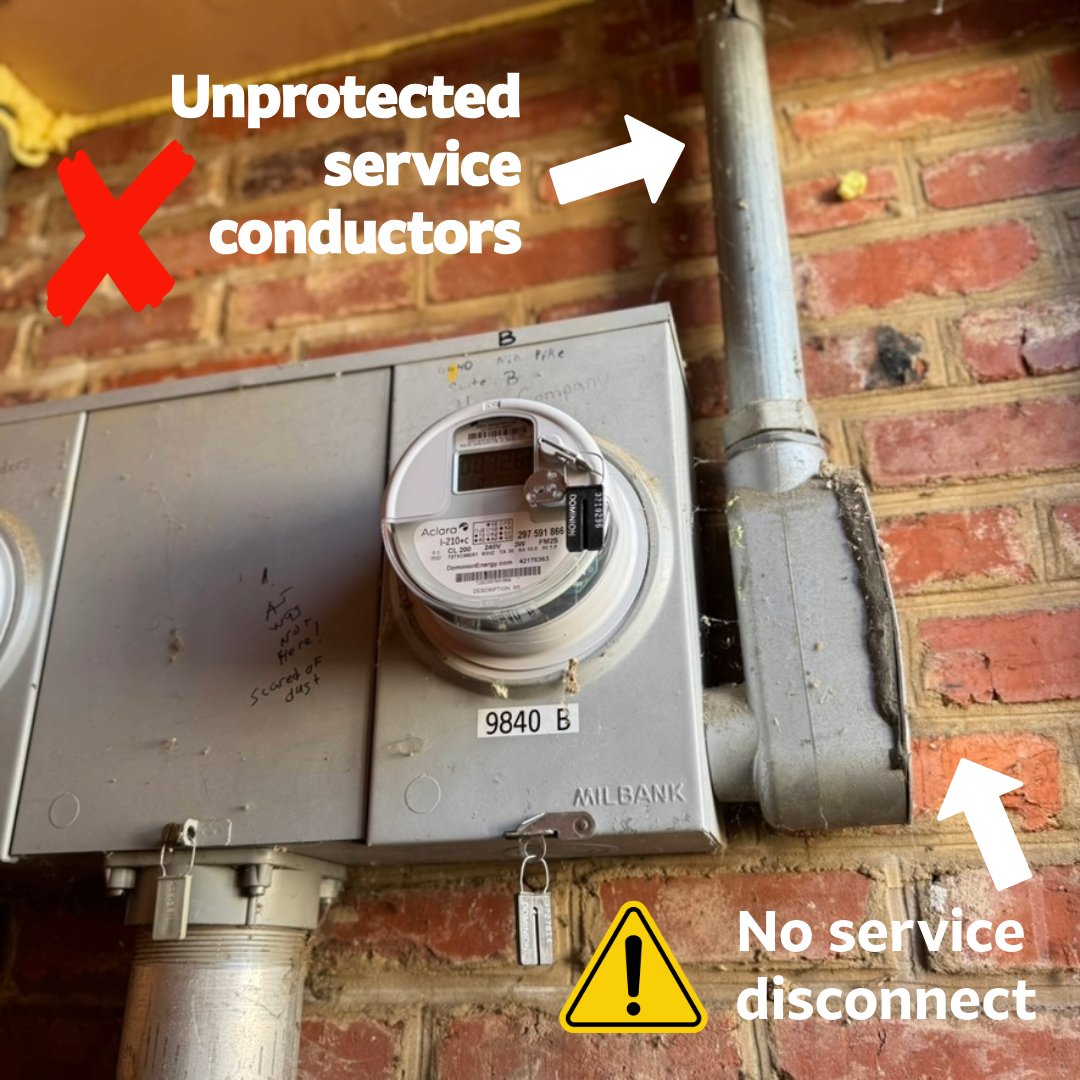
I like to call this setup the Walmart meter mod because it trades compactness for practicality. In multi-tenant buildings, we often see modular meter stacks, a compact and standardized way to meter and distribute power to multiple tenants, but these systems can get expensive quickly.
This installation takes a custom, field-built approach:
- The service conductors from the utility transformer enter through the tap box (the large red square on the right).
- From there, they feed into the wire trough (the long rectangular section at the top).
- The conductors then tap down into each tenant’s meter, route through a disconnect, and feed inside to each tenant’s panelboard.
- The setup currently serves three tenants and a house panel, with two spare conduits already provisioned for future tenants.
Pros:
- Easy to source, off-the-shelf equipment
- Flexible for future tenant additions or changes
- More cost-effective than a traditional meter stack
Cons:
- Occupies over 5x the wall space of a meter stack
- Not as good looking as a meter stack
This approach can be a budget-friendly and adaptable solution for retail centers, strip malls, or smaller commercial properties. It is a good reminder that any design always balances cost, timeline, and aesthetics.
Would you choose cost over appearance for your next project?
#ElectricalDesign #Richmond #MEPEngineering
1
5
175
18 Aug 2025
Landlords: just like engineers don’t tell you how to handle your finances, don’t tell engineers what’s required by code.
We’re adding electrical load to a tenant space that shares a service lateral with three other tenants. By law (NEC 220.87), we have to prove our added tenant load is not overloading the existing service.
The code allows two ways:
12 months peak demand data from other tenant bills, or
30-day demand metering on the service lateral (if bills are not available)
On this project, I asked my client (the tenant) to reach out to her landlord first. Sometimes the landlord has the electric bills from the other tenants. If so, that’s the fastest and easiest way to move forward.
Pretty straightforward, right? But instead, I get this from the landlord:
“This is overkill."
"We’ve never been asked for this before.”
Here's the truth: just because you haven’t seen it before doesn’t make it overkill.
If you’re a tenant doing a fit-out, listen to your engineer.
If you're a landlord being asked for this information for one of your tenants, read the code before you tell your tenant's engineer that something is overkill.
Engineers read the code every single day. We know the requirements. And nothing stalls a project better than ignoring a code requirement.
1
115
8 Aug 2025
AI is this century’s calculator. If you’re not using it, you’re already behind.
Before calculators, math was done on paper and giant whiteboards in a room full of mathematicians. Then the handheld calculator showed up, and the reaction was predictable skepticism:
“Is this thing right?”
“I don’t trust this darn thing. I’ll do my calculations by hand.”
“You kids and your gadgets…”
(Sounds like people talking about AI in 2025, right?)
The people who were crazy enough to try the first calculator didn’t blindly trust it. They did this:
Give it X Y when you already know Z. Does it return Z? Inputs, process, outputs. Wash, rinse, repeat. Over time, trust was earned and the calculator became a trusted tool for doing math.
AI in 2025 is the same story, just bigger.
The move isn’t “trust AI blindly.” It’s professionals in the loop:
✔️ Verify the inputs (did we ask the right question?).
✔️ Sanity-check the process (does the approach make sense?).
✔️ Validate the outputs (do the numbers, code, or claims actually hold up?).
Start small. Have it clean up meeting notes or shorten a wordy email.
Start using it now, learn its limits, and it will become useful for you.
118
8 Aug 2025
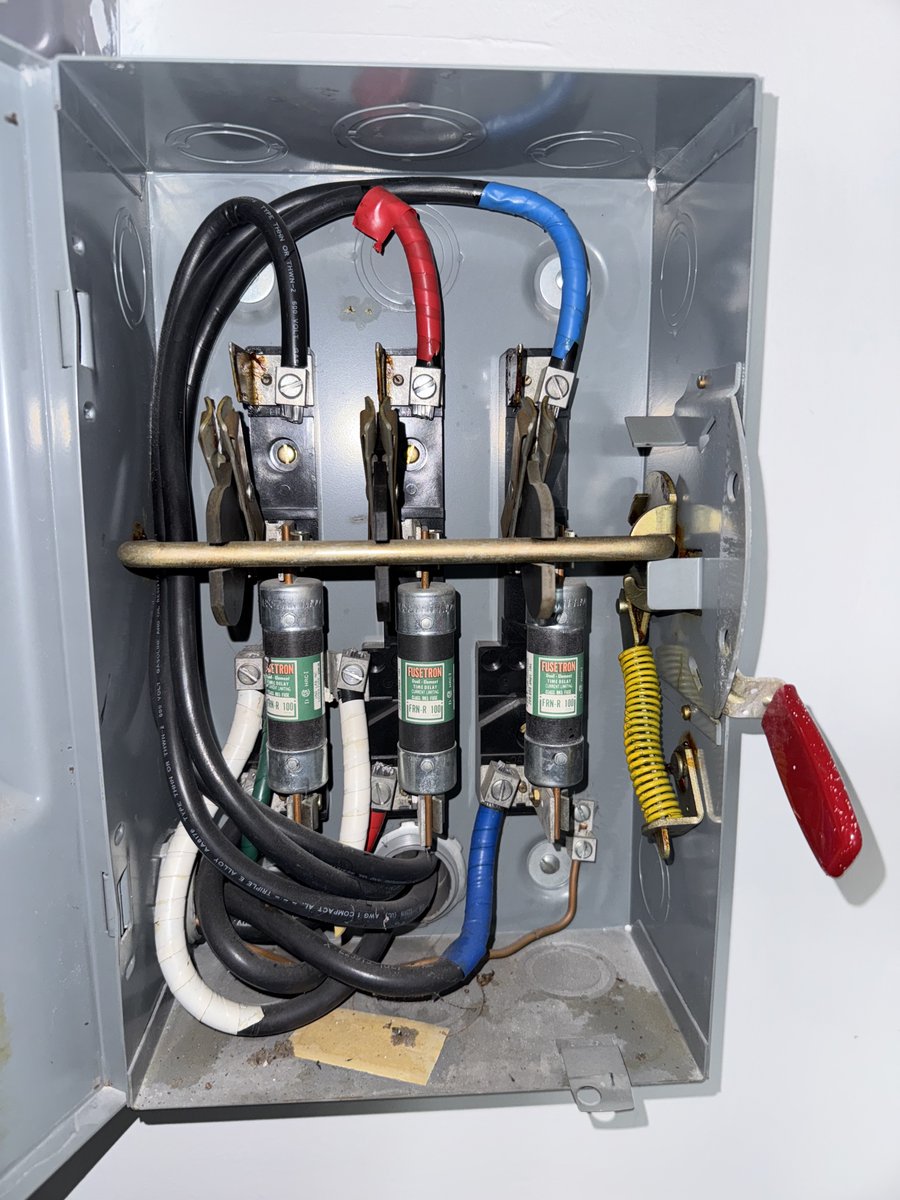
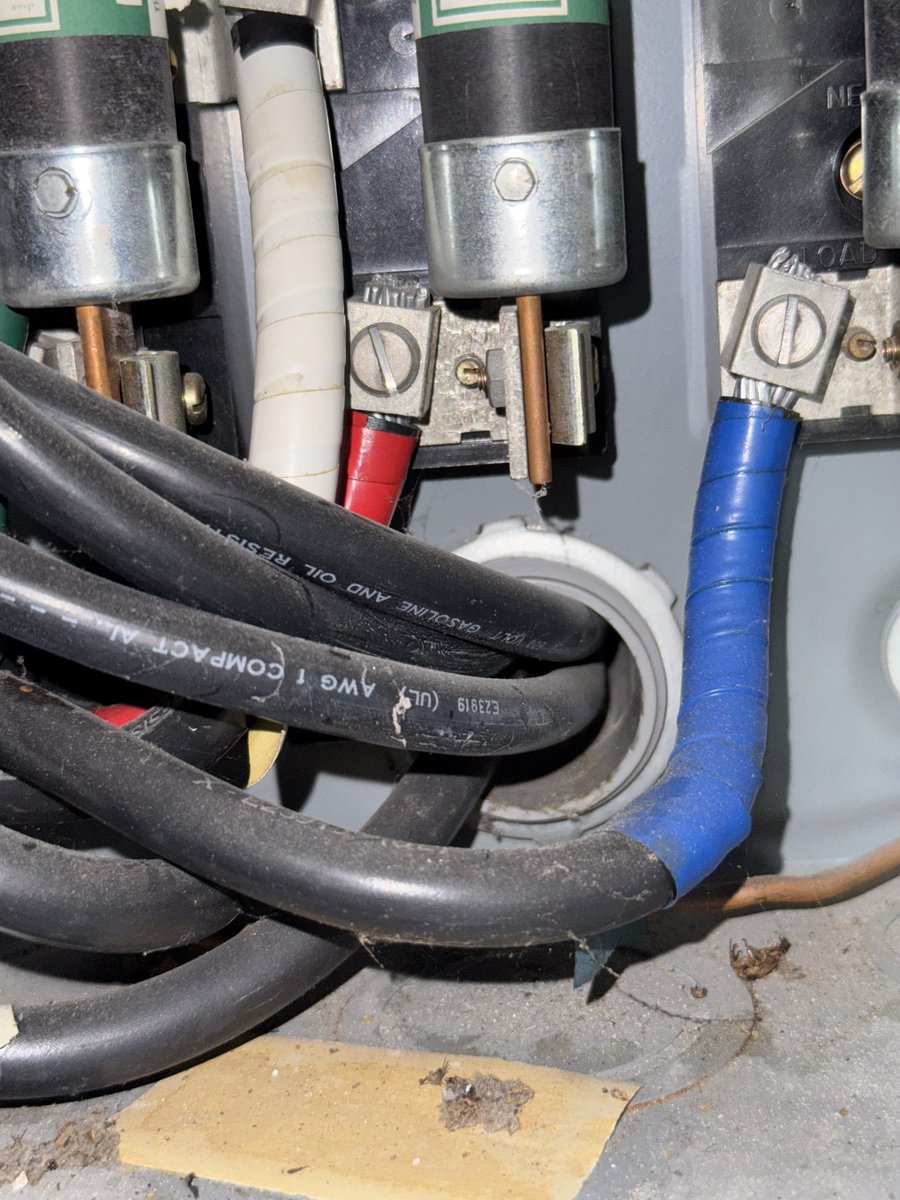
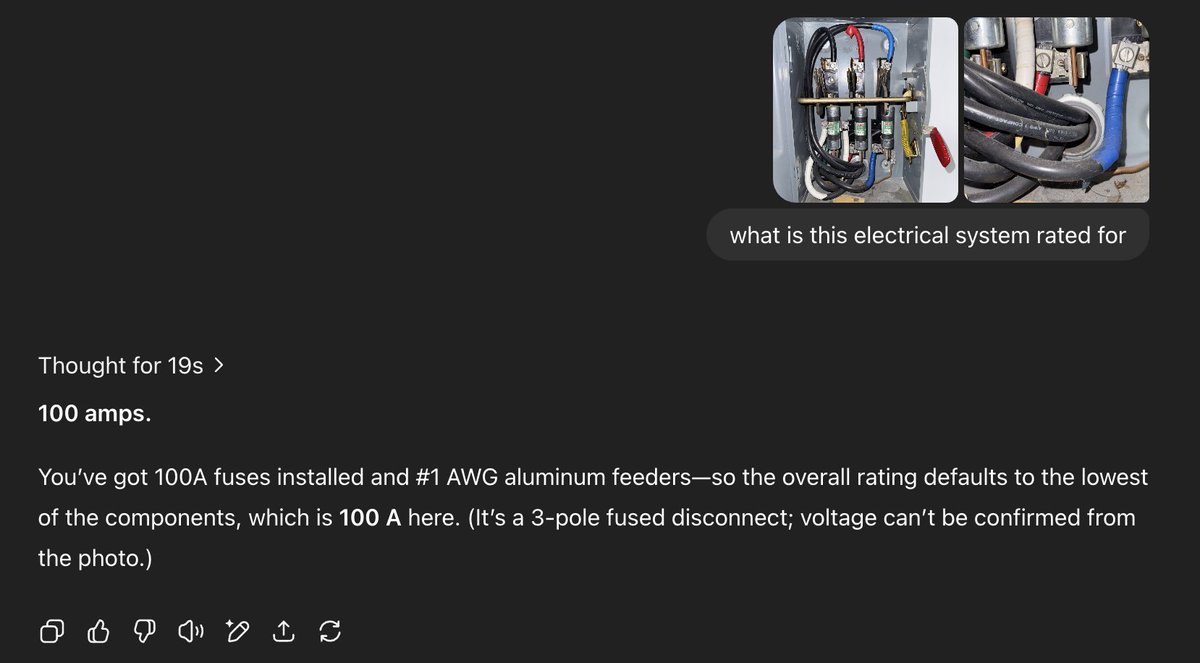
Inside of a 100 amp fused service disconnect on a recent @PermitZIP survey in Henrico, VA.
Three 100 amp fuses, and #1 AWG AL conductors mean this is a fully rated 100 amp / 3 phase system (NEC table 310.16).
Never trust a nameplate on the outside. The inside of the disconnect will tell you the full story.
Bonus tip: if you're out in the field and not sure what you’re looking at, take a picture and ask ChatGPT.
1
77
Carter Huddleston retweeted
1 Aug 2025
Engineers aren’t trained to sell, but we should be. The “I’ve done it cheaper” crowd keeps winning trust. So now I just say: “If you take their advice, sign here saying 85°F and 85% RH is an acceptable indoor condition.”
Nobody ever signs.
I wonder why?
2
2
10
391
31 Jul 2025
Unpopular opinion: If you're blasting out a bunch of unstructured emails with scattered thoughts, random attachments, and forwarded threads without context — and the recipient misses something, that’s on you.
Don’t expect people to piece together what you didn’t take the time to organize.
If it’s important: organize your thoughts, structure the email clearly, and communicate with intention.
The person on the other end isn’t your administrative assistant. If you don’t make it easy to follow, don’t be surprised when things are missed.
2
4
375
Carter Huddleston retweeted
29 Jul 2025
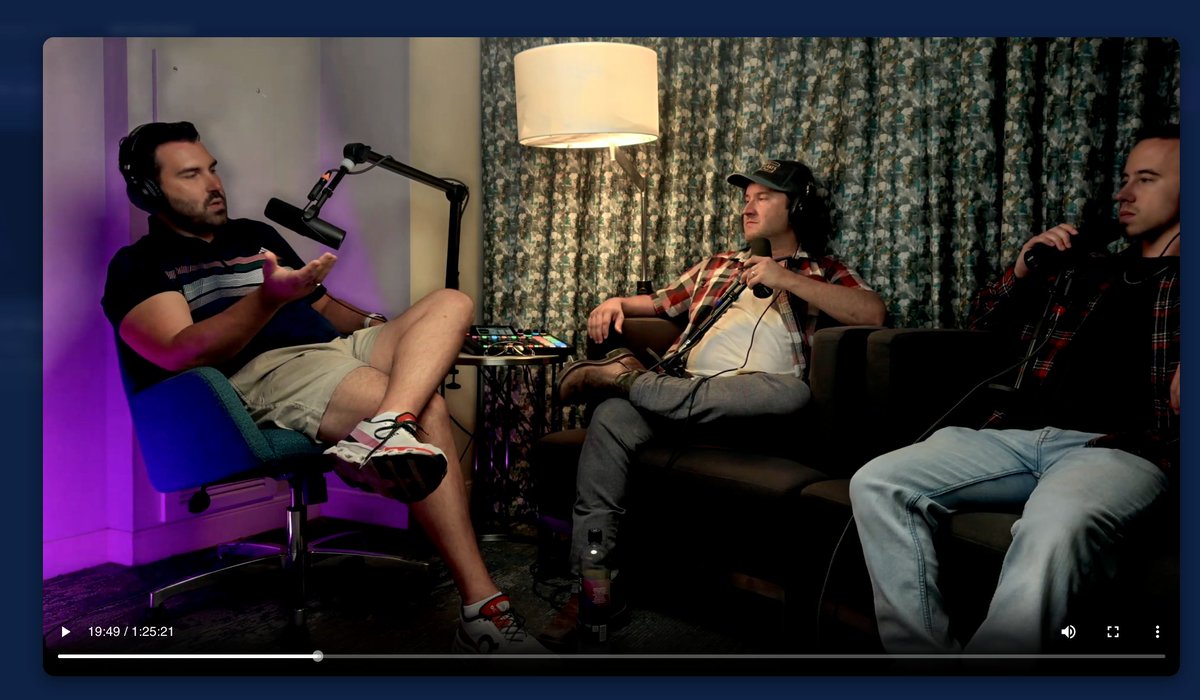
Our buddy Nick Heim, PE, was in our backyard today (Washington, DC) so we swung by his hotel room for a quick chat and ended up recording an awesome conversation. We covered construction, AI, industry optimization, old hats, new hats... and everything in between. A great episode all around.
@PermitZIPelec
1
4
238