
Egyptologist & historian, University of Memphis. Karnak Hypostyle Hall Project #history #Ramesses #Egypt #Archaeology #ancient #antiquity #Egyptology
Joined April 2022
- Tweets 4,973
- Following 710
- Followers 10,232
- Likes 879
3,241 Photos and videos
Pinned Tweet

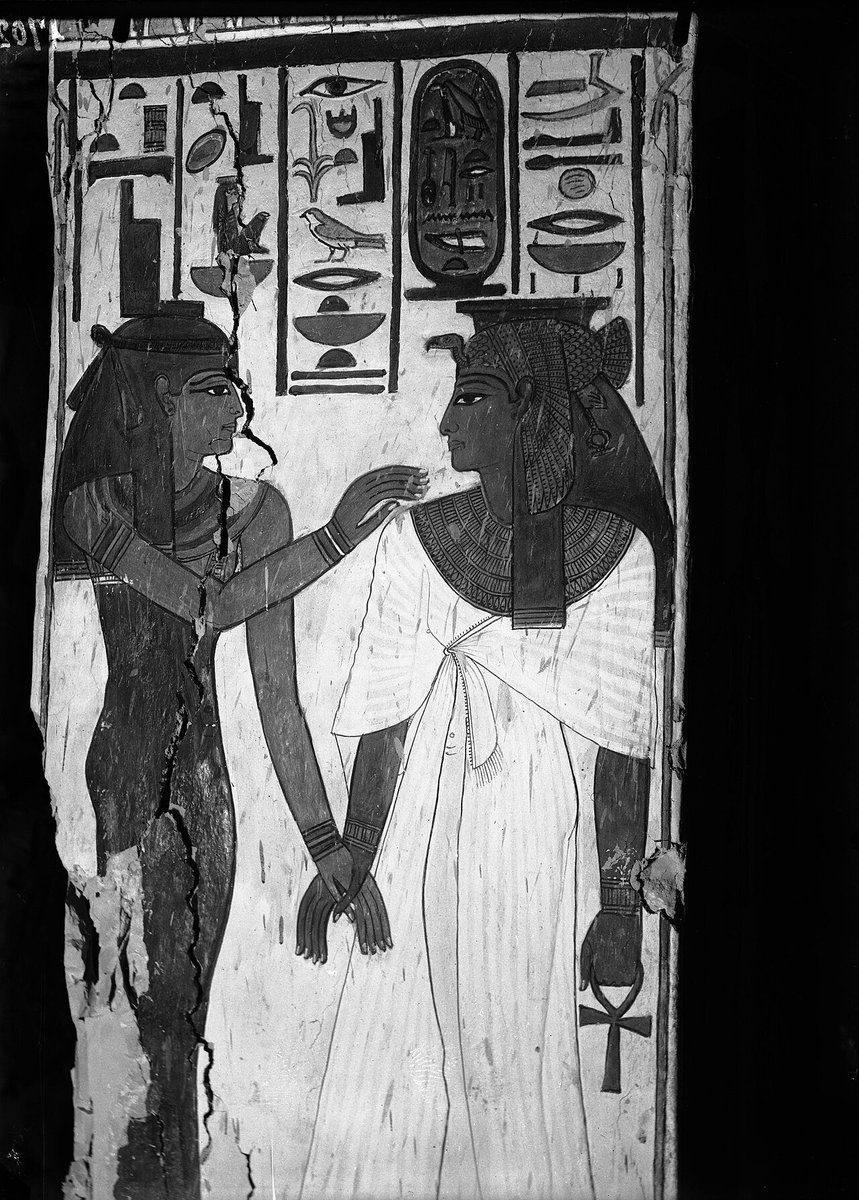
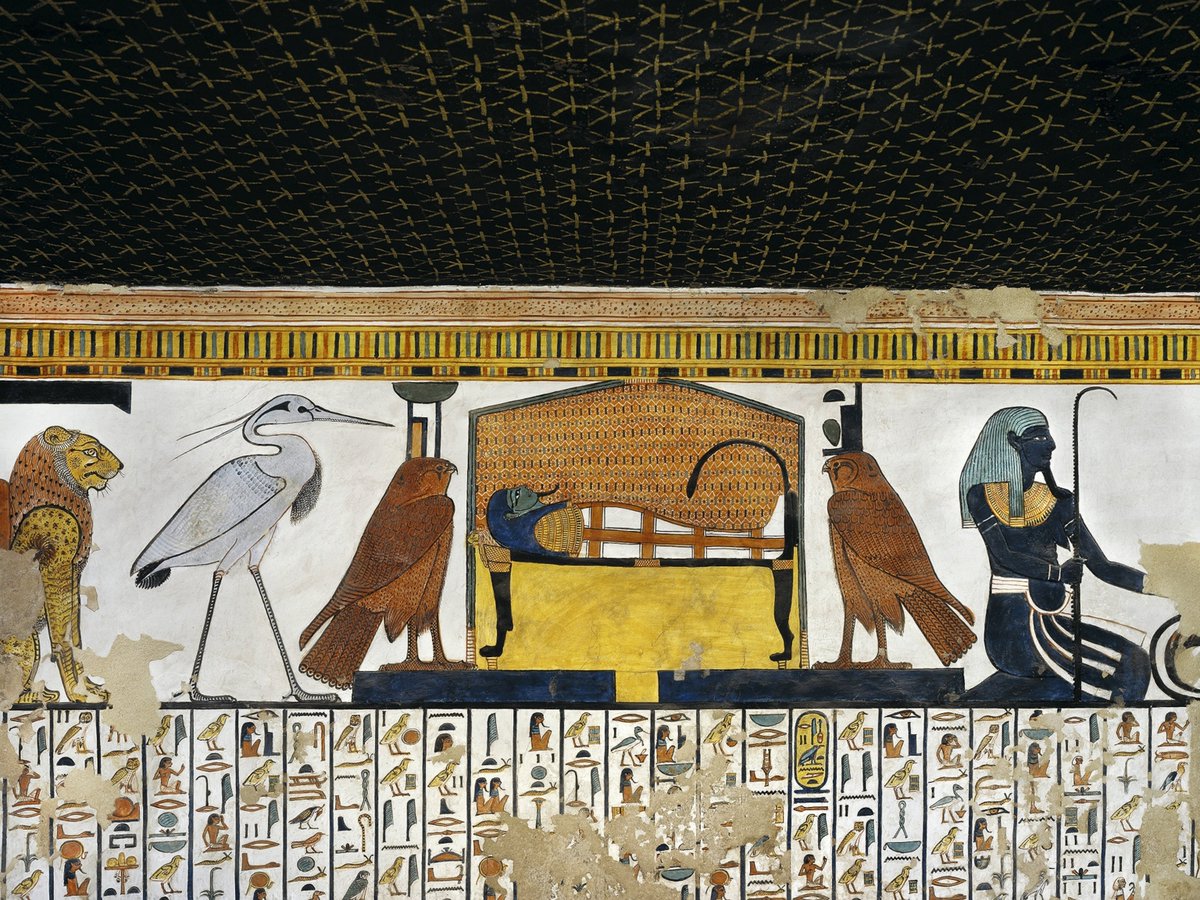
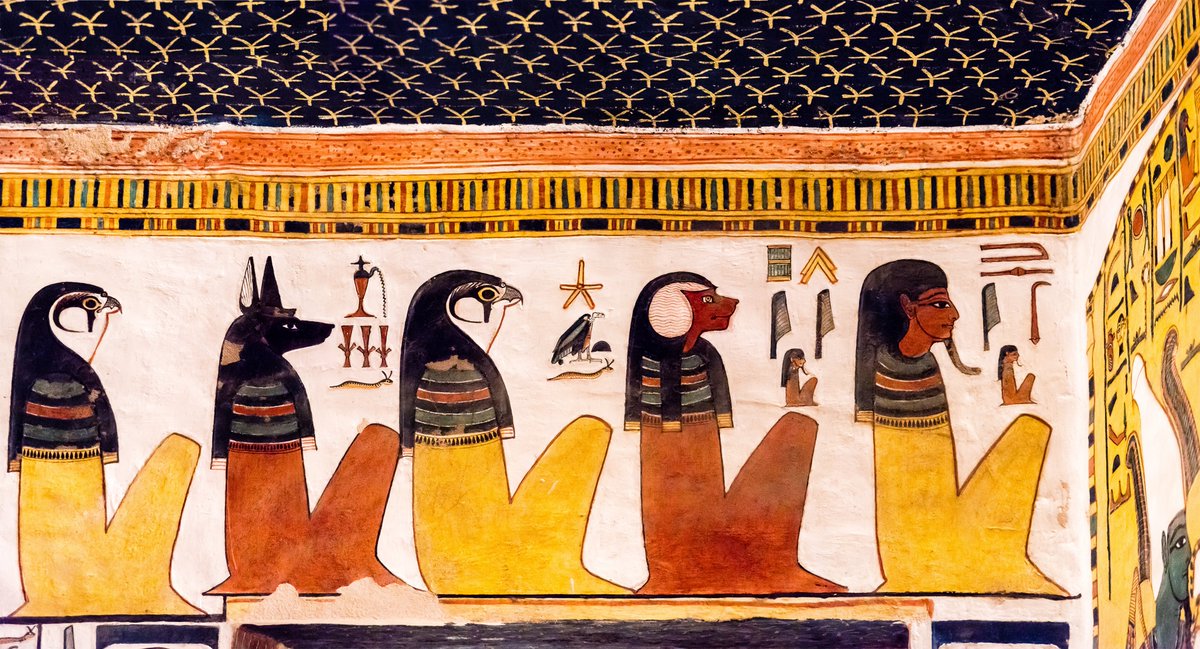
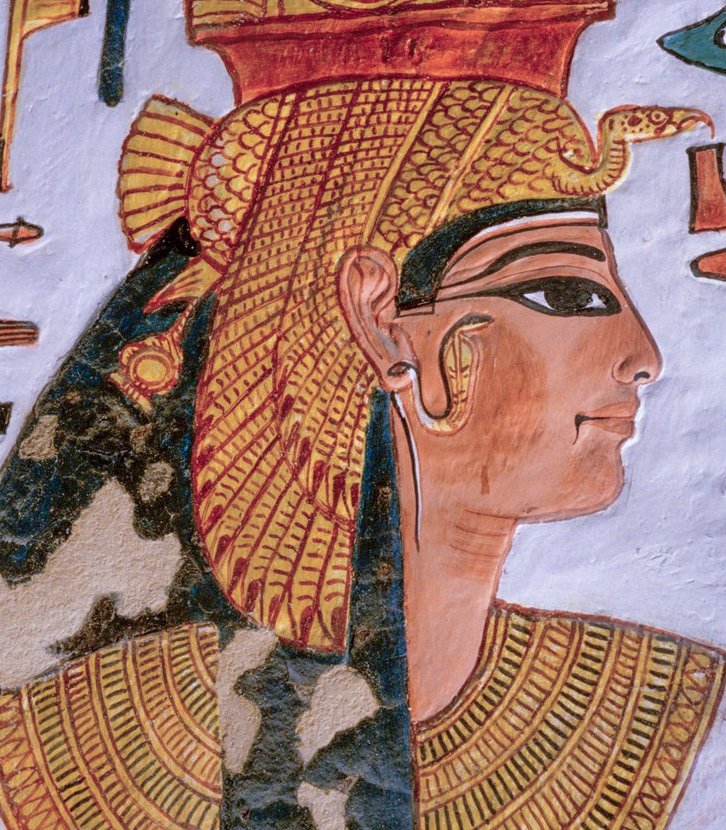
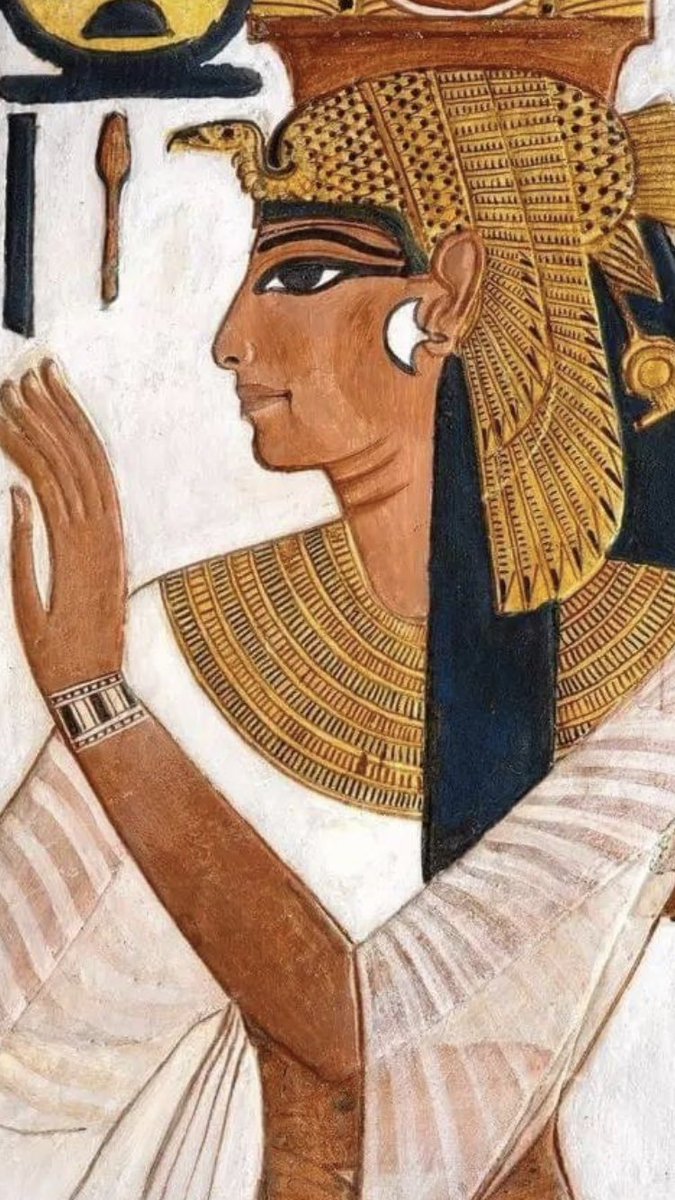
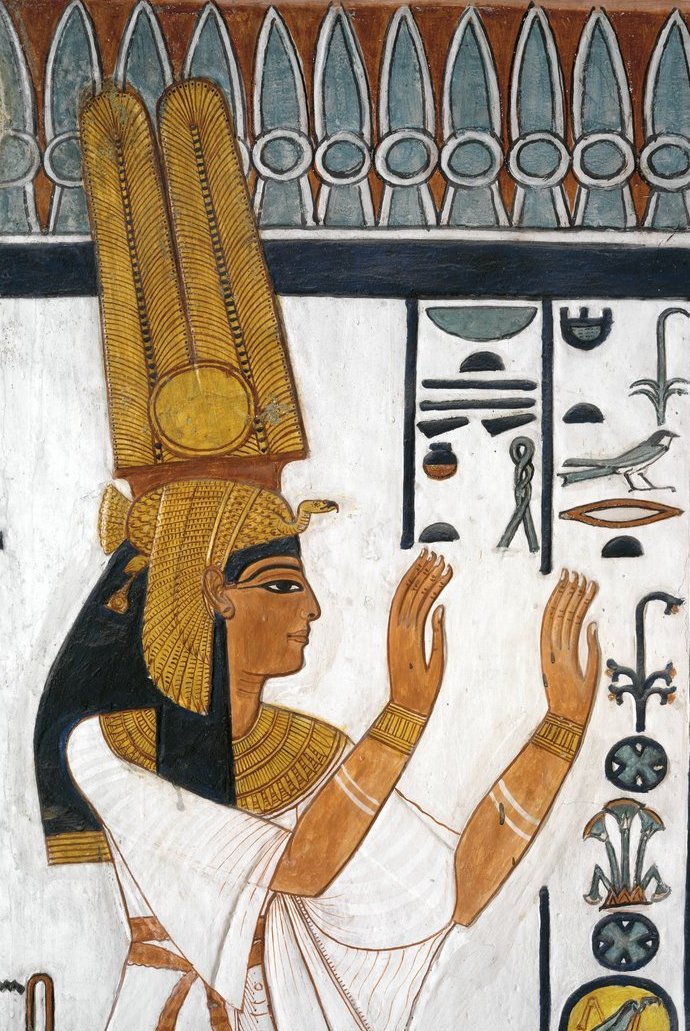
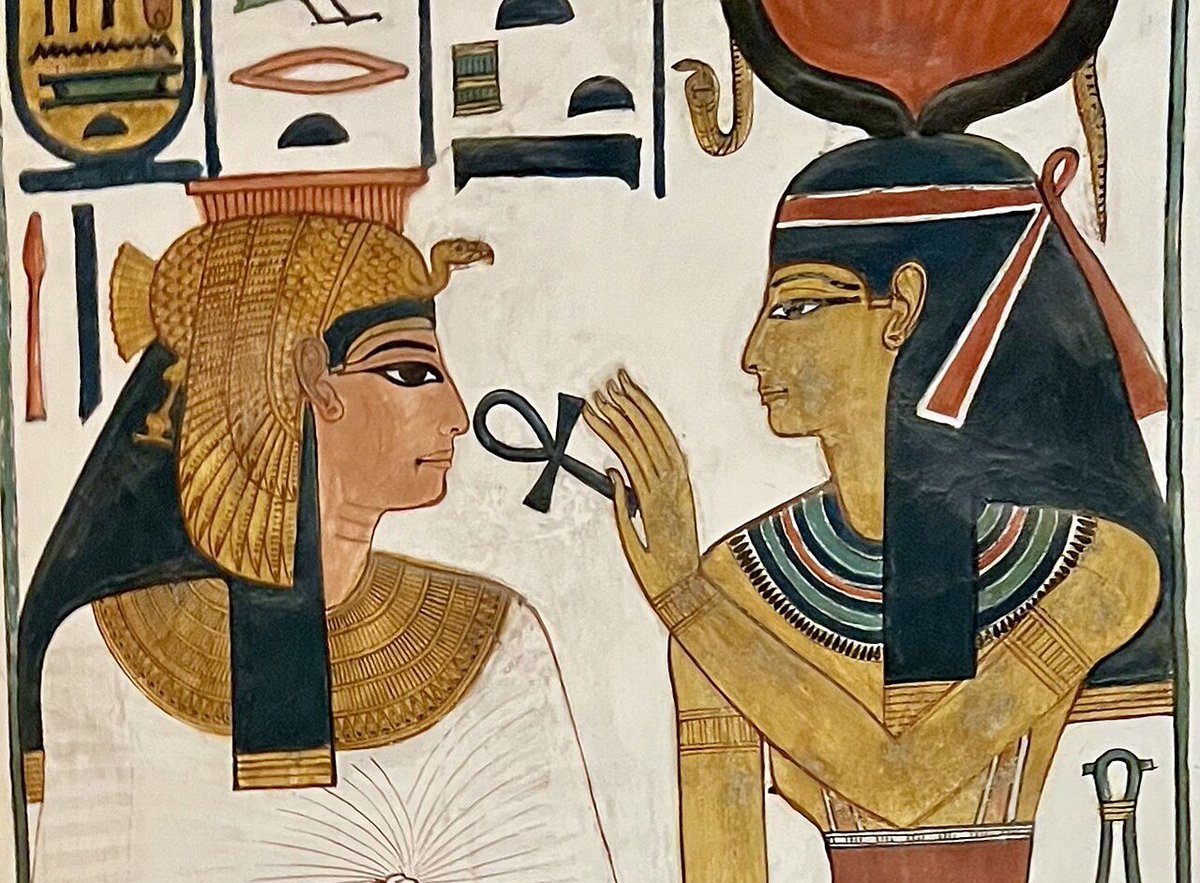
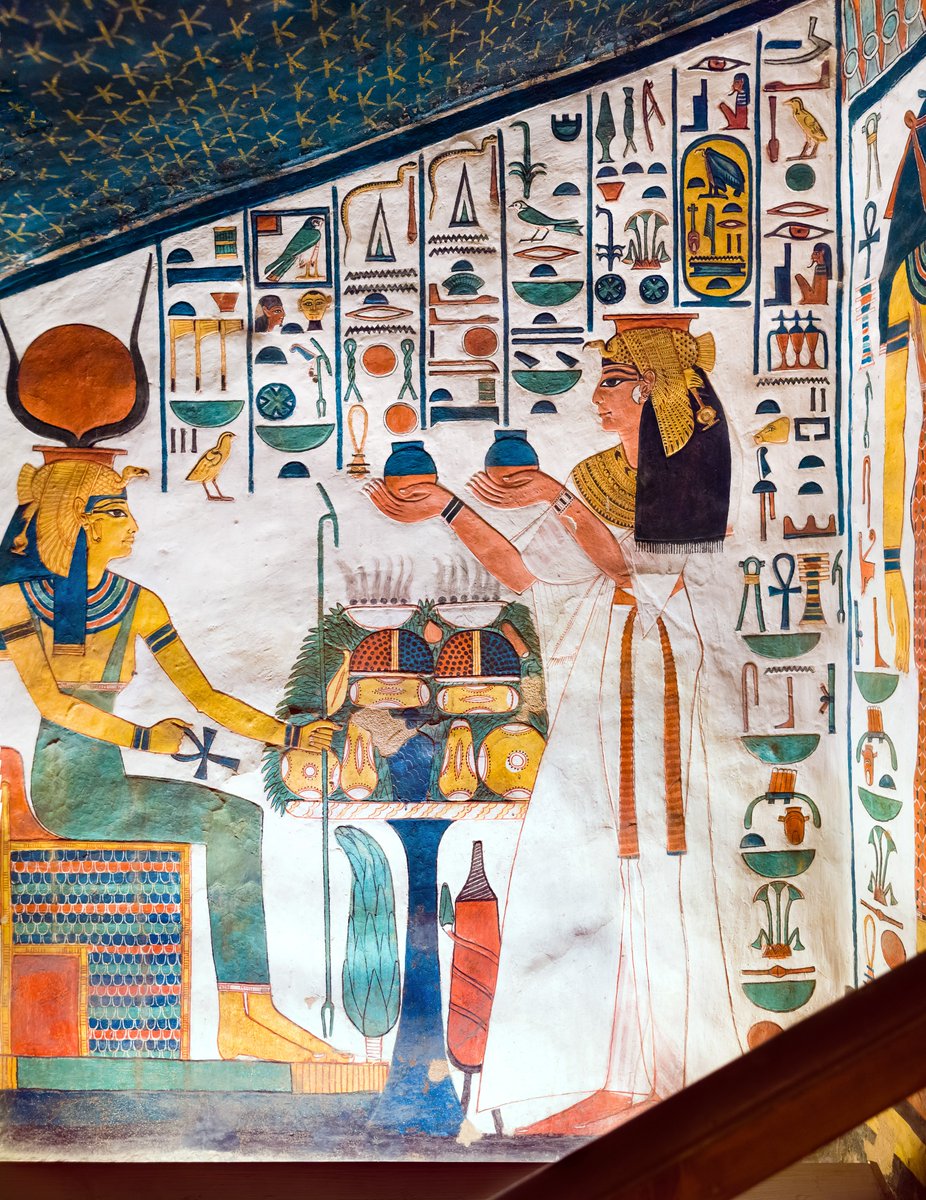
Images of Nefertari from her tomb in the Queens Valley. They are not true "portraits", but idealized images. She shares the same facial features as the goddess in the mouth picture.
Images of Ramesses II's other wives and daughters in their tombs show the same look
Egyptian art was always idealized
#ancient #Egyptian
#مصر
3
20
83
1,584
Dr. Peter J Brand retweeted

Jun 12
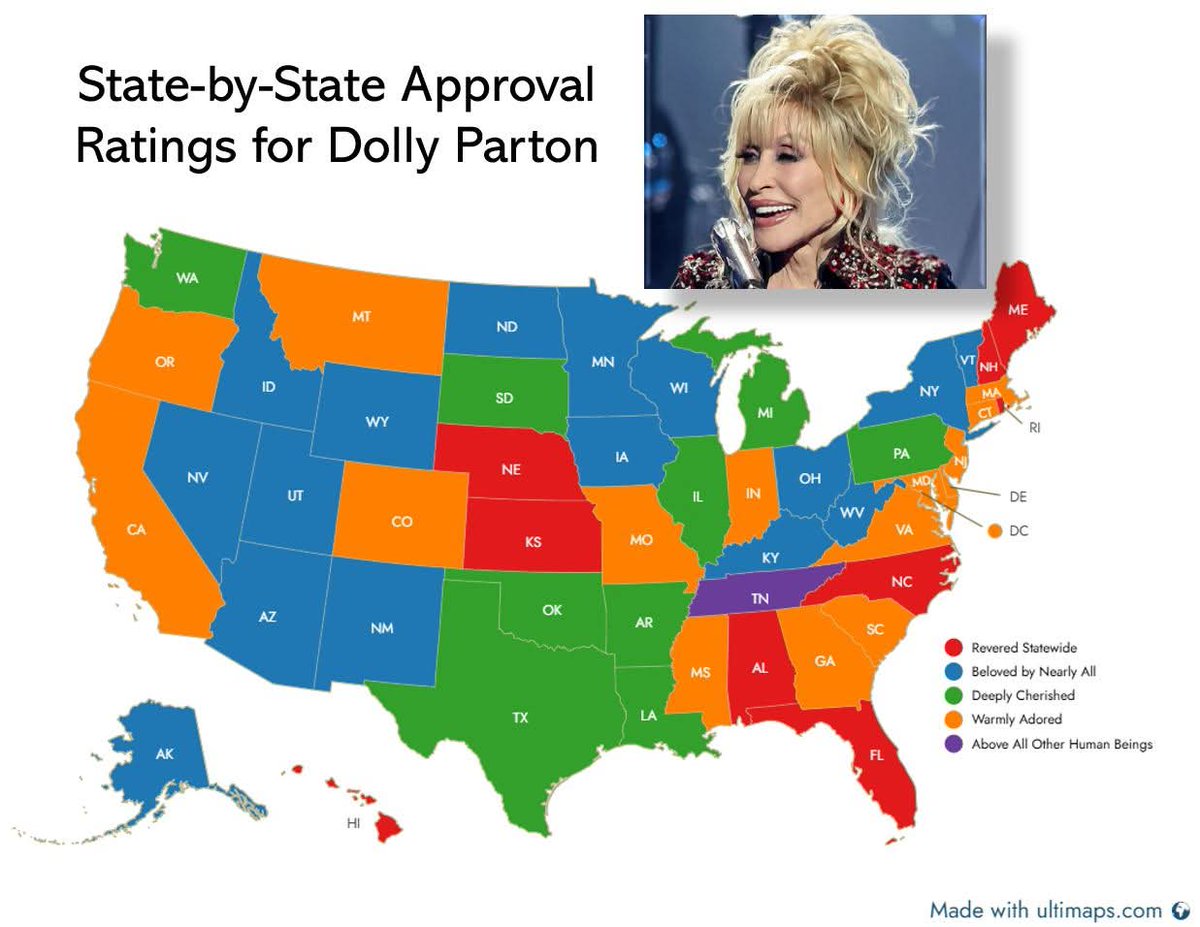
Unbiased poll results for Dolly Parton
38
147
1,742
165,493
Dr. Peter J Brand retweeted

Jun 11
The Star of David was used by the Nazis to identify Jewish people, while the pink triangle was used to mark those persecuted for being homosexual. At the time, homosexuality was criminalised in Germany, and many of the Allied countries that liberated the concentration camps including Great Britain also had laws that criminalised gay people. As a result, some survivors who were freed from Nazi camps continued to face discrimination, prosecution, and imprisonment after the war. The pink triangle was later reclaimed by the LGBT community as a symbol of remembrance, resistance, and pride, particularly in recognition of those who suffered persecution because of their sexual orientation or gender identity.

41
2,191
14,269
1,229,258
Dr. Peter J Brand retweeted

Jun 10
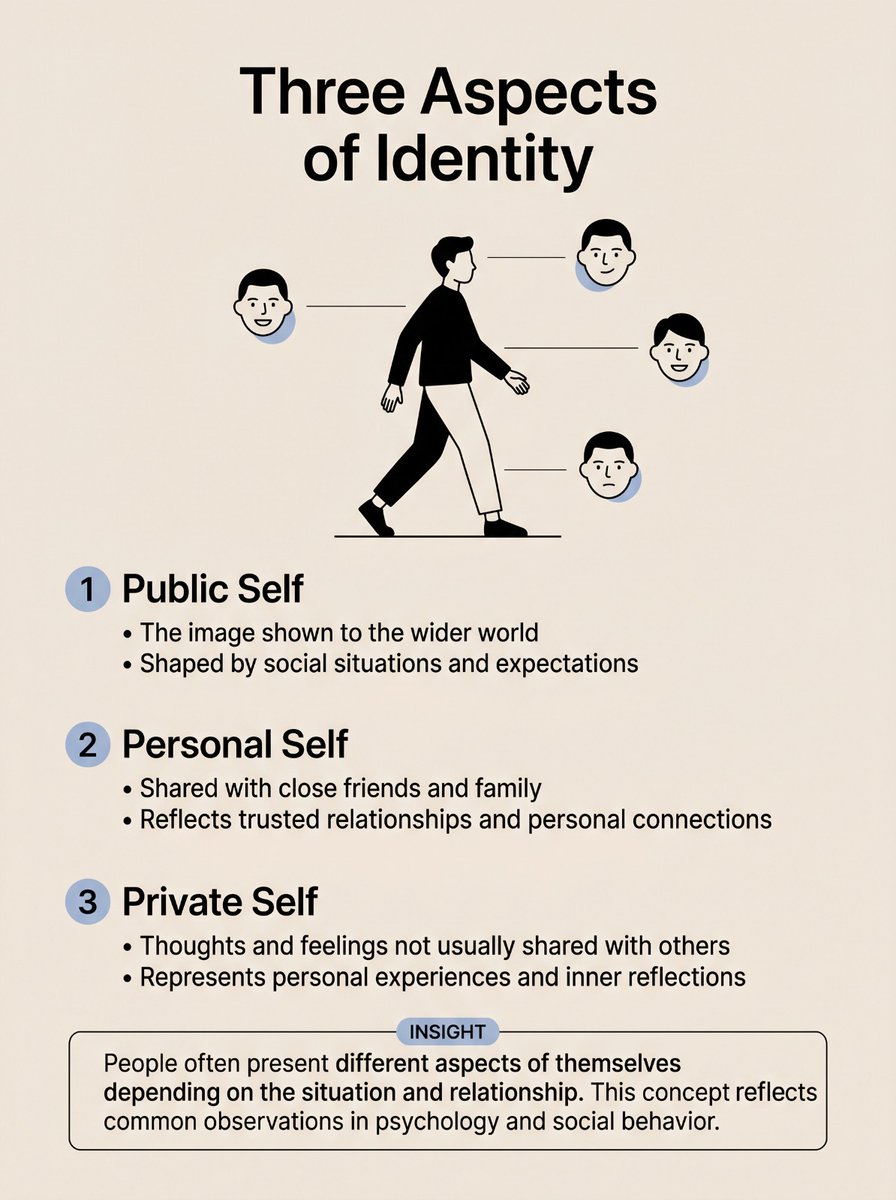
The three layers of identity.
2
45
199
15,531
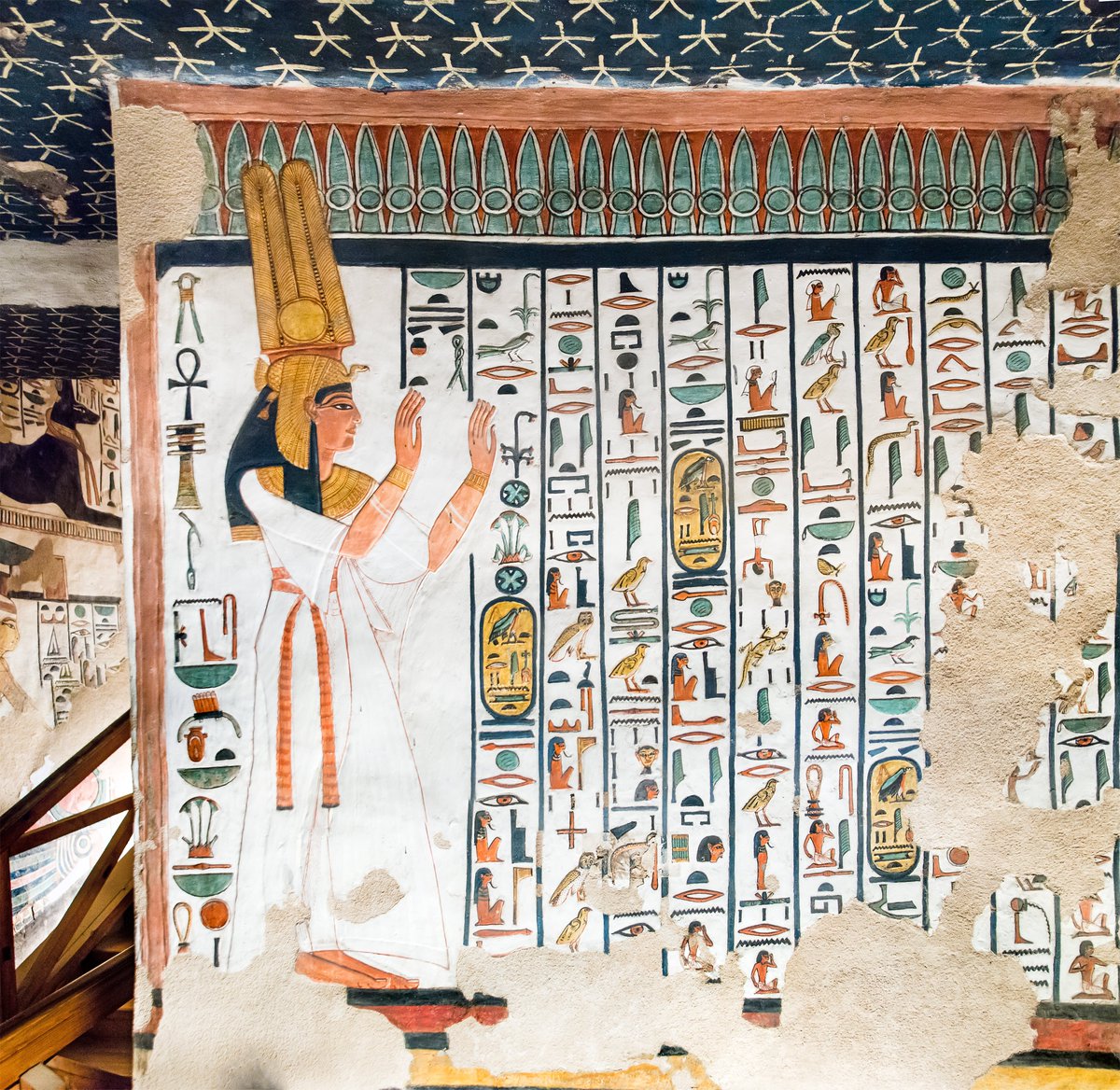
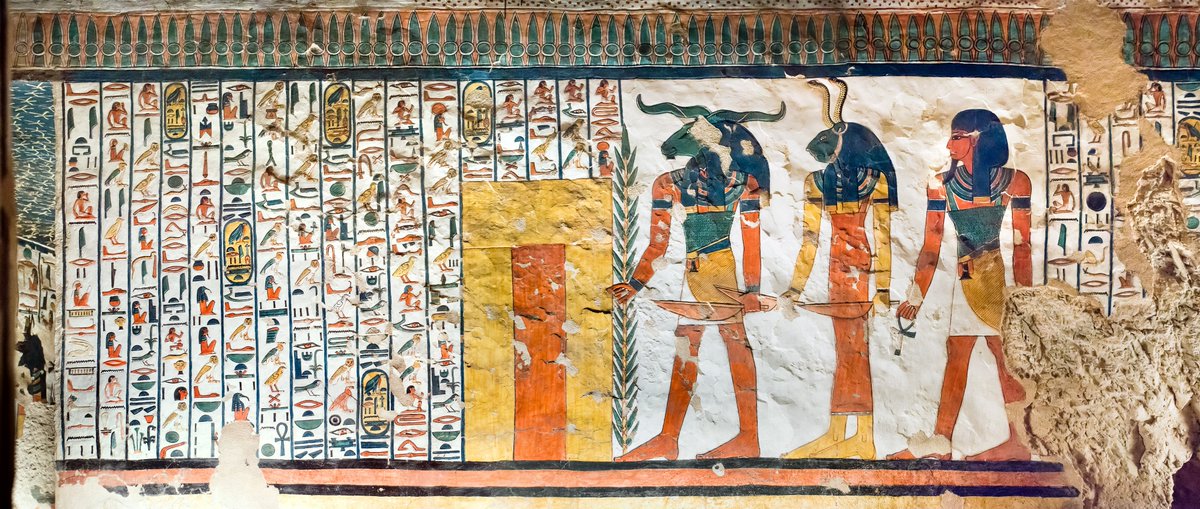
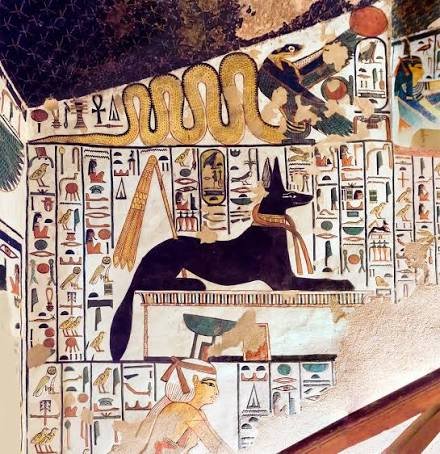
Another category of scenes from Nefertari's tomb QV66 in the Valley of the Queens are episodes from the famous Book of the Dead.
The real Egyptian name for this collection of magical spells and images was "The Book of Coming forth by Day".
It was a kind of "guide book" to the Underworld aiding the deceased with a map of locations and magical phrases and images to assist them in knowing what to say to the gods, demigod and demons they would encounter, ensuring the preservation of their bodies and rebirth of their spirit (Ka) and soul (Ba)
Nefertari's tomb has several scenes and important magical spells from the Book of the Dead
#mythology #Egypt #ancient
3
17
89
1,632
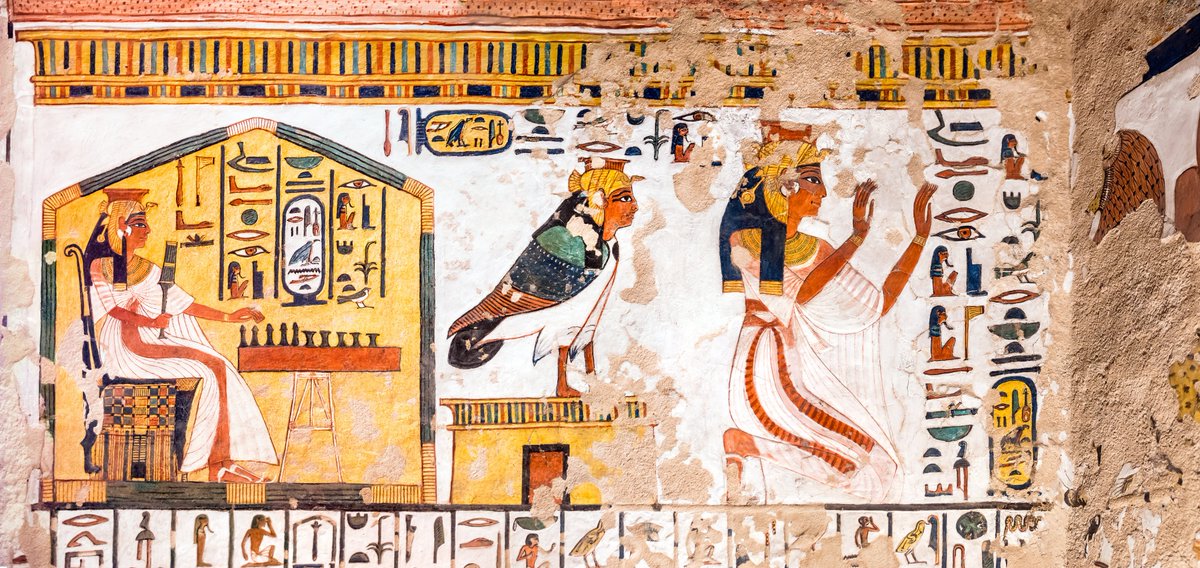
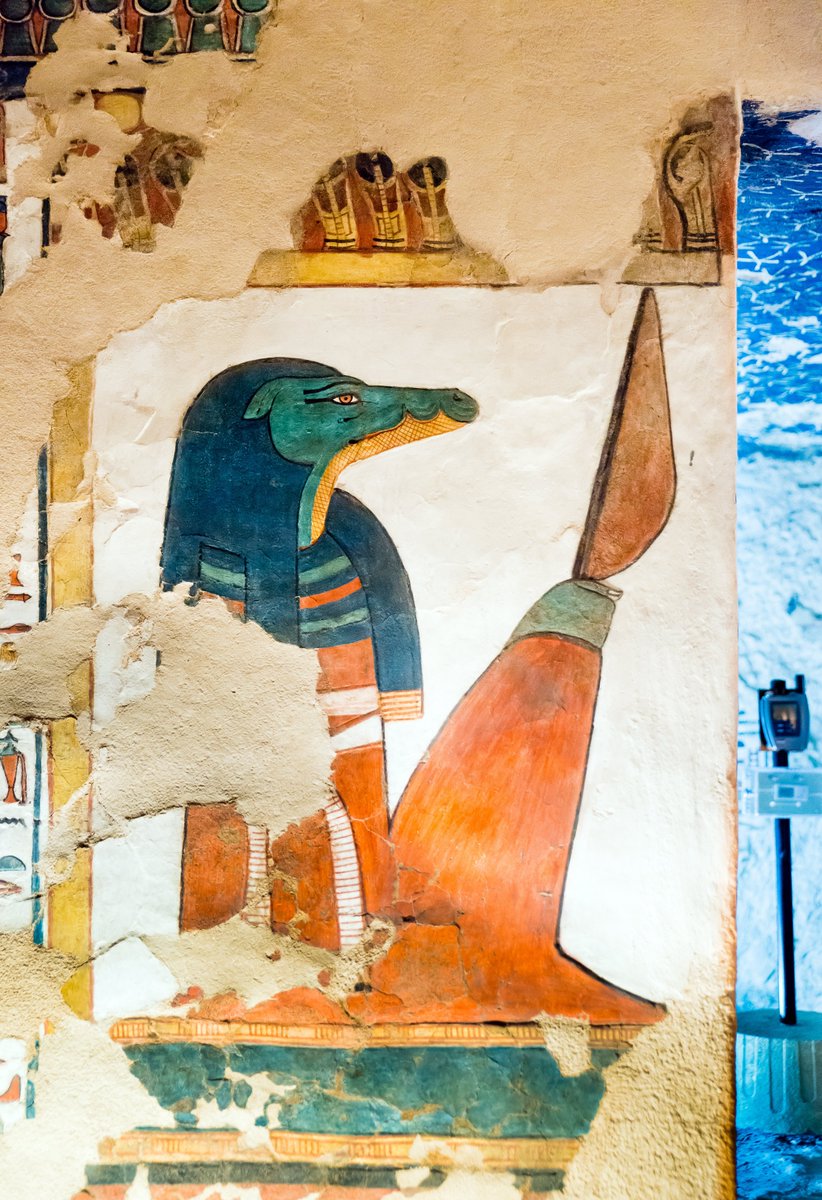
Some images from Queen Nefertari' tomb show symbism seen on papyrus scrolls of the Book of the Dead.
There wasn't room for the entire Book on its walls, but these scenes airded the Queen' journey through the Underworld
In one scene the goddesses Isis and Nepthys appear as kites mourning Osiris on his bier inside a shrine.
Kites are raptors whose high pitched cries were similar to the sound of the goddesses mourning their dead brother Osiris
Another scene has Nefertari herself sitting in a shrine playing the ancient board game Senet. Sent means "(the game of) Passing"
It represents the dead queen's journey through the Underworld and the obstacles she faced.
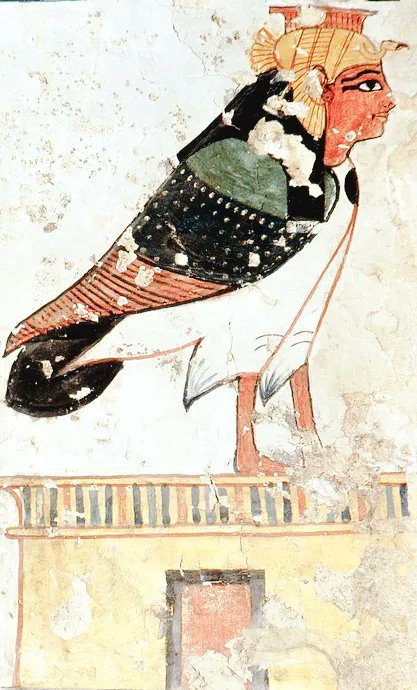
Another image shows her with a bird's body, the classic image of the deceased's soul
#archaeohistories #archaeology
#myth
2
27
121
2,183
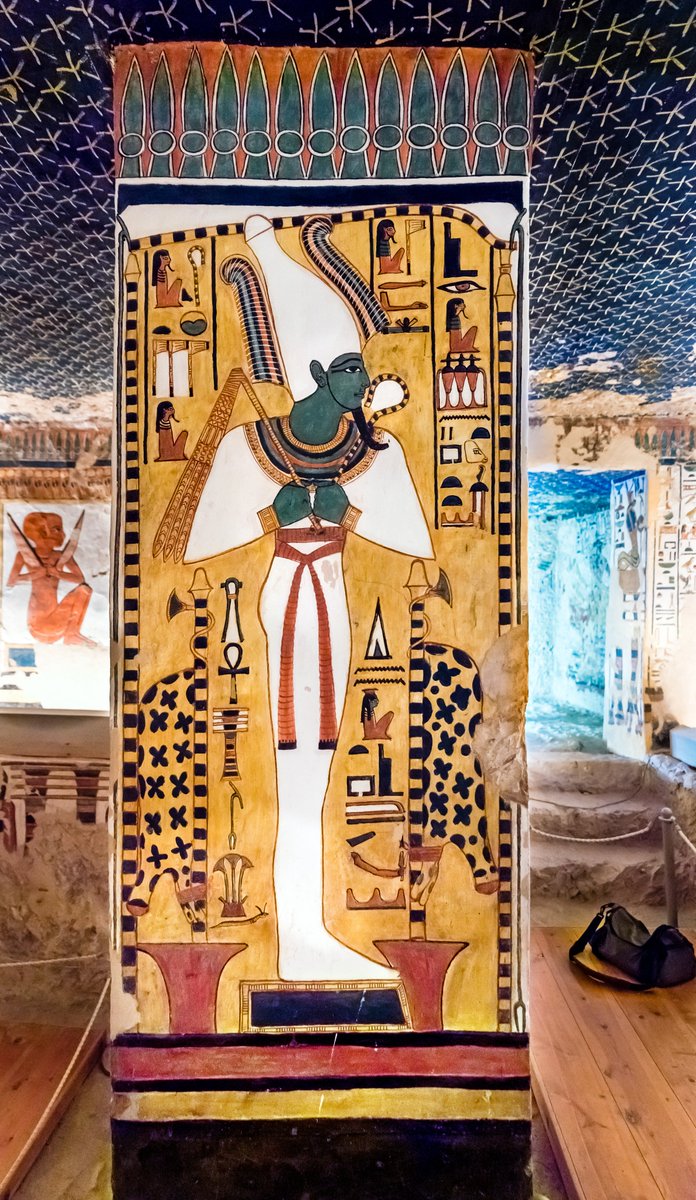
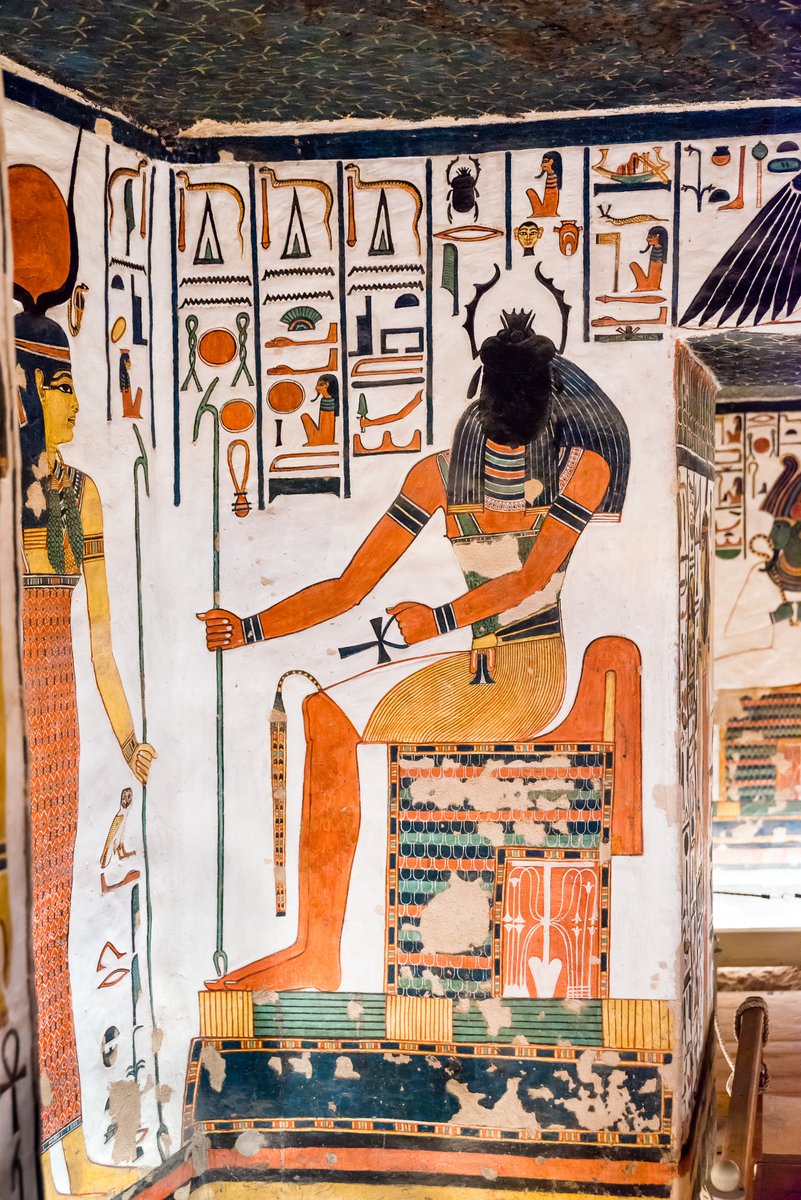
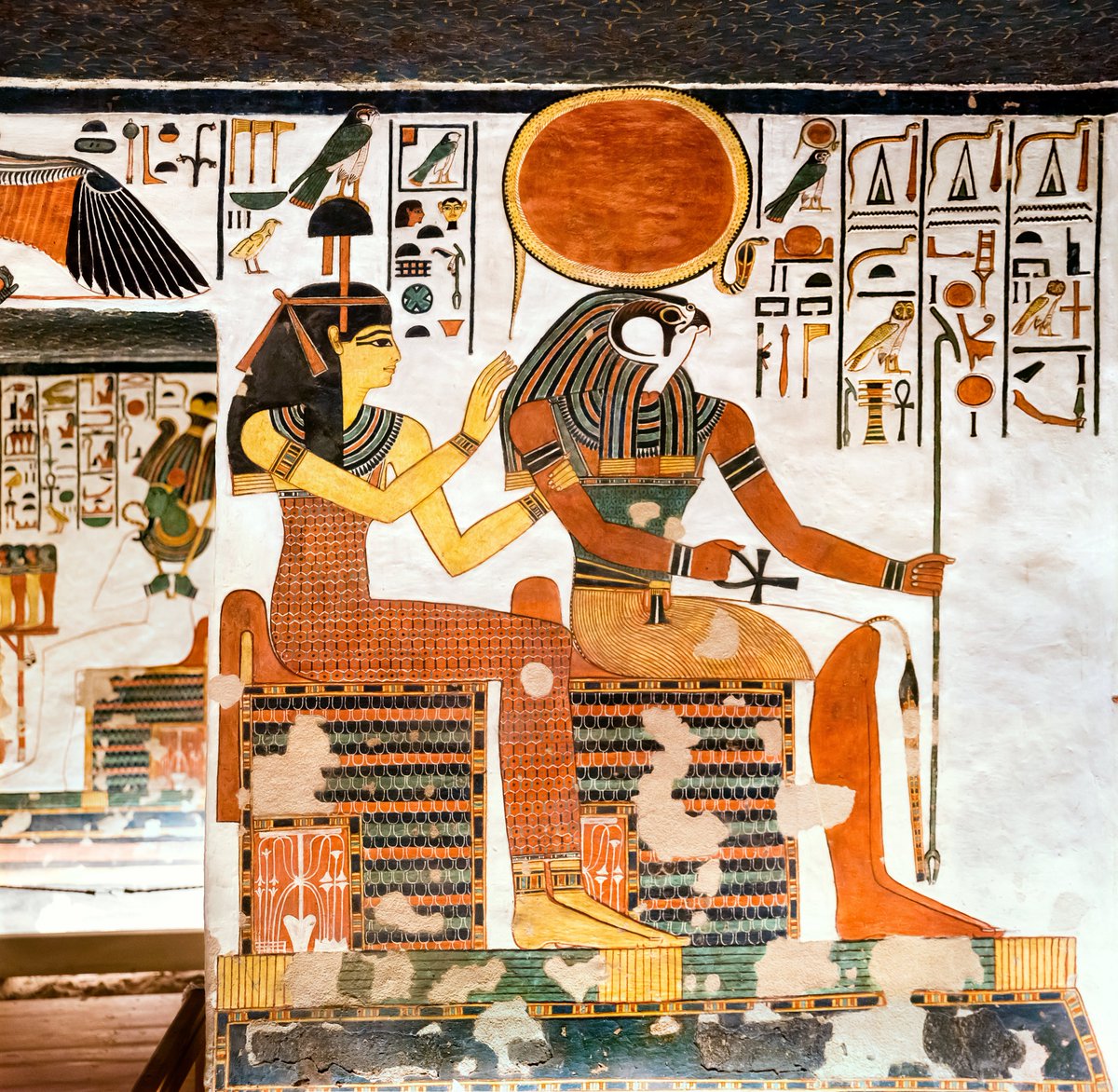
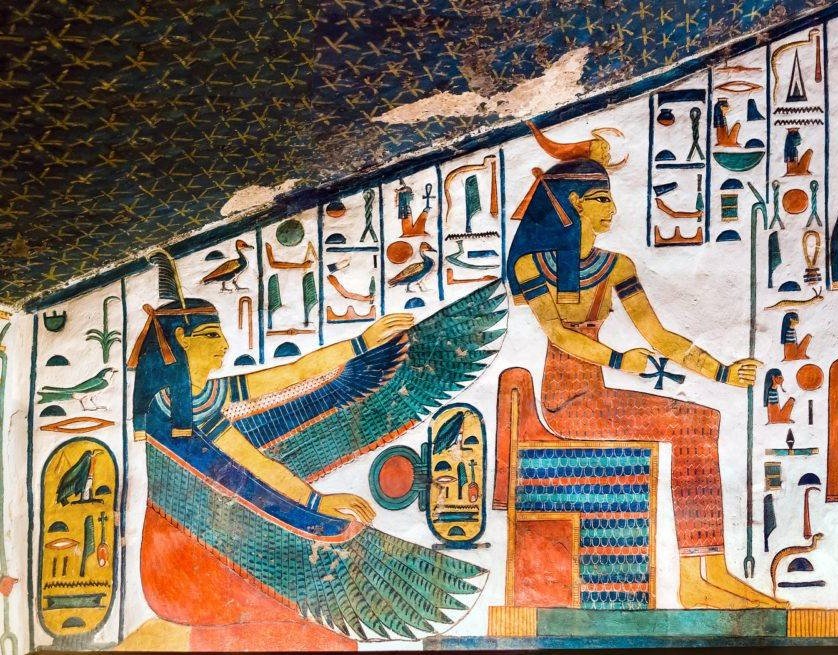
Other gods and goddesses from the walls of Queen Nefertari's tomb in the Valley of the Queens near modern Luxor
1 Osiris standing in a shrine
2 the solar god Khepri with a beetle for his head. He represents the rising sun at dawn
3 the falcon-headed sun god Re-Horakhty. His name means "Re-Horus, the Horizon Dweller" as the solar god, Re ruled the Eastern Horizon of daybreak and the Western Horizon" of sunset.
4the goddesses Selket on the right with her scorpion symbol on her head. Fortunately the Egyptians never showed her as a woman WITH a scorpion for a head!
On the left, Matt, the goddess of Truth and Cosmic Order kneel with her wing crossed with Nefertari's cartouche name between the wings
#mythology #tombs #art
1
28
111
1,891
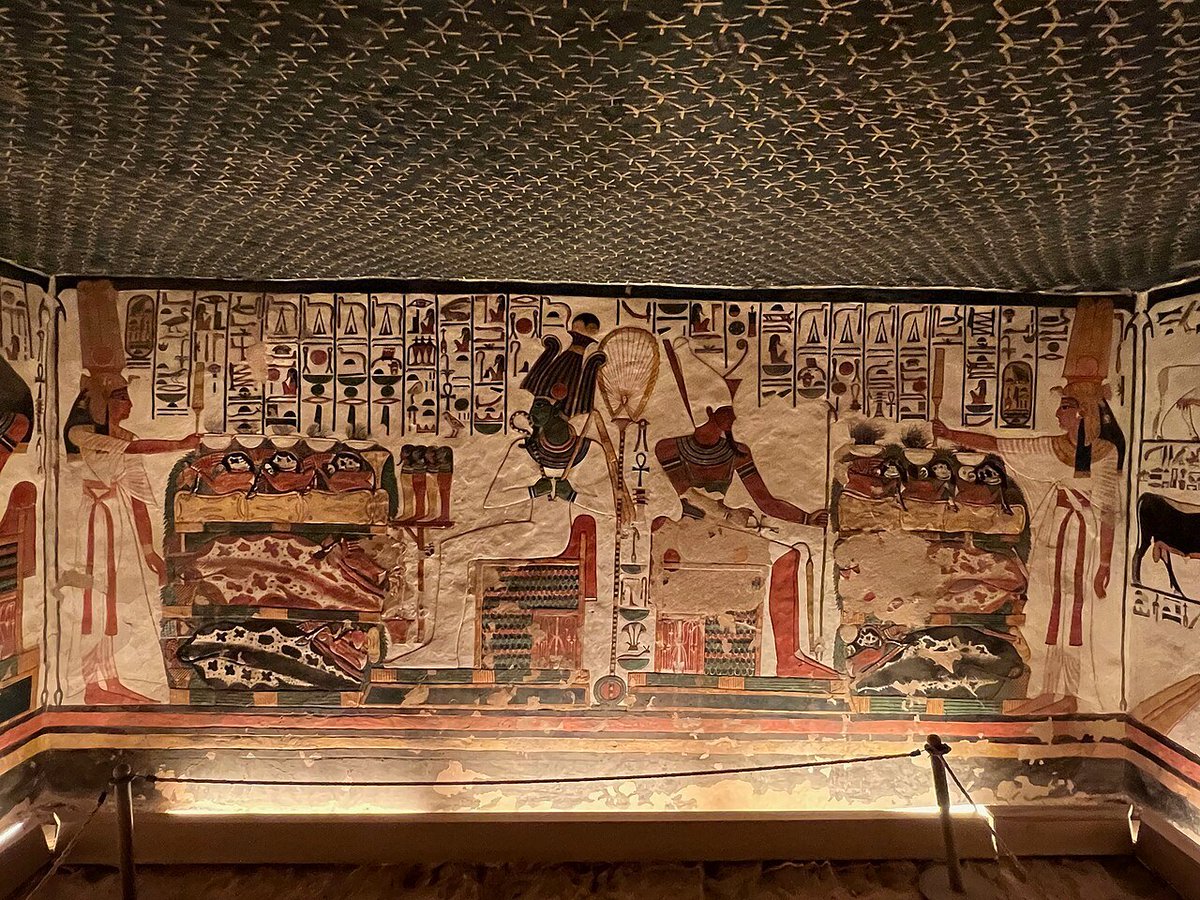
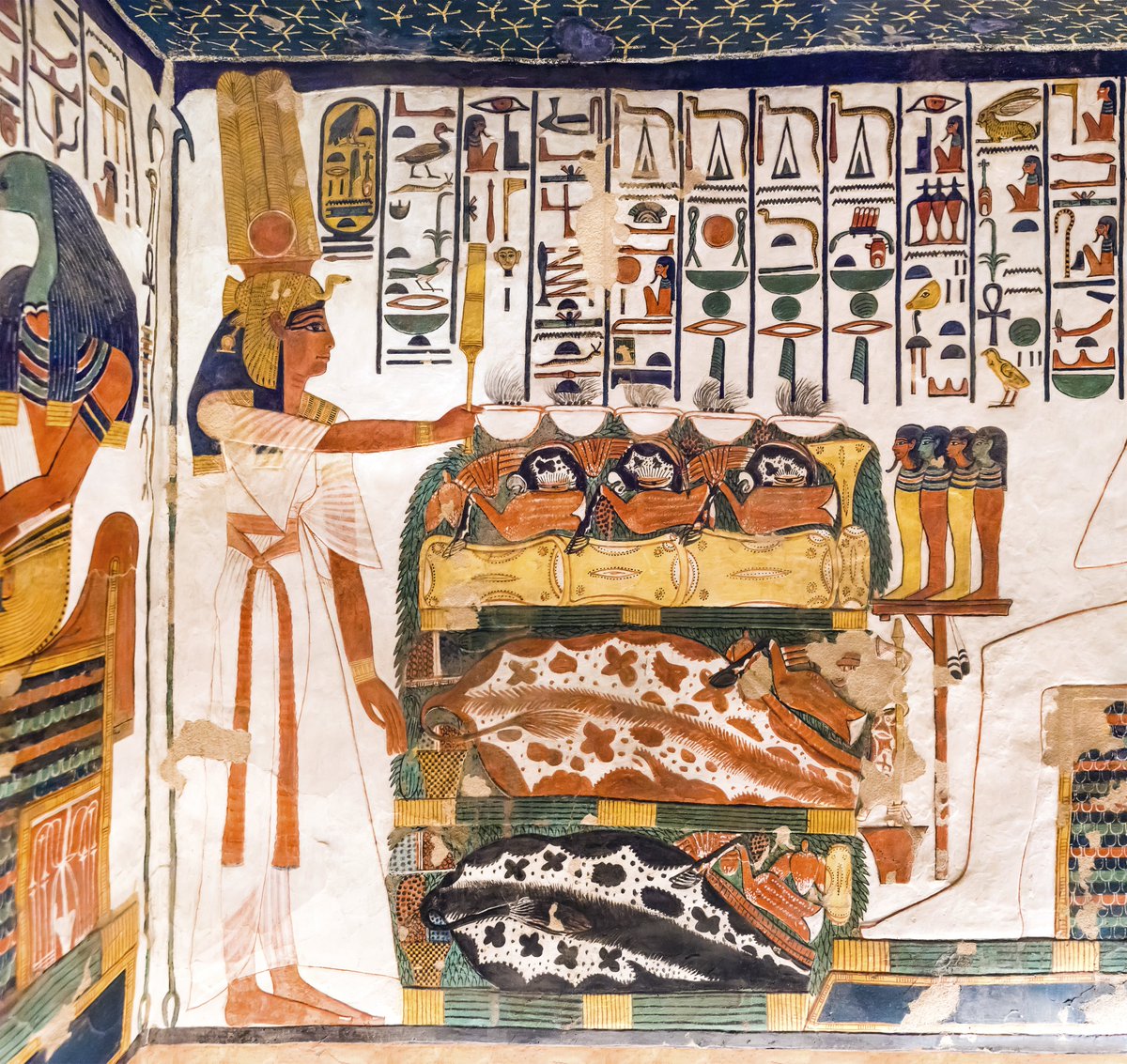
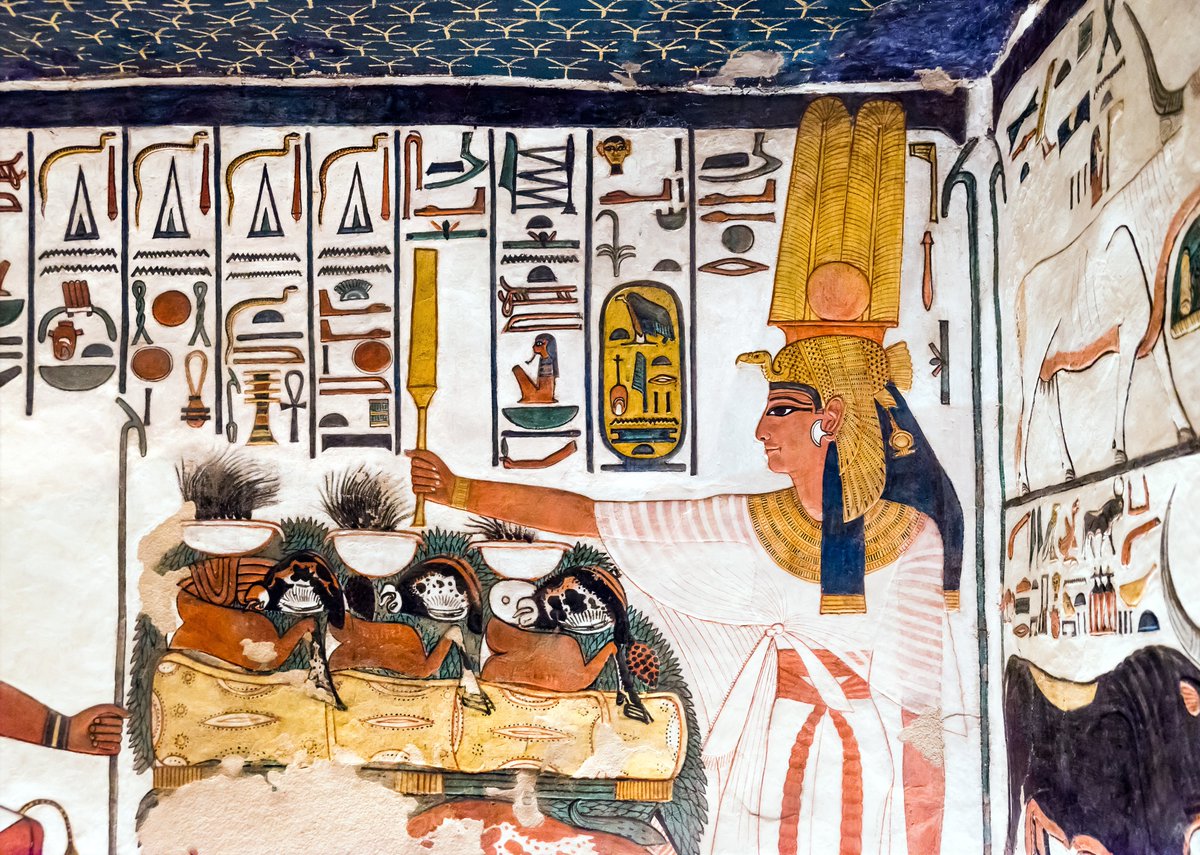
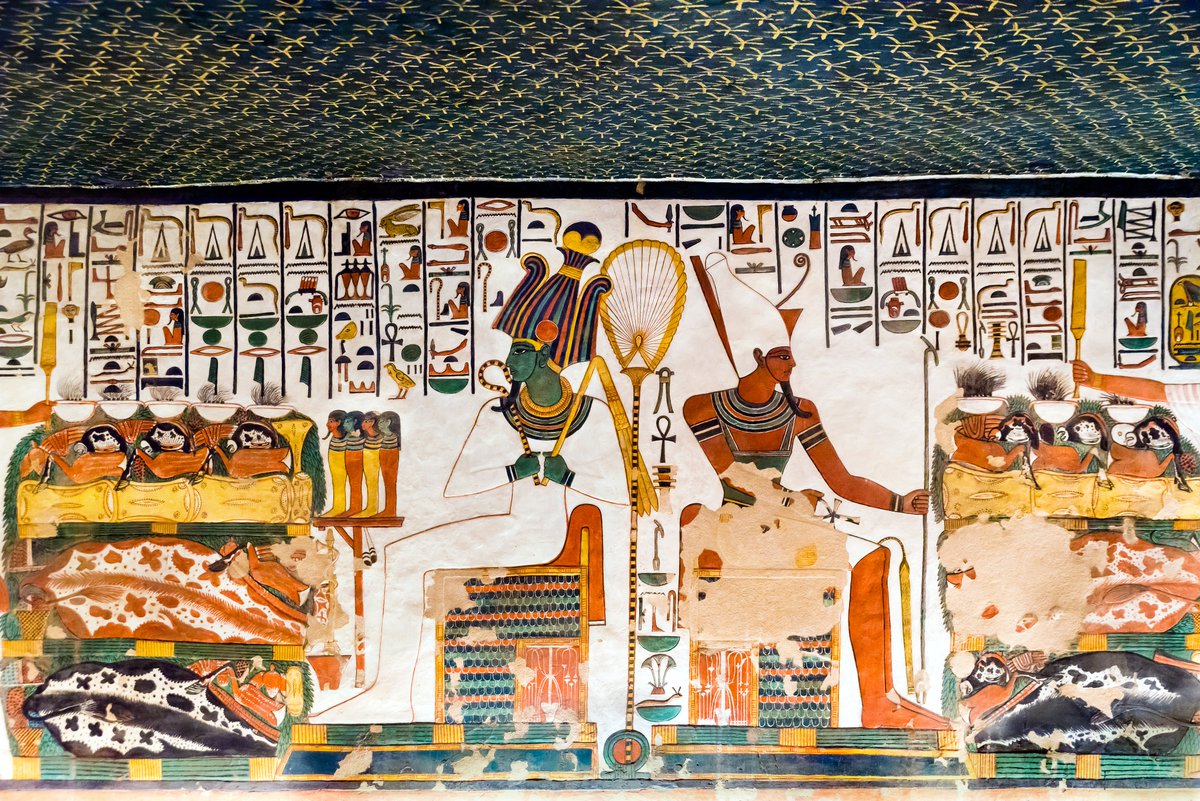
More scenes of Nefertari and the gods and goddesses from her tomb in the Valley of the Queens
1 double scene of Nefertari making huge offerings of food, drink, and incense to Osiris on the left and the sungod Atum on the right
2 queen offers to Osiris, left side
3 queen offers to Atum on right
4 Osiris and Atum sit back to back enthroned before altars piled with food
#AncienEgypt #ancient #queen
3
20
125
1,652
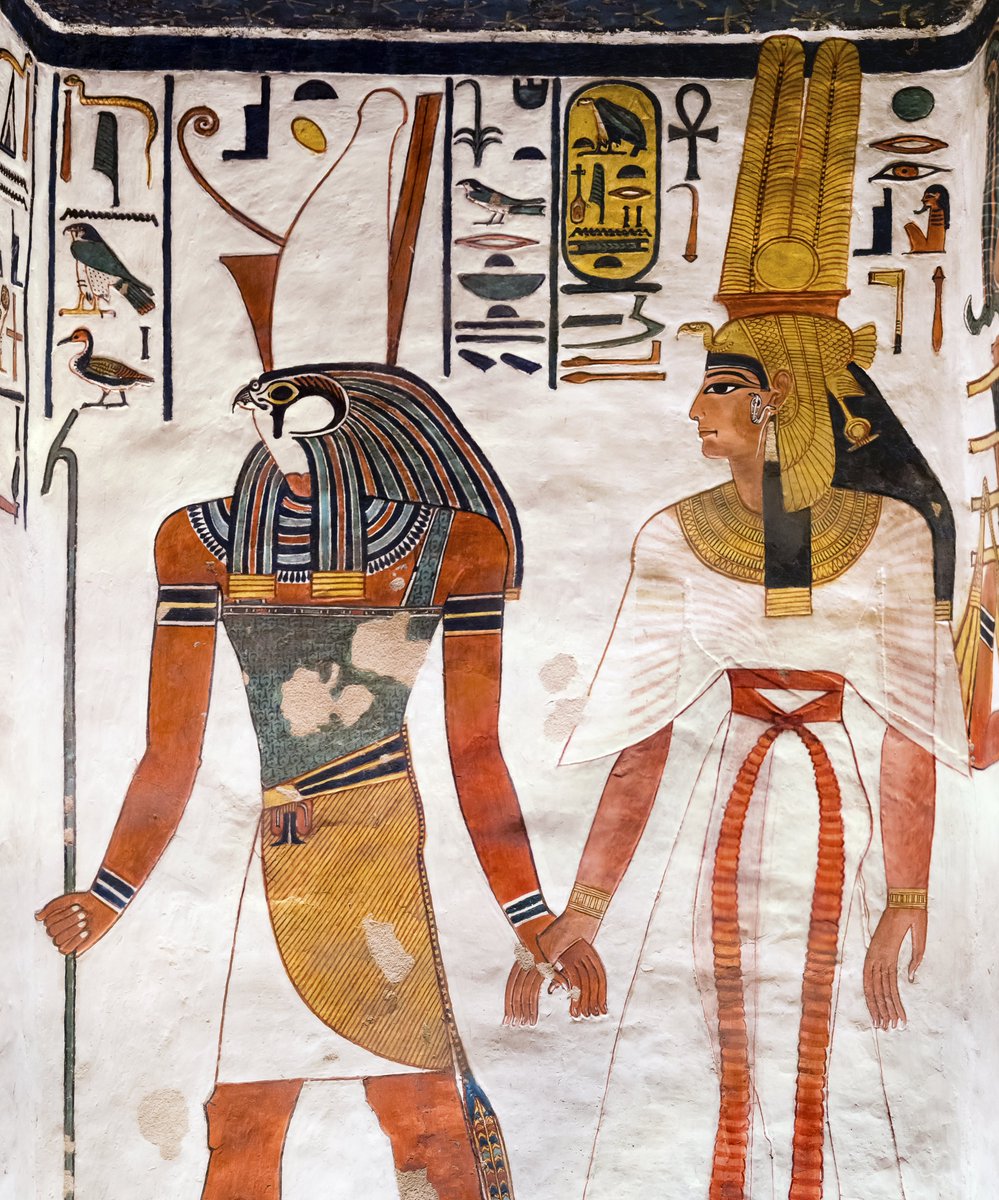
The walls of Queen Nefertari's tomb has two basic types of decorative wall painting. Scenes of the Queen facing the gods and goddesses and other scenes showing images and magical texts from the famous Book of the Dead
The most common examples portray Nefertari interacting with Egyptian gods, often those connected with their beliefs about the afterlife.
Often she offers food, drinks, incense, or other gifts. This imagery is similar to the decoration in temples where Pharaoh himself performs these offering rituals. The tomb images reflect Nefertari's privilege, influence, and favor with her husband Ramesses II who made this tomb for his wife.
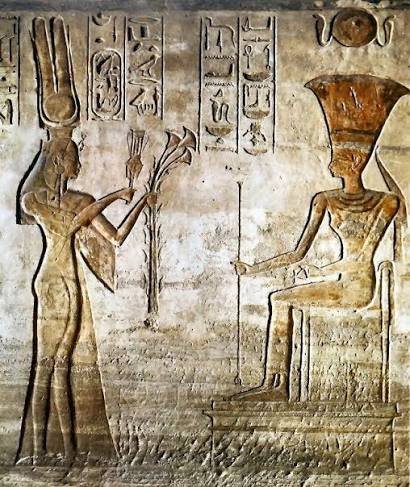
She also worshiped the gods in scenes from the temple Ramesses built for her at Abu Simbel in ancient Nubia
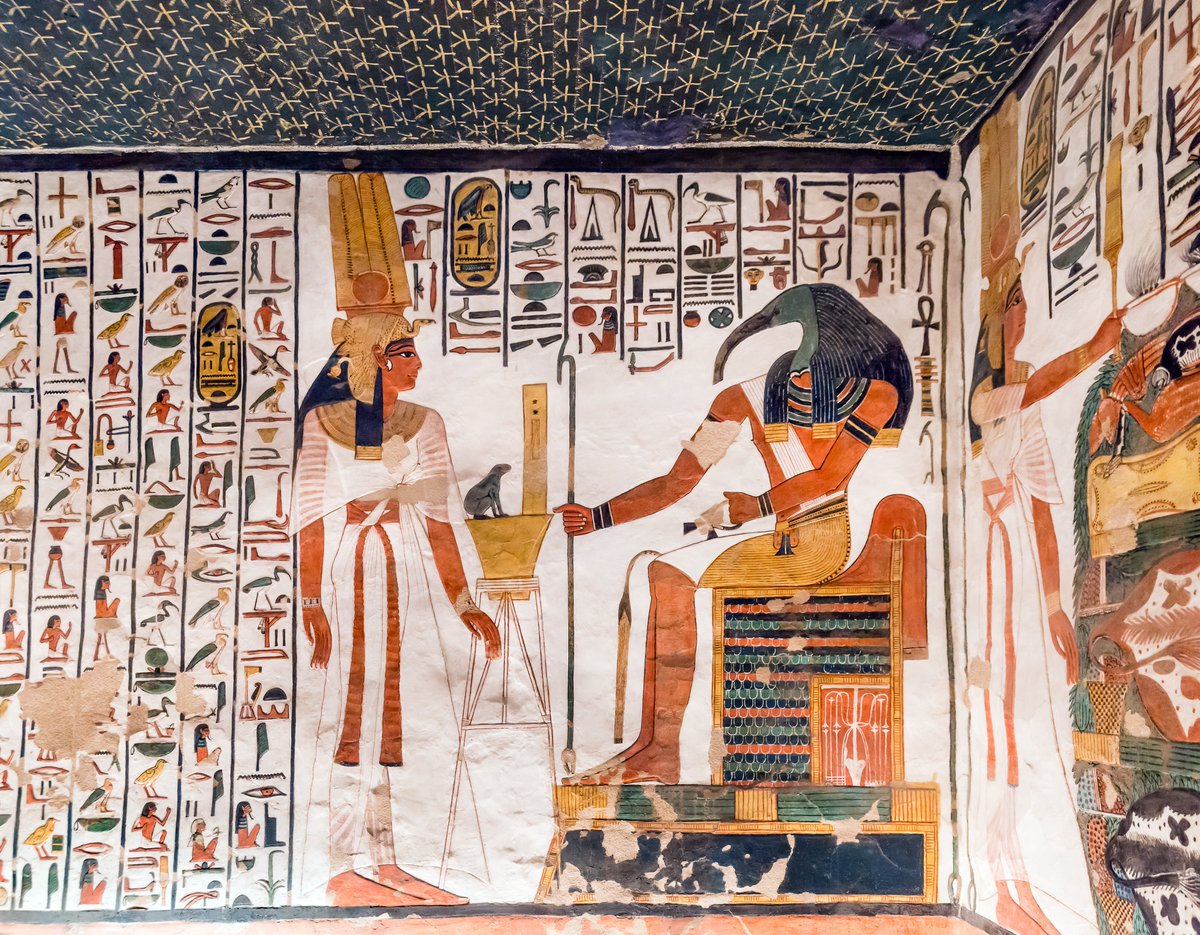
Pictures
1 Nefertari worshiping the ibis-headed god Thoth
2 the falcon headed god Horus leads the Queen holding her hand
3 She makes food and wine offerings to the goddess Hathor
4 from her temple at Abu Simbel, a wall carving shows Nefertari worshiping the goddess Anuket who has a crown of ostrich feathers
#Egypt #archaeohistories
2
18
84
3,311
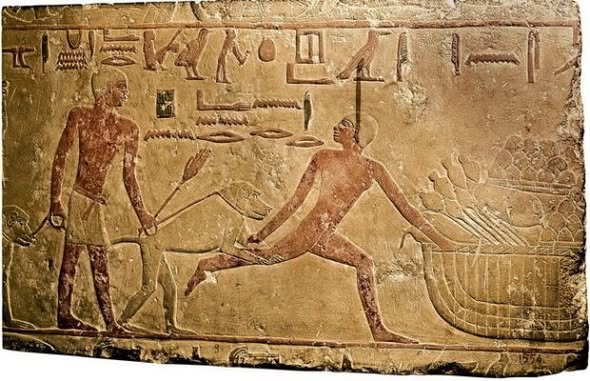
Reduce crime, bring back police baboons!
Old Kingdom tomb scene from Saqqara
4
14
62
1,851
Dr. Peter J Brand retweeted

“This planet is our home. Our life and hers are interdependent.”
- Doreen Valiente (1922-1999)
About the Author:
Doreen Edith Dominy Valiente was an English Wiccan who wrote much of the early religious liturgy within the tradition of Gardnerian Wicca. Her books include Natural Magic (1975), Witchcraft for Tomorrow (1978), and Charge of the Goddess (2000).
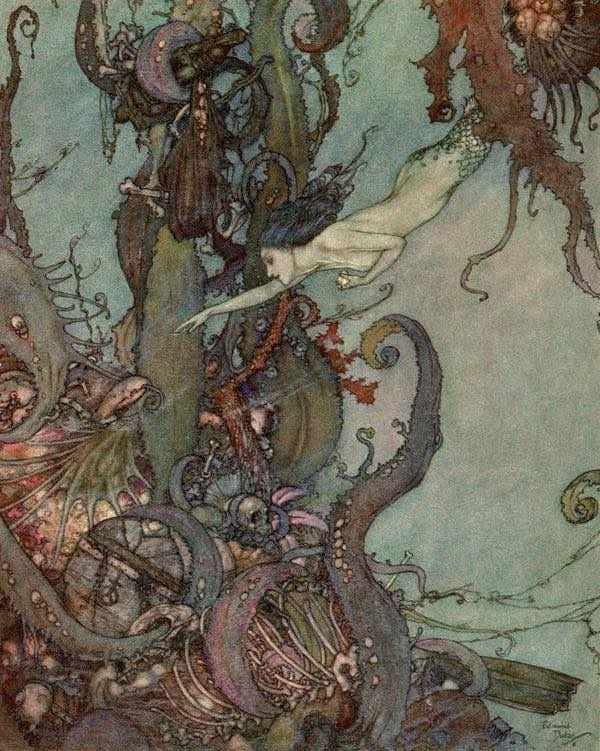
[Image: The Mermaid (1911) tipped-on color plate by Edmund Dulac (1882-1953) as one of twelve illustrations for The Nightengale and Other Stories by Hans Christian Anderson.]
via The Smart Witch by Elizabeth
#FairyTaleTuesday
10
20
543
Dr. Peter J Brand retweeted

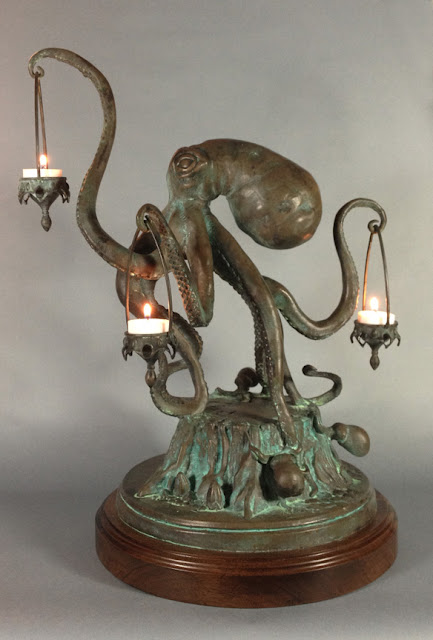
A Walktopus bronze sculpture by artist Scott Musgrove.
18
150
787
13,746
Dr. Peter J Brand retweeted

Wait for it.. 😂
491
3,629
27,800
958,069
It's "Silly Sunday" over on the AltArcheology fringe.
This time it's about-wait for it-how the Great Pyramid supposedly isn't really a tomb (even though it is).
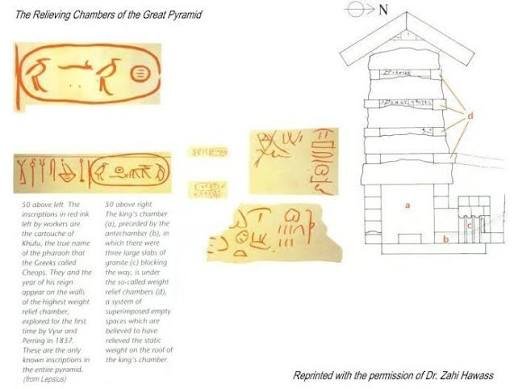
Claims like "there are no inscrip inside pyramids" are wrong of course.
Then there are those sarcophagi like the uninscribed one in Khufu's burial chamber which fits well in the tradition of royal and non-royal sarcophagi that were not always inscribed.
Most dubious is the claims of @BrightInsight6 @groyperexplorer and friends wh turn to Herodotus & other ancient Greek authors that were writing more than 2000 years AFTER the Great Pyramid was built.
Various Greek and Roman authors get a few things right about Egypt and other ancient civilizations, but they also got a LOT wrong.
Herodotus relied on the talestold by local priests and "interpreters" who acted like the ancient equivalent of "tour guides" to tell him about the pyramids. Like today, these guys were full of misinformation and we know from Egyptian records from this time they themselves believed in folk tails about the distant Egyptian past
Herodotus also admitted some of his information was possibility or likely wrong, but said he was just throwing it out there for readers to decide.
Should we believe his claim that Khufu pimped out his own daughter by offering her sexual favors to pay for the pyramid and that she was so successful she made money on the side to build hor own small pyramid next to his.
Egyptologists and historians are skeptical! Maybe Jimmy Corsetti thinks we should believe Herodotus on that point.
Herodotus exaggerated a bunch of details about the pyramids that we know don't fit with basic reality.
The pyramids were not built by 100,000 slaves
He also doesn't mention the Great Sphinx, kinda an important detail!
It's not that he misidentified the builder of the Sphinx, he simply doesn't mention its existence.
So if we trust Herodotus, there was no Sphinx. Should we admit Herodotus got his facts wrong or not believe our lying eyes when we see it.
Oh, and it wasn't burried under the sand either. Its head was visible for millennia before modern excavations and archaeological remains from Greek and Roman tims show it was still worshiped as a god in Herodotus' time.
Herodotus also discusses the giant gold mining ants from the Indian desert... fake news? Or am I being too skeptical?
Herodotus and other ancient historians get a lot of bad information
Herodotus exaggerated a lot about the pyramids.
He didn't say all that much about Khufu's pyramid, just a few paragraphs. But he was interested in their grandeur and how they were built.
Herodotus doesn't mention a lot of things about the GreatPyramid, including its function as a royal tomb. He didn't give it any other function except as an obsessive desire and the cause of a century of misery Khufu imposed on his people by closing temples and not worshipping the gods.
He misidentified the Osiris Shaft. The Osiris Shaft near the Great Pyramid is a typical Saite tomb shaft found near various Old Kingdom pyramids including two as the pyramid of Unas at Saqqara. The Saites ruled about 2000 years after Khufu. Herodotus' guide told him a tall tale about it being the alleged tomb of Khufu.
Also every pyramid has burial chambers inside or below them. The Osiris shaft isn't Khufu's tomb
Herodotus is not always a reliable source. His account is irrelevant as to the function of the pyramid as a tomb or for anything else!
Jimmy likes to insult academics, saying Egyptologist are "desperate" to prove the Pyramid was Khufu's tomb.
No, everything we know shows that it was. It's just a fact. I'm not desperate. Believe Jimmy's claims & the other alternative theories of guys on social media.
Or not.
That's your decision.
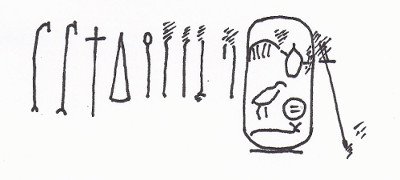
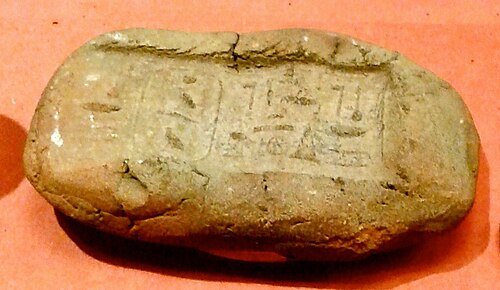
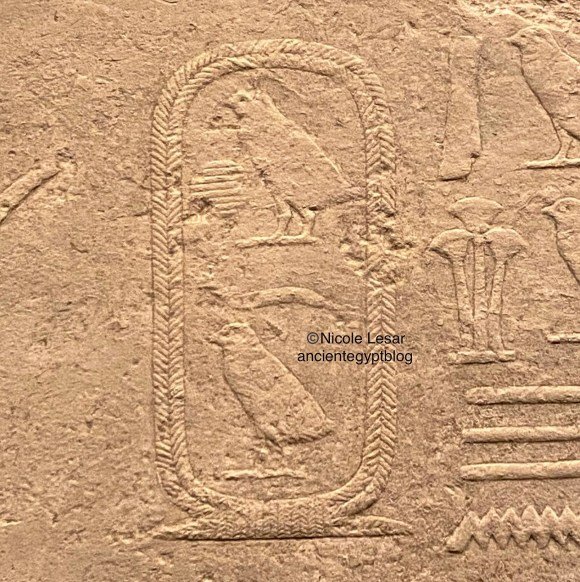
Also, there are other inscriptions and artifacts showing Khufu built the Great Pyramid like the workers marks on the back of some blocks & clay sealings, and inscriptions from the pyramid temple naming him
6
8
29
1,419
Dr. Peter J Brand retweeted
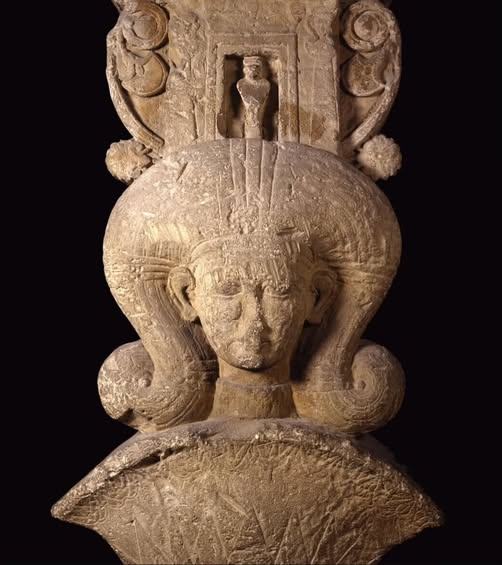
Hathoric votive stele dated 600-475 BC, Cypro-Archaic II. It is 133cm in height and once stood in the sanctuary of Astarte at Kition Bamboula (mound) in Larnaca, Cyprus which was discovered in 1885.
The Louvre Museum, Paris, France
via the Mother Goddess
7
15
578
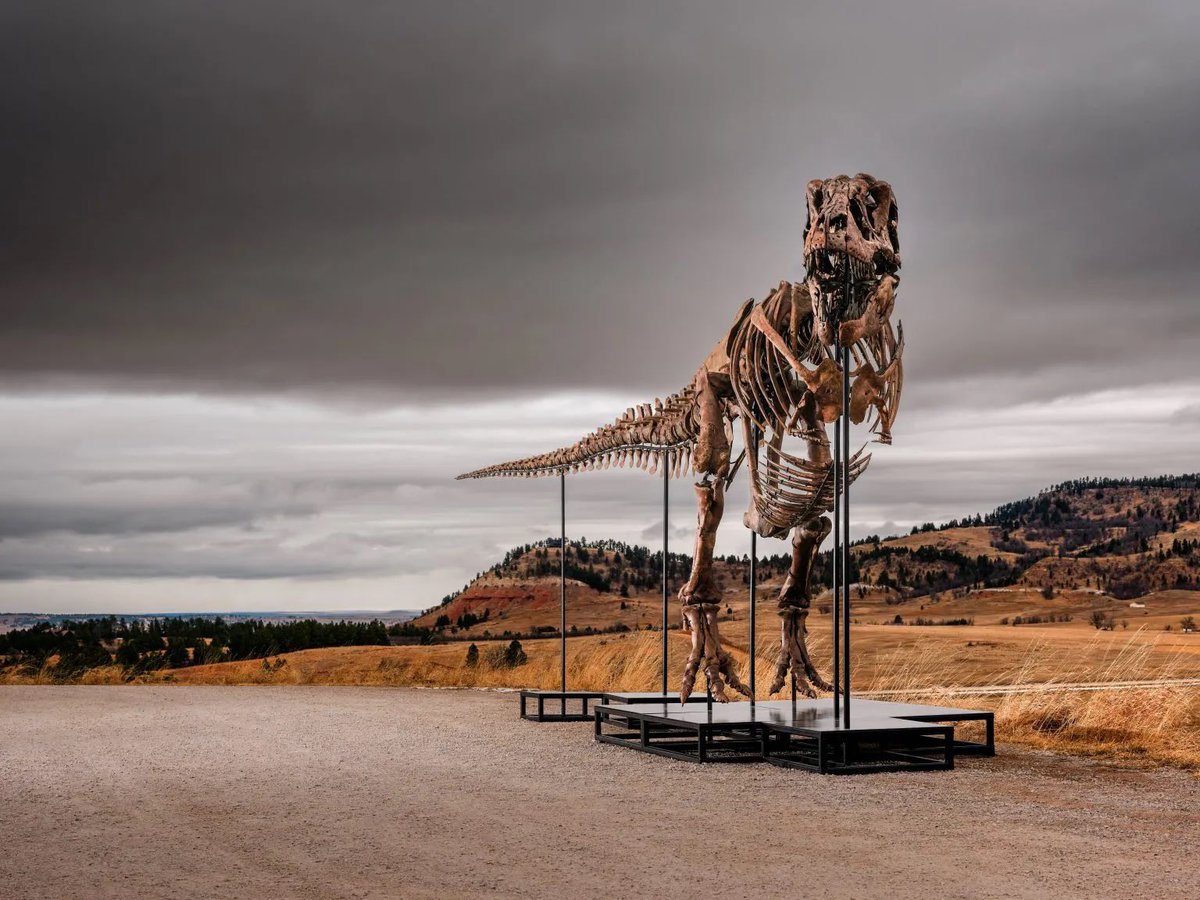
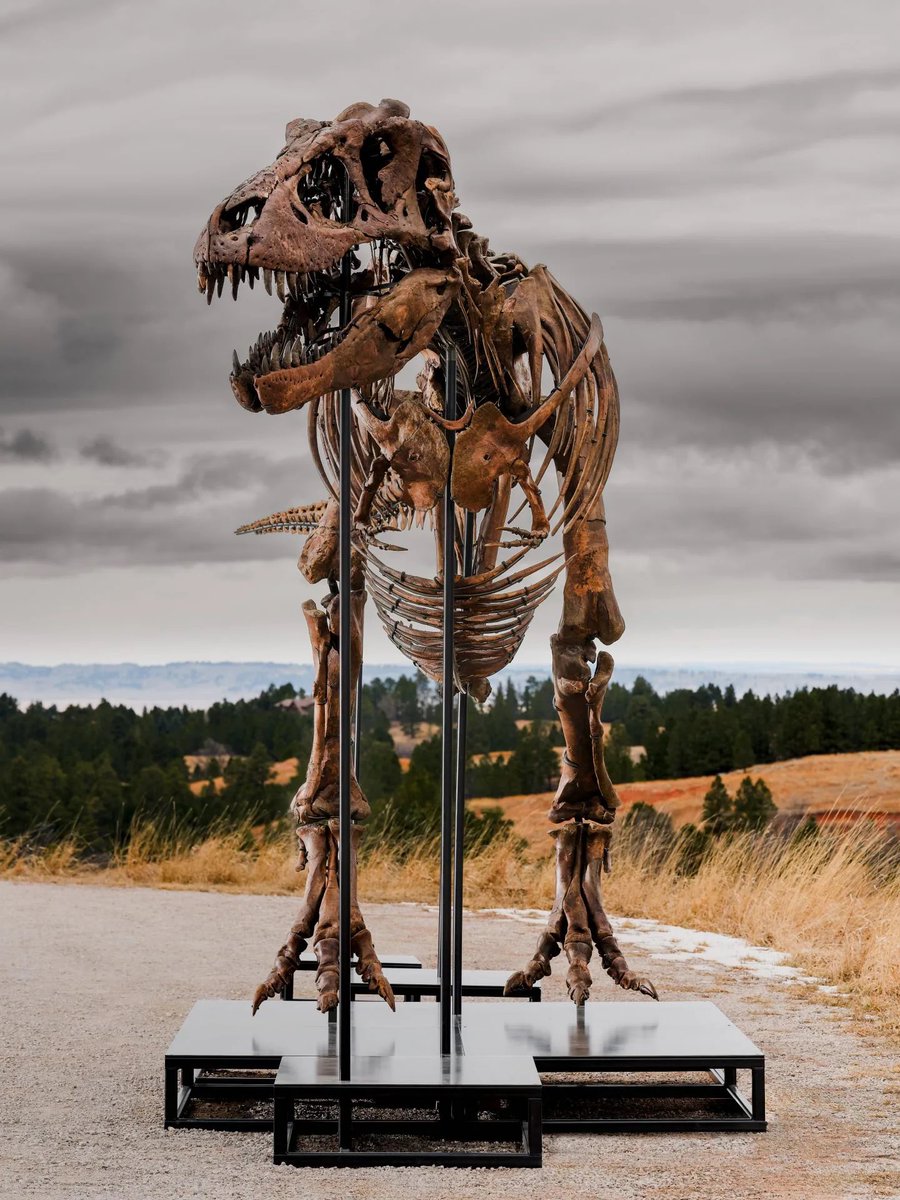
These kinds of auctions need to stop or require the buyer to make the specimens 100% available to scientists and the public
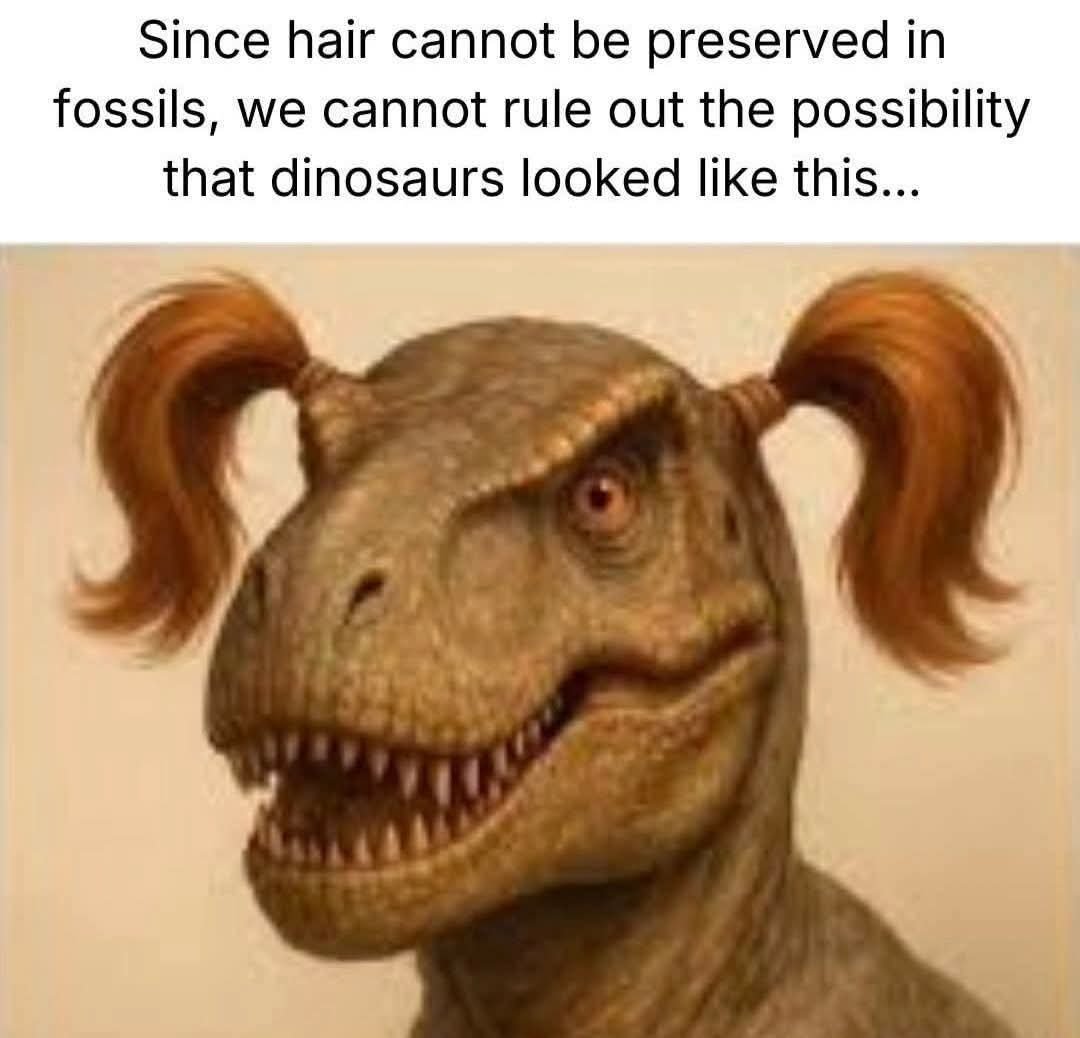
#dinosaurs #Tyranosaurus
#Trex
May 27

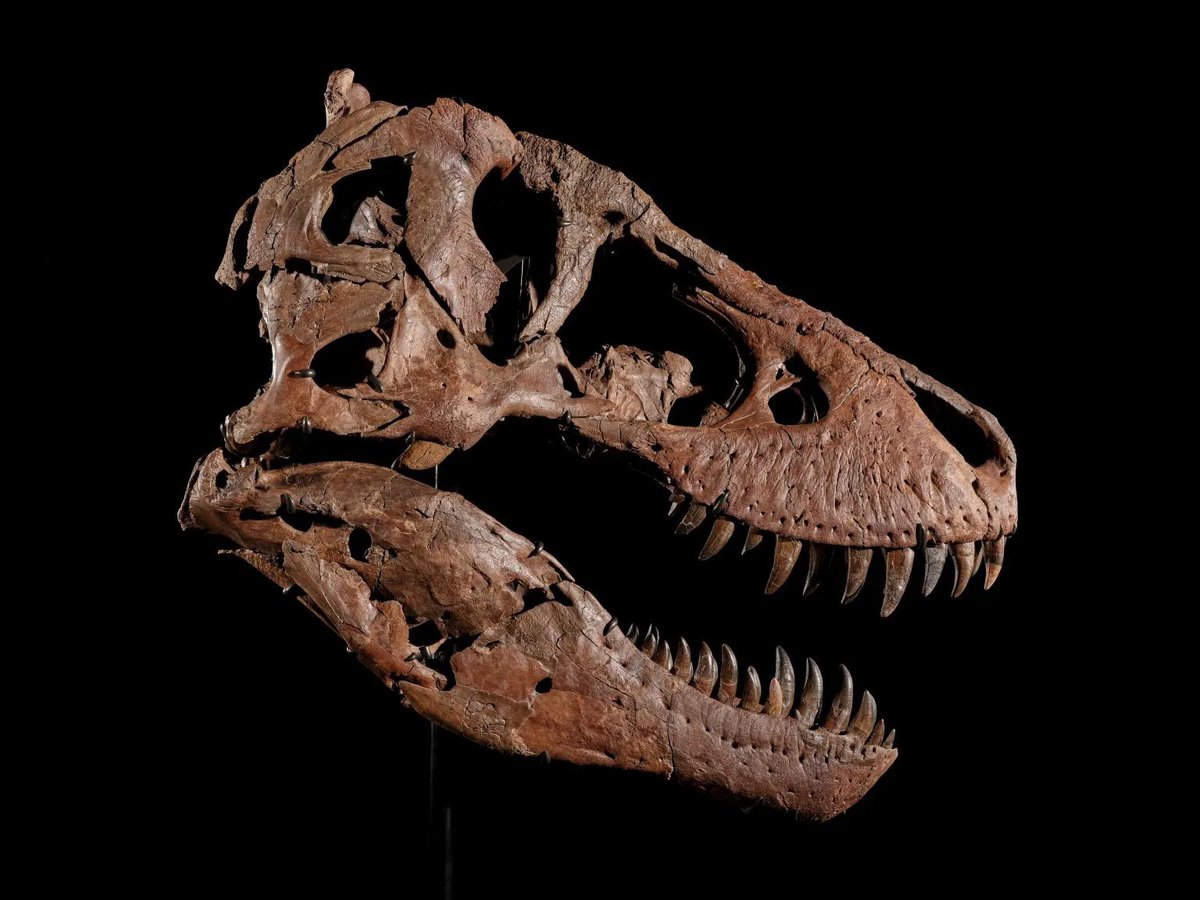
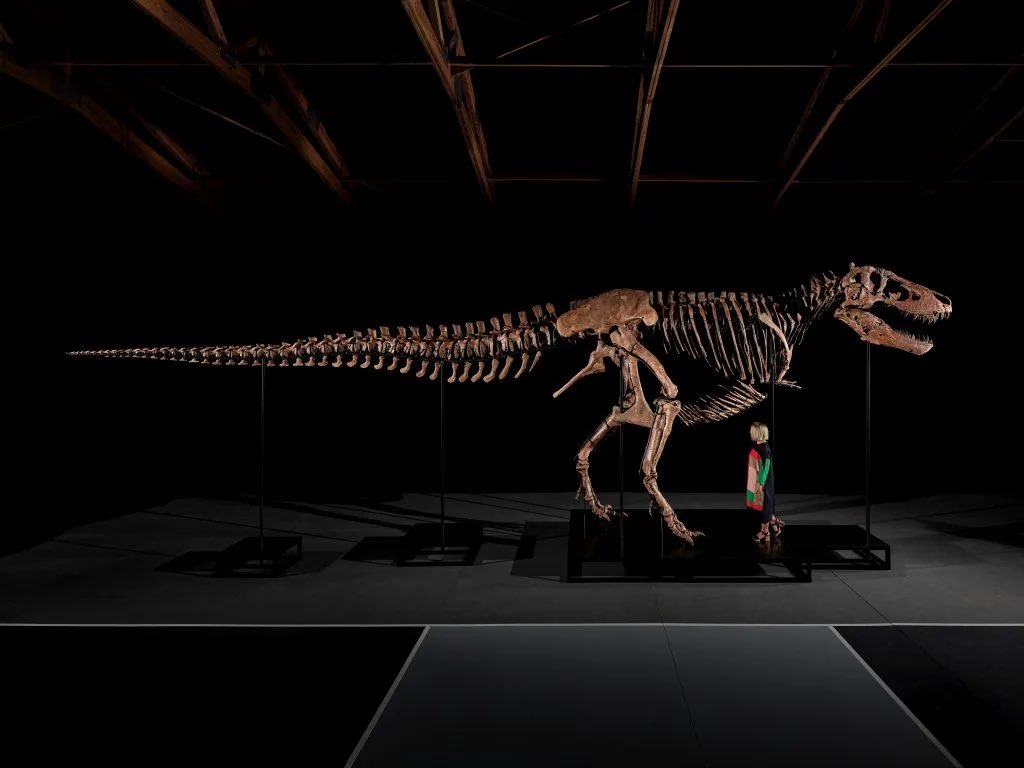
*sigh* another dinosaur up for auction. This time a T.rex nicknamed Gus. 63% complete and a well preserved skull. The expected price of $20-30 million for this 11.5 meter animal is way too high for museums to generally have access to. Here’s hoping for a happy ending…
1
1
25
1,204
Dr. Peter J Brand retweeted

May 27
This rabbit was supposed to be dinner. In 1919 a French farmer found one in his barn with patchy, balding fur, figured it was a sick runt, and tossed it in with the meat rabbits headed for the local priest. The priest took one look at the soft, velvety coat and pulled it out of the meat pile.
The farmer's name was Désiré Caillon. The priest, Abbé Gillet, knew nothing about genetics. He could just tell that the fur on this little animal felt different from every other rabbit in the French countryside. So he bought a second one with the same coat from Caillon and started breeding them.
By 1924, Gillet had about 150 of them. He sold his first batch (one male and two regular females) for 6,000 francs, which was roughly $1,000 at the time. He called the breed Castorrex, mashing together the French word for beaver (the fur looked like beaver pelts) and the Latin word for king.
That same year, the rabbit went on display at the Paris International Rabbit Show. Two American breeders, John Fehr and Alfred Zimmerman, bought a pair and shipped them home. By 1929, the breed was officially recognized in the US.
The velvet coat comes from a single missing letter of DNA, tucked inside a gene called LIPH. LIPH makes a chemical the body needs to grow normal rabbit hair. Take that one letter out, and the long stiff outer hairs (the ones that stick up on a regular rabbit) shrink down until they are the same length as the soft fluffy hairs underneath. Every hair on the animal ends up the same height. That is what makes the coat feel like velvet when you run a hand over it.
The same mutation also packs the hairs much closer together. The best Rex coats fit 15,000 to 38,000 individual hairs into a single thumbnail-sized patch of skin, roughly the same density as chinchilla fur.
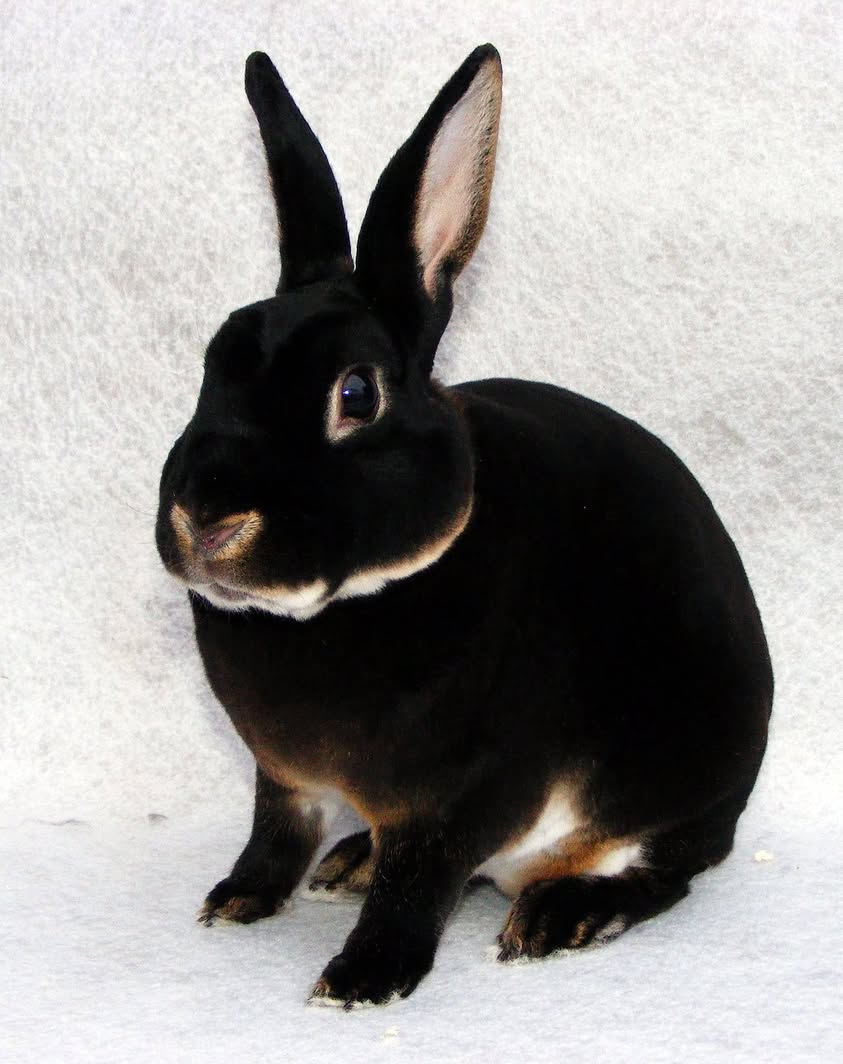
The black-and-tan look in the photo comes from a completely separate gene. Breeders call it the otter pattern. It paints the back, head, and ears solid black, then turns the belly, the rims of the eyes, and the insides of the ears a soft cream color, with a reddish line where the two halves meet. The same kind of markings you see on a Doberman.
The fur industry still treats Rex pelts as the closest substitute for beaver, seal, and chinchilla. The whole breed exists because a village priest a hundred years ago looked at a runt nobody wanted and saw something worth keeping.

Black Otter Rex rabbits.
Known for their velvety fur and distinctive black-and-tan markings, the breed’s plush coat comes from a rare genetic mutation first discovered in France in the early 1900s.

22
1,054
7,376
615,899
Dr. Peter J Brand retweeted

May 27
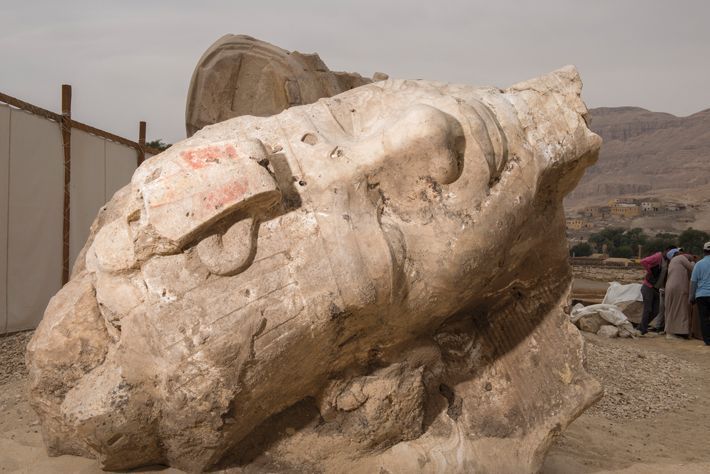
A giant alabaster head depicting Amenhotep III from one of the colossi guarding the mortuary temple’s third pylon preserves traces of its red paint.
archaeology.org/collection/r…
1
17
403