
Videographer, ClimateClean Energy Comms, Sun101.org, Wind101.info, Thinc.blog . NCSE "Friend of the Planet" , Cat Dad
Joined April 2010
- Tweets 102,439
- Following 2,497
- Followers 6,015
- Likes 13,189
10,506 Photos and videos

Pinned Tweet

Data from MIT and Elsewhere is clear: Renewable Energy lowers costs. Iran Debacle is supercharging energy transition ourmidland.com/news/article/… via @MDN
2
8
229
Rx for Trump fatigue.
"Mr Smith Goes to Washington" is a reminder that the Constitution is not a guarantee that corruption will never exist, but a tool set for citizens of integrity to use, and use again, as necessary to uncover and confront it.
youtube.com/watch?v=LZ0rABIS…
41
Peter Sinclair retweeted

Jun 14
Love how these types of posts conveniently exclude any of the additional context from the literal article they cite. Chasing engagement. Sounds like a big, scary number.
Context:
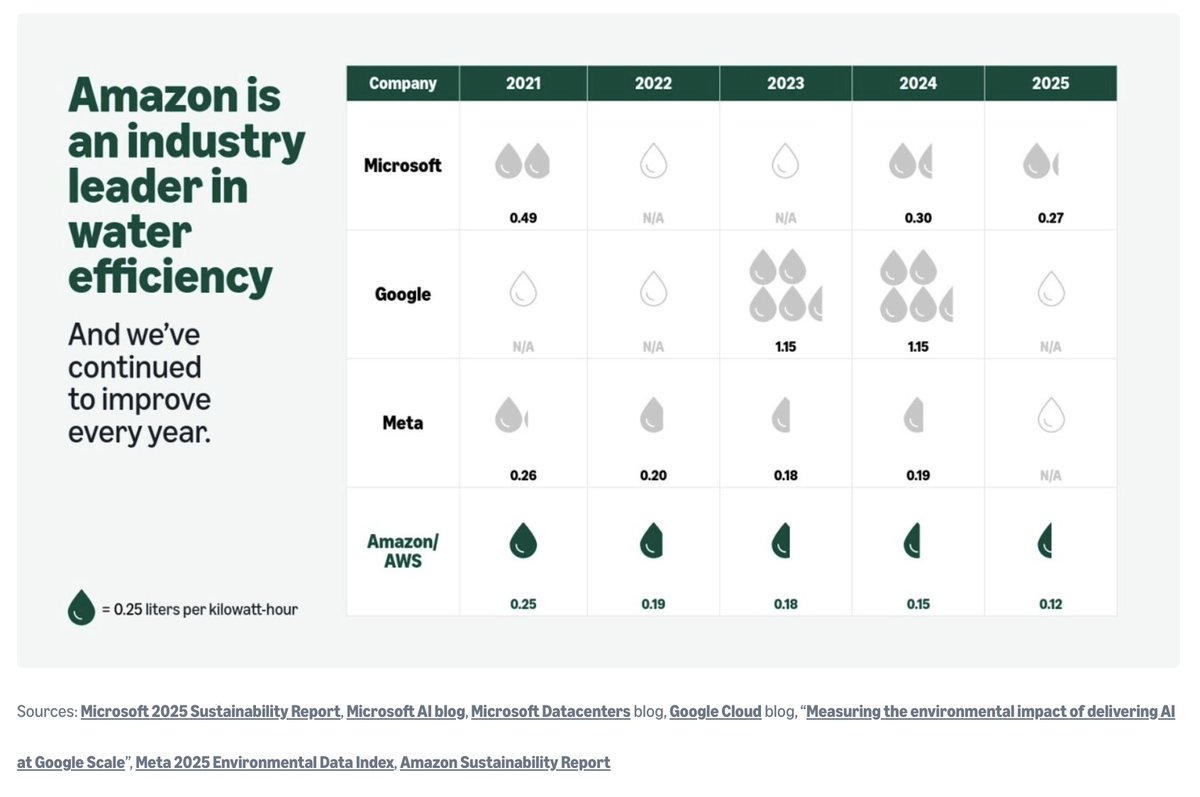
-Amazon's data centers use 0.12 L/kWh of water. Industry average: 0.84 L/kWh. 7x more efficient.
-vs. other hyperscalers: Microsoft FY25 WUE: 0.27 L/kWh. Meta 2024: 0.19 L/kWh. Amazon 2025: 0.12 L/kWh. Google's LLM-supporting data centers hit 1.15 L/kWh (though that is a different reporting boundary). Amazon's fleet-wide average is 0.12.
-Water intensity down 52% since 2021. Northern Virginia (largest IT load region) specifically: -42% YoY while demand grew.
-90% of the time, Amazon's data centers use zero water cooling = no water-based cooling. Water kicks in when temps exceed ~85°F.
-Amazon returned 3 gallons for every 4 used in 2025 (replenished / returned via projects). 50 replenishment projects coming online will return 5.8B gallons/year = >2x current withdrawals (obvious caveat is water impact is local vs. replenishment often compared to global)
For reference:
-Data centers as a share of global industrial water use: <0.5%. Amazon is a fraction of that fraction.
-U.S. lawn / landscape irrigation withdrawals are ~8B gallons/day.
-U.S. public water supply is 39B gallons/day.
-U.S. thermoelectric power withdrawals are 133B gallons/day (much of which is returned, btw; Withdrawals ≠ consumption)
So yes, water matters. Especially locally. But the honest critique is local watershed stress and disclosure boundaries, not pretending Amazon’s global data-center water footprint is remotely comparable to agriculture, lawns, public supply, or power-sector withdrawals.
Jun 12

Amazon said its data centers used 2.5 billion gallons of water worldwide last year, or about 5% of the amount metro Seattle consumes annually
5
14
44
8,816
Peter Sinclair retweeted

When people in Washington lower their voices and say, “Please don’t use my name. I’m afraid he’ll come after my family’s livelihood,” it means something has broken. People no longer trust the law to protect them.
298
3,041
6,234
170,684
Peter Sinclair retweeted

Is there like a sellout awards? Like the Razzi’s but for people’s opinions that are totally bought and paid for?
Oh, I forgot, she’d only come in fifth anyway. Who cares.
23
163
670
18,379
Peter Sinclair retweeted
The administration’s scam is to point to something already illegal, pretend it’s rampant, and demand sweeping powers to “fix” it. The Cato Institute says noncitizens are not voting in detectable numbers. The Brennan Center found suspected cases at 0.0001%. This has nothing to do with evidence and is all about building machinery for voter suppression.
zurl.co/OUTrF
zurl.co/8lAHs
57
1,462
3,217
61,986
PBS Horizons: Fact Checking on Data Centers
thinc.blog/2026/06/14/pbs-ho…
16
Peter Sinclair retweeted

The big problem with these UFC fights for Trump is that they reinforce the idea that he's is out of touch with Americans.
Just 16% say these fights are appropriate. Even just 31% of the GOP do.
This comes as 60% of voters & 80% of indies say the White House is out of touch.
476
1,382
7,163
523,660
Peter Sinclair retweeted

BREAKING: Senator Jack Reed, the Democrats top ranking official on the Senate Armed Services Committee, just went on Fox News and exposed how bad Donald Trump’s Iran negotiations really are. Wow.
106
2,658
8,402
229,849
Peter Sinclair retweeted

Jun 13
If what Dan Bongino told Tucker Carlson is true, then Thomas Matthew Crooks was a sacrificial dupe that Trump intentionally had murdered to help him win a presidential election and stay out of prison.
Jeffrey Epstein claimed Trump could "crack" under pressure and described him as "evil beyond belief" and "nuts" when feeling cornered.

905
6,093
17,649
819,531
Peter Sinclair retweeted

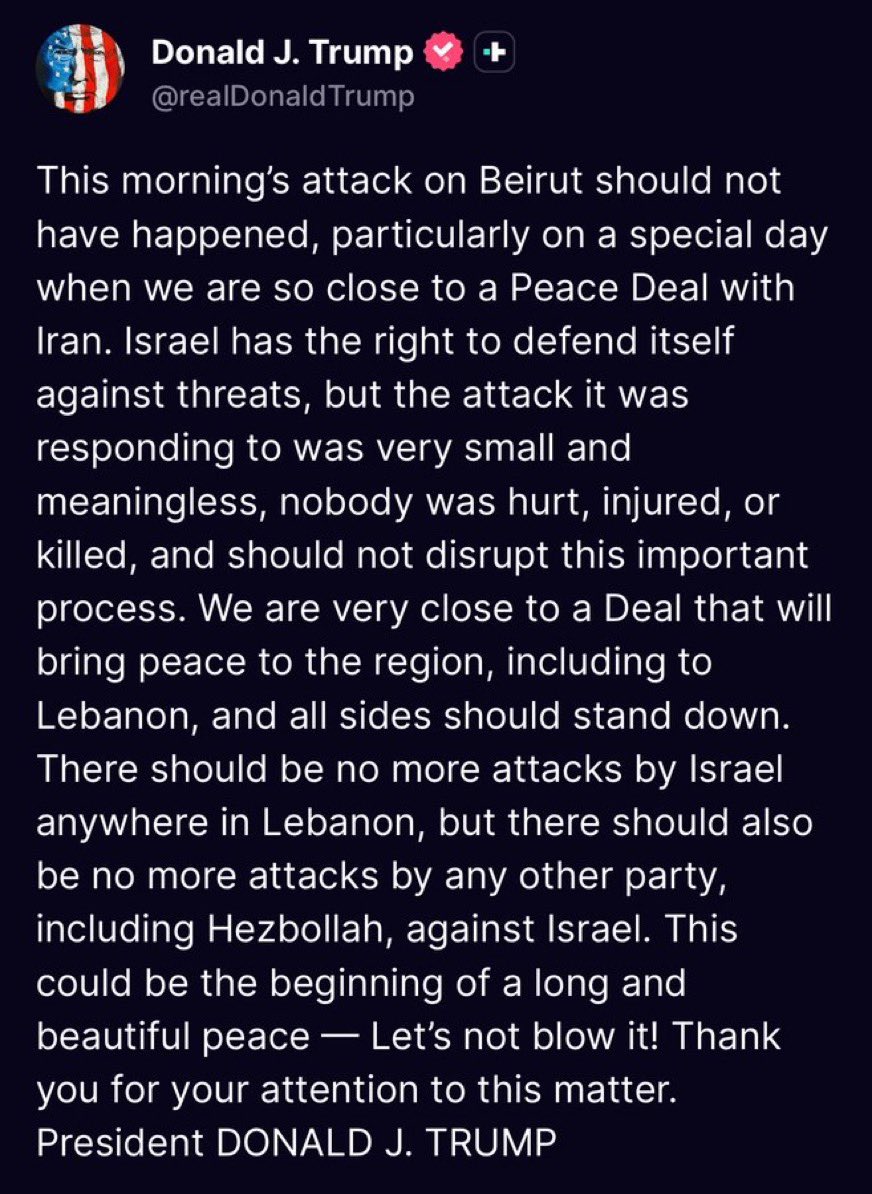
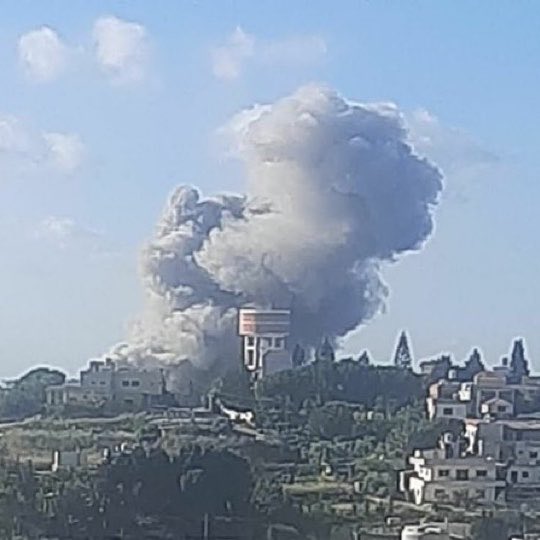
30 minutes after Trump said “There should be NO more attacks by Israel anywhere in Lebanon”
Israel bombs Tebnine, Lebanon
This is a humiliation ritual.
368
6,174
19,462
272,559
Peter Sinclair retweeted

Jun 14
This is disgusting.
Fighter Josh Hockit, a grown man, is spitting on himself at the Freedom 250 UFC weigh-in.
Donald Trump has made a disgrace of America.
2,630
2,486
18,033
7,701,233
Peter Sinclair retweeted
This isn’t just bad optics. National monuments belong to the public and shouldn’t be monetized by Trump, his allies, or corporate partners looking to profit from proximity to power.
11
227
560
7,676
no honor among thieves

Top White House officials fear Maggie Haberman and Jonathan Swan obtained audio recordings of Situation Room meetings for their forthcoming book.
"We're afraid some of our most sensitive conversations were being recorded. And we have no idea which ones." axios.com/2026/06/14/trump-s…
44
Peter Sinclair retweeted

Jun 14
Real America's Voice host Grant Stinchfield thinks the left sabotaged Trump's work on the Reflecting Pool:
"President Trump fixes the Reflecting Pool and a week later it's green again, loaded with algae… Sabotage… Vandalism? I believe it is. The left can't stand Trump, American greatness, and his quest to make DC beautiful again. What a shame!"
2,152
367
1,301
210,345
Peter Sinclair retweeted

Jun 13
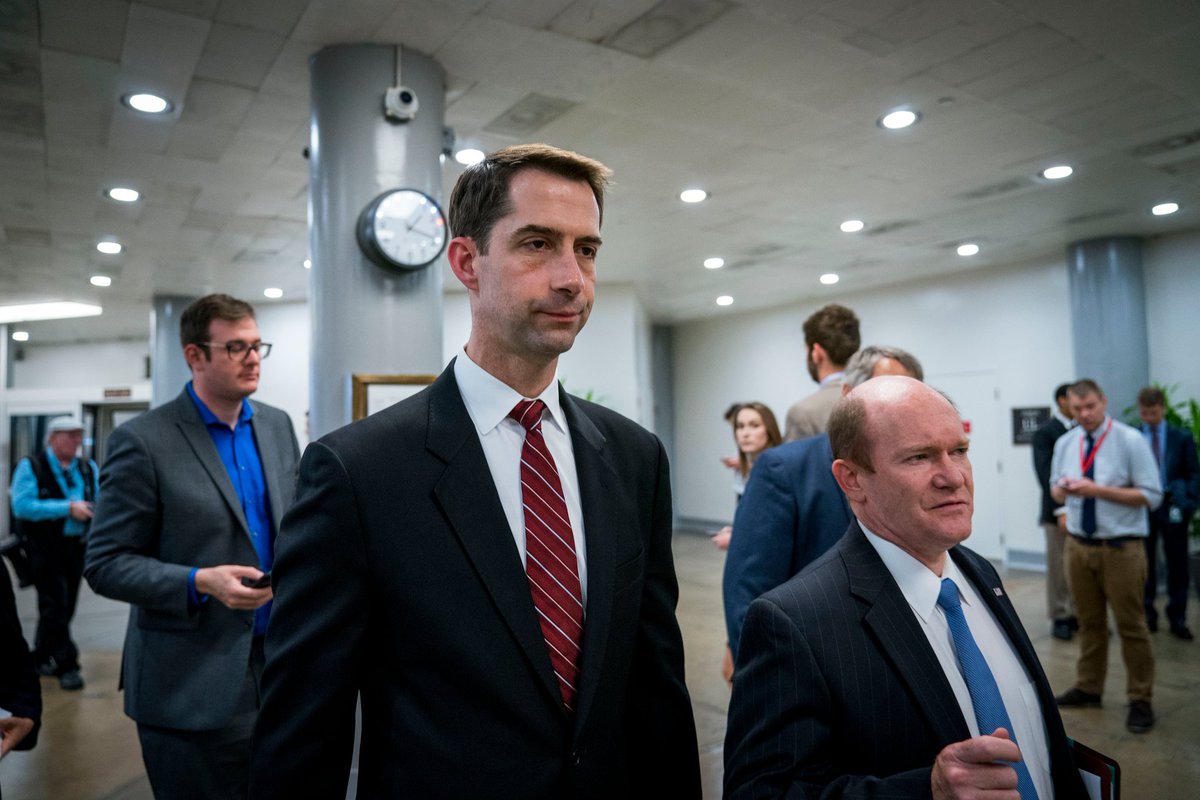
🇺🇸🇮🇱 The merger between the U.S. and Israel has a third piece almost nobody is talking about. While Section 224 fuses the militaries, Section 622 moves to fuse the intelligence services...
Buried in a 192-page intelligence authorization bill from Sen.Tom Cotton, Section 622 would legally require the president to "expand and enhance intelligence sharing" with Israel across nearly every topic of intelligence interest in the Middle East.
It would prohibit any reduction in that sharing except for a "specific and identifiable national security concern," then force a detailed report to Congress within 15 days justifying it.
Read that mechanism again carefully.
It strips the president of the ability to limit what America tells Israel, then makes any attempt to do so a political fight the Israel lobby can frame as being "against Israel's security."
It welds the intelligence spigot open by law.
Now stack the three pieces moving through Congress at once:
-The Stutzman resolution phases out visible aid.
-Section 224 integrates the militaries.
-Section 622 mandates intelligence sharing.
Each one is less publicly accountable than the last.
Aid is a line item voters can see.
Intelligence liaison happens in the dark, where no price tag ever appears.
The strategy is to move the relationship out of public view precisely as public support collapses.
And the timing is the most scandalous part.
The Pentagon just rated Israel a "critical" espionage threat.
Congress's response to all of it is to legally mandate that America share more secrets with the country its own spy agencies say is robbing it.
Source: Responsible States Craft / Writer: Daniel
592
3,131
5,278
312,238
Peter Sinclair retweeted

Jun 14
I give this a thumbs down. 👎
543
1,494
5,181
77,300
you voted for the world's most notorious liar and now you're tired of Lies?

🚨 JOE ROGAN JUST SNAPPED 🔥
“I’m tired of the lies. Where the f*ck are the Epstein files?! Why is the JFK assassination STILL sealed after 60 years?! And who the HELL really killed Charlie Kirk?!”
The people are DONE.
They murdered Charlie in cold blood on stage in Utah — sniper shot, September 10, 2025. They arrested some guy named Tyler Robinson… but we all know the real story isn’t being told.
They hide the truth about Epstein’s clients.
They hide the truth about JFK.
Now they’re hiding the truth about Charlie Kirk.
HOW MUCH LONGER ARE WE SUPPOSED TO TAKE THIS?!
The elites are laughing at us while America bleeds.
DROP THE FILES.
TELL THE TRUTH.
OR GET THE HELL OUT.
#EpsteinFiles #JFK #CharlieKirk #DeepState #Rogan
15
Peter Sinclair retweeted

A new GAO report finds the F-35 can perform all its assigned missions only about a quarter of the time — a readiness rate that has fallen every year since 2021 even as sustainment costs climbed.

99
117
466
65,828
Peter Sinclair retweeted

Trump used the Armed Forces Full Honor Cordon — soldiers who escort fallen heroes and heads of state — to usher UFC fighters past Abraham Lincoln’s statue like they’re celebrities on a red carpet. I am LIVID. And everyone else should be too.
1,817
5,680
15,828
592,358
Yes, Wisconsin, that was a Derecho
thinc.blog/2026/06/13/yes-wi…
18