- Tweets 15,809
- Following 471
- Followers 597
- Likes 23,753

















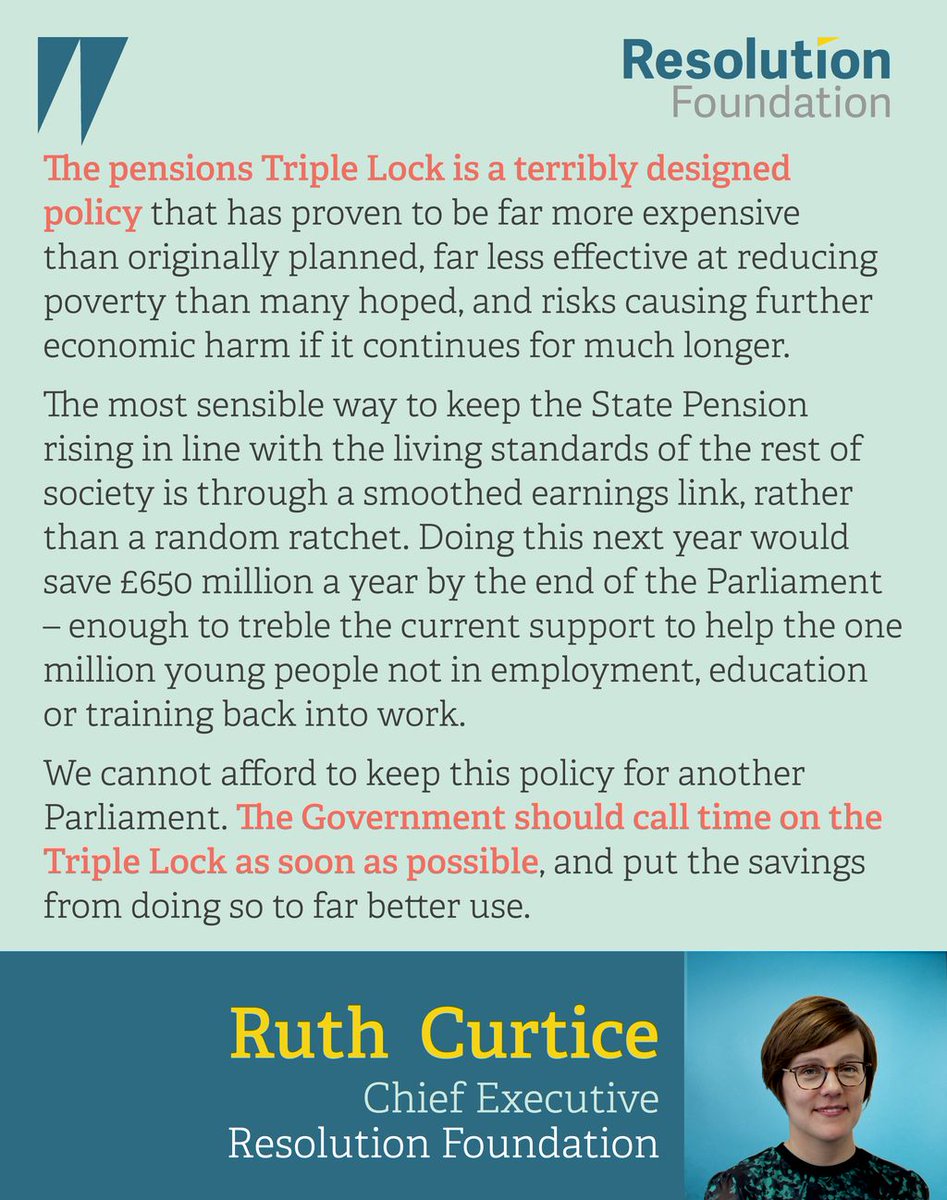
ALT Ruth Curtice, Chief Executive of the Resolution Foundation, said: “The pensions Triple Lock is a terribly designed policy that has proven to be far more expensive than originally planned, far less effective at reducing poverty than many hoped, and risks causing further economic harm if it continues for much longer. “The most sensible way to keep the State Pension rising in line with the living standards of the rest of society is through a smoothed earnings link, rather than a random ratchet. Doing this next year would save £650 million a year by the end of the Parliament – enough to treble the current support available to help the one million young people not in employment, education or training back into work. “We cannot afford to keep this policy for another Parliament. The Government should call time on the Triple Lock as soon as possible and put the savings from doing so to far better use.”








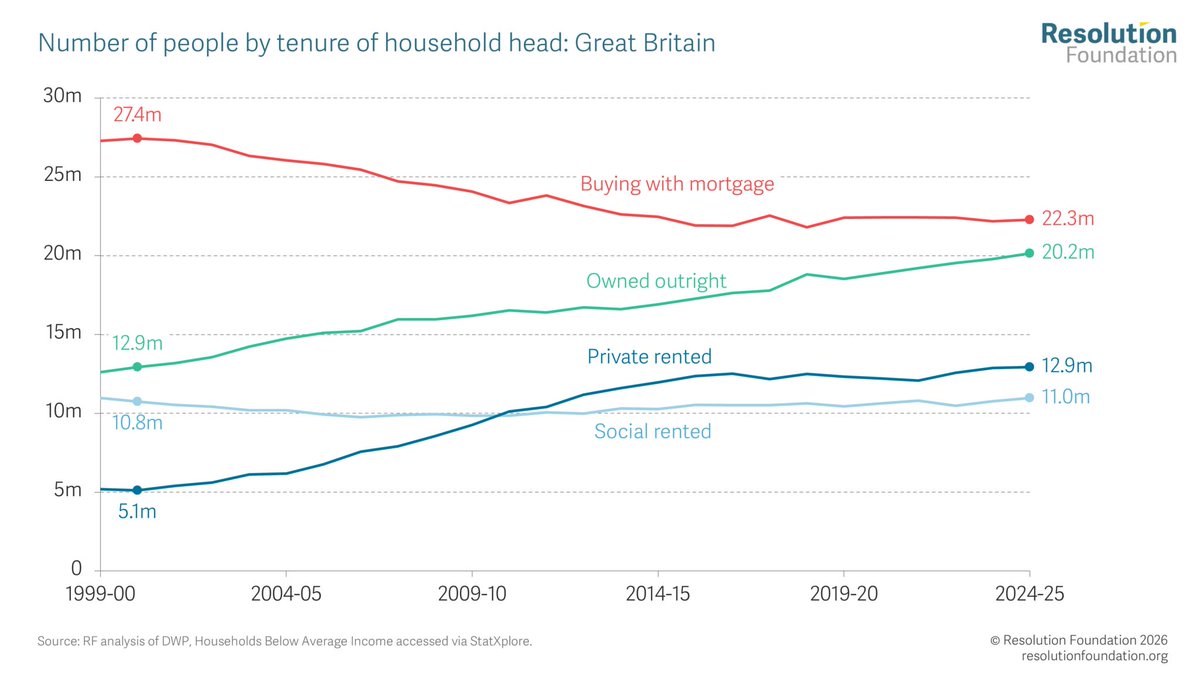
ALT The chart shows the number of people by tenure of household head in GB. The private rented sector (PRS) has grown hugely since the early 2000s, a shift that has played a significant role in how living standards have changed in Britain over the last quarter century. In 2024-25, 12.9 million people (in 5.2 million households) lived in the PRS, more than double the number in 2000-01 when the figure stood at 5.1 million people (in 2.5 million households)