
Philo (fai·low). Data Architect & Software Engineer. Good vibes only. No politics. github@philo-groves
Joined September 2025
- Tweets 1,999
- Following 76
- Followers 11,122
- Likes 3,611
258 Photos and videos










Pinned Tweet
Responsible disclosure of an unauthenticated RCE in GitHub Copilot CLI before 1.0.26. Reported in March, I found this bug with Opus 4.6 before the nerfs. There was no CVE/GHSA issued.
TLDR: no auth on port, port exposed on network, and tool permission confusion allowed remote command execution
Preconditions:
Victim: runs "copilot --acp --port <p>"
Attacker: has reachability to TCP port
A bad actor could chain flaws from missing network/copilot auth, to node misconfiguration, and ACP misunderstanding. I was impressed with Opus 4.6 ability to bring these concepts together (with some nudging). The result is unauthenticated remote code execution from a reachable network position.
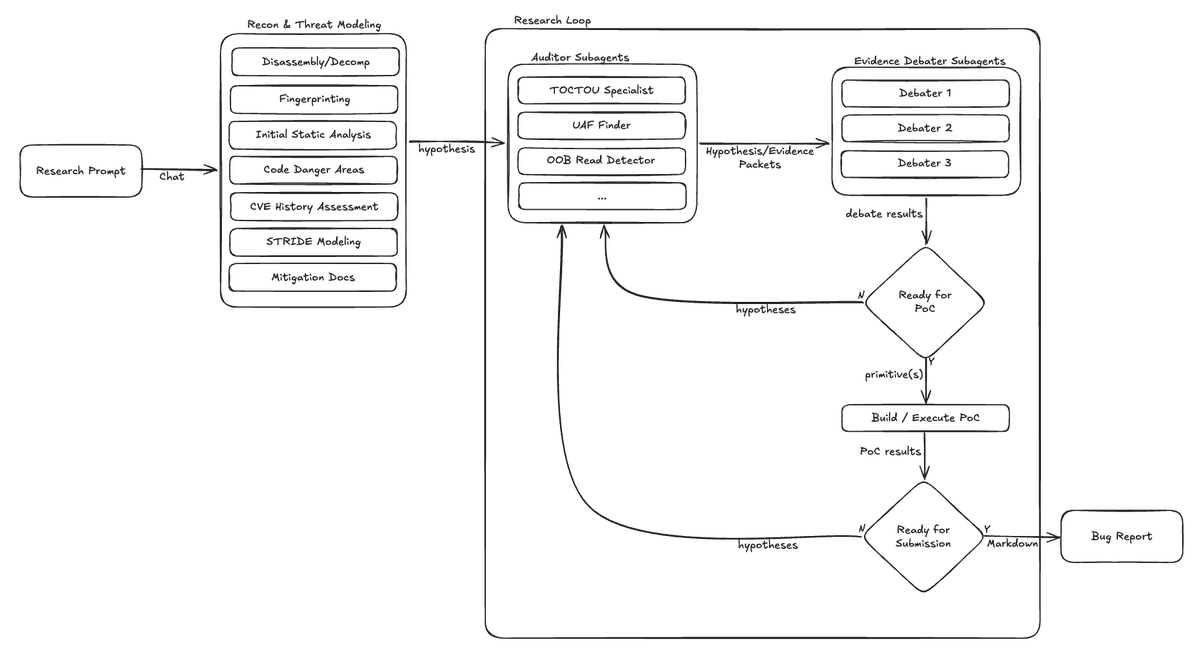
My logs show research on GitHub Copilot CLI began at 10:19p. The session started with the objective to find bugs in newer features of GitHub Copilot CLI. The idea was simple: fast moving = break easy.
Before any real analysis, recon and threat modeling was needed, so I asked Opus 4.6 to decompile the GitHub Copilot CLI. It is not open source. Opus 4.6 handled the decomp easily, then performed source code mapping and initial static analysis.
Finding 1. No Auth: there is (was?) no authentication or authorization on any requests sent to the GitHub Copilot CLI ACP Server port. The client never sends their own credentials and there is no request origin checking. Every unauthenticated client piggybacks on the GitHub Copilot credentials of the server for AI requests.
It wasn't until 12:11a that Opus 4.6 made this first breakthrough. The two-hour span was real honest work of mapping the surfaces and looking elsewhere. The bug was found after Opus 4.6 spawned a subagent tasked with "copilot --acp --port, bind behavior, client auth, and permission implications."
Finding 2. Node Misconfiguration: the first finding wouldn't be so bad if it was same-device service access, but there was a Node misconfiguration, which bound the GitHub Copilot CLI ACP Server host to 0.0.0.0: a wildcard for all network listener interfaces, including local, external, and public. As a result, the service was exposed across the network. No other protocols in the client were found to use this binding.
Coupled with the first find, a remote attacker could send unauthorized requests to a victim's GitHub Copilot CLI and use their paid features: start sessions, send chat messages, attempt tool calls, etc. At this point, I also needed to sign up a GitHub Copilot account for testing, so I did (cancelled later).
Opus 4.6 found this bug at 12:40a, only 29 minutes after the first finding. This was discovered after writing targeted prompts for other flaws in the ACP implementation, with a focus on bugs that may chain together. Again, this was found by a subagent.
Several reachability checks were also tested and completed by 12:48a. Cool, but there is no RCE yet, only remote access to a service.
Finding 3. ACP Misunderstanding: the only real "authorization" was at Copilot CLI ACP Server's LLM tool call layer. Breaking this authorization was important because through tools, a remote client can run shell commands. I audibly laughed when Opus 4.6 broke this.
By default, tool calls through the Github Copilot "--port" are limited unless the CLI user also runs with the "--allow-all-tools" argument. Safe, right? Well...
Copilot CLI uses a shared permission scaffolding between protocols, so the program only needs to handle a standard set of permission args (like "--allow-all-tools"), JSON formats, etc. And you may note I said tool calls are limited, not disabled.
When limited ("--allow-all-tools" is missing), Copilot delegates to the protocol of the server for tool permission, ACP in this case, and the ACP protocol... asks the client for permission. It is even in the name: Agent Client Protocol, the client is in charge.
In other words: a malicious unauthenticated remote client sends their shell command to the victim ACP server, the server says "this needs permission", and then sends the permission request to the malicious client, who approves their own requested shell command, and the command is then executed on the victim server.
There was an apparent assumption by GitHub developers that the protocol has server-side or non-client approvals, and that would act as its own authorization. For most server agent protocols, that may be the case. However, ACP has a hyperfocus on client control and this was not properly considered.
This final finding was discovered at 1:34a, nearly an hour after the second finding, was a two-parter. First was the permission bypass, from my logs, "ACP delegates session/request_permission to the connected client, so a malicious client can return allow_always". Second, only 2 minutes later, confirmed it works even when "--allow-all-tools" is missing.
I worked on the report and PoC deeper into the night, including a PoC which prints the victim system info from a remote position, and wrapped up this effort at 2:47a.
It was a lot of fun to find this RCE vulnerability, and I'm glad the core issue is patched. Watching Opus 4.6 create threat models, gravitate toward security-sensitive code (after decompiling programs on its own), and chain together findings was truly novel; this was before Mythos' announcement in April.
That said, I am done with the GitHub program. Beyond the bounty being less than 10% of advertised (10k-20k listed, received the program minimum of 617): triage took 7 weeks, not all issues were addressed, and core impact seems to be ignored.
The bug hunting process was awesome, the reporting process was awful.
4
1
15
1,450

The only way to make software more secure is to allow AI to scan for vulnerabilities and fix it.
But this is what got Fable 5 pulled.
The stuff that fixes vulnerabilities also reveals them, obviously.
The only solution is no guardrails. Use AI to fix it all and find it all.
Otherwise you just leave hacks to state level actors and leave everyone else vulnerable.
48
20
367
22,093
Philo Groves retweeted

13h
Fable will be back in a few weeks likely with financial sector style KYC, anti-token laundering & prompt & data retention.
30
15
235
20,557

Jun 13
Bro warned us!
Apr 9

The geniuses at the AI corporations are going to now pour everything into increasing cyber capabilities in an attempt to get AI sanctioned, so they can create a monopoly and force everyone to pay a subscription fee forever
1
3
20
2,500
Jun 13
Now I’m actually scared for 5.6 to be better than Fable. Please don’t be better, be legal and accessible.
1
1
41
5,384
Jun 13
I’ve typed and deleted a few posts, but this really describes the situation best.
Jun 13

Man what the fuck
6
781
Jun 13
This could the end of the industry, yikes.
Jun 13

The US government, citing national security authorities, has issued an export control directive to suspend all access to Fable 5 and Mythos 5 by any foreign national, whether inside or outside the United States, including foreign national Anthropic employees.
The net effect of this order is that we must abruptly disable Fable 5 and Mythos 5 for all our customers to ensure compliance.
Access to all other Claude models is not affected.
We apologize for this disruption to our customers. We believe this is a misunderstanding and are working to restore access as soon as possible.
Read our full statement: anthropic.com/news/fable-myt…
5
13
1,414
Jun 12
she claims not to work in tech, but she uses shampoo with peptides so idk
2
8
1,260
Jun 12
89 days since I found and reported a RCE in a popular coding agent CLI 🙃 Disclosure tomorrow, especially since they didn’t issue a CVE and users don’t know the risk.
6
1
133
13,387
Jun 12
Didn't expect attention on this lol. It's not one of the big 3 btw: Codex, Claude, Cursor
1
484
Jun 12

BREAKING: The SpaceX, $SPCX, IPO will be quoted at 9:50 AM ET today and begin trading at 10:00 AM ET.
Currently, the stock is indicated to open ~25% higher, making SpaceX the 7th largest public company in the world and Elon Musk the first trillionaire in history.
551
Jun 12
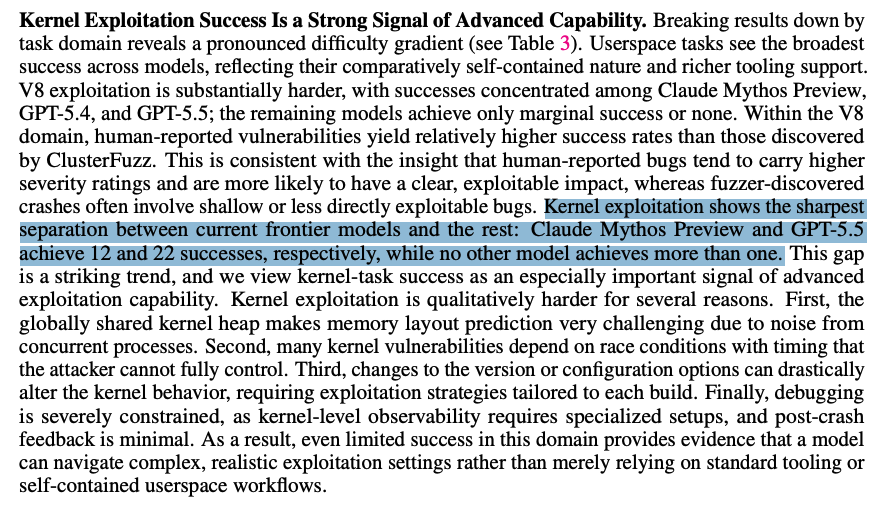
userspace vs kernelspace
Jun 11

we need to remove ai from the hands of real estate agents
what the hell is this


1
8
742
Jun 12
A raccoon broke into my trash and picked all the pickles off a hamburger before eating it, literally AGI.
1
7
540
Jun 12
Space is the next race after AI, and the technology races might even overlap. The fact that SpaceXAI was able to bring space and AI together… this snowball could be insane.
1
4
285
Jun 12
Amazing how some people (and models) can talk on and on without adding any details or digging into any surface. It’s like they’re filling a word count requirement but have no more content.
4
223
Jun 12
Assuming there will be no major AI news today with the big IPO, maybe a surprise Grok release to boost it but I doubt it’s ready.
4
385