Director, Queensland Quantum and Advanced Technologies Research Institute at Griffith University. Minneapolis, Caltech, MIT, Baritone, Woodworker.
Joined February 2018
- Tweets 7,040
- Following 1,243
- Followers 844
- Likes 18,395
192 Photos and videos




Pinned Tweet

20 Sep 2024
Proof is in the pudding. If half the quantum physicists suddenly relocate to Manhattan buying Classic 6’s and start complaining about private school math curriculums being soft I think we’ll know someone found a real quantum advantage.
1
1
22
2,391
May 22
Am now questioning if Rayleigh scattering and friends (Mie, Fraunhofer, etc.) is actually coherent because of its reversibility or lack there of. It’s temporally coherent I’m solid on that. #quantum
1
1
102
Apr 27
3
59
Mar 29
Peak empirical data science.
Mar 29

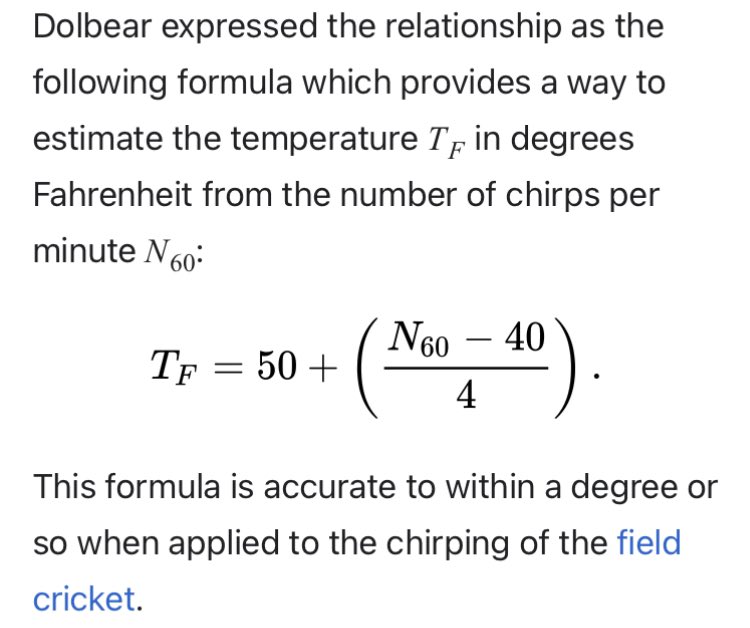
In the 1800s we had so much free time and love for our world we developed a mathematical formula to calculate the temperature outside based on cricket chirps that is accurate to within one degree
1
86
Mar 23
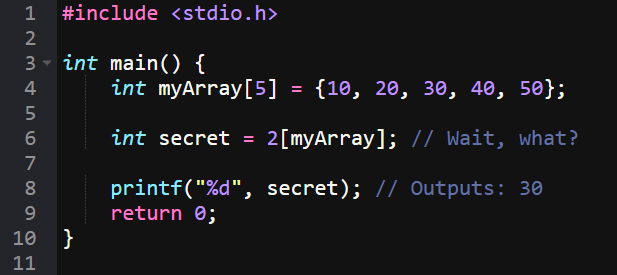
This would make a great C programming language exam question.

every developer is taught that to access an array, you write array[index].
but in C and C , you can just... flip it.
this code compiles perfectly and runs without a single warning.
how the hell does 2[myArray] work?👇
1
111
Feb 18
Details matter
Feb 16

Can you top this soldering mistake?
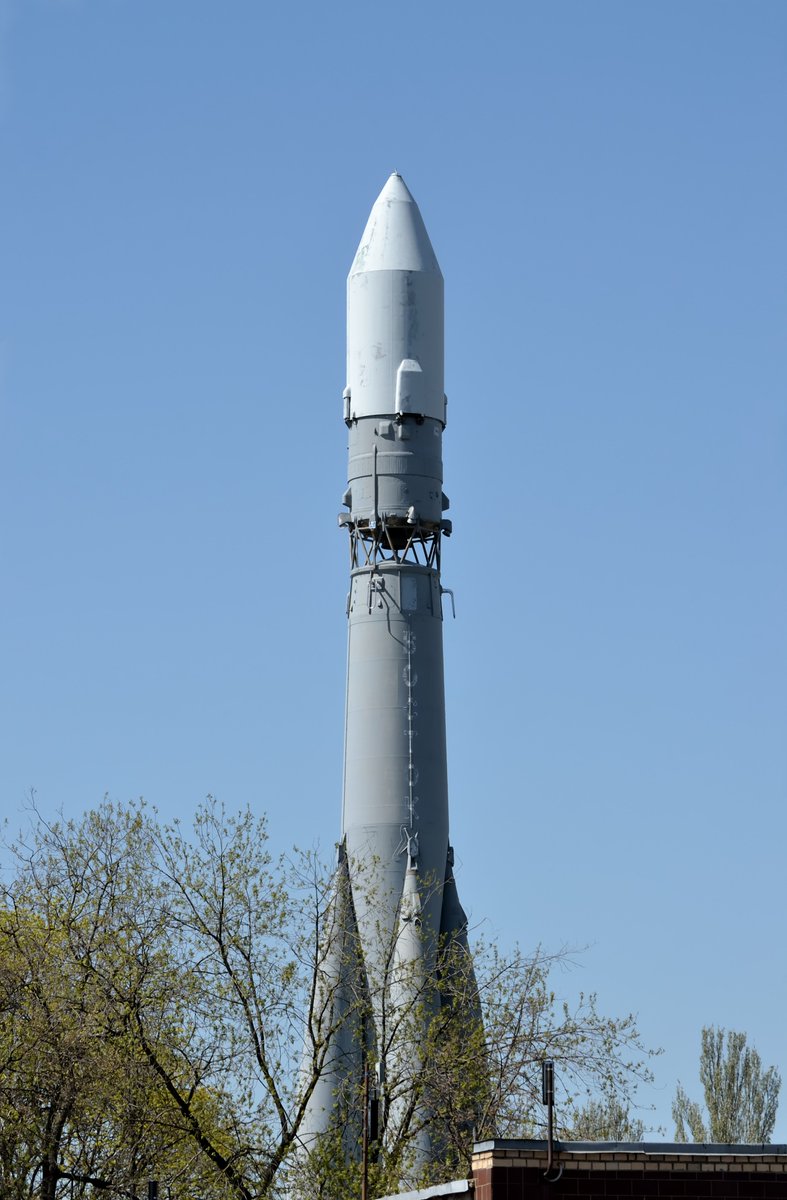
In 1980 in Russia, at some subcontractor facility, someone used leaded solder instead of lead-free solder in a fuel filter that was later fitted to a Vostok 2M rocket at the Plesetsk launch pad.
No problem, it's soldered correctly, so they thought.
Only problem is that the Vostok 2M used high test peroxide (HTP) to power the turbopumps, and lead is catalytically active and decomposes hydrogen peroxide on contact. This leads to rapid exothermic decomposition, fire, and ultimately a big 400T of TNT KA-BOOM.
48 people in the ground crew died due to someone at a subcontractor using the wrong type of solder.
That was a very bad day.
They didn't figure out the issue until a year later.
Think twice when you next select your solder type.
1
88
Feb 15
Reposting unconditionally
Feb 14

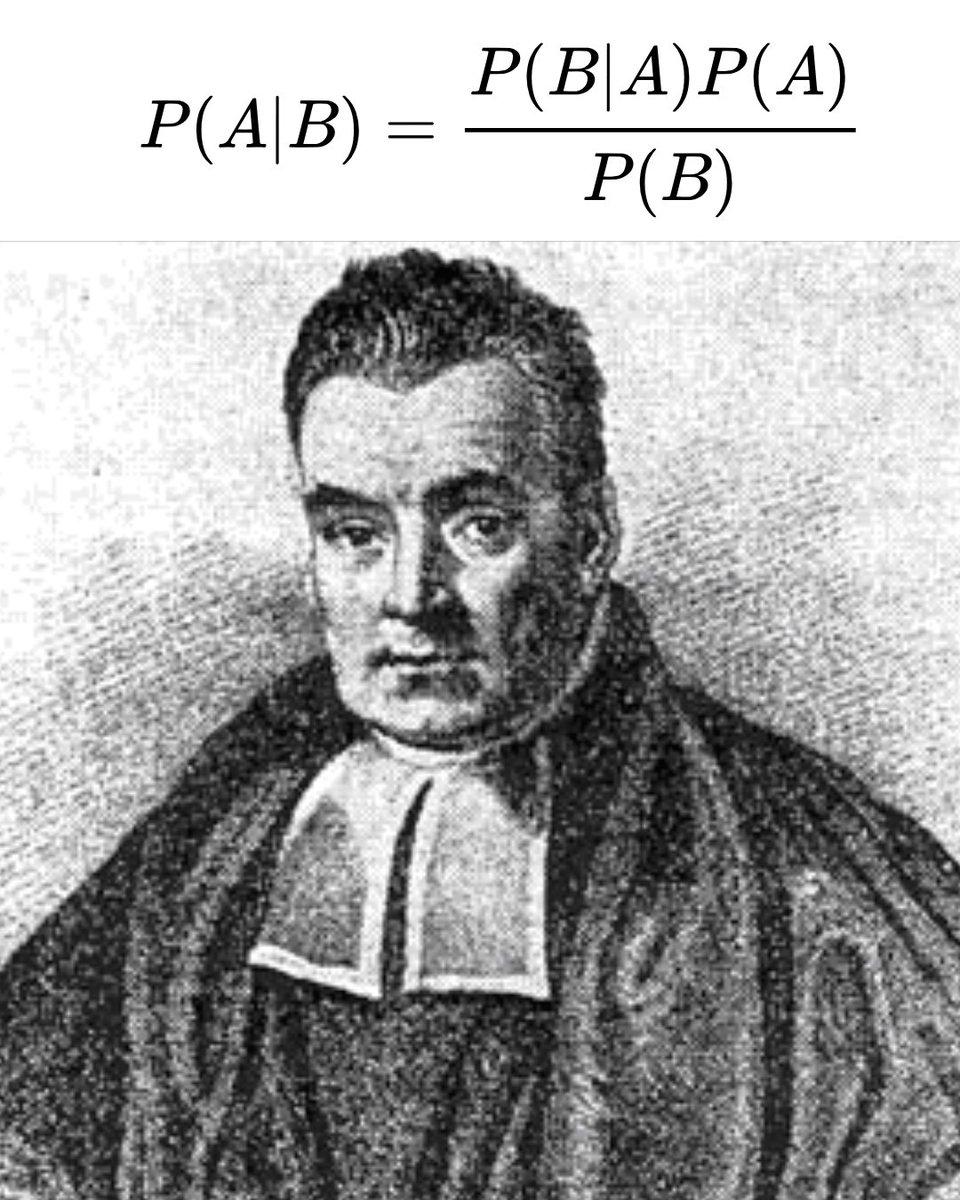
Bayes’ theorem is probably the single most important thing any rational person can learn.
So many of our debates and disagreements that we shout about are because we don’t understand Bayes’ theorem or how human rationality often works.
Bayes’ theorem is named after the 18th-century Thomas Bayes, and essentially it’s a formula that asks: when you are presented with all of the evidence for something, how much should you believe it?
Bayes’ theorem teaches us that our beliefs are not fixed; they are probabilities. Our beliefs change as we weigh new evidence against our assumptions, or our priors. In other words, we all carry certain ideas about how the world works, and new evidence can challenge them.
For example, somebody might believe that smoking is safe, that stress causes mouth ulcers, or that human activity is unrelated to climate change. These are their priors, their starting points. They can be formed by our culture, our biases, or even incomplete information.
Now imagine a new study comes along that challenges one of your priors. A single study might not carry enough weight to overturn your existing beliefs. But as studies accumulate, eventually the scales may tip. At some point, your prior will become less and less plausible.
Bayes’ theorem argues that being rational is not about black and white. It’s not even about true or false. It’s about what is most reasonable based on the best available evidence. But for this to work, we need to be presented with as much high-quality data as possible. Without evidence—without belief-forming data—we are left only with our priors and biases. And those aren’t all that rational.
1
90
Erik Streed retweeted

Jan 29
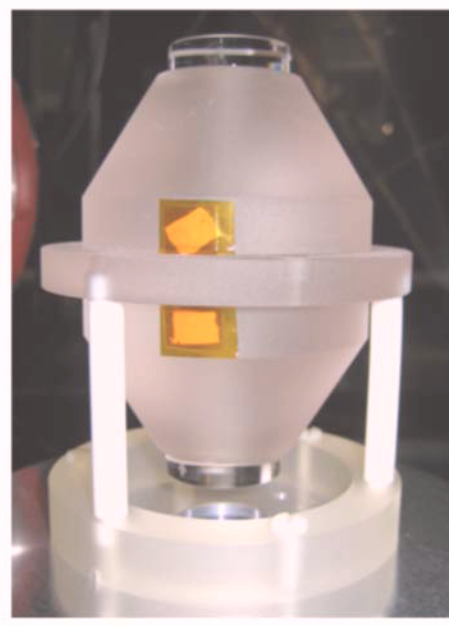
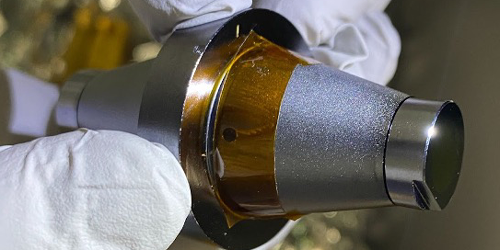
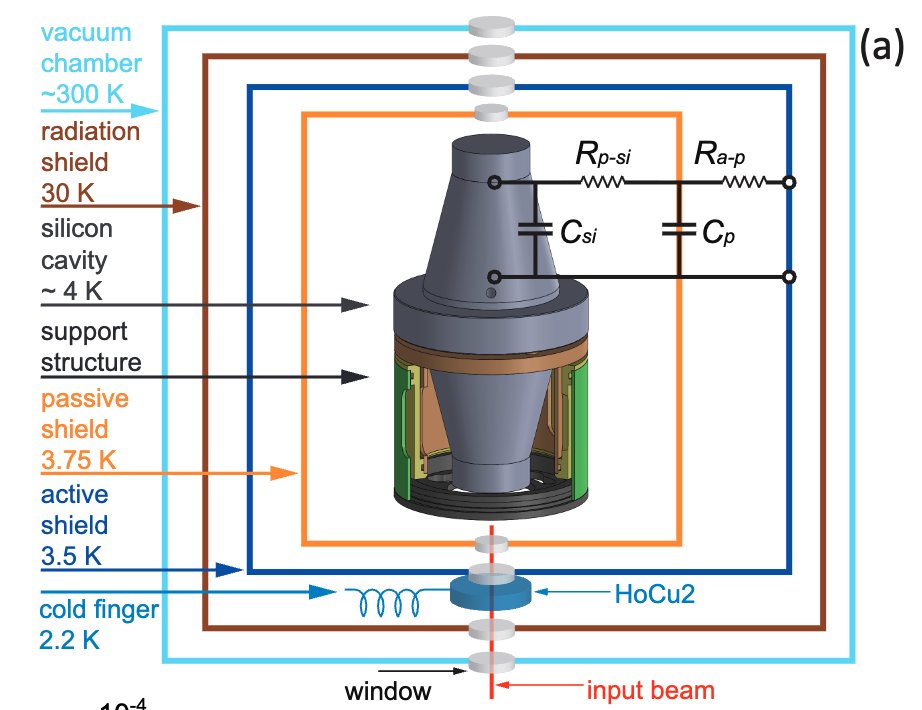
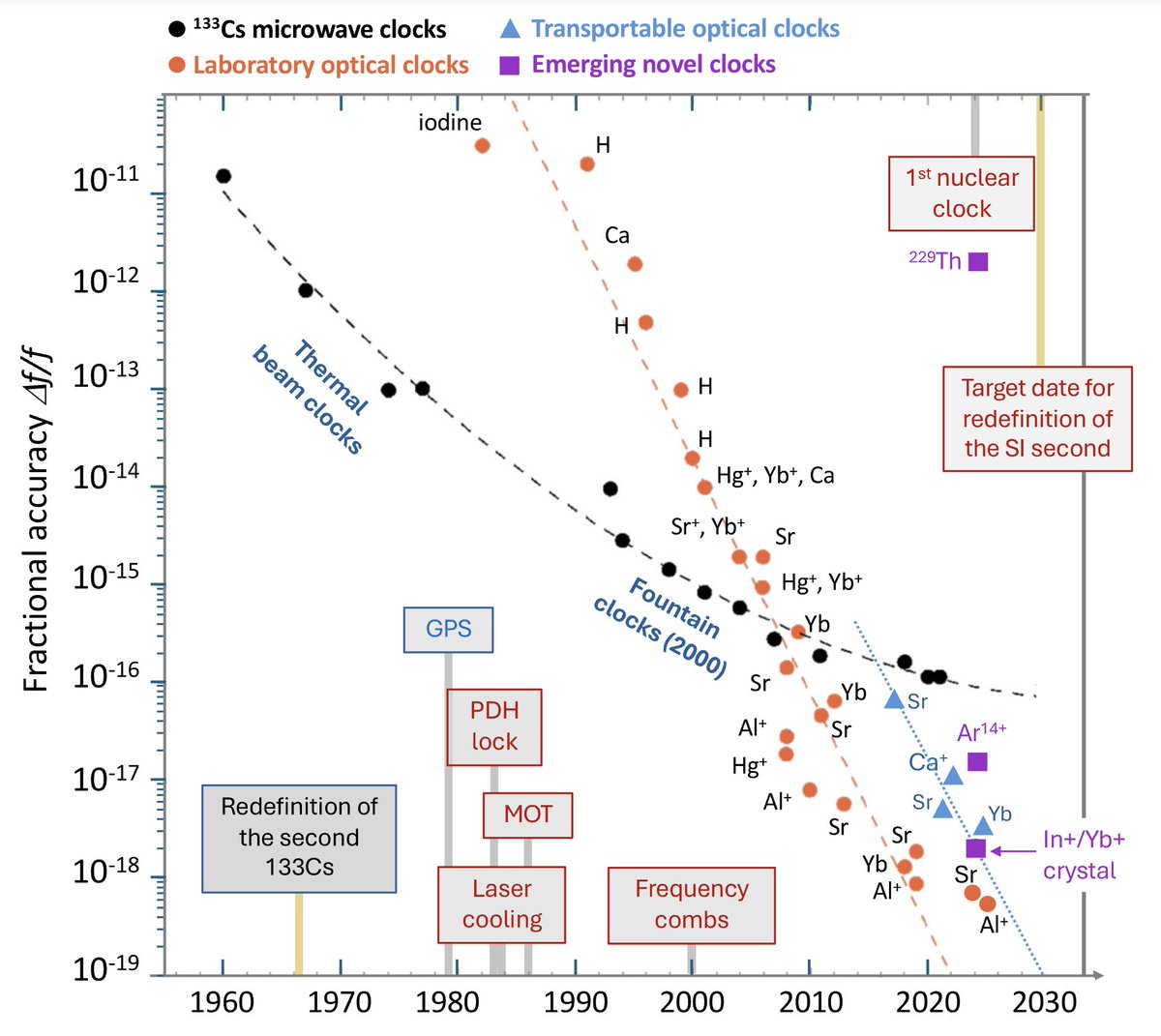
people don't appreciate 1e-18 fractional accuracy enough. It took decades of development pushing many things to the extreme. For example, let's take a look at the optical cavity used for stabilizing the laser used for these atomic clocks.
The most recent fight they had with the cavity is replacing the dielectric coating (sputtered SiO2/Ta2O5 or TiO2), which is amorphous, to stacks of crystalline GaAs/AlGaAs, because crystals have lower thermal mechanical noise than amorphous materials, and they got a cavity with 2.5e-17 stability with such quieter mirror coatings. [Lee2026]
How good is 2.5e-17? When you are here, you are at the extreme opposite of "nothing ever happens". Everything is happening, and everything affects you.
Temperature? It gives you at least two big headaches, (temperature fluctuation) * (thermal expansion), and thermal noise itself.
So you optimize the cavity shape, you use single crystal for both the mirror spacer as well as the mirrors themselves so they are less lossy and thus less noisy, and you bond them together along the same crystal orientation as closely as possible.
You also cooldown the cavity to reduce thermal noise, not only that, but you also operate at the CTE zero crossing point so temperature fluctuation matters less, thats why you see 124 K and 17 K for silicon cavities.
Even with zero CTE, you still need few mK temperature control. Away from zero CTE, it may need to be stabilized to sub uK level.
If you glance into cavities working at 4 K (i.e. small but not at zero CTE), you'll see crazy thermal damping systems to smooth out the temperature fluctuation of the 4 K cryostat (~20 mK), as well as find claims like "we now require only mK level control of the room temperature enclosure". [Zhang2017, Robinson2019]
(they said "only" because some older cavities were at room T and controlled to sub mK [Ludlow2007], and they got tricks to reduce effects from room T.)
(temperature gradient also gives you headache, which is why they choose silicon over glass, for its much higher thermal conductivity)
Next is vibration/acceleration. Nothing is rigid, the cryostat vibrates, the earth rotates, and your cavity changes shape. Thats another motivation for silicon over glass, for its higher Young's modulus.
So you make the cavity shape as symmetric as possible, and make the mounting fixture as symmetric as possible, and align them with the crystal axis because silicon's Youngs modulus not isotropic . Thus you also choose the optical axis to be the crystal axis with the highest Young's modulus. [Kessler2012]
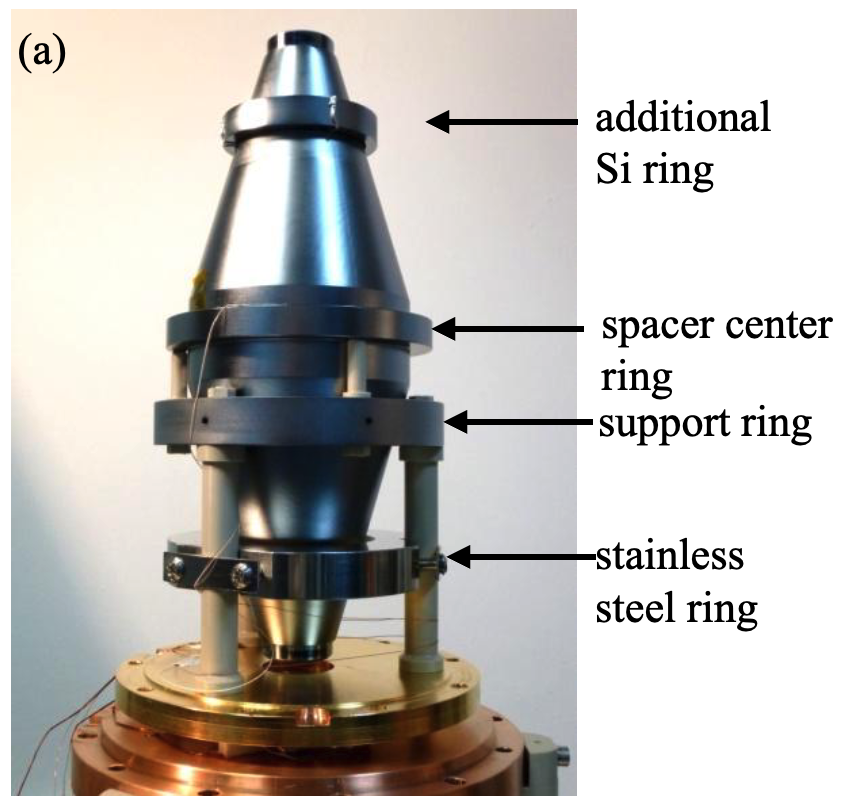
You also gotta align the mechanical axis with the optical axis and with the crystal axis, otherwise longitudinal acceleration would tilt the mirrors and change cavity length. The spacer shape is also a double cone so that it sags less and bends less under transverse acceleration. [Millo2009]
Any mechanical resonance would be bad, so you also gotta use PEEK instead of PTFE for supporting the mounting ring, and push the lowest mechanical resonance to be as high freq as possible.
Remember silicon's crystal structure? Remember its 3-fold rotational symmetry? That's why your support structure also has the same 3-fold symmetry. [Matei2016]
If you have done all these properly, congratulations, now you might be ready to start fighting thermal noise in the dielectric mirror coatings.
Harry2002: [Thermal noise in interferometric gravitational wave detectors due to dielectric optical coatings](doi.org/10.1088/0264-9381/19…)
Numata2004: [Thermal-Noise Limit in the Frequency Stabilization of Lasers with Rigid Cavities](doi.org/10.1103/PhysRevLett.…)
Ludlow2007: [Compact, thermal-noise-limited optical cavity for diode laser stabilization at 1e-15](doi.org/10.1364/OL.32.000641)
Millo2009: [Ultrastable lasers based on vibration insensitive cavities](doi.org/10.1103/PhysRevA.79.…)
Hopcroft2010: [What is the Young's Modulus of Silicon?](doi.org/10.1109/JMEMS.2009.2…)
Kessler2012: [A sub-40-mHz-linewidth laser based on a silicon single-crystal optical cavity](doi.org/10.1038/nphoton.2012…)
Matei2016: [A second generation of low thermal noise cryogenic silicon resonators](doi.org/10.1088/1742-6596/72…)
Zhang2017: [Ultrastable Silicon Cavity in a Continuously Operating Closed-Cycle Cryostat at 4 K](doi.org/10.1103/PhysRevLett.…)
Robinson2019: [Crystalline optical cavity at 4 K with thermal-noise-limited instability and ultralow drift](doi.org/10.1364/OPTICA.6.000…)
Lee2026: [Frequency Stability of 2.5×10^−17 from a Si Cavity with AlGaAs Crystalline Mirrors](doi.org/10.1103/zgrm-cjbb)
Jan 23

nice plot of good clocks, evolution over time
they are gonna redefine the second!
14
67
710
41,947
Jan 13
Nicely done
Jan 12

The fastest way to reach zero? the slide operator.
Make your loops aerodynamic with the Slide Operator. 100% Standard C, 0% readability.😁

2
69
Erik Streed retweeted

25 Dec 2025
A rotating ball casts a shadow that perfectly matches a mass on a spring, revealing how circular motion and simple harmonic motion are linked. A visual proof of sine-wave physics in action.
72
835
13,444
2,279,801
10 Dec 2025
When a No. 8 Stanley isn’t enough f a plane for you.
10 Dec 2025

I now have the world’s largest collection of these old films, showing how basic processes worked.
I’ve made great progress training AI on 100s of these thus far—I have 100s more to go, but it’s quite astonishing the details of remembrance.
This is high protein training data.
1
2
127
14 Oct 2025
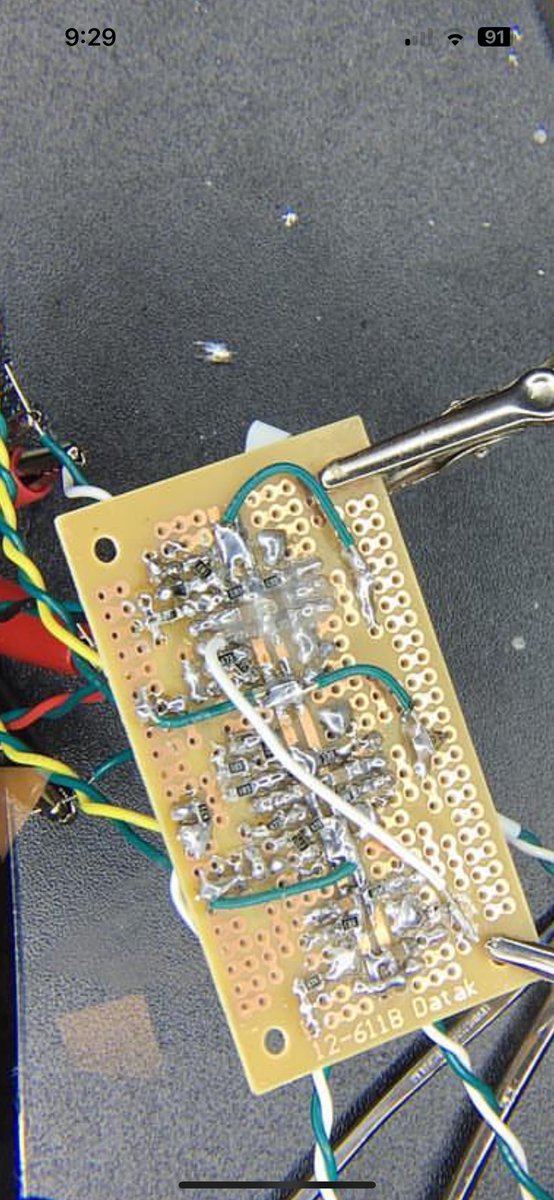
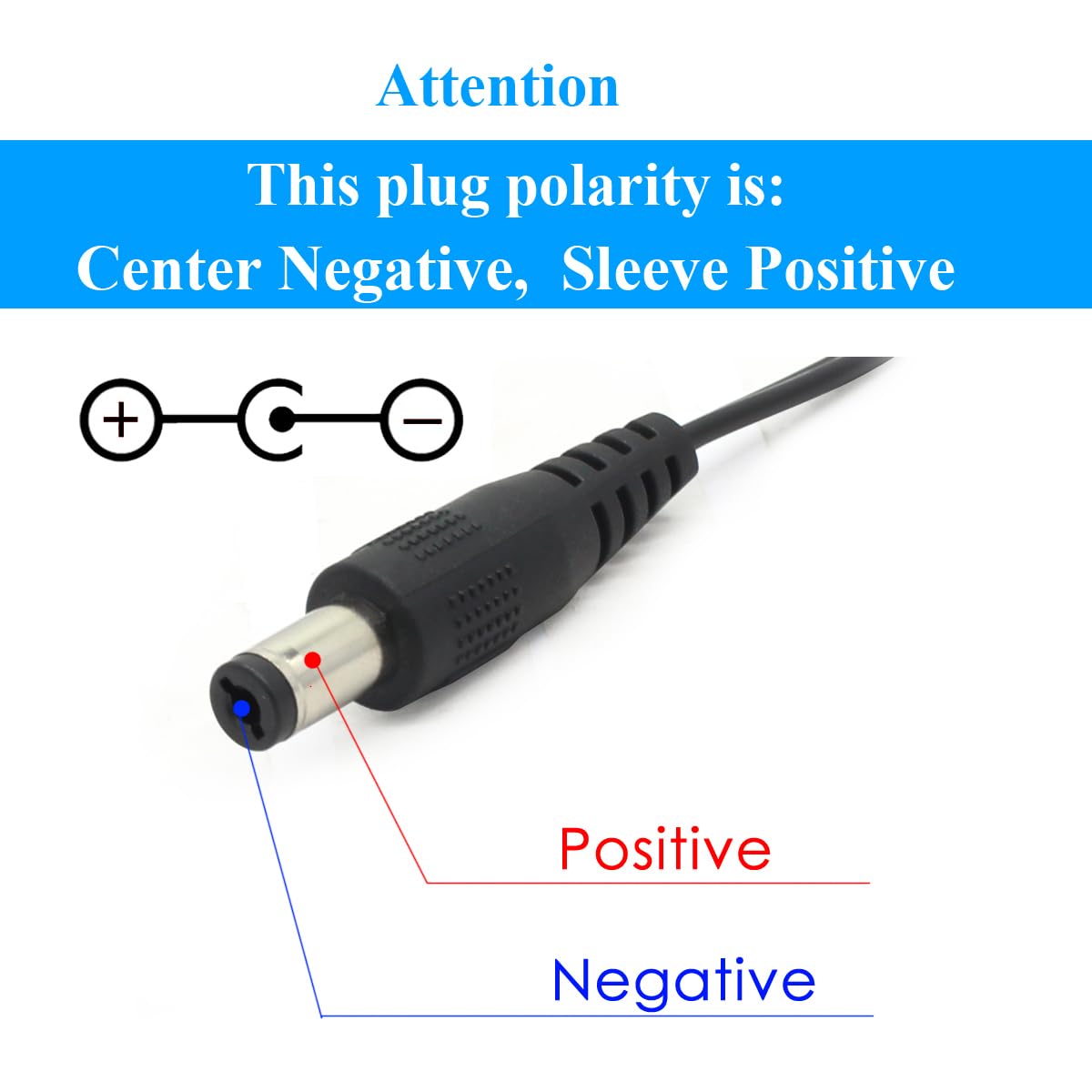
Green wire Active.
1
2
215
1 Oct 2025
facebook.com/share/v/17bu3SS…
@MJBiercuk, you’re doing GYG ads now? Way to diversify for Quantum Winter.
1
176
19 Sep 2025
Thought: There is only heat capacity. That’s the only really real thing in #thermodynamics. Everything else is heat capacity in a trench coat cavorting with mechanics. You never actually see temperature.
…and maybe chemical potential, but that’s like heat capacity for stuff.
1
89
1 Aug 2025
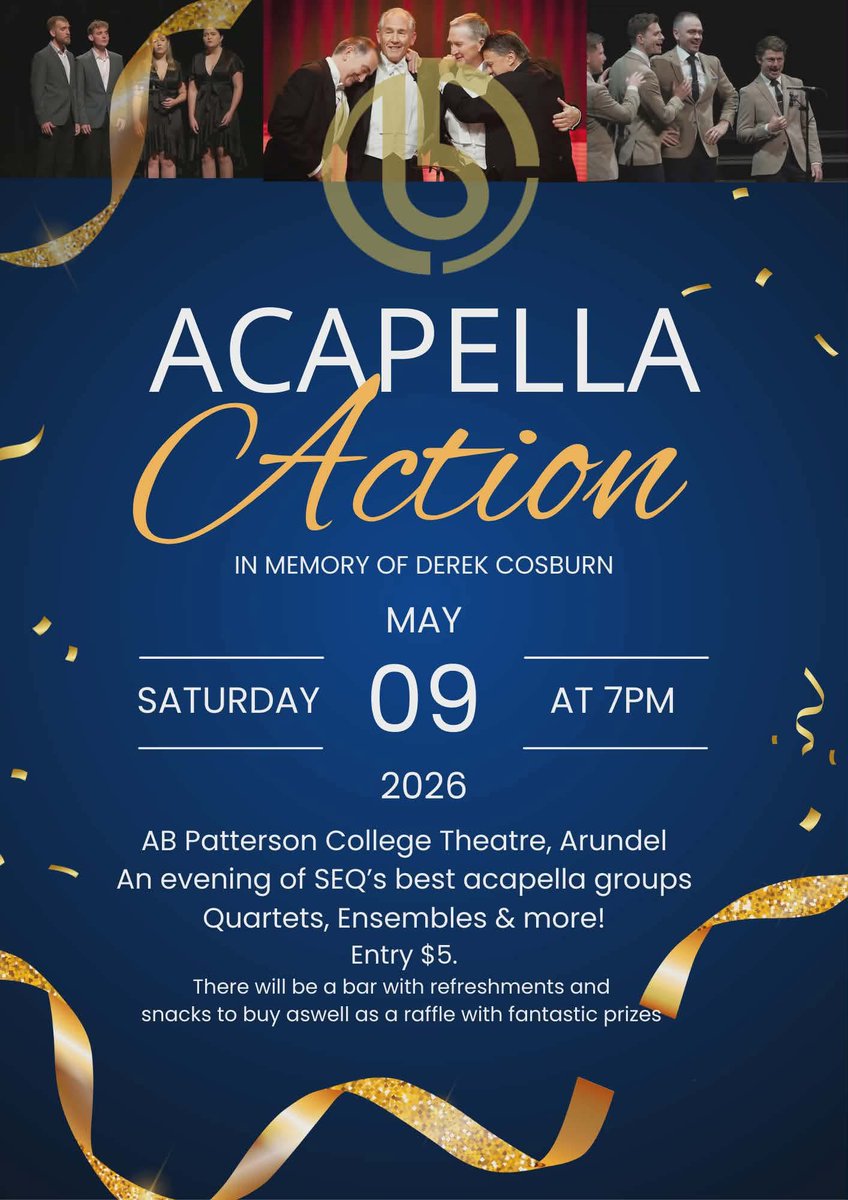
Today we mark the passing of #barbershop legend Derek Cosburn. It was a privilege and an honour to have sang with him. #acapella
108

20 Jul 2025
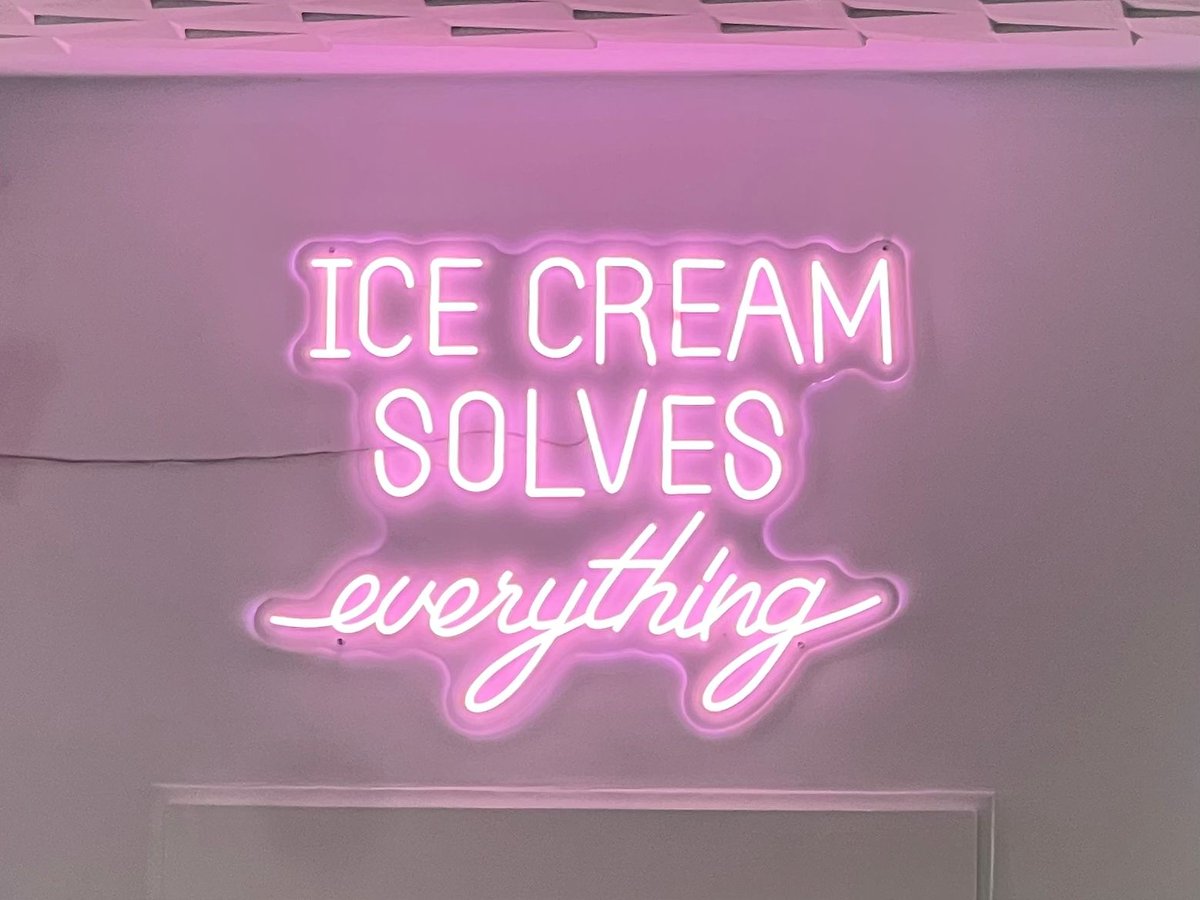
Except lactose intolerance and diabetes.

134
15 Jul 2025
Dan #Kleppner was my first graduate academic advisor and an incredible physicist to learn from. His work lives on in all our phones and all those who were once lost but now found due to #GPS. #quantum #giantspassing #KleppnerBottle
14 Jul 2025

Daniel Kleppner, Physicist Who Brought Precision to GPS, Dies at 92 nytimes.com/2025/07/12/scien…
113