
Fix the money, fix the world #bitcoin
Joined February 2022
- Tweets 13,248
- Following 582
- Followers 1,997
- Likes 46,066
2,588 Photos and videos












Jun 9
מישהו מהקהילה משתמש בשירותי multisig של unchained או Casa? שוקל בשביל קורבי משפחה שפחות טכניים וכנראה יצטרכו עזרה לגשת לביטקוין בעתיד.
1
1
308
Jun 7
ברור לכם שכל הסיבה שהאיראנים תוקפים זה כדי להפיל את ביטקוין שוב, נכון?
1
10
1,275
Jun 6
ביטקוין מרגיש כאילו הוא רוצה לבקר ב-50K.
אתם קונים או מחכים?
5
8
635
Pinkas Kineta retweeted
Jun 2
מניות מייצרות ערך, אבל בזמן משבר חוב (שכרגע נראה מאוד סביר שיגיע) המדינה יכולה לשנות את כללי הבעלות, המיסוי, הנזילות והיציאה.
יש לך הנחה סמויה: שבזמן משבר חוב עמוק המדינה תמשיך לכבד את זכויות הקניין בדיוק כמו היום. אני חושב שזו הנחה נאיבית.
כשמדינות מגיעות לקיר של חוב, הן לא אומרות "אופס אין כסף" - הן משנות את כללי המשחק.
לפעמים זה מיסוי חריג, לפעמים אינפלציה, לפעמים פיקוח הון, לפעמים כפייה על מוסדיים להחזיק אג"ח ממשלתי, לפעמים bail-in של פיקדונות, ולפעמים הלאמה ממש. זה לא מדע בדיוני, זו היסטוריה מוניטרית בסיסית. אחרי מלחמת העולם השנייה, דיכוי פיננסי היה כלי מרכזי להפחתת חוב ממשלתי; ב-1933 ארה"ב אסרה החזקה פרטית של רוב הזהב; בקפריסין ב-2013 פיקדונות לא מבוטחים שימשו להצלת בנקים; ובארגנטינה ב-2008 המדינה הלאימה חשבונות פנסיה פרטיים.
לכן השאלה היא לא אם מניות מייצרות ערך. ברור שחברות טובות מייצרות ערך. השאלה היא מי שולט בגישה שלך לערך הזה בזמן משבר: ברוקר, בנק, רגולטור, מדינה, מערכת פנסיה - כי זה לא יהיה אתה.
מניה יכולה להיות נכס מצוין ועדיין להיות שבויה בתוך מערכת קסטודיאלית, משפטית ומיסויית. ביטקוין בהחזקה עצמית הוא אחד הנכסים היחידים שבהם האדם יכול להחזיק את הערך מחוץ למאזן של בנק, מחוץ לברוקר, מחוץ לפנסיה, ומחוץ לנכס פיזי שקל למסות, להגביל או להפקיע.
קנדה 2022 וצו 9 ב-2024 בישראל הראו את אותה נקודה: לא צריך להלאים לך את הבית כדי לפגוע בזכויות הקניין שלך. מספיק לשלוט בצינור הגישה לכסף. חשבון בנק, ברוקר, פנסיה ואפליקציית תשלום הם לא באמת "החזקה עצמית". הם הרשאה מותנית.
וחשוב יותר: בישראל זה בוצע בלי הליך פלילי רגיל, בלי משפט, בלי הרשעה, ובלי שהמדינה המקומית הוכיחה עבירה בבית משפט ישראלי. זו הייתה החלטת סנקציות מנהלית של רגולטור אמריקאי, שהכניסה אנשים לרשימת סנקציות כי הם הפריעו לשיירות סיוע להגיע לעזה.
זכויות הקניין שלך לא חייבות להיפגע דרך הלאמה רשמית. הן יכולות להיפגע דרך שכבת הציות של המערכת הפיננסית. הבנק יכול להגביל אותך לא כי אתה עבריין לפי החוק המקומי, אלא כי אתה הפכת ל"רעיל רגולטורית" בעיני מי שמחזיק את המפתח למערכת הדולרית.
מספיק שבעשור הקרוב יעלה בארה"ב ממשל הרבה יותר עוין לישראל, תחת לחץ פרוגרסיבי ופתאום כל מי ששירת בצבא או במילואים בישראל בזמן המלחמה יכול להיות חשוף לסנקציות כלכליות באשמת רצח עם ופשעי מלחמה.
כלומר, גם אזרח ישראלי נורמטיבי לגמרי יכול לגלות שהגישה שלו לחשבון בנק, ברוקר, תשלומים, תרומות או אשראי תלויה לא רק בחוק המקומי, אלא באידיאולוגיה של ממשל זר.
אז לא, הצלחתו של ביטקוין לא דורש שהמערב ייהרס. הוא דורש רק שהחוב, האבטלה (שכנראה תגדל משמעותית בעקבות AI), הלחץ הפוליטי ימשיכו לדחוף מדינות לעשות את מה שמדינות תמיד עושות במשברים: להגן על המערכת לפני שהן מגנות על החוסך.
וזה בדיוק ההבדל בין נכס שאתה "מחזיק" כל עוד המדינה מאפשרת לך, לבין נכס שאתה באמת מחזיק. ביטקוין בהחזקה עצמית הוא לא רק הימור על עליית מחיר, הוא ביטוח מפני פוליטיזציה של הקניין עצמו.
1
1
1
168
May 18
עוד מישהו מרגיש כאילו הולכים לחבר לנו את חופשת שבועות עם החופש הגדול? 🫣
1
3
171
May 6
חבר עכשיו אמר שהוא מרגיש שהוא מפספס, לא יודע במה להשקיע בזמן שסאנדיסק עושה פי 40.
שאל אותי במה משקיעים "חוץ מביטקוין".
שלחתי לו את זה חזרה 😆
8
261
Apr 25
ניסוי מחשבתי:
ביטקוין מחר מגיע למיליון דולר.
יש לכם בלת"ם רציני ואתם נאלצים למכור הכל.
וברגע שאתם מוכרים, כל הבעיות שלכם נעלמות.
ריסטארט לחיים.
אבל יש קאץ׳ אחד:
ברגע שאתם מוכרים, אתם שוכחים לגמרי שביטקוין אי פעם היה קיים.
הייתם לוקחים את העסקה?
Apr 25

Here’s a wild thought experiment…
Bitcoin hits $150K.
You’re forced to sell.
Life happens.
Family happens.
Pressure happens.
And the second you sell…
Every single one of your problems disappears.
Life reset.
But there’s one catch:
The moment you sell, you completely forget Bitcoin ever existed.
Would you take the deal?
14
11
6,755
Apr 9
אוי זה מצחיק 😂
Apr 9

crazy that Bitcoin is now being used to *prevent* boating accidents
2
5
776
Apr 7
יש רק שלוש דרכים לאבטח רשת מוניטרית:
1. עם אטומים (זהב).
2. עם אנרגיה (ביטקוין).
3. עם קונצנזוס חברתי/פוליטי (פיאט).
אנרגיה היא הדרך היחידה שמובילה לכסף קשיח בלתי שביר.
אין נדירות באטומים.
(מקור ווילי וו)
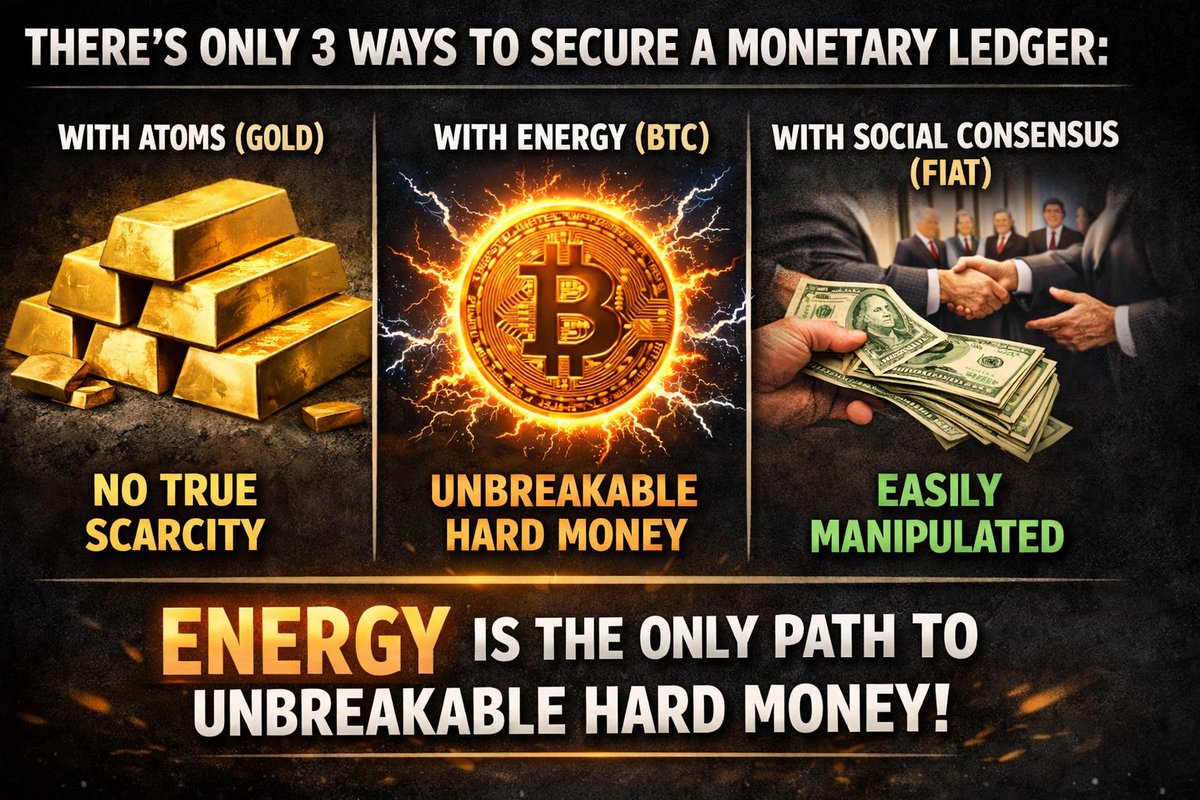

“BTC uses too much energy.”
There’s only 3 ways to secure a monetary ledger.
- with atoms (gold)
- with energy (BTC)
- with social / political consensus (fiat)
Energy is the only path to unbreakable hard money. There’s no scarcity of atoms.
1
7
441
Apr 3
קל להסתכל על ישראל עכשיו - מלחמה מתמשכת, ויכוחים סביב קואליציה, חרדים, ולא מעט שחושבים על הגירה - ולראות רק בלאגן וסכנה.
אבל בעולם שבו יותר ויותר אנשים עלולים לאבד עבודה בגלל AI, הקיטוב החברתי רק גדל, והכסף מתחיל להישבר - השאלה האמיתית היא לא מי הכי שקט כרגע - אלא מי יודע להישאר יחד כשהכול מתחיל לקרוס.
בישראל, דווקא מתוך המורכבות הזאת, יש משהו נדיר:
קהילה חיה וערבות הדדית שלא תלויה במערכת.
אנשים שנרתמים, מתארגנים, ועוזרים אחד לשני באופן טבעי.
ציבור שמורגל באתגרים יומיומיים, ולכן פחות נשבר כשהלחץ עולה.
זה לא מושלם, וזה בטח לא קל, אבל לדעתי זה חוסן אמיתי.
ובעשור של אי-יציבות עולמית - קהילתיות כזו זה נכס שלא קל לשכפל.
אני לא מאמין שיש מדינה אחרת בעולם שיותר מוכנה להתמודד עם האתגר הגדול שמגיע, ואתם?

1
4
323
Mar 23
סייפדין עמוס, אחד הקולות הכי משפיעים בקהילת הביטקוין בעולם, פרסם פוסט אנטי-ציוני חריף שמציג את כל הסיפור של 1948 כנרטיב חד-צדדי של גירוש מתוכנן והפרת זכויות קניין.
ישבתי שעות וכתבתי תגובה מפורטת שמפרקת את הטענות שלו אחת לאחת.
ובמקביל, גם לא התעלמתי ממה שכן בעייתי.
לא סיסמאות, אלא ניסיון כן להציג תמונה מורכבת ואמיתית יותר.
אני חושב שחשוב שקולות ישראלים יישמעו בדיונים כאלה, במיוחד כשמדובר בדמות כל כך משפיעה בזירה בינלאומית.
מי שחושב שחשוב לאזן את השיח:
אשמח אם תגיבו, תשתפו, ותעזרו לחשוף עוד אנשים לזווית הזו.
@EllaTravelsLove @basisbtc @EinatWilf @cptallenhistory @gazawood1 @lelemslp @imshin @shlomo_fishman @tmasudin @journo_ben @noatishby @noamagid @elonalevy @henmazzig
Mar 23

Ok Saifedean habibi, you asked for it.
Let's do some Proof of Hasbara, shall we? 😉
First I'll debunk your major claims where the history and facts got twisted.
Then I'll show exactly where I actually agree with you.
As we say in Bitcoin: don't trust - verify, right?
**************
"…a government agency that owns the majority of land.. never sells, and only leases land to one racial group."
You're conflating the JNF, which is a historic organization with a Jewish mandate, with the Israel Land Authority (ILA), which is a state body bound by law that manages 93% of the land. Today, land is marketed through the ILA, and under Israeli law it cannot be allocated on a discriminatory basis.
So no - it's not true that land is leased only to Jews.
Arabs, or any other group, can lease/buy land directly from ILA as long as they're ISRAELI CITIZENS.
Jews do get a fast track to citizenship, that is true.
But that's an immigration policy, not a land ownership law.
Many countries have ethnic or diaspora-based immigration laws:
Germany (for ethnic Germans), Ireland (for descendants), Armenia, Hungary, Greece, etc.
Private property in Israel is not restricted to Jews. Foreigners of all backgrounds can buy property. Palestinians in the West Bank face major barriers, but those stem from their legal and political status, not from a law that says "only Jews can own land".
To lease land directly from ILA you need to be a citizen, and there are over 2M Israeli Arabs that can and do participate in this market.
You're talking about the Israeli property rights, but on the Palestinian Authority side, selling land to Israelis is criminalized as treason, with penalties up to life imprisonment or even death in law. That alone prevents any normal open property market between the two populations.
Since your argument rests on the claim that land is leased only to Jews, and that claim is proven above as false, this significantly weakens your property-rights argument.
**************
Your argument also relies on treating land ownership in Mandatory Palestine as if it were a modern, simple private property system.
It wasn't.
Under the Ottoman system, land was divided into multiple categories, a large share of it was Miri land (state-owned with usage rights), communal and tribal land, and unregistered land. Private freehold ownership (mulk) was actually a relatively small portion of the land. Miri land gave something resembling ownership, it was more like a bank account - You have control only as long as the state allowed it. If we apply your own "Bitcoin standard" - that's not true property rights - it's custodial permission, not ownership.
So presenting the land as if it was overwhelmingly privately owned Palestinian property is historically inaccurate. Saying 'Arabs owned X%' simplifies a much more complex system of land tenure.
On top of that, by 1945 roughly 46% of the land was classified as state public land under the British Mandate, not privately owned by Arabs either.
More importantly, private land ownership has never been the basis for political sovereignty. States govern territory regardless of who owns individual plots, and that was already true under both the Ottoman and British systems.
Finally, using district-level land ownership is also misleading. These districts were large administrative units that included vast rural and uninhabited areas. Jewish populations were concentrated in urban centers and settlement blocs, so district-level ownership doesn't reflect actual demographics or control.
So overall, this is a statistical framing that creates a misleading impression, not an accurate picture of land ownership or political reality.
Another major piece missing from your argument is the condition and development of the land itself.
In the late Ottoman period, large parts of the country - especially coastal plains and valleys - were underdeveloped and heavily affected by malaria, making them difficult to inhabit.
As can be seen in the maps I'll attach in the following post, many of the areas where early Jewish settlements were established were precisely these malaria-infested regions. Through sustained public health efforts, led mostly by Dr. Israel Jacob Kligler, who played a central role in malaria eradication efforts in Palestine during the 1920s and 1930s, turning previously unhealthy areas into habitable land.
en.wikipedia.org/wiki/Israel…
At the same time, major infrastructure and economic development took place during the British Mandate, often with significant Zionist initiative:
Pinhas Rutenberg founded the Palestine Electric Corporation in 1923 and played a central role in electrification and industrial development of the land.
Rutenberg also founded Palestine Airways airline.
Herbert Samuel oversaw early administrative and infrastructure expansion, including roads and public works.
These changes improved public health, agriculture, and economic opportunity across the region - not just for Jews, but for the entire population.
In the 19th century, the region had a relatively low population. Contemporary visitors, such as Mark Twain, described significant parts of the land as sparsely populated and economically underdeveloped. By the late 19th century, the total population of the country was only a few hundred thousand.
Population growth accelerated significantly during the British Mandate period.
Jewish immigration is well documented, but it's also the case that Arab population growth during this period was not solely natural increase. Improved conditions - including better healthcare, infrastructure, and economic opportunities - contributed to internal and regional migration into the area alongside natural growth.
Population movements among Arab communities were often less formally recorded, making them harder to quantify and often overlooked.
At the same time, it's a clear demographic fact that the Muslim population in Palestine grew by over 110% between 1920 and 1948 - far outpacing population growth in several neighboring Muslim countries during the same period, such as Egypt (~53%), Syria (~50%), Yemen (~22%), and Saudi Arabia (~11%).
That kind of divergence raises an important question. If this were purely natural growth, we would expect roughly comparable trends across the region.
A more plausible explanation is that improved conditions - including better healthcare, infrastructure, and economic opportunity during the Mandate period - contributed not only to natural growth, but also to migration into the area.
Even cultural traces, such as popular Palestinian surnames reflecting origins in places like Egypt or Syria, point to historical population movement into the region - not something unique to one group. Which raises serious questions about the claim that all of that growth was purely local and organic.
So this wasn't a static, fully developed land that was simply "taken".
Large parts of it had to be made livable first. Kligler was a major cayalyst to this.
Immigration only really started taking off when Malaria was solved.
A significant portion of that transformation was the result of organized investment and development during the Mandate period, much of it driven by Zionist institutions. These efforts played a major role in shaping the land and in the population growth of both communities
**************
Your claim that the Nakba was not a war but a one-sided massacre doesn't hold up when you look at the actual sequence of events.
Deir Yassin is often presented as the central cause of the Palestinian exodus, but that's an oversimplification ignoring important facts.
First, it happened in the middle of an ongoing war.
After the UN Partition Plan on November 29, 1947, Arab leadership rejected the plan and hostilities began immediately (bus shootings).
Arab forces attacked Jewish roads and convoys, including the Jerusalem supply routes where over 100 Jews were killed. Jerusalem was placed under siege, putting tens of thousands of Jews at risk of starvation.
Deir Yassin itself was not randomly chosen - it was located near the Jerusalem corridor, in an area critical to breaking the siege. The operation took place within a strategic military context, not as an isolated act against a passive population.
You portray Palestinians as a 'largely unarmed population,' but at the same time there were organized militias, attacks on Jewish supply lines, and a siege on Jerusalem. That's not a one-sided situation - it's a war.
It's also worth noting that in years prior to the war, mainstream Jewish defense doctrine of fortifying their settlements, known as Havlagah (restraint), emphasized avoiding escalation despite repeated Arab violence.
It was a framework by which they morally differentiated themselves from their Arab rivals.
en.wikipedia.org/wiki/Havlag…
That context matters when assessing intent.
Second, even Arab sources acknowledged that the way Deir Yassin attack was reported played a major role in spreading panic. Hazem Nusseibeh, who worked for Palestinian news in 1948, described how, under direction from Arab leadership Hussayn Khalidi, they highly exaggerated and in some cases false reports of what happened in Deir Yassin - including claims of mass rape - these were circulated to mobilize the Arab armies. These false reports instead triggered widespread panic among Palestinian civilians.
Nusseibeh later admitted: "We committed a fatal error, and set the stage for the refugee problem."
(got his video too if needed).
In a later interview, a Deir Yassin resident (Abu Mahmud) described that warnings were issued via loudspeakers before the attack, urging civilians to evacuate. He also claimed there was no rape and those were lies of Khalidi.
Not everyone left, and fighting did occur and many died - but this again reinforces that the event unfolded in a combat context, not as an unannounced one-sided massacre.
Video of his testimony here:
youtu.be/PKLucDqEeKA?si=cwE7…
At the same time, the broader regional context included openly hostile rhetoric. For example, Arab League Secretary General Azzam Pasha was quoted describing the coming conflict as a war that could resemble historic massacres for Jews. Whether taken literally or rhetorically, this reflects the expectations of a large-scale war, not a one-sided civilian campaign.
Most importantly, Deir Yassin was only one factor. The Palestinian exodus had multiple causes: active fighting, collapse of local leadership, fear from nearby battles, and in some cases expulsions. Even historians critical of Israel, such as Benny Morris, acknowledge that it was not a single-cause event.
Even in the Tantura case, there's no historical consensus on what exactly happened - whether it was a massacre or wartime misconduct. So presenting it as settled proof of a systematic campaign is misleading.
And even if you take the most critical interpretation, isolated incidents don't prove a premeditated, system-wide policy - which is the much bigger claim being made.
You also claimed: "Contrary to Zionist propaganda, the Palestinians did not leave as a result of the invasion of Arab armies."
But we have documented firsthand testimonies saying otherwise. See attached video. These are recorded interviews of Palestinians themselves describing how they were told to leave by their leaders and armies during the fighting, expecting to return in a short period of time after the Jews will be defeated.
This doesn't mean everyone left for that reason - but documented cases directly challenge the idea that this was the only cause. If even some civilians were instructed or encouraged to leave, then your statement is false.
There were also Arab voices at the time suggesting the fighting was often reciprocal rather than unilateral. For example, Ismayil Safwat, a commander in the Arab Liberation Army, stated that Jewish forces generally did not attack villages unless they had been attacked first - reflecting the broader pattern of hostilities between both sides.
So presenting the Nakba as a pre-planned, one-sided massacre ignores the reality: it was a chaotic war, shaped by violence, propaganda, and decisions on both sides.
And if you claim this was a systematic campaign of expulsion, then show evidence of it before the war even began. Name a single Arab village that was occupied/depopulated by Jewish forces before November 29, 1947. Just one. If this was a premeditated campaign, it should be visible before hostilities started - but it isn't. Because there isn't a single one.
**************
I recently watched a documentary called Blue Box about the destruction of Arab villages, made by the granddaughter of Yosef Weitz, Father of the transfer plan.
She had access to his private journals. Here is the trailer:
youtube.com/watch?v=FJV5011p…
The film is not pro-Israel.
It raises difficult moral questions and gives a rare look into the private mindset of a Zionist leader, which is exactly why it is valuable.
What emerges from both his writings and later archival research is important. Yosef Weitz did believe that two national movements could not easily coexist in the same land. But there is no evidence of a single, pre-planned, centralized plan to expel the Arab population BEFORE the war. Even historians critical of Israel, based on archives opened decades later, describe a far more complex and improvised reality.
Population movement happened in the context of a war. Some fled due to fear, including the psychological impact of events like Deir Yassin. Some left after being encouraged to evacuate during the fighting. Some were probably expelled.
This does not explain everything, but it directly contradicts the claim that the exodus was purely the result of a systematic expulsion.
At the same time, once the war turned in their favor, Jewish leadership did take advantage of the situation, AFTER they saw many Arabs fled mostly on their own merit and the land was pretty much clean of Arabs, only then the transfer plan to destroy/reoccupy was born. Many did not want the refugees to return, out of fear of renewed violence and because they saw a strategic opportunity. That part should be acknowledged honestly - It was not morally clean.
Even Yosef Weitz himself believed compensation should have been given, and I agree with that.
It is also worth noting that a significant Arab population that remained and became citizens of Israel. Today, around 2 million Arab citizens live in Israel with equal legal rights and representation. That does not erase the displacement, but it shows the system was not built as total ethnic exclusion.
Finally, this period needs to be understood in its broader historical context. The 20th century saw the collapse of empires and the rise of nation-states, often accompanied by massive population exchanges and displacement. Millions of people, including Jews from Arab countries, were forced to rebuild their lives elsewhere. This does not justify what happened in 1948, but it places it within a wider historical pattern rather than a unique, isolated event.
There was no sovereign Palestinian state before 1948, and the land was under imperial rule. A partition was proposed. One side accepted it, the other rejected it, and a war followed. From that point on, events were shaped by war, fear, and decisions on both sides.
I'm also not comfortable with what's happening in the West Bank.
Settler violence is wrong, and taking private property is wrong. These are not things that should be justified.
Israel has real security concerns, and many of its policies come from a need to protect its citizens. But the result is that Palestinian life is often severely restricted and hurt. That reality shouldn't be ignored.
I am open to discussion and criticism, but the reality here is complex.
It cannot be reduced to a single narrative of pure victim and pure aggressor, or to a single cause like "property rights."
It involved competing national movements, war, fear, and some bad decisions made on both sides.
You're trying to fit a complex historical reality into a single economic framework - but the facts don't support that level of simplification.
Both sides have wronged each other deeply.
Personally, I don't believe a full "right of return" is a realistic solution.
I do believe people who lost homes and property deserve recognition and some compensation. But as long as the expectation is a return that would effectively reverse the outcome of the war, the conflict is unlikely to end.
A forward-looking solution will have to focus on building a common future, not undoing the past.
2
7
307
Mar 21
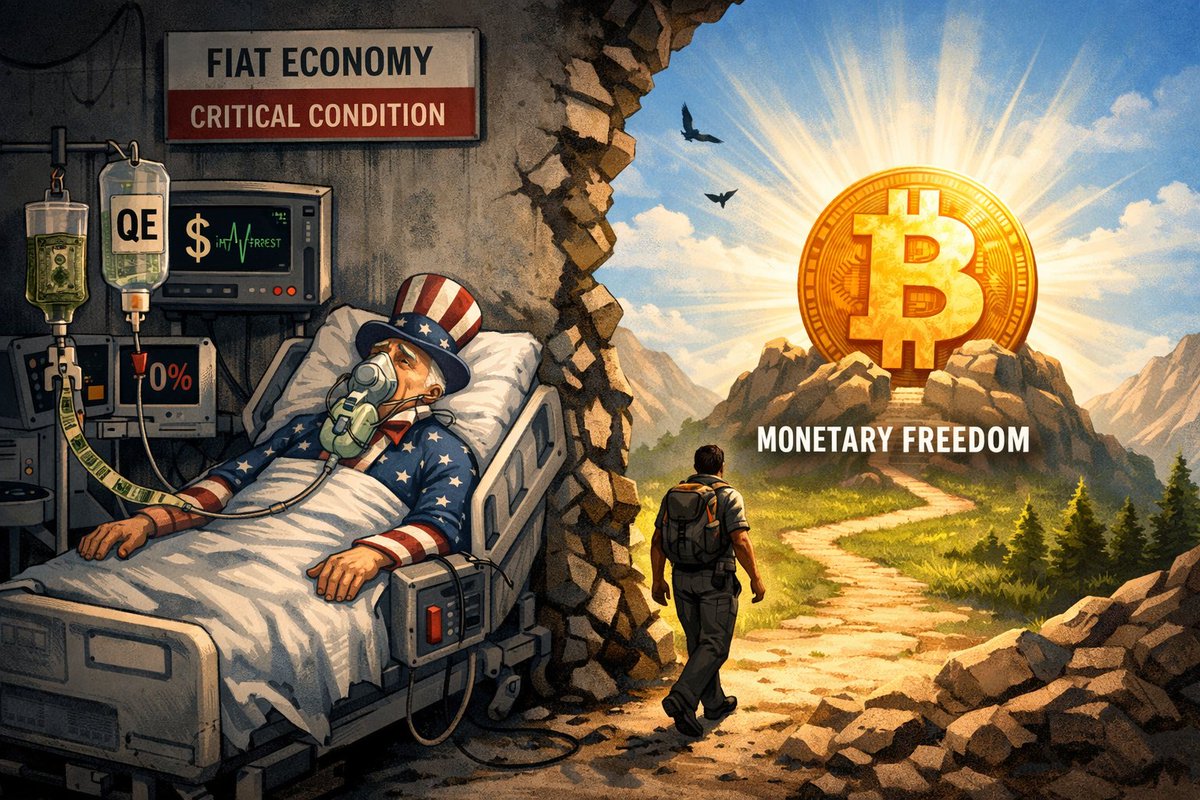
הדפסת כסף היא התמכרות שהופכת את הכלכלה לחולה בטיפול נמרץ.
המטופל נמצא על מכונות הנשמה של ריבית אפס והרחבה כמותית. הדולר איבד 99% מהערך שלו. אתם לא חיים בכלכלה משגשגת, אתם חיים בפירמידת פונזי שצריכה עוד ועוד חוב רק כדי לא לקרוס מחר בבוקר.
המערכת הזו לא תבריא. אי אפשר לרפא התמכרות על ידי הגדלת המינון. הדרך היחידה היא לצאת מהחדר המיון.
ביטקוין הוא לא עוד "נכס להשקעה" - הוא הפרדת הכסף מהמדינה. הוא המחסור המוחלט שאי אפשר להדפיס, אי אפשר לזייף ואי אפשר להקיז לו את הדם.
בעוד שהפיאט הוא שקר שחי על זמן שאול, הביטקוין הוא אמת מוניטרית שמבוססת על חוקי הטבע והמתמטיקה.
2
1
24
1,086
Mar 18
Did you know that a tree is rarer than gold and diamonds?
For trees to exist, you need liquid water, a suitable atmosphere, and complex biology that is the result of billions of years of evolution. As far as we know, Earth is currently the only place in the universe with trees.
Gold and diamonds, on the other hand, are formed in explosions and under extreme pressure, which makes them relatively common across the galaxy.
So a single tree is likely far rarer than tons of gold.
And Bitcoin is rarer than both.
ידעתם שעץ יותר נדיר מזהב ויהלומים?
כדי שיהיו עצים צריך שיהיו מים ואטמוספירה מתאימה וביולוגיה מורכבת תוצר של מילארדי שנים של אבולוציה. כרגע כדור הארץ הוא המקום היחיד ביקום שאנו מכירים עם עצים.
זהב ויהלומים לעומת זאת, נוצרים בהתפוצציות ולחץ גבוה, ולכן הם נפוצים בגלקסיה.
לכן עץ אחד כנראה נדיר בהרבה מטונות של זהב.
וביטקוין נדיר יותר משניהם.
2
176
Mar 15
בדיוק חשבתי על זה אתמול, שחייבים לייצר פרוטוקול פתוח כדי לוודא תוכן אמיתי לפני שמתחיל הכאוס. צריך שהוא יתממשק עם חתימות של ביטקוין כדי לוודא זמן, שיהיה חתימה קריפטוגרפית ברמת החומרה והפריימים, וצריך משהו בדומה לצמתים של ביטקוין לוודא שתוכן אמיתי, אולי חתימות של עמיתים שנמצאים בקרבת מקום.
6
5
728
Mar 14
הייתם מתקינים דוד מים שכורה ביטקוין כדי לחמם את המים?
במדינה כמו שלנו של-80% מהבתים יש דוד שמש אולי קצת פחות רלוונטי
5
17
2,540
Pinkas Kineta retweeted
Mar 7
You falsely present it as if the Palestinains built the golden Gorny church and Church of Saint John in Ein Kerem when if fact it's a Russian orthodox structure from 1871-1911, and was only gold plated on 2009. A holy Catholic site due to John the Baptist, a jew related to Jesus that lived there.
This site has been settled for over 3000 years and is mentioned in the Hebrew bible as well.
And yes Israel is a small piece of land over populated in it's central parts, lots of sturctures are unimpressive over 60 years old.
But modern buildings don't look anything like that.
For example:
Sharona Market TLV: maps.app.goo.gl/kafJnssc6ALw…
Or check this for some cool projects:
architizer.com/blog/inspirat…
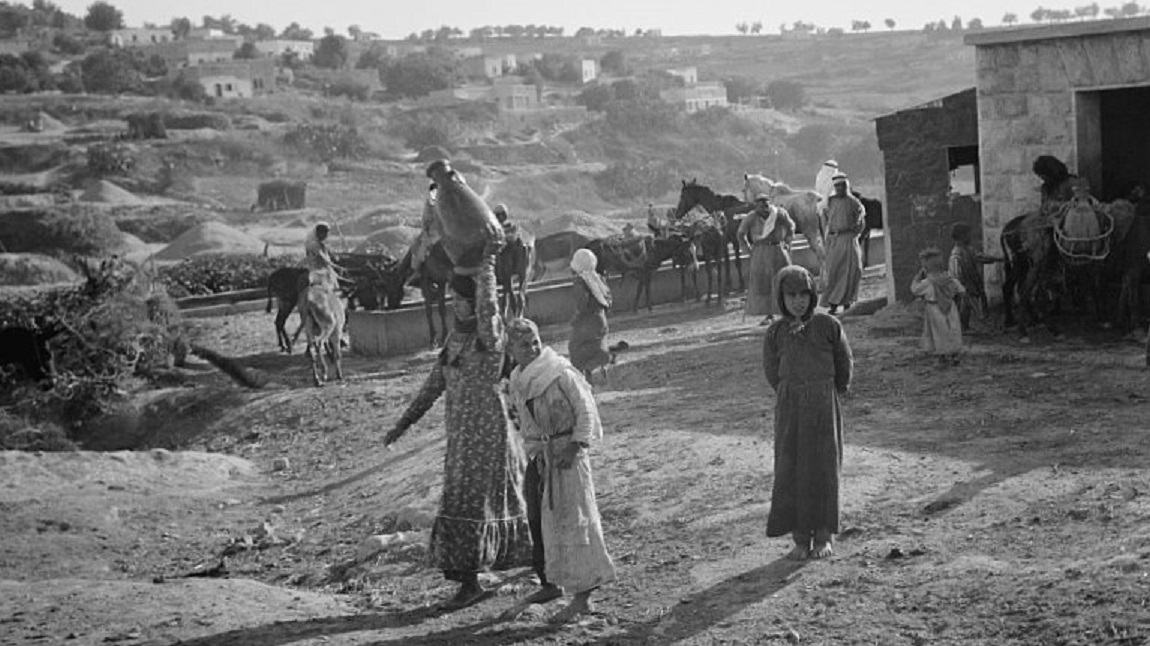
You can show how the average Palestinian village looked like prior to 1948, that's ok.
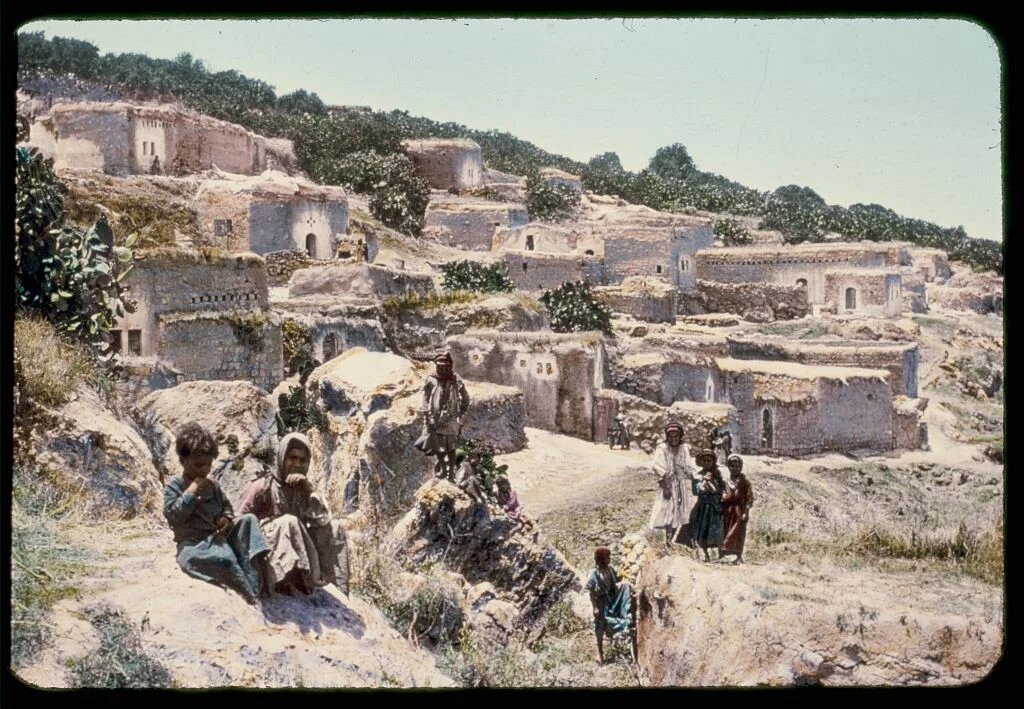
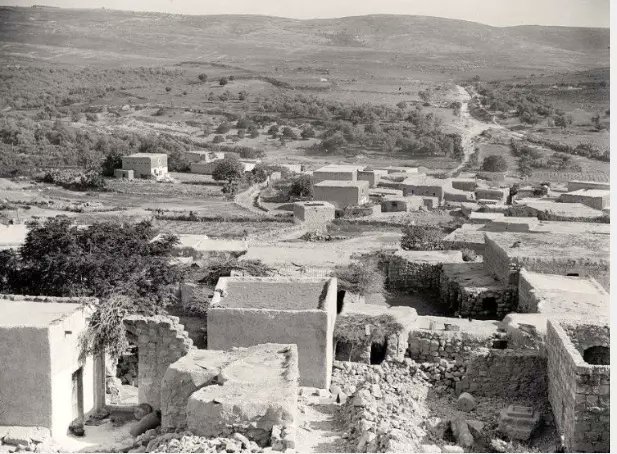
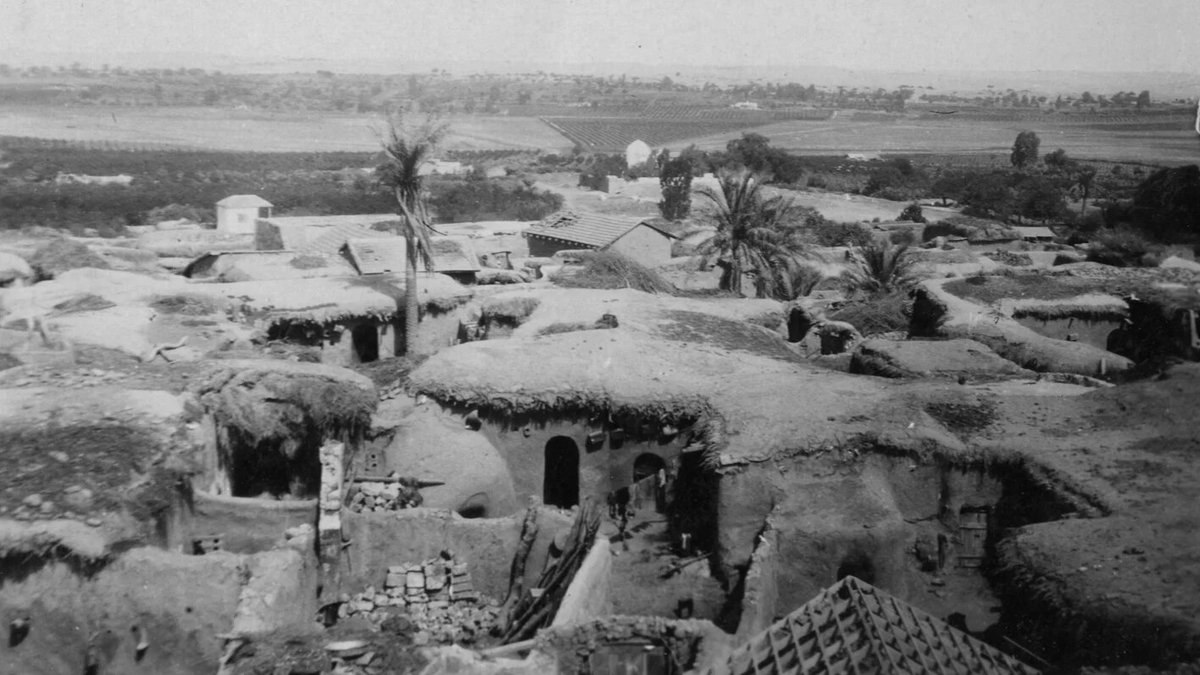
2
2
2
660
Feb 25
האם בעתיד נשלם במכולת בביטקוין בקלות כמו אפל-פיי?
Feb 24

Tap. Beep. Done.
Bitcoin's first tap to pay solution is here.
Free and open source.
Privacy by default.
Meet Numo.
1
151
Pinkas Kineta retweeted
Feb 23
זה לא בהכרח משקף את מה שבאמת קורה.
אם מסתכלים על ביטקוין ברמת הפרוטוקול, אין שום סייקלים:
בלוק כל 10 דקות בממוצע, כבר 15 שנה.
התאמת קושי כל 2016 בלוקים שומרת על הקצב גם כשכורים נכנסים ויוצאים. חצייה כל 4 שנים.
ההנפקה צפויה לחלוטין, בלי קשר לנרטיבים, ריבית, פוליטיקה או פחדים בשוק.
כלומר: השכבה הבסיסית היא אחת המערכות הכי יציבות שנוצרו אי פעם בעולם הכלכלי.
מה כן כאוטי? בני אדם.
המחיר בדולר הוא תוצר של פסיכולוגיה, נזילות, רגולציה, מקרו, אופנות - זה הכאוס.
אבל כאוס הוא לא כשל, הוא מנוע אבולוציוני - החיים עצמם פורחים מתוך כאוס.
אבולוציה לא עובדת בקו ישר אלא דרך תנודות, ניסוי וטעייה.
מערכות חזקות נבנות דווקא כשיש רעש ואי-ודאות.
במובן הזה ביטקוין די ייחודי:
ליבה יציבה מאוד מעטפת אנושית כאוטית.
זה תהליך הסתגלות של האנושות למשהו חדש.
1
1
2
130
Feb 21
בדיוק היום דיברתי עם אישתי על ה-mp3 הראשון שהורדתי, היא אמרה כן נאפסטר היה נהדר ואמרתי לה לא זה היה הרבה לפני, עוד בימי ה-mirc, שם שמעתי על זה לראשונה, הייתי כנראה בין הראשונים בעולם לאמץ את הטכנולוגיה הזו שהתפשטה כמו אש בשדה קוצים סיברנטי.
זוכרים את חנויות הדיסקים? מדהים איזה שינוי מאסיבי עבר על התעשייה הזו בעקבות הדיגיטציה.
אכן יש הרגשה שאנחנו נמצאים בפתחה של מהפכה דומה כרגע, אבל כזו עם השלכות שיטלטלו את כל מה שאנחנו מכירים.

כמה מחשבות על התפתחות המכונה
אם נבחן את התפתחות הAI מול התפתחות האינטרנט והטכנולוגיה, אפשר להגיד שאנחנו בשלב הmirc או מקסימום web0.1. הנפסטרים בדרך. גם המייספייס. ובהמשלה על שימוש בזיכרון נגיד זיפ. על האובר והנטפליקס והספוטיפיי אני עוד לא מדבר, הם קדימה בזמן, וגם ה״קדימה״, יגיע במהירות שונה לקצב התפתחות האינטרנט. אין ספק שהמכונה תבלע את שוק הטכנולוגיה.
זה נכון שאפשר לבנות היום דברים מהר. אבל כולם יכולים. זה הופך את המהירות לחסרת ערך. אם פעם הקזנו דם להקים צוות של חמישה אנשים שמוכנים לעבוד ללא שכר לשם חזון, וזה היה מבדל תחרותי, היום הבידול צנח. היום הבידול הוא להגיע להכרה כי המוצרים שיוצאים הם רעש, כולם יכולים לבנות, לא כולם יכולים להגיע להכרה. למעשה זהו עידן הזהב של אנשי השיווק. וגם אנשי השיווק הנוכחיים למעשה כבר לא רלוונטיים אם לא ישנו תפישות לגבי מהו השיווק החדש. (אכתוב את דעתי על כך בנפרד)
השמחה וההתלהבות של משתמשי הטכנולוגיה מהמכונה תעלה ביוקר. זה הרבה מעבר לכך שלא יהיה צורך במפתחים, זה שלא יהיה צורך בחברות מוצר או שירות (כבר עכשיו חברות SAAS עומדות בפני משבר כך שאם נסתכל העתיד כמעט כל מוצר שאנשים מפתחים כעת ידרס בהמשך. וההמשך הוא לא בעוד עשור, אלא פחות. בכל רליס חדש נמחקים נישות שלמות של סטארטאפים. זה יגדל ויעבור למאות. כשכתבתי שלא יצטרכו מפתחים בטווח של עשור, טעיתי. חמש שנים, נותרו שנתיים. וזה לא שבעוד שנתיים נוכל לייצר איזה מוצר שנרצה ולכן לא נזדקק לאנשי פיתוח, זה שבעוד שנתיים המכונה תייצר אותם, והיא לא תיתן לנו צ׳אנס להיכנס למגרש, שלה.
אני חוזר וטוען שאנחנו באירוע קיצוני שהאנושות טרם חוותה. זו לא המהפכה התעשייתית כי להבדיל, בעבר היה לאנשים את הזמן להיערך. עכשיו אנחנו במשחק שבו בכל רליס אין לדעת מה יקרה. חברות כמו אמזון עם מחסנים ומערכי הפצה ישרדו. אבל כל מה שדיגיטל, בלבד, לא סביר. שאלו אותי אז מה עושים? והתשובה שלי היא, תבנו מחוץ לקופסה. תבנו כלי התנגדות למכונה. לדעתי הסייבר החדש הוא כלים שהמכונה לא יכולה לחטט בהם. אני קורא להם כלי התנגדות. שרה קונור צדקה.
טקסט צף:
2.5 טריליון דולר בהשקעות גלובליות בבינה מלאכותית, עלייה של 44% לעומת השנה שעברה. אמזון, Xetc, גוגל, מטא ומיקרוסופט צפויות לשרוף 560 מיליארד דולר על בינה מלאכותית. כפול ממה שהוציאו לפני שנתיים.
היסטורית, הזרקת הון בסדר גודל כזה אומרת דבר אחד: משרות, צמיחה. אבל הפעם זה לא המצב כי כל דולר שמושקע מתוכנן להחליף את האנשים שבדרך כלל היו נהנים ממנו.
גולדמן זאקס יודעים את זה, הפד יודע את זה, רבים יודעים ושותקים. אנחנו מתקדמים למשהו שמעולם לא היה קודם. השקעות שיא ואבטלה המונית בו זמנית. הנה תגובת שרשרת שניתן לחשוב עליה ואף אחד לא רוצה לדבר עליה:
משרות נעלמות, הצריכה צונחת, ההכנסות לעסקים מצטמצמות, הכנסות ממסים צונחות וממשלות שכבר קבורות בחובות ללא מרחב תגובה. שלושה כוחות מתכנסים בו זמנית לראשונה בהיסטוריה: פריסת הון בשיא. דחיקה רחבה של עובדים ממשרות. חוב ממשלתי בלתי בר קיימא.
אם זה נכון, אז זו טריטוריה לא מוכרת והשווקים עדיין לא מתמחרים את זה, ואני לא חושב שזה יחזיק עוד הרבה זמן. הפתרונות המוצעים, מסי אוטומציה, והכנסה בסיסית אוניברסלית, הם מוקשים פוליטיים שאיש לא באמת מוכן לגעת בהם. אבל עצם זה שהם חוזרים לשולחן הדיונים מצביע על הכיוון שאליו הדברים הולכים.
המנופים הישנים כמו הורדות ריבית, תמריצים ורגולציה לא תוכננו להתמודד עם הסיטואציה הזו.
ועם כל מה שכתבתי, אני מזהה הזדמנויות לשנתיים הקרובות. ועוד טובות יותר להמשך הדרך. אציין הזדמנות שתשמע מופרעת, אבל אני צופה שיש שם משהו. השקעה בבתי כלא. להשקיע במניות של חברות המנהלות בתי כלא פרטיים בארה״ב זו זווית מעניינית כי חוסר הסדר והכאוס שצפויים לעלות יקפיצו רווחיות למפעילים. אנשים לא ידעו איך לאכול את השינוי, והסדר החברתי יתערער ובזמן של בין המייצרים הפשיעה תזנק ואיתה השיטור. בתי כלא וכלי שיטור. עתיד ורוד.
5
654
Pinkas Kineta retweeted
Feb 13
רק ביטקוין אי אפשר לגזול מאיתנו בכוח.
זה המפתח לחירות.
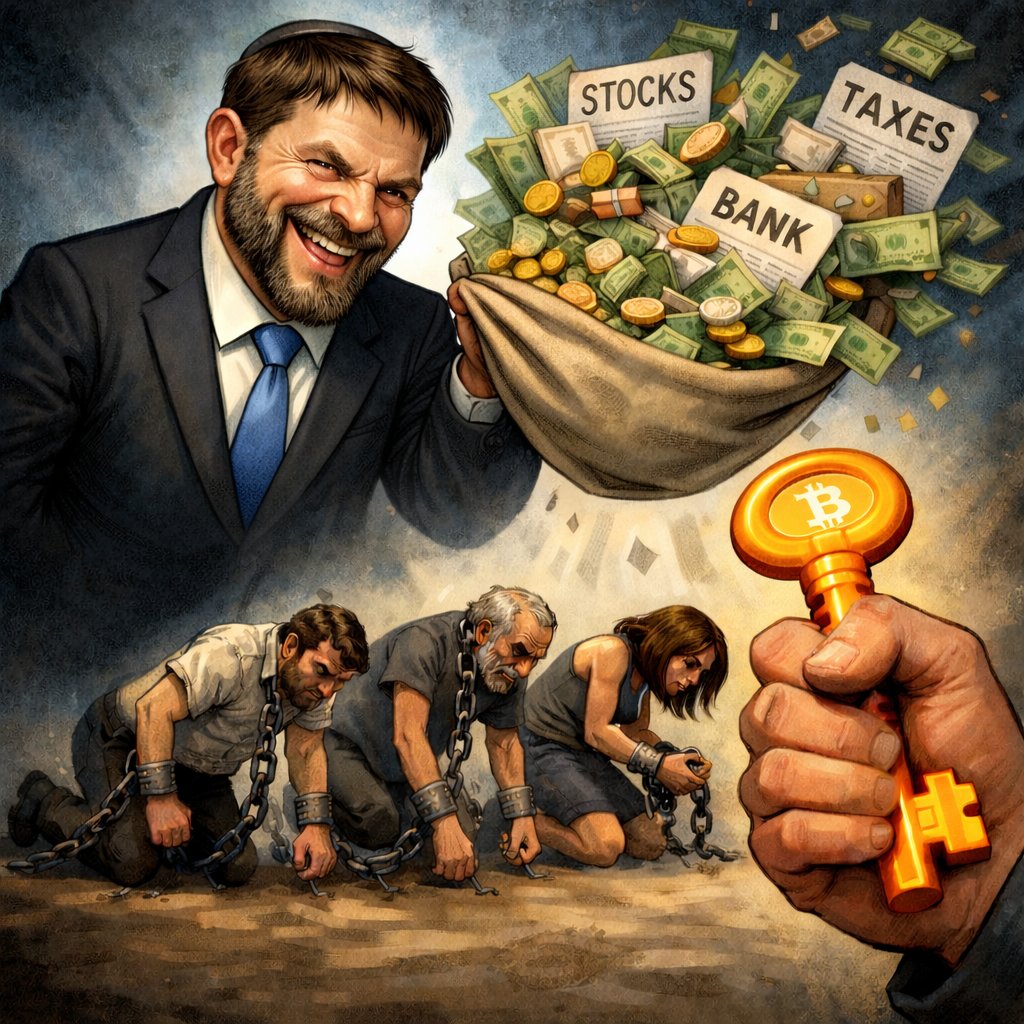
1
1
4
221