
A new virtual world in development by the creators of Club Penguin team and its community! A Digital Daylight and @RocketSnail Production
Joined September 2022
- Tweets 1,566
- Following 20
- Followers 6,659
- Likes 1,896
392 Photos and videos











Party Parrot World retweeted

24 Oct 2023
Here's how New Zealand saved the kakapo from extinction
on.natgeo.com/3Q7fmSj
12
87
716
213,968
Party Parrot World retweeted

May 28
Kākāpō chicks go through an amusing and quirky playful stage from around 65 days of age. They are super curious and enjoy exploring their surroundings.
Kākāpō playing with a rolled up towel. Simple but very effective enrichment for these chickies 💚
2
37
303
12,100
Party Parrot World retweeted

May 15
here's what i've been up to with @PlayPartyParrot patreon.com/posts/rewriting-…
1
2
13
791
Party Parrot World retweeted

𝘒𝘪𝘢 𝘰𝘳𝘢 from New Zealand where Rakiura makes sure Nora and Heather start their day with a healthy breakfast. #Kakapo #nzwildlife
1
4
31
984
Party Parrot World retweeted

Mar 16
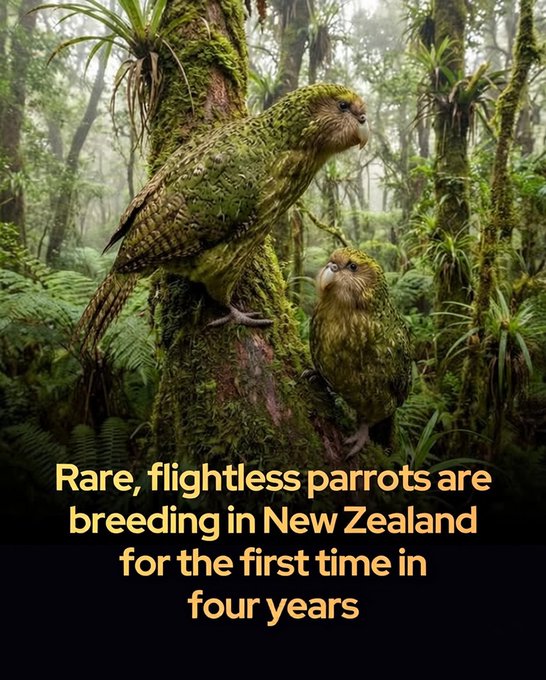
For the first time in four years, kākāpō are breeding again.
Experts are optimistic that 2026 could deliver the most productive breeding season for the kākāpō in decades. These critically endangered, flightless, nocturnal parrots—native exclusively to New Zealand—are among the world's heaviest and most intensively managed bird species. Their reproduction is highly irregular, occurring only every two to four years when native rimu trees undergo a "mast" event, producing an abundance of protein-rich fruit and seeds that provide the essential nutrition for egg-laying and chick-rearing.
After a four-year hiatus since the last major breeding in 2022, the pattern has shifted dramatically this year. A significant rimu mast is underway, triggering widespread mating activity that began as early as late December 2025. Males congregate in traditional leks—communal display areas—where they construct intricate networks of cleared tracks and bowl-shaped depressions to amplify their deep, booming calls. These resonant, low-frequency sounds carry far through the dense forest, attracting females for courtship.
The Kākāpō Recovery Programme, run by New Zealand's Department of Conservation (DOC) in partnership with Ngāi Tahu, now monitors the entire known population of 236 individuals (as of early 2026), including 83 breeding-age females. Every bird is fitted with a small radio transmitter to track movements, mating behavior, and nesting success in real time. Females typically produce one to five eggs but usually fledge just a single chick per season, meaning even high participation could yield a substantial influx of young—potentially the highest number since systematic records began 30 years ago.
Conservation strategies for kākāpō rank among the most hands-on globally: decades of efforts have included hand-rearing chicks, supplemental feeding, predator-free island translocations, and vigilant nest protection. For 2026, however, managers are deliberately scaling back intervention in many cases—allowing more eggs to incubate naturally and permitting mothers to raise offspring with less human involvement. This approach aims to foster greater self-sufficiency and resilience in the population.
As Deidre Vercoe, operations manager for the kākāpō recovery program, explained: “We want to create healthy, self-sustaining populations of kākāpō that are thriving, not just surviving.” A robust food supply combined with reduced interference could mark a pivotal step toward that goal. If the season fulfills expectations, with chicks hatching from mid-February onward, it would represent meaningful progress in pulling this iconic species back from the edge of extinction.
[Department of Conservation (DOC), "Kākāpō breeding season officially underway" media release (January 6, 2026)]
22
329
1,436
38,334
‘My lovely distraction’: live stream of kākāpō – world’s fattest parrot – and her chicks captivates New Zealand theguardian.com/world/2026/m…
1
4
817
Party Parrot World retweeted
Revel in the colours.
Andrew Digby, 5/3/2026: "Female #kakapo are utterly focused on their chicks. Stella came back to the nest while I was checking her very young chicks two nights ago—unconcerned by me being there, she jumped in and started brooding them in front of me."
3
13
114
1,756
Party Parrot World retweeted

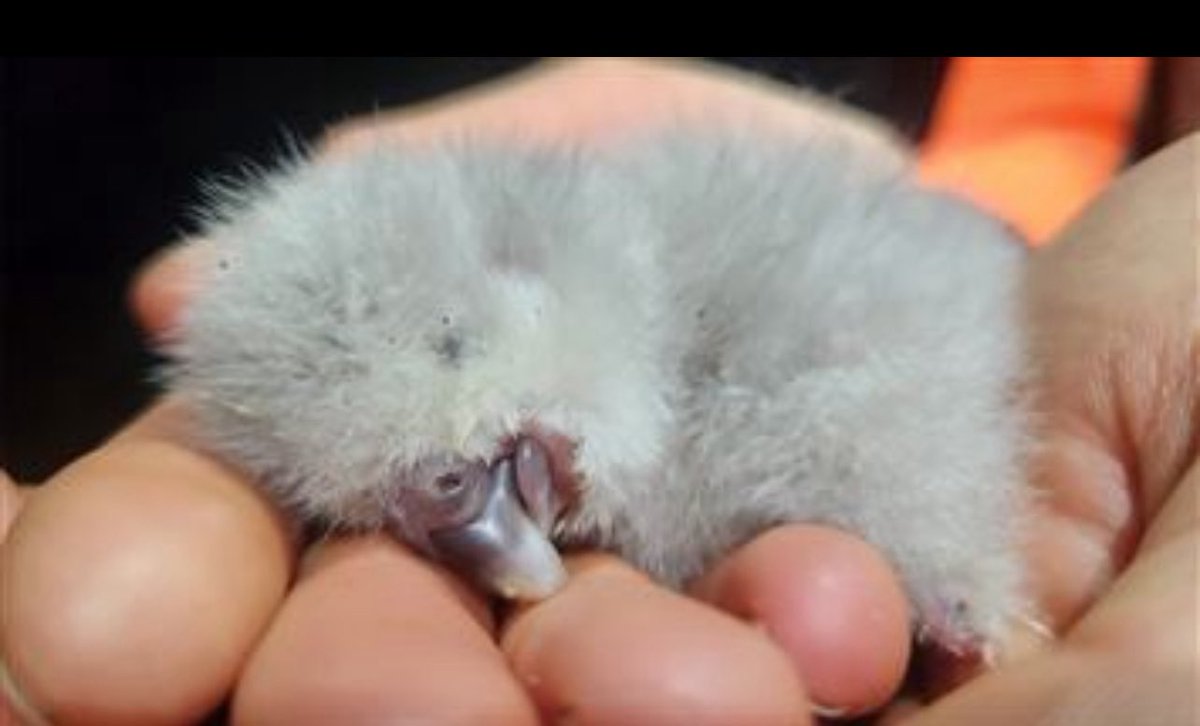
The first kakapo chick in four years, brining the kakapo population up to a grand total of 237 birds. The kakapo is an endangered flightless parrot native to New Zealand
5
27
1,244
Party Parrot World retweeted
Jan 16
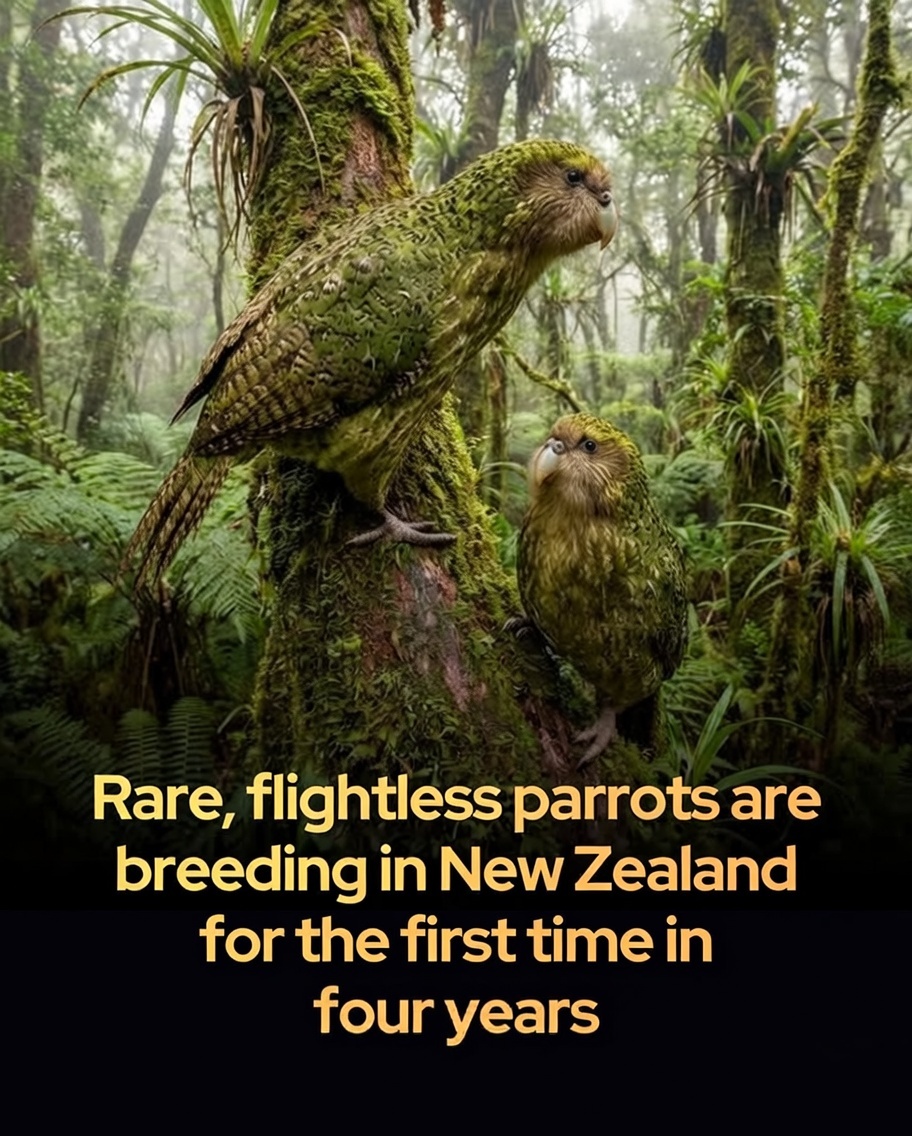
For the first time in four years, kākāpō are breeding again.
Experts are optimistic that 2026 could deliver the most productive breeding season for the kākāpō in decades. These critically endangered, flightless, nocturnal parrots—native exclusively to New Zealand—are among the world's heaviest and most intensively managed bird species. Their reproduction is highly irregular, occurring only every two to four years when native rimu trees undergo a "mast" event, producing an abundance of protein-rich fruit and seeds that provide the essential nutrition for egg-laying and chick-rearing.
After a four-year hiatus since the last major breeding in 2022, the pattern has shifted dramatically this year. A significant rimu mast is underway, triggering widespread mating activity that began as early as late December 2025. Males congregate in traditional leks—communal display areas—where they construct intricate networks of cleared tracks and bowl-shaped depressions to amplify their deep, booming calls. These resonant, low-frequency sounds carry far through the dense forest, attracting females for courtship.
The Kākāpō Recovery Programme, run by New Zealand's Department of Conservation (DOC) in partnership with Ngāi Tahu, now monitors the entire known population of 236 individuals (as of early 2026), including 83 breeding-age females. Every bird is fitted with a small radio transmitter to track movements, mating behavior, and nesting success in real time. Females typically produce one to five eggs but usually fledge just a single chick per season, meaning even high participation could yield a substantial influx of young—potentially the highest number since systematic records began 30 years ago.
Conservation strategies for kākāpō rank among the most hands-on globally: decades of efforts have included hand-rearing chicks, supplemental feeding, predator-free island translocations, and vigilant nest protection. For 2026, however, managers are deliberately scaling back intervention in many cases—allowing more eggs to incubate naturally and permitting mothers to raise offspring with less human involvement. This approach aims to foster greater self-sufficiency and resilience in the population.
As Deidre Vercoe, operations manager for the kākāpō recovery program, explained: “We want to create healthy, self-sustaining populations of kākāpō that are thriving, not just surviving.” A robust food supply combined with reduced interference could mark a pivotal step toward that goal. If the season fulfills expectations, with chicks hatching from mid-February onward, it would represent meaningful progress in pulling this iconic species back from the edge of extinction.
[Department of Conservation (DOC), "Kākāpō breeding season officially underway" media release (January 6, 2026)]
24
554
3,432
62,967
Party Parrot World retweeted
Jan 14
What made Club Penguin YOUR game?
15%
Making it my own
33%
The vibes & people
7%
Easy to jump in
45%
Art, music, events
484 votes • Final results
12
12
61
3,564
Party Parrot World retweeted

10 Jul 2023
The sea surrounding Skipwreck Island even has the exact same sky as Kakapo Island.
Stars, white clouds, and a purple/pink gradient.
Could this be a coincidence, or the passing between worlds? If so, why would a portal even be on RH's map? He doesn't use portals, does he? Well..


1
3
67
3,374
Party Parrot World retweeted
10 Jul 2023
PPW's map shows Penguin Island surrounded by three smaller islands, as well as a whale & giant squid.
This is the same layout from Club Penguin, shown during “Rockhopper’s Quest” in 2012.
This seems to tell us that the parrots traveled to Shipwreck Island.

1
9
159
5,771

23 Dec 2025
Happy holidays, parrots! Here's a new update video for you: youtube.com/watch?v=QBTJXMT6…
1
5
11
1,447
Party Parrot World retweeted
15 Dec 2025
What lore are you most interested in? ☕
23%
Story
24%
Behind the scenes
52%
Both!
1%
None!
125 votes • Final results
3
8
2,370
19 Nov 2025
congrats to anyone who had this collab on their bingo card!
18 Nov 2025

🧑🌾 Among Us x Stardew Valley 🌾
our collab with @ConcernedApe is out now! complete tasks in the coziest cosmetics, along with the Junimo and Krobus pets!
available until February 18th, 2026 for 3,300 Beans 🫶

ALT Keyart of the Among Us x Stardew Valley Cosmicube. 3 Crewmates stand at a farm, from left to right: - Yellow wearing the Abigail's Locks Hat and Abigail's Outfit Skin - Red wearing the Prized Straw Hat and Work Overalls Skin beside a Junimo Pet - Gray wearing the Sebastian's Bangs Hat and Sebastian's Hoodie Skin
12
1,374
Party Parrot World retweeted
24 Oct 2025
Happy 20th birthday, Club Penguin! In celebration, I'm making a new video! And as some of you requested, I will be uploading it along with some older Club Penguin videos here: youtube.com/@polofield
3
26
137
11,534
Party Parrot World retweeted
11 Oct 2025
Should we all start referring to virtual worlds as "Clublikes" or "Penguinlikes"? 😂
22%
Clublike
36%
Penguinlike
26%
Eww no
16%
Meh where's my taco
120 votes • Final results
2
3
12
1,911
6 Oct 2025
How do you enjoy new books and stories? Cast your vote in our first weekly poll here:
patreon.com/posts/weekly-pol…
3
1,047
2 Oct 2025
Exciting news about the next chapter of Party Parrot on our Patreon: patreon.com/posts/end-of-cha…
10
928
29 Aug 2025
Long way to go for us to hit those heights! But we parrots were born to dream! 💚


2
5
69
3,213