Joined April 2026
- Tweets 1,272
- Following 264
- Followers 4,910
- Likes 1,225
781 Photos and videos


Pinned Tweet

Jun 10
Every token you spend hits DRAM.
Sanjay Mehrotra, Micron CEO, on A Bit Personal: token economics mechanically scales memory demand. Longer context windows mean larger KV caches. Larger models mean more DRAM per inference call. More agents mean more concurrent memory loads.
All three levers are growing at once.
Greenfield fabs take 3-4 years to bring online. Each new memory node yields fewer gigabits per wafer. Memory supply will be tight through 2026 with no catch-up timeline in sight.
The token budget crisis in corporate America is a DRAM demand signal. ($MU)
Source: A Bit Personal with Jodi Shelton - youtube.com/watch?v=y4G69Fwt…
Jun 10

Token capital is the new line item every enterprise balance sheet is missing.
@satyanadella named it on Possible with @reidhoffman.
The model your vendor sells you was trained by your former employees. Model companies staff reward labeling with ex-employees of large enterprises. Their judgment gets encoded into frontier weights. Those weights get sold back to your industry.
You contributed the IP. The vendor keeps the compound interest.
Most CFOs don't have a token capital line yet. But they're already burning it. Every year they don't capture work traces inside an enterprise-controlled environment is a year of compounding leakage with no reversal mechanism.
Source: Possible with Reid Hoffman - youtube.com/watch?v=BKx0Dp8y…
1
1
24
25,785
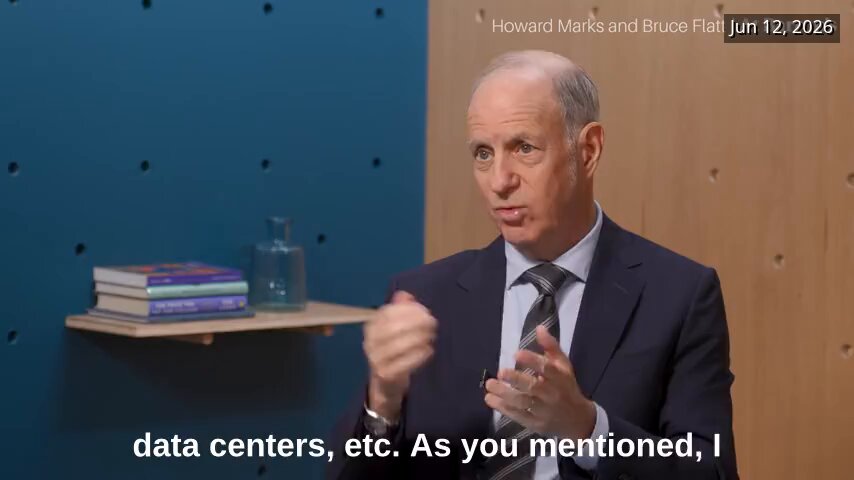
If you're sizing AI infrastructure exposure, Flatt's supply argument is the frame.
Bruce Flatt, Brookfield CEO via @Barrons, doesn't predict AI demand. He assumes it. His thesis: building AI supply is genuinely hard enough that pricing power persists regardless.
The numbers: $20 to $250 billion per factory. Years of siting, permitting, grid connection, construction. Brookfield - world's largest private power builder - is signing 25-year contracts with sovereign AI programs and top-rated tech companies.
The risk he names: technological obsolescence making current-generation infrastructure irrelevant before the contracts expire.
The risk he doesn't name: demand collapse. He's betting the supply bottleneck holds. That's the bet to stress-test.
Read whether that argument is enough: podcastalpha.substack.com/p/…
Source: At Barron's - youtube.com/watch?v=ZPpcUUe9…
46
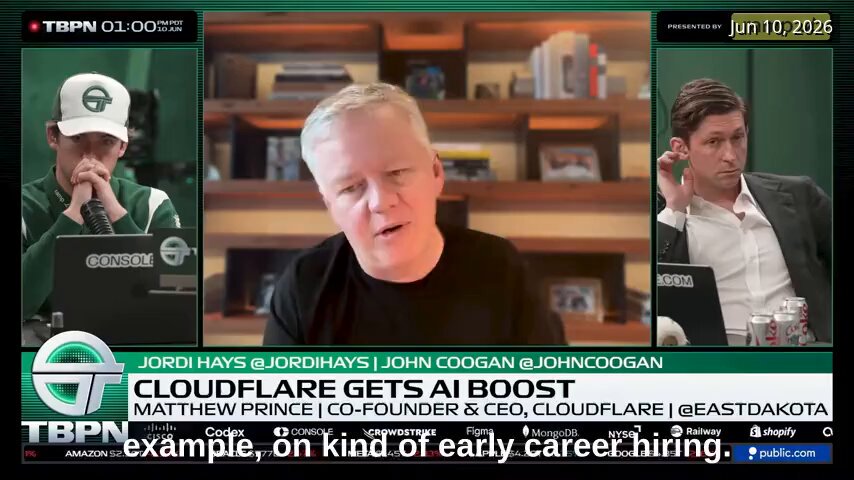
Most companies are cutting early-career hiring because AI will replace entry-level work. $NET is doing the opposite.
Cloudflare hired 1,111 interns in summer 2026 while cutting 20% of its total headcount. Matthew Prince's logic on @tbpn: AI-native recent graduates are the most productive workforce available right now - not because they are learning AI tools, but because they are teaching the company how to use them.
Prince has inverted the standard narrative. Interns are not the training recipients. They are the trainers.
If he is right, companies cutting junior hiring are making a structural mistake. The talent that understands AI natively is at the bottom of the org chart, not the top.
The workforce bet and what it signals: podcastalpha.substack.com/p/…
Source: The Bear Paw Network (TBPN) - youtube.com/watch?v=HWheP8hY…
4
259
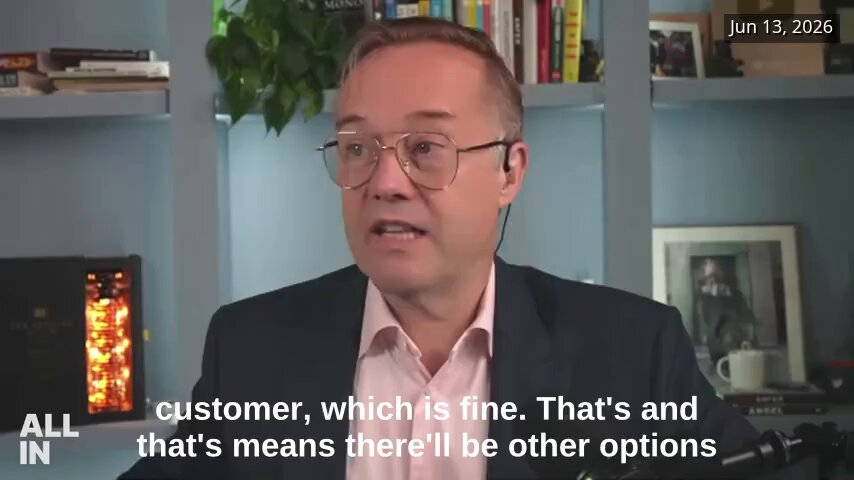
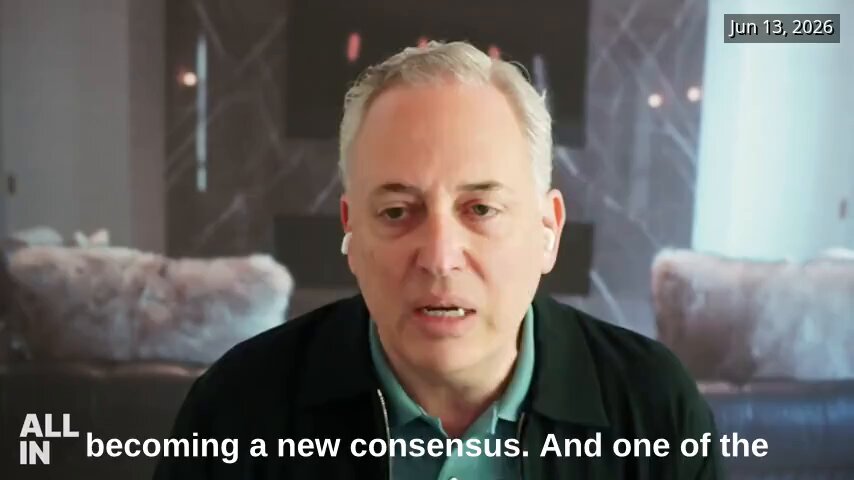
8 months ago, @DavidSacks called Anthropic's strategy regulatory capture. Now it is consensus.
In late 2025, Sacks publicly called it a "sophisticated regulatory capture campaign based on fear mongering." People thought it was a spicy take.
This week: Anthropic rolled out mandatory user surveillance, published a call for government model approval & got Fabel & Mythos banned, and filed for IPO.
On @theallinpod, Sacks laid out the three-part playbook: restrict users, amplify existential risk, lobby for approval frameworks only you can clear. The outcome is a government-sanctioned AI duopoly.
What this means for AI companies outside the Anthropic/OpenAI circle:
podcastalpha.substack.com/p/…
Source: All-In Podcast - youtube.com/watch?v=gH4FTjDm…
2
2
878
$COIN has three AI agent products in market right now. Not a roadmap.
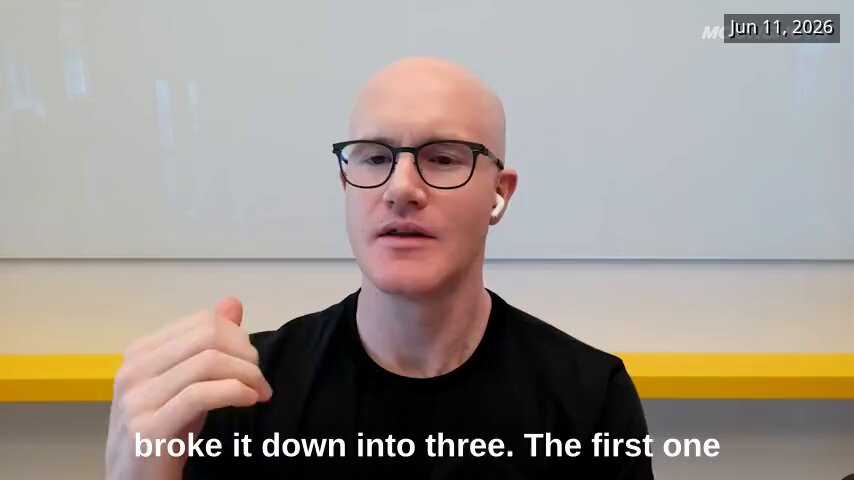
Brian Armstrong @brian_armstrong on @PeterDiamandis's Moonshots: Coinbase built API account access for LLMs, an in-app Advisor that auto-rebalances crypto portfolios, and KYC-free Base Protocol wallets where AI agents can sign up with no government ID.
Armstrong says stablecoin payments are becoming the default settlement layer for agent-to-agent transactions. AI agents are already conducting millions of transactions on Base.
If that scales, the exchange revenue model is the floor on $COIN's value, not the ceiling.
Full breakdown of the three-step AI agent roadmap: podcastalpha.substack.com/p/…
Source: Moonshots with Peter Diamandis - youtube.com/watch?v=isd2y37j…
3
403
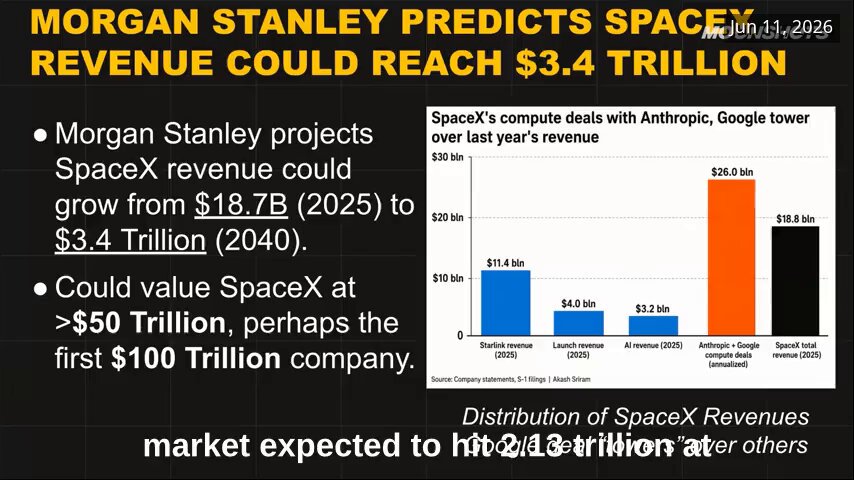
Morgan Stanley projects SpaceX revenue growing from $18.7B today to $3.4T by 2040.
@PeterDiamandis flagged it immediately as a fundraising tool - Morgan Stanley is likely an IPO underwriter. He's probably right.
But @DaveBlundin's structural point survives: SpaceX's revenue mix has already changed. Starlink ($11B), launch ($4B), and compute rental to Google and @AnthropicAI ($3.2B and growing). That's not a rocket company. That's tech infrastructure.
No one else can match SpaceX's launch economics for deploying AI-1's 1 million satellite Dyson swarm. That compute advantage has no terrestrial equivalent.
SpaceX valuation and the AI compute angle: podcastalpha.substack.com/p/…
Source: Moonshots with Peter Diamandis - youtube.com/watch?v=isd2y37j…
2
4
61
4,686
Anthropic's new terms void your zero-data-retention contract.
Enterprise customers who previously signed zero-data-retention agreements are now subject to Fable 5's mandatory 30-day custody of all prompts, outputs, and agent context - including everything your agent platform passes automatically: memories, files, proprietary data. No exceptions.
@Jason flagged this on All-In. The policy is buried in a 319-page document. Your entire context window is in Anthropic's custody for a month, and nothing in your prior contract changes that.
For enterprise AI teams rethinking vendor data governance - the full breakdown on @theallinpod:
podcastalpha.substack.com/p/…
Source: All-In Podcast - youtube.com/watch?v=gH4FTjDm…
3
906
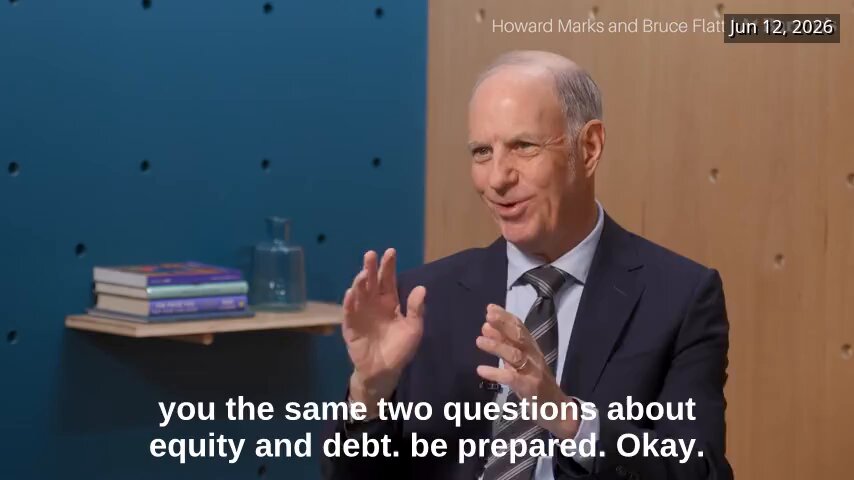
17 years. Howard Marks @HowardMarksBook calls it the longest uninterrupted credit bull run he can recall.
It started at the March 2009 low. The pandemic interrupted it briefly - "easily solved" in credit terms - and then it resumed.
What 17 years of credit generosity looks like in practice: theory recedes, skepticism declines, due diligence declines, FOMO takes over. Lenders compete by cutting prices because if they don't make the loan, the competitor does and they're shut out. That ratchets down standards one quarter at a time - invisible in any single period, obvious late in the cycle.
Marks via @Barrons also sees no reason to cut rates. Higher-for-longer hits every leveraged position originated expecting cuts.
Historically generous conditions. Not stress-tested yet. Full read: podcastalpha.substack.com/p/…
Source: At Barron's - youtube.com/watch?v=ZPpcUUe9…
4
5
1,320
Cerebras is down 50% from its IPO. @jvisserlabs says that's not a Cerebras story - it's a preview.
OpenAI, Anthropic, and SpaceX represent roughly $4 trillion in equity competing for the same institutional capital pool. When that volume hits, you don't need sentiment to turn - you just need capital to be occupied. The digestion window: 3-6 months.
Not a reason to go short AI infrastructure. A reason to know what you're holding and why.
Full breakdown with @RaoulGMI: podcastalpha.substack.com/p/…
Source: Raoul Pal The Journey Man - youtube.com/watch?v=jGNmWFeC…
3
5
29
10,129
Anthropic is 83% likely to IPO before end of 2026. The concentration math argues for owning it.
Polymarket: Anthropic 83%, OpenAI 48%, SpaceX 100%.
LeFont's venture data, per @DavidSacks on @theallinpod: senticorn to trillion-dollar is a 31% probability - roughly double the rate at each prior tier. Sacks extrapolated $1T to $10T at around 60%.
If Anthropic prices near senticorn at IPO, the historical data says the market is more likely than not to reprice it higher over time.
The question is whether the Fable 5 backlash and regulatory risk are already in the price.
Full IPO breakdown at @theallinpod:
podcastalpha.substack.com/p/…
Source: All-In Podcast - youtube.com/watch?v=gH4FTjDm…
2
1
6
2,735
One year ago, Gavin Baker was managing a large AI position. Today he is medium-small.
This is not a change in thesis. Baker and @altcap both remain long SpaceX and AI infrastructure. The trimming is about price, not conviction.
CPI at 4.2%. Iran war. Oil at $100. Semis already ran doubles and triples. Baker names the seasonal pattern: college students drive heavy AI consumption, and the last three summers saw token growth flatten.
The positioning signal: the investors most likely to buy the next AI dip are currently lighter than last month. When they add back, the bid could move fast.
What they are watching before sizing up:
podcastalpha.substack.com/p/…
Source: BG2 Pod - youtube.com/watch?v=Tx9jT2c6…
3
4
58
16,166
The contrarian hardware bet is no longer contrarian. Tony Fadell has been making it for 30 years.
On @lennysan, he walks through his Build Collective portfolio: Simbi Robotics (AI inventory counting), Gray Parrot (AI recycling contamination sorting), early Grok and Cerebras positions. All built when his network thought he was wrong.
Fadell's edge is not predicting when the hardware cycle turns. It is identifying the pain-plus-enabling-technology intersection before anyone else calls it a market. He moved on Nest when $249 AI thermostats were not a category. He moved on Cerebras when AI infrastructure was cheap and unfashionable.
The window to buy early always looks identical to the window to miss entirely.
Fadell's full atoms-plus-software investment thesis:
podcastalpha.substack.com/p/…
Source: Lenny's Podcast - youtube.com/watch?v=RJjl1Twy…
1
2
1,083
Anthropic wants the government to approve every AI model. Open-source would not survive.
@DavidSacks on @theallinpod: Dario's call for an FAA/FDA-style model approval framework is the third leg of a coordinated strategy - implement restrictive product policies, amplify AI existential risk narratives, then lobby for approval requirements that only large labs can navigate.
Any approval process requires dedicated regulatory teams, institutional infrastructure, and years of runway. Open-source models released by distributed research communities cannot clear that bar.
The framework would not constrain Anthropic. It would constrain everyone else.
What this means for the TAM of every AI company outside the approved circle:
podcastalpha.substack.com/p/…
Source: All-In Podcast - youtube.com/watch?v=gH4FTjDm…
1
1
6
2,180
100 million drug candidates screened in 2 days. The trial took 10 months.
Ray Kurzweil on how the COVID vaccine was actually found: AI screened 100 million structural possibilities in 48 hours. The discovery was instant. The bottleneck was human clinical trials.
His prediction: within 5 years, simulated human trials replace physical ones. The full cycle - discovery through validation - runs in days.
That is not a biotech moonshot. That is a 5-year engineering timeline that lands at 2031.
If he is right, the companies building AI-driven trial simulation infrastructure are at the beginning of a capital rotation that the market is still pricing as speculative.
The longevity trade and what sits behind the 2032 LEV target:
podcastalpha.substack.com/p/…
Source: Tony Robbins - youtube.com/watch?v=fddhXXIj…
561
$4 trillion in new equity is about to compete for the same institutional capital pool.
@jvisserlabs on Raoul Pal The Journey Man: the OpenAI, Anthropic, and SpaceX IPOs don't signal confidence - they signal a capital absorption event. Cerebras is the preview: already down 50% from IPO, locked-up capital in a drawdown. Multiply that across three mega-IPOs.
His call: 3-6 months of digestion for AI infrastructure names. Not a bear thesis. A timing one.
The full setup - and what to rotate into: podcastalpha.substack.com/p/…
Source: Raoul Pal The Journey Man - youtube.com/watch?v=jGNmWFeC…
1
4
1,721
Why did $NVDA win AI when it was built for video games?
Jensen Huang explained the actual mechanism at @HooverInst. The gaming market was not a pivot. It was a bootstrap strategy.
You cannot get developers to build for a new architecture with no install base. So you find an application with high enough volume to proliferate the hardware first. That was 3D games. Once the install base existed, researchers could use it.
The GeForce 3 launched in 2001 for gamers. CUDA launched in 2006 for developers. The 5-year gap is the moat.
Why the 2001 product decision determined who wins in 2024:
podcastalpha.substack.com/p/…
Source: Only In America - Hoover Institution - youtube.com/watch?v=ZEL0EAVt…
396
8x earnings. Sole supplier to Google TPU servers. Whale Rock found it three years ago.
On @InvestLikeBest, Alex Sacerdote walked through how Whale Rock spotted Celestica when it was priced as a commodity contract manufacturer - and was actually the only company building Google's TPU server infrastructure.
The tell was a shift in procurement behavior: from "call us next week if you need capacity" to a four-year roadmap partnership. When that shift happens, you've gone from commodity vendor to mission-critical supplier. Multiples follow.
The position is now "dramatically higher." Sacerdote says the same pattern is live today in 40-layer PCB manufacturers and fiber specialists - the picks-and-shovels that hyperscalers need on locked-in contracts.
The Celestica framework and where Sacerdote sees the next 8x-earnings analog: podcastalpha.substack.com/p/…
Source: Invest Like The Best - youtube.com/watch?v=DZt1DDmM…
1
3
23
5,367
AI infrastructure is not a bubble. It's the opposite of a bubble.
@RaoulGMI on Raoul Pal The Journey Man: PE ratios for AI infrastructure names have compressed as earnings grew. That is the definitional opposite of a bubble. Bubble means multiples expand faster than earnings. This cycle, earnings grew faster than multiples. Pattern-matching to 1929, 1987, and dot-com is three data points applied to a structurally novel regime. Three data points is not a model.
@jvisserlabs' frame: a 20-30x return over 15 years is a secular trend. Speed does not change the structure.
The rotation map and what to hold through the digestion: podcastalpha.substack.com/p/…
Source: Raoul Pal The Journey Man - youtube.com/watch?v=jGNmWFeC…
301
Salesforce sold Agentforce as the enterprise AI product. That product was not ready.
Dan Nathan raised Salesforce on @RiskReversal June 10 as the cautionary case for enterprise AI that ships a brand before it ships a working tool. The risk: customers buy the narrative, run a pilot, and when the pilot underdelivers, the credibility of the broader enterprise AI wave takes a hit.
This matters beyond $CRM. Every enterprise software company is repricing on AI potential. When a flagship AI product from a marquee vendor disappoints at scale, it raises the bar of proof for every vendor behind it.
Ives named Copilot and Agentforce in the same breath - both products that needed third-party intervention or replacement to function as advertised.
What this implies for how to read enterprise AI product claims in Q3 earnings: podcastalpha.substack.com/p/…
Source: RiskReversal Media - youtube.com/watch?v=uaMpnRch…
3
3,034
The S&P has more than doubled since October 2022.
Howard Marks @HowardMarksBook , Oaktree co-chairman via @Barrons, tracks one thing: is optimism or pessimism running the market? October 1, 2022 is his exact marker - the Fed turned more dovish. Optimism took the wheel.
When optimism dominates, prices rise above intrinsic value. Lower forward returns follow mechanically. Not as a prediction. As a consequence.
IPO pricing for SpaceX, Anthropic, and OpenAI? He reads those as sentiment data, not valuation calls. You cannot price that kind of deal when pessimism runs the room.
The implication: if your forward return model uses 2022-2026 trailing data as a baseline, rebuild it. That run was the starting condition for lower returns, not a mean to extrapolate.
Full framework: podcastalpha.substack.com/p/…
Source: At Barron's - youtube.com/watch?v=ZPpcUUe9…
379
How do you build an internal AI platform without knowing what tasks it needs to run?
$NET used a Wizard-of-Oz method. They created a fake AI email address, told employees to send any job-to-be-done request, then had humans process every email behind the scenes - recording every workflow step as they went.
Once the job catalog was rich enough, real AI replaced the humans, using the recorded human workflows as the operating model. The result: slash-command automation any employee can invoke today.
Matthew Prince explained this on @tbpn. The method is replicable. Bootstrap with real human behavior data before deploying AI. Do not guess the workflows. Record them.
The enterprise AI deployment playbook: podcastalpha.substack.com/p/…
Source: The Bear Paw Network (TBPN) - youtube.com/watch?v=HWheP8hY…
1
287