An interdisciplinary journal associated with the @epovb section of @APSAtweets. Edited by Chris Karpowitz & Jessica Preece, @BYU
Joined December 2014
- Tweets 718
- Following 41
- Followers 5,746
- Likes 326
72 Photos and videos

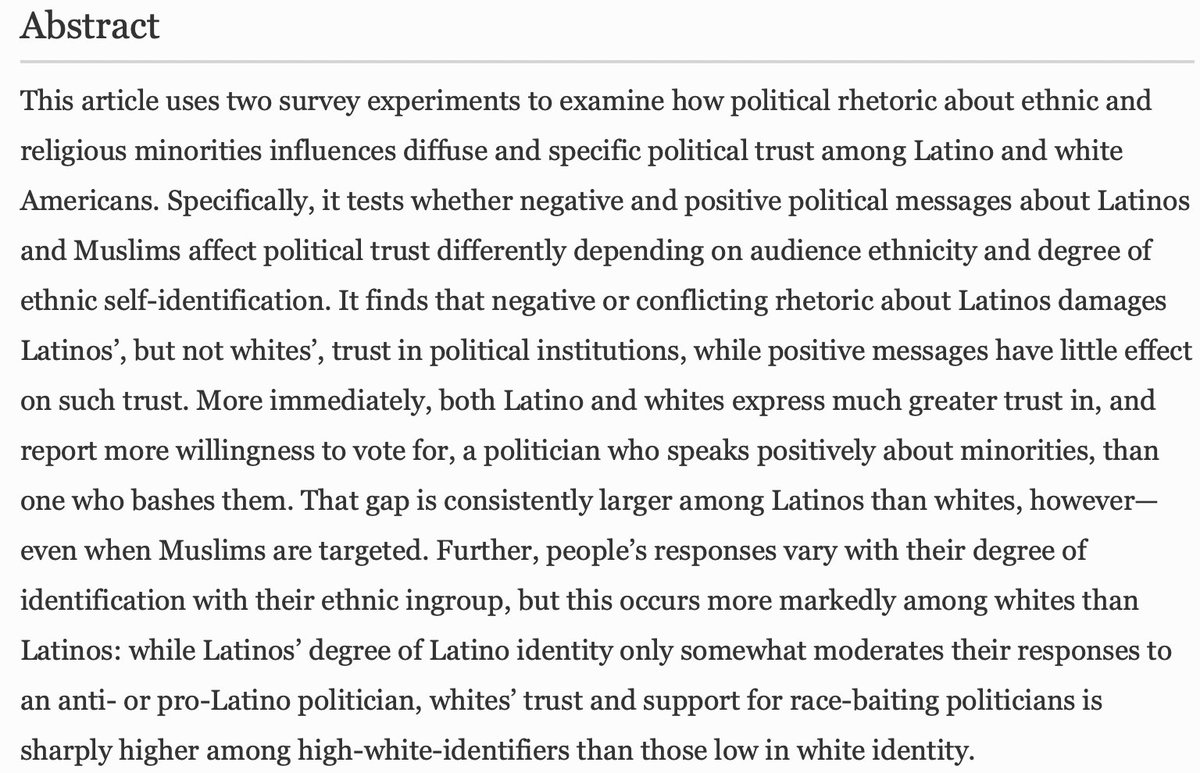
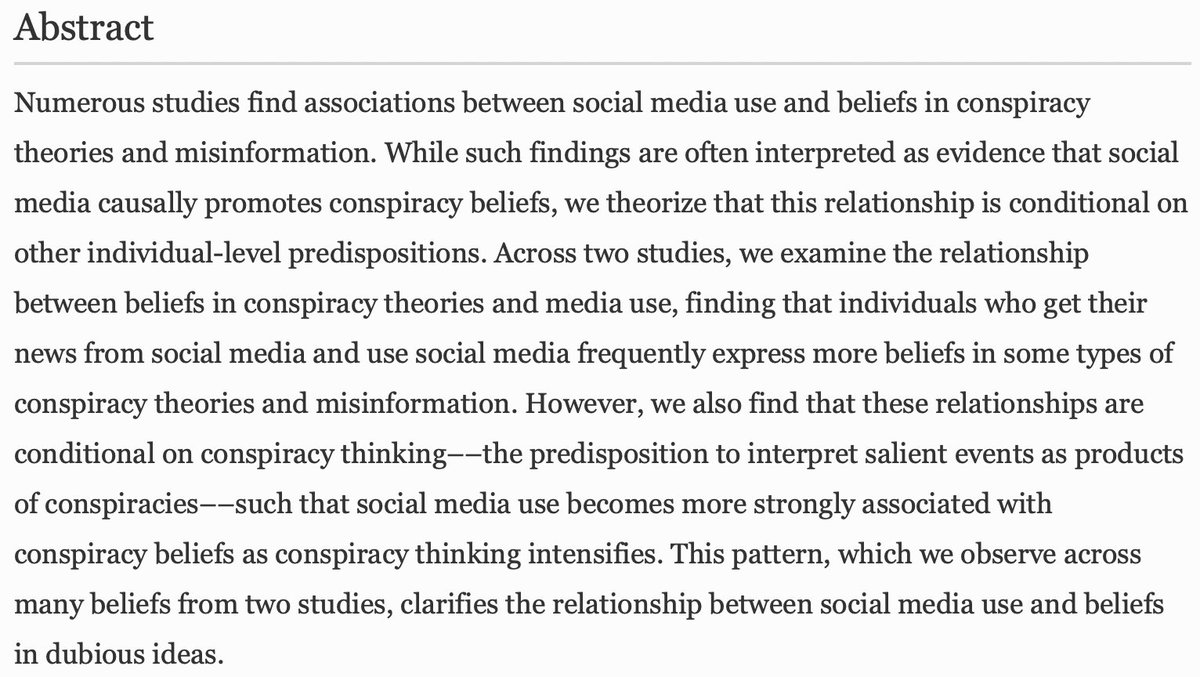
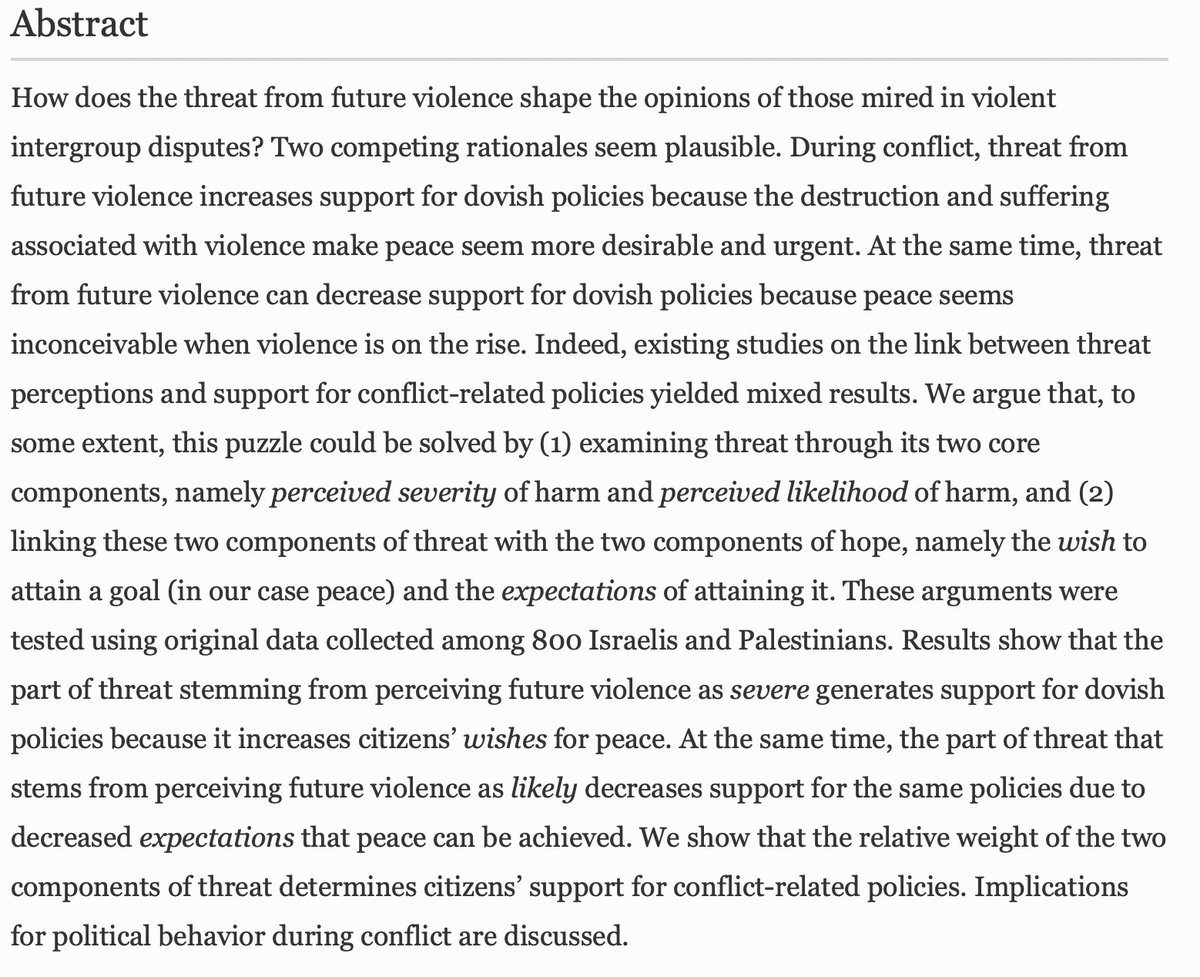
Across multiple datasets, researchers find that cross-cutting social ties predict warmer out-party feelings, and Latino Americans, who hold more of these ties, consistently exhibit lower affective polarization.
#AmericanPolitics
Read more:
link.springer.com/article/10…
8
30
1,568
New research on Hong Kong’s 2019 Anti-ELAB movement shows that constituencies exposed to tear gas saw more businesses publicly align with the protest movement. When repression meets pro-movement consumers, activism can become profitable.
Read more:
link.springer.com/article/10…
2
10
605
Across 38 European countries, network analyses show that programmatic party–citizen linkages are linked to more coherent mass belief systems, especially where symbolic ideological identities anchor the attitude network.
Read more:
link.springer.com/article/10…
4
16
1,100
Mass mobilization moves votes.
New causal evidence from Weather to Protest shows Black Lives Matter protests increased Democratic vote share in 2020, with short-term backlash but lasting progressive shifts in beliefs about racial inequality.
Read more:
link.springer.com/article/10…
9
23
1,784
Does political distrust undermine representative democracy? New evidence from four European countries shows it mainly increases support for direct democracy, especially among politically efficacious and populist voters. #ComparativePolitics
Read more:
link.springer.com/article/10…
3
18
1,072
Do legislators make more reasoned decisions than the public? New evidence shows that while lawmakers do not have stronger policy knowledge, legislative institutions help ensure their votes reflect accurate beliefs about policy consequences.
Read more:
link.springer.com/article/10…
5
15
1,175
Why does support for abortion rights change over the life course? New evidence shows that becoming a parent is associated with declining support for abortion, particularly among conservatives and practicing Christians.
Read more:
link.springer.com/article/10…
3
13
1,155
When do voters follow labor or side with big business? Evidence from California’s gig worker ballot fight shows that when attitudes are weakly formed, interest group cues matter greatly and labor unions still guide Democratic voters.
Read more:
link.springer.com/article/10…
1
5
648

19 Dec 2025
Wishing everyone a wonderful holiday season! See you in the New Year!
1
2
563
19 Dec 2025
When do Americans excuse or condemn political violence? New evidence shows that while who commits the violence matters, what they do matters far more, target and severity drive punishment more than partisan identity, an encouraging finding.
Read more:
link.springer.com/article/10…
4
30
3,104
18 Dec 2025
How powerful are nationalist symbols? Work by O’Brochta & Cunha Silva shows that subtle language cues matter in political context. In Serbia, politicians use Cyrillic to signal nationalism, and these cues make politicians seem more nationalist.
Read more: link.springer.com/article/10…
3
2
8
822
17 Dec 2025
Trials are often seen as a polarizing form of transitional justice, but new evidence suggests they can strengthen democracy. Padialla finds that across Latin America, prosecuting authoritarian crimes increases satisfaction with democracy.
Read more:
link.springer.com/article/10…
7
15
1,365
12 Dec 2025
COVID-19 politics fueled a rise in secularism. New evidence shows the public debate over vaccines and pandemic responses increased Americans’ embrace of secular worldviews, with the strongest shifts among Democrats tied to pro-science attitudes.
link.springer.com/article/10…
4
10
946
10 Dec 2025
What happens to political trust after a crisis? New evidence from China shows governance failures sharply erode trust, and government corrections don’t work for everyone. “Insiders” with past exposure remain skeptical, while others recover.
Read more:
link.springer.com/article/10…
3
12
1,020
5 Dec 2025
What moves Latino independents? New evidence shows economic policy appeals drive the most positive reactions. Economic messages resonate across party lines, while immigration cues polarize more than they persuade.
#PoliSciResearch
Read more:
link.springer.com/article/10…
1
13
863
3 Dec 2025
Why do so many young Americans sit out elections? New evidence shows eligibility uncertainty creates sharp drops in youth turnout. Small rule changes (or clear info) can close the gap.
#YouthVoters #ElectionResearch
Read more:
link.springer.com/article/10…
5
19
1,584
3 Dec 2025
APSA’s Elections, Public Opinion & Voting Behavior Section is seeking nominations & applications for the next Editor of Political Behavior (term begins January 2027). Scholars & editorial teams encouraged to apply! Deadline: March 1, 2026.
More info ⬇️
link.springer.com/journal/11…
1
4
557
1 Dec 2025
How do we know when loyal partisans stop excusing democratic violations? New research on “winners’ restraint” shows that even political winners have limits, and accumulating procedural abuses can trigger real withdrawal of legitimacy.
Read more:
link.springer.com/article/10…
7
19
1,812
21 Nov 2025
How do we tell motivated reasoning from Bayesian updating? Little shows that standard designs can’t distinguish them—unless people sometimes reject unwelcome information, which changes the picture.
#BehavioralScience #PoliSciResearch
Read more:
link.springer.com/article/10…
8
32
2,342
14 Nov 2025
How does online tone shape polarization? Goel & Merkley find that people punish incivility from their own side—but not from opponents. Still, uncivil talk can spill over, fueling broader out-party hostility. Gender doesn’t change these effects. Read more:
link.springer.com/article/10…
2
7
711