
✨ Ex Chief Video Editor @TheKusamarian : The #1 news resource on Polkadot Rank III Ambassador @Polkadot クサマ 🇫🇷
Joined April 2016
- Tweets 1,780
- Following 2,757
- Followers 1,710
- Likes 12,415
168 Photos and videos







Pinned Tweet

Hommage public à Jay
Merci à la team @TheKusamarian pour ces années inoubliables
forum.polkadot.network/t/the…
3
2
9
455
Le Comte de Monte-Crypto retweeted

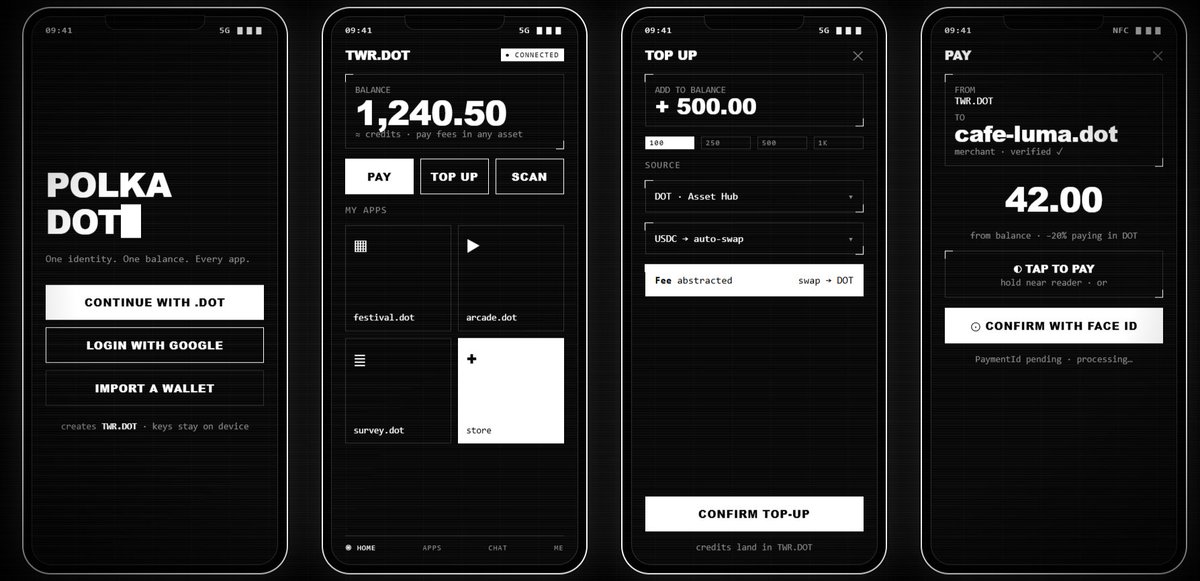
followed my friend(?) @LeemoXD's instructions, talked to claude code for five minutes and it reverse-engineered the entire polkadot super-app just by reading the @paritytech repos.
no screenshots in the repo? np
2
3
29
3,460
Le Comte de Monte-Crypto retweeted

Jun 8
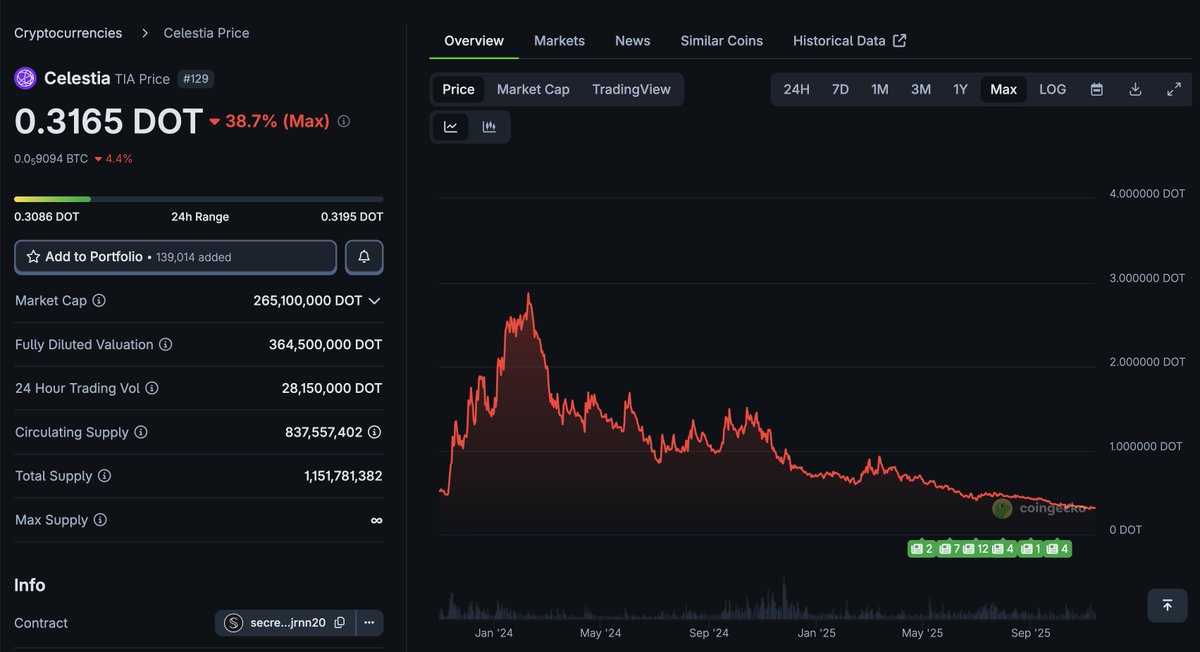
the only ATH that Polkadot can afford 😭😂
Jun 8

“Decentralised” doesn’t magically mean democratic.
Building new infrastructure is one thing, but building it around human freedom is the real test.
We're looking forward to welcoming Florence D'Ath, PhD researcher in law and technology, to the Summit.
She brings vital legal depth to the conversations too often treated at technical details — but are really about data protection, governance, and how digital systems collide with fundamental human rights.
Don't miss it → web3summit.com/tickets/

4
2
32
1,908
Le Comte de Monte-Crypto retweeted
For months, we were told Treasury spending was the reason DOT kept dumping.
7 months of leadership silence later, the chart is still doing exactly what it was doing before.
Turns out blaming the community was easier than finding the actual problem.
Congratulations
9
4
43
1,832
Le Comte de Monte-Crypto retweeted
Go dark.
Stay human. ◼️
Umbra: encrypted chat, anonymous mail & a non-custodial wallet on Polkadot
→ only a hash hits the chain
→ messages self-destruct
→ mail with no sender
→ personhood
It's a demo, but it could actually ship (PolkaVM contracts, 12/12 tests) 😆
2
2
47
1,725

some more context on why polkadot losing its relevance, becoming fully isolated today, and losing the market was not mainly caused by treasury spend unlike people think so
when polkadot started funding everything, the leadership was already decreasing in the eco
some early OGs left, migrated, or flopped, it was already dropping out of the top 20, and its token value shrank
since the treasury fully correlated to the value of DOT at that time, it went from high 9 digits to mid-low 9 digits
parity/w3f then positioned and announced that since they don’t want to lead or couldn’t steer the ship on marcom and BD, they were inviting the community to figure it out by using the treasury and finding the best deals by cutting each other’s margins through competition, using its highly sophisticated onchain governance tool: OpenGov, arguably polkadot’s best niche user-end product
so the argument that persuaded the majority of stakeholders at that time was:
either DOT is on the trajectory of a death spiral, and being passive or doing nothing will depreciate the token value anyway so the treasury will be worth nothing regardless,
so you at least spend it, and it became the FAFO way to have a chance: renting some attention, at least on the existing working products (parachains/apps), and getting some mindshare among normies in case one day they want to buy some coins
things didn’t go as expected
in the same way that persistent fragmentation hurts the modular/rollup chain the most, this also led to a lack of coherence across all efforts and introduced a game of thrones in the social layer, with everyone fighting each other for funding and people building their social brand around the dramas
since the treasury is now closed to such funding, which showed w3f’s hand of control over decision-making, today you can slowly observe the attacks directed toward w3f/parity, because there is no one else left to scapegoat or to explain what went wrong
5
2
20
1,485
Le Comte de Monte-Crypto retweeted

May 14
No one cares about Nakamoto numbers if one entity can single-handedly change the whole protocol rules, tokenomics, freeze the funds, or spend all the treasury with governance proposal and votes.

One way to measure decentralization and why you should care.
A Nakamoto coefficient of 178 means it would take 178 independent validators to collude to disrupt consensus. For comparison, many chains sit in low or single digits.
Decentralization isn't something a network can just claim. It's something you can measure and demand proof of.
12
4
37
5,773
Le Comte de Monte-Crypto retweeted

May 6
Coinbase has made a strategic investment in Centrifuge and selected Centrifuge as a Preferred Tokenization Infrastructure.
Centrifuge brings deep institutional tokenization expertise.
@coinbase brings consumer access, institutional relationships, and developer reach.
Together, we’re bringing differentiated assets to @base.
85
148
676
109,257
Le Comte de Monte-Crypto retweeted

May 10
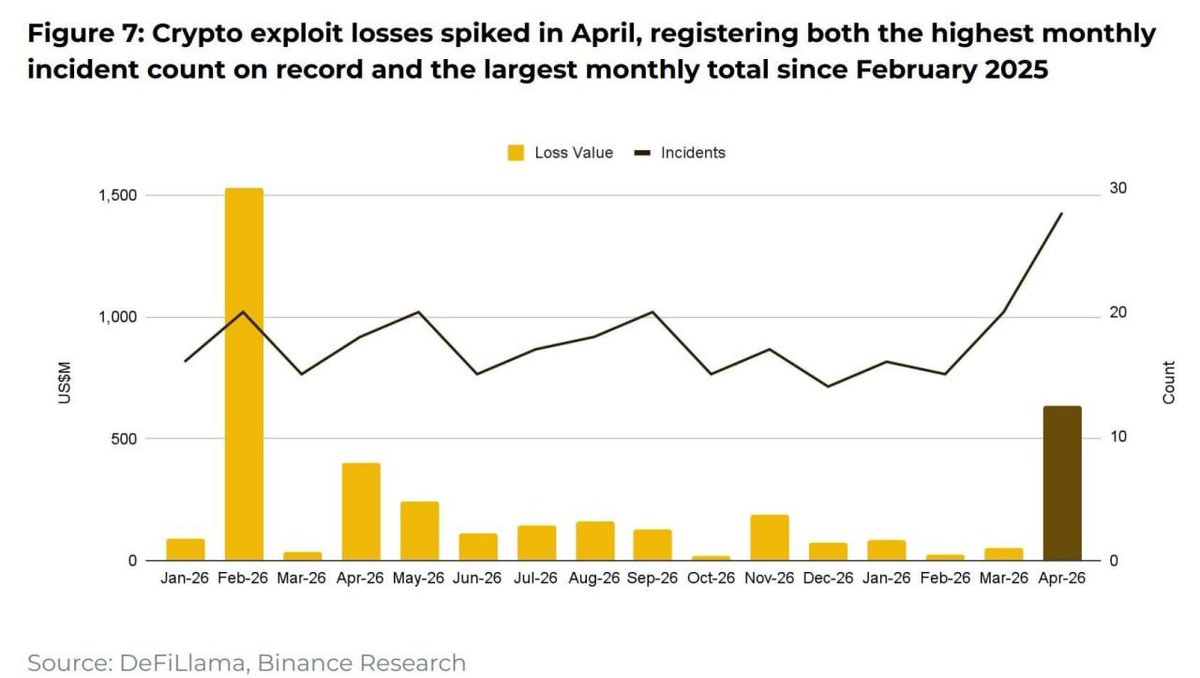
LayerZero just apologized for the $292M Kelp DAO hack, killed 1/1 DVN setups, and is migrating defaults to 5/5.
47% of LayerZero OApps were running 1/1. ~$4.5B exposed.
Reminder: Acurast — the Polkadot parachain that chose LayerZero over XCM — bridges $ACU through this same infrastructure to Ethereum, BSC, Base, peaq.
Polkadot's XCM has 0 hacks. LayerZero just survived its largest. Lazarus took $575M from cross-chain bridges in 18 days.
The "DOT doesn't matter" thesis ages by the week.
Source: theblock.co
1
9
435
Le Comte de Monte-Crypto retweeted

May 7
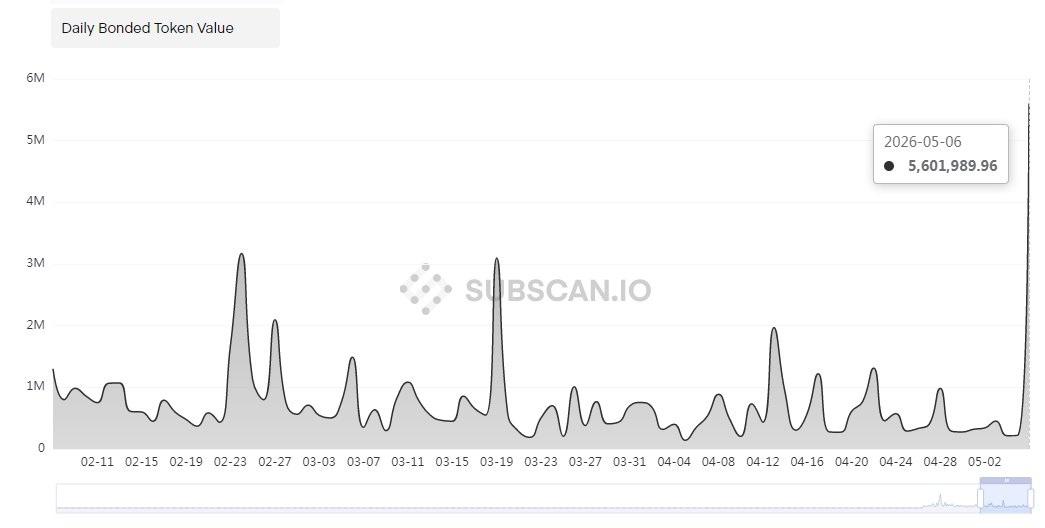
5.6 million $DOT were staked yesterday, the highest amount in the last 3 months! 👀
5
18
134
6,752
Le Comte de Monte-Crypto retweeted
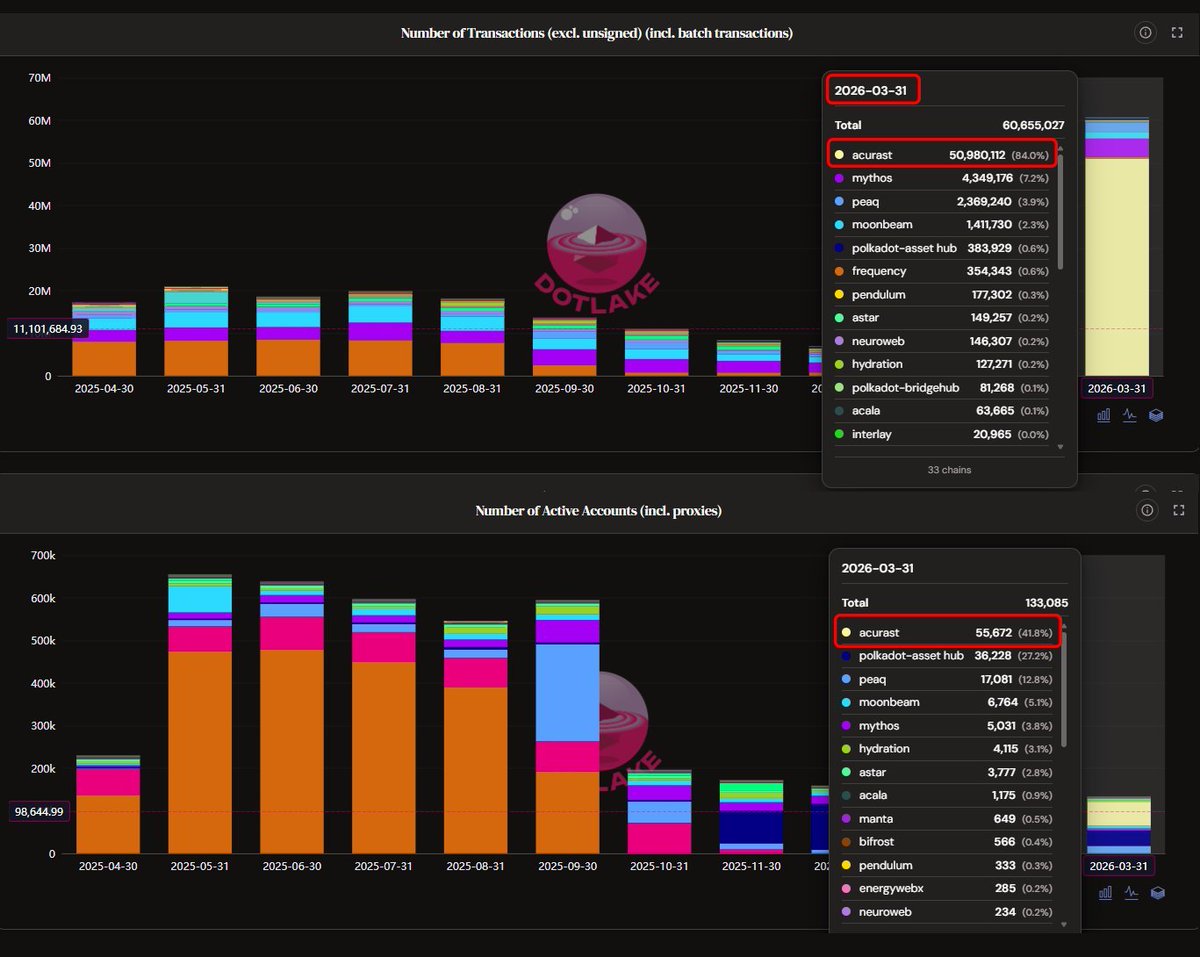
Browsing DataLake waiting for April stats, the March 2026 data made me stop and think.
60.6M transactions.
133K active accounts.
33 parachains.
The numbers deserve a closer look.
Let's go through them together. 🧵👇
4
6
26
3,022
Le Comte de Monte-Crypto retweeted

May 5
🚀 Monero (XMR) fait un bond en avant pour la confidentialité.
Jusqu'ici, quand tu envoyais des XMR, ta transaction se "cachait" parmi seulement 16 autres. Pas mal… mais perfectible.
Dès demain (bloc 2 997 100), une mise à jour majeure appelée FCMP entre en vigueur. Résultat ? Ta transaction ne se fond plus dans un petit groupe de 16 ... elle disparaît parmi les 150 millions d'outputs de toute l'histoire de la blockchain !
C'est la différence entre :
🚪 Se cacher dans une pièce avec 15 inconnus
🌆 Disparaître dans une mégalopole de 150 millions d'habitants
Personne ne peut plus pointer du doigt ta transaction. Pas de piste. Pas de lien. Rien.
C'est une multiplication par 10 000 de l'anonymat.
Longue vie à Monero.
May 5

🚀 Monero : Lancement du Stressnet FCMP
Demain, au bloc 2 997 100, Monero franchit une étape historique avec le lancement de son "stressnet" pour FCMP (Full-Chain Membership Proofs).
🛡️ Une évolution massive de la confidentialité
Le changement technique est colossal : l'anonymat ne reposera plus sur des "Ring Signatures" (signatures de cercle) couvrant seulement 16 sorties, mais passera à un ensemble couvrant plus de 150 millions de sorties.
📈 Le signal du marché
Soutien de Binance : Alors que la période 2023-2024 a été marquée par une vague de radiations (delistings) des "privacy coins", le plus grand exchange au monde a déjà confirmé son soutien à cette mise à jour.
L'effet de contraste : Si le volume quotidien de 761 millions de dollars sur Zcash attire l'attention, le véritable catalyseur se trouve du côté de Monero.
💡 Pourquoi c'est crucial ?
"Monero livre une amélioration de 10 000x de ses garanties de confidentialité fondamentales, tout en conservant l'appui des plateformes d'échange. C'est l'événement majeur à surveiller cette semaine."


30
179
1,053
77,307
Le Comte de Monte-Crypto retweeted
May 5
Polkadot just shipped sponsored transactions — apps can now cover fees so users don't need DOT to interact.
The UX win is real. Onboarding friction was killing adoption.
But this is the third "you don't need DOT" feature in 6 months:
→ Sufficient assets (no DOT for account existence)
→ Asset-pay fees via AMM (no DOT for tx fees)
→ Sponsored transactions (no DOT for any user interaction)
Each one removes a friction.
Each one also removes a DOT demand sink.
Honest question for the community:
If the strategy is to abstract DOT away from the user experience (which is the right UX call), where is the compensating value capture?
Why no burn from Treasury surplus, Coretime revenue, or parachain fees to balance the demand sinks being removed?
You can't have it both ways:
→ Either users need DOT, and adoption is harder
→ Or users don't need DOT, and the network burns/captures value somewhere else to offset
What do you think?
Should JAM include a mandatory burn mechanism — Coretime, Treasury, fees, anything — to offset the demand sinks UX removed?
Or is the current path (UX wins no compensating capture) actually the right call?
Genuinely curious how the ecosystem reads this.
#Polkadot #DOT #JAM #OpenGov

9
7
51
7,874
Le Comte de Monte-Crypto retweeted

May 4
Over the past few weeks we have re-audited every cryptographic dependency Hyperbridge relies on.
This has led to the discovery of even more critical vulnerabilities in our code, third-party libraries and even Polkadot itself.
All have been responsibly disclosed and patched. We’ll be publishing a detailed write-up on shortly on all our findings.
The root cause of the original incident was a missing single line of code that permitted proof forgery.
The vulnerable code in question dates to early Polytope Labs days and predates our current review & testing standards, which is why the re-audit was warranted and why it’s ongoing.
Alongside this, we’re launching a bug bounty which will help us work with whitehats on the continued security of the protocol.
22
43
306
15,232

Pioneered by Polkadot: a new efficient data storage model for everyday Web3 applications
When it comes to storing and serving data, most Web3 apps still fall back on centralized Web2 servers. The missing piece has been a decentralized alternative that is actually suitable for everyday use. Bulletin Chain, pioneered by Polkadot, aims to solve this.

62
201
767
45,363
Le Comte de Monte-Crypto retweeted

May 3
Clarifying my previous post:
I’m one of ~30 JAM implementation teams — not “JAM itself”.
Our team has already completed Milestone 1 and is close to finishing Milestone 2.
JAM as a technology is still one of the most interesting things I’ve worked on.
The issue is the process and incentives around the JAM prize. After ~2 years of work without compensation, and with M1 still pending, I decided to pause for risk management reasons.
This doesn’t mean JAM is dead or that teams aren’t building — clearly, many are.
It just means the current situation isn’t sustainable for everyone.
Happy to jump back in when there’s more clarity and predictability.
May 2

Just to be clear: I am not so sure JAM testnet chain will be launch anytime soon. I have zero faith in JAM now, as the @Web3foundation don’t have anyone in charge of the JAM prize and most teams (including ours) are waiting for M1 payment to keep building.
10
11
92
6,923
Le Comte de Monte-Crypto retweeted

Apr 30
.@gavofyork “There’s a fair chance I’ll make an appearance. Have you got your ticket yet?"
Get tickets at: web3summit.com/tickets/

48
55
435
1,637,764
Le Comte de Monte-Crypto retweeted
My friends at @KusamaShield blocked me, but I still want to respond to their "Offramps without KYC - Welcome to web3" post about integrating @peerxyz.
Before you offramp DOT this way, here's what nobody's telling you 🧵
3
2
7
850
Le Comte de Monte-Crypto retweeted

Apr 26
Offramps without Kyc - Welcome to web3
We are proud to announce that we have not only launched a shielded Pool on @polkadot but also integrated @peerxyz directly into our interface.
Offramp $DOT to Wise, Revolut, Venmo, Cash App and lots more fiat options
👇👇👇👇
6
30
147
17,242
Le Comte de Monte-Crypto retweeted

Apr 20
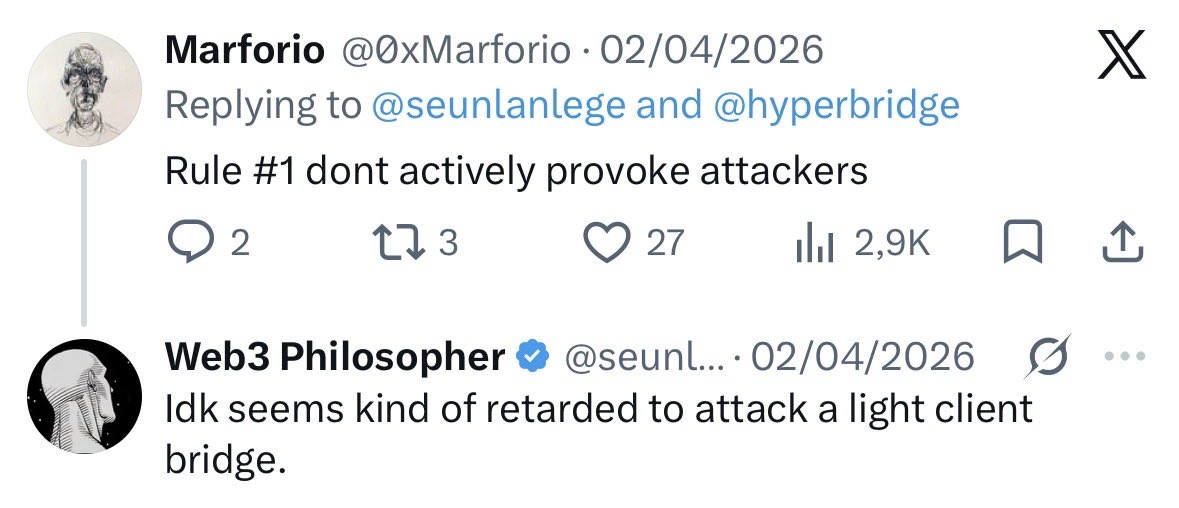
Il y a 2 semaines, certains alertaient sur le fait de ne pas provoquer inutilement les attaquants. Réponse : confiance totale sur la sécurité du bridge.
2 semaines plus tard : 2,5M siphonnés.
Dans la crypto, l’excès de confiance est souvent une surface d’attaque. Même des profils très compétents peuvent tomber dans ce biais.
1
2
6
458
RT @giottodf: The first decentralised legal action against a decentralised ecosystem 😅
crowdjustice.com/case/unpaid…
1