
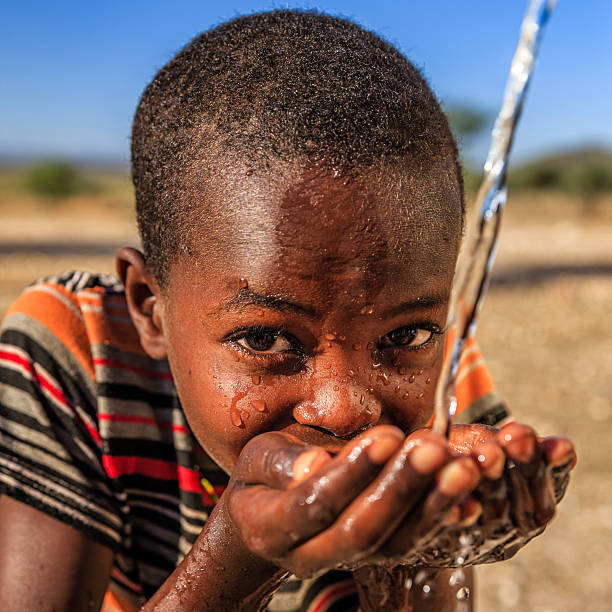
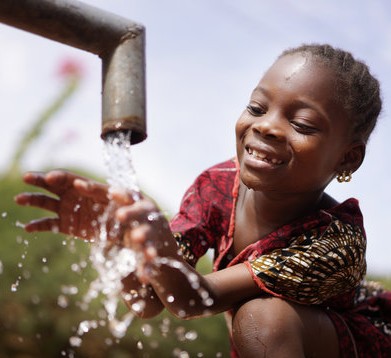
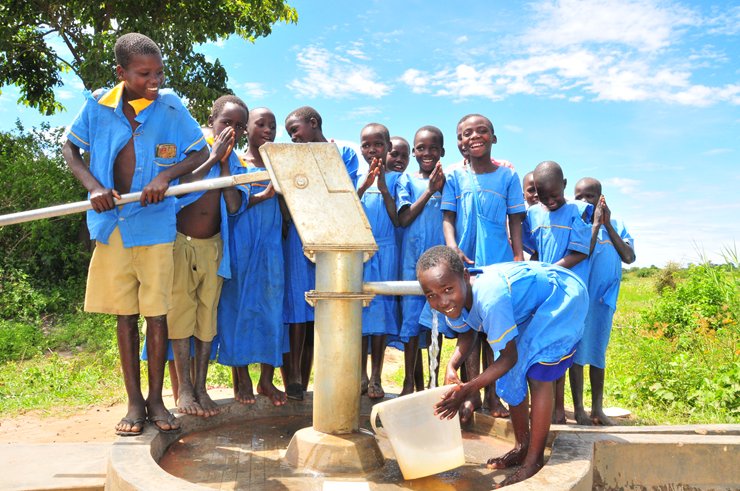
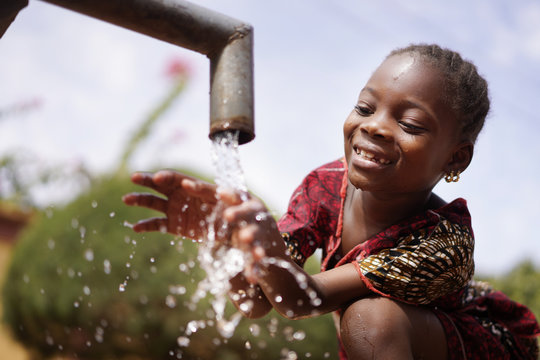
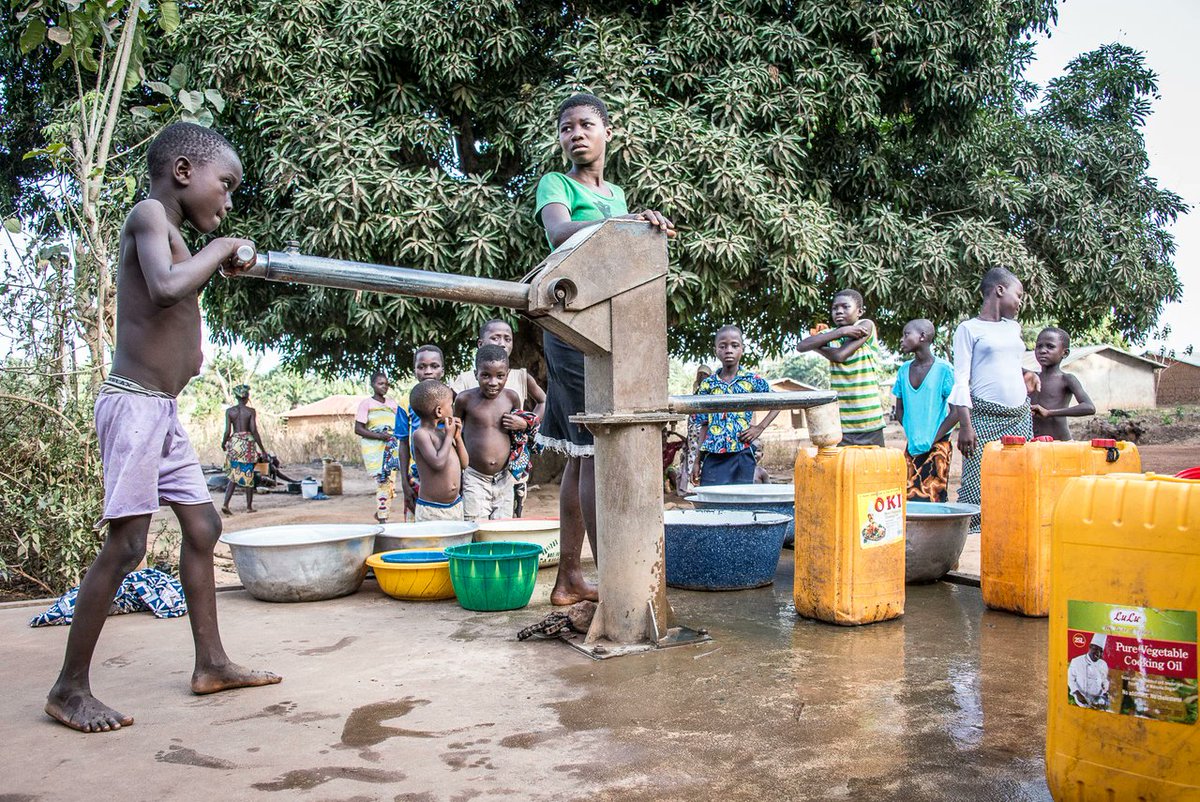
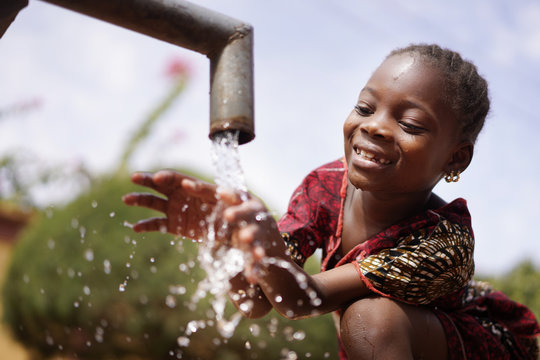
Cardano stake pool fighting malnutrition and drilling wells in Malawi. 50% of operator rewards to charity. Delegator rewards are not affected. 🍃⚡ Ticker: LHS
Joined July 2021
- Tweets 3,689
- Following 938
- Followers 1,265
- Likes 14,203
228 Photos and videos
Pinned Tweet

28 Dec 2021
#CardanoCommunity
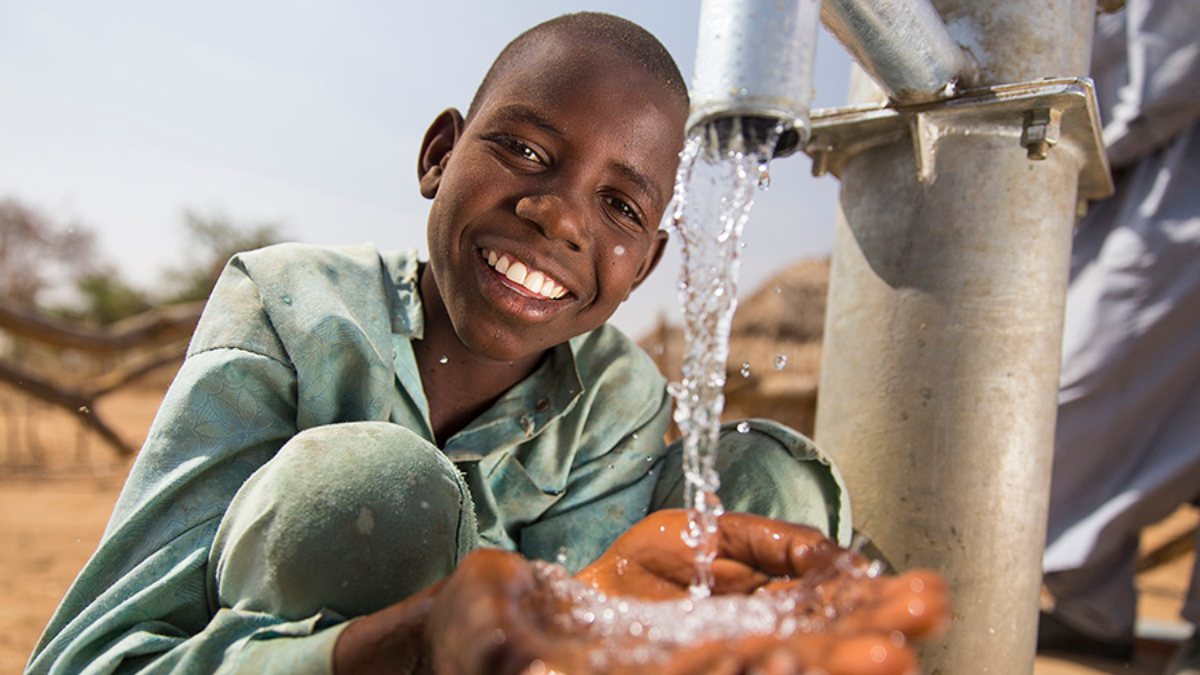
Received this great little video today and wanted to share it with you all as a good omen of many more great things to come in 2022! 💙💙💙
#Cardano making a real difference!!!
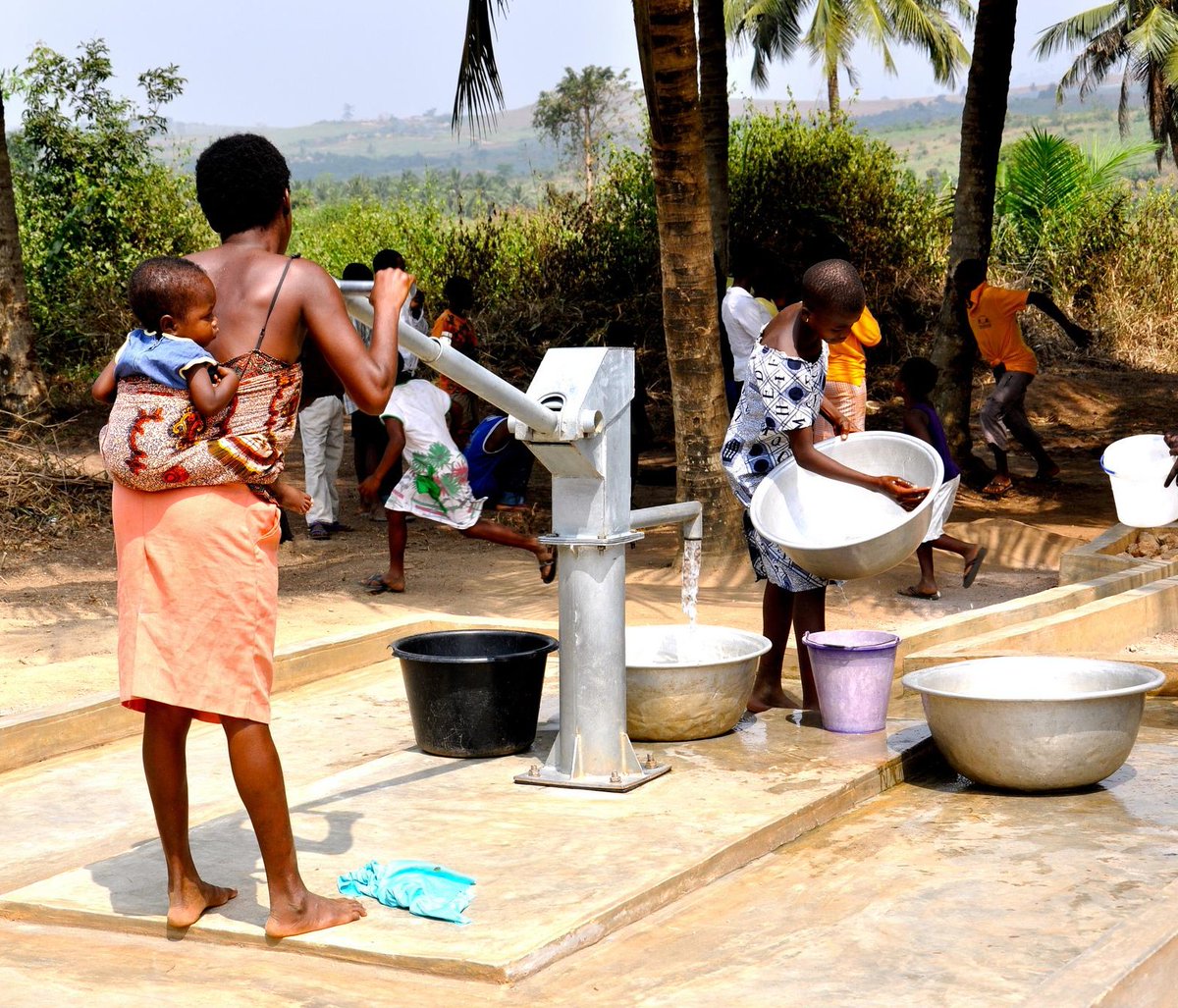
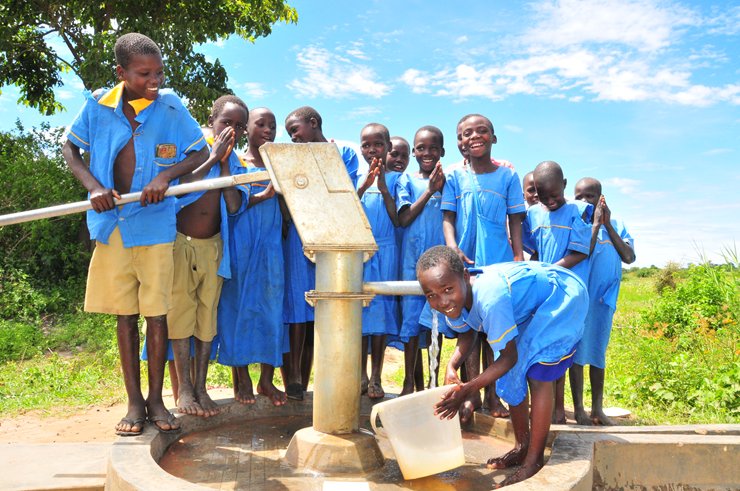
This was the moment when the drilling reached the ground water in Malawi 🤩
61
196
951
Lighthouse Stake Pool | LHS | retweeted

15 Dec 2023
As predicted, Generative AI scams are now here. These will be dramatically better in 12-24 months and hard for anyone to distinguish between reality and the AI fiction
14 Dec 2023

Holy smokes!! The AI isn’t perfect in this scam video that played before my video but it’s PRETTY DAMN CLOSE. That sounds exactly like @IOHK_Charles albeit a bit choppy. KISS your ada good bye. @YouTube the scams are only getting more sophisticated and this is scary.
100
164
962
148,990
Lighthouse Stake Pool | LHS | retweeted

29 Nov 2023
"On-chain governance. It's hard, it's really interesting, but what's so beautiful about it is it's not a concept anymore. It's a reality." @IOHK_Charles reflecting on Cardano's: Past, Present & future in this session from #CardanoSummit2023.
Watch it here: iohk.link/47dhr6O
1
32
160
6,729
Lighthouse Stake Pool | LHS | retweeted
29 Nov 2023
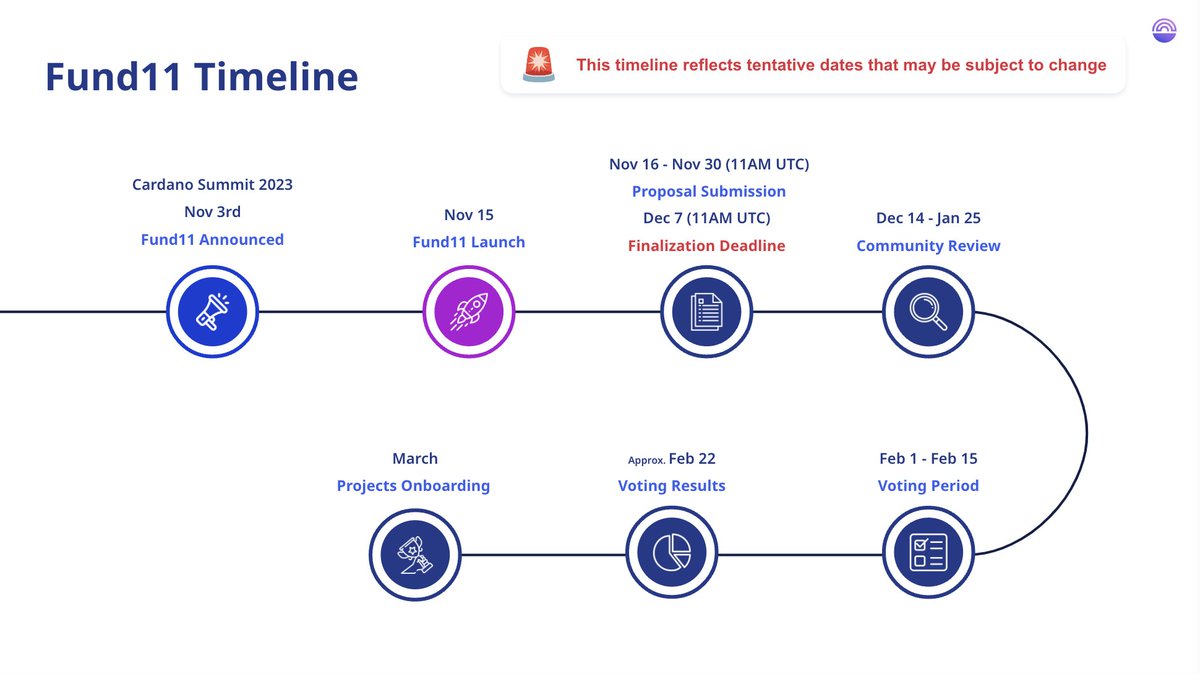
⏰#ProjectCatalyst #Fund11 idea submission phase ends in 24h!
If you have an idea that will help #Cardano ecosystem to expand, head over to cardano.ideascale.com & submit your proposal.
The deadline for submission is Nov 30, 11 AM UTC
👀projectcatalyst.io/catalyst-…
31
131
7,977
Lighthouse Stake Pool | LHS | retweeted

20 Nov 2023
The Cardano Foundation is unwavering in its commitment to furthering the goals of CIP-1694 and steering #Cardano towards a fully decentralized on-chain governance system. Explore the specifics of our involvement in the Cardano ballot.
#CIP1694
🧵(1/7)
8
105
563
66,828

Only on Cardano can users connect their wallet to any site without a care in the world!🏖️🏄♂️
For other chains you have to explain to people how dangerous that is to do! But on Cardano because of the UTXO & the security of the design, Wallet drains are impossible! $ADA 💎🔱
37
82
520
21,620
Lighthouse Stake Pool | LHS | retweeted
24 Nov 2023
This week’s Cardano development update is live on #EssentialCardano!
Read the report to learn about the latest on core technology, wallets and services, smart contracts, scaling, governance, #ProjectCatalyst, and #Cardano education. essentialcardano.io/developm…
5
46
211
8,904
Lighthouse Stake Pool | LHS | retweeted

23 Nov 2023
LHS pool is helping Malawians to give them clean water. Consider to delegate to @PoolLighthouse 🙏🏽💦
23 Nov 2023

#CardanoCommunity
Always proud to be an active part of the #Cardano blockchain!!! 💪
LHS has minted its 35th block!
As usual, 50% of the operator fee goes directly to our clean water project in Malawi, Africa.
Thank you so much to everybody who supports us 🙏🙏🙏
#ADA
1
2
317
Lighthouse Stake Pool | LHS | retweeted
22 Nov 2023
Want all the latest from across the #Cardano ecosystem? Get the hottest news, must-see interviews, and top insights in Essential #Cardano360, your definitive guide to the Cardano space.
🗓️ Live-streamed on X, Thursday Nov 30, at 16:30 UTC.
#CardanoCommunity #BuildingOnCardano
3
37
207
9,271
23 Nov 2023
#CardanoCommunity
Always proud to be an active part of the #Cardano blockchain!!! 💪
LHS has minted its 35th block!
As usual, 50% of the operator fee goes directly to our clean water project in Malawi, Africa.
Thank you so much to everybody who supports us 🙏🙏🙏
#ADA
1
2
7
304
Lighthouse Stake Pool | LHS | retweeted

29 Aug 2023
The Fund10 Shark Tank 🦈 starts today at 15h00 UTC. 20 amazing #Cardano projects will elevator-pitch their Catalyst proposals to sharks @Padierfind and @Real0xJason. This is something you don't want to miss. So, set your reminders! 😉🦋🍄
x.com/i/spaces/1PlJQpMydBvGE
4
17
84
13,852
Lighthouse Stake Pool | LHS | retweeted

28 Aug 2023
Cardano is a more decentralized blockchain than Bitcoin.
Come explore with us.
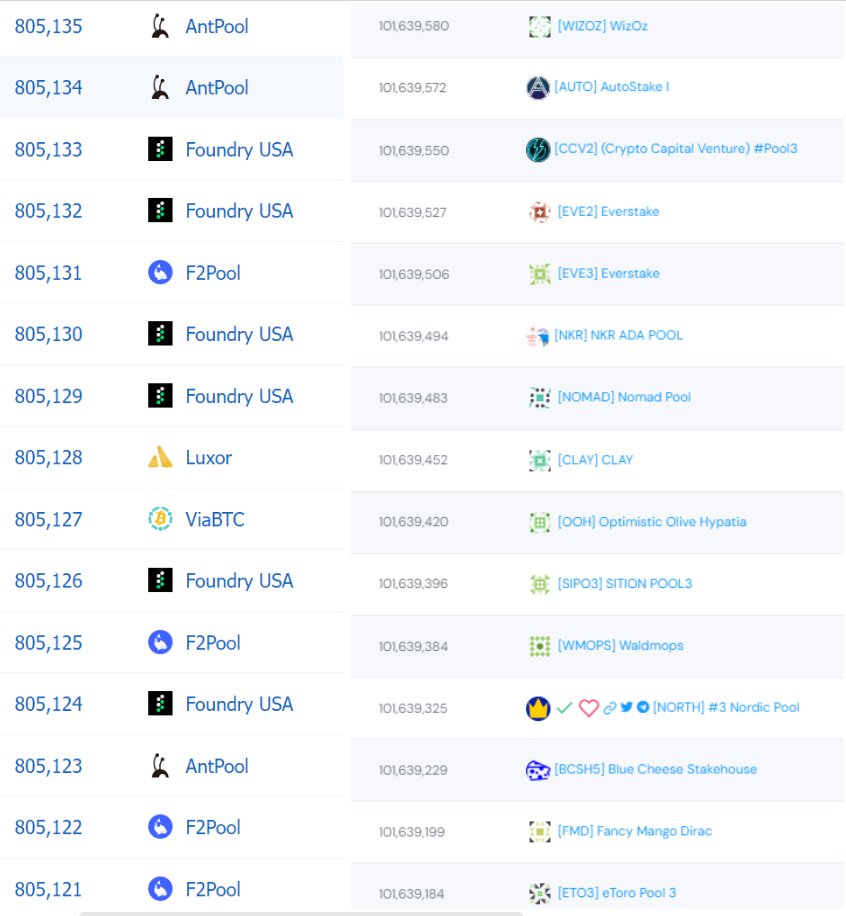
In the #Bitcoin network, out of the last 15 blocks, 6 blocks were mined by the Foundry USA pool, 4 blocks by F2Pool and 3 blocks by AntPool. Only 2 other pools had a chance to mine a block against dominant pools.
In the #Cardano network, each block has minted a unique pool. Although there are multi-pool operators in the Cardano network, it is not often that one of them mints multiple blocks in a row. See picture 1.
There are about 1100 pools active in the Cardano network. Some operators run multiple pools, only exceptionally more than 10. We can say that hundreds of independent entities produce blocks in the Cardano network.
What about the number of miners vs. ADA stakers?
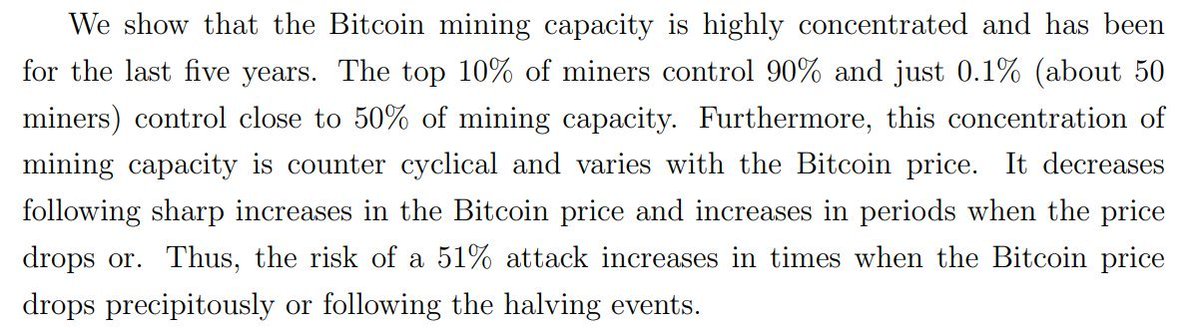
Roughly 4M ASICs are used to mine $BTC, but they are owned by 50K to 200K miners. The biggest miners own up to hundreds of thousands of ASICs. An estimated 50 large miners control 50% of the hash rate. See picture 2.
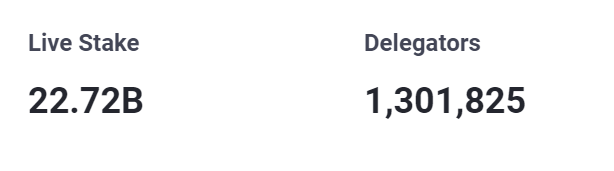
$ADA is staked by 1.3M stakers. Part of the stakers will be exchanges and multi-stakers. See picture 3.
While it pays for BTC miners to run more ASICs because they have the advantage of scale, in the case of staking it does not make sense to have more staking accounts.
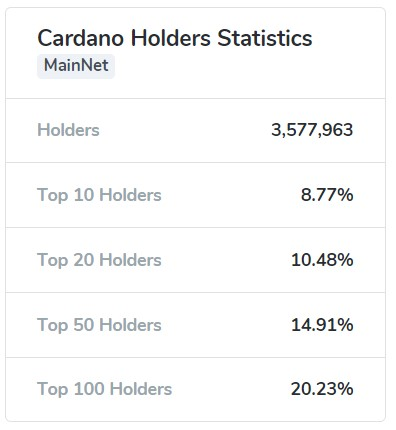
The 100 largest Cardano wallets only hold 20% of the ADA coins. See picture 4.
One entity can hold multiple ADA wallets similar to how one entity can own multiple miner companies.
Cardano is 100x to 200x more decentralized than Bitcoin in terms of block producers (pools). Cardano has 5x to 20x more delegators than Bitcoin.
23
64
387
32,725
Lighthouse Stake Pool | LHS | retweeted
25 Aug 2023
Essential #Cardano360 is the one to watch if you want the latest news about #Cardano, to connect with the community, or if you want to stay up to date on what’s going down in the ecosystem.
🔔 Subscribe now and join us on the last Thursday of the month: youtube.com/iohk_io
23
118
5,454
Lighthouse Stake Pool | LHS | retweeted

12 Aug 2023
Africa has the youngest population in the world. It's vital that young people have opportunities to gain skills, like through our project in Uganda's West Nile region.
The theme for today's Int. Youth Day is: 'Green Skills for Youth: Towards a Sustainable World.' 💚 🌍
Watch:
3
6
511
Lighthouse Stake Pool | LHS | retweeted

24 Aug 2023
Tons of people use $ADA to interact with smart contracts every single day. But most of them have no idea how those smart contracts actually work.
Let's take a look at how smart contracts are executed on Cardano 🧵
18
26
168
13,325
Lighthouse Stake Pool | LHS | retweeted
5 Aug 2023
We were pretty spot on. 9 months versus 10!
5 Aug 2023

To Mainnet:
x.com/InputOutputHK/status/1…
He said "6-9 months" at Messari Mainnet 2022.
Video was 10 months ago .
Cointelegrath/Coindesk headline: "Charles Hoskinson misses deadline again, as Mithril arrives on Mainnet after delay".
19
46
479
109,365
Lighthouse Stake Pool | LHS | retweeted
21 Jul 2023
Meet Manesi!
Manesi her talent for crafts into a small business, through our ASPIRE (Achieving Sustainable Poverty Reduction through Increased Inclusive Resilience and Empowerment) project in Malawi.
Learn more about ASPIRE here: bit.ly/44So0da
@irish_aid
1
1
273
Lighthouse Stake Pool | LHS | retweeted
28 Jul 2023
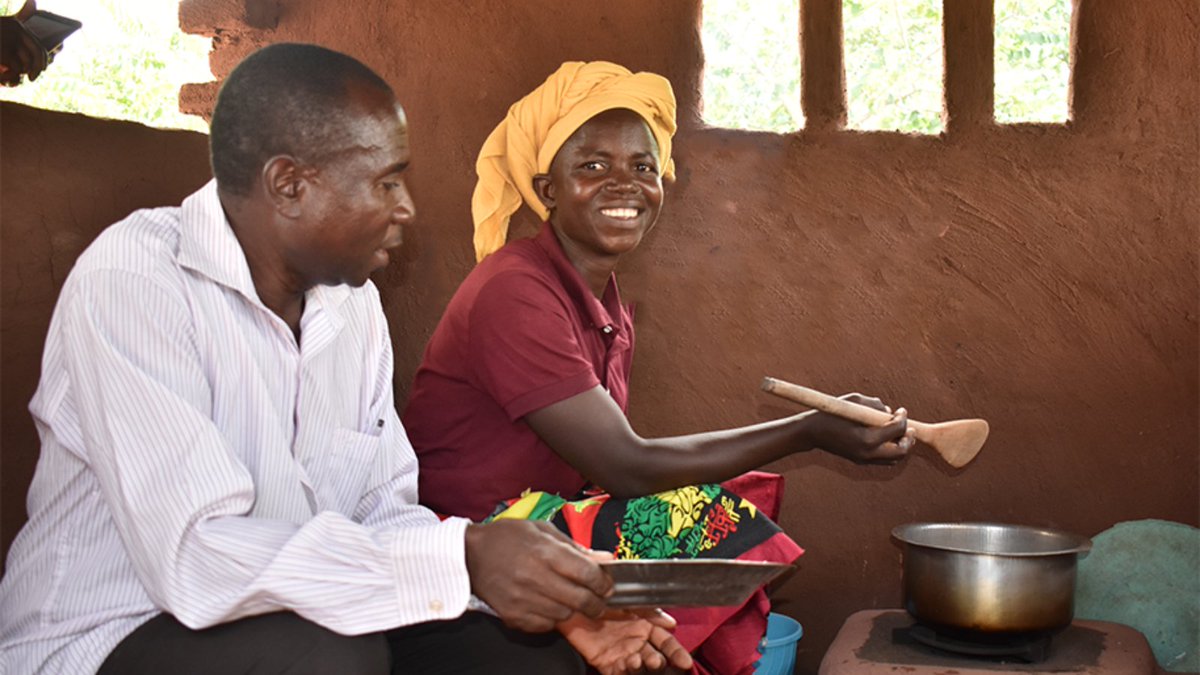
Kondwani used to sell charcoal but struggled to provide enough for his family.
Through our Social Support for Resilience (SoSuRe) programme, Kondwani & his wife, Wongani, received training in financial management and sustainability. 🏦 🌱
Read more: bit.ly/3Ouk9Ok
1
2
3
519
Lighthouse Stake Pool | LHS | retweeted

30 Jul 2023
JUST IN: Mithril, "a stake-based signature scheme and a protocol that improves the speed and efficiency of nodes' syncing times;" is officially live on the #Cardano mainnet.
4
70
353
28,021
Lighthouse Stake Pool | LHS | retweeted

30 Jul 2023
For those in my network that DONT understand what this will do for you, let me give you a simplified explaination (50,000 ft level)
30 Jul 2023

JUST IN: Mithril, "a stake-based signature scheme and a protocol that improves the speed and efficiency of nodes' syncing times;" is officially live on the #Cardano mainnet.
3
24
88
10,403
Lighthouse Stake Pool | LHS | retweeted

23 Jul 2023
A while back we started a tree planting project in #Turkana #Kenya. Things are progressing very well.
Our dream is to one day reduce greenhouse gases, change the climate in the desert and improve circumstances for the least fortunate. I believe we can do it.
#Cardano #Africa>
8
13
60
3,639