192 Photos and videos
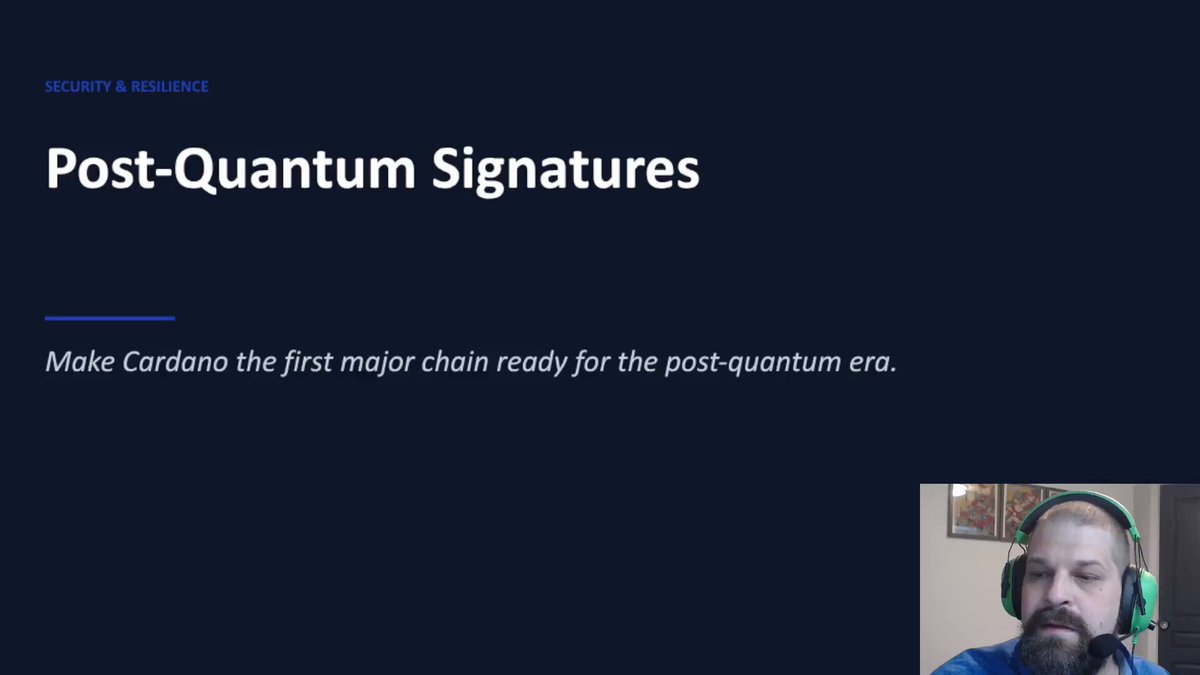







Post-quantum signatures are becoming part of the infrastructure conversation for every serious blockchain. The timeline is finite, and leading chains should be preparing before the migration becomes urgent.
That is the point of MLabs’ post-quantum signatures proposal.
Today, Cardano scripts and dApps rely on signature schemes like Ed25519, ECDSA, and Schnorr. These are not quantum-safe in the long run. For public blockchains, the core concern is not decrypting old ledger data. It is future-proofing the signature and authorization assumptions that protect accounts, scripts, and high-value assets.
This proposal takes one concrete slice of post-quantum readiness.
Can Cardano support post-quantum signature verification at the script layer?
The work is scoped around CPS-0027, “Approaches to Post-Quantum Signatures,” authored by an MLabs Tech Lead.
github.com/cardano-foundatio…
The work starts with the practical question.
Which post-quantum signature scheme actually makes sense for Cardano?
That means comparing candidates against Cardano’s real constraints, including signature size, key size, verification performance, implementation quality, and likely fit inside Plutus.
From there, the proposal follows the normal Cardano engineering path. A CIP, cardano-base, Plutus Core, wrappers for Plinth, Plutarch, and Aiken, and then a working smart contract wallet demo that shows the capability end to end.
So the goal is not just to write a research report. It is to take one concrete post-quantum signature path from evaluation to something Cardano builders can actually review, test, and use.
Proposal link:
hydra-voting.intersectmbo.or…
For MLabs, the value proposition is straightforward. Cardano does not need to panic about post-quantum migration. But it should not wait until migration is urgent to answer the practical engineering questions.
This proposal gives Cardano a concrete, reviewable, open-source step toward post-quantum readiness at the script and dApp layer.
Our CTO gives an approachable overview 👇
2
1
11
657
Just pinging a few DReps here - appreciate your attention 🙏
@blockdaemonhq @everstake_pool @Cardano_CF @Hideki_Takeshi @JaromirTesar @BullishDumpling @bigpey @phil_uplc @ATADA_Stakepool @ItsDave_ADA @Wiiinnie @nagamaru_panda @hix_coffeepool @longminswap @tempo_vote @dori_coin @Pooltoolio @TheOCcryptobro @liqwidfinance @quantumplation @ArmyofSpies @hisa_iokinawa @cryptofly777 @kyosuketakatuki @sachs_johnny @ada_ocean @Padierfind
139
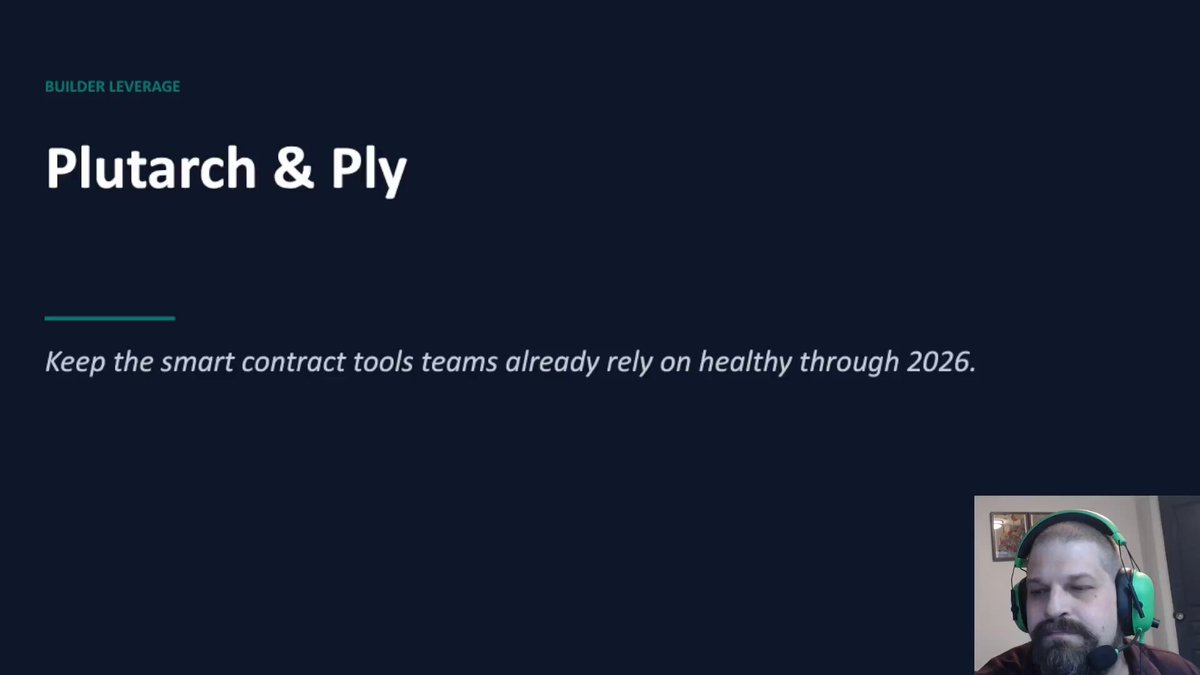
Plutarch and Ply have been doing serious work in the Cardano ecosystem for years. MLabs' treasury proposal focuses on keeping that smart contract tooling reliable, compatible, and useful throughout the next protocol cycle.
For anyone unfamiliar, Plutarch is a Haskell eDSL for writing efficient Cardano smart contracts via controlled compilation into UPLC. Ply helps serialize Plutarch scripts to and from CIP-57 blueprint-style artifacts with inferred types, protecting the on-chain/off-chain boundary without forcing teams to manage low-level type details.
These are not flashy end-user products. They are part of the tooling layer that production Cardano builders rely on when writing and maintaining smart contracts. These tools have seen real ecosystem use, including production or project use by teams and protocols such as Liqwid, adopters of Agora, Djed, Clarity, Optim, and others.
Our proposal seeks 12 months of quarterly maintenance and enhancement work for Plutarch and Ply.
hydra-voting.intersectmbo.or…
To keep priorities clear and transparent, we follow a hierarchy each quarter:
1. Critical breakages and serious vulnerabilities
2. Protocol-era and hard-fork compatibility
3. Bug fixes, correctness improvements, and optimizations
4. Documentation, examples, technical writeups, and developer-experience improvements
This also includes Dijkstra-era readiness where relevant, keeping Plutarch and Ply aligned with Cardano ledger, Plutus, UPLC, and tooling changes as Cardano moves forward.
The scope is distinct from earlier funding. Prior Fund9, Fund13, and Intersect support covered previous development, enhancement, and Conway-era compatibility. Rather, this proposal covers the next annual maintenance cycle, including critical breakage response, protocol-era compatibility, bug fixes, Dijkstra-era readiness, documentation, and related maintenance.
Each quarter will produce public evidence of work completed including issues, PRs, releases, tests, benchmarks, documentation, changelog updates, technical writeups, and a maintainer review explaining what was prioritized and why.
If Cardano wants production smart contracts to keep moving safely through protocol evolution, the tools behind those contracts need funded maintenance. With community support, Plutarch and Ply will remain reliable, efficient, compatible, and well-supported for the builders who depend on them.
Our CTO gives an approachable overview 👇
2
6
383
Just pinging a few DReps here - appreciate your attention 🙏
@blockdaemonhq @SebastienGllmt @Hideki_Takeshi @JaromirTesar @BullishDumpling @bigpey @phil_uplc @longminswap @ATADA_Stakepool @astroboysoup @liqwidfinance @quantumplation @ArmyofSpies @TheOCcryptobro @hisa_iokinawa @cryptofly777 @kyosuketakatuki @sachs_johnny @ada_ocean @ItsDave_ADA @Wiiinnie @ada_stat @hix_coffeepool @Padierfind @dori_coin @Pooltoolio @tempo_vote
1
1
199
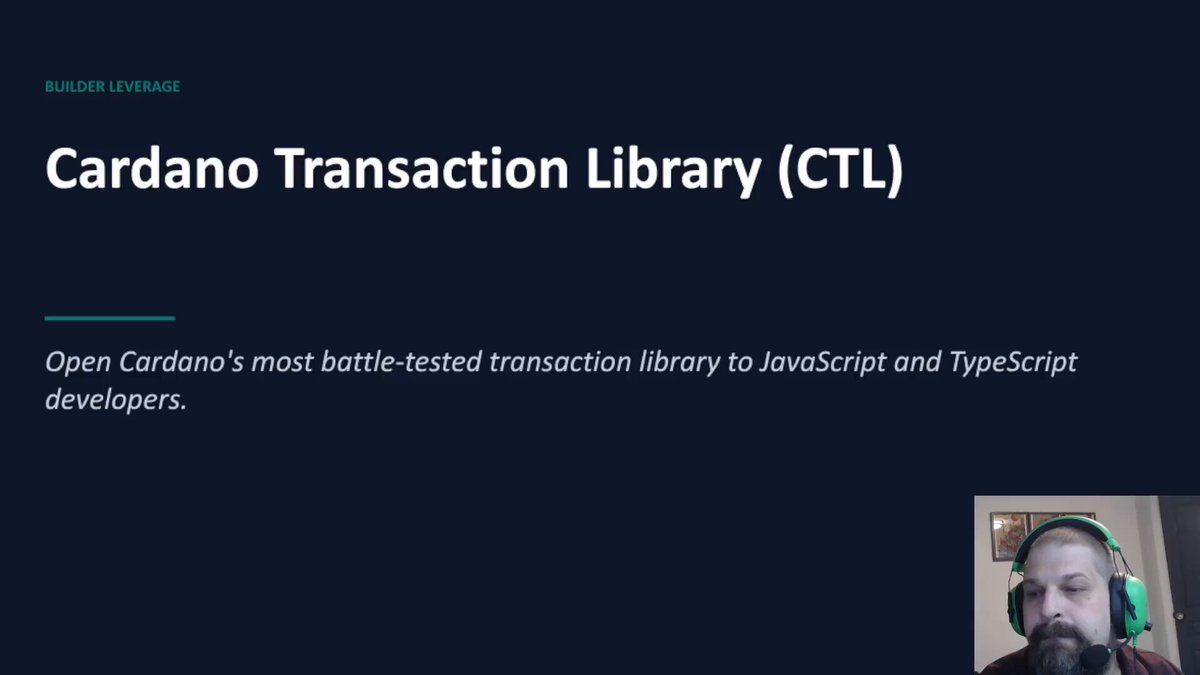
CTL has been doing serious work in the Cardano ecosystem for years. This proposal is about opening it up to more developers.
CTL is Cardano’s open-source transaction-building library, an off-chain/browser-friendly layer that helps dApps construct, balance, work with wallets for signing, and submit Cardano transactions.
It has been part of the Cardano developer stack since the Alonzo era.
This proposal builds on infrastructure that is already in production use. CTL has helped real teams build through multiple protocol upgrades, including projects like Indigo, Clarity, Genius Yield, Cardano Racers, Noble Steed Games, SingularityNET, and others.
The opportunity now is to make CTL easier to use for developers who are not already working in PureScript.
PureScript made sense historically, given CTL’s roots in the Alonzo-era Plutus ecosystem. But today, most dApp teams work in JavaScript and TypeScript. Teams that want CTL’s reliability often need wrappers, middleware, a separate PureScript service, or custom transaction-building logic.
This proposal opens a better path.
hydra-voting.intersectmbo.or…
WP1 opens CTL to JS/TS developers through a supported public interface, while keeping the mature CTL core underneath. The goal is simple: broader access without throwing away the reliability CTL has built over multiple protocol eras.
WP2 adds Koios as a first-class backend, giving builders another open-source, community-operated query option alongside Blockfrost and Kupo/Ogmios.
WP3 keeps CTL current through quarterly maintenance and Dijkstra readiness, so downstream dApps can prepare earlier and move through the next protocol cycle with more confidence.
The value proposition is straightforward.
This is existing production-used infrastructure becoming easier to adopt.
The scope is separated from OSC work: OSC is expected to cover core maintainership and Van Rossem work, while this proposal covers JS/TS access, Koios integration, and forward-looking Dijkstra readiness.
Demand is already visible. CTL has production use today, TypeScript-facing integration needs already exist, and recent repo traffic showed 2,057 clones and 424 unique cloners in 14 days before the JS/TS interface even exists.
If Cardano wants more builders, one of its most mature transaction libraries should not remain locked behind a niche language surface.
CTL should be easier to adopt, easier to maintain, and ready for the next protocol era.
We appreciate everyone taking the time to review, question, and consider the proposal.
Our CTO gives an approachable overview 👇
2
6
454
Just pinging a few DReps here - appreciate your attention:
@YoroiWallet @yutazzz @emurgo_io @eternlwallet @everstake_pool @Cardano_CF @ThomasNordicADA @BullishDumpling @bigpey @phil_uplc @ATADA_Stakepool @astroboysoup @ItsDave_ADA @Satoshi15121937 @nagamaru_panda
1
87
MLabs retweeted

I would like to see the quantum resistance signature proposal from @MLabs10 pass.
I know we @clarity_dao would incorporate this into our governance flows for our clients and it needs to be done.
1
8
402
Another quarter — another Cardano.nix update.
Cardano.nix is our reproducible #Cardano infra project. This Intersect milestone we:
🔹 Updated cardano-node & cardano-db-sync
🔹 Bumped Blockfrost
🔹 Private testnet: added Dijkstra-era genesis
🔹 Bug fixes
And more. Details 👇
github.com/mlabs-haskell/car…
1
4
340

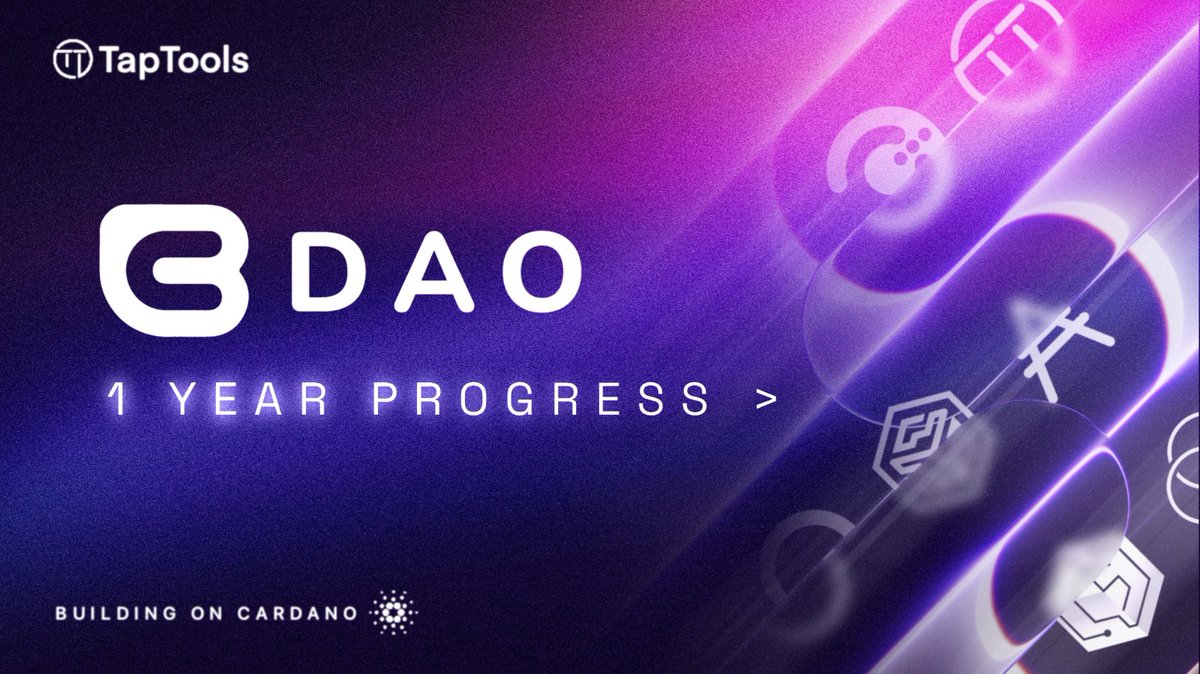
Cardano Builder DAO is one of the clearest paths for treasury funding to reach active ecosystem teams.
Round 2 builds on that progress with stronger governance, public KPI tracking, and improved accountability.
Cardano’s builders are still here.
They should have the resources to keep building.
medium.com/tap-in-with-tapto…
5
25
126
4,784
MLabs retweeted

May 21
Join us in 30 minutes as we debate and share what is happening at the CB DAO.
x.com/i/spaces/1wxWjaNlWqWJQ
6
14
482
254
MLabs just delivered more reliable infra with Cardano.nix v1.3.0, including:
🔹Refreshed dependencies
🔹CI/integration validation
🔹Bug fixes
🔹Updated docs for easy adoption
Made possible through #Cardano community funding ❤️
Details 👇
github.com/mlabs-haskell/car…
1
2
15
785
Totally agree, @planetmaaz.
We just published our own “show your work” rundown of MLabs’ treasury-funded projects across Catalyst & Intersect: what shipped, what’s in flight, and what we are actively closing out.
mlabs.city/blog/show-your-wo…
Jan 22

SEND IN THE AUDITOOOOOOOORS
to be very specific, a back of the envelope wishlist:
1. prior to intersect budget season kicking off, teams should voluntarily provide an update on ALL their treasury funded proposals (direct TW, thru catalyst, builder DAO, etc). You got money to do X, did you really do it?
2. Previous and current delivery history for ALL treasury funded proposals should be accounted for and communicated as an appendix to new budget proposals. You got money to do X in Y time. Did you successfully deliver X during or before Y time? This ecosystem is too comfortable with delayed implementation…we need expediency if we’re to be competitive.
3. the next budget cycle should fund an independent firm providing Monitoring, Evaluation, Accountability and Learning function. Standard in any publicly funded programme. What is MEAL? Track progress, assess impact in the context of Cardano 2030, ensure transparency to stakeholders, and use data for continuous program improvement and adaptation, integrating systematic data collection, analysis, feedback, and learning into project management to achieve better, evidence-based outcomes.
1
4
1,182
MLabs has finalized the #Plutarch Quarterly Dependency Update, which includes performance benchmarks, pull arrays, and updated documentation for #Cardano developers.
📷 Watch: youtu.be/dR3J5I8xYJIRead
📚more: mlabs.city/blog/performance-…

6
838
Heya #Cardano & #Haskell Communities 👋
MLabs has a new post just for you! Patterns & Paradoxes: The Logic of Pattern Synonyms.
Discover how pattern synonyms & view patterns give constructor-like ergonomics, packed-data performance, and safety.
mlabs.city/blog/patterns-and…
5
563
MLabs Talent Partners are looking for a 'Talent Sourcer,' please apply if you are interested: apply.workable.com/mlabs/j/4…
#TechHiring #recruitment #Sourcer #TalentAcquisition
2
1
8
1,060
#Cardano Community
MLabs has a new post: Performance, Pull Arrays & Plutarch.
Built on CIP-138, PPullArray delivers real onchain gains (often ~0.5–0.68× CPU/MEM) by eliminating intermediates.
Learn more 👇
mlabs.city/blog/performance-…
6
646
#ProjectCatalyst
Just delivered the serialization/deserialization testing milestone for Covenant, our Fund13 eDSL designed for reliable static analysis better auditability of #Cardano scripts.
Check it out 👇
2
3
469