
Learning about Web 3 and contributing on project Optimum.....
Joined February 2026
- Tweets 422
- Following 1,915
- Followers 1,488
- Likes 1,445
65 Photos and videos




Sanjidul Islam Porosh retweeted

May 15
Most brand deals on X are paying for bots.
The merchant has no idea.
The platform doesn't care.
The creator who gamed it gets paid anyway.
We built Magverse to fix this. 🧵

322
3,010
2,236
56,629

just got paid $0.50 USDC for posting on X
shipped "New Limited Campaing (FCFS)" on @DopamynAI — paid out instantly, on-chain.
your turn: app.dopamyn.ai?referral_code…
10
11
68
Sanjidul Islam Porosh retweeted

May 8
The way you trade is about to change.
17
35
71
1,708
Sanjidul Islam Porosh retweeted

May 11
Most people still use X just for scrolling.But if you’ve already built a real audience of 1K followers, your account is more than just a feed — it’s time to turn your influence into real income.
Join creator tasks through @MagVerse_AI and let your content start earning for you.
🔗:console.magverse.io?invite_c…
Content-to-Earn is becoming real.

191
832
702
15,649
Gmum🌺

Optimum — Unique Points
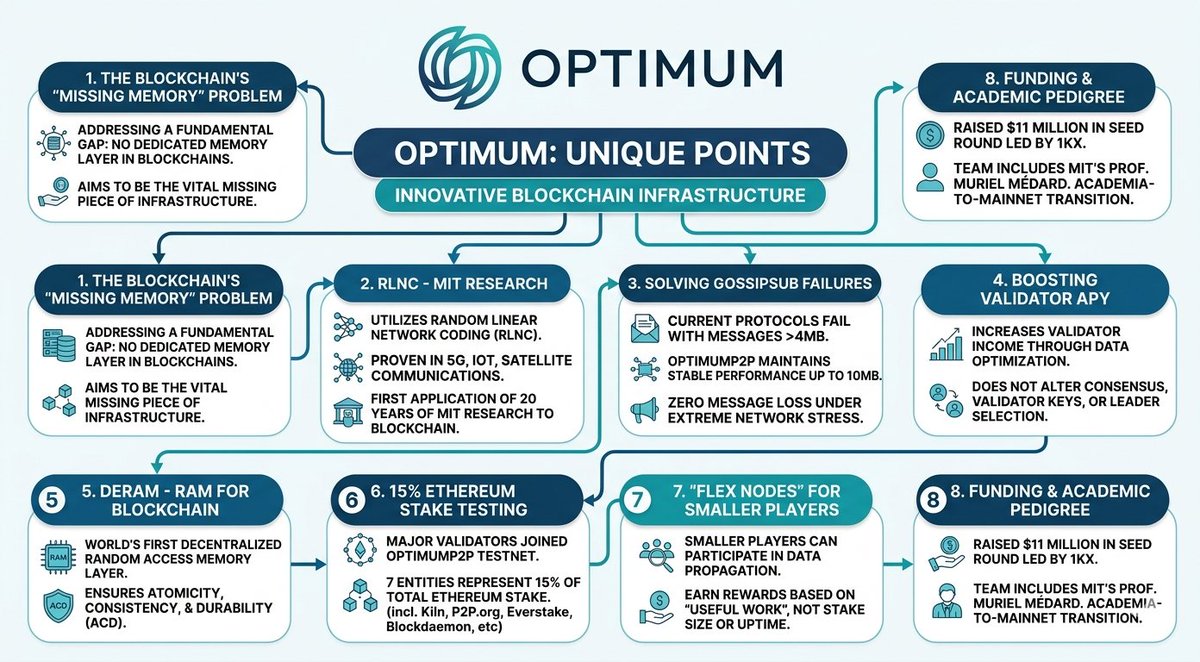
➡️The Blockchain's "Missing Memory" Problem
While most projects focus on computation and execution, Optimum addresses a fundamental gap: the lack of a dedicated memory layer in blockchains. It aims to be the vital missing piece of the infrastructure.
➡️ RLNC — Two Decades of MIT Research
Optimum utilizes Random Linear Network Coding (RLNC), a technology already proven in 5G, IoT, and satellite communications. This marks the first time RLNC research (spanning 20 years at MIT) is being applied to blockchain.
➡️ Solving the Failures of Gossipsub
Current network protocols like Gossipsub often fail with messages larger than 4MB. In contrast, OptimumP2P maintains stable performance up to 10MB and has recorded zero message loss, even under extreme network stress.
➡️ Boosting Validator APY without Altering Consensus
Optimum increases validator income by optimizing data movement. Crucially, it does not touch validator keys or interfere with leader selection, leaving the existing consensus mechanism unchanged.
➡️DeRAM — RAM for the Blockchain
DeRAM is the world's first decentralized Random Access Memory layer. Much like hardware RAM in a computer, it ensures Atomicity, Consistency, and Durability (ACD) for blockchain data.
➡️ 15% of Ethereum Stake Already Testing
Major validators—including Kiln, P2P.org, Everstake, and Blockdaemon—have joined the OptimumP2P testnet. Collectively, these seven entities represent 15% of the total Ethereum stake.
➡️Flex Nodes— Opportunities for Smaller Players
You don't need to be a massive validator to participate. Optimum introduces Flex Nodes, which assist in data propagation. These nodes earn rewards based on "useful work" rather than just stake size or uptime.
➡️ Funding and Academic Pedigree
Optimum raised $11 million in a Seed round led by 1kx. The team represents a rare direct transition from academia to mainnet, featuring MIT’s NEC Chair Prof. Muriel Médard and the former Pres
@optimum network
1
8
417
GMum🌺
Optimum – Unique Points
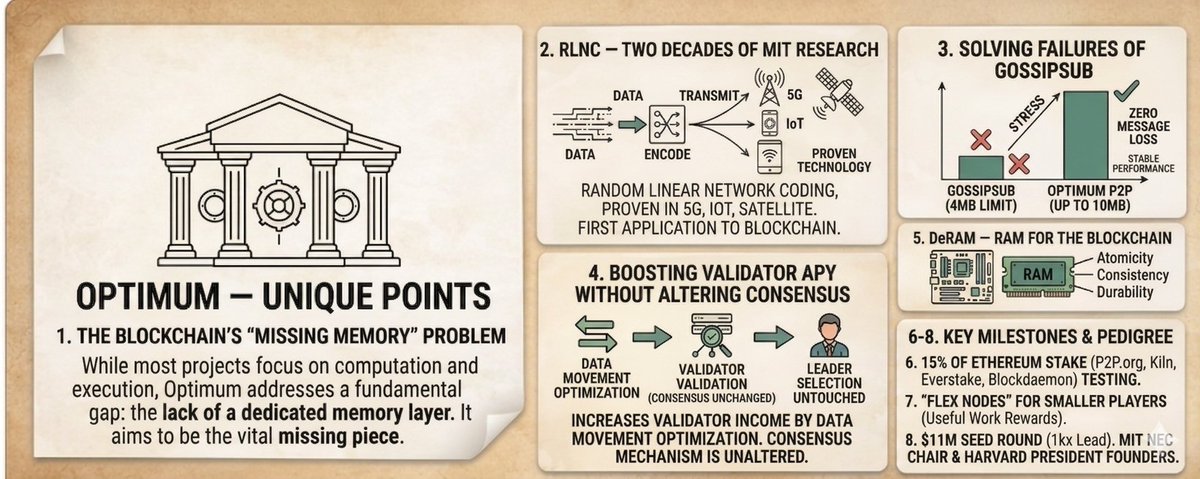
➡️The Blockchain’s “Missing Memory” Problem
While most projects focus primarily on computation and execution, Optimum addresses a fundamental gap: the lack of a dedicated memory layer in blockchain. It aims to be the vital missing piece.
➡️ RLNC – Two Decades of MIT Research
Random Linear Network Coding (RLNC) is a proven technology already used in 5G, IoT, and Satellite communications. Optimum is the first to apply this research to the blockchain.
➡️Solving Failures of GossipSub
GossipSub has a limit of only 4MB and often fails under stress. Optimum P2P can handle up to 10MB, ensuring Zero Message Loss and Stable Performance.
➡️Boosting Validator APY Without Altering Consensus
Validator income is increased through Data Movement Optimization. The core Consensus Mechanism remains completely unaltered.
➡️ DeRAM – RAM for the Blockchain
DeRAM functions as the RAM for the blockchain ecosystem. It ensures:
Atomicity
Consistency
Durability
6–8. Key Milestones & Pedigree
Topic
Description
6
Ethereum Stake
15% of Ethereum Stake testing with P2P.org, Kiln, Everstake, and Blockdaemon.
7
Flex Nodes
"Flex Nodes" for smaller players, featuring Useful Work Rewards.
8
Seed Round
$11M Seed Round (led by 1kx). Founded by MIT NEC Chair and Harvard President.
@get_optimum
9
402
Sanjidul Islam Porosh retweeted

Optimum – Unique Points
➡️The Blockchain’s “Missing Memory” Problem
While most projects focus primarily on computation and execution, Optimum addresses a fundamental gap: the lack of a dedicated memory layer in blockchain. It aims to be the vital missing piece.
➡️ RLNC – Two Decades of MIT Research
Random Linear Network Coding (RLNC) is a proven technology already used in 5G, IoT, and Satellite communications. Optimum is the first to apply this research to the blockchain.
➡️Solving Failures of GossipSub
GossipSub has a limit of only 4MB and often fails under stress. Optimum P2P can handle up to 10MB, ensuring Zero Message Loss and Stable Performance.
➡️Boosting Validator APY Without Altering Consensus
Validator income is increased through Data Movement Optimization. The core Consensus Mechanism remains completely unaltered.
➡️ DeRAM – RAM for the Blockchain
DeRAM functions as the RAM for the blockchain ecosystem. It ensures:
Atomicity
Consistency
Durability
6–8. Key Milestones & Pedigree
Topic
Description
6
Ethereum Stake
15% of Ethereum Stake testing with P2P.org, Kiln, Everstake, and Blockdaemon.
7
Flex Nodes
"Flex Nodes" for smaller players, featuring Useful Work Rewards.
8
Seed Round
$11M Seed Round (led by 1kx). Founded by MIT NEC Chair and Harvard President.
@get_optimum
6
1
13
489
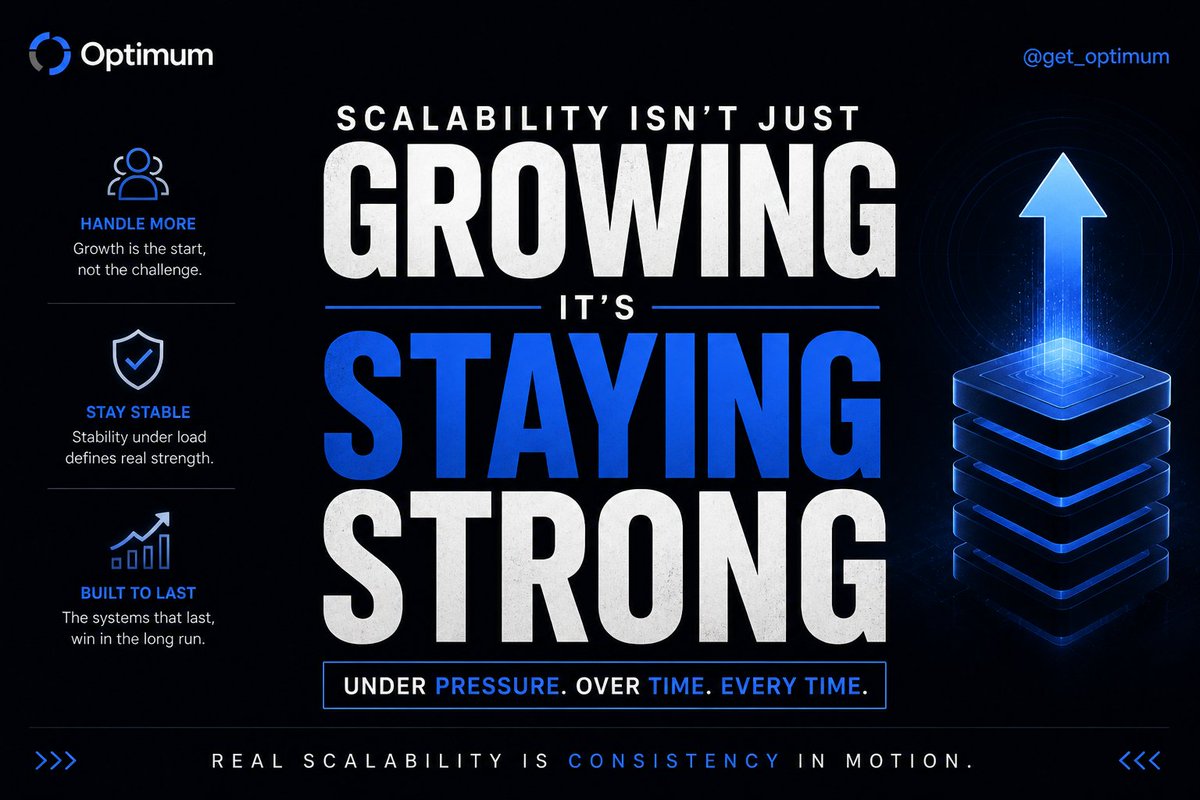
The strongest infrastructure is often the least visible.
When everything works smoothly, it's easy to overlook the layers making it possible.
But as systems grow, consistency becomes more valuable than attention.
That quiet reliability is what makes long term scalability possible.
Interesting to see more focus shifting toward that foundation.
@get_optimum seems to be building with that principle in mind.
Sometimes the most important progress happens behind the scenes.
4
12
17
480
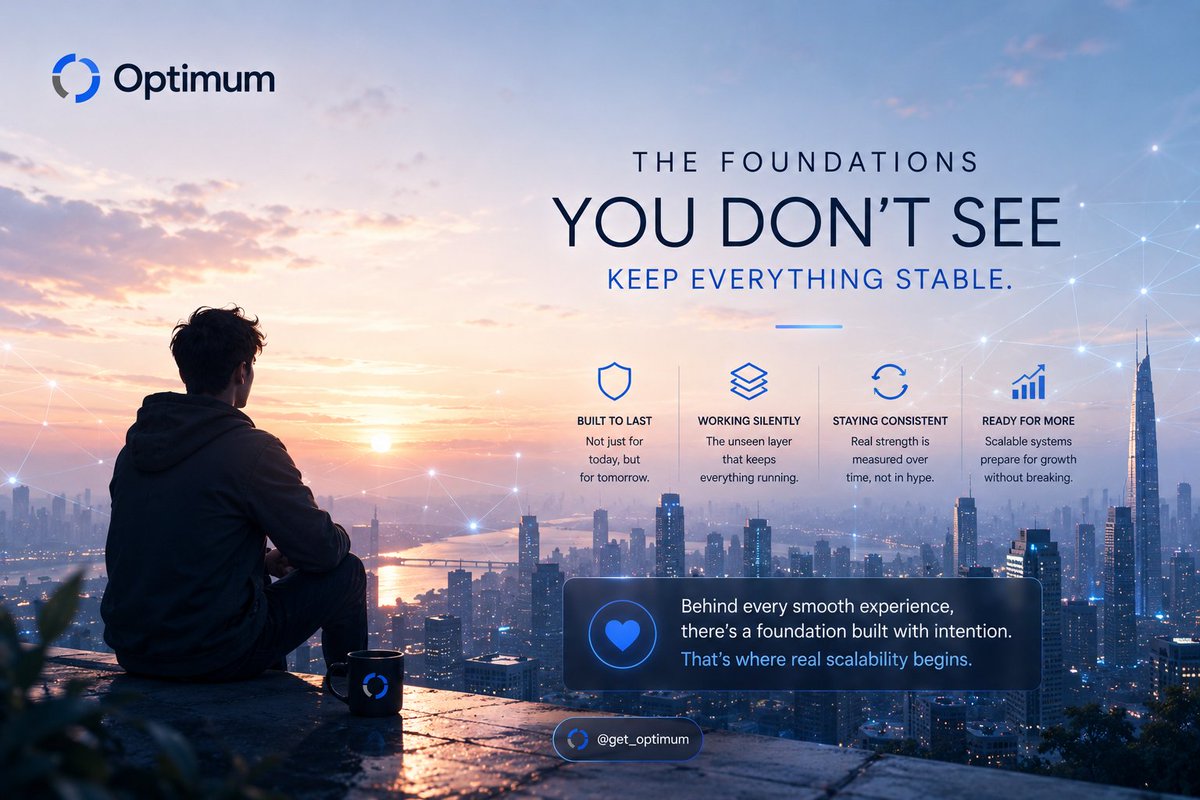
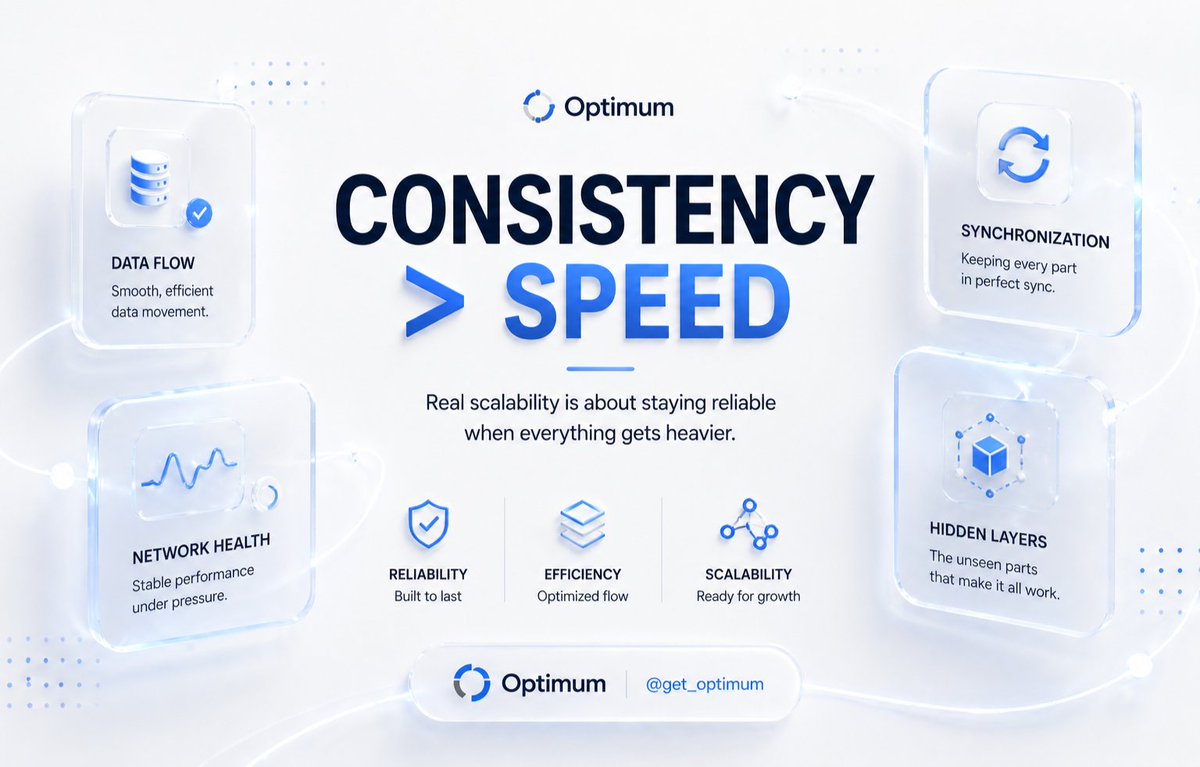
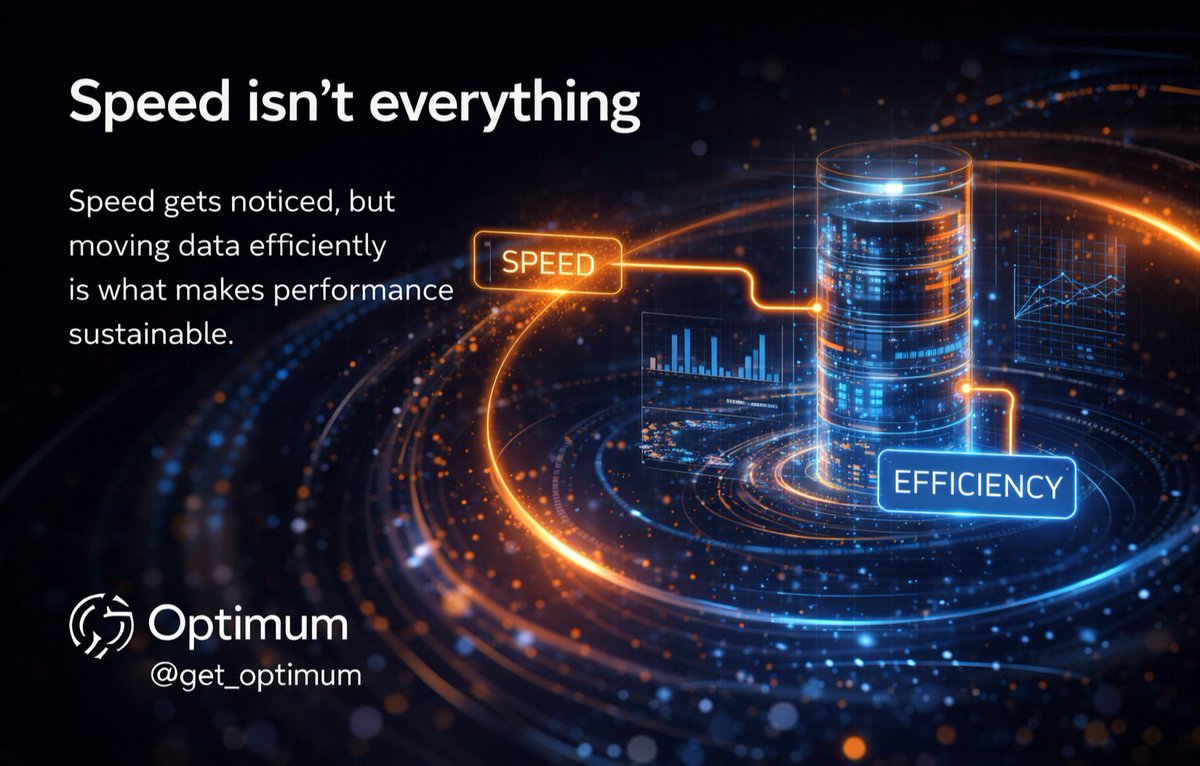
The more I explore different Web3 systems, the more I realize that good infrastructure rarely gets noticed.
People usually notice the hype, the numbers, the announcements.
But the strongest systems are often the ones quietly keeping everything stable in the background.
That kind of consistency becomes more valuable as networks grow.
It's not flashy, but it matters.
Interesting to see projects putting more focus on that foundation now.@get_optimum seems to be approaching scalability from that perspective.
Curious to see how far that mindset can go.
7
10
13
949
💔💔

4
48
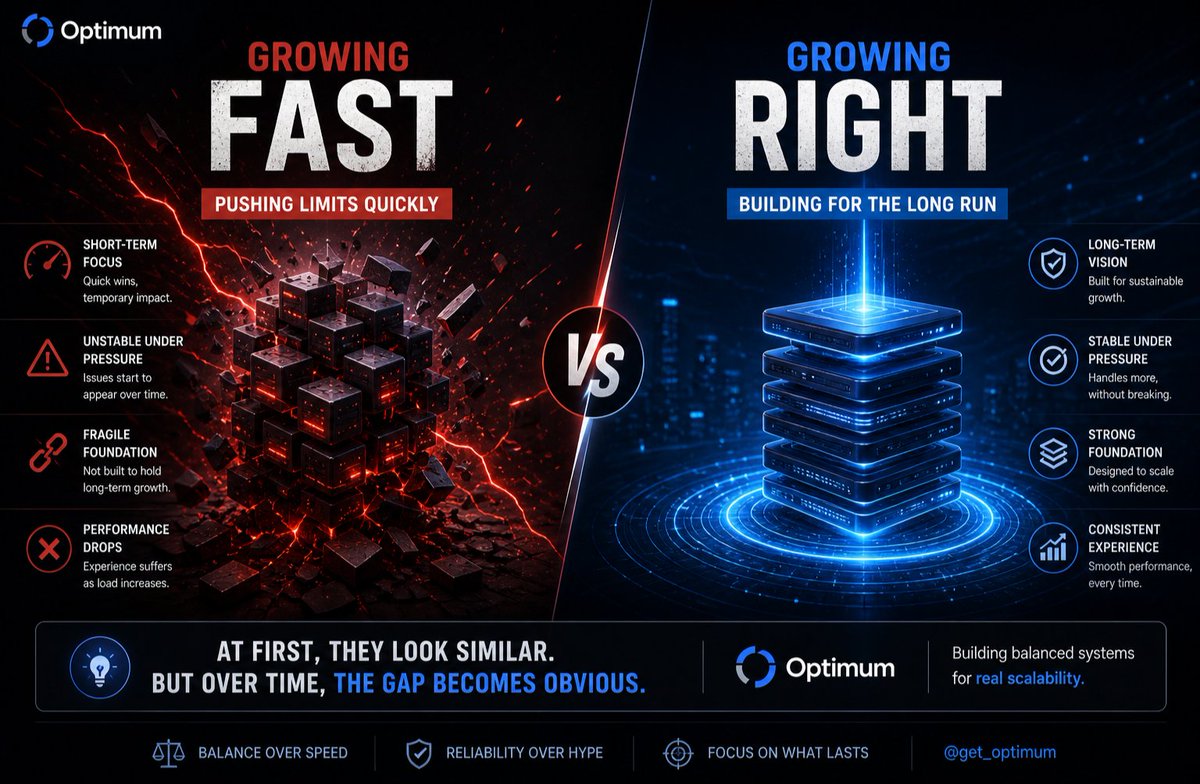
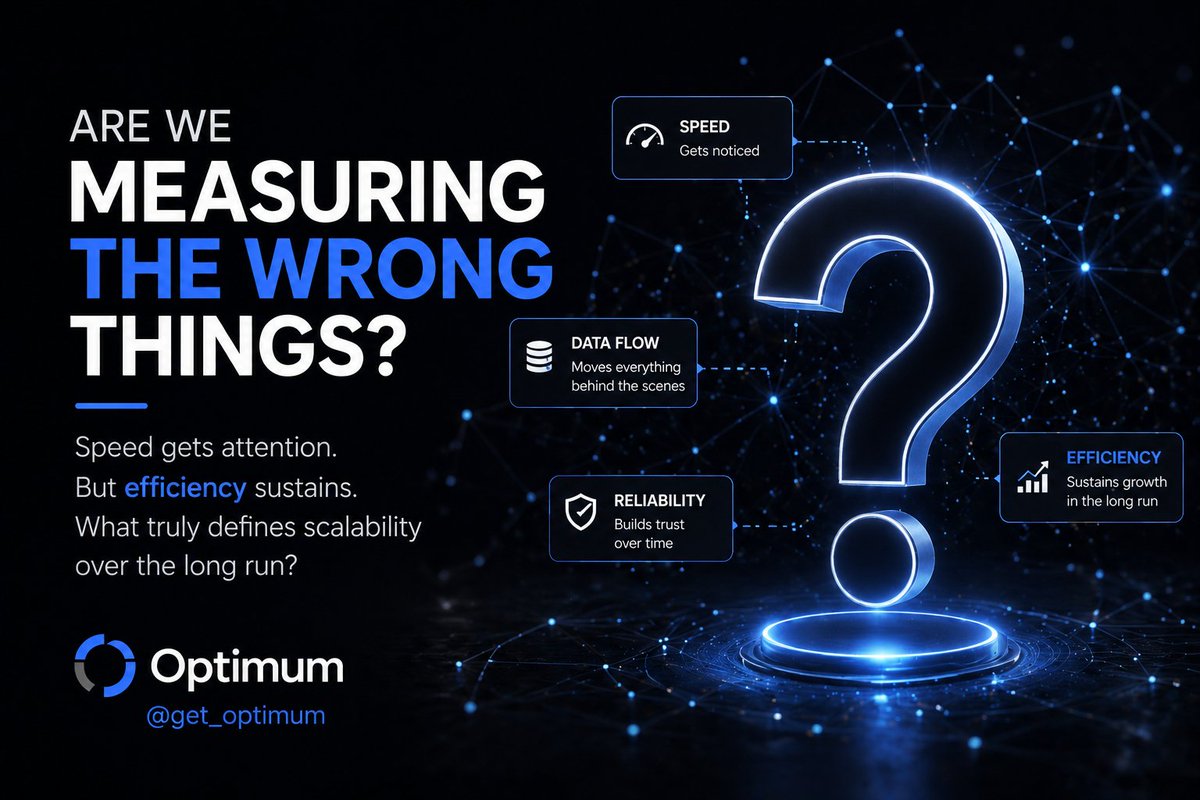
There's a clear difference between growing fast and growing right.
One focuses on pushing limits quickly.
The other focuses on making sure everything still works smoothly as things expand.
At first, both might look similar.
But over time, the gap becomes obvious.
Systems built with balance tend to last longer.
Interesting to see more attention going toward that balance now.
@get_optimum seems to be moving in that direction.
Might be what define next phase of scalable systems.
7
8
15
584
Hinata saw the light in Naruto when the whole world saw a monster.
That’s not just love that’s true belief 🌺💝🌺
The Last movie proved it.
#NaruHinaForever #NarutoShippuden
হিনাতা নারুতোর মধ্যে আলো দেখেছিল যখন পুরো দুনিয়া তাকে দেখত একটা দানব হিসেবে।
এটা শুধু ভালোবাসা নয়… এটা সত্যিকারের বিশ্বাস 🌺💝🌺
‘The Last’ মুভি সেটা প্রমাণ করেছে।
6
8
13
339
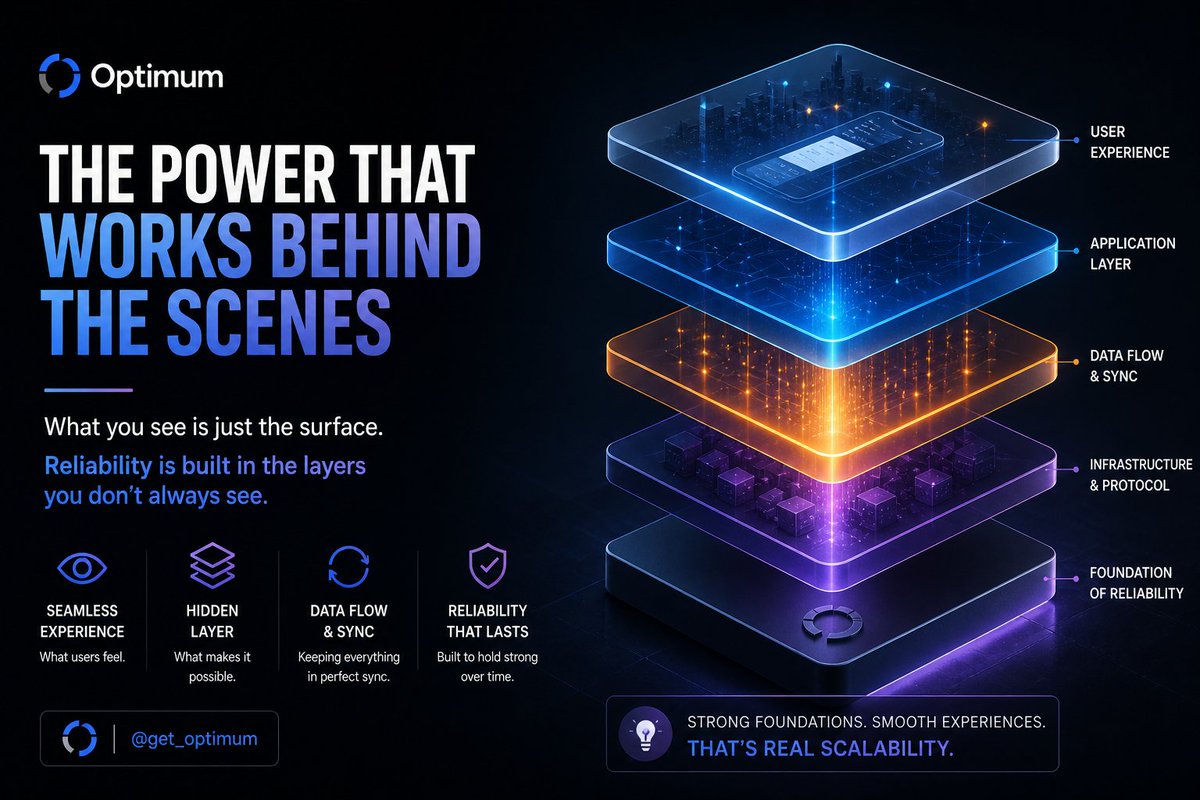
What users experience on the surface is only part of the story.
Behind every smooth interaction, there's a layer working silently handling data, keeping things in sync, making sure everything just works.
When that layer is strong, everything feels effortless.
When it's not, even small actions can start to feel off.
It's not always the most visible part, but it might be the most important one.
Interesting to see more attention going there now.
@get_optimum seems to be focusing on that.
Maybe that's where real reliability is built.
9
9
16
698

🌅 Good Morning X 🌅
New account, new journey, same goals — growth, consistency, and success 💪✨
Every big page starts from zero, and today is step one 🚀
Follow the journey. Be part of the grind. Let’s build something great together.
#GoodMorning #NewAccount #Growth

4
3
6
431
Sanjidul Islam Porosh retweeted

May 3
🌅 Good Morning 🌅
A new day means a new chance to grow, improve, and get closer to your goals 💪✨
Don’t wait for the perfect moment — start now and make today count 🚀
Stay positive. Stay focused. Keep moving forward.
#GoodMorning #NewDay #StayMotivated #PositiveVibes

8
4
16
421
Sanjidul Islam Porosh retweeted

May 1
えっと…すみません。違いますので訂正させてください。
当時、子役としてすでに180本ほど出演しており、劇団の看板子役でした。(日テレさんにもかなり出てますよ)
声優デビューはおもひでぽろぽろで、その後、外画吹き替えも多数やっております。
むしろ、この作品のあとは一旦芸能活動をやめており、活動再開は大学卒業後です。
May 1

雫役を演じた本名陽子さんは、本作をきっかけに女優・声優として本格的に活動を開始!その後「ふたりはプリキュア」などでも活躍しています
ちなみに「おもひでぽろぽろ」(91年公開)では、主人公タエ子の子供時代を演じています。雫が聖司の弾くヴァイオリンにあわせて「カントリー・ロード」を歌うシーン。この歌も、雫を演じた声優の本名陽子さんが実際に歌っています!

Community note
事実誤認です。
投稿者は「雫役を演じた本名陽子さんは、本作をきっかけに女優・声優として本格的に活動を開始!」と書いています。
しかし本名陽子さんご本人から「当時既に180ほど出演していた」という内容の投稿がされており、「耳をすませば」をきっかけに活動を開始したわけではなく以前から活動されていたことに注意が必要です。
x.com/i/status/20502…
3,189
18,892
98,185
28,746,204

RT @TryLuel: Complete tasks. Get paid.
Join thousands of contributors earning on Luel worldwide.

1,426