Methodist & Protestant Apologetics, Practical Christianity, Biblical Study, and much more.
Joined August 2023
- Tweets 1,300
- Following 75
- Followers 117
- Likes 541
137 Photos and videos





Pinned Tweet

May 20
Did you know #RomanCatholics & #EasternOrthodox are not only losing more people then they gain (despite the constant narrative they run online), and are on average less pious then many other Christian groups?
See below
1
3
495
I'll take DeYoungs advice. And trust John Wesley, Philip Schaffe, etc. Jk, I'll listen to them but this is a massive oversimplification. Translators know what they're doing, there is a reason they are translators.
Jun 15

Stephen DeYoung says it is a sin for English speakers to try to teach about Church Fathers. Says English speakers cannot understand Church Fathers.
48
Joshua Pearsall retweeted

Jun 13
I watched @sincead33's recent video against me last night. I am willing to concede the point about the mistranslation of Perrone, but with the caveat that it certainly was not intentional. I also don't think it changes the basic thrust of my original argument
I have some more thoughts on it, but am currently too busy to write them out in detail. For now, I'd refer the reader to my article in rebuttal to the Ordo Essendi, where I deal a bit more in-depth with issues like the motives of credibility, and the nature of certainty in reference to a formal object of assent.
mattjhedges.substack.com/p/t…
3
22
1,125
Jun 15
Yesterday I had the privelage to talk with @AnglicanAcolyte of ARM, Brian of @EpiscopalRenew @AndrewForFaith of NAAR, alongside Eddie & JT on the recent work going on between ERF & ARM towards Anglican orthodoxy and fellowship. We need more of this!
youtube.com/live/aRCksBrXs9M
2
3
105
Jun 13
Live tomorrow! Discussing the state of people and their intelligence (or lack thereof): youtube.com/live/XjX-__8ETi0…
21
Joshua Pearsall retweeted

Jun 10
Leaning hard into entire sanctification is one way that a Global Methodist congregation can avoid becoming indistinguishable from a garden-variety evangelical church.
3
3
17
908
To the #easternorthodox I have heard mixed answers on this and am curious your own position. If you hold to the essence energy distinction, do you reject divine simplicity? If so, why?
Perhaps the next generation of EO apologist (@C2Antiquity @Alex_Ortodoxie ) have an answer?
8
3
1,162
Joshua Pearsall retweeted

I said it before: Orthobro is just a fad. In ten years, it’ll be gone.

25
7
73
7,637
I learned today of "The Only Doge Who Became a Saint," Peter Orselo. A man, who abandoned his wife and child and didn't tell them anything. I have seen only passing references to his wife eventually finding out (and not because he told her), would anyone know a source on that?
1
76
Joshua Pearsall retweeted

Dude Richard Hooker in Book V of the Laws literally says salvation is union with God via participation in the deified humanity of Christ through the Holy Spirit. This is not some uniquely EO idea.
7
20
194
9,646
Joshua Pearsall retweeted
Joe claims that the Jews thought they only could worship God in Jerusalem where they offered sacrifice. That is obviously false (and Joe won't admit this of course doing what he does)
In Daniel 3:17, Daniel explicitly says he serves God. The Hebrew term פָֽלְחִ֔ין (the nominal being "pelach") is the term the LXX translates with "latreuo" and itself refers to divine worship in Daniel. In the book of Daniel, in fact, the term exclusively is given to deity. His claim would entail that Daniel never "really" worshipped God.
And of course the command to love God with all our heart, mind, and soul and worship him with these things is obviously not limited to the place where you make material sacrifice.
But of course, he will try to weasel/lawyer out of it by saying "well that is only latreuo improperly and not properly".
But if that were true, Angels could never "really worship" God. Aquinas refutes this well. Sacrifice is offered to God alone; this does not mean you can only offer such sacrifices via a material altar:
"I answer that, As stated above (Article 1), a sacrifice is offered in order that something may be represented. Now the sacrifice that is offered outwardly represents the inward spiritual sacrifice, whereby the soul offers itself to God according to Psalm 50:19, "A sacrifice to God is an afflicted spirit," since, as stated above (II-II:81:7; II-II:84:2), the outward acts of religion are directed to the inward acts. Again the soul offers itself in sacrifice to God as its beginning by creation, and its end by beatification: and according to the true faith God alone is the creator of our souls, as stated in I:90:3; I-II:118:2, while in Him alone the beatitude of our soul consists, as stated above (I-II:01:8; I-II:2:8; I-II:3:1 and I-II:3:7 and I-II:3:8). Wherefore just as to God alone ought we to offer spiritual sacrifice, so too ought we to offer outward sacrifices to Him alone: even so "in our prayers and praises we proffer significant words to Him to Whom in our hearts we offer the things which we designate thereby," as Augustine states (De Civ. Dei x, 19)."

Protestants MISUNDERSTAND Worship...
Watch the full episode here: youtu.be/llZKg6Ivvu8
6
6
66
5,025
May 30
Is anyone aware of any English translation of this work? amazon.com/Psalmi-Davidis-Ca… @sincead33 you like obscure old works too, can you help a brother out!?
1
512
May 29
Another excellent video by James Michael Smith of Disciple Dojo! Very much worth watching his entire series so far: youtube.com/watch?v=uzCTyXcC…
55
May 28
An absolutely amazing video by @DrJordanBCooper came out recently (youtube.com/watch?v=4N6uDrnF…). This is the type of content people should be consuming far more than the regular things the algorithim pushes!
2
2
9
2,104
Joshua Pearsall retweeted

May 28
The church fathers were not protestant.
The church fathers were not Orthodox.
The church fathers were not Romain
Roman Catholic.
They were men who were imperfect that God used to preserve His church, like he's doing with us today. Let them be who they were. We all have things we both agree and disagree with in their writings.
I guarantee we all would be considered heretics to them by some degree.
72
2
58
9,618
May 27
To the #easternorthodox ¨How do new converts avoid being too orthobro?¨ As the Priest answers, ¨the online extremes.¨ youtube.com/shorts/j0nqQovQ4…
1
151
Joshua Pearsall retweeted

May 26
ORTHOBROS: "You have to debate us on the True Church or you're grifters and we're going to help DawahBros expose you!"
ME: "Okay. I wasn't interested, but I'll prepare for debate."
ORTHOBROS: "Why is David making so many videos about Eastern Orthodoxy?"
As a rule, if you don't want me to trust you, just complain whether I do A or not-A.
29
30
801
11,517
Joshua Pearsall retweeted
May 27
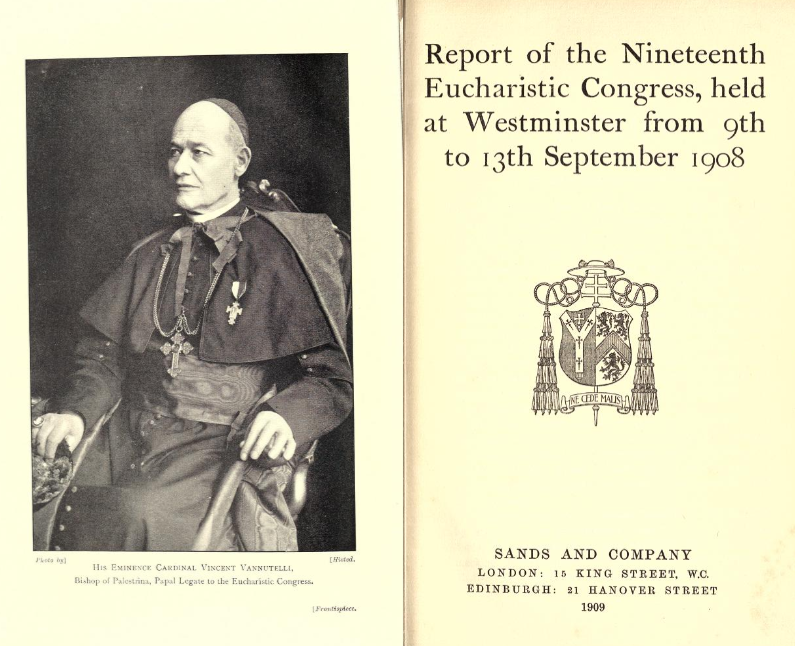
‘In the fifth century, the dogma of conversion had not yet received its full precision, and in the Eucharistic elements one did not yet clearly distinguish between that which is converted and that which remains.’ and one does not yet clearly distinguish in the Eucharistic elements that which is converted from that which remains: one is therefore easily led, when speaking of the permanence of sensible properties, to admit at the same time the permanence of the substance, and conversely, when speaking of the change of substance, one sometimes forgets that the sensible qualities remain.”
"LE DOGME DE LA TRANSUBSTANTIATION", Report of the Nineteenth Eucharistic Congress (Westminster, 1908), pp. 345–346.
Note: This paper is of course pro-transub, being from an RC perspective. The point is the tacit admissions here and there.
3
1
13
978
Joshua Pearsall retweeted

May 27
There is nothing new under the sun, as they say. And when it comes to online Roman Catholic apologetics, well, it's just the same thing, over and over again. Here is a classic example. Augustine never said what is cited here. Didn't happen. And that has been documented for centuries...but it doesn't stop Roman Catholics from repeating it. They don't read the controversial literature of the past. It is all so surface level.
A quarter century ago I debated Fr. Peter Stravinskas...Dr. Peter Stravinskas, editor of the Catholic Answer. Two Ph.D.s from Ivy League schools. We debated purgatory. Stravinskas gave the same quote. He, likewise, had no idea what the original context was.
Here is the real story. This is not a short read. Way too long for folks living in Ogden, evidently. But if you are serious about Christ's church, serious about the issue of authority, and serious about knowing what Augustine believed on these issues, you will take the time to work through it. And the next time someone does the "Rome has spoken, the case is closed" thing, you will know that THEY are not "deep in history," they are deep in Roman rhetoric only.
aomin.org/aoblog/roman-catho…

Mistaken view on RC/Prot #4:
Huff doesn't understand how Mt. 16:18 is all about the Petrine office and doesn't seem aware of the other two Gospel passages traditionally cited (Lk. 22/Jn. 21)
Huff also semi-favorably cites Augustine, even though Augustine affirmed the papacy--esp. as evidenced in Lk 22 and Jn 21--saying of the Pelagain heresy, "Roma locuta est: cause finita est"
Also, Huff seems to believe that the Pope's absence from Nicea means something against papal primacy; Huff doesn't seem to know that the Pope wasn't in person at any of the other first councils either, but was considered the authority
54
46
441
46,237
May 27
A wonderful thought for many dealing with the #Ecclesialist apologist who try and use fear to undermine your confidence, demanding a level of certainty humans have never operated with for thousands of years. Turn these voices aside and trust God (Pr 3.3-6), and ask yourself
2
2
915
May 27
"Where have I been so obsessed with certainty that I have lost confidence?" - Steven Foster.
61