
The World’s Opinion Page, featuring exclusive commentaries by scholars, policymakers, practitioners, and civic activists.
Joined June 2009
- Tweets 121,078
- Following 2,054
- Followers 218,509
- Likes 8,072
13,270 Photos and videos


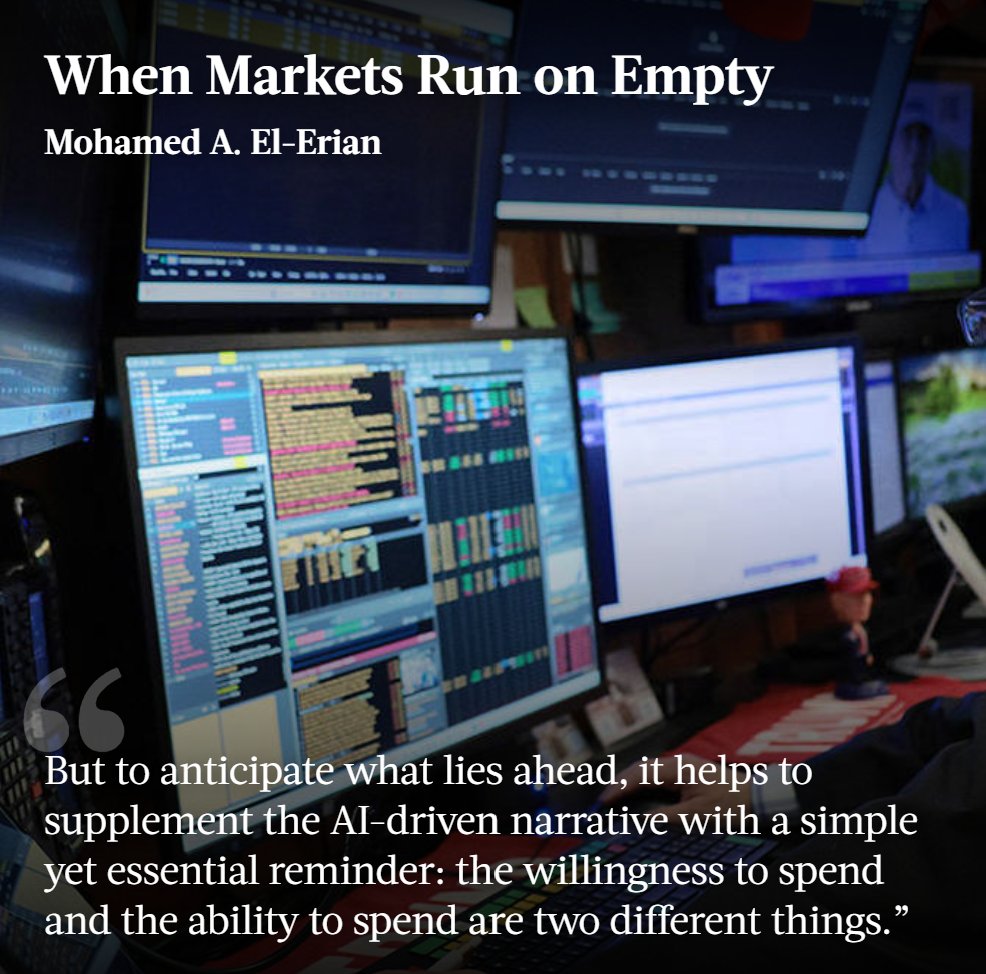




.@realDonaldTrump returned to office championing American energy dominance and the continued growth of hydrocarbons. Yet his war against Iran has sharply reduced demand for such products, @CarolynKissane writes. bit.ly/49VXbKh
1
381
In a global economy where AI handles more and more analytical tasks, the ability to question, challenge, and navigate uncertainty may soon become the scarcest commodity of all, argues Sami Mahroum.
bit.ly/43x0CU8
2
867
The institutions of the postwar era are struggling to keep pace with today’s global challenges. A more adaptive model of international cooperation is needed, says @glob_solutions’s @DJSnower. project-syndicate.org/commen…
2
913
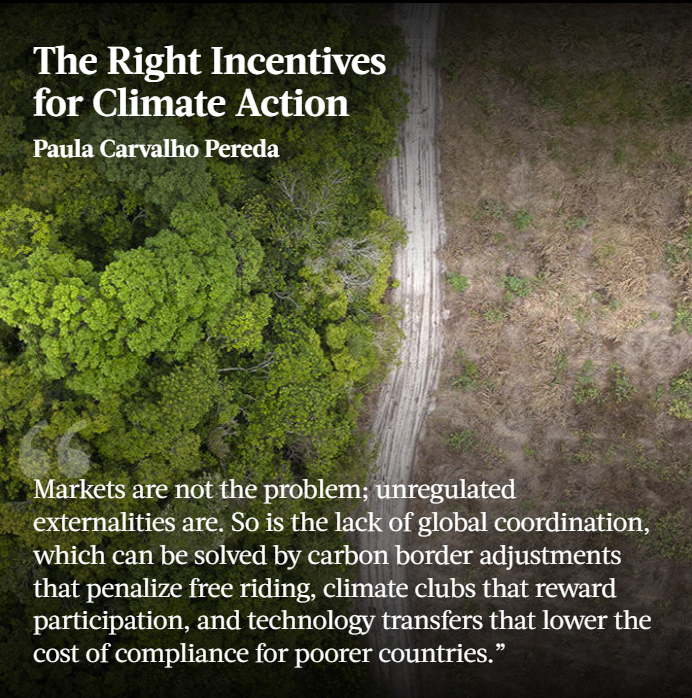
.@PaulaPereda8 underscores the need for well-designed policy as global shocks entrench carbon-intensive systems.
bit.ly/4xkcNRW
3
971
To translate protest against @realDonaldTrump and the @gop into presidential power, @TheDemocrats must put forward a clear, compelling economic vision, based on wage-led growth, explain @tghilarducci and @rickmcg (@SCEPA_economics). bit.ly/4v4xyiZ
979
Past investments in education have created the largest cohort of university graduates in Brazil’s history, but the labor market has not caught up, @lauraabcarvalho and @GuilhermeKlei11 write. bit.ly/43xOt19
1
3
2,481
.@TheDemocrats might assume that, if they just highlight @realDonaldTrump's failures and corruption, voters will turn against him. But what do they have to turn to? @tghilarducci and @rickmcg (@SCEPA_economics) offer their advice. bit.ly/4v4xyiZ
1
1
1,046
This eschatological breakdown in American politics allows for practically any action to be portrayed as righteous. Nowhere is this more apparent than in @PeteHegseth's depiction of America's war of choice in Iran, writes Nina L. Khrushcheva. project-syndicate.org/commen…
2
4
880
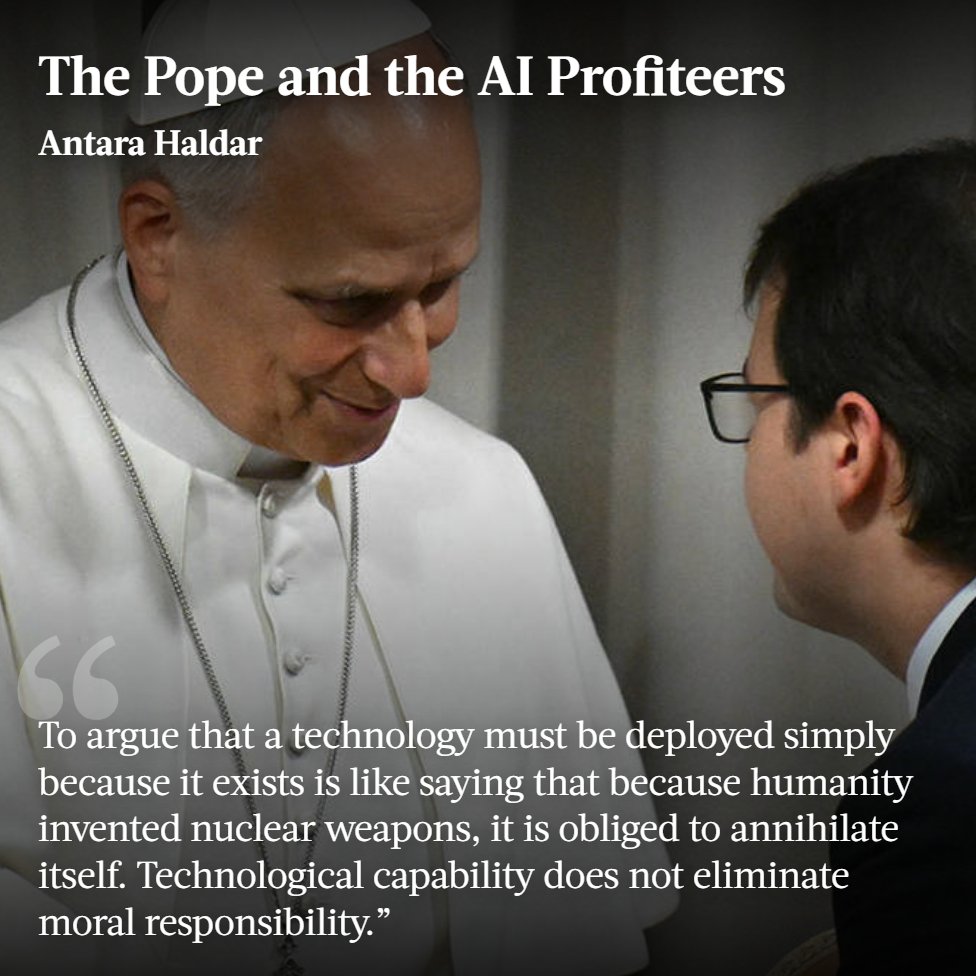
Antara Haldar thinks Leo XIV is right to challenge the market-driven narrative of technological inevitability.
bit.ly/43rXWqI
5
8
2,877
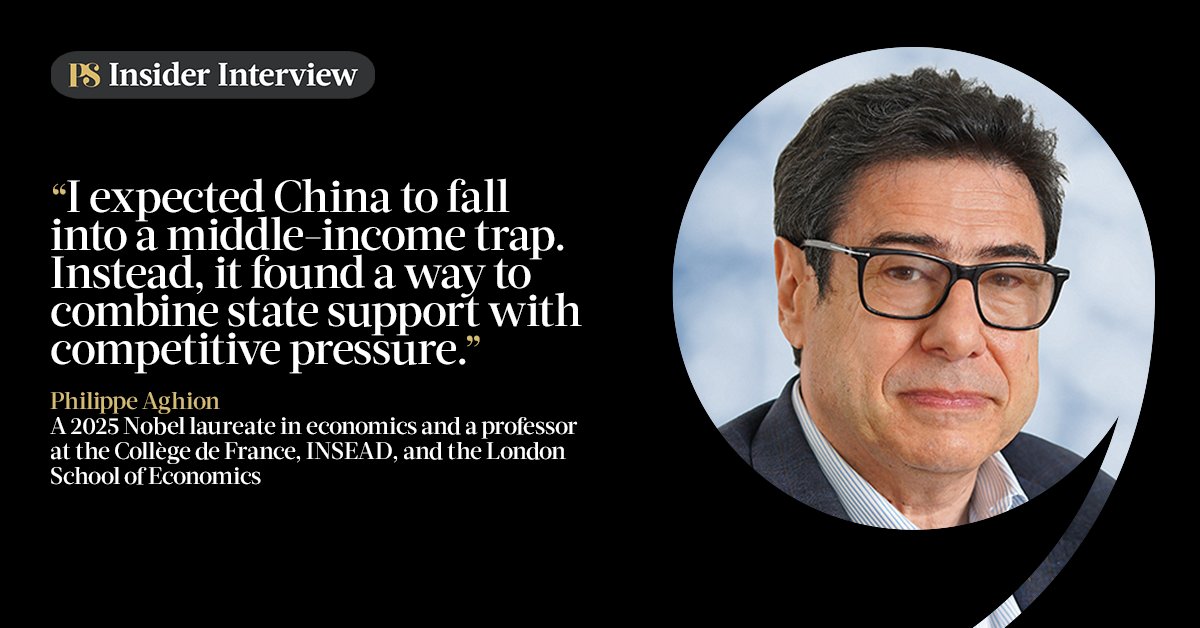
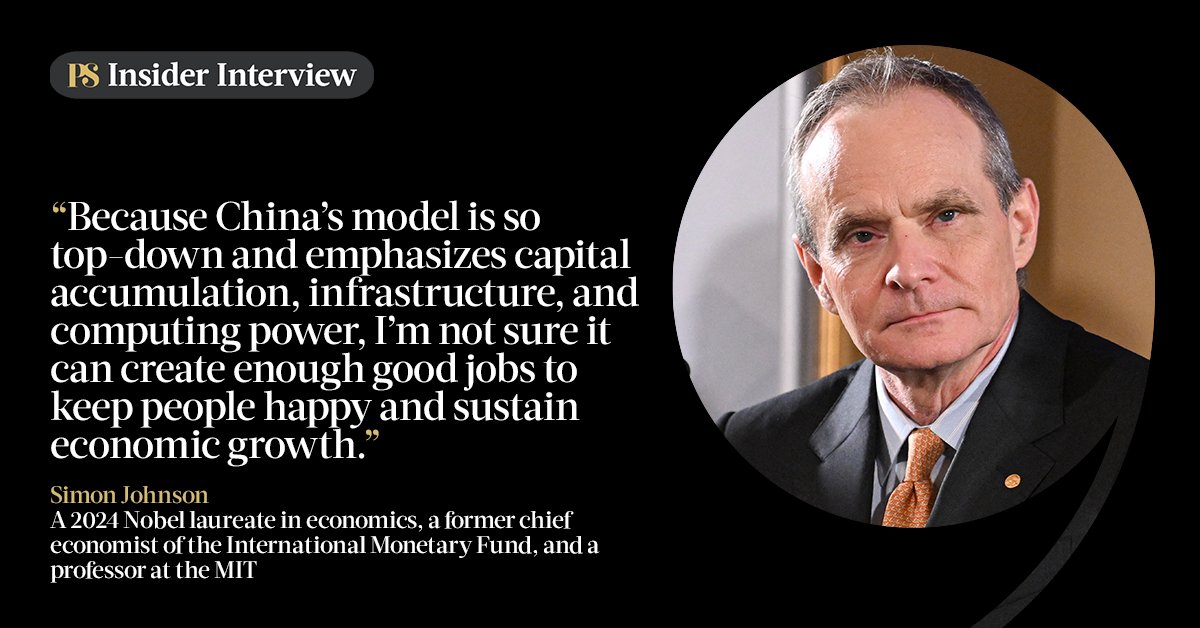
In the latest #InsiderInterview, @Ph_Aghion (Philippe Aghion of @INSEAD, @LSEnews, and @cdf1530) and @baselinescene (Simon Johnson of @MITSloan) highlight China’s use of “yardstick competition” to reconcile industrial policy with creative destruction. Read it now at the link.
bit.ly/4oikmEp
2
5
1,159
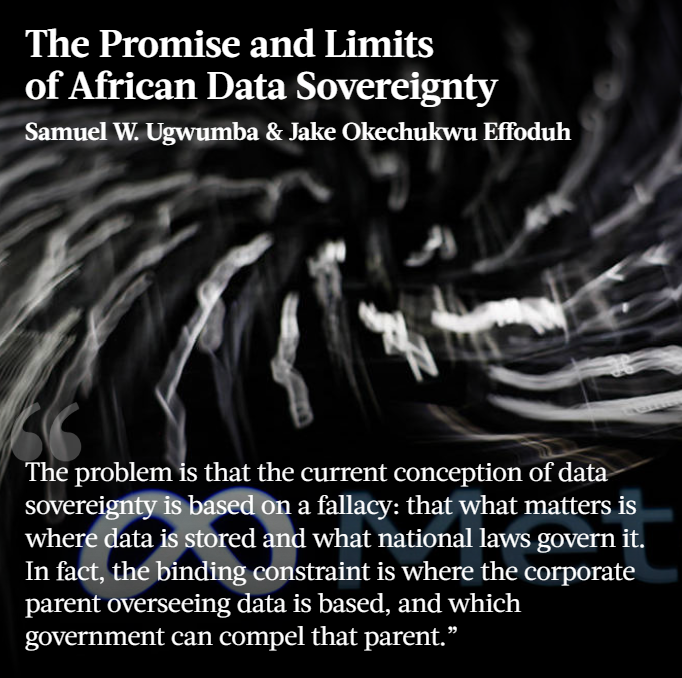
Data sovereignty is more than a political slogan; going forward, it could determine Europe’s ability to produce its own scientific knowledge, @BertrandBadre and Stéphane Voisin write. bit.ly/4xs493S
2
5
1,197
No economy has achieved structural transformation using textbook inflation-targeting and interest rates, writes @CelestinMonga. African countries are no different. bit.ly/4v6MmgZ
1
2
2
1,088
The US is running a huge and growing federal budget deficit that is sucking savings from the EU and the rest of the world to finance tax cuts for the rich, a foolish war, and other wasteful spending, notes Laura Tyson and @gpapak. bit.ly/4ghgmlA
1
4
6
1,573
Even if a ceasefire is reached, traffic resumes, and mines are eventually cleared, the experience of the past four months cannot be undone. Reducing oil dependency is the name of the game, @CarolynKissane concludes. bit.ly/49VXbKh
1
923
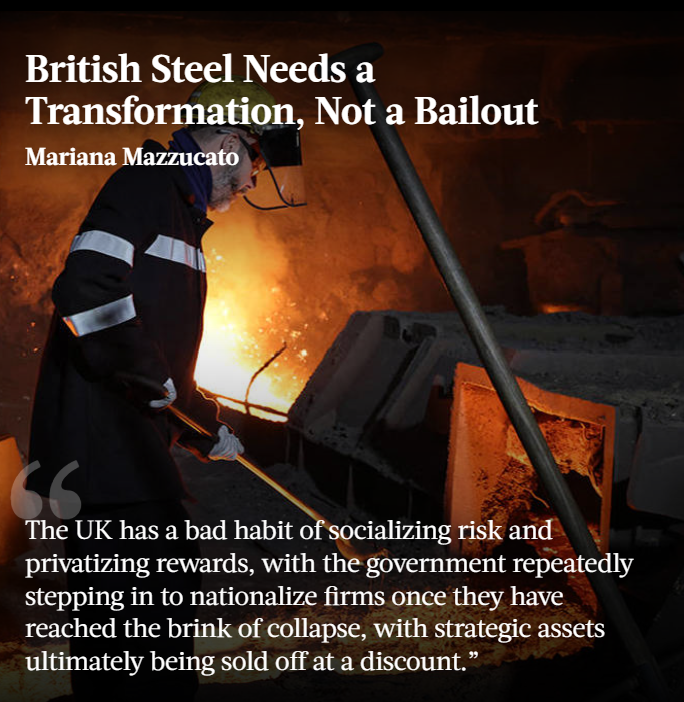
.@MazzucatoM & @AnnaHopeEmerson see the debate about nationalizing British Steel as a test case for the new era of industrial policy.
bit.ly/4xpqcZ1
3
904

Jun 13
Indian citizens are witnessing a remarkable inversion of democracy. Rather than voters choosing their government, the government is choosing its voters, writes @UMassAmherst’s @Jayati1609. bit.ly/4omuagy
1
6
6
1,095
Jun 13
Politicians like to pretend that they control the levers of economic growth. But, as @Keir_Starmer’s spiraling government shows, that pretense has worn increasingly thin. bit.ly/4aI7lyh
3
6
1,201
Jun 13
In the latest PS #InsiderInterview, @Ph_Aghion (Philippe Aghion of @INSEAD, @LSEnews, and @cdf1530) and @baselinescene (Simon Johnson of @MITSloan) explore how institutional and fiscal constraints may hinder Europe’s ability to support breakthrough innovation.
Watch their wide-ranging conversation at the link below.
bit.ly/4oikmEp
#Europe #InnovationPolicy #Productivity #EconomicDevelopment #PublicPolicy #GrowthStrategy
2
5
15
2,380
Jun 13
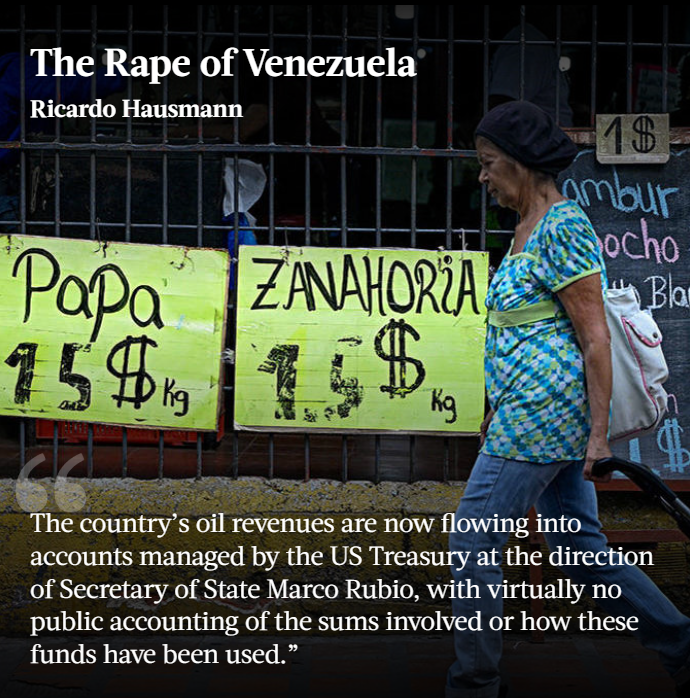
.@ricardo_hausman shows why economic conditions for ordinary Venezuelans continue to worsen, despite rising oil revenue.
bit.ly/4ft5ZLf
14
21
2,358
Jun 13
Underlying today's economic insecurity, political fragmentation, climate change, and distrust in institutions is a challenge that governments continue to treat as an afterthought: rising inequality, @AAbdenur writes. project-syndicate.org/commen…
3
955