
Photos and videos
Pinned Tweet

Blackberry Vector Alloy Kore Solution? Volkswagen Horizon Robotics China JV vs Rivian US JV
youtu.be/C-BpuneLTCY
Hypothesis about a convergence point via Alloy Kore (the QNX Vector joint platform)
Rivian OS 2.0 on the R2 platform might be the catalyst, and how Volkswagen could eventually bridge its fractured global strategy.
1. What Alloy Kore Actually Solves
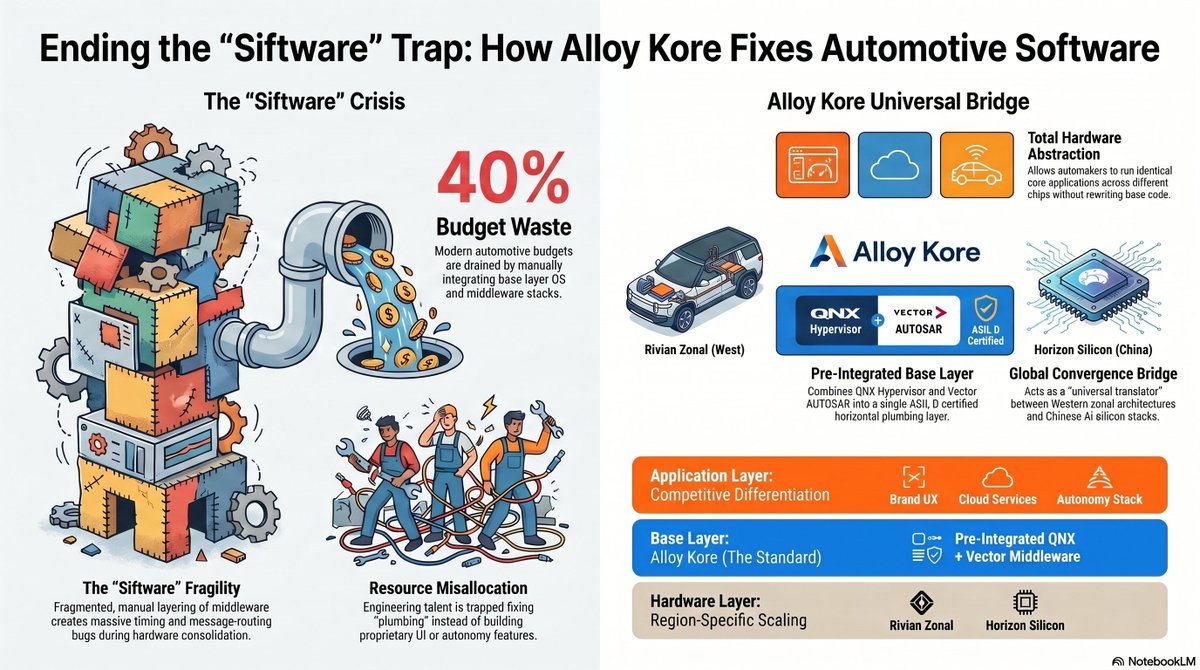
When QNX and Vector unveiled Alloy Kore at CES 2026, it was designed specifically to end what the industry calls "Siftware"—the fragmented, fragile process of manually layering middleware on top of an OS.
Historically, an OEM would license the QNX OS/Hypervisor for safety, and then spend millions paying Vector (or Elektrobit) to integrate the AUTOSAR middleware stack (which handles vehicle network communications like SOME/IP, diagnostics, and secure routing).
Alloy Kore pre-integrates these two layers out of the box, fully safety-certified up to ASIL D. It provides a clean, standardized, horizontal "plumbing" layer.
The Strategic Value: It allows an automaker to treat the foundational OS and vehicle network as a solved commodity. They can focus 100% of their engineering resources on the Application Layer (the UI, the cloud features, and the autonomy stack) where they actually compete.
2. Rivian OS 2.0 & The R2 Launch: The Logical Pivot
You are spot-on to look at the upcoming R2 and Rivian’s next-gen software architecture as a candidate for this type of stack.
When Rivian launched the Gen 2 R1, they proved they could successfully consolidate their hardware into three massive zonal domain computers. However, as you’ve experienced firsthand, managing that consolidated, mixed-criticality hardware with custom-stitched software introduces massive timing and message-routing bugs.
For the R2 platform, Rivian faces a completely different challenge: Mass Scalability and Cost Reduction.
To build the R2 at a lower price point and scale it globally (including inside millions of future Volkswagen Group vehicles), Rivian cannot afford to spend thousands of engineering hours manually fixing custom software routing bugs.
Moving to a highly optimized, pre-certified foundation like Alloy Kore would make immense sense for Rivian OS 2.0. It keeps Rivian’s beautiful proprietary UI (Android/Linux-based) and their custom autonomy stack on top, but swaps out the messy, homemade "plumbing" underneath for a rock-solid, resource-efficient QNX/Vector foundation.
It drops CPU overhead, slashes latency, and ensures that a bug in an infotainment update can't accidentally starve a critical safety loop of processing power.
4
5
25
10,656
iphone moment powered by QNX though I hope
Agree with the premise. No need to look human.
Just function as one or better
19h

Humanoid robots don't need to look human.
Meet Eno, our first general-purpose robot.
Not a machine pretending to be human, but intelligence given a body.
At Genesis, we’re building a future where robots don’t feel cold or distant, but capable, calm, and ready to help.
Available Q4 this year.
2
74
Shaker Cherukuri retweeted
in hand sight.
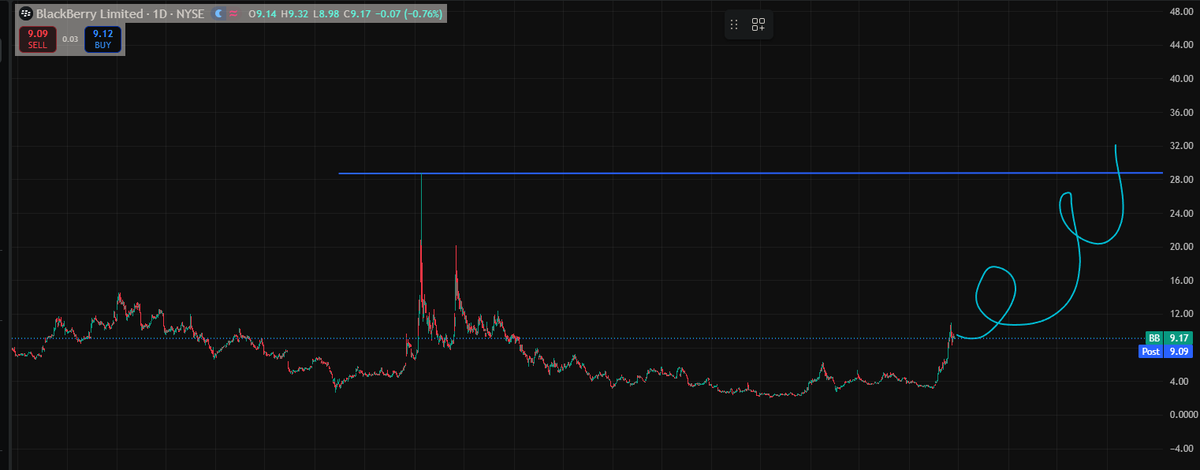
it will be very obvious as to why NVDA picked $BB for its physical AI leader.
earnings next week. i see the gap happening slowly as soon as people forget about Blackberry being a dead phone company and migrating into PHYSICAL AI and Cybersecurity defense stock
Jun 4

“The next trillion-dollar opportunity is Physical AI and Robotics.”
— Masayoshi Son, CEO of SoftBank, also just became the richest in Asia
2
2
40
3,054
Shaker Cherukuri retweeted

This Is The Power of QNX.
The QNX platform is being adopted in a new AI powered heart pump developed by Johnson & Johnson.
$BB
finance.yahoo.com/markets/st…
5
32
880
Shaker Cherukuri retweeted

Exclusive: EV startup Rivian is laying off hundreds of employees, as the automaker seeks to make its business profitable while launching a key new model. on.wsj.com/4a1ND0h
15
12
52
61,718
Shaker Cherukuri retweeted

New Fed Chair Kevin Warsh will be holding his first FOMC press conference tomorrow. His WSJ op-ed on 11/16/25 is likely a good blueprint. “AI will be a significant disinflationary force… Inflation is caused when government spends too much and prints too much.”
Which message will the stock market focus on if that is the blueprint? Note that the bond market right now has a slightly higher than 50% odds of a rate hike by year-end, so his belief that the Fed Funds Rate is too high due to AI would be bullish.
But he wants to reduce the Fed balance sheet which would be bearish. The Fed started “QE light” following its 12/10/25 meeting (less than a month after that op-ed piece) to alleviate near-term pressures in money markets. The Fed balance sheet since then has expanded by $186B.
For perspective, on 5/22/13, Fed Chair Ben Bernanke said in Congressional testimony that the Federal Reserve could begin to taper the pace of its bond-buying program (QE) in the coming months that it started during the Global Financial Crisis. The “taper tantrum” that ensued saw both bond and stock markets sell off. The S&P lost 5.0% over the ensuing month from 5/22 but then gained 17.5% from that low point through year-end. But the bond market saw 10-year treasury yields go up by 96 bps to 2.99% in just over three months and finished the year at just over 3% despite the Fed Funds rate remaining at 0-0.25%.
Given my view that “History May not Repeat Itself but it Often Does Rhyme,” my concerns lie more with the bond market (given the fiscal deficit of ~6% of GDP) than the stock market (given ~27% S&P EPS growth this year and my belief in Agentic AI.) The good news is with oil prices coming down, this acts as support to both.
36
20
275
30,646
End game:
Merge with Tesla.
Exit automotive manufacturing and use the Tesla manufacturing prowess for physical AI systems.
Acquire QNX for post quantum safety and security especially physical systems.
Scale Physical AI
$100 trillion valuation by 2040
$SPCX $TSLA

Elon is doing the smartest thing by using SpaceX’s current valuation (up 50% from IPO price) to buy up Cursor
Time to go on an M&A spree and buy up companies generating billions in revenue to make those valuation multiples look reasonable
172
Gamma squeeze nothing to do with business fundamentals. Right?
17h

If SpaceX is indeed worth $5 trillion soon on space data centers, then existing terrestrial infrastructure, and its associated capex, may be just a little obsolete
49
Shaker Cherukuri retweeted

17h
I don't get how market's are sleeping on $BB.
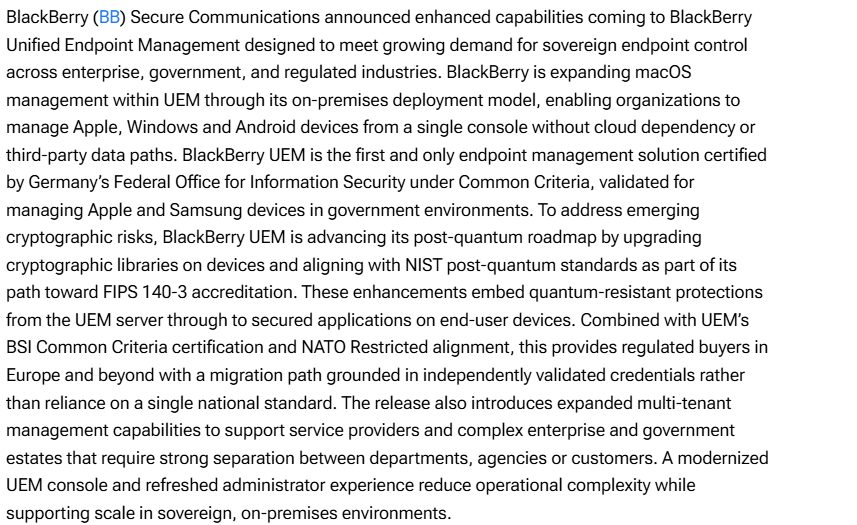
This strengthens the company’s position as a leader in high security, sovereign endpoint management solutions tailored for government and regulated industries. The new capabilities include the first and only Common Criteria certification from Germany’s Federal Office for Information Security for managing $AAPL and SAMSUNG devices in government environments... Yes.... They actually have GOV contracts globally.
HELLO?
Plus NATO Restricted alignment and a clear post quantum cryptography roadmap aligned with NIST and FIPS 140-3 standards all of which significantly improve BlackBerry’s ability to win large, long term government contracts in Europe, the U.S. and other sovereign markets that demand on-premises control and independently validated security. These enhancements, combined with expanded multi tenant support for complex government estates and service providers, position BlackBerry to capture more high margin, recurring revenue from public sector deals while reducing reliance on consumer markets.
This isn't even the main reason $BB should be valued higher is the crazy part.. people forget that QNX is becoming the #1 OS for physical AI.
Markets are sleeping and earnings are next week. cheers grabbing more.
18h

JUST IN
BlackBerry announces enhanced capabilities for BlackBerry UEM
BlackBerry is doubling down on its traditional strength ultra-secure, on-prem enterprise/government software rather than trying to compete in the consumer or general cloud MDM space (where they’ve lost a lot of ground over the years to Microsoft Intune, VMware, etc.).
$bb IS NO LONGER dead phone company.
i am greedy here.
8
3
68
5,398

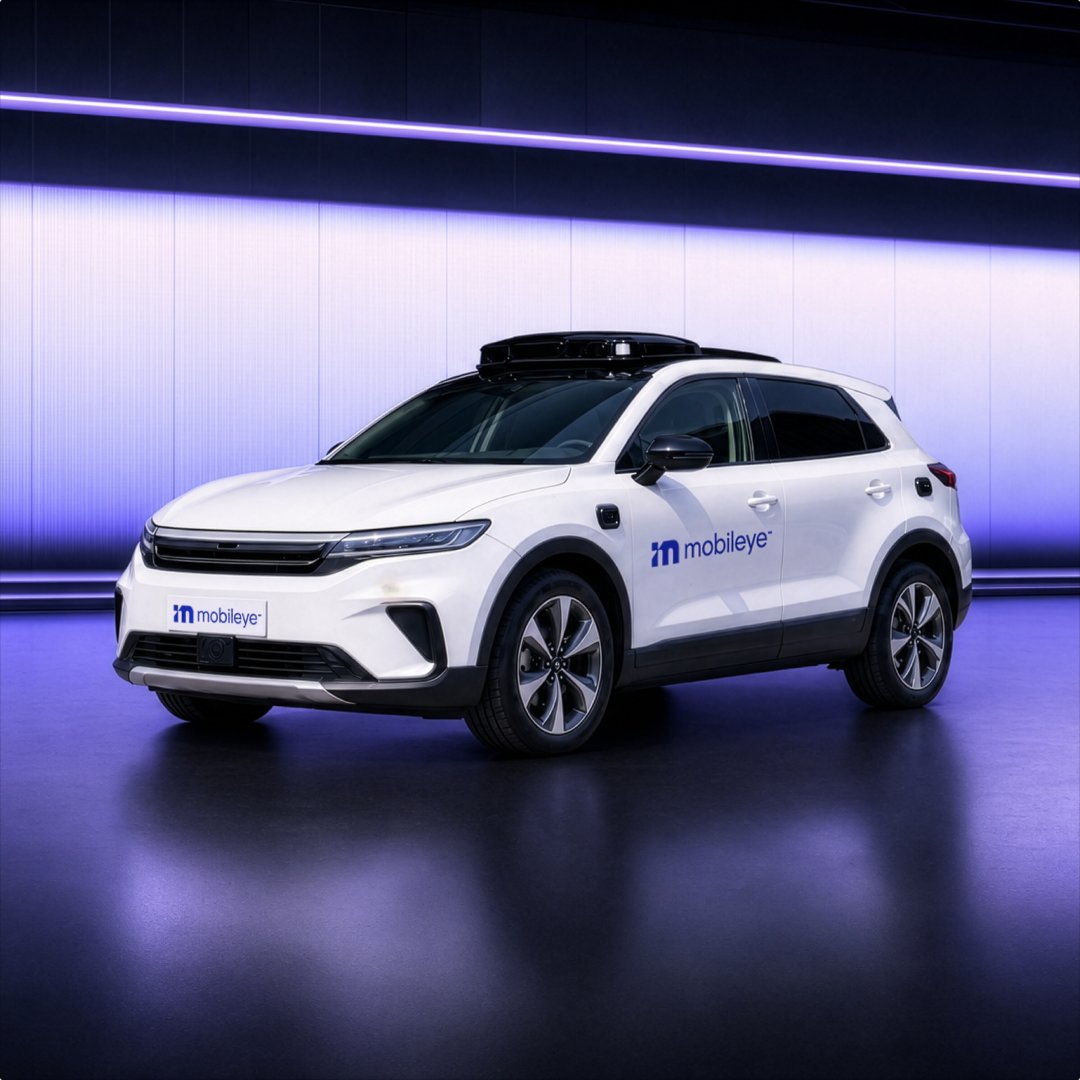
NEW: Mobileye today announced plans to expand its robotaxi activities beyond supplying self-driving technology and into full ownership of an autonomous ride-hailing business.
The planned initiative, set to launch in a U.S. city in 2027, combines Mobileye’s autonomous driving capabilities with fleet operations, rider services, and mobility management into a single vertically integrated offering.
The effort adds to Mobileye’s existing model as a supplier to automakers and mobility providers.
Read more here: okt.to/UY3AGO
7
28
115
25,583
Netflix could be strategically baiting competitors to overpay for acquisitions?
18h
*NETFLIX LOST OUT TO FOX IN PURSUIT OF ROKU: SEMAFOR
1
54

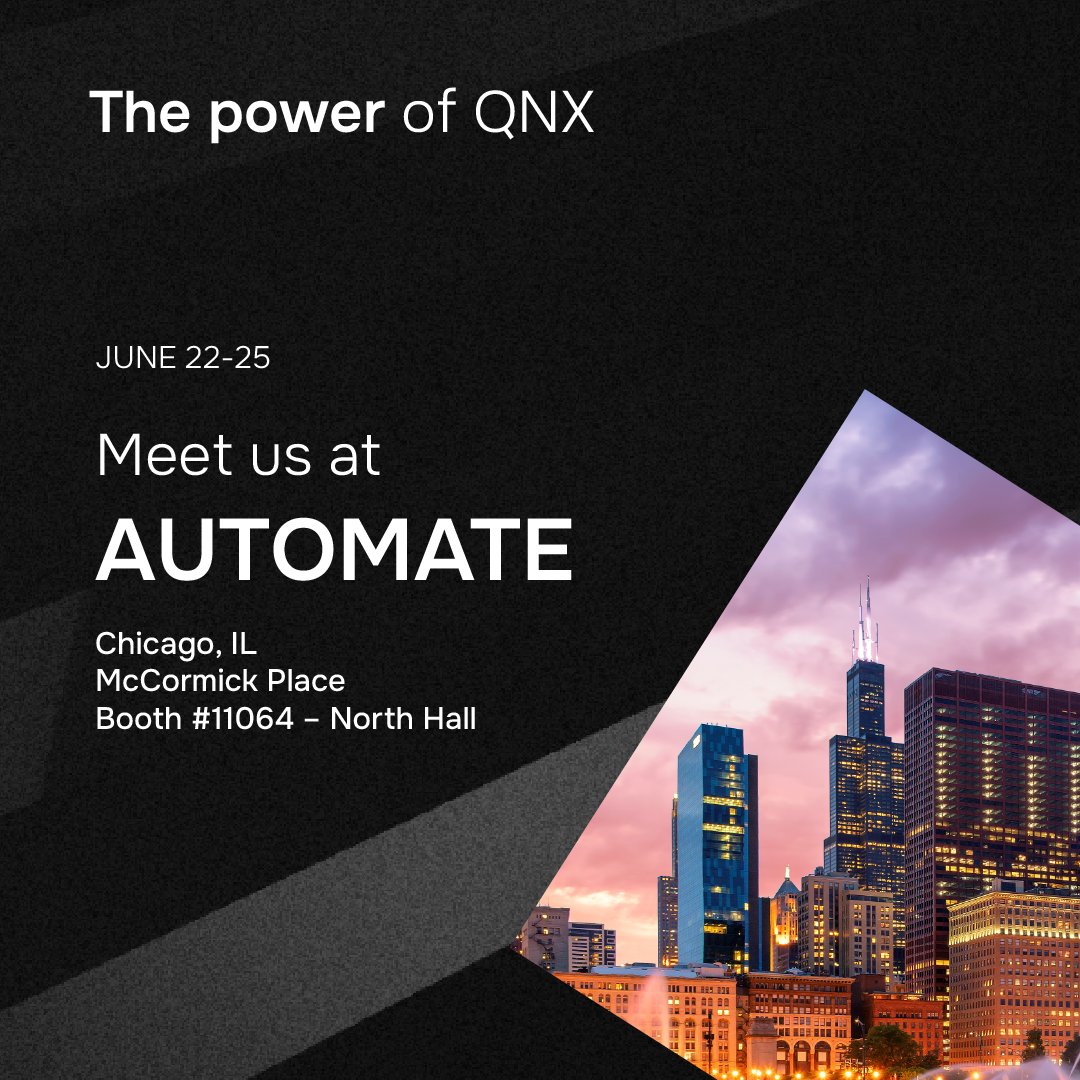
We’re heading to @AutomateShow 2026
As Physical AI raises the bar, QNX powers safe, predictable, scalable systems.
📍 Booth 11064 (North Hall)
🔹 Virtual Factory @FlexivRobotics robot arm
🔹 Physical AI demo
🗓️June 22–25 | Chicago
See you there: automateshow.com
13
35
731
Shaker Cherukuri retweeted
18h
JUST IN
BlackBerry announces enhanced capabilities for BlackBerry UEM
BlackBerry is doubling down on its traditional strength ultra-secure, on-prem enterprise/government software rather than trying to compete in the consumer or general cloud MDM space (where they’ve lost a lot of ground over the years to Microsoft Intune, VMware, etc.).
$bb IS NO LONGER dead phone company.
i am greedy here.
4
2
78
8,801
At 6 trillion, less than 20% for $TSLA
22h

At what valuation of SpaceX does Elon merge Tesla into it?
94
Shaker Cherukuri retweeted

19h
We're excited to join forces with @SpaceX to advance the frontier of useful AI. Expect significant improvements to Cursor soon.

SpaceX has exercised the option to acquire @cursor_ai in an all-stock transaction with the goal of building the world’s most useful AI models.
For the past few months, SpaceXAI has been jointly training a model with Cursor, which will be released in Cursor and Grok Build soon.
We look forward to working closely with the Cursor team to advance our frontier AI capabilities
1,061
2,801
27,696
3,028,337
TLDR: All stock deal. Private placement in 3 rd quarter after regulatory approval. Average of 7 day trading volume leading up to closing day.
$SPCX
SpaceX entered into a definitive agreement to acquire **Anysphere** (the AI startup behind the highly popular AI coding assistant, **Cursor**).
The deal is a massive move that highlights SpaceX's aggressive expansion into advanced artificial intelligence infrastructure. The key details of the merger include:
1. The Financials & Structure
* **$60 Billion Valuation:** The all-stock merger values Anysphere at an implied equity value of **$60 billion**.
* **All-Stock Transaction:** Anysphere shareholders will not receive cash. Instead, their existing common and preferred stock will be converted into **SpaceX Class A common stock**.
* **The Exchange Ratio:** The exact number of SpaceX shares issued will be determined using a 7-day volume-weighted average price of SpaceX stock immediately leading up to the closing date.
* **Subsidiary Structure:** SpaceX is executing the deal through a wholly owned subsidiary called **X67 Inc.**, which will merge into Anysphere. Once finalized, Anysphere will operate as a wholly owned subsidiary of SpaceX.
### 2. Timeline and Public Market Context
* **Closing Window:** The transaction is currently expected to officially close in the **third quarter of 2026**, pending standard regulatory approvals.
* **Private Placement:** The issuance of these new SpaceX shares is being handled as a private placement (under Section 4(a)(2) of the Securities Act of 1933), meaning it won't require a public offering prospectus.
### 3. The Big Picture Strategy
This acquisition comes right on the heels of SpaceX's historic Initial Public Offering (IPO) and its prior massive consolidation with xAI (the creators of Grok).
By bringing Cursor's development team under its wing, SpaceX is rapidly securing the software engineering talent and AI capabilities needed to fuel its broader, highly ambitious technical goals. These goals include developing next-generation autonomous flight systems, scaling massive planetary and orbital data networks, and pioneering space-based AI computing clusters.
312
23h

Maybe it's okay to you, but I would hate to see a meme stock--what SpaceX stock has become--walked to the size of Nvidia over a series overnight moves with no sellers. But that seems to be the goal. Maybe early release of those who want to go?? I am uncomfortable watching a stock go up ten points in a couple of hours of trading. And i LIKE the stock!!
125
Shaker Cherukuri retweeted

Jun 16
From a person who works in embedded OS Security:
I work in embedded OS security domain and had chance to try Fable, it was really good.
Actually this model already found bugs in software like linux kernel, openbsd, freebsd, mozilla and many others. Those bugs were lurking for 20 years and nobody found it. Releasing such model would have indeed caused harm.
Anthropic is working with major software distributers to fix those bugs before they release their models.
2
3
19
2,611
Shaker Cherukuri retweeted
Jun 15
$BB earnings confirmed for next week. Thursday!
Most people on the timeline have gone quite about it, but people aren't pricing in QNX and what the OS is doing.
Buying under $10 is a no brainer especially after the $NVDA deal inviting QNX to incorporate it into there Thor Chips.
The broader cybersecurity and secure communications businesses add defensive stability, while the shift to high-margin software has transformed the company's economics. With shares still trading under $10, the market hasn't fully priced in this multi-industry expansion into physical AI, edge robotics, and autonomous everything especially as NVIDIA's ecosystem pulls QNX even deeper into the future of compute. Earnings could be the spark that wakes everyone up: beat-and-raise potential, forward guidance highlighting these partnerships, and a valuation that screams asymmetry for patient bulls. Buying here feels like getting in on the infrastructure layer of the next industrial revolution before the crowd piles in.
On top of that, BlackBerry IVY continues to gain serious traction as the intelligent vehicle data platform, enabling automakers to harness sensor insights for new services, faster feature development, and monetization opportunities already powering digital cockpits and connected vehicle innovations with partners like Bosch, PATEO, Mitsubishi, and more. QNX is in over 270 million vehicles globally and growing, providing rock-solid recurring revenue and a moat in automotive that legacy players can't easily
please sell me your $BB as i will be absorbing it all and enjoying every dip given :)
1
6
111
5,568