
🇺🇸 Philosophy Politics Economics & Liberal Arts College Prof in 🇳🇱 | Catholic⚓ | Likes, Follows & Retweets = curiosity =/=identity | Opinions: My Own
Joined October 2010
- Tweets 11,696
- Following 1,006
- Followers 1,833
- Likes 11,693
502 Photos and videos






Brandon Zicha retweeted

Here's an idea: Don't alter the coursework. Just fail students who fail to obtain a passing grade.
Jun 12

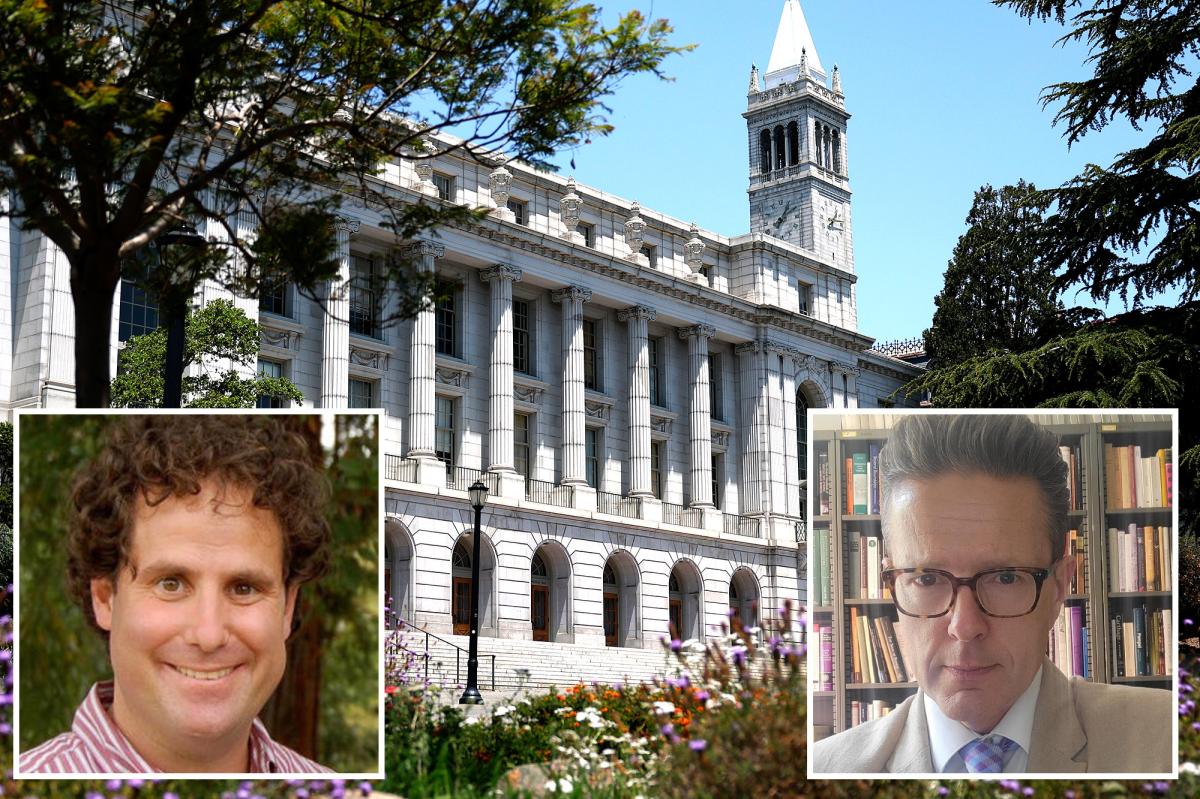
Professors at top California college forced to radically alter coursework as students struggle to read trib.al/f01hXz6
6
6
37
841

Jun 12
It entails a symmetry by assertion of our lord and savior Steven.
My mattering need not have a damn thing to do with your mattering.
Jun 12

Rebecca goes beyond this to put a secular basis for universal mattering on even deeper foundations: the way that our own mattering is baked into every choice we make, and this cannot coherently be confined to ourselves but must be generalized to others; that our longing to matter intrinsically makes us matter; and that our own indignation when our interests are threatened commits entails a symmetry in which others' interests command the same respect.
47
Jun 12
RT @sapinker: Rebecca goes beyond this to put a secular basis for universal mattering on even deeper foundations: the way that our own matt…
1
Jun 11
This was also my issue trying to use perplexity… which is argued to be the best for research. Maybe it is if you work in very singular established literatures, but I found the response very much normed and ignoring relevant sources I knew of that were not as widely seen as important… in part because they sat in spaces between disciplines, etc.
I could imagine it getting worse, if perplexity guides research and then it trains on that work. Eventually, every response is just sourced “Plato, The Republic.”
Jun 10

You have noticed it. ChatGPT feels dumber than it used to. Your prompts that worked six months ago produce worse results now. The writing sounds flatter. The ideas sound safer. The internet itself feels like it is shrinking. Every article reads the same. Every email sounds the same. Every answer sounds like it was written by the same voice.
You thought it was you. It is not you.
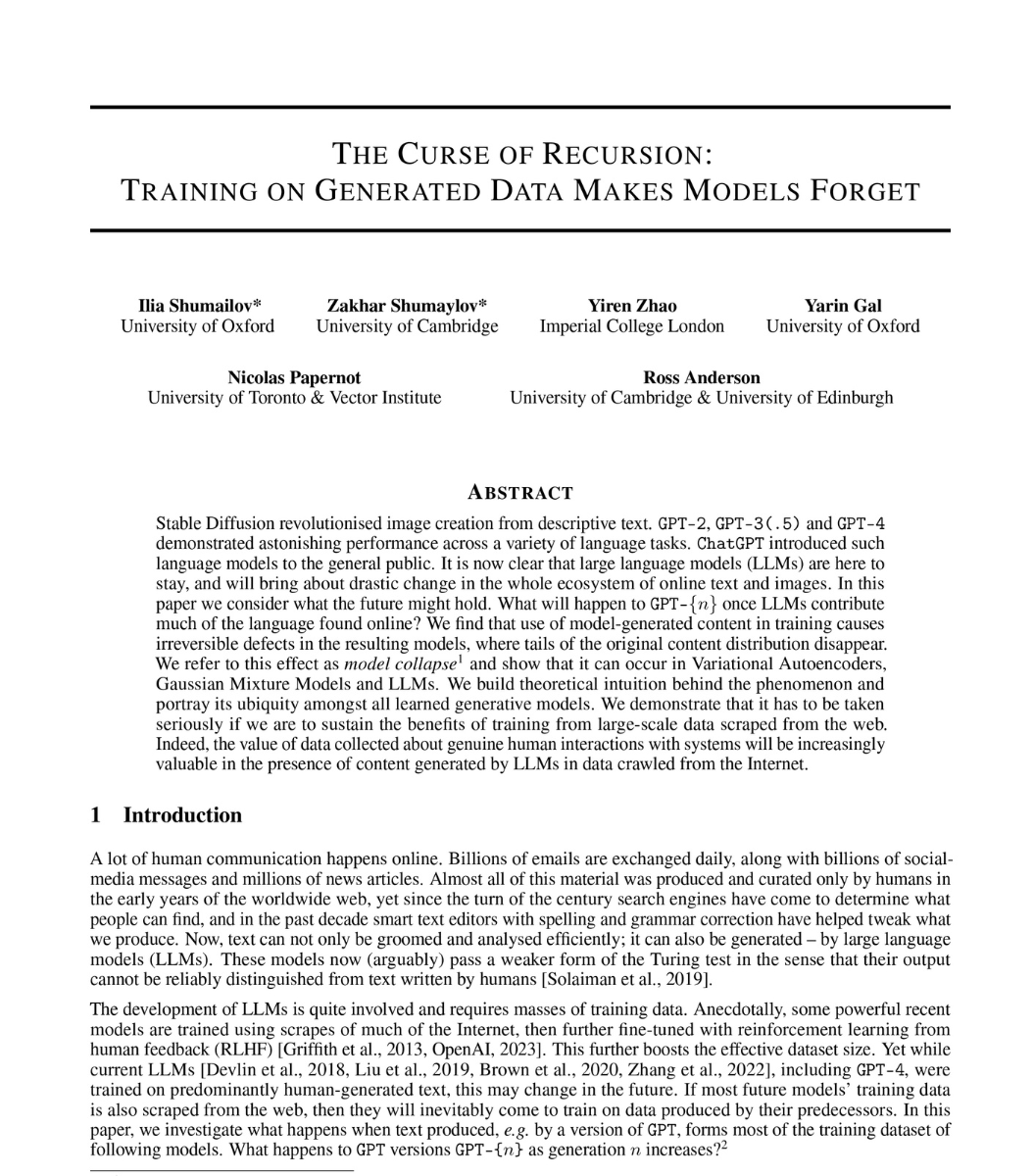
Researchers at Oxford and Cambridge published a paper in Nature proving what is happening. They call it Model Collapse.
Here is the mechanism in one sentence. AI trained on AI-generated data gets dumber every generation until it forgets what real human data looked like.
The internet is filling with AI-generated content. Blog posts. Articles. Reviews. Comments. Social media. AI companies scrape the internet to train the next generation of models. Which means the next generation of AI is being trained on the output of the current generation.
Each cycle loses information. Not randomly. It loses the rarest, most unusual, most creative parts first. The researchers call these the "tails of the distribution." The weird ideas. The unexpected perspectives. The things that made the internet feel human. Those disappear first.
What remains is the average. The safe. The expected. The bland.
Then the next generation trains on that. And loses more. And the next generation trains on that. And loses more. The researchers proved this is not a slow decline. Major degradation happens within just a few iterations. Even when some of the original human data is preserved.
They tested it on large language models. On image generators. On statistical models. The pattern was the same every time. The output converges toward a narrow, flattened version of reality that looks nothing like the original data.
The lead researcher put it plainly. "Large language models are like fire. A useful tool. But one that pollutes the environment."
The pollution is invisible. You cannot see which sentence on the internet was written by a human and which was written by AI. Neither can the AI that is about to train on it. And once the tails are gone, they do not come back. The damage is irreversible.
This is not a prediction anymore. It is a diagnosis.
The internet you grew up on was built by humans writing things no algorithm would have written. Strange, personal, imperfect, alive. That internet is being diluted. One generation of AI at a time. And the models trained on what remains are learning a smaller and smaller version of the world.
Model Collapse is not a technical problem. It is a cultural one. The thing that made the internet worth reading is the thing that disappears first.
1
130
Jun 11
I wondered how that would work. Obviously it should work this way due to the basic logic of statistical reduction of information into estimates, where the estimates become data withprevious outliers removed and reduce again…rinse repeat.
Turns out it does. lol.
The single best argument for far more restrictionist approaches to AI use, unless the model owners fix the training data selection problem… and quickly.
I thought I noticed this problem with Claude’s latest model. It understands what I want better, it is more articulate and less error prone in chat, but when it turns to producing it gets way more blah than the last model, and more editing is now required after or revision of my code to do what I need to do a less common but far better way.
I totally abandoned it for two projects.
Seems an issue.
Jun 10
You have noticed it. ChatGPT feels dumber than it used to. Your prompts that worked six months ago produce worse results now. The writing sounds flatter. The ideas sound safer. The internet itself feels like it is shrinking. Every article reads the same. Every email sounds the same. Every answer sounds like it was written by the same voice.
You thought it was you. It is not you.
Researchers at Oxford and Cambridge published a paper in Nature proving what is happening. They call it Model Collapse.
Here is the mechanism in one sentence. AI trained on AI-generated data gets dumber every generation until it forgets what real human data looked like.
The internet is filling with AI-generated content. Blog posts. Articles. Reviews. Comments. Social media. AI companies scrape the internet to train the next generation of models. Which means the next generation of AI is being trained on the output of the current generation.
Each cycle loses information. Not randomly. It loses the rarest, most unusual, most creative parts first. The researchers call these the "tails of the distribution." The weird ideas. The unexpected perspectives. The things that made the internet feel human. Those disappear first.
What remains is the average. The safe. The expected. The bland.
Then the next generation trains on that. And loses more. And the next generation trains on that. And loses more. The researchers proved this is not a slow decline. Major degradation happens within just a few iterations. Even when some of the original human data is preserved.
They tested it on large language models. On image generators. On statistical models. The pattern was the same every time. The output converges toward a narrow, flattened version of reality that looks nothing like the original data.
The lead researcher put it plainly. "Large language models are like fire. A useful tool. But one that pollutes the environment."
The pollution is invisible. You cannot see which sentence on the internet was written by a human and which was written by AI. Neither can the AI that is about to train on it. And once the tails are gone, they do not come back. The damage is irreversible.
This is not a prediction anymore. It is a diagnosis.
The internet you grew up on was built by humans writing things no algorithm would have written. Strange, personal, imperfect, alive. That internet is being diluted. One generation of AI at a time. And the models trained on what remains are learning a smaller and smaller version of the world.
Model Collapse is not a technical problem. It is a cultural one. The thing that made the internet worth reading is the thing that disappears first.
60
Brandon Zicha retweeted

As I frequently tell my own students @uaustinorg, the job market is about to be saturated with people like this: people who have been cheated out of their own minds for the stupidest possible reasons. People whose teachers didn’t want to be a burden or a bad guy or worst of all, an elitist, so they just gave up in advance on literature the old fashioned way.
Sure, they made up a cock-and-bull story about how obsolete the classics were, how outmoded the old ways of teaching were, how impractical it was to sit with a pen and paper and run through verb conjugations or just puzzle over words. But the truth is they were scared of being that most valuable of beings, the kindly but stern authority figure. And then when the machines came for the books, they had not a leg to stand on.
The result is that maybe no other skill will be more valuable in years to come, or more rare, than the ability to sit alone in a room and follow a train of thought from beginning to end. All those drills and disciplines they told you were “useless”? Reading, rhetoric, contemplation? Poetry, philosophy, fine art? Turns out they’re the only training that can mold you into the scarcest resource on earth, which is a functional adult human being.
And to beat it all, that’s now just about the one kind of training that can make you proof against the disruptions of the AI economy. Forget who said it but it’s true: “learn to code” was crap advice. Learn to ode.

A college professor:
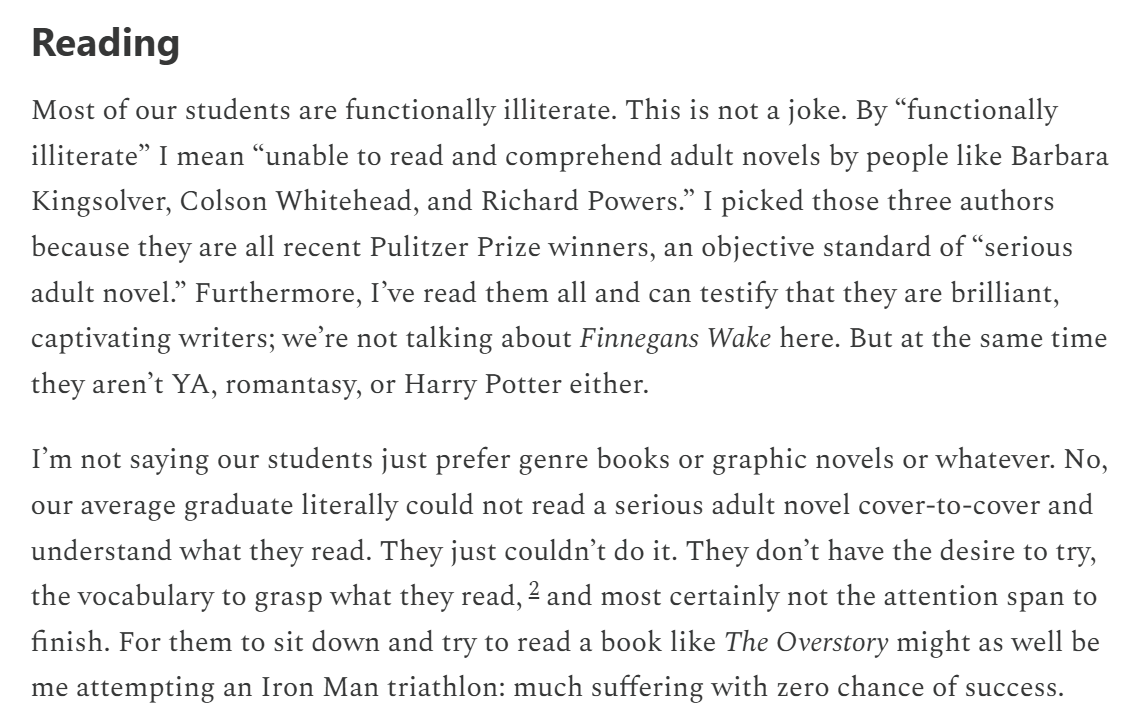
"Our average graduate literally could not read a serious adult novel cover-to-cover and understand what they read"
39
113
661
43,194
Brandon Zicha retweeted

A college professor:
"Our average graduate literally could not read a serious adult novel cover-to-cover and understand what they read"
117
345
2,097
336,977
Brandon Zicha retweeted

It's Season 4 of TAITC.
Starting off with hereditary monarchy: why is it the most common form of government throughout human history?
You KNOW the answer, folks.
buzzsprout.com/2186249/episo…

1
5
411
Jun 8
"Davis is currently still going through his divorce and is beginning the process of trying to move on. "I can't even hope to reconcile," he says. While he can speculate and consider the reasons why his wife might have wanted a divorce, he has not yet had an explanation from her."
Kind of weird to me that you can just file for divorce without explanation. Feels like that should be grounds for, basically, not being allowed to get divorced. I mean, I get we don't want the state determining if a reason is 'good enough' anymore... but I feel like insisting on a genuine *reason* is a compelling interest of all concerned in securing Marriage as an institution.
bbc.com/future/article/20260…
2
118
Brandon Zicha retweeted
Jun 6
Yeah, but nobody checks most university assessments outside the university… and I’m glad of it.
Don’t particularly care what John Q. Public thinks of my teaching methods anymore than I do some administrative educational pseudo scientist. But, internal university quality control procedures are able to check and verify these as any other, as far as I can tell from my understanding of the law and practices. Moreover their activities are not protected by law from scrutiny.
Many of my pop quizzes aren’t really verifiable either, given that they aren’t archived. I hardly think that’s a blemish on the pop quiz as an assessment method. Nor, frankly, do I give a shit if taxpayers like my formatting or approach. I am interested in that of my peers in the university, which is appropriate, and again can access all this stuff… sooo….?
Maybe what I’m driving at is that I find the lack of seriousness in pedagogy and assessment to be a problem that exists all too generally across assessment types… and that the problem isn’t sufficient oversight or discussion boards. It’s a collective action problem in academe that aims activities against proper prioritization of education.
Where instructors know what they are doing and give a shit, discussion boards can be great. If they don’t, they are awful. Any public oversight mechanism you can use at scale will just be gamed and will lower quality in the same way education science homogenization and fads do if professors just don’t care about education/assessment quality because doing so harms your career in multiple ways both administratively and in terms of research etc.
‘Transparency’ and sticks in the absence of culture and carrots will improve very little. Excellent education isn’t something one can centrally command.
1
1
2
177
Brandon Zicha retweeted
Apr 9
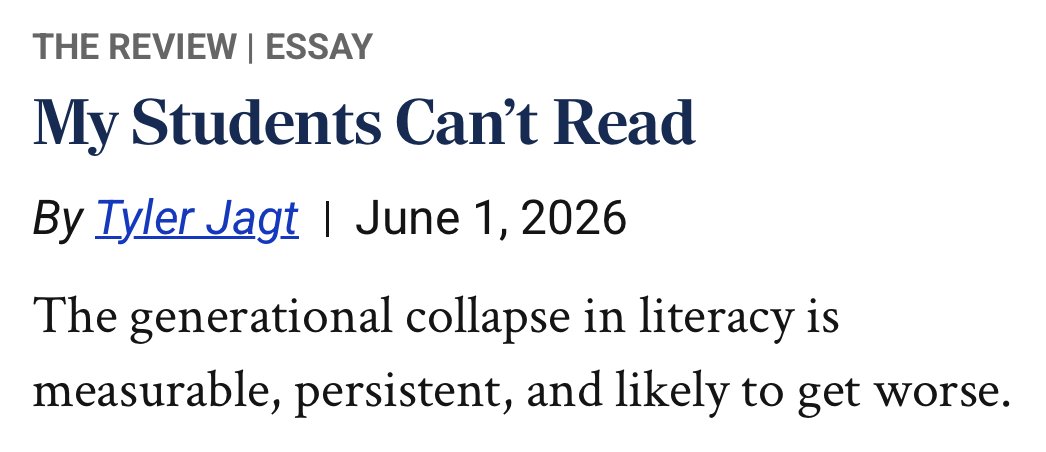
Summarizing:
The concern isn't my (actually heroic) student, but the trend that student is tackling under her own steam...
I routinely here professors complaining about students who:
1.) Can't or won't read at levels we have never seen.
2.) When they do, their ability to connect between texts and evaluate is poor. Indeed, grasping the text is not great. It's increasingly the norm, and it used to be the opposite.
3.) They struggle to reason, honestly.
4.) Most weirdly, we struggle to talk about 'reflecting on ones ideas'. They often struggle to understand *what that means*. This suddenly started where student's didn't understand what this meant.
5.) They have declining writing skills.
6.) They have lower interest in ideas
7.) They are less sophisticated in their ability to manipulate ideas
8.) They are much worse on many of the metrics associated with high level reading ability.
At the same time
1.) Study times have declined.
2.) Assigned workloads have declined a great deal
2.) Hiring employer complaints about graduate quality has declined continually.
3.) Grades have remained the same or gone up.
... in the past decades, but particularly the last decade to an alarming degree. This is not about one student's situation, or whether or not one should be 'readmaxxing' in college, reading 500 pages plus.
... and just look at the examples cited in this thread.
We have a major issue to address here, folks. Civilizational level issues. And, I genuinely don't feel we are having the conversation we need to be having yet.
24
51
375
98,925

Brandon Zicha retweeted

I wrote about the Pope and why Christian tech critics often have a more compelling response to the AI crisis than their secular counterparts. Simply, Christian writers aren't afraid of "human nature" talk, and they understand THE question of the AI Age is: what are people for? 🧵
Jun 2

Pope Leo and other Christian thinkers have captured the gravity of the AI revolution in a way that many secular thinkers have not, @Tyler_A_Harper argues. theatlantic.com/culture/2026…
21
165
935
108,220
Brandon Zicha retweeted

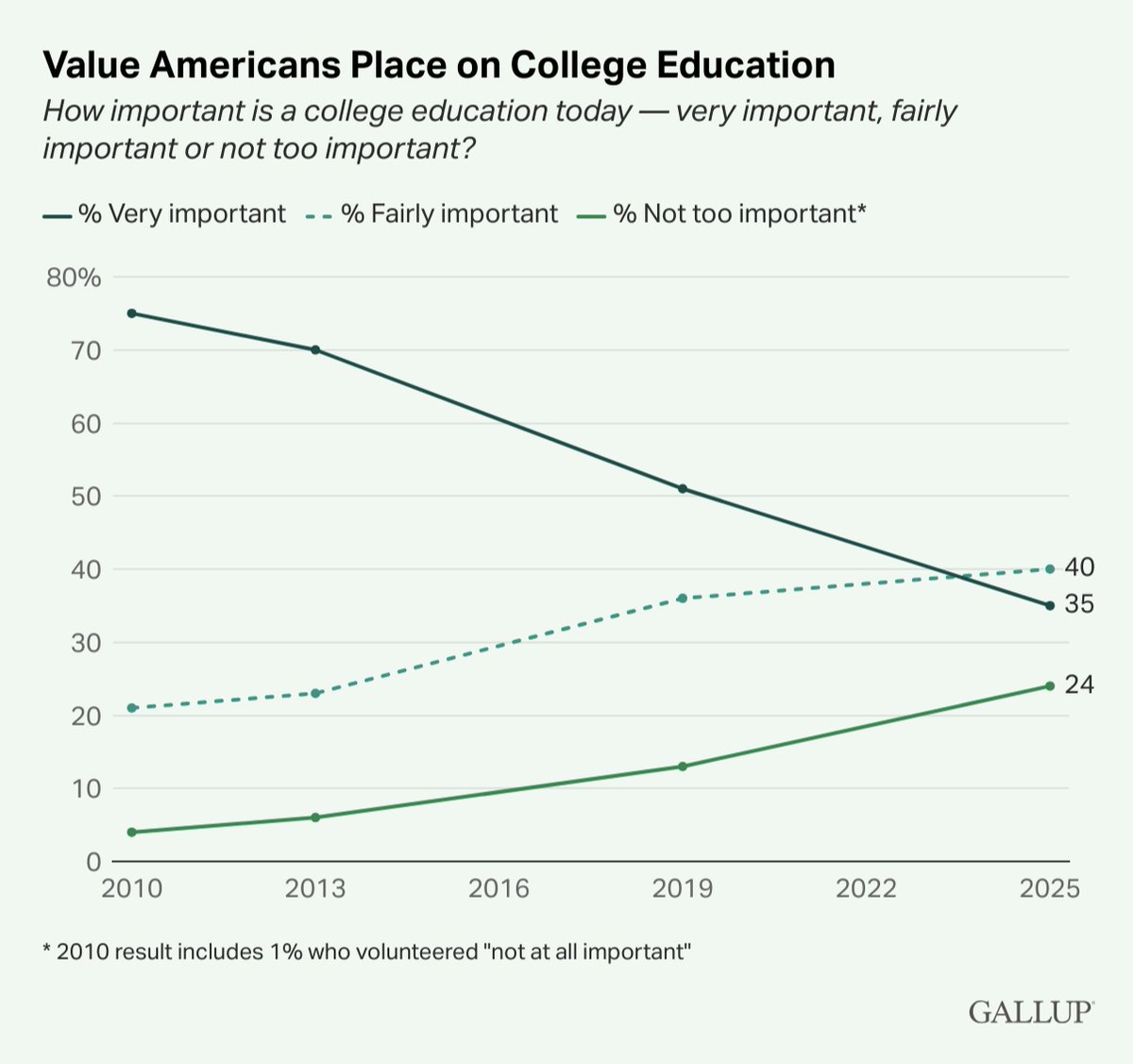
Professors: This is the real long-term threat to your jobs, not AI.

What's interesting about this trend is how far back it goes. There has been a steady decline in how important people say college is today since 2010.
54
60
633
101,354
Brandon Zicha retweeted
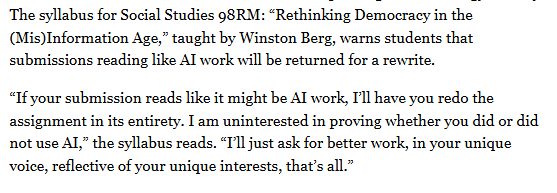
Yesterday's pod was partly about this question. I worry that trying to devise new strategies to prevent AI use in academia is a half-measure, and may be a moot point as models get more sophisticated. You have to fix the culture that encourages a factory-like production of work.

I wonder how many university instructors feel they could get away with this:
thecrimson.com/article/2026/…
16
16
139
26,078
Brandon Zicha retweeted

May 28
Technological progress — valuable in itself — requires careful discernment of the anthropological vision that guides it and the ends it pursues. If technological development advances without a corresponding ethical and social progress, the result may be an increase in means without a growth in humanity: “having more” without “being more.” There is a risk that individuals will be evaluated principally according to the outcomes they produce. #MagnificaHumanitas
vatican.va/content/leo-xiv/e…
339
2,316
15,235
445,618
May 28
How about less regulation, more autonomy, and focus on education rather than
(1) using schools as a tool to generate various idealized social futures (eg: EU affinity, socially progressive attitudes, therapeutic socio-emotional training) and
(2) a source of revenue for pseudoscientific educational consultants/'experts'who have been experimenting on children for decades now, and burning out teachers with their never ending ever more alienating 'best practice innovations'.
(3) trying to track students at the worst and least representative period of their development (12 year olds!).
But, if fewer tests is the first step, I will take it... but if it's just another reform to hide lower standards.... grrr


92
May 27
Lol.
May 27

Studying philosophy isn't a good way to gain material wealth. But is it the way to a rich and fulfilling life?
No. But is it at least a path toward greater wisdom and understanding? Also no.
1
126