Joined May 2019
- Tweets 2,517
- Following 277
- Followers 3,284
- Likes 32,976
250 Photos and videos






Jun 13
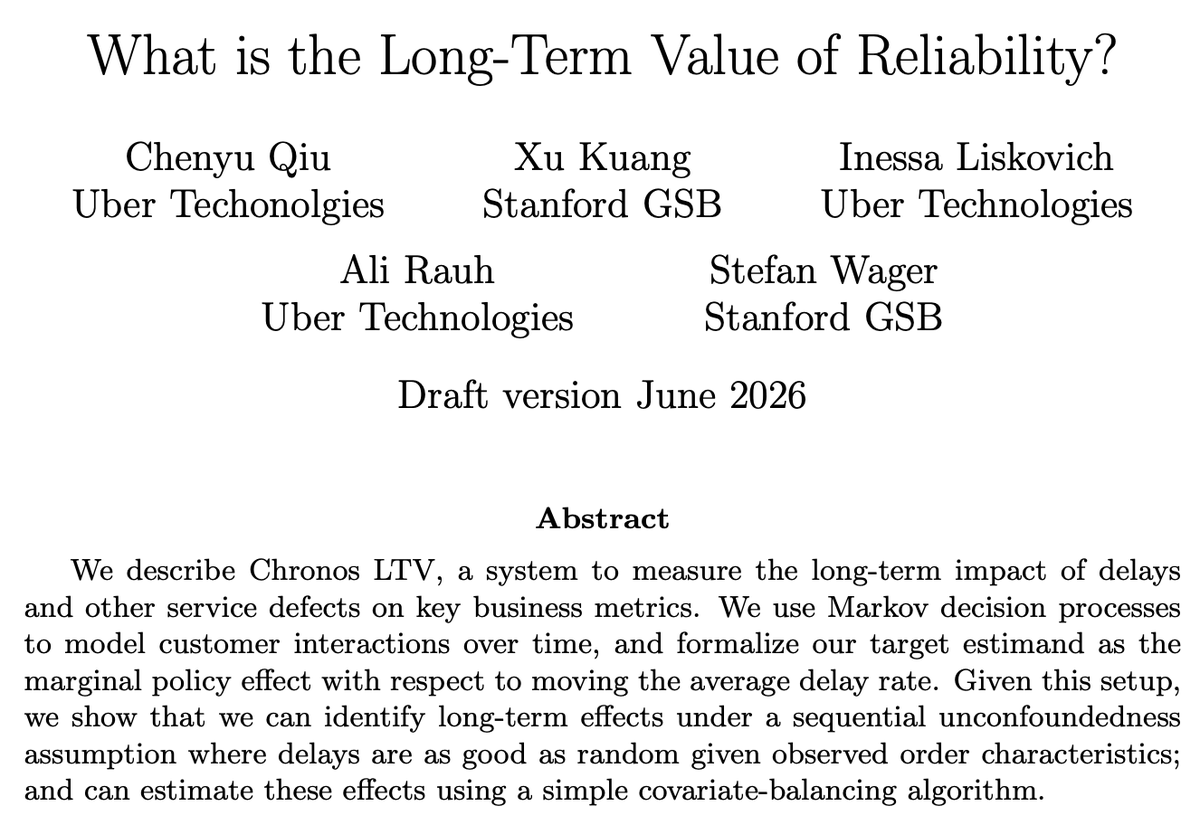
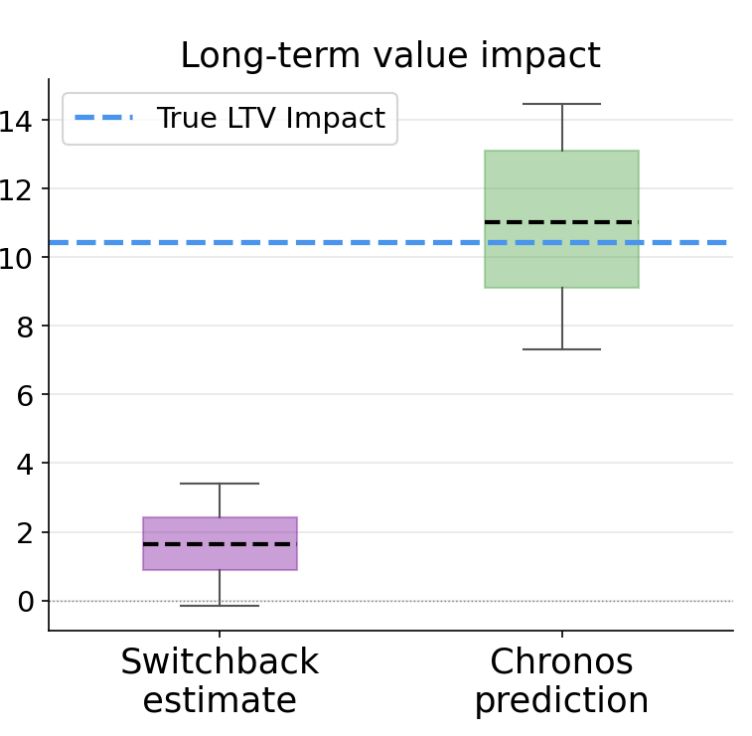
It’s a rare joy to work on something with real-world impact. Meet Chronos LTV, a system we built at Uber to estimate the causal, long-term impact of short-term delays. Links below.
This problem is notoriously difficult because of the cascading effects inherent in long-horizon learning: a single event does not just change a user’s current experience; it can also update hidden state (e.g., beliefs, preferences, habits) in ways that in turn would have lasting effects on future behaviors.
Chronos LTV combines ideas from Markov decision processes, off-policy evaluation in reinforcement learning, and causal inference. It then enables accurate long-horizon evaluation using observational data, without relying on expensive, long-running randomized controlled trials.
Beyond its immediate application here, I am optimistic that Chronos could also be useful in other long-horizon evaluation tasks in agentic AI and world models.
4
2
28
2,772
Jun 13
We started this project while I was on leave at Uber, so a huge thank you to the Uber-Stanford team for pulling this off and making its publication possible Chenyu @chenyuqiu90, Stefan Wager, Inessa Liskovich, Ali Rauh. A special shoutout to @chenyuqiu90 for the hard work, sweat, and persistence that made this a reality.
1
219
Jun 11
I remember learning about accelerated gradient in a phd course on optimization in grad school. The professor was very unsettled as to the fact that acceleration was effective, despite having a much less, at least at that time, geometrically elegant theoretical justification... i wonder all the time should good things be pretty, and are pretty things often good?
Jun 10

spent half of my PhD working on optimization research, I only published one negative result paper showing beating SGD with momentum is hard especially when noise dominated regime 🤣
1
17
4,215
Jun 1
Seeing reality as can be unpleasant; but it's never not exciting
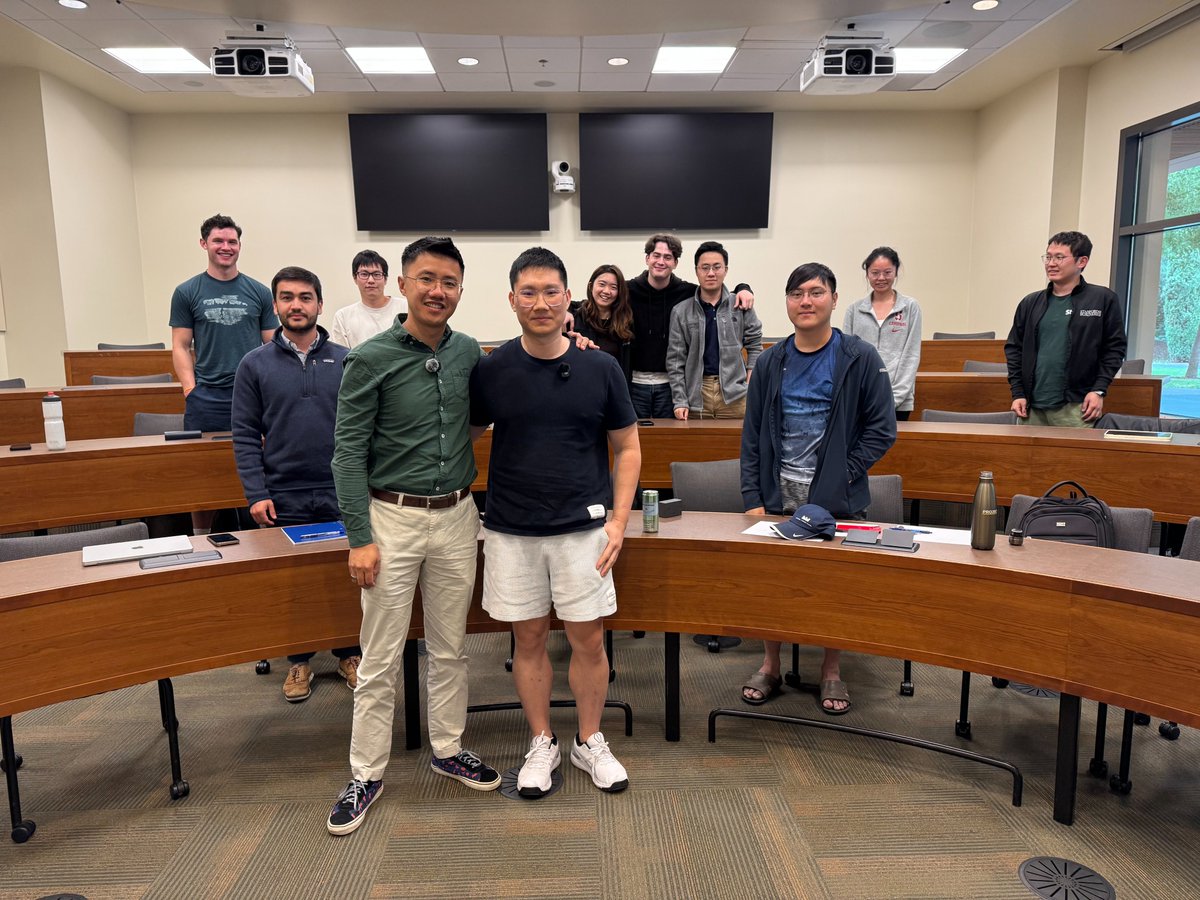
We wrapped up the last lecture for the phd course Charting Reality. The first half focuses on the grand arc modeling starting from Newton through Erlang and Neyman to today's data science and AI. (Lecture notes see link in comment)
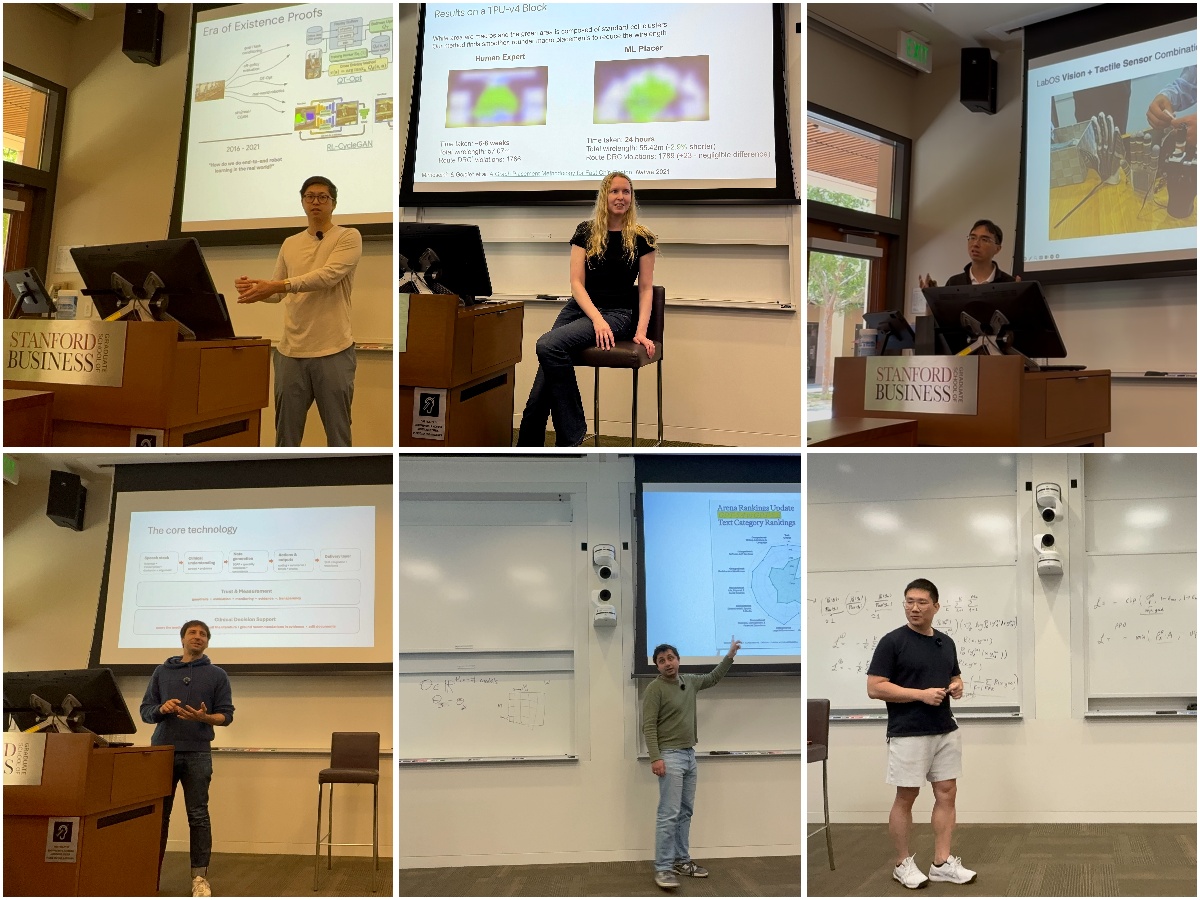
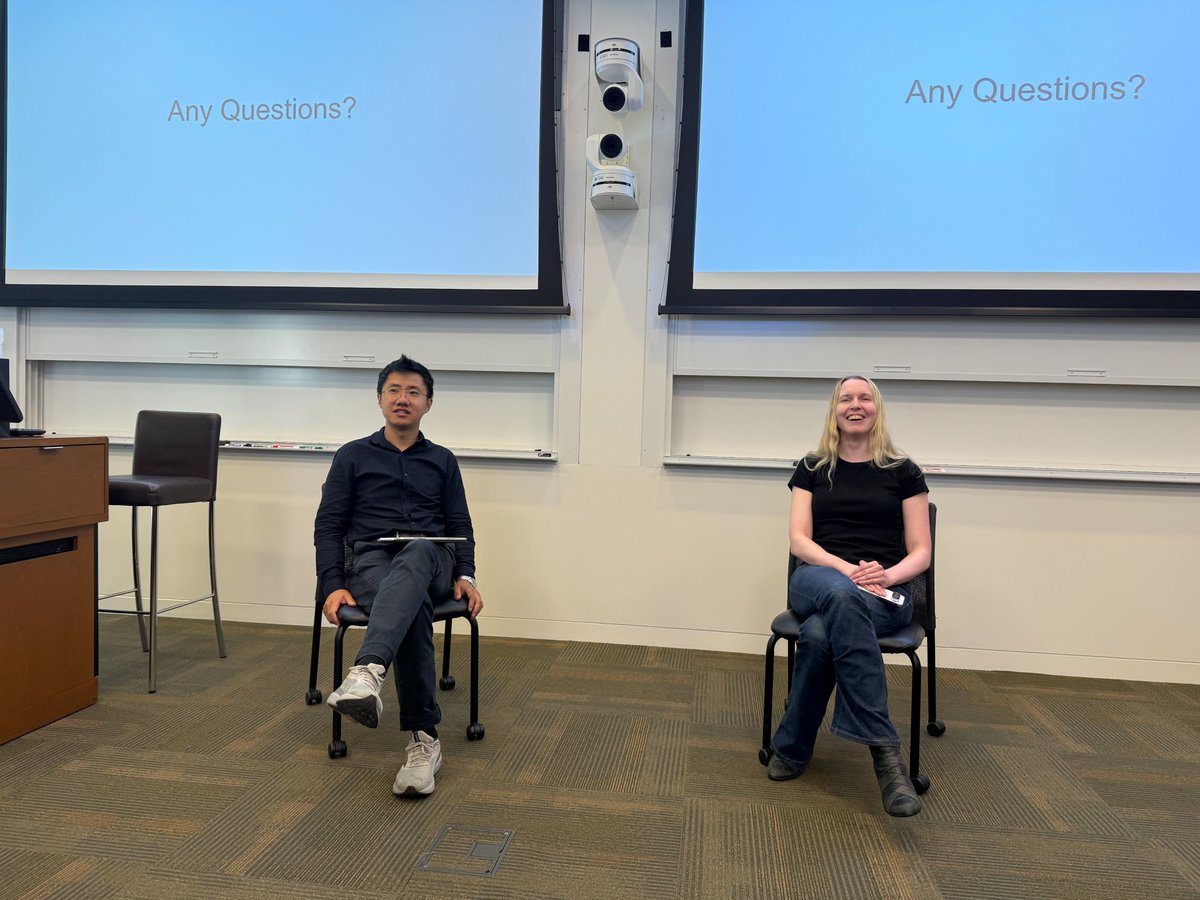
The second half consisted entirely of guest lectures from my friends, who also happen to be some of the very best researchers, managers, academic and founders of this generation. think I speak for all the phd students that you brought so much to this course!
The biggest takeaway for me when it comes to teaching is just how kinetic and dynamic it can be to have top folks with deep expertise come, and let them rip. I was shocked to find how deep and wide ranging the lecture can go in an otherwise technical phd course. Will do this again any day.
Tomorrow is the final presentation day for Charting Reality - Good luck everyone, and I'm so excited to see what you have to share!
Thank you! @ml_angelopoulos @lecong @TianfuF @annadgoldie @zacharylipton @xiao_ted @Zhiqiang_Xie
4
1
22
5,566
May 6
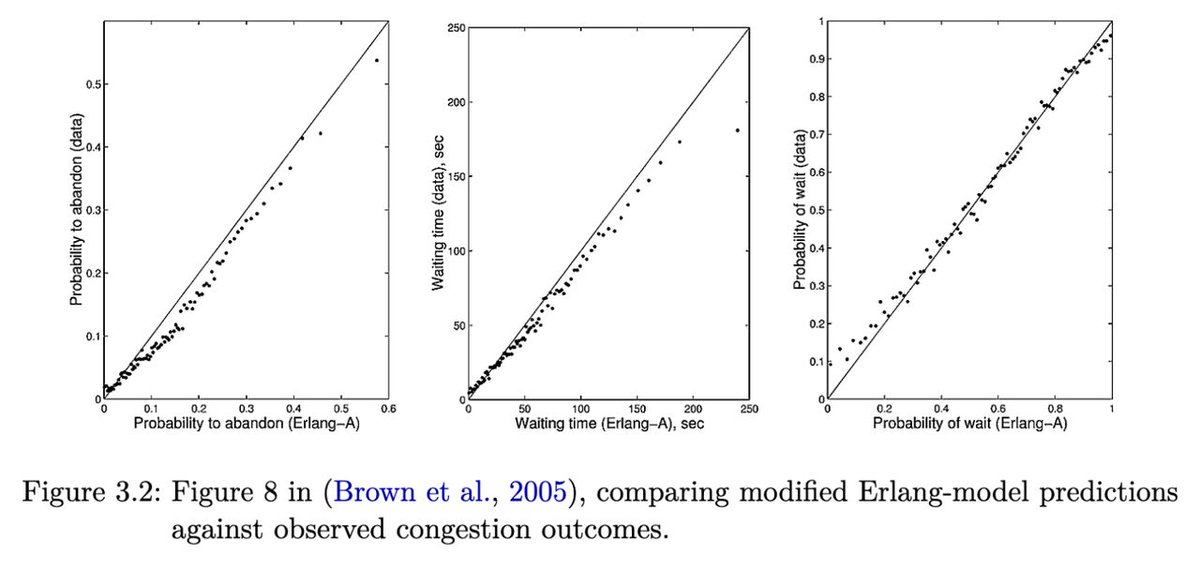
All models are wrong, but why and when can wrong models produce the right predictions? In Chapter 3 of Charting Reality, we look at how mechanistic models are learned and evaluated. Brown et al 2005 provides a stunning example where despite demonstrably wrong distributional assumptions, an Erlang type model was able to produce remarkably consistent predictions.
1
2
308
Kuang Xu retweeted

Apr 11
life rewards action not intelligence
Mar 20

what's a hard pill to swallow in life ??
32
1,508
11,324
477,327
Apr 11
Me: weather in chicago
Gemini: Defining research objectives .......⌛️⌛️⌛️⌛️
4
364
Apr 2
Chapter 2 of Charting Reality is up. What does a 100 year-old theory have to say about AI inference? Why was modern network engineering theory born in 1909 Copenhagen rather than in the U.S.? Why might a technically sound model fail in practice?
I spent a lot of time over the last couple of days reading about the early days of data science and stochastic modeling, and I’m honestly floored by how interesting, and rhythmic, this scientific history was. I could probably have written the whole chapter by swapping out company names from the 1900s with today’s hottest AI startups, and few would even bat an eye!
Modeling Congestion - From Telephony to AI Inference
github.com/kuangxu/charting_…
3
443
Mar 27
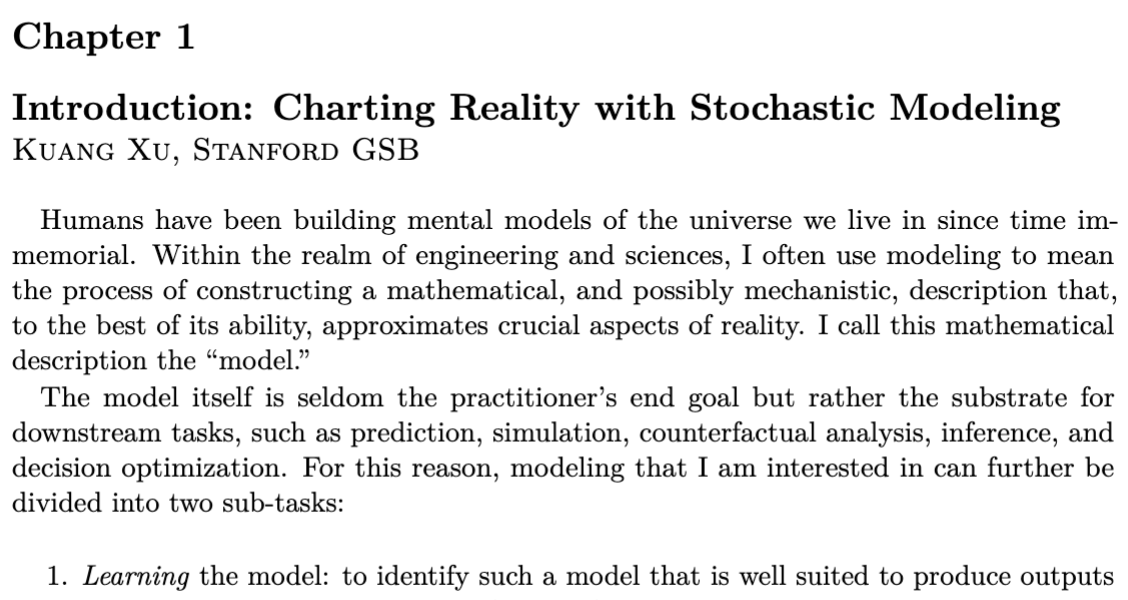
I will be posting the lecture notes of Charting Reality with Stochastic Modeling (OIT 677) as they become available. Here is the first chapter: What is a model? What is modeling and a typical modeling workflow cycle? What can a practitioner of OR or AI modeling learn from the Copernicus revolution?
Chapter 1: github.com/kuangxu/charting_…
1
2
5
637
Mar 27
Open Lecture Sign-Ups: If you are a Stanford student/faculty, fill out this form if you'd like to be notified for one of the guest lectures open to the broader Stanford community (Note: Stanford login is required): forms.gle/KWRJnMp9M9kVz2E27
Course syllabus: docs.google.com/document/d/1…
1
277
Mar 15
I will be teaching a PhD course titled “Charting Reality with Stochastic Modeling (OIT 677)” this spring. The course will combine lectures, paper-reading seminars, and guest talks. I encourage you to check it out if you are a full-time Stanford graduate student, especially PhD students working in operations research, statistics, economics, or engineering. (Sorry, this will be in-person only. No online videos.)
Many decision-making systems benefit from the use of stochastic models. These models help an algorithm or AI agent make sense of the world and understand how the effects of various actions propagate. However, choosing the right model and refining it with data remains a daunting challenge. Placing emphasis on dynamics arising from physical reality and business problems, we will examine core frameworks for stochastic modeling while illustrating their application through examples ranging from personalization and dynamic pricing to reinforcement learning and world models.
We will also hear from guest speakers who wrestle with stochastic modeling in real-world systems, including founders and technical leaders from Arena, Recursive Intelligence, DeepMind, AI robotic, as well as other Stanford researchers.
Tentative Syllabus: docs.google.com/document/d/1…
3
16
1,136
Feb 10
What happened to Cursor? It feels more sluggish and worse than 3 months ago. It's almost unusable.
1
2
660
Jan 28
It's clear by now that AI is going to make routine computer programming obsolete. There's much more consensus that medium term AI is going to vastly outperform the best humans in many intellectual domains and verticals. This is clearly going to shake the foundation of higher education that focuses on transferring "hard" and "standard" knowledge. Some personal speculations for educators and students:
- Things are just going to have to change all the time - get used to it. You won't be teaching the same thing for a second time, let alone 3 years. Curriculum, software, materials, everything. The extra burden will be somewhat offset by AI tools that make the updates more expedient.
- Fundamentals will stay the same, but how they are applied will need to be updated frequently. Counterintuitively, in the world of cheap AI slops, understanding fundamentals (math, philosophy, language, etc.) can become more of a sought after differentiator.
- The focus will shift from mass "hard information" education to smaller, more personal "soft information" education: more laborious, more human to human interactions. At least for the short term, education will increasingly focus on things that can't easily be found in standard texts as sort of a moat until AI becomes more pervasive (or invasive).
- The ultimate question higher education has to answer is how and why education adds value to the student's life or career. Bull case: if there'll truly be some sort of universal basic income, higher education may evolve away from about survival (e.g., getting a job) to about enrichment or entertainment (e.g., the joy of understanding and discovery). Bear case: if AI simply creates a pressure cooker of a "race to the bottom," then there will be tremendous pressure for higher education to help students survive (and hopefully thrive) in the new world order; enjoyment will be a second/third order luxury. Unfortunately, I believe the bear case is likely more relevant in the short run. There will be inevitable confusion and pain.
Life gives us what we need. Here is to enjoying the journey, for all of us!
1
13
819