
Joined March 2025
- Tweets 264
- Following 460
- Followers 205
- Likes 116
5 Photos and videos

I love Claude. I was excited by Fable. But we can’t rely on foreign owned brilliance.
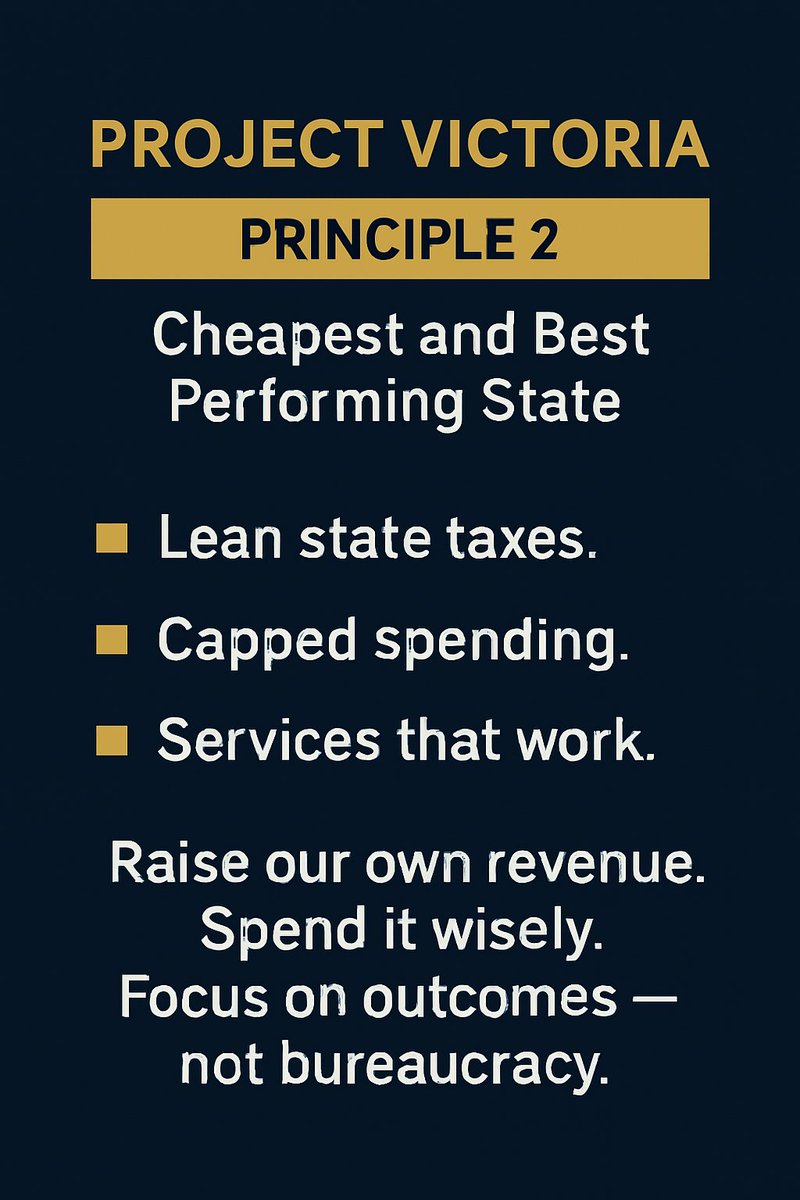
We need to have Australian AI - and proper competitive federalism and deregulated low tax markets would help immensely.
We can’t forever rent things from the world.
6
3
23
58,574

Jun 11
The tax debate is tedious because everyone dresses up self-interest as principle.
Labour and capital are both productive. Neither is morally superior. The problem isn’t that labour alone is overtaxed. Income is overtaxed, including returns on capital.
If reform is politically possible, capital taxes must rise first, then income taxes come down later, because no one wants to mess with the sacred Budget bottom line.
But the real answer from here is simple: the top marginal rates are too high.
If you’re arguing something else, you’re an interest group. You’re not morally special.
The bigger project is a lower overall tax and spending burden (and that I acknowledge is morality).
12
5
842
Jun 11
It’s hardly a surprise in this context that most assets are overpriced and real wages can’t keep up.
60
May 30
The position these ppl are in has nothing to do with how much tax “wealthier” ppl pay and a lot to do with a social contract that pushes them into high debt - esp the nurse - and rewards unproductive bureaucratic (public and private) jobs.
May 30

In May, the federal budget did something Australian budgets almost never do. It touched the tax concessions that protect wealth. The response was predictable and it had nothing to do with salaried Australians.
Like these two…and the vast majority of Australians.
A registered nurse, 34, in Melbourne’s outer north. Under $90k, an essential job, still paying off the degree that got her there. Her rent is up more than a third in three years. Her pay isn’t. She did everything her generation was told to do, and she’s going backwards.
A maintenance supervisor, 51, keeping a regional NSW town’s biggest employer running. Fixed his mortgage at 2% in 2021 and felt secure for the first time. Rolled onto a rate three times higher. Repayments up more than $1,000 a month, on a wage that didn’t move.
Neither owns an investment property. Neither has a lobby, a peak body, or a meme campaign. Between them they are most of the country and in the week the budget tried, however modestly, to shift the balance back towards them, the airwaves belonged to the people they’ll never become.
The salaried majority has been getting poorer for years while the national conversation was about someone else. Those with asset power.
New piece, link below

3
4
472
Project Victoria retweeted

May 24
While technocrats and academics pontificate the merits of high CGT with indexation versus a lower CGT without indexation, none seem to want to address the root cause of the anomaly - our obscenely high 47% top marginal rate.
Reduce that to <35% (30% better) then the debate ends.
14
8
114
3,360
May 19
There’s 2 ways to do good tax reform: lower overall tax take and do things that limit the need for tax professionals be they private practitioners or bureaucrats.
I’m an avowed small gov / low tax guy.
What’s in the Budget is good reform.
2
2
97
May 17
We need all tax rates to coalesce around 30% - that's the next big target. Forget about CGT etc. That's the game. For those keen on 20 - it's unrealistic. 30 is achievable within most ppls' lives. Thresholds and incremental decreases are the interim game.
1
90
May 13
This government over-taxes and over-spends. Raising taxes again is bad. But flattening average tax rates across different forms of income is good policy: it’s efficient and stops tax driving decisions. The next step is lower, flatter marginal rates.
1
1
77
May 12
This is a good Budget on structural reform. Things should be taxed the same. The tax system shouldn’t be used for incentives or disincentives; they distort decisions and make capital lazy.
The right’s task now is simple: cut rates and reduce total tax take.
2
81
Project Victoria retweeted

If this is true it’s an absolute disgrace. Constant trading away of competition integrity for commercial gain will eventually completely destroy people’s faith in and love of the sport. 💔😔

Corbin Middlemas has reported on ABC Sport that Wildcard Weekend could be up for sale as early as the 2027 season.
This year, the teams finishing 7th and 8th will host the Wildcard fixtures, but from next season, hosting rights could go to the highest bidder.
The AFL says it will reassess the model at the end of the year. @CorbinMiddlemas reports that preliminary conversations have already taken place between the AFL and the WA government about the concept.
Hear every AFL match, live and ad-free, on ABC listen: ab.co/ABClisten

87
19
393
42,015
Mar 10
Just so true. Tax “work” - from which I’ve made a living - is unproductive. The need for an illusion of fairness makes a lot of ppl a lot of money.

Your real tax burden isn't just what you pay the IRS. It's also the opportunities you don't pursue, the decisions you make solely to avoid taxes, and the resources spent on shelters and compliance. Friedman explains why simplifying the system threatens two powerful groups who benefit from complexity.
2
172
Project Victoria retweeted

Mar 6
I need to rant about something because I keep seeing the same brain-dead take over and over again. "AI is going to take all our jobs."
No. No it is not.
AI is not going to make people work less. It's going to make people work MORE.
I know this because I'm living it. Right now. Today. I am working more hours than I have at any point in my life. Not because I have to. Because I literally cannot stop.
I'm doing it voluntarily. Happily. Obsessively.
This is also true of everyone I know that is deeply involved in AI.
When you sit down and realize you can go from idea to execution in HOURS with no dependencies on anyone else — no designer queue, no engineering sprint, no "let's circle back next week" — your brain breaks in the best possible way.
You just keep going. You build one thing. It works. You build the next thing. That works too?! And suddenly it's midnight and you don't care because you just brought five ideas to life that would've taken you 3 MONTHS six months ago.
Every builder I know is experiencing this same addiction right now. We're all sleeping less and producing more and enjoying every second of it.
The value of one hour of human input has gone up by an order of magnitude. So what happens when your input becomes 10x more valuable? You don't do less of it. You do WAY more. Because the incentives are insane.
The "AI takes jobs" crowd is making the same mistake people have made with every single technology in history. They're assuming there's a fixed pie of work. There isn't. There never was. The pie grows. It always grows.
And AI is about to make it grow faster than anything we've ever seen.
More work. More jobs. More builders. More opportunities. More humans doing more ambitious things than they ever thought possible.
This is the beginning of the most productive era in human history and most people are too busy doom-scrolling to notice.
Bookmark this.
213
59
576
69,237
Project Victoria retweeted

Feb 28
Pathetic mate…you know what’s going on here.
95
426
2,972
62,109
Feb 28
Housing debates in Australia have become moralised. Investors vs first-home buyers. Scrap negative gearing. Change CGT. Rezone more land.
Supply matters. Tax settings matter. But we rarely examine the upstream incentives we’ve built over the past five decades.
Across that period we progressively normalised university as the default pathway for capable young people. Workforce entry shifted later. Student debt became standard. Credential requirements expanded. That delayed wealth formation at scale.
Many trades and vocational pathways still produce strong incomes, often earlier. But the cultural hierarchy increasingly privileged academic credentials. Later earning years plus debt compress deposit windows.
Over the same decades, universities evolved into major export businesses reliant on international enrolments and migration-linked growth. That created structural incentives to expand the degree pipeline and population intake.
We also increased migration without developing a clear, explicit beneficiary-pays mechanism for the housing and infrastructure load that follows. Gains are often concentrated. Costs are diffuse.
So we have later workforce entry, higher early-life debt, sustained population growth, and then a political debate that focuses almost entirely on investors and tax concessions.
Housing affordability is partly a supply issue. It is also the product of long-term incentive design.
If we won’t examine education settings, migration pricing, tax structure, and cultural defaults together, we’ll keep treating symptoms instead of system architecture.
1
11
8,251
Feb 25
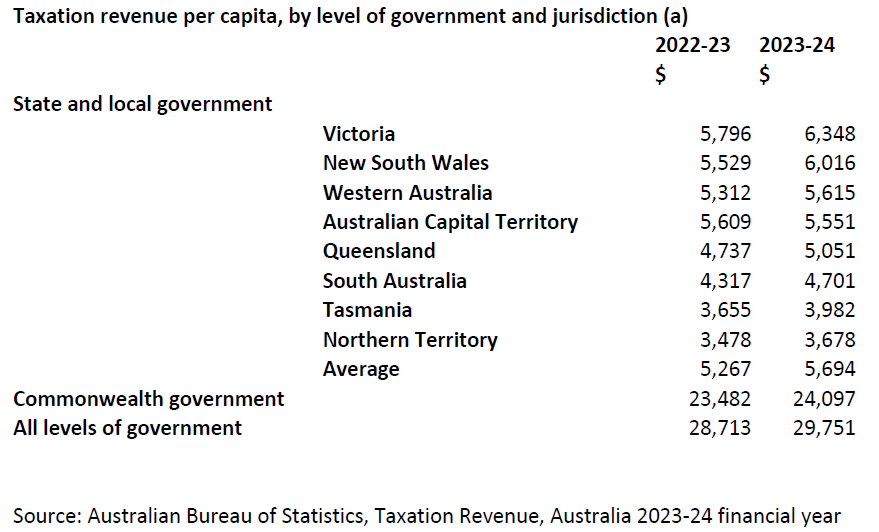
Victoria is
- the highest taxing state,
- the most indebted state,
- pays the biggest interest bill,
- gets less back from the Cth than it contributes (inc on infrastructure).
Surely some people care about this?
2
56
Project Victoria retweeted

Feb 21
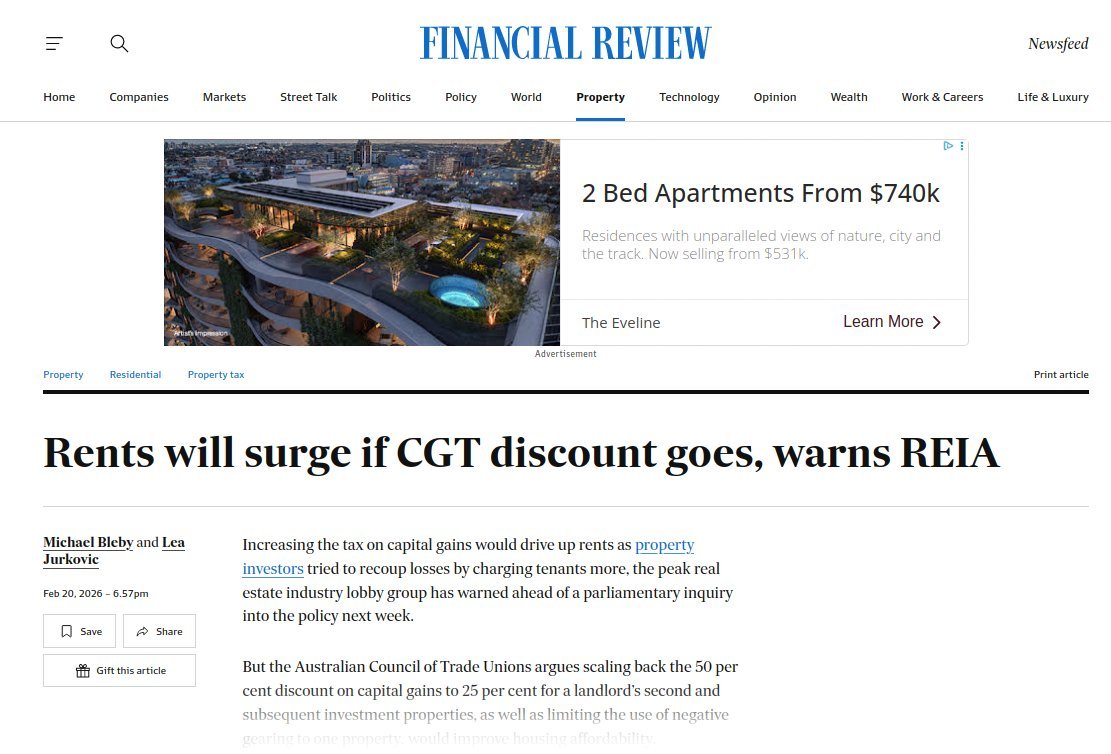
Removing the discount for capital gains tax would reduce construction and increase rents by 1.3%.
In my opinion that is the best, most credible estimate, by Cho, Li and Uren.
It is similar to estimates by Deloitte (2019), CIE (2017) and Singh et al (2025).
onlinelibrary.wiley.com/doi/…
19
6
39
3,576
Project Victoria retweeted

Feb 17
Yes, this is possible if we got rid off zoning and half the bloated bureaucracy!
19
11
87
2,463
Project Victoria retweeted

The housing crisis is really just another cost of government crisis. It’s hurting families trying to buy their first home and the small builders trying to provide them.
At a federal level, mass immigration is putting pressure on demand, and state and local zoning restrictions and regulations are stopping supply from keeping up. The Libertarian Party has policies to address these problems, but one often overlooked factor is the massive tax and regulation burden.
For a new four-bedroom house and land package in Sydney’s suburbs, you’d be looking at $1,200,000 or more.
How much of that went straight to tax and government fees?
- Infrastructure levies and developer contributions: $70,000
- GST baked into construction and the sale: $110,000
- Stamp duty on the land (paid by the builder when they bought the site): $35,000
- Payroll tax, superannuation, income tax & corporate tax on the tradies, suppliers and builder’s slim margin: $90,000
- Council fees, planning approvals, land tax, licensing & compliance red tape: $40,000
- Biodiversity offsets: $10,000
- Additional costs from net zero energy efficiency mandates: $10,000
Total direct taxes and government fees from your $1,200,000 are over $365,000, and that’s before the buyer pays another $48,000 in stamp duty on top.
Independent studies shows that when you include all the endless delays due to red tape, compliance and overheads, it’s closer to 49%. Nearly $590,000 going straight to the government per new Sydney home. So how dare they talk about housing affordability!
Next time you’re looking at a new home, remember that a huge chunk of that price isn’t going to the land, the bricks, the tradies or the builder trying to keep the project alive. It’s funding the big fat state.
If I’m elected to NSW Parliament next year I’ll stand up for free markets and free families by smashing this tax burden and slashing the red tape so more families can actually afford a home of their own.
@LibertariansNSW


Be great to see this for building a new home
7
22
76
5,531
Project Victoria retweeted
Feb 10
Rents would become a lot more affordable if we did this.
9
10
38
3,373
Remember CGT is a tax and imposing taxes - and increasing them - makes things more expensive not less expensive.
Tell me how I’m wrong.
1
8
5,764