
Qiskit is a quantum computing software development kit and open-source community of people who believe anyone can learn how to program a quantum computer.
Joined September 2017
- Tweets 2,165
- Following 191
- Followers 28,174
- Likes 1,563
397 Photos and videos



Qiskit v2.4 is now available: ibm.com/quantum/blog/qiskit-…
The update strengthens Qiskit as a platform for real quantum workloads, with support for compiled Python extensions via the C API, faster QPY serialization, and improvements in Qiskit’s fault‑tolerant transpilation pipeline.
3
12
36
2,597
Qiskit retweeted

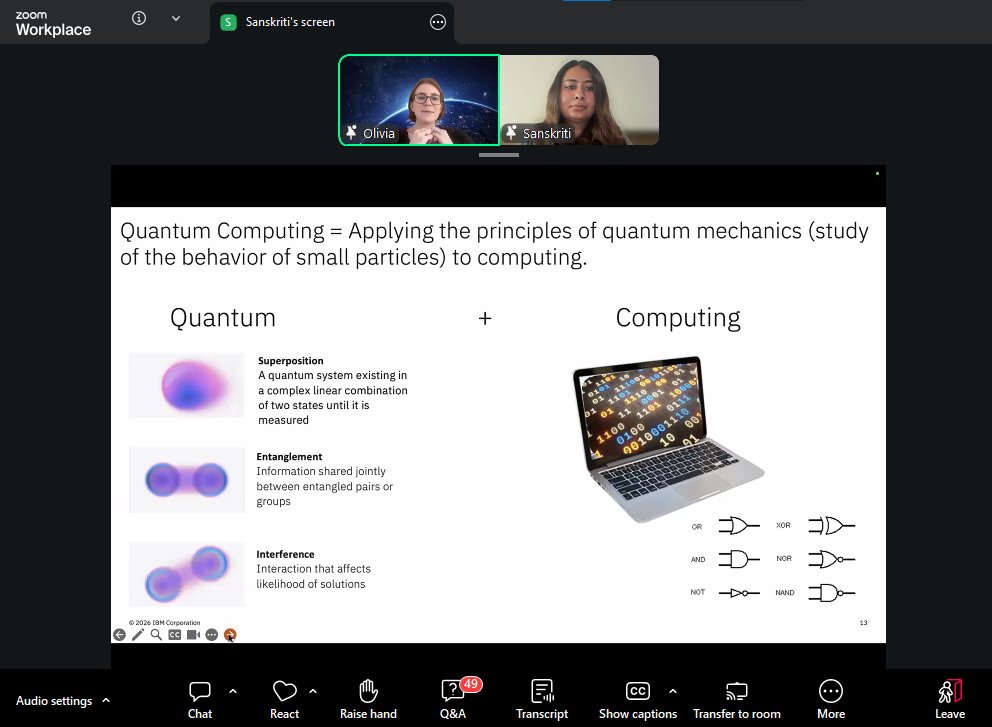
Attended a World Quantum Day session (April 14) and explored quantum computing.
From superposition & entanglement to real-world use cases like drug discovery and finance, quantum is no longer just theory.
You can start today using tools like @qiskit
@IBM
#QuantumComputing
2
7
947
Qiskit Functions abstract away the complexity of quantum-classical workflows to help applications researchers run large‑scale quantum experiments on today’s quantum hardware—no deep expertise required: ibm.com/quantum/blog/functio…
1
5
32
1,574
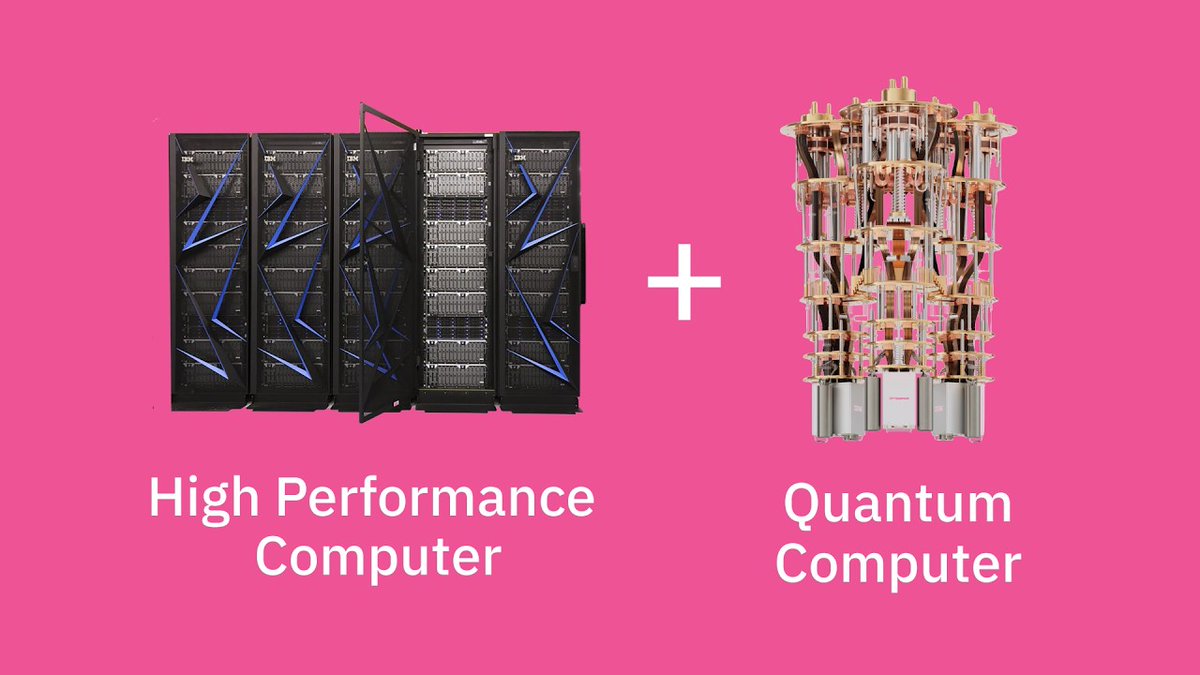
A new learning course—“Integrating Quantum and High-Performance Computing”—is now available and free to take on the IBM Quantum Platform: quantum.cloud.ibm.com/learni…
Watch the full video on #Qiskit Youtube here: youtube.com/watch?v=BCmgyNDD…
11
3
15
964
The new #Qiskit v2.3 release expands the C API—adding faster, more flexible tools for custom circuit optimization in hybrid quantum-HPC workflows.
Full technical summary here: ibm.com/quantum/blog/qiskit-…
2
6
22
1,336
Registration is now open for the #Qiskit Advocate Mentorship Program (QAMP) 2025 Open House, scheduled for 3 - 4 February 2026: crowdcast.io/c/axfd1c9ywtsc
1
4
13
1,347
We invite you to drop in to any (or all) of the sessions linked above to see the minimum viable products (MVPs) these teams have built as part of their development journey—spanning quantum algorithms, research explorations, educational content, and open-source contributions.
1
1
502
Today, on the Qiskit blog, we’re highlighting a fun Qiskit Ecosystem project that provides users with a handy, GUI-based tool for building Bloch sphere visualizations. Check it out! medium.com/qiskit/quantum-gl…
3
11
55
11,979
Qiskit retweeted

10 Nov 2023
#145: Tune in to hear about a work I am very proud of. Oles Shtanko will tell us about "Uncovering Local Integrability on #IBM Quantum Hardware" on the @Qiskit #QuantumSeminar
🔴 Tune in now to ask question & discuss live
buff.ly/3ugf1W8
2
17
7,731
Qiskit v0.45 is here!
👩💻 API improvements for working with transpiler passes and layouts
🔩 New hardware-aware synthesis functionality
📈 Performance improvements
💨 Clean-up for deprecated code
Read our latest Qiskit blog to learn more: medium.com/qiskit/qiskit-v0-… 1/2
1
10
63
9,448
This will be the last release before we launch Qiskit 1.0, so you may notice we're making a few more changes than usual. To get all the details, be sure to check our documentation for the full release notes: qiskit.org/documentation/rel… 2/2
1
8
3,377
On the Qiskit blog, we're exploring how a tool from the Qiskit ecosystem can help us improve the performance of variational quantum algorithms.
Take a look: medium.com/qiskit/enhance-va… 1/5
3
18
82
9,058
On the blog, @ZhidingLiang, Jinglei Cheng and @hanrui_w detail their approach to executing pulse-level VQE. For more details, be sure to read the full piece on the Qiskit Medium:
medium.com/qiskit/enhance-va… 5/5
2
6
2,417
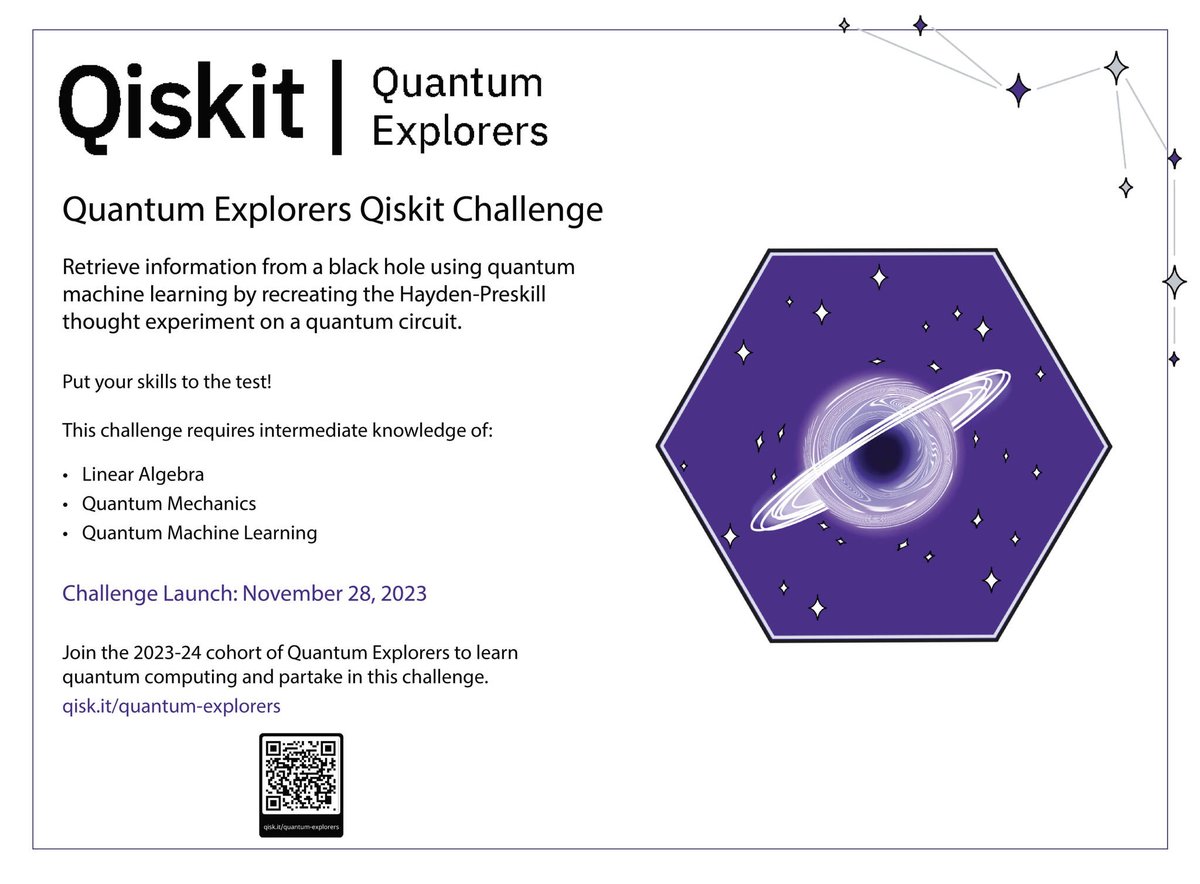
Announcing the Quantum Explorers Qiskit Challenge launching November 28! 🚀 Join the ongoing Quantum Explorers 2023-24 cohort and put your skills to the test: challenges.quantum-computing…
4
52
183
19,625
Qiskit retweeted
27 Oct 2023
🌟 Join us for a unique @Qiskit Quantum Seminar with Jay Gambetta and four amazing scientists! This isn't your regular seminar; we're diving deep into the world of large-scale quantum circuits, seeing 1/2
buff.ly/3Q0A862
1
12
49
6,201