The Quantum Biology DAO is a non-profit that supports the field with community building, governance tokens and an open competition for research grants.
Joined July 2024
- Tweets 2,317
- Following 405
- Followers 7,318
- Likes 9,218
513 Photos and videos


Pinned Tweet

What if some of the biggest breakthroughs in health, medicine, and biotechnology come from understanding how quantum phenomena influence living systems?
In this video, we explore some of the potential applications of quantum biology, check it out!
youtu.be/p7z7Ph7KLkI?si=-bNJ…
1
16
679
Quantum Biology DAO retweeted

May 29
The Magnetobiology Episode:
A company in San Francisco, called @NonfictionBio, is building proteins (like antibodies and enzymes) that can be controlled using small magnets.
In this episode, co-founder Maria Ingaramo and scientific advisor Andrew York explain how they engineered a protein, MagLOV, that responds strongly to magnetic fields, why most prior attempts have failed to replicate, and how the mechanism of magnetically-controlled proteins actually works. They also get into the “dream” use cases, like cancer drugs that activate only at the tumor, which might have a lower toxicity inside the body. This podcast is made possible by @AsteraInstitute.
I'm happy with how this episode came out. I think my interviewing skills are improving, and I'm getting better at building up context throughout the episode. Enjoy!
Search for "The New Biology" on YouTube, Spotify, and Apple Podcasts.
Timestamps:
00:00 - Opening
00:54 — Introduction
01:35 — The dream
05:38 — Why magnets vs. light or ultrasound
10:05 — The physics
17:48 — On the name "magnetogenetics"
21:25 — Birds and cryptochromes
27:09 — Why is the field filled with so much junk?
29:51 — Adam Cohen's molecule
33:24 — Markus Meister’s debunking
38:06 — The experiment
46:22 — Finding the LOV domain
54:11 — Singlets, triplets, and cysteine
56:54 — What the magnet is actually doing
1:05:13 — The conformational-change red herring
1:12:46 — The Quantum Biology Institute
1:19:31 — Founding Nonfiction Labs
1:24:38 — How to convince skeptical investors
1:29:39 — What a magnetogenetic medicine might look like
1:38:50 — First clinical indications
1:45:12 — The regulatory path
1:48:01 — What the field needs
1:54:30 — Appendix: Whiteboard lecture
7
38
204
28,968
For a long time, living systems were thought to be too warm, wet, and complex for quantum effects to play a meaningful role. But as research in quantum biology continues to grow, that assumption is being questioned.
In this new video, we explore why this field could matter for human health, what scientists are investigating, and where the research may lead. Check it out!
youtu.be/-3tVHkW9zt8?si=_POE…
4
17
1,505
📢 Join us this Tuesday, June 16th at 8AM PT / 11AM ET for the Quantum Biology DAO Science Working Group (open to all!).
Come discuss the latest ideas in quantum biology and hear from DAO contributor Nahuel Garcia, a biologist with a Ph.D. in Biotechnology and more than a decade of experience developing cell- and extracellular vesicle-based technologies across cardiology, metabolism, and cancer research. He is also the founder of a genetic diagnostics company in Argentina, bringing expertise in both translational science and biotech entrepreneurship.
Nahuel will be presenting on his paper: "DNA as a Quantum System in Evolution"
🔗 The paper: journals.plos.org/plosone/ar…
🔗 To join the call: meet.google.com/yeu-rbsv-osv
1
8
280
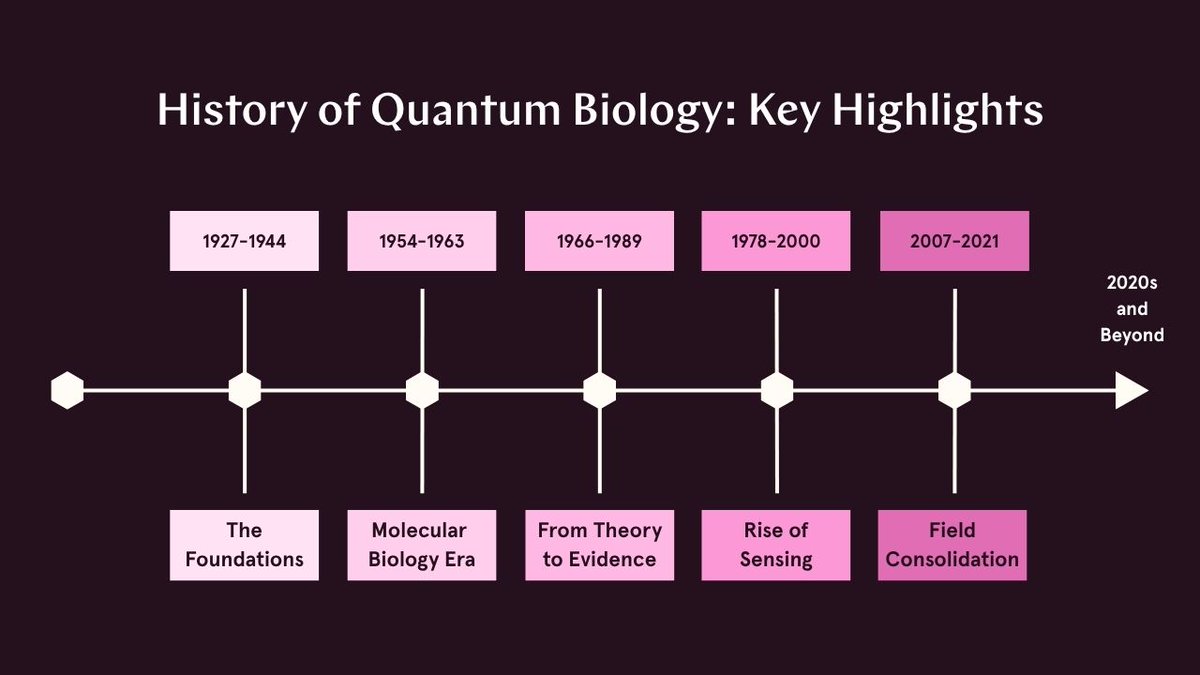
5/ THE RISE OF QUANTUM SENSING (1978–2000)
1978 — A quantum compass is proposed
Klaus Schulten, Charles Swenberg & Albert Weller propose that spin-correlated radical pairs could provide a biological compass sensitive enough to detect Earth's magnetic field. Building on the recently developed radical pair mechanism from spin chemistry, this is the first explicit application of quantum spin physics to a biological sensory process and marks the birth of modern quantum theories of animal magnetoreception.
1996 — A quantum theory of smell
Luca Turin proposes that smell may depend not only on the shape of molecules but also on how they vibrate. The idea remains debated but expanded discussions of quantum effects in sensory biology.
2000 — The cryptochrome compass model is developed
Thorsten Ritz, Salih Adem, and Klaus Schulten develop a detailed radical-pair model in which cryptochrome proteins in the retina function as quantum magnetic sensors. The work unites spin chemistry, radical-pair physics, and animal navigation into a single mechanistic framework that becomes the dominant model of avian magnetoreception.
1
62
6/ FIELD CONSOLIDATION (2007–2021)
2007 — Evidence for quantum coherence in photosynthesis
Researchers observe signatures suggesting that photosynthetic systems may use quantum effects while transporting energy. The findings generate enormous interest and spark years of debate, replication, and follow-up research.
2009 — The first dedicated quantum biology conference
The inaugural Quantum Effects in Biological Systems (QuEBS) conference is held in Lisbon, creating the first recurring international meeting devoted entirely to quantum biology. The field now has its own scientific community and gathering place.
2010 — Coherence observed at room temperature
Collini and researchers detect quantum coherence in marine cryptophyte algae at room temperature, not just at 77 K. Dramatically changes the field's assumptions: quantum effects may persist in wet, warm biological systems under physiological conditions.
2014 — Life on the Edge introduces the field to a wider audience
Jim Al-Khalili and Johnjoe McFadden publish the first major book explaining quantum biology to both scientists and the general public. The book helps bring together many of the field's leading ideas under a single framework.
1
70
7/ THE 2020s AND BEYOND
Landmark papers reassess and sharpen earlier findings, dedicated funding bodies, doctoral training centers, and conference series establish permanent institutional homes, and the first decentralized research institution (the Quantum Biology DAO) introduces community-governed science funding to the field for the first time.
Quantum biology enters the 2020s as an organized, rigorous, and rapidly accelerating discipline.
60
3/ MOLECULAR BIOLOGY ERA (1953–1963)
1953 — The structure of DNA is discovered
Watson and Crick reveal the double-helix structure of DNA, transforming biology and launching the modern era of genetics.
Although most biological research would focus on genes and biochemistry rather than quantum effects, Schrödinger's earlier ideas had helped motivate the search.
1963 — Proton tunnelling in DNA
Per-Olov Löwdin proposes that quantum tunneling of protons between base pairs can produce tautomeric mismatches, providing a physical mechanism for spontaneous point mutations. One of the first specific quantum-mechanical hypotheses grounded in molecular structure.
1
3
366
4/ FROM THEORY TO EVIDENCE (1966–1989)
1966–1974 — Electron tunnelling observed in enzymes
Researchers observe electrons moving through biological molecules in ways that appear difficult to explain using classical physics alone.
These experiments provide some of the earliest evidence that quantum tunneling may play a functional role in living systems.
1968 — Long-range coherence proposed in biological systems
Herbert Fröhlich suggests that biological molecules might sometimes behave in a coordinated, collective way rather than acting independently.
The idea was controversial but helped launch decades of research into coherence in biology.
1969 — The Radical Pair Mechanism is developed
Robert and Carolyn Closs, Jan Kaptein, and others develop the Radical Pair Mechanism (RPM) to explain chemically induced dynamic nuclear polarization (CIDNP). For the first time, quantum spin correlations are shown to alter chemical reaction outcomes. Although developed within chemistry rather than biology, RPM later becomes the theoretical foundation for magnetoreception, cryptochrome signaling, and many weak magnetic field effects in living systems.
1989 — Room-temperature tunnelling demonstrated in enzymes
Judith Klinman and colleagues provide strong evidence that hydrogen tunneling occurs during enzyme-catalyzed reactions at ordinary biological temperatures.
The result showed that quantum tunneling is not limited to exotic laboratory conditions and may be used by living organisms.
1
46
2/ THEORETICAL FOUNDATIONS (1927–1944)
1927–1932 — Quantum pioneers turn to biology
Shortly after quantum mechanics was developed, physicists including Niels Bohr and Pascual Jordan began wondering whether the same laws that govern atoms might also help explain living systems.
Jordan's 1932 paper is generally considered the first scientific publication devoted to quantum biology, while Bohr helped introduce the question to a broader scientific audience through public lectures.
1944 — Schrödinger publishes What is Life?
Erwin Schrödinger proposed that heredity must be stored in a highly ordered molecular structure capable of carrying information. He also suggested that quantum effects might contribute to biological mutations.
The book became enormously influential and helped inspire the next generation of molecular biologists, including Watson and Crick.
1
5
315
Did you know quantum biology is older than you might think?
For nearly a century, scientists have wondered whether some of life's most fundamental processes depend on quantum phenomena. What began as a theoretical question posed by some of the founders of quantum mechanics has gradually evolved into a field spanning photosynthesis, animal navigation, magnetobiology, and more.
Today, quantum biology sits at the intersection of many fields, with researchers investigating how such phenomena may influence living systems.
Let's take a look at some of the key milestones in the history of quantum biology. Thread below ⬇️
4
3
16
1,168
Are you interested to learn about quantum biology?
Our grantee, the Quantum Biology Institute, will be leading a series of classes to introduce people to the field. This first one is an accessible introduction to quantum biology, radical pairs, spin physics, and how quantum-level effects may influence biological reactions.
Register here: bit.ly/QBI-Q1-Class-1
These are offered free and to anyone around the world 🌎

Join us on July 9 at 2 p.m. ET (11 a.m. PT) for the first in a new weekly series of online classes on #QuantumBiology. Class 1 will be led by Alessandro Lodesani, Chief Operating Officer at the Quantum Biology Institute. Register here: bit.ly/QBI-Q1-Class-1 .
1
11
377
How does smell work?
The traditional explanation is that odor molecules are recognized by their shape. A molecule binds to a receptor in your nose, triggering a signal that your brain interprets as smell.
But some scientists have argued that shape may not be the whole story.
A competing hypothesis suggests that odor receptors may also be sensitive to the vibrational properties of molecules. In this model, quantum tunneling could help receptors distinguish between molecules that look similar but vibrate differently.
The idea remains controversial, and the mechanism of olfaction is still not fully understood.
Smell may be just one example... what other biological processes could be influenced by quantum effects?
Related paper: arxiv.org/abs/2506.22265
1
12
240
Quantum Biology DAO retweeted

Jun 9
Microbiologist Michael Montague (@QuantumBioDAO) explains: the color of your iris is an aggregate effect. Around 10^17 pigment molecules adding up to a visible signature. Remove one and no one would notice.
What makes life quantum, in his telling, is the opposite. A single molecular event that cascades up to shape an entire cell, an entire organism, an entire life.
He gives the example of a cosmic ray hitting a strand of DNA, altering a nucleotide, which starts a chain that could end in a tumor.
He calls these "scale shifting effects." And he argues they're everywhere in living systems. That, he says, is the real answer to the question "how quantum is life."
Michael won 3rd place in our essay competition for his essay "Scale Shifting: Quantum Biology, Quantum Omics, & a Quantum Biotech Future."
3
4
36
2,842
Quantum Biology DAO retweeted

Jun 9
Great job @ClariceDAiello! If anyone needs a quantum biology refresher, may I suggest youtu.be/qzaPrzL7geA?si=dfmS…
.@ClariceDAiello, a scientist at the Quantum Biology Institute, is featured in a New Scientist article that examines the science—and the hype—surrounding so-called “quantum therapies,” while also highlighting serious ongoing research in #QuantumBiology: tinyurl.com/huz6ms7s
2
5
654
Which potential application of quantum biology excites you the most?
50%
Health
25%
Space exploration
25%
Longevity
0%
Other (comment below)
0%
0%
0%
0%
4 votes • Final results
1
5
205
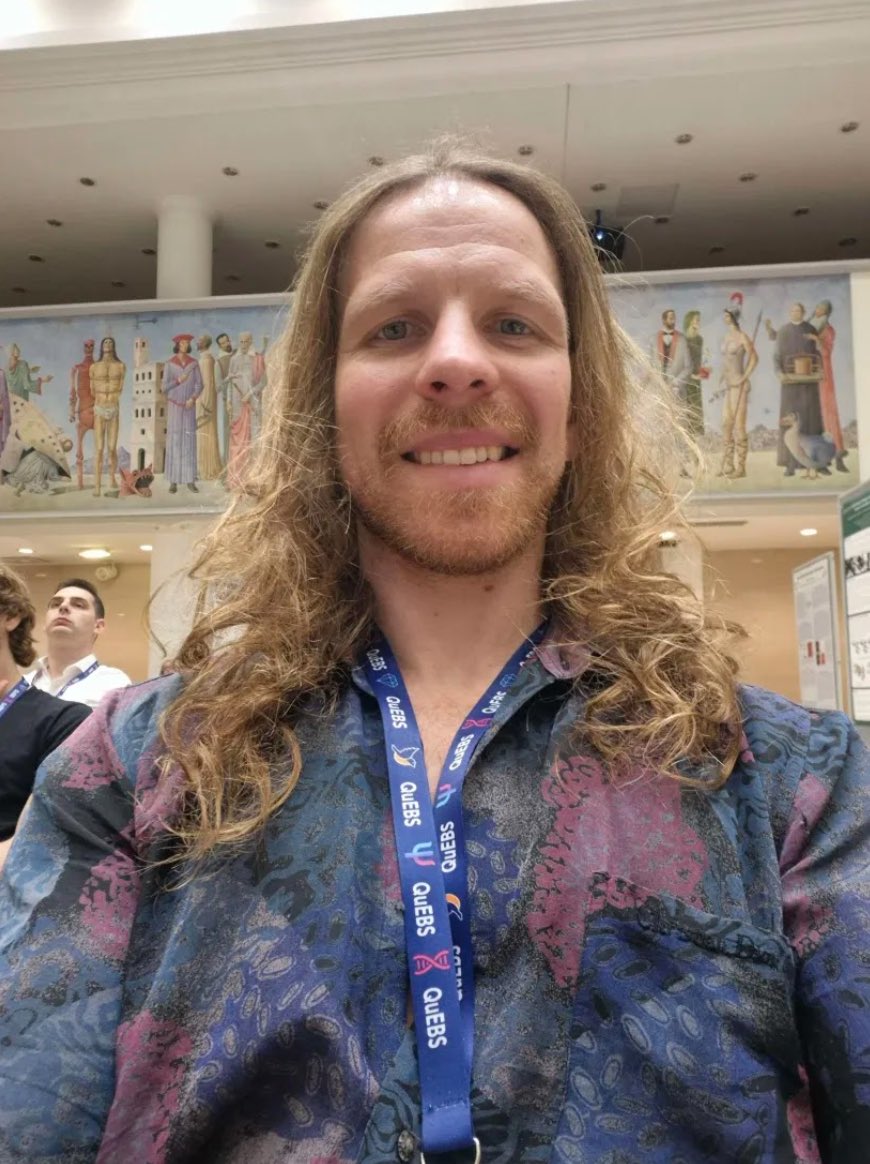
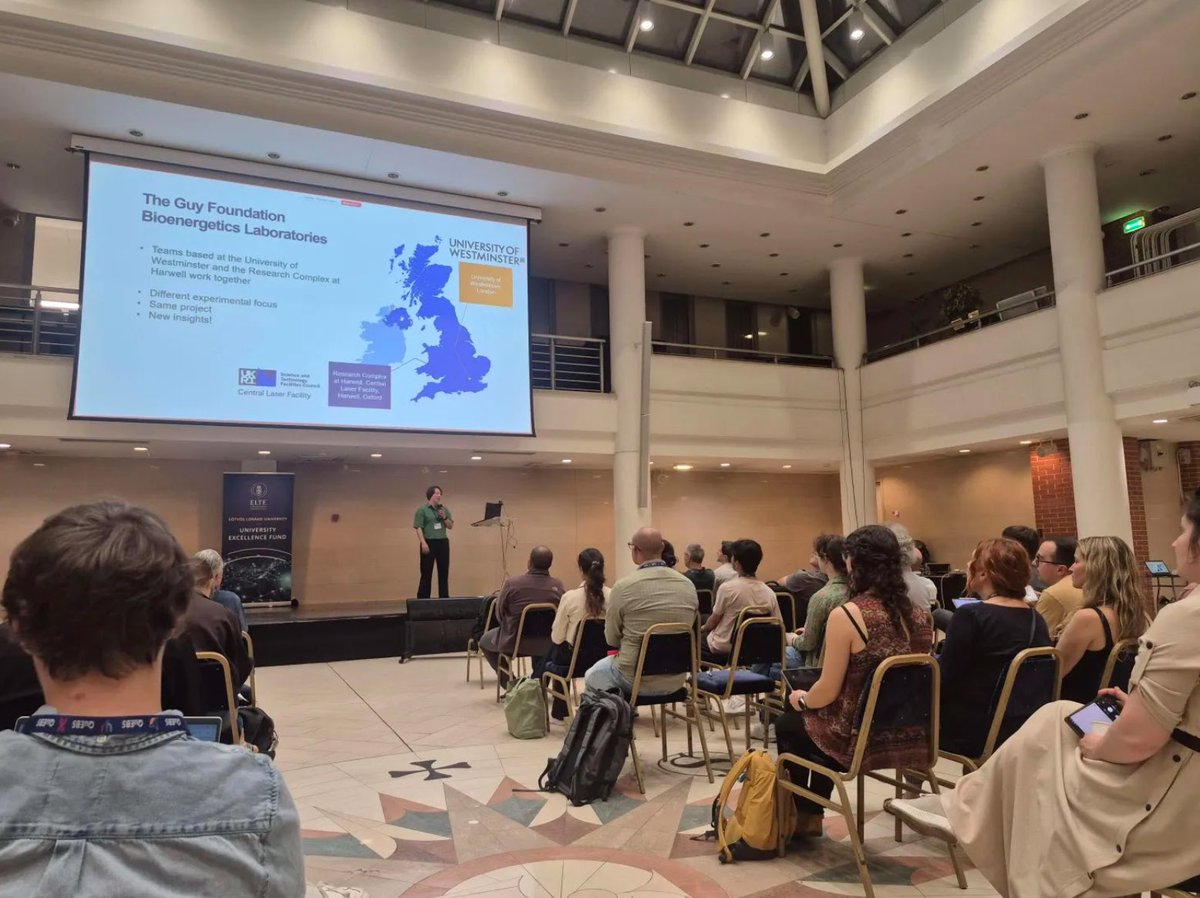
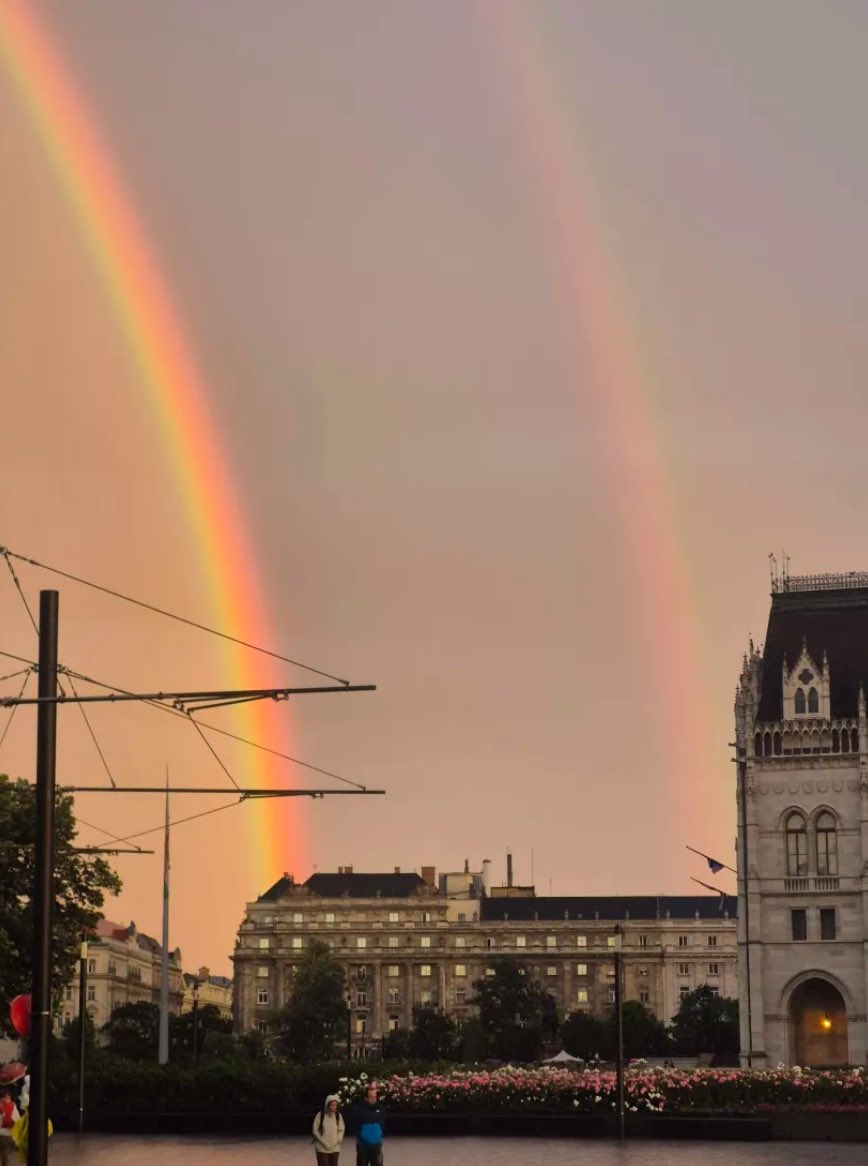
Had an amazing time at QuEBS 2026 last week!
Beyond the science, one of the biggest highlights was seeing how much momentum the field is building. We connected with researchers from around the world, explored new work in areas like magnetobiology, quantum sensing, photosynthesis, and more, and had great conversations about where quantum biology is headed next.
We were honored to have the opportunity to present on the DAO and engage with researchers interested in helping shape the future of the field.
We're leaving with new ideas, new connections, and even more excitement about what's ahead for quantum biology.
1
10
308
Quantum Biology DAO retweeted

Jun 1
Experiments hint that quantum mechanisms are vital to the machinery of life. Now researchers are exploring if these effects help to explain the success of an array of puzzling health treatments newscientist.com/article/252…
2
6
6
5,129
>> Check out this new article!
In addition to featuring our own @ClariceDAiello, the article highlights serious ongoing research in quantum biology exploring whether light and magnetic fields can influence quantum states within living systems and whether those effects may help explain some of the biological responses observed in therapies that make use of light and magnetic fields.
.@ClariceDAiello, a scientist at the Quantum Biology Institute, is featured in a New Scientist article that examines the science—and the hype—surrounding so-called “quantum therapies,” while also highlighting serious ongoing research in #QuantumBiology: tinyurl.com/huz6ms7s
1
8
724
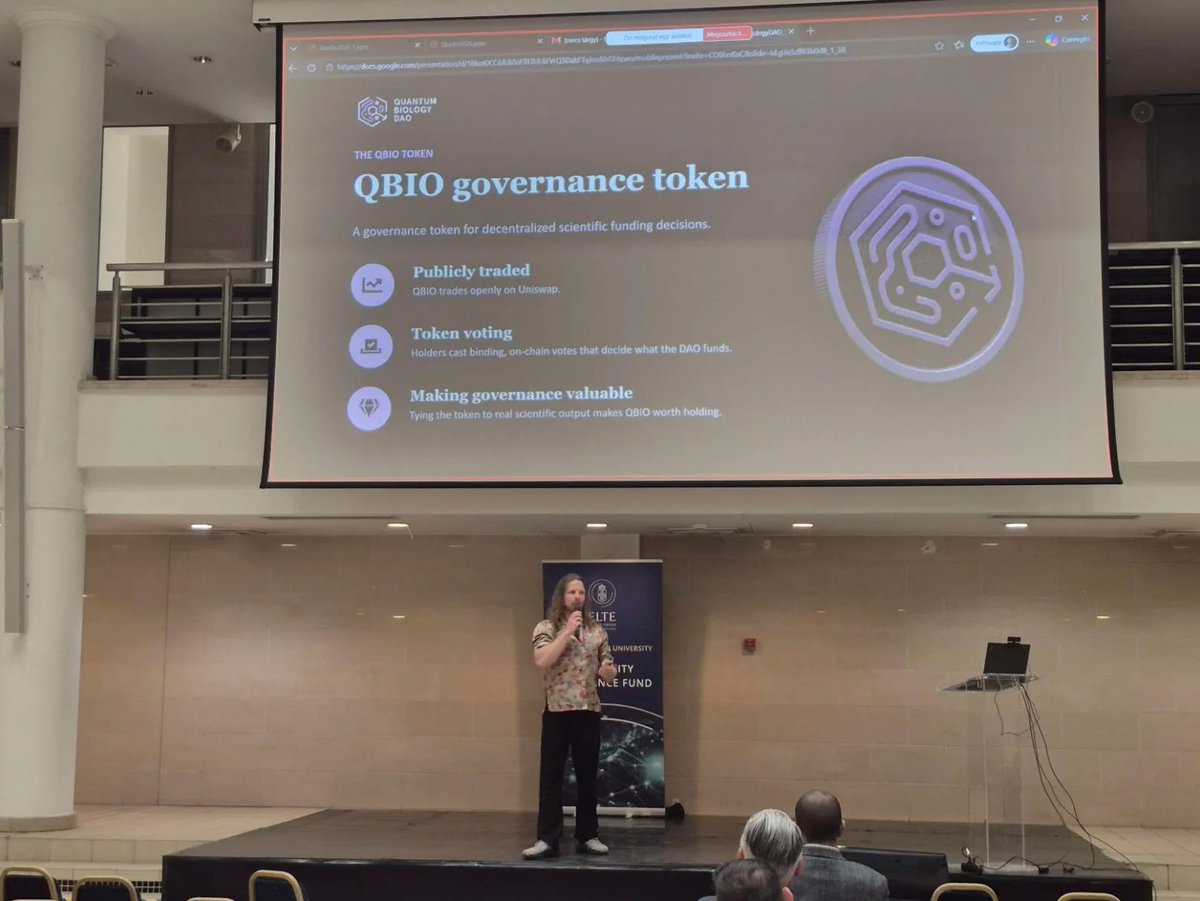
We're heading to QuEBS 2026 (the 15th International Workshop on Quantum Effects in Biological Systems). In addition to participating in the event, our own contributor @EnactJohnny will be presenting on the Quantum Biology DAO and how decentralized science can contribute to the advancement of the field.
QuEBS brings together researchers across quantum physics, biology, chemistry, biophysics, and engineering to explore how quantum phenomena influence living systems and how those insights can inspire next-generation technologies.
We're excited to connect with scientists from around the world, share the DAO's approach to advancing quantum biology through DeSci, and learn from the latest developments across the field.
1
2
20
568
If you're curious to learn more about the event, you can find additional information at the event website HERE: quebs2026.elte.hu/
5
146