Membre de Grup Objectivament Identificable (GOI)
Joined September 2017
- Tweets 30,493
- Following 493
- Followers 363
- Likes 35,170
1,683 Photos and videos






Carles Garcia retweeted

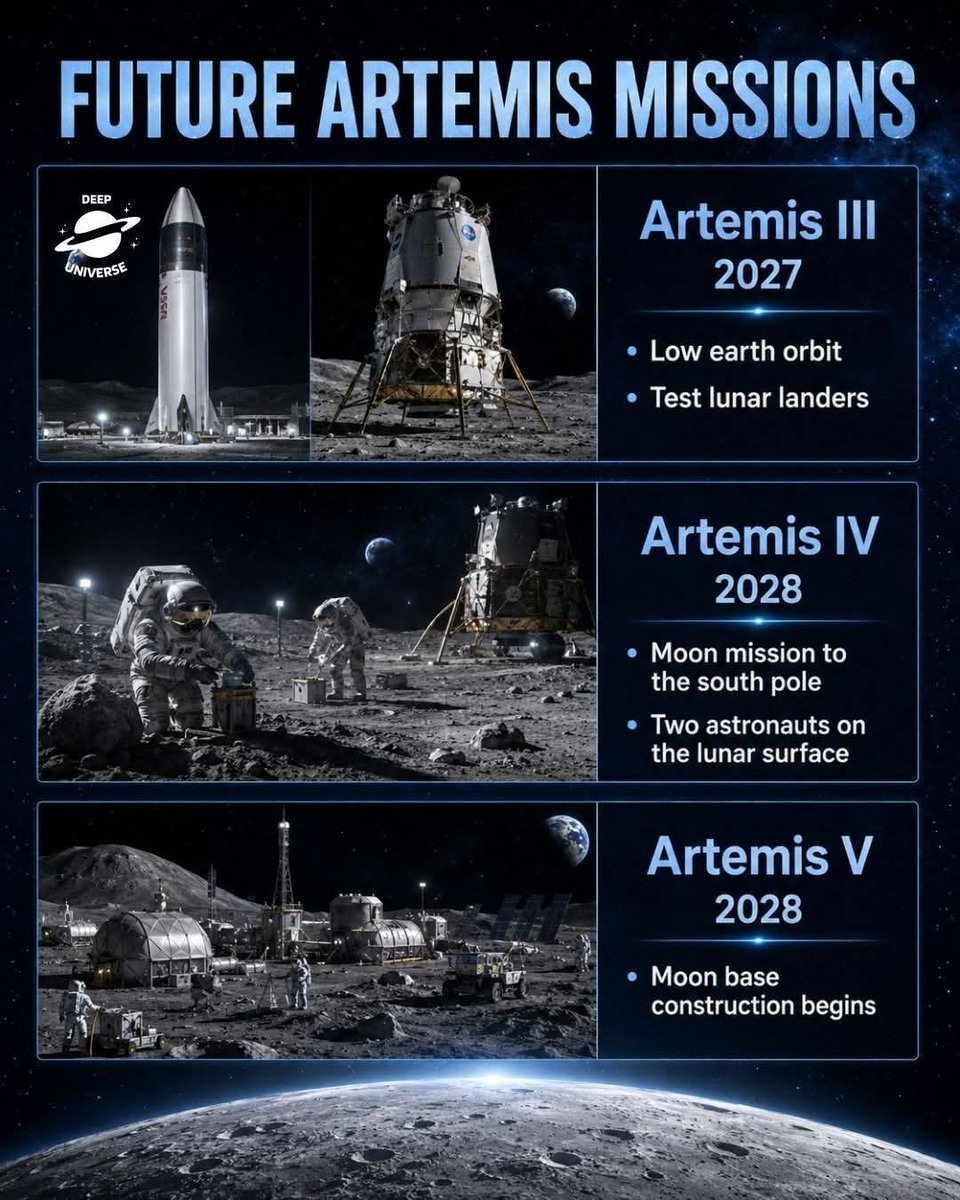
Within weeks of Artemis II’s triumphant return, the dream of a permanent human foothold on the Moon shifted from ambitious vision to accelerating reality.The mission, launched from Kennedy Space Center in Florida, sent four astronauts on an epic voyage that looped around the Moon at a daring 70 nautical miles above its cratered surface. Over ten gripping days, the crew tested cutting-edge life-support systems, deep-space navigation, and communication technologies that will one day sustain explorers far beyond Earth’s protective embrace. The flawless flight didn’t just tick boxes—it ignited momentum.Almost immediately, NASA and its commercial partners kicked into high gear, fast-tracking hardware for actual lunar surface operations. The blueprint now coming into focus is nothing short of breathtaking: rugged, pressurized rovers that will let astronauts roam up to 20 kilometres in a single excursion; nimble robotic drones built to map the treacherous polar terrain; and massive landers capable of delivering multi-tonne payloads precisely to the Moon’s south pole.That sunless region holds special allure. Its permanently shadowed craters are believed to harbor vast deposits of water ice—an invaluable resource that could be transformed into drinking water, oxygen, and rocket fuel, turning the Moon into a cosmic gas station and launchpad for deeper space exploration.Perhaps the most exciting twist in today’s planning is the central role of robots. These aren’t just scouts anymore. Next-generation machines are being designed to act as robotic pioneers: assembling habitats, unfurling solar arrays, and prepping smooth landing zones long before any human boot touches the regolith. What once felt like distant science fiction is rapidly becoming strategy—humans and intelligent machines working side by side in a true off-world partnership.The Moon is no longer a place we visit. It’s becoming a place we build. And the countdown has already begun.
2
24
53
4,365
Carles Garcia retweeted

Tomás Vega, ingeniero formado en el MIT, ha creado un dispositivo que permite a las personas con parálisis controlar teléfonos, tabletas y ordenadores solo con la lengua.
El dispositivo se coloca en el paladar y funciona como un trackpad inalámbrico.
180
3,248
29,451
2,020,233
Carles Garcia retweeted

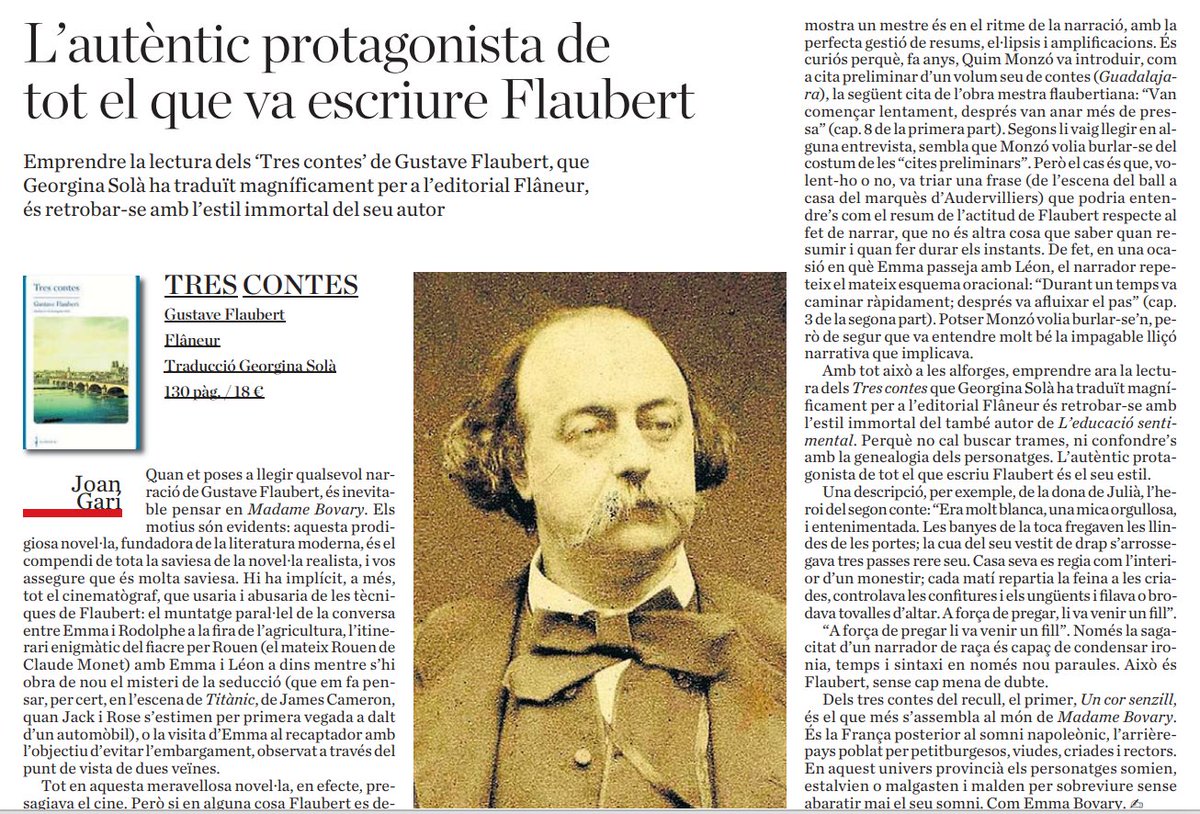
Joan Garí ressenya "Tres contes" de Gustave Flaubert al diari @ARAllegim
1
5
11
711
Carles Garcia retweeted

Si 'Widow's Bay' és la millor sèrie l'any, com he llegit a diversa gent que presumptament n'entén, és que l'art de la telesèrie (i la crítica) és morta i enterrada.
Quin refregit de tòpics i quin avorriment.
7
1
15
5,458
Carles Garcia retweeted

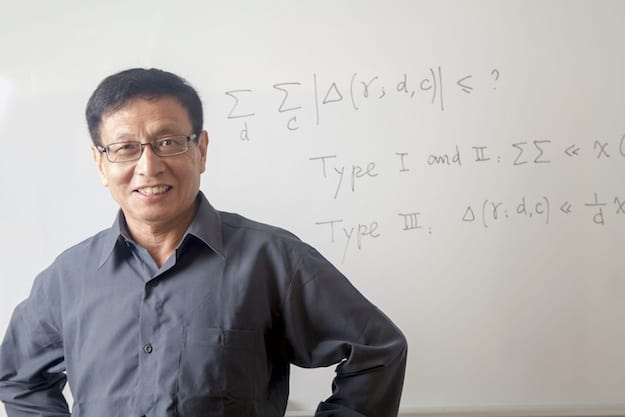
A Chinese mathematician spent 7 years making sandwiches at Subway after his PhD, and at 58 solved a 150-year-old math problem nobody thought was solvable.
His name is Yitang Zhang. The problem is called the Twin Prime Conjecture.
He was born in Shanghai in 1955 and knew he wanted to spend his life on mathematics by the time he was nine years old. That year he found his own proof of the Pythagorean theorem. Nobody taught it to him. He just worked it out.
Then the Cultural Revolution arrived and took everything.
The Chinese government closed the schools. Zhang's father had political troubles with the Communist Party, so Zhang was sent to the countryside with his mother to work in the fields. He spent 10 years as a farm laborer. No high school. No classroom. No teacher.
He read math books in the fields when he could find them.
When the revolution ended, Zhang was 23. He sat the university entrance exam and got into Peking University, one of the most competitive mathematics programs in China. He finished his bachelor's degree, then a master's. The president of Peking University personally recommended him for a full scholarship at Purdue University in the United States.
He arrived at Purdue in 1985. He earned his PhD in 1991.
Then the second wall hit.
His relationship with his doctoral advisor collapsed. The advisor did not write him letters of recommendation. Without those letters, the academic job market was closed. Zhang applied. Nothing came back. He spent the years after his PhD working as an accountant, doing delivery work, sleeping in his car during the stretches when nothing else was available.
A friend eventually opened a Subway sandwich restaurant in Kentucky and offered him a job. Zhang took it. He kept the books and made sandwiches. A man with a PhD in mathematics from Purdue, working a Subway counter because the academic world had no place for him.
He did this for seven years.
He was finally hired as a lecturer at the University of New Hampshire in 1999. Not a professor. A lecturer. The lowest rung of the academic ladder, with no research funding, no graduate students, and no institutional support. He taught calculus to undergraduates and worked on mathematics alone in whatever time was left.
Most people would have stopped believing by then.
Zhang did not stop.
The Twin Prime Conjecture is one of the oldest unsolved problems in number theory. Twin primes are pairs of prime numbers separated by exactly two: 5 and 7, 17 and 19, 41 and 43. The conjecture predicts that these pairs never stop appearing no matter how far you go along the number line. Mathematicians had believed this for over 150 years. Nobody had been able to prove it.
The deeper version of the problem asks something slightly different. Not whether twin primes are infinite, but whether there is any finite gap between prime numbers that appears infinitely often. This is called the bounded gap problem. The best mathematicians in analytic number theory had been attacking it for decades. A landmark 2005 paper by three researchers came agonizingly close and still could not close it.
Zhang worked on it alone. No collaborators. No funding. No department seminars where he could road-test his ideas. He once said he would go to a friend's house and think in the garden for hours.
In 2012, during a visit to a friend's home in Colorado, something unlocked.
He submitted his paper to the Annals of Mathematics in April 2013. The Annals is the most prestigious mathematics journal in the world. Papers sit in review for months, sometimes years. The editors read Zhang's submission and immediately knew something was different. They sent it to the leading experts in analytic number theory for review.
It was accepted in three weeks.
The paper proved that there are infinitely many pairs of prime numbers separated by a gap of less than 70 million. Not two. Not the twin prime gap specifically. But a finite gap. For the first time in history, someone had proved that prime numbers keep coming back together, that the universe of numbers never lets them drift apart forever.
Peter Sarnak, one of the most respected mathematicians at the Institute for Advanced Study, said: "He is not a fellow who had done much before. Nobody knew him. His result was spectacular."
Zhang was 58 years old.
Within a year he had the MacArthur Fellowship, the Cole Prize, the Rolf Schock Prize, and a full professorship at UC Santa Barbara. The man who spent seven years at Subway was now one of the most celebrated mathematicians alive.
He said in an interview: "I was not lucky. Maybe it is more important for a person to make himself known to the public. But that was not so easy for me."
He was not complaining. He was just being precise.
The mathematics establishment has a quiet belief that great work happens young. The Fields Medal cuts off at 40. Most mathematicians who change the field do it in their thirties. Zhang proved his most important theorem at 58, after a decade of farm labor, seven years of sandwiches, and a decade of teaching calculus to freshmen with no one watching.
He did not beat the deadline.
He proved there was no deadline to beat.
90
757
2,983
224,708
Carles Garcia retweeted

Jun 14
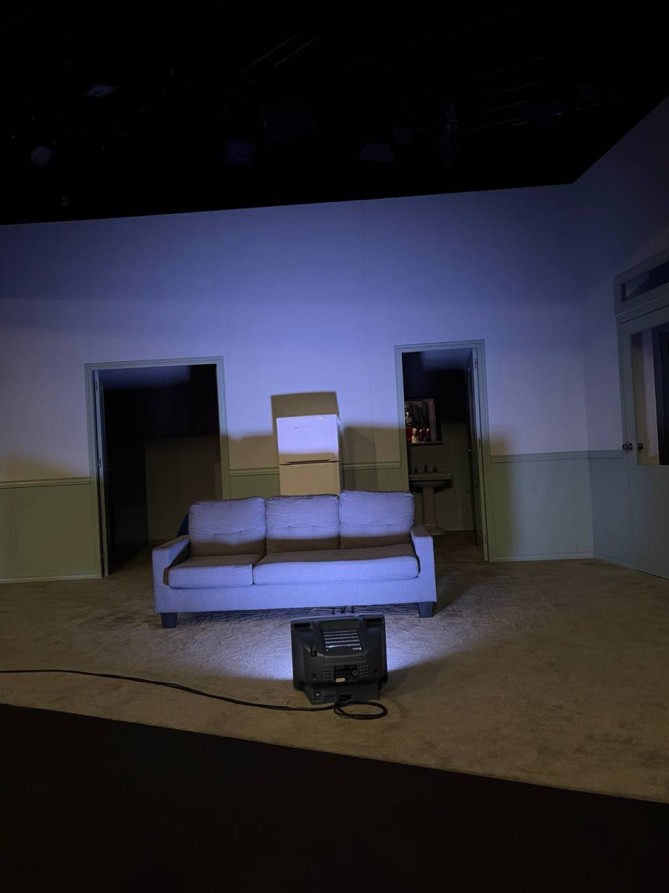
"L'últim àtom" al @Teatre_Goya, una tragicomèdia que suposa el nou muntatge de la companyia @gestindi, sobre una parella divorciada, ell professor de física quàntica i ella professora de lingüística, que han d'afrontar la pèrdua de la seva filla, que va desaparèixer fa 10 anys.

1
1
14
660
Carles Garcia retweeted

Researchers at Columbia University have developed modular robots that can adapt, repair, and even rebuild themselves using a concept called robot metabolism. 🤖
Instead of remaining fixed, these robots can detach, reconnect, and reorganize their own structure based on the task or environment.
If one part is damaged, the system can replace or rearrange itself rather than stopping completely.
This could reshape the future of disaster response, industrial automation, and even space exploration.
The idea of robots that evolve instead of wear out is becoming more than science fiction.
What real-world application do you think will benefit most from this technology?
🎥 Media: @Columbia
⚠️ This content is shared for informational purposes only. CTO Robotics Media is a media platform and does not own or develop the technology shown. Credit belongs to the original creators.
153
579
4,931
2,642,442
Carles Garcia retweeted

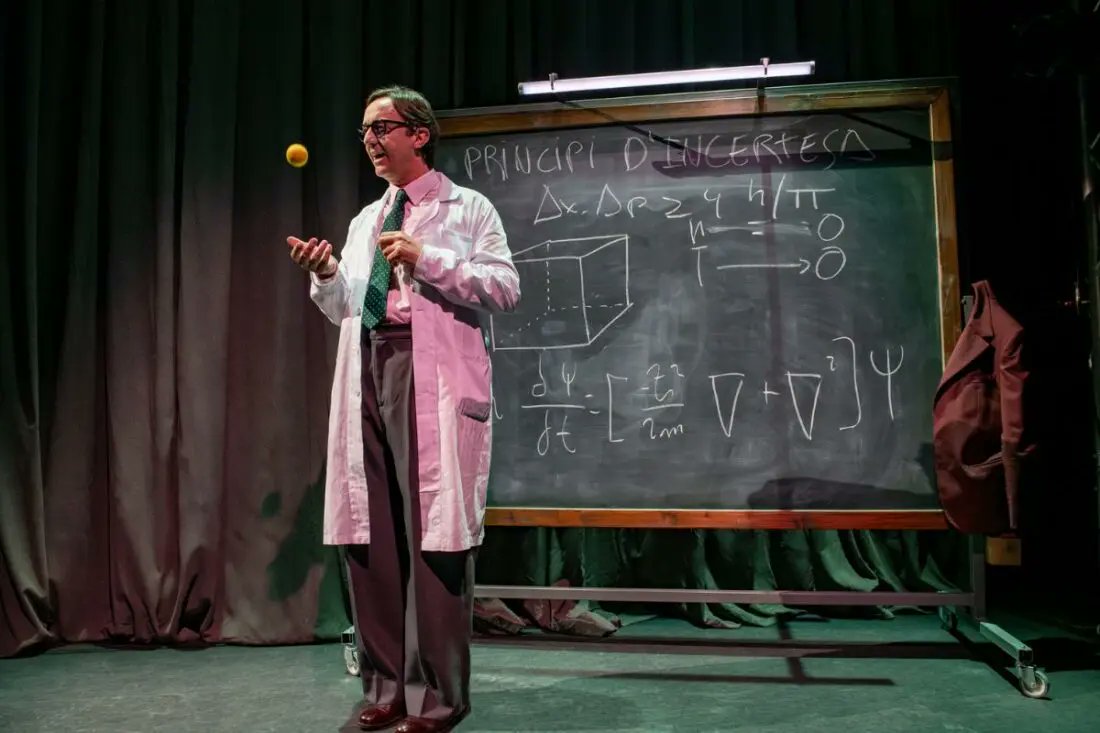
#DillunsHemeroteca A 'Visions, reflexes i reflexions sobre el text teatral' Jordi Oriol ens acostava als seus processos d'escriptura ✍️✍️✍️
Fins el 5 de juliol encara podeu veure la seva darrera creació, 'L'últim àtom' ⚛️
revistapausa.cat/la-textuali…


6
9
173
Carles Garcia retweeted
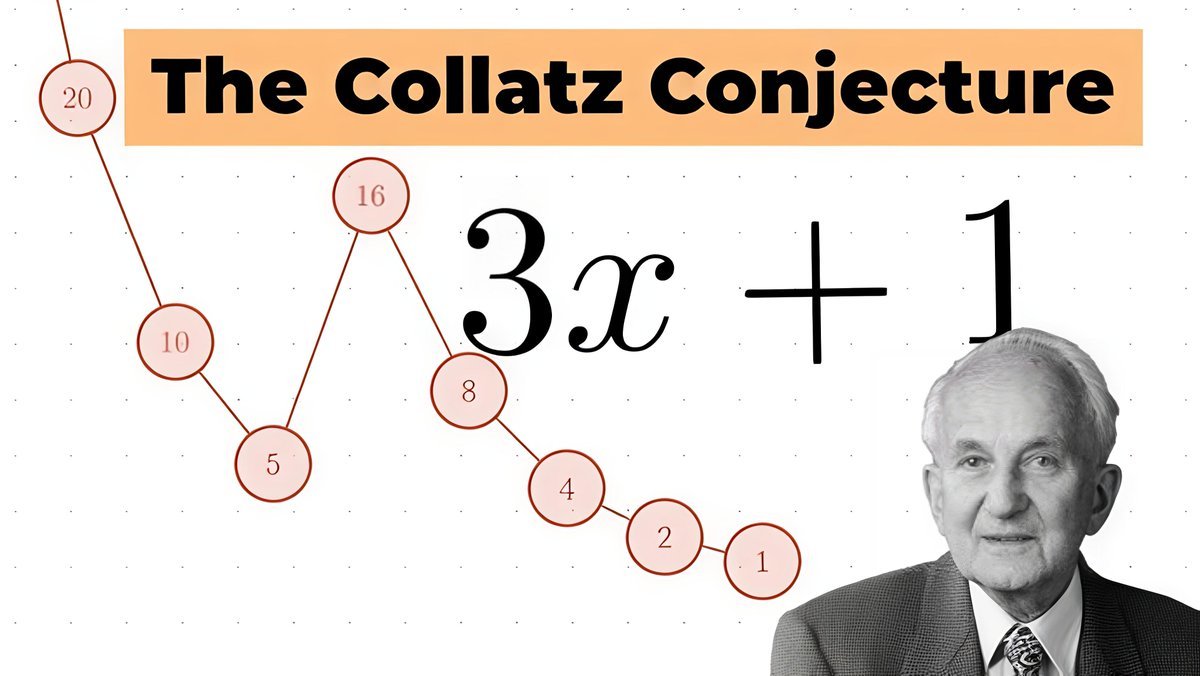
Legendary mathematician Paul Erdős once remarked that mathematics is not yet ready to solve the 3n 1 problem.
Known as the Collatz conjecture, it begins with a simple rule. Take any positive integer. If it is even, divide it by two. If it is odd, multiply it by three and add one. Repeat the process. The claim is that every starting number eventually reaches one.
Despite its simplicity, no complete proof exists. Yet modern progress offers strong hints. In 2019, Terence Tao showed that for almost all starting values, the sequence eventually drops significantly. This suggests that most trajectories do not grow without bound.
Probabilistic reasoning points in the same direction. On average, the sequence tends to shrink over time, making convergence to one highly likely.
Meanwhile, computers have verified the conjecture for numbers up to 2^68. Every tested case reaches one.
A simple problem, still unsolved, continues to challenge the limits of mathematics.
4
24
114
10,626
Carles Garcia retweeted

Una comisaría plena de policies espanyols del CNP fent tasques administratives que pot fer qualsevol altre funcionari del estat. A la porta un segurata. Es tot un despropòsit ! Quina merda de seguretat! Per això que s’en vagin a atrapar criminals als carrer i no viure del momio!
1
2
47
Carles Garcia retweeted

Jun 14
Joel Joan rep el premi Montserrat Carulla al FIC-CAT amb una reivindicació de la llengua catalana vilaweb.cat/noticies/joel-jo…
8
232
745
5,800
Carles Garcia retweeted

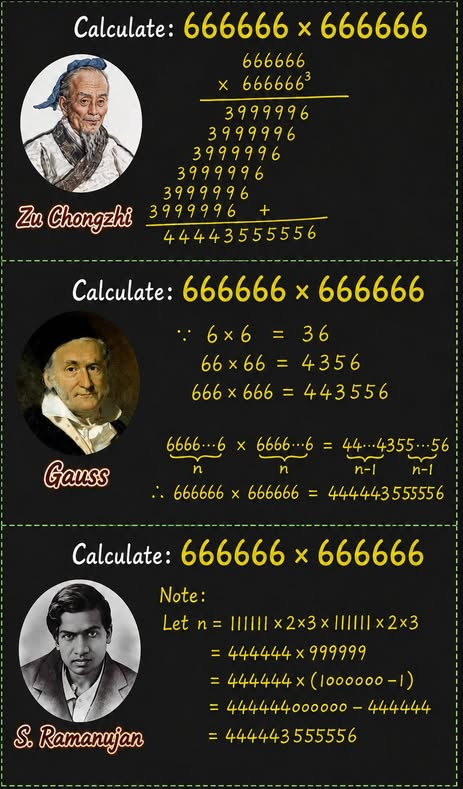
Three unique methods to calculate
3
47
314
11,086
Carles Garcia retweeted

Jun 14
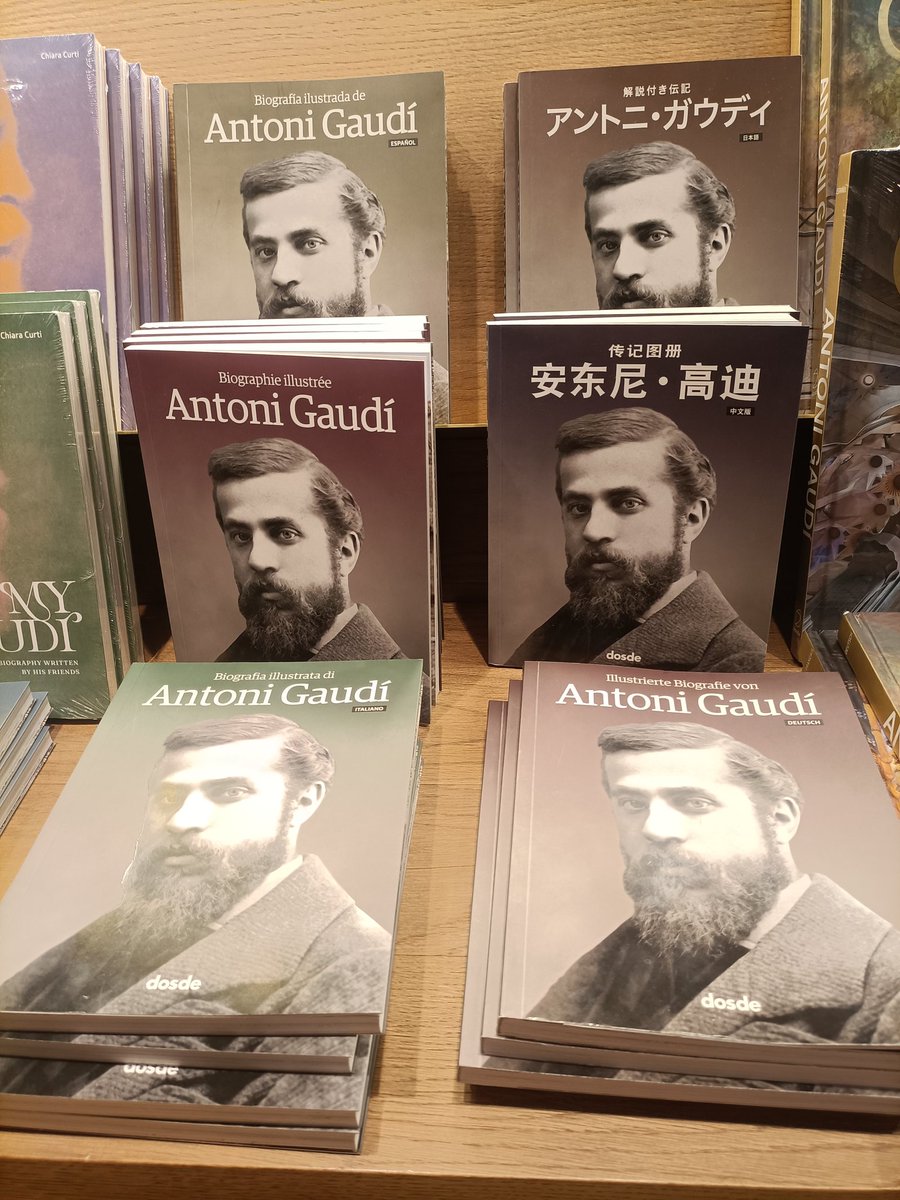
A la botiga de la #casabatllo la nostra llengua, la que #gaudi va defensar fins el dia de la seva mort, no existeix!
28
196
321
8,355
Carles Garcia retweeted

Jun 14
Toyota phát minh ra động cơ oto chạy bằng nước kìa 😁😁😁
Trong một bước di chuyển được thiết kế để phá vỡ ngành công nghiệp ô tô toàn cầu, Toyota vừa cho ra mắt một động cơ chạy nước dựa trên hydrogen được sản xuất bởi điện phân - và điều đó chỉ phát ra hơi nước! Không liti. Không có trạm sạc. Không có gì ngoài cuộc cách mạng thuần khiết. Với sự lựa chọn táo bạo này, Toyota không chỉ cạnh tranh với xe ô tô điện - nó đang tuyên bố kết thúc kỷ nguyên pin.
Massimiliano Grasso II
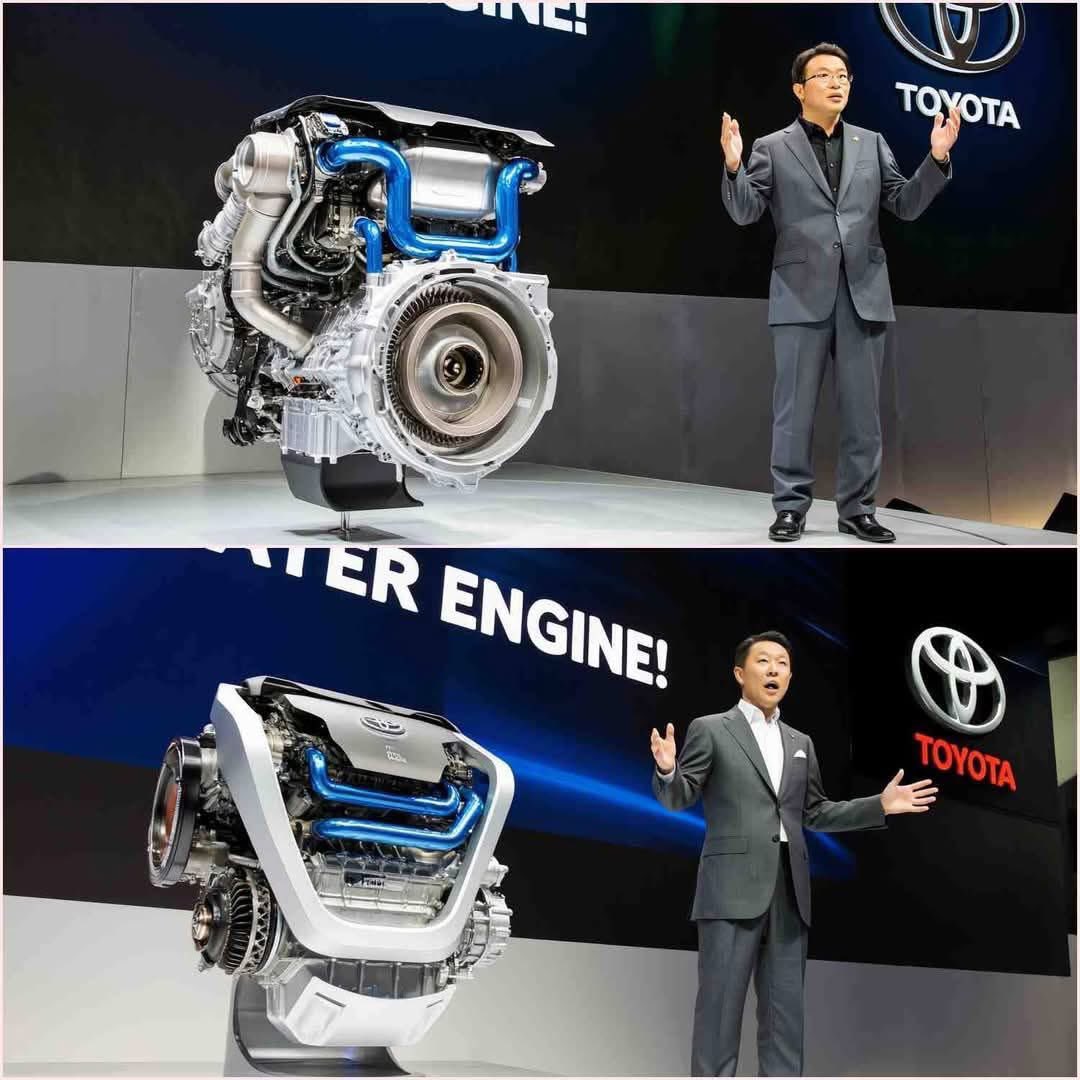
Community note
Toyota không phát triển động cơ chạy bằng nước qua điện phân; tuyên bố này là sai sự thật vì vi phạm định luật bảo toàn năng lượng. Xe hydro của hãng sử dụng hydro lưu trữ sẵn và thải hơi nước, không phải nước làm nhiên liệu. factcheck.afp.com/doc.afp.com.69… tuoitre.vn/hang-toyota-da… forbes.com/sites/rrapier/…
919
2,924
10,128
777,534
Carles Garcia retweeted

Jun 14
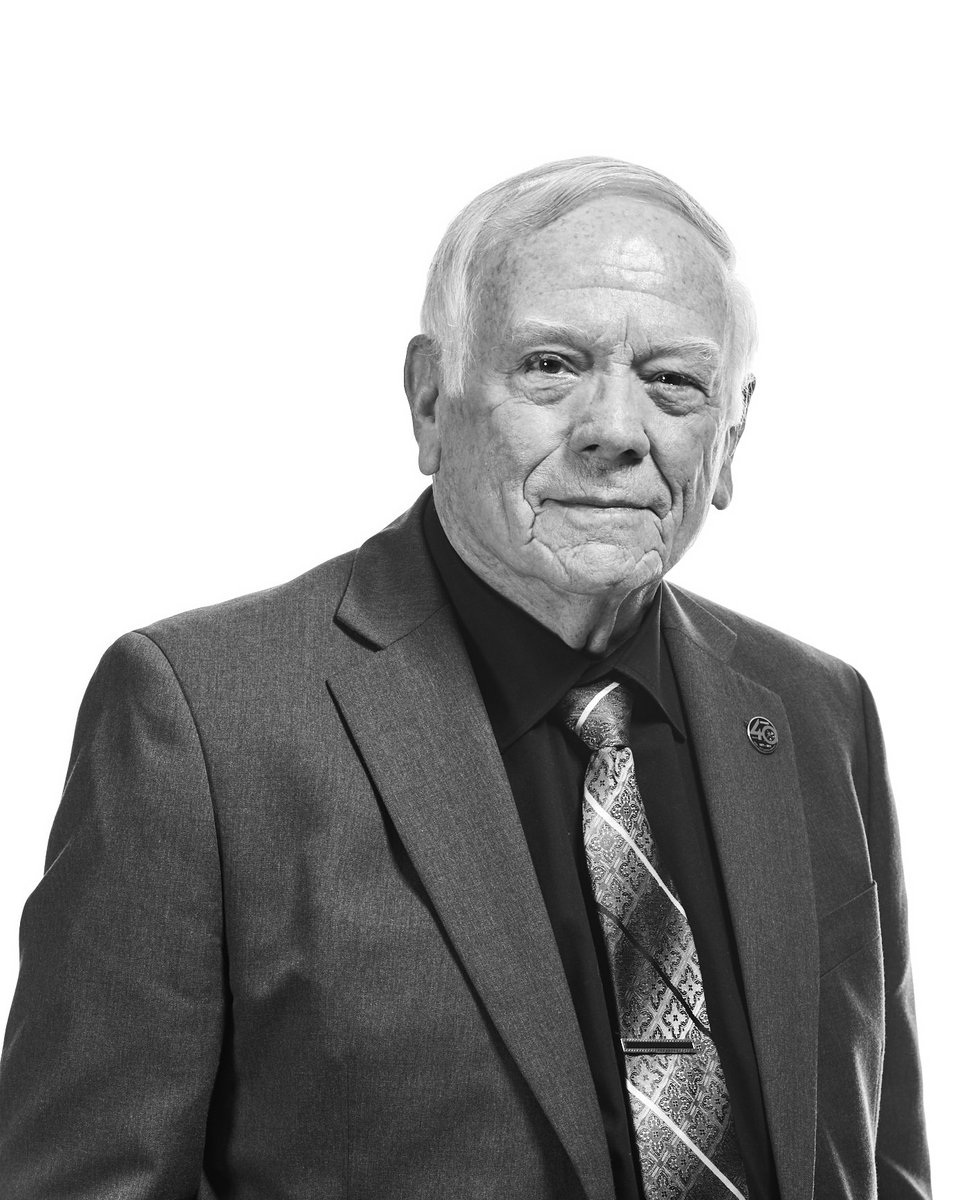
In the 1960s, a direct flight to Neptune would have taken nearly 30 years. That was longer than most spacecraft could survive. Reaching the outer planets seemed almost impossible.
But one engineer, working quietly with a pencil, found a way around this problem.
Gary Flandro, a scientist at NASA’s Jet Propulsion Laboratory, was asked to study how spacecraft might travel to the distant planets despite the limits of rocket technology at the time. Fuel was scarce, and engines were not powerful enough for such long journeys.
Flandro turned to a clever idea from physics called a gravity assist, sometimes known as a planetary slingshot. The concept is simple in principle. When a spacecraft passes close to a large planet, the planet’s gravity pulls it in and then flings it forward. In doing so, the spacecraft steals a tiny bit of the planet’s motion around the Sun. The planet slows down by an amount too small to notice, but the spacecraft gains a huge increase in speed without using any fuel.
With only paper, pencil, and the limited computers of 1965, Flandro calculated the future positions of Jupiter, Saturn, Uranus, and Neptune. What he found was remarkable. In the late 1970s, these giant planets would line up in a rare formation. This alignment would allow a single spacecraft to travel from one planet to the next, gaining speed at each step.
This opportunity appears only once every 176 years.
Flandro showed that a spacecraft could use Jupiter’s gravity to reach Saturn, then use Saturn to reach Uranus, and finally use Uranus to reach Neptune. This chain of boosts would cut the travel time to Neptune from about 30 years down to just 12.
This elegant piece of mathematics changed everything.
It became the foundation for the Voyager 1 and Voyager 2 missions, both launched in 1977. Thanks to this precise planning, the two spacecraft sent back the first close images of the outer planets. They later continued their journey beyond the solar system, becoming the first human-made objects to enter interstellar space.
All of it began with a simple insight, worked out by hand, that turned an impossible journey into a reachable one.
42
508
2,395
70,588
Carles Garcia retweeted

A veure si ho entenc: els socialistes es passen dècades alliçonant-nos sobre la importància de tenir impostos elevats per a pagar serveis socials i tota la mandanga, i resulta que el seu líder polític i alhora ex-president del govern feia de contrabandista de joies i utilitzava la "valija diplomática" per evadir el pagament d'IVA, impostos especials, transmissions patrimonials, o IRPF!!!
On són les queixes de tots els professors de la Mary Poppins University???
lavanguardia.com/politica/20…
174
2,055
4,550
88,785
Carles Garcia retweeted

Jun 12
"La sintaxi és una facultat de l'ànima", Paul Valéry.
6
16
536
Carles Garcia retweeted

Jun 12
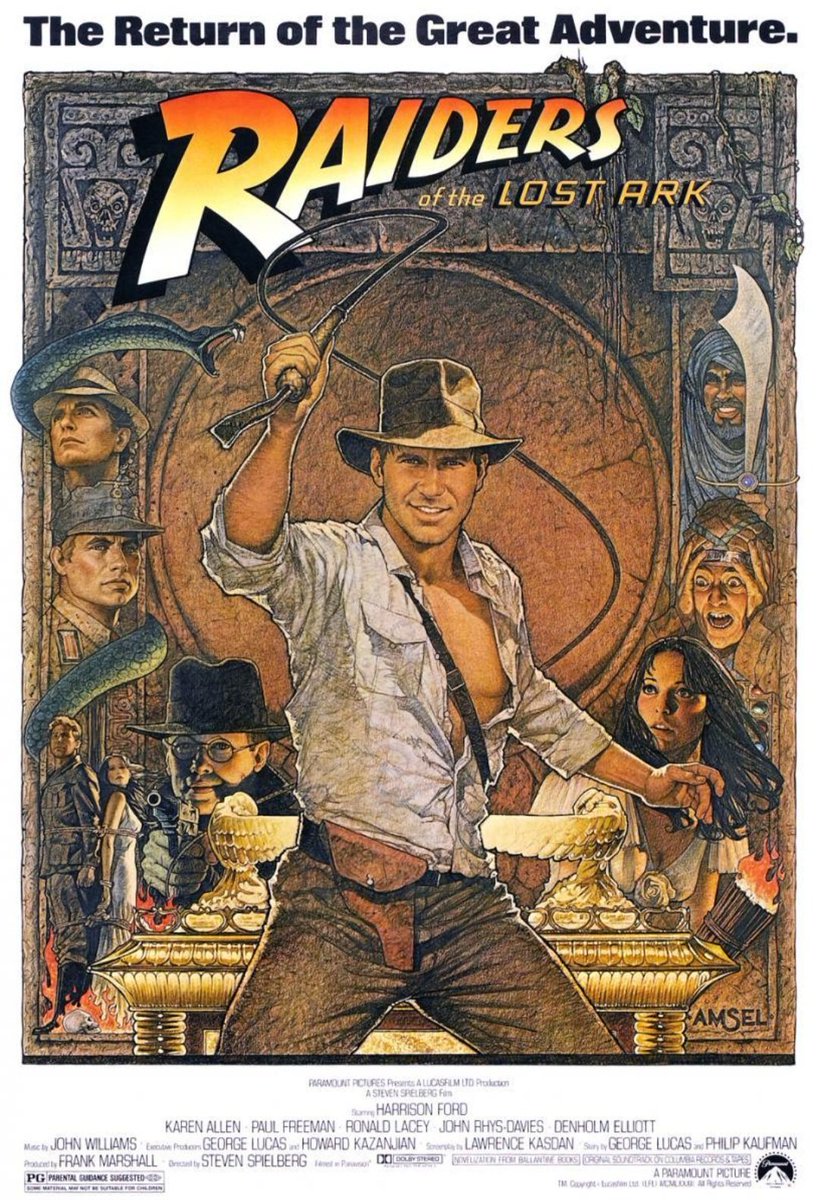
Aquí va el meu rànking actualitzat d'#Spielberg!
1. En busca del Arca Perdida/La Última Cruzada

6
2
27
6,332
Carles Garcia retweeted

Jun 13
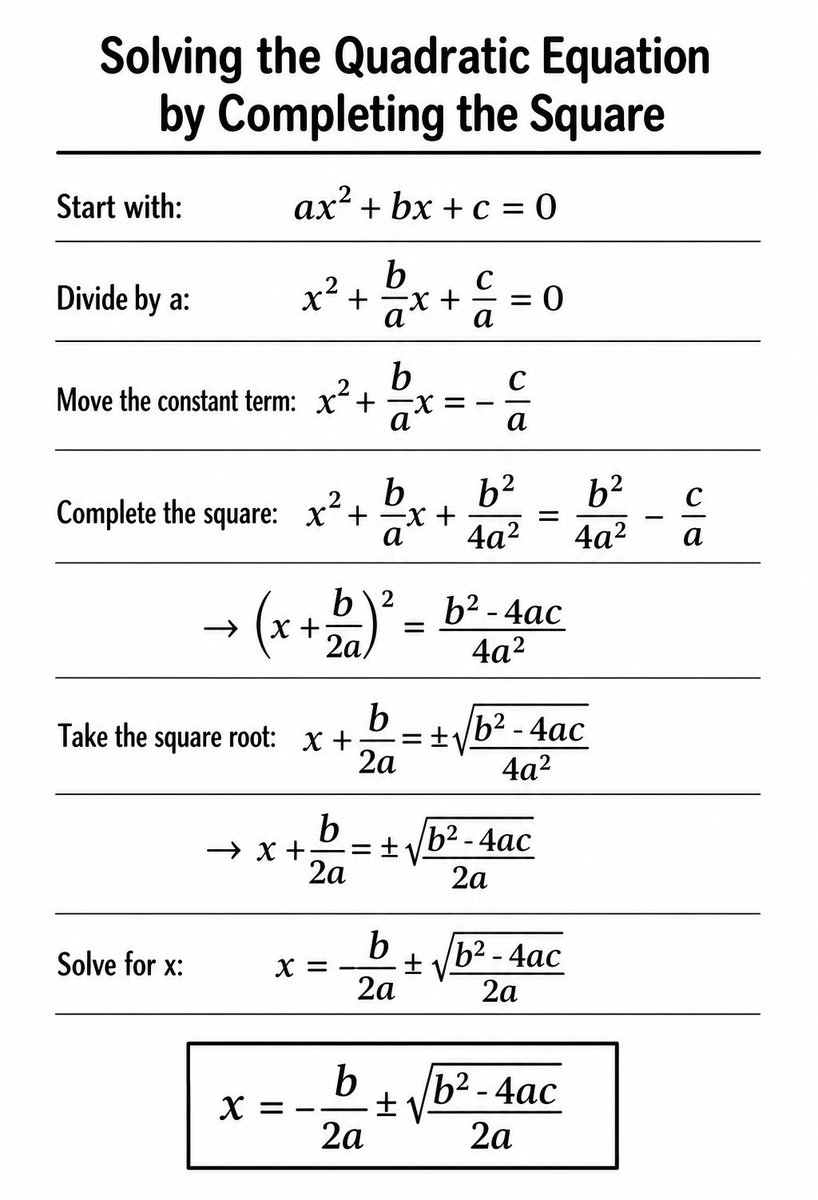
Deriving the quadratic formula by completing the square, shown step by step.
- Start with ax² bx c = 0.
- Divide by a
- Move the constant to the right
- Add (b/2a)² to both sides
- Simplify the right side to (b² - 4ac)/4a²
- Take square roots
- Solve to reach x = (-b ± √(b² - 4ac)) / (2a)
It is used to calculate the path of a projectile like a thrown ball or to find break-even points in business where costs and revenue follow a parabolic curve.
4
56
301
52,153
Carles Garcia retweeted

Jun 13
Tu entiendes que esos 12 ceros los ha generado el? Y que si no los hubiera generado, no existirian?
Tu eso lo entiendes?
1
3
129