
Quliter removes the manual layout bottleneck to make PCB design instant, infinite, and autonomous, so engineers can innovate instead of routing traces.
Joined September 2023
- Tweets 183
- Following 84
- Followers 996
- Likes 296
67 Photos and videos


Pinned Tweet

10 Dec 2025
What would change if a three-month PCB design project became a one-week task?
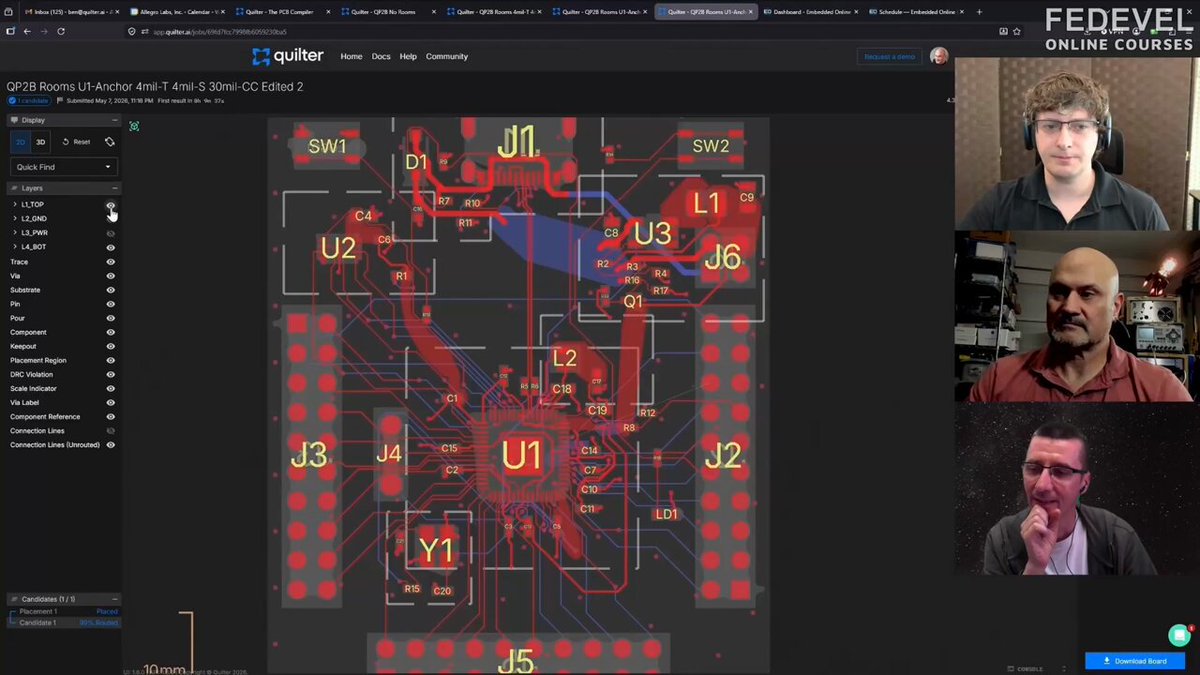
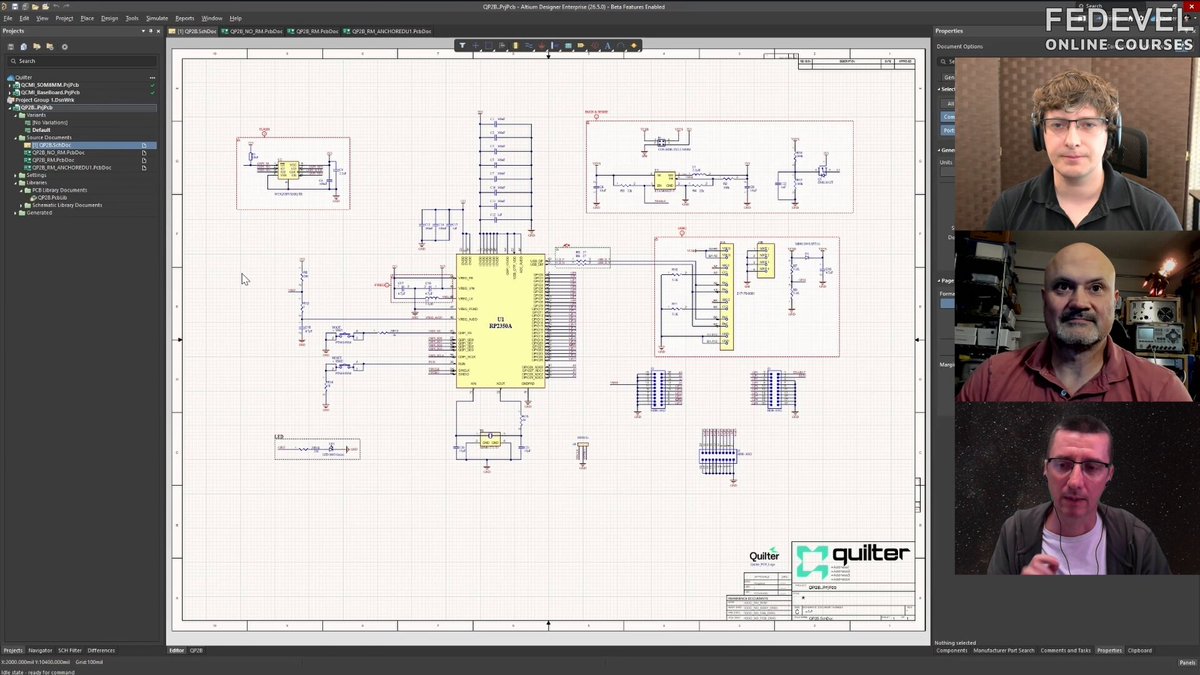
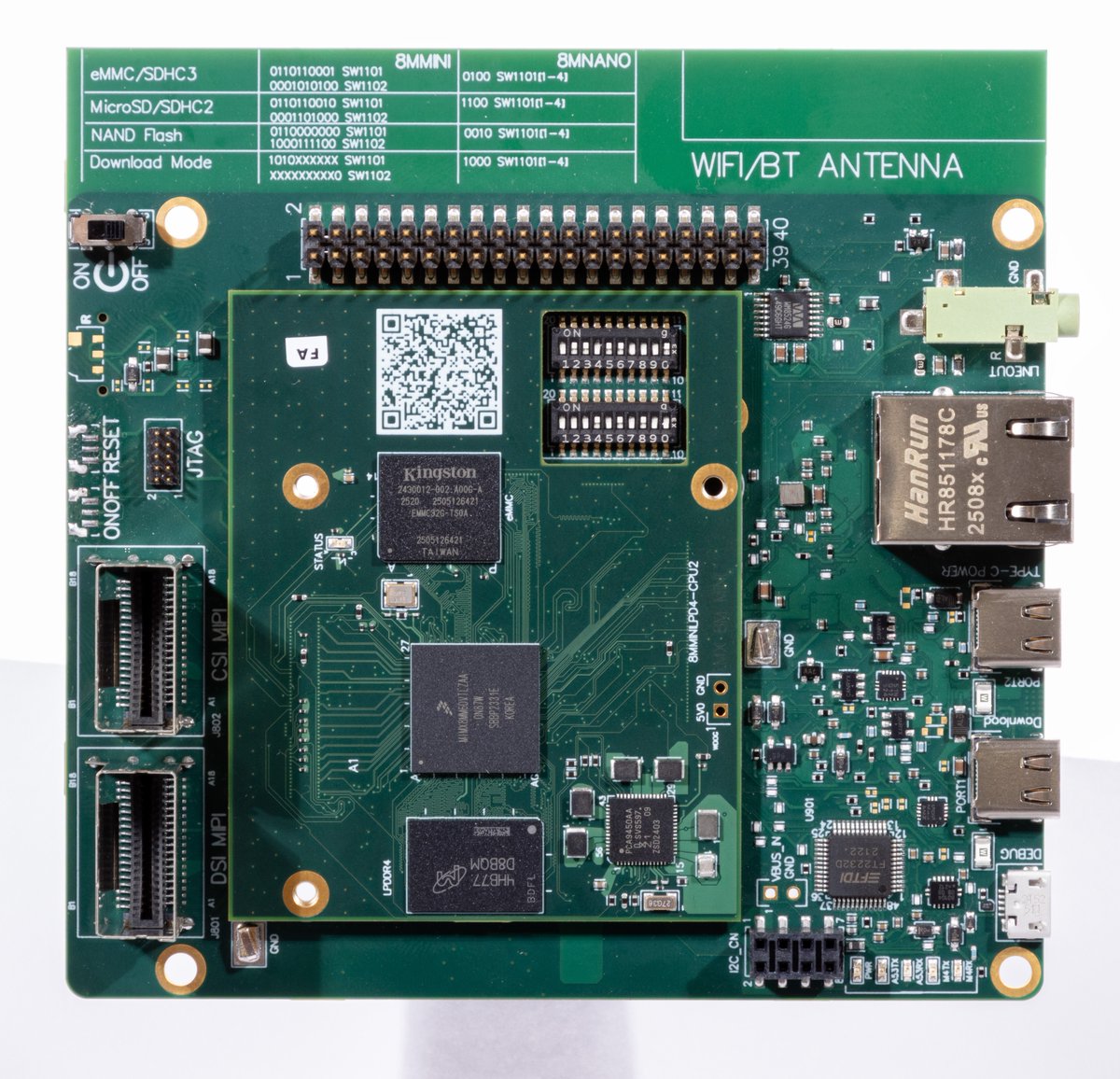
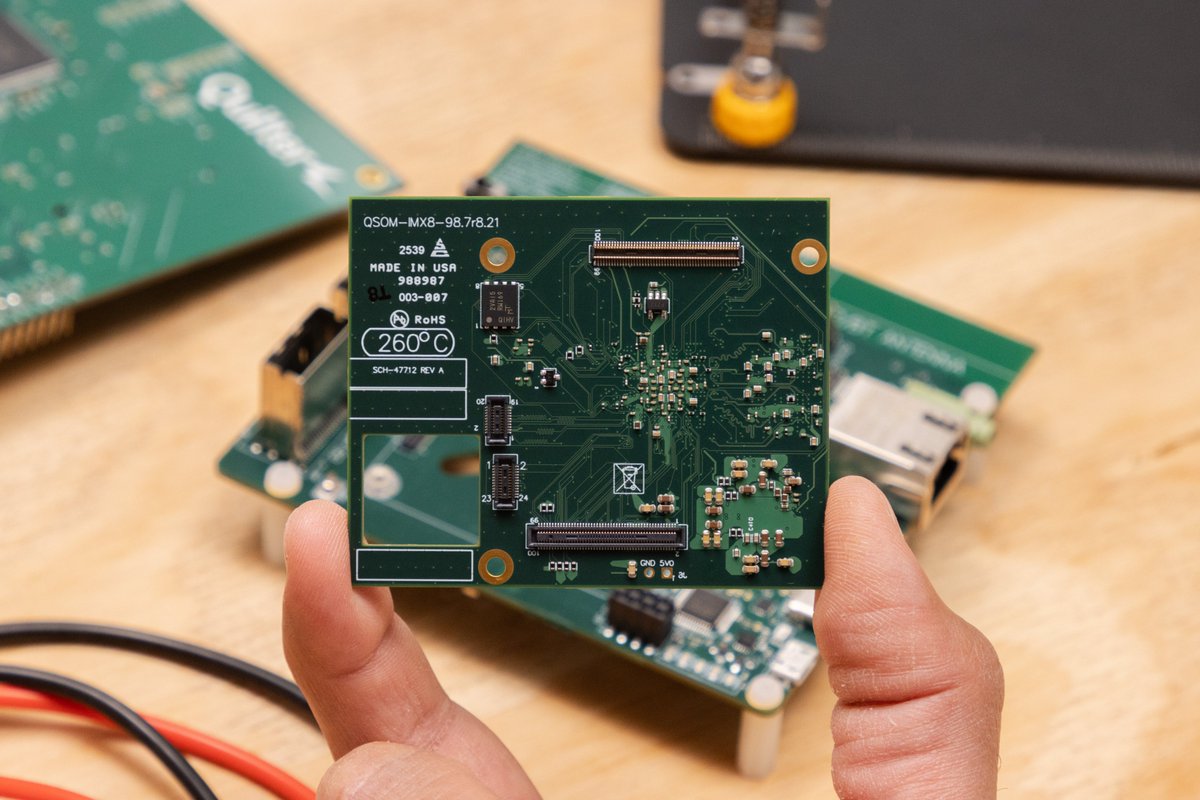
For Project Speedrun, a single engineer used Quilter to design an entire computer, reducing layout time from 428 hours to 38.5 hours—an 11x acceleration.
quilter.ai/project-speedrun
4
10
20
3,416

Jun 11
We didn't build another autorouter!
We know that when engineers hear about automated PCB layout, their first thought/question is usually "Is it another autorouter?"
The industry has been burned by many unsuccessful attempts at automating routing, to the point that engineers wore T-shirts like the one in the image attached. Big thanks to Chris Gammell for allowing us to use this image.
The thing is, PCB layout is a difficult problem to solve. It's essentially two problems tangled together. Placement decides where each component sits. Routing connects them with copper. The two halves can't be separated because you can't judge a placement until you try to route it. The number of ways to arrange and wire a board grows so fast that the solution space is effectively unbounded.
With advances in AI and cloud computing, we believe that we finally have a shot at developing a solution that can automate layout in earnest.
Check out our latest blog where we explain why PCB layout automation is such a hard problem, and why Quilter is taking a different approach to solving it than traditional autorouters.
quilter.ai/blog/pcb-autorout…
1
8
275
Jun 10
“Whether or not a PCB layout or design is good is computable.”
Our CEO @sergiynest joined the AI and Design podcast from CMU Human-Computer Interaction Institute hosted by Nikolas Martelaro to talk about why Quilter is taking a different path from most AI tools.
Here are key highlights when it pertains to PCBs design:
1. Imitation of existing designs has a ceiling, physics does not.
A lot of AI tools learn by mimicking human behavior. We all know how powerful it can be for text. For printed circuit boards, if a PCB layout is 99% right, the remaining 1% can still kill your whole board. Moreover, if a model learns from existing expert layouts, how do we know that all of those layouts were optimal?
Quilter starts from physics instead. Whether a layout works can be computed from electromagnetics and thermodynamics. So we optimize against that directly.
2. "Vibe coding" hardware has a hard limit.
For simple boards, yes, hobbyists are experimenting with vibe engineering. We've seen a mechanical engineer with no EE background ship a PCB after a few hours with KiCAD and Quilter. That works when the board is simple and the stakes are low. But for anything with real complexity nobody serious is prompting their way to a validated layout.
3. Constraints are at the heart of layout automation.
Before you can automate anything, you have to capture what "good" means for this specific board. Across a real design, that can be tens of thousands of constraints. No engineer is going to manually capture all of them. Sergiy talked about 3 possible approaches: a chatbot that interrogates you, tables you fill in and verify, or direct selection on the schematic you already know by heart. The truth is nobody has solved how to design the best human-AI interface for that yet, including us.
The discussion went beyond the traditional PCB topics and touched on how to hire engineers in an era where AI tools are expected, why deleting from your design until things break is a better practice than adding features, how to stay focused on one problem when agentic tools make it cheap to build anything.
Take a listen:
podcasts.apple.com/us/podcas…
open.spotify.com/episode/5aw…
1
1
136
Jun 8
We are excited to have been mentioned by @ninaachadjian during her recent interview with @Bloomberg !
"There's all of these functions: electrical engineers, mechanical engineers, aerospace engineers. And for decades, they have been using the same software stack. And a lot of these incumbents were built in the 1980s."
She named our founder Sergiy Nesterenko as one of two former SpaceX founders Index recently backed. During his years at SpaceX, Sergiy kept running into the same problem: waiting for a human to manually lay out every printed circuit board. PCBs are at the center of everything being built in aerospace, defense, and AI hardware today, and the layout process hasn't kept pace with how fast teams need to move. That's what Quilter is working to change.
We got a shoutout on Bloomberg just days after we were mentioned on @CNBC. Is it just us, or are we becoming famous 😎 ?
youtube.com/watch?v=uJMgzPX7…
2
112
Jun 2
"When I do layout, the very first layout, I know I'm going to trash it. Because I'm using it to see where there's space and where there isn't."
Robert Feranec is describing a workflow most layout designers know well: a throwaway first pass to understand the physical reality of the board.
One use case for Quilter is exactly this: design exploration.
When generating a first-pass layout is cheap, you stop committing prematurely to one floorplan. You can compare a different placement strategy or a different region assignment, and see what each looks like before investing days of manual work in one direction.
Robert framed it as time savings. It's also about making better decisions earlier.
Watch the original video here youtube.com/watch?v=aXjcSAsH…
2
8
296
May 29
Most conversations about AI in hardware swing between two extremes: it's useless, or it's about to replace everyone in the building.
Our founder @sergiynest sat down with Zachariah Peterson on the @altium OnTrack podcast for a more grounded discussion on the subject.
A few highlights:
- PCB layout is not a language problem. LLMs are good at reading datasheets and writing firmware. They are not the right tool for deciding where a component goes and how a net routes. That's geometry, physics, and manufacturing, which is why Quilter trains its own models with reinforcement learning rather than wrapping a language model.
- The realistic goal isn't a magic box. When we talk to VPs of engineering, nobody is asking for a perfect board out of a one-sentence prompt. They're asking whether a three-week layout can become one. That's a more achievable problem to solve than nailing a simple board to production perfection.
- Being honest about our limits is a feature. Customers tell us we're a breath of fresh air, mostly because we're willing to say "no, we can't do that yet." Engineers see through hype immediately, and we are tired of AI hype as much as everyone else.
Check out the conversation here -> youtube.com/watch?v=YJTbsoxP…
1
1
358
May 27
There's a common misconception about Quilter that we have a magic button you just push to do your PCB layout.
We don't. In this clip from our recent conversation with Robert Feranec, @sergiynest says it plainly: there's no magic button.
Quilter is a tool. A useful mental model is to treat it like a junior engineer on your team, correcting it every few iterations.
Robert makes a good point: on a 50-component board, doing layout by hand is fast enough that the value of a "junior engineer" isn't obvious. On a 3,000-component board with thousands of nets and vias, where each component can take 20 seconds to place by hand, Quilter can save you a lot of time.
You can watch the original video here youtube.com/watch?v=aXjcSAsH…
1
5
973
May 14
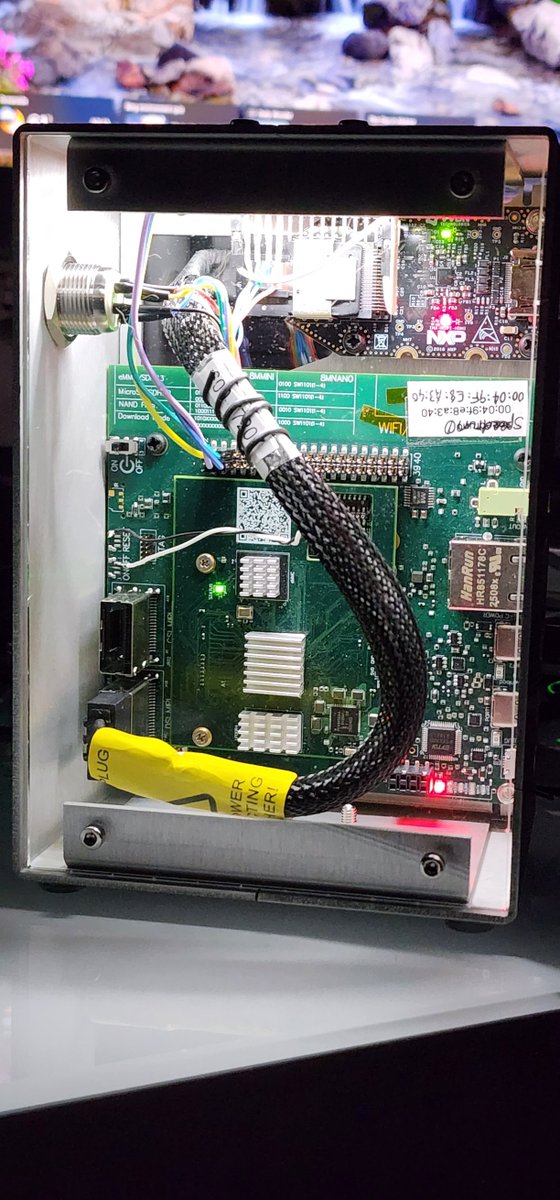
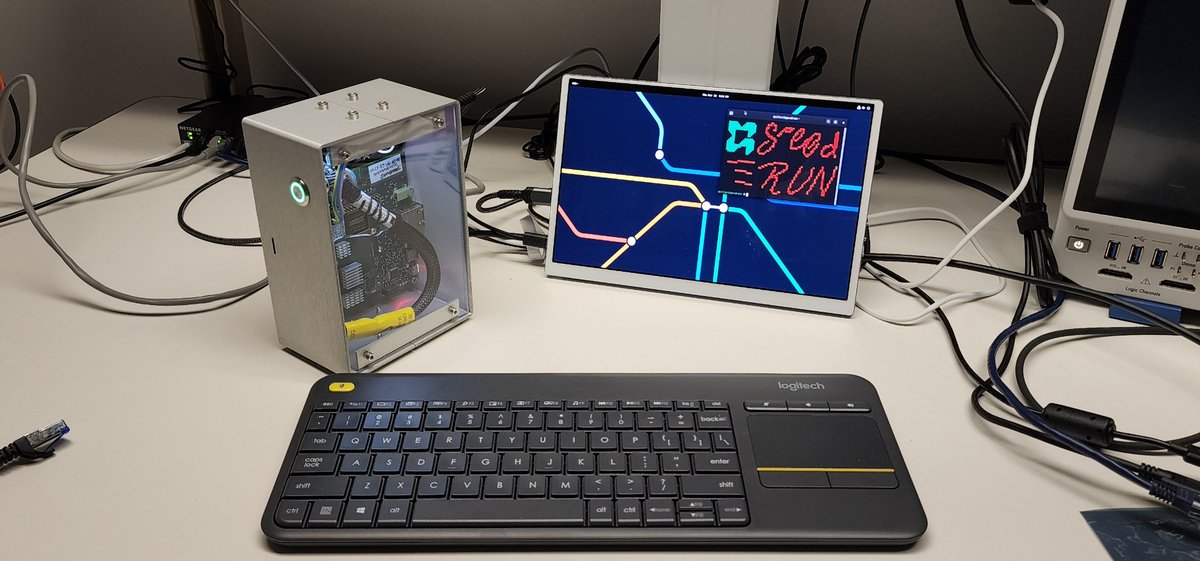
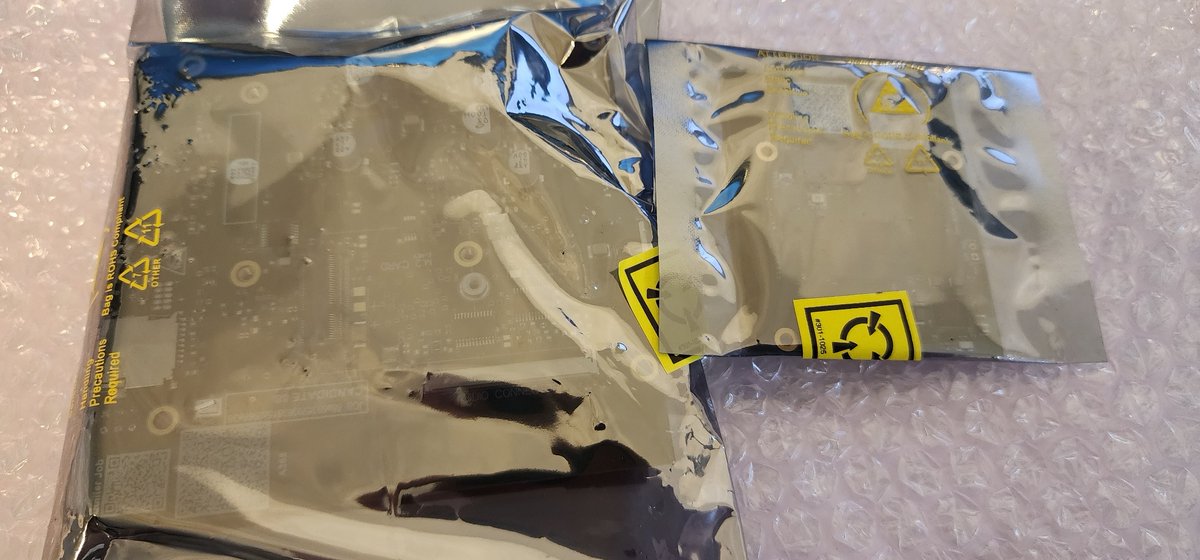
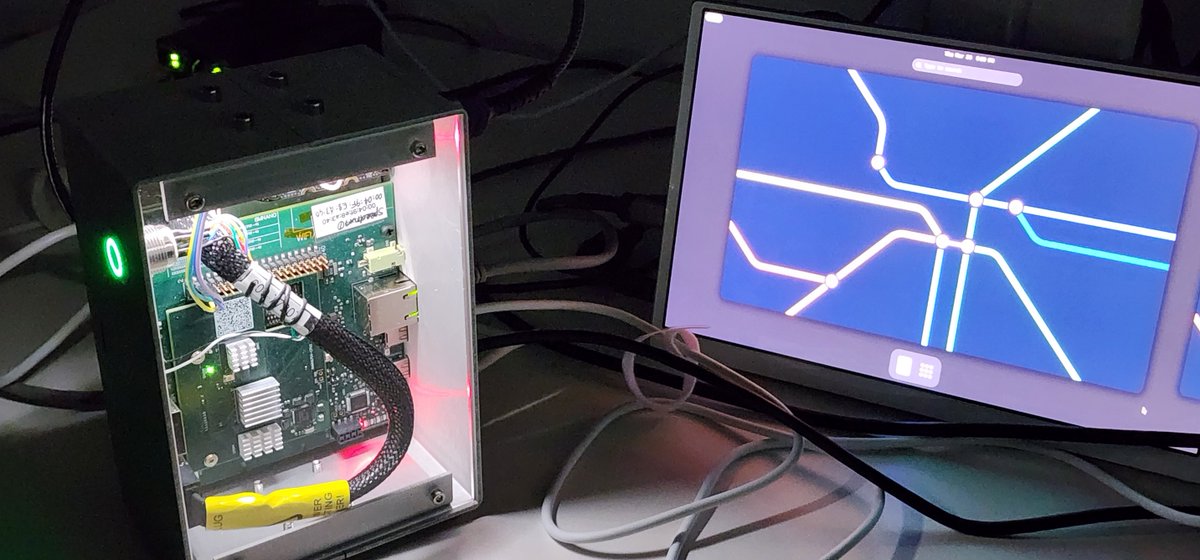
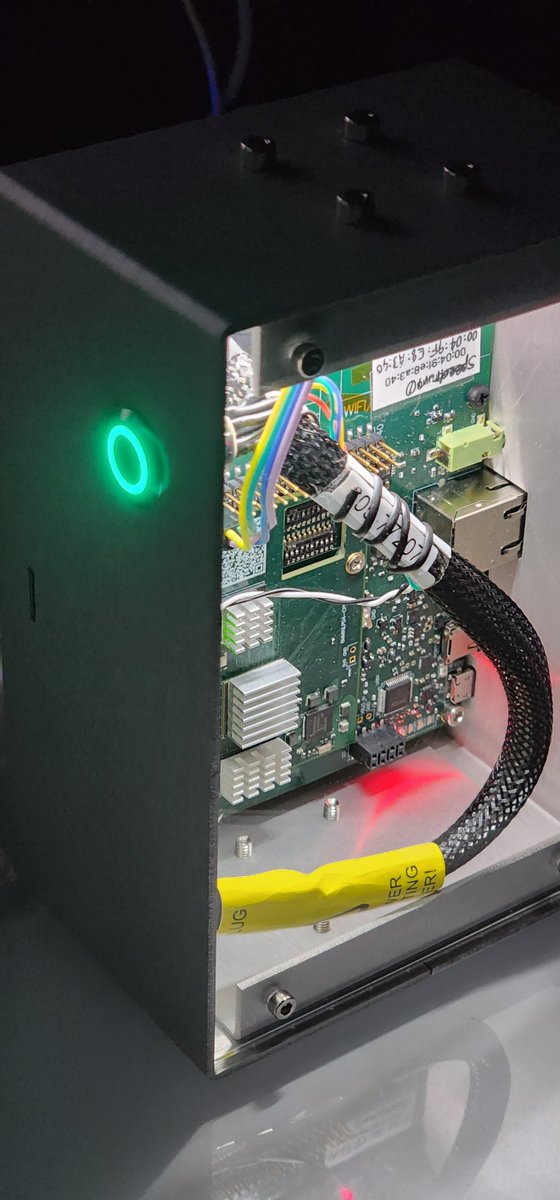
Did you know that we didn't just lay out the i.MX 8M Mini boards with Quilter AI?
Ben gave the boards a proper home. Project Speedrun is now a fully functional computer with a custom-made enclosure. We've joined video calls on it and played Doom. Check out the up-close glamour shots.
If you haven't heard about Project Speedrun, you can learn more here quilter.ai/project-speedrun
#PCBDesign
1
4
364
May 8
"We have a 6-month queue for a PCB designer's time, with no one in the pipeline to hire."
That's a US defense contractor describing the problem we hear about from almost every team we talk to: not enough engineering capacity.
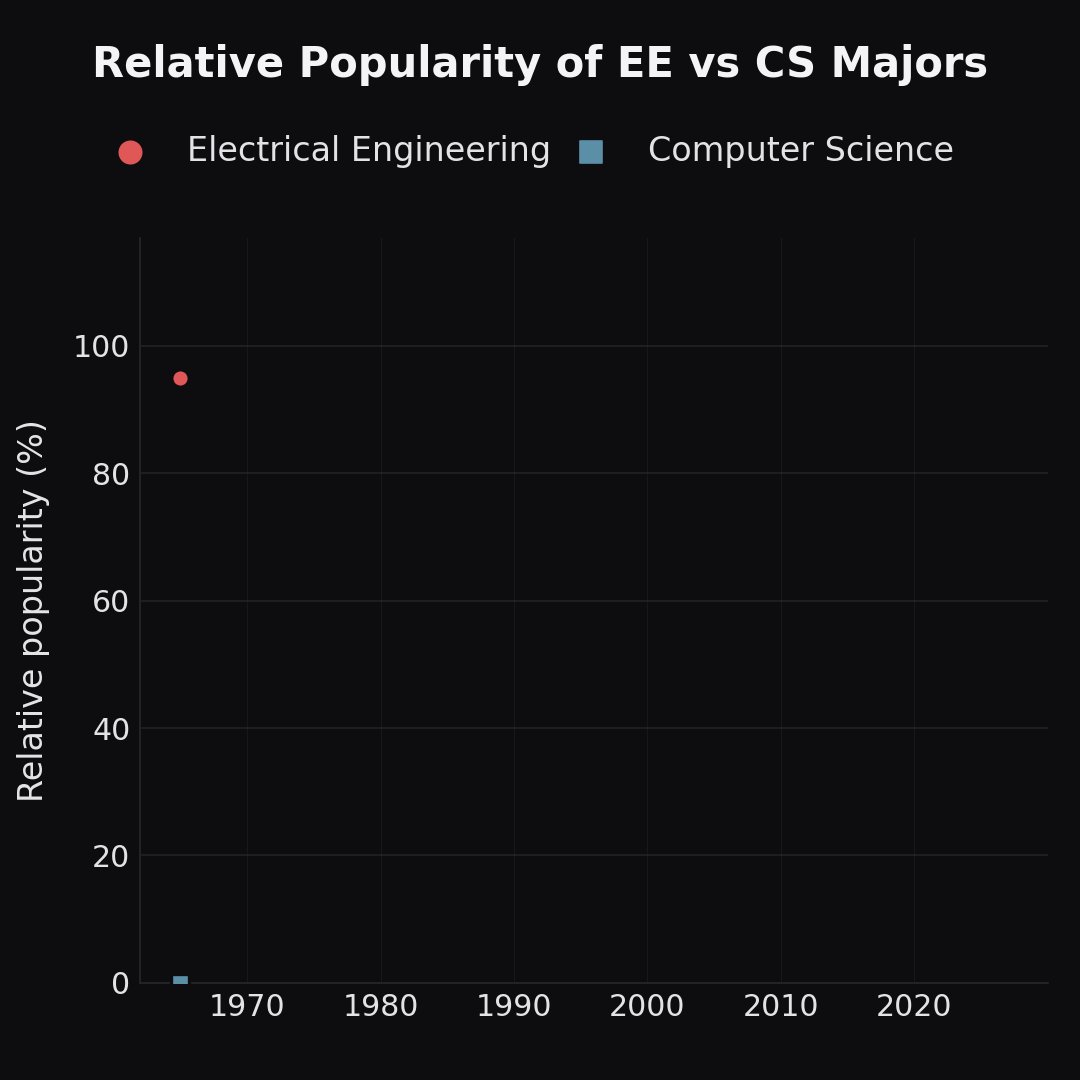
The electrical engineer shortage isn't a hiring cycle. It's a 50-year structural decline.
- US electrical engineering enrollment is down roughly 90% vs. computer science since the 1980s
- 3 engineers retire for every 2 entering the workforce
- 77% of firms report difficulty hiring qualified electrical engineers
If you can't convert the hiring budget into a human engineer, you can convert it into engineering capacity in another form.
We'll be upfront: we naturally benefit from making this argument. Quilter automates PCB layout, so the team you already have can ship more boards in less time.
However, no single product can close a gap of this size. While more experienced engineers retire, industries that depend on custom electronics (defense, automotive, aerospace, energy, AI/computing) are all growing simultaneously competing for the same finite talent pool. Our goal is to be a part of the solution to this problem.
quilter.ai/blog/hardware-eng…
1
8
452
May 7
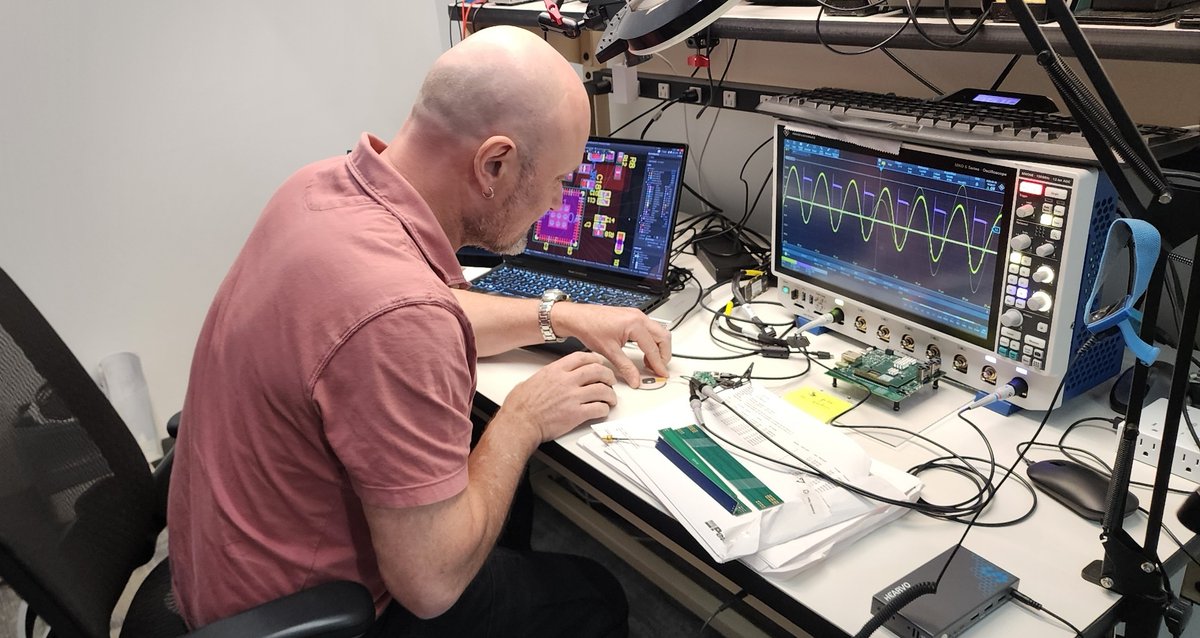
Behind the scenes at Quilter lab! Ben is working on another hardware project. Stay tuned!
2
1
19
1,657
Quilter retweeted

ICYMI: @QuilterAI CEO @sergiynest recently shared his POV in @politico on why onshoring PCB manufacturing is critical for the future of U.S. robotics. 🤖⚡
Read more: bit.ly/4vWAYow
1
1
120
Apr 28
"Technology is easy. People are hard." That's how Pooya Tadayon sums up nearly 30 years across semiconductor test, packaging, and pathfinding.
The counterintuitive piece: friction inside hardware programs gets worse as teams get more technically capable.
Our Hardware Rich Development interview gets into why, and what he learned about shipping product anyway.
Conversations like this one are the part of the work we look forward to most. We build for hardware engineers, so we spend a lot of time listening to them.
quilter.ai/blog/technology-i…
2
2
190
Apr 22
Project Speedrun is getting a shoutout at the Embedded Online Conference next month.
Max Maxfield is featuring the board we laid out from the NXP i.MX 8M Mini reference design in his session, "A Smorgasbord of Advanced Technologies." That's Project Speedrun: a Linux-capable motherboard with DDR4, ethernet, USB, HDMI, and hardware-accelerated graphics, designed with Quilter in 38.5 human hours versus the 428 originally quoted.
The conference runs May 11-15, 2026. If you want to tune in, Max is offering $100 off registration with code MAXFIELD100.
Conference: embeddedonlineconference.com
Session: embeddedonlineconference.com…
1
3
303
Apr 21
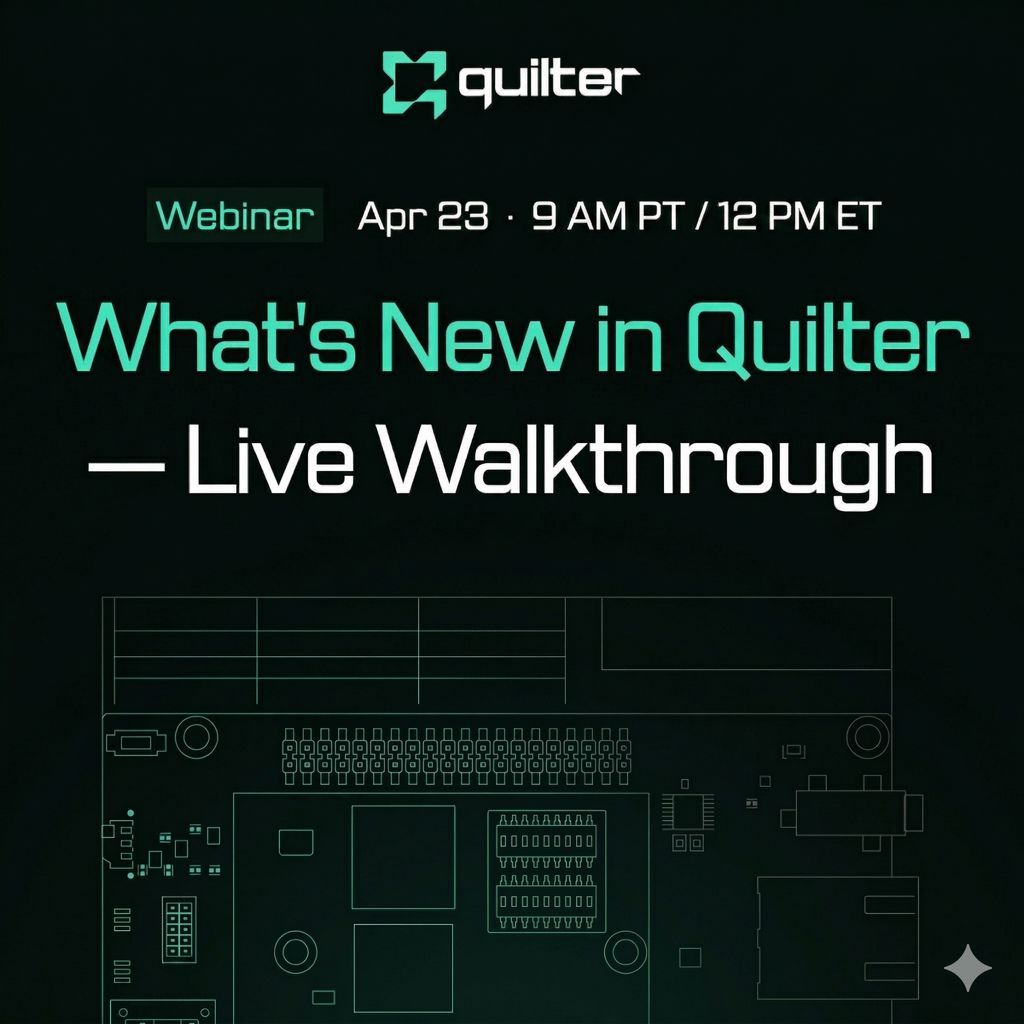
We've been shipping a lot, and we are excited to show you what's new.
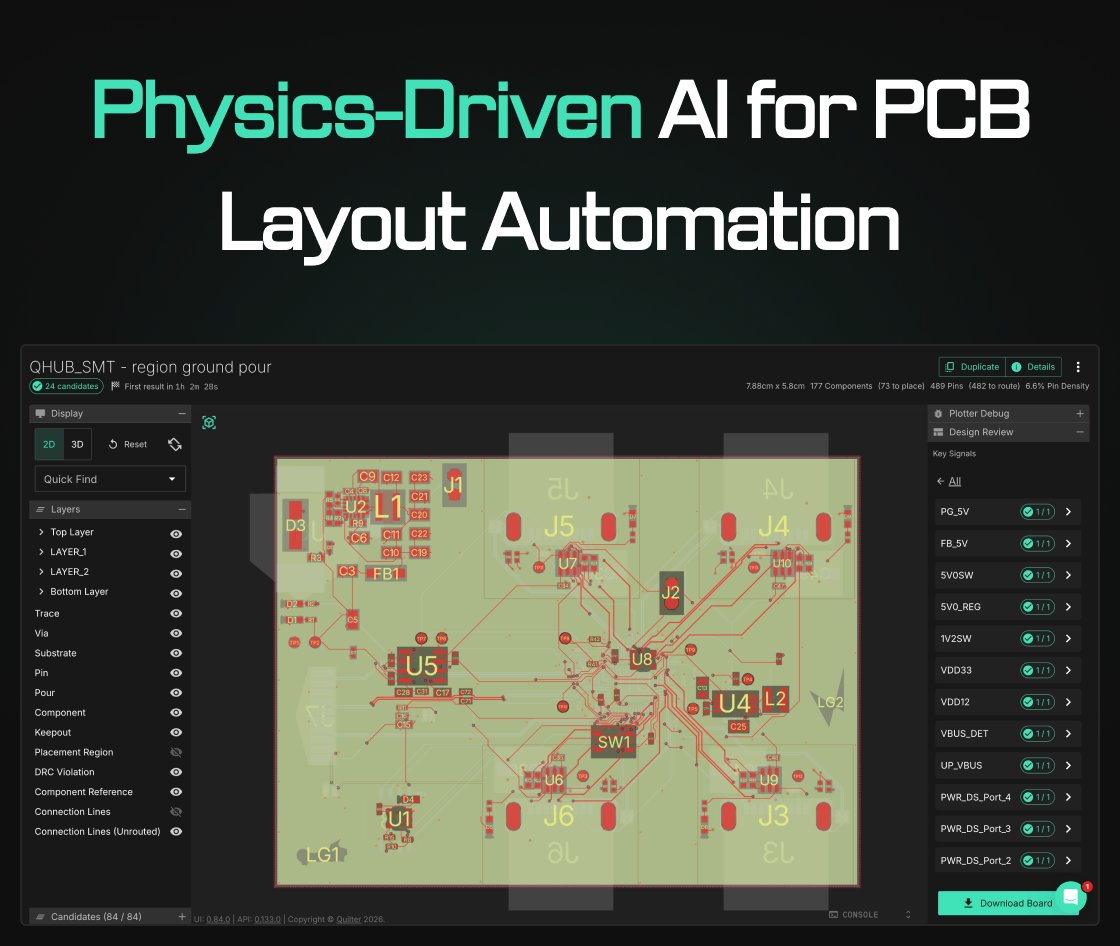
This Thursday, we're going to walk through everything that's landed in Quilter in Q1: Simbeor-calculated impedance profiles, ground net comprehension with region pours, a rebuilt setup flow, a new full-screen candidate reviewer, and more. We'll demo it all on a real board so you can see how it comes together in an actual design.
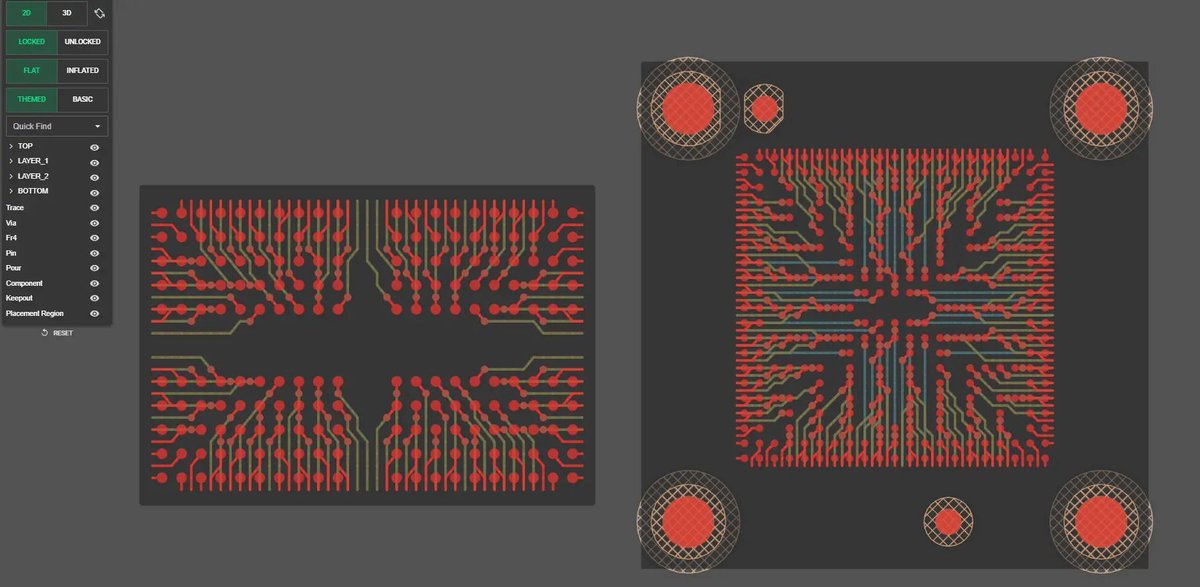
We're also giving you an early look at what's shipping next, including the one we know you've been waiting for: automated BGA fanouts. If you've ever burned a Friday fanning out a large BGA, this is the release you'll want to see.
Register now us06web.zoom.us/webinar/regi…
1
2
7
267

One thing I learned is that launching a hardware produce may take 10 cycles of prototyping, each cycle taking weeks for PCB layout alone… @Quilter compresses that into hours…
Apr 15

The real value of PCB automation isn’t one magic board.
It’s compressing the dozens of prototype cycles before the final product ships.
Sergiy Nesterenko @sergiynest says that’s why hardware takes years — and why speed matters so much.
1
7
1,134
The impact that SpaceX alumni are going to have on the hardware sector cannot be understated
Apr 15
Sergiy Nesterenko @sergiynest , Founder & CEO of Quilter on what SpaceX taught him:
"The physics is the real ultimate guide"
He says the biggest thing he learned was speed: build it, test it, learn from the failure.
In hardware, physics always gets the final say.
3
23
3,072
Quilter retweeted

If you have also access to Design, you get a schematic and final BOM too. All automatically.
Then that design, and a basic PCB for sizing, goes to quilter.ai for layout. After that to a contract manufacturer for making it.
Great work by @quilterai!
1
1
121
Apr 14
If you've been wondering whether Quilter is ready for the boards you design, this is the fastest way to find out 👇️
On April 23rd, Quilter CEO Sergiy Nesterenko and Head of Product Richard Whitney will cover:
→ How Quilter fits into your existing ECAD workflow
→ Key milestones from 2025
→ Live walkthrough of Q1 releases on a real board: calculated impedance profiles (Simbeor), ground net comprehension, region pours, and our rebuilt setup flow
→ Early look at what's shipping next: automated BGA fanouts and clearance constraints from your uploaded files
→ Live Q&A
Register now -> buff.ly/MkPwuiC
2
151