
Abyss ponderer
Joined November 2013
- Tweets 4,815
- Following 158
- Followers 995
- Likes 3,899
1,442 Photos and videos









3 Mar 2024
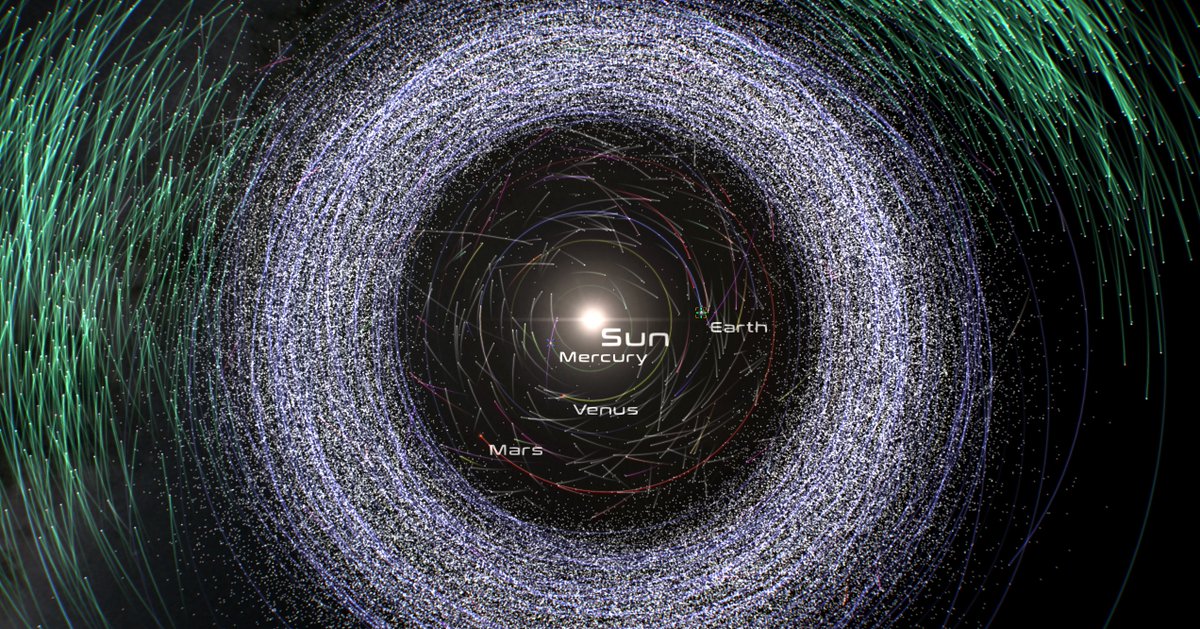
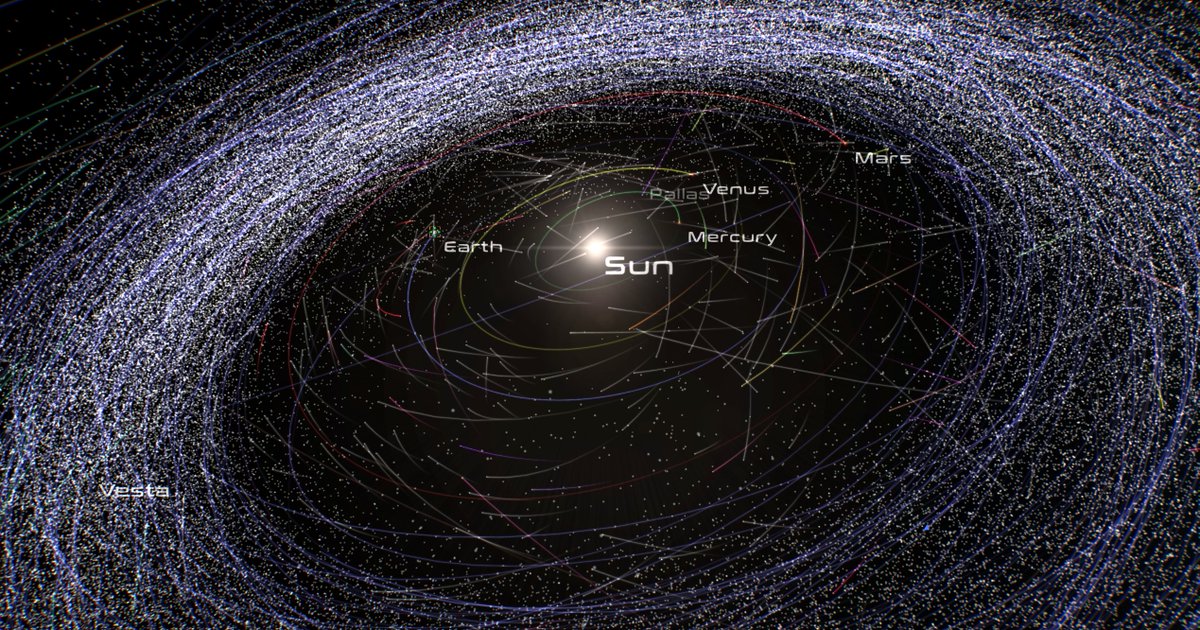
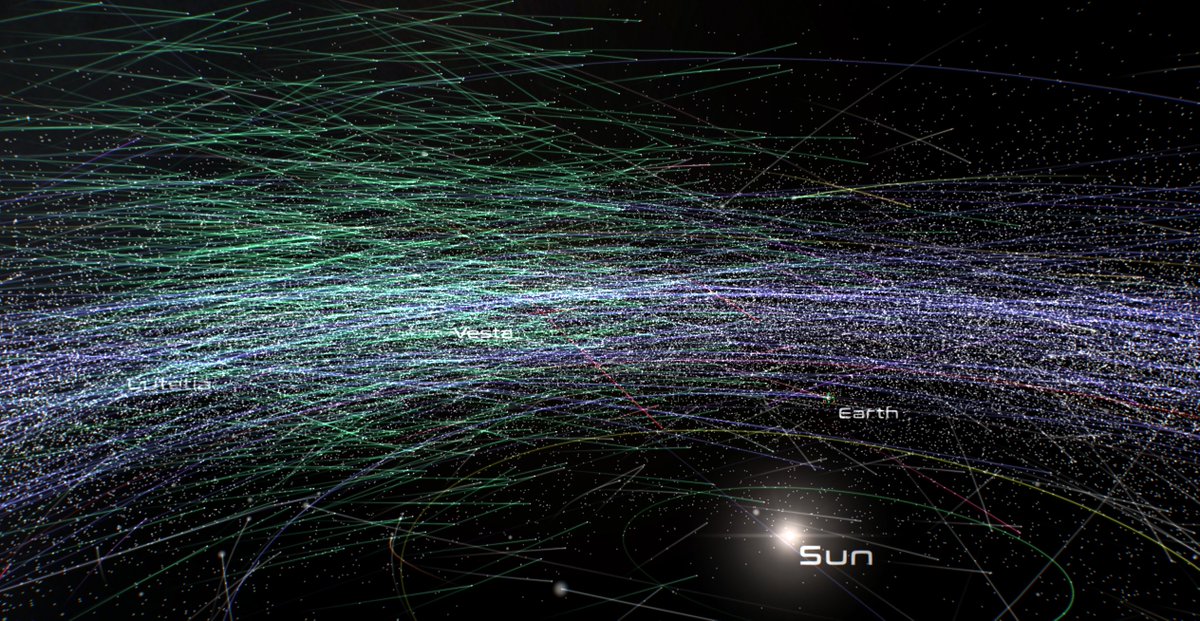
A visualization of how the inner solar system looks like when you include the orbits of most of the currently known asteroids:
1
4
14
1,191
3 Mar 2024
If you want to play around with it too, the way these pictures were made was with a free program called Gaia Sky available here: zah.uni-heidelberg.de/gaia/o…
And in order to get the asteroid orbits I have included, you need to download these extra datasets to it from the obvious option to do so in the main UI.

1
425
21 Jan 2024
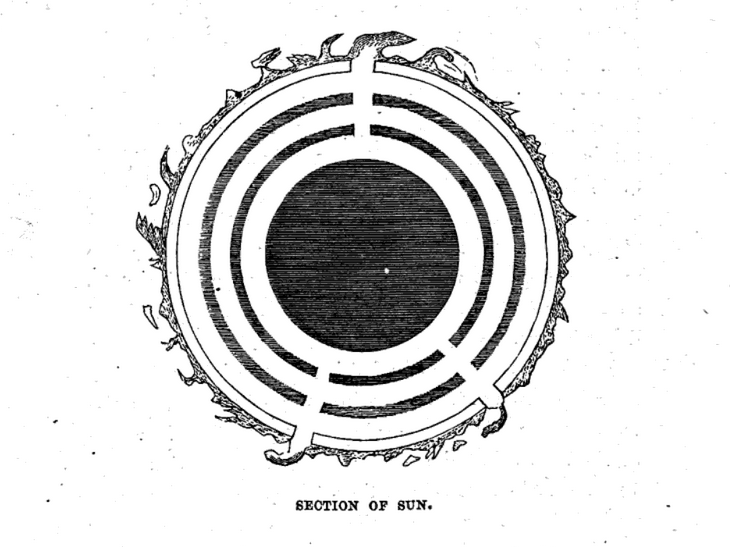
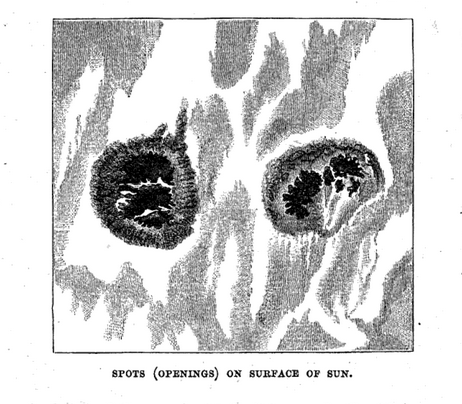
Diagram of a multilayered hollow (and potentially habitable) Sun.
From a victorian 1877 popular science book called half Hours in Air and Sky.
1
3
515
21 Jan 2024
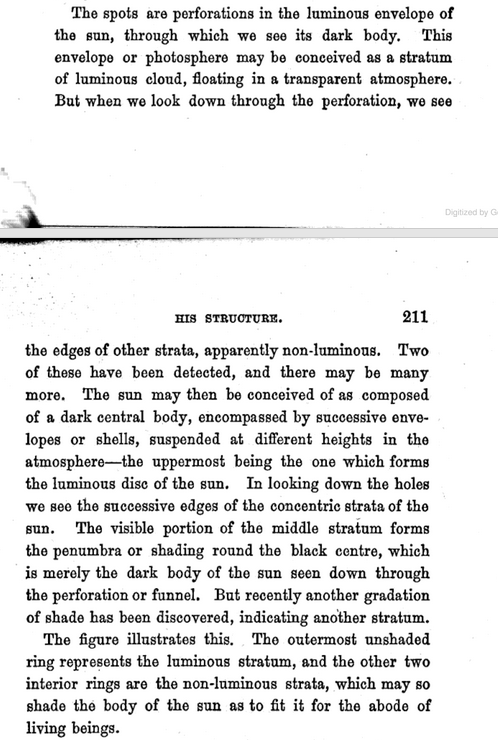
The reason for this belief for the sun at that point seems to stem from the previous observations of Scottish astronomer Alexander Wilson's who focused in recording examining sunspots.
Which he was fairly convinced were depressions on the Sun's surface (somewhat accurate and the effect that makes them appear so being known to this day as the Wilson effect), and holes that revealed a non luminous dark surface of "dark globe" underneath a luminous atmosphere. (well, that part a bit less accurate).
Further more he was convinced he had observed additional dark shells through them, thus the multi-shell diagram.
Although all this might sound a bit silly, in the end one must remember that one is talking about an era before nuclear physics was a thing. The mere fact that the sun was "glowing" was already a mystery with no other scientific explanation other than "Goddidit".
So if one miraculous and designed thing exists in the sky, no reason it can't be further designed. And if you think that you have seen a structure clearly intented to insulate the interior from the exterior, then you might as well concluded it is likely so to as to protect someone.
Tl;DR: There was a small period in cosmology where astronomy was doing as advanced a thing as figuring out the atmosphere of the gas giants with spectroscopy and yet people still weren't 100% sure the Sun wasn't hollow and inhabited!
1
1
275
21 Jan 2024
Google books copy of "half Hours in Air and Sky"
books.google.co.uk/books?id=…
And also if interested Alexander Wilson's sunspot observations:
royalsocietypublishing.org/d…
221
20 Jan 2024
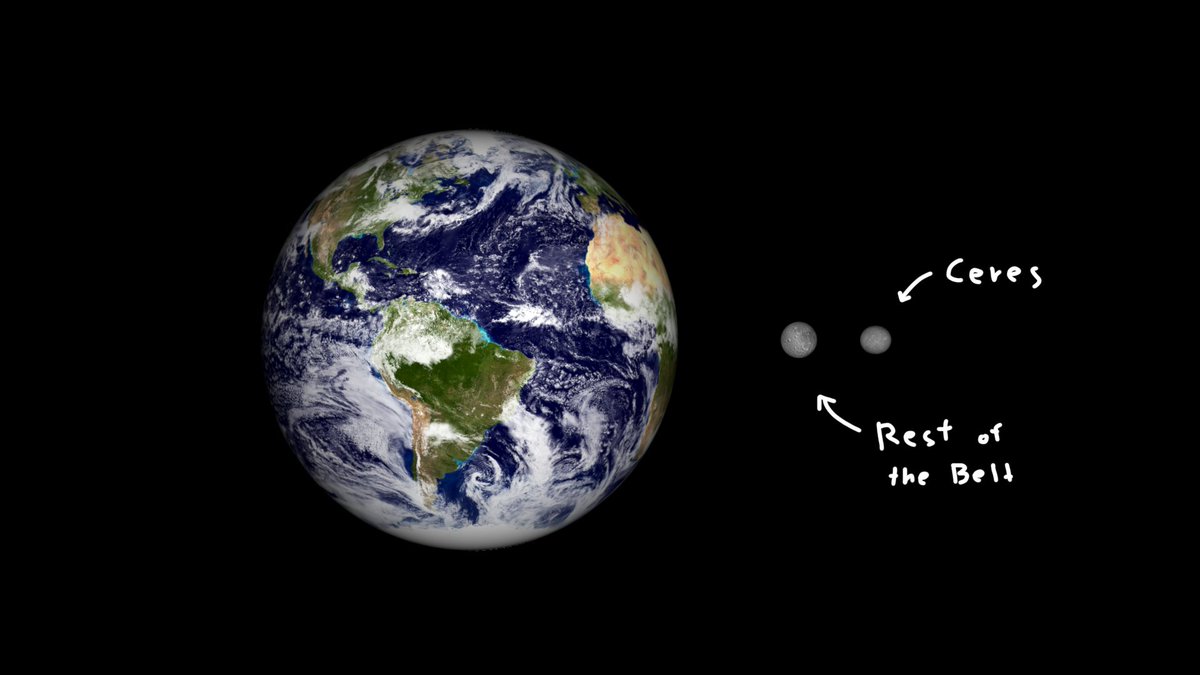
And it is worth noting that even so, Ceres accounts for about 39% of the mass of it.
If one were to exclude it, then you'd only get an 1102 km diameter object instead.
Which drawn together would only look slightly larger than Ceres.
(it would be heavier, but volume increases much faster than diameter, so a little bit of diameter nets you a lot more volume)
1
1
247
20 Jan 2024
Keep in mind that despite the mass of the total material in the asteroid belt being so tiny, this is not necesserily the size the original protoplanet (or protoplanets) that may have once broken up to form it had.
Since many fragments of it, likely either got ejectected from the solar system, or fallen into/merged with the rest of the existing planets and gas giants.
This essentially is what remains of the fragments of it/them, that ended up in a stable enough orbit to be around for us to observe today.
1
1
206
20 Jan 2024
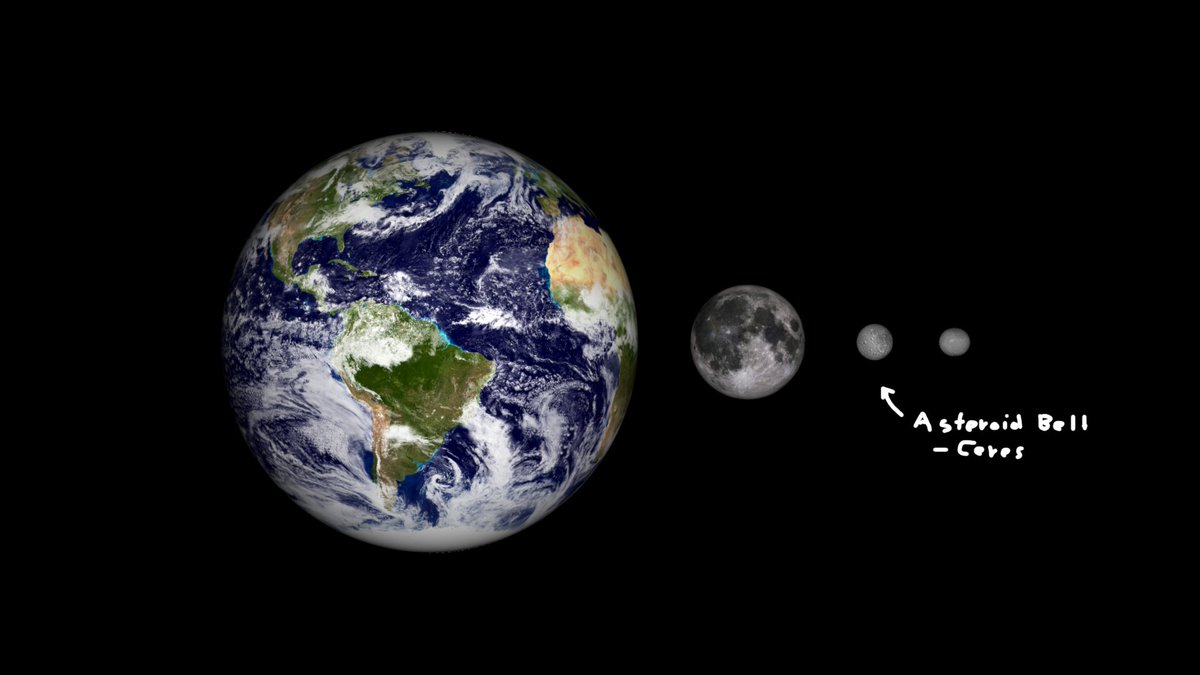
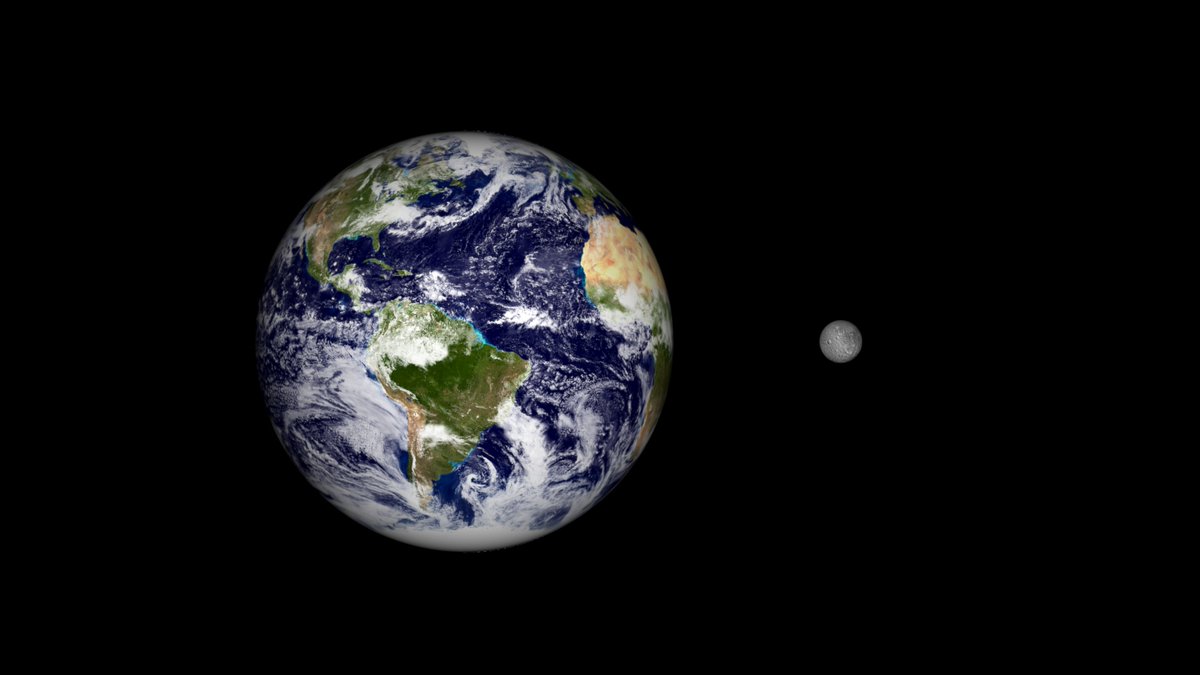
(Bonus picture of the Earth, Moon, current "Asteroid Belt Planet" and Ceres all together)
189
20 Jan 2024
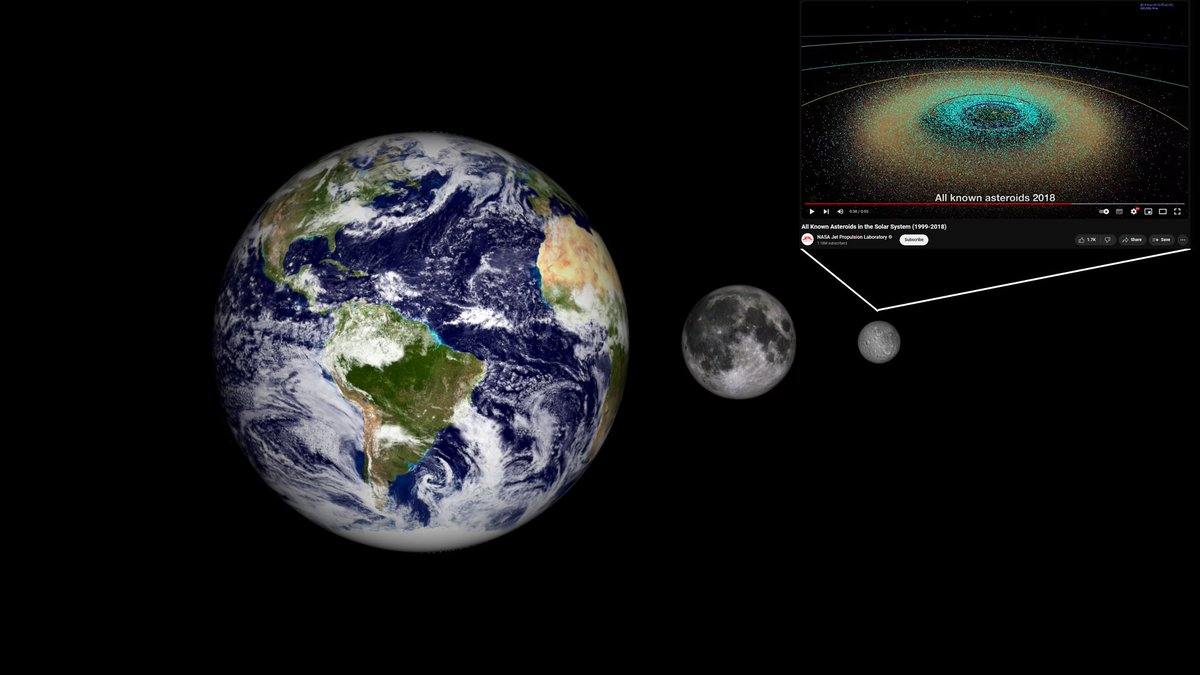
Despite the asteroid belt looking fairly scary when you see visualization that plot every single object. All of these are fairly tiny objects spread around a trully vast space.
And together mass to only about 2.39 x 10^21 kg, or a mere 3%-ish of the mass of our Moon.
1
1
135
20 Jan 2024
The size the asteroid belt would have if you were to concetrate it again into a single object:
The resulting "asteroid dwarf planet" in this case has a diameter of 1,299 km.
And I assumed it to be a mostly rocky/icy object with the density of Ceres (2.08 g/cm³)
1
1
2
264
19 Jan 2024
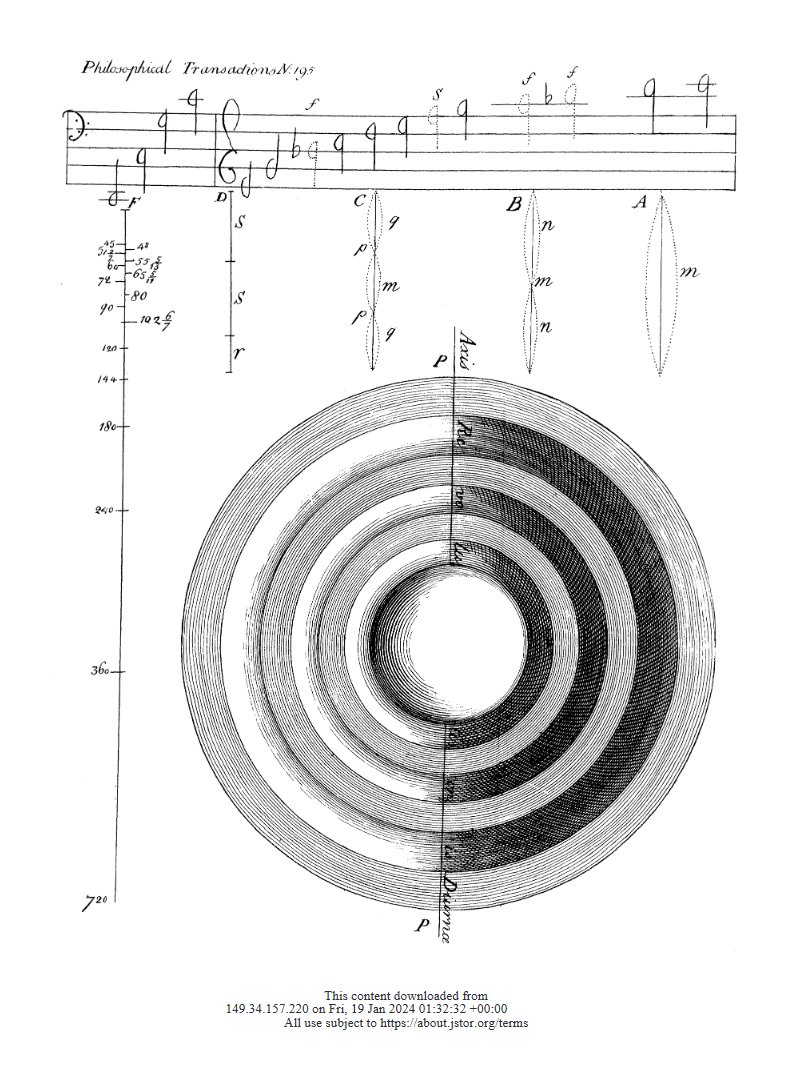
Edmond Halley.
Famous and forever immortalized astronomer for accurately mathematically predicting Halley's comet return.
Probably a bit less famous and accurate about:
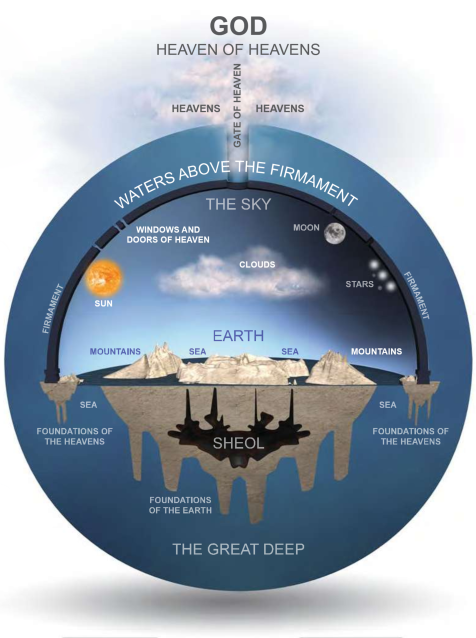
His multi-shell hollow earth theory.
royalsocietypublishing.org/d…
1
2
219
19 Jan 2024
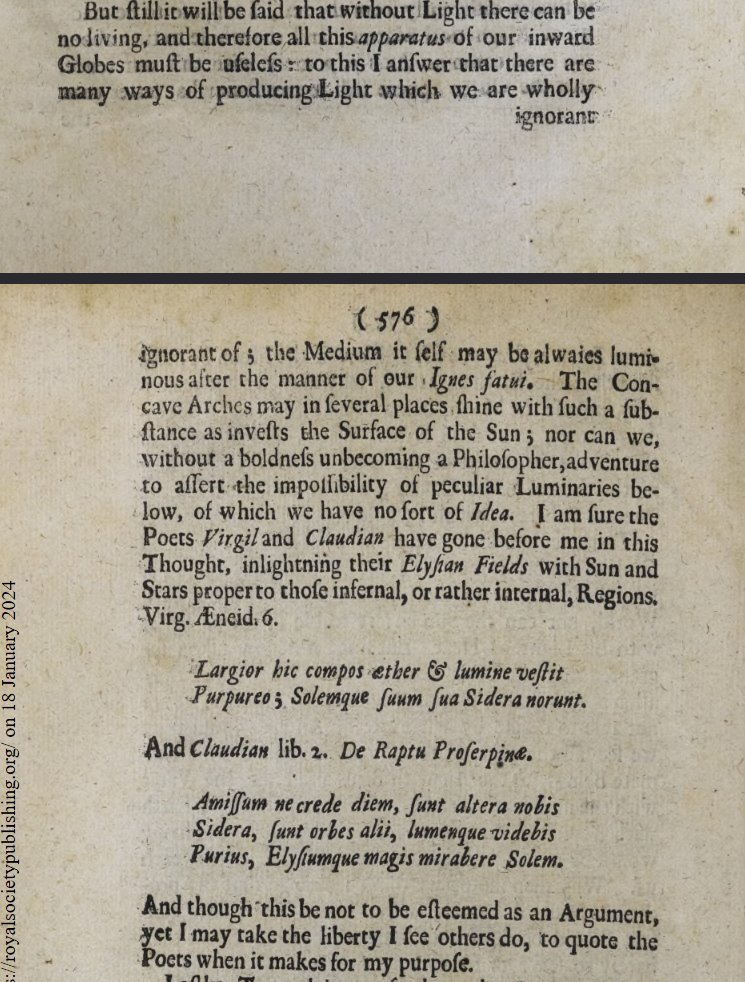
Back to Halley.
He is of cource very much aware of other limitations, such as light. Albait at this point the argument not being anything more beyond "well, there may be other ways to produce light" and essentially later on "well, it would be a waste if the Creator didn't make something so cool".
1
135
19 Jan 2024
In the end the point of all of this is not to dunk on Halley.
It is to ponder what an archievement it is to get anything right in the first place, when you exist in a world where everyone is stumbling in the dark and pretty much this was the level of science all around you.
And for all we know, future astronomers knowing the reality of folded spacetime time-rotated fractal tensors or something will laugh at our silly "hey, did you know that after the big bang, the universe also magically inflated really fast but only for a little while, then it still did so but slower? Why and with what mechanism? Oh, uh, Inflaton fields I guess" (actual current scientific theory en.wikipedia.org/wiki/Inflat… )
And of cource I very much like this stuff because it makes for excellent alternative fantasy and what if settings!
1
128
11 Jan 2024
Yes, that's extremely obviously bird poop/bug smear or similar a far as I am concerned.
However I have noticed some interesting comments by people saying "oh yeah, then why does it sometimes move back and forth compared compared to the rest of the hud?" or "oh year, and how come something on top of the lens is in focus"?
So here's actually the last mental lego piece of information needed to explain these, which to me as someone who also likes military tech was obvious but realize its probably worth explaining.
For starters, check out the cool video attach of some rocket seekers moving. And notice that they move and at the same time, they are inside a plastic "dome".
The same thing I can assure you pretty much is going on whatever targetting pod thingy this video is from. In other words, these camera lenses are not bare to the air.
They will usually have inbetween another transparant cover, which is there either for aerodynamics, or because, simply put, if you hit a pigeon you'd rather ruin that rather than you expensive sensors/lenses.

🚨 New UFO Footage: “The Jellyfish”
In 2018, the U.S. military captured footage in Iraq over a sensitive facility. The object was designated as “UAP” by U.S. Intelligence.
Jeremy Corbell obtained & released this video. He identified direct eyewitnesses that corroborated that the event occurred and described the following:
“It goes out over a body of water. I’m told, it stops on a dime, descends into the water, stiff into the water. And for 17 minutes, nothin’. And BOOM! This thing comes up out of the water and shoots off at 45 degrees.”
Corbell says the footage of this action exists according every source he’s talked to that is aware of this event.
TMZ Presents: UFO Revolution
Episode 1:
tubitv.com/movies/200044921/…
h/t: @MikeColangelo
#ufox #ufotwitter #ufo #uap
1
1
5
1,108
11 Jan 2024
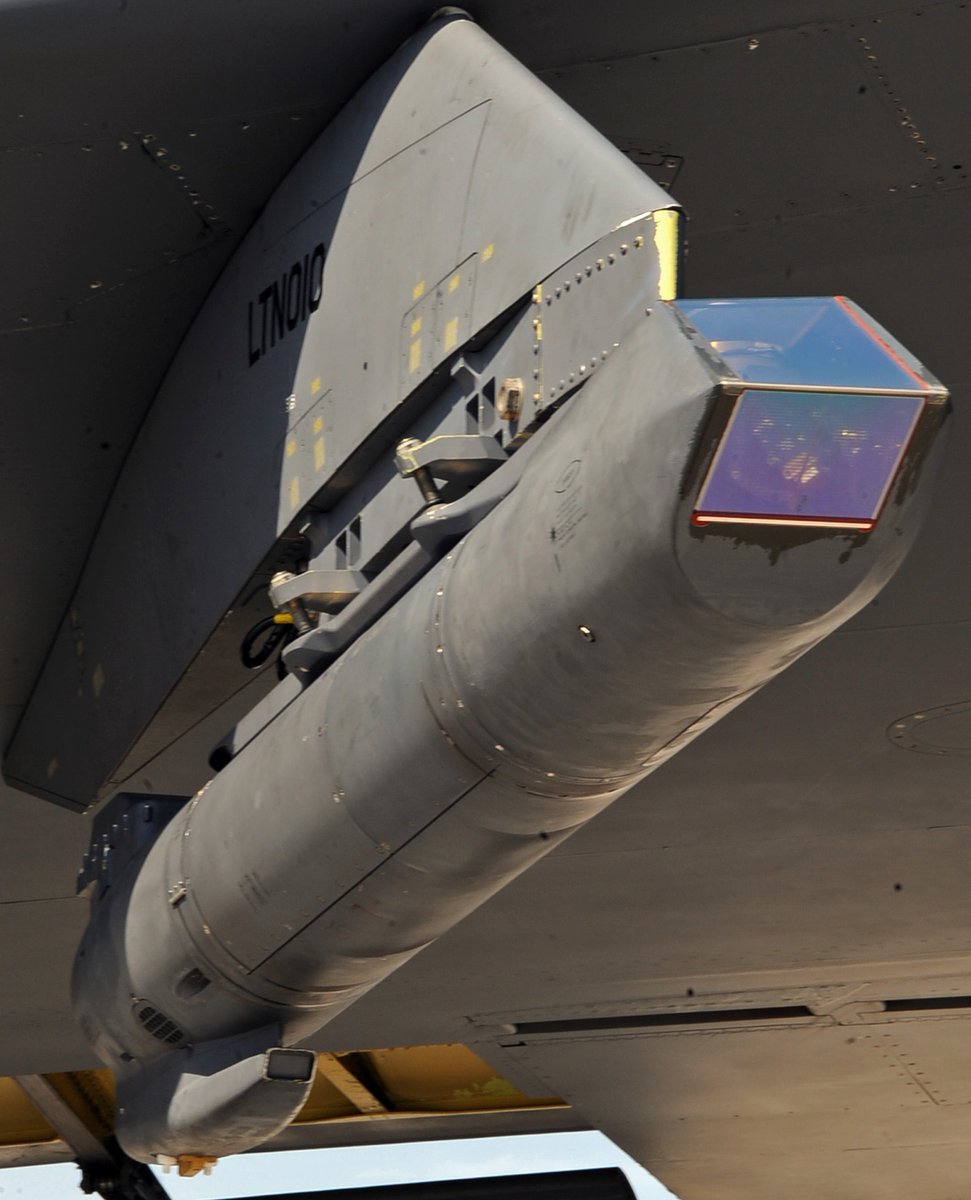
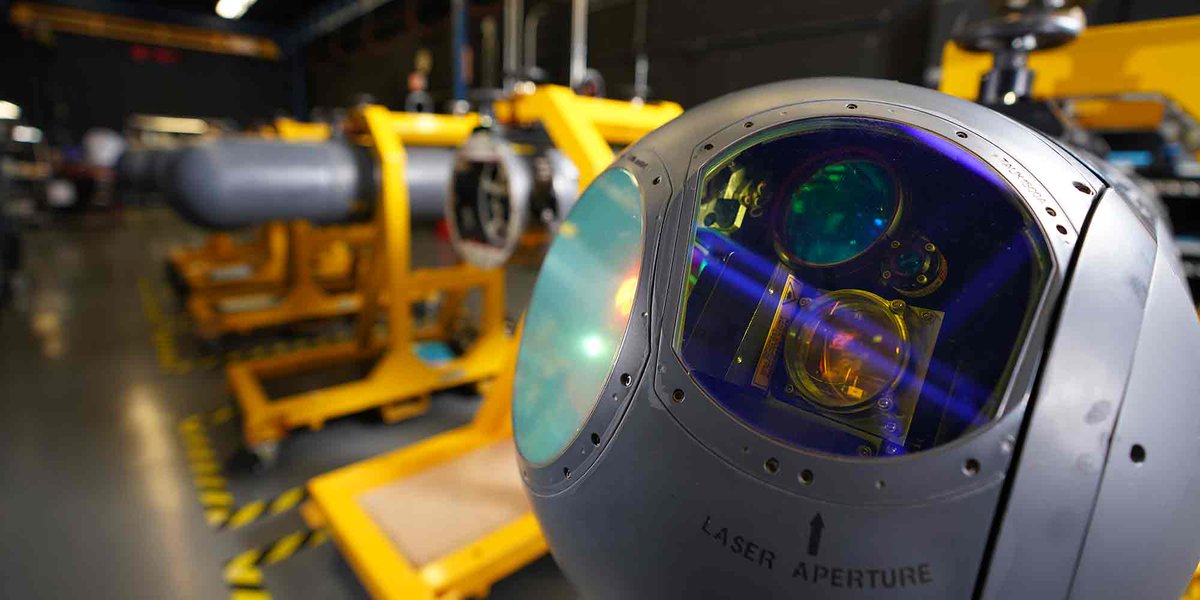
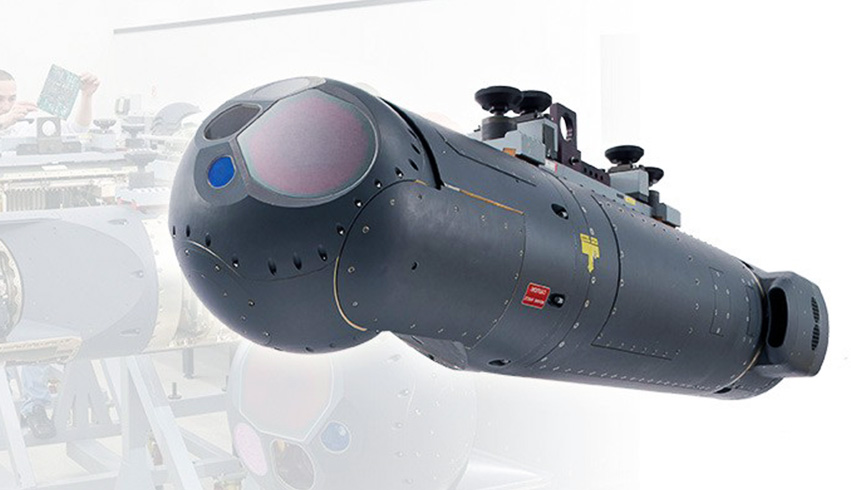
And here's a couple of actual targetting pods:
In this one, the polygonal cover would be stationary, and the camera would move inside around it.
And even in those where it seems the dome has some turning capability of its own, the actual camera will still be some distance inside it and have some independant movement. (in, ie, doing active image stabilization of its own to reduce vibrations from the rest of the vehicle)
In fact, in targetting pods where the entire cover rotates as well, these would significantly reduce extreme movements by the smear.
Since in one with a static cover, if the vehicle turns a significant amount the smear would shoot away some direction as the camera makes a "big" movement inside the cover.
Whilst if both the cover and the camera track, then this wouldn't happen, but the dome's movement and camera's own stabilization inside it would still differ a bit, which would create some back and forth movement.
(until the vehicle turned enough that the dome runs out of motion range. Which ofc wouldn't happen if the pilot itself is trying to keep the smear within the pod's field of view)
4
195
22 Sep 2023
A fun case of ancient "Microgravity manufacturing" I stumbled upon.
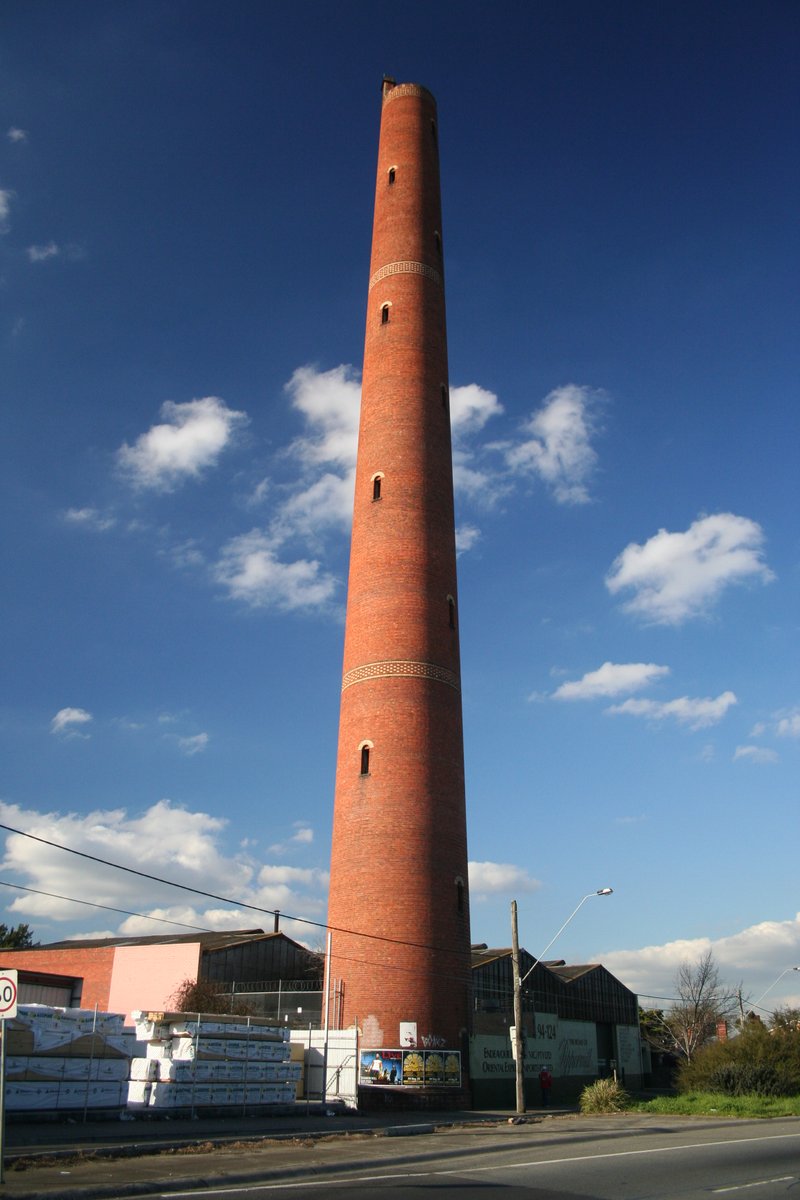
"Shot Towers" were used in the past to manufacture round shot. (which for the longest time was what guns like muskets used). They work like this:
1
7
514
22 Sep 2023
Incidentially a somewhat interesting side fact (in case you had that thought, since I had it as well) is that, no, raindrops dont actually have a "raindrop" shape during flight.
Its a myth (possibly due to how they look when they are about to drip from a faucet)
1
2
205
22 Sep 2023
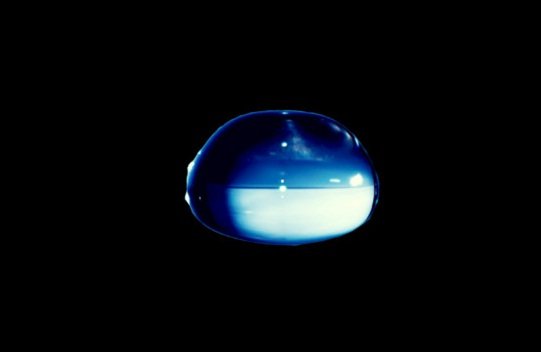
Water also tries to make itself into a sphere when it freefalls, but due to air resistance it deforms to a shape like this.
(Presumably so does lead somewhat but holds its shape better resists air better due to its higher density. And was good enough for that time's use case)
3
191