
#Mother | #Activist | #Author | #Speaker | #CastingLots; Creating a Family in a Beautiful, Broken World | @DaCapoPress | Founder @2ndNurture
Joined March 2014
- Tweets 6,048
- Following 2,338
- Followers 8,774
- Likes 49,996
355 Photos and videos





(((SusanSilverman))) retweeted

May 28
Hello @AOC, while you smiled in a hijab at a New York event, I was in Federal Court facing the 4th hitman hired by the Islamic Republic to assassinate me, for campaigning for Iranian women to have the same freedom you performed for a photo op. Will you come to court with me in August when I face the 5th hitman? Or does solidarity only work when it doesn't offend the Islamic regime?
You wore hijab voluntarily in New York. Women are killed in Iran for taking it off.
You are the very woman who, at every opportunity, protests against violence against women, decries gender segregation, and champions "inclusion." Yet here you stand, smiling and wearing a hijab, at an event in New York, in the heart of the West, where men and women are strictly separated. To me and millions of Iranian women, this does not look like a choice. It is no longer "My body, my choice," but rather "My body for votes."
They who claim to fight for women's self-determination in the name of feminism voluntarily embrace an ideology that mandates our women cover their hair simply because they are women. They enjoy the prosperity, freedom, and privileges of the Western world, where they may live as autonomous individuals , yet they simultaneously accept that other women should not be afforded the same rights.
#LetUsTalk
3,033
25,699
89,692
2,316,589

(((SusanSilverman))) retweeted

May 21
Ben Gvir is a national embarrassment. Time and again, he’s behaved recklessly, inflamed tensions, and disgraced the State of Israel. He does not reflect the values of most Israelis. Fire him.
1,121
219
1,615
97,165
To Muslims in San Diego and everywhere. I stand with you in this horific moment. And my heart goes specifically to the @IslamicCenterSD Diego. You are not alone. All good people are with you, from near and from far.
8
217

😂 This “Nakba Survivor” is literally a “European settler”
In the late 19th century, Muslim Bosnians (including Inea’s grandparents), fled Bosnia to Ottoman Syria, after Austria-Hungary took control of Bosnia.
They feared that now, the Christians will seek revenge after years of mistreatment.
Inea’s father’s family lived in Tulkaram, but he himself lived in Jerusalem where Inea was born.
In the 1930’s, Inea’s father had a Job in England, he returned to Mandatory Palestine after a few years, but in 1948 they decided to move back to England.
They were not expelled, and no one forced them to move to England. As a matter of fact, Tulkaram, and the old city of Jerusalem remained under Jordanian Arab control. Not a single Zionist to bee seen there.
So in summary, this is a European with no strong roots in the land of Israel, whose family made the decision to immigrate back to the continent of their grandparents instead of remaining under Arab control.
(And the “visit Palestine” poster on her wall is a Zionist poster by Franz Kraus to encourage Zionist tourism to the holy land. It’s not even the original poster, but a replica of the poster, with an additional Hebrew description mentioning his name 🤦♂️)
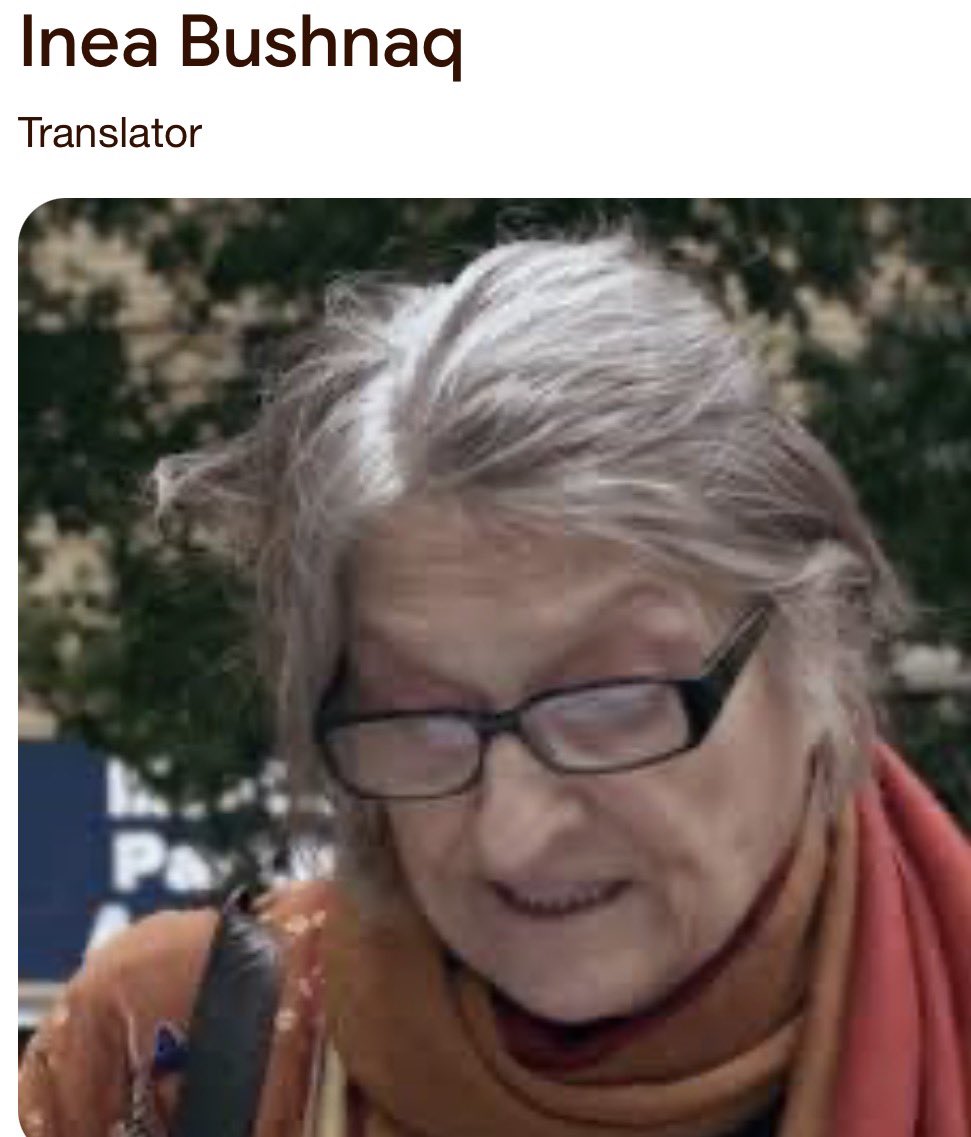

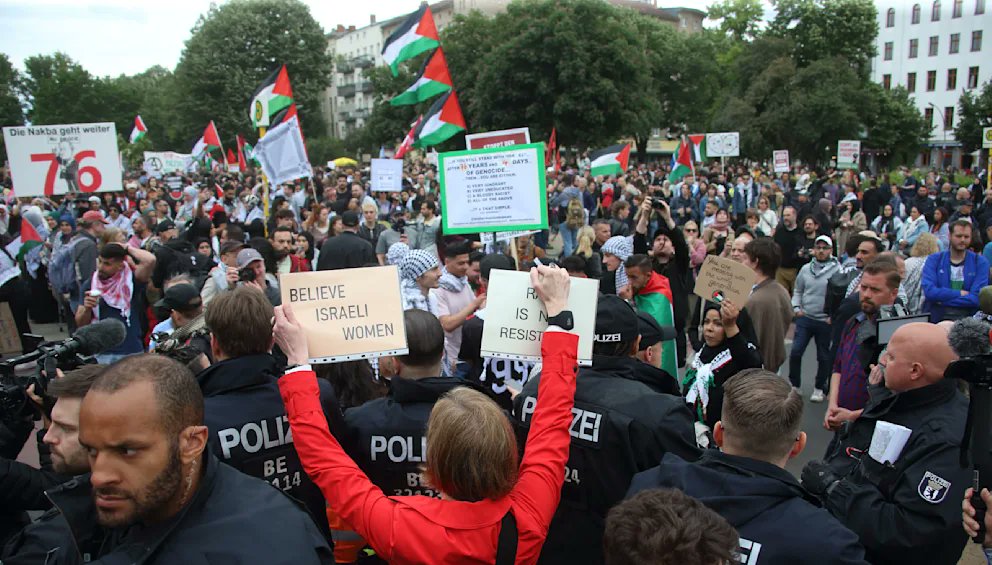
Today marks Nakba Day, an annual day of remembrance to commemorate the expulsion of more than 700,000 Palestinians between 1947 and 1949 during the creation of the State of Israel and the year that followed.
Inea is a New Yorker and a Nakba survivor. She shared her story with us — one of home, tradition and memory over generations.
324
2,492
10,695
846,831
(((SusanSilverman))) retweeted

May 16
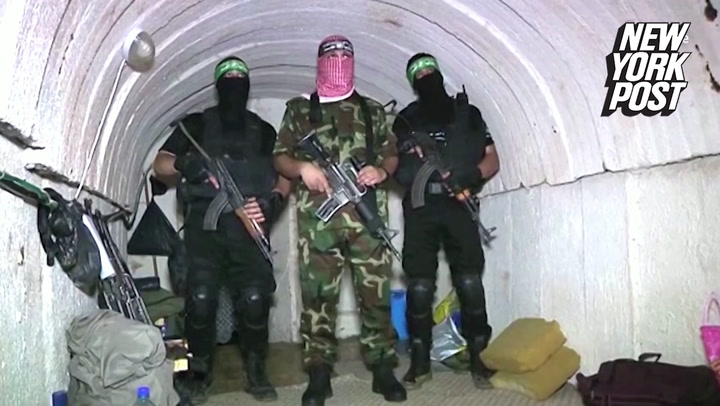
Hamas spent years siphoning the Palestinian people’s resources and money to dig hundreds of kilometers of tunnels under Gaza, all sold as essential to “protect the resistance.” Yet the war after October 7 exposed the lie: most senior Hamas leaders killed in Gaza weren’t found in tunnels at all. They were hiding in tents, schools, apartments, and civilian areas, dragging dozens, sometimes hundreds, of Palestinians to their deaths each time they were targeted by the Israeli military.
Today’s strike on Izz al-Din al-Haddad fits the same pattern seen with Mohammed al-Deif, Marwan Issa, Sinwar, Ismail Barhoum, Salah al-Bardawil, and many others. The tunnel narrative was ultimately a fraud; billions wasted, thousands killed, all to maintain the illusion that burrowing into muddy, airless tunnels was some noble form of resistance. Ultimately, the tunnels served mainly to imprison a fraction of the hostages in horrific underground conditions, while most hostages were kept above ground with Hamas families or embedded among civilians in homes, markets, schools, and medical facilities.
Gaza cannot rebuild while any tunnels remain. Every intact shaft is a ready-made sanctuary for Hamas to hide weapons, fighters, and sabotage any future administration trying to stabilize and transform the territory.


19
239
844
30,882
(((SusanSilverman))) retweeted

May 16
People say the left and the right can’t agree on anything these days. But there is this one thing:
3,763
4,566
22,851
3,065,566
(((SusanSilverman))) retweeted

May 16
Narrative violation warning:
Elders in my Arab village in Israel told me the richest Palestinians sold their land and left first. 80 years later, their grandkids now claim to be displaced victims.
I am so allergic to victim mindset. It boils my blood. ~15 million displaced Hindus and Muslims in India-Pakistan around the SAME year. No one is trying to be a victim there. It's time to move on.
"You only get to be a victim once. After that, you’re a volunteer."
Today marks Nakba Day, an annual day of remembrance to commemorate the expulsion of more than 700,000 Palestinians between 1947 and 1949 during the creation of the State of Israel and the year that followed.
Inea is a New Yorker and a Nakba survivor. She shared her story with us — one of home, tradition and memory over generations.
1,181
3,320
17,850
1,009,809
(((SusanSilverman))) retweeted

May 12
African American showing support for NYPD and Jewish community while domestic terrorists were terrorizing Jews in Brooklyn, NY.
191
1,094
7,720
86,425
(((SusanSilverman))) retweeted
May 13
Gaza’s exceptionalism? There is a strange and recurring theme that treats Palestinians in Gaza as exempt from the basic realities of modern war. It suggests Gazans should remain exactly where they are, face no disruption, and expect reconstruction to simply restore the pre-October 7 reality, as if the devastation, the tens of thousands killed, and the political collapse should carry no structural consequences. This view ignores how every major conflict from Iraq and Syria to Yemen, Sudan, Libya, Ethiopia, Lebanon, Afghanistan, and Ukraine involved mass displacement and population relocation for their safety and security, shifts in governance, the removal of armed groups, and major political restructuring. Gaza is the only case where displacement has been entirely internal, leaving civilians with almost no safe alternatives and facing unbearable hardships and challenges, caught in between Israeli bombardment and Hamas’s control.
The exceptionalism narrative insists that everything in Gaza must be smooth and consequence‑free: aid should flow flawlessly; civilians should never be asked to temporarily relocate; all needs must be met while everyone stays put; reconstruction should be guaranteed without any commitment to a new political or social contract; and Gaza should receive unlimited aid while its leaders retain the freedom to launch wars, provoke neighbors, and reject peace under the banner of “resistance.”
A second pillar of this exceptionalism point of view is the belief that Hamas, the actor that triggered this disaster, is entitled to a say in the next steps and deserves to remain politically intact and recycled into yet another reconstruction phase, as has happened for two decades. Whether out of romanticization of “resistance” or avoidance of hard choices, this view demands rebuilding Gaza while its captors stay in place.
But the international community and donor states will not fund a future where Gaza is expected to thrive while still held by jihadist adventurism and nihilistic governance. There is no perfect humanitarian delivery system, no perfect reconstruction with everyone staying put, and no scenario where Hamas is confronted while the population remains entirely stationary. Two decades of jihadism marketed as “resistance” have created consequences that can no longer be deferred.
If Gaza is to be rebuilt and reborn, difficult decisions are unavoidable. The alternative is the status quo: a slow drip of aid that leaves two million people trapped in rubble, sewage, and despair. Creating genuinely safe zones outside of the “Yellow Line,” secured by an International Stabilization Force, is essential to moving civilians out of Hamas’s grip, shielding them from renewed Israeli attacks, and enabling the eventual rebuilding of Gaza.
24
122
496
34,486

(((SusanSilverman))) retweeted

Al Jazeera and some of the biggest accounts on X are targeting me. Why? Because I’m a 17-year-old Druze Israeli who refuses to stay silent. They’re claiming I’m "government-funded." The truth? It’s much simpler, and it terrifies them. Here’s my story >>

60
447
1,824
20,946
Adar was on that border. I remember it well.
May 10

Revealed: Hamas leader Jaser Al-Barghouti shared that Sinwar and Hamas decided to use protests on the Gaza border between 2018 and 2019, belovingly referred to as the “Great March of Return,” to deflect internal pressure against the terror group’s rule and weaken the “we want to live” anti-Hamas protest by Palestinians in Gaza. Hundreds of Gazans were killed & nearly 10,000 were wounded as part of a con to proclaim the "right of return" of refugees displaced in 1948, when the effort was ultimately a way for Hamas to manipulate the global masses and force Israel into resuming monthly Qatari cash payments.
2
2
149
The fucking absurdity, so blatantly trying to be a victim. I'm a little embarassed for him.
May 5

Flotilla leader Thiago Avila got his detention extended until Sunday. He entered court with hands clasped behind his back as if he’s handcuffed. He’s not. Even the guard looks confused. There’s nothing real about this people.
2
82
(((SusanSilverman))) retweeted

May 4
BBC Interviewer:
"You’ve said that in some dinner circles antisemitism has become something normal. Are you talking from your own experience?
Kemi Badenoch:
"Not in my social settings. I don’t hang around with antisemites." 🎤💥
116
545
6,669
221,570
(((SusanSilverman))) retweeted

Corpse shopping in Iran
274
1,313
4,275
82,120
(((SusanSilverman))) retweeted
If I’m quiet on here, it’s because I’m speechless. It’s because my mind is tying itself in knots trying to understand how an Iranian man is tortured to death over Starlink internet possession, and the world organizes itself to say, actually, the regime is not the problem. It’s Israel and all of its nine million civilians—Jews, Muslims, Arabs, Christians—that need to be eliminated for justice to come.
224
1,612
7,465
99,421
(((SusanSilverman))) retweeted

Apr 30
We can all thank Susan Sarandon for the 6-3 Supreme Court.
15
56
244
2,335
I am familiar with Israel having developed unique techniques and programs re seeing-guide and service dogs. (And even invented an "electronic guide dog" system, which uses a 3D camera, phone app, & headphones) but this is new...

Unbelievable: U.N. rapporteur Francesca Albanese — widely condemned for spreading misinformation — now claims Israel is raping Palestinians with “trained dogs.”
2
168
(((SusanSilverman))) retweeted

🎴📢Devastador testimonio del príncipe saudí Bandar —el hombre que estaba en la sala con Arafat en enero de 2001, cuando este rechazó los Parámetros Clinton (aceptados por Israel) para el establecimiento de un estado palestino.
“Quise llorar. Mi corazón ardía por cómo se perdió otra vez la oportunidad…”
Para contexto: los Parámetros eran la propuesta final y de gran alcance del presidente Clinton para la paz. Incluían un Estado palestino en casi toda Cisjordania y Gaza (con intercambios de territorio), una capital en Jerusalén Este y otras importantes concesiones. Israel aceptó el marco. Bandar ya había logrado reunir un amplio apoyo árabe.
Arafat miró a Bandar y a los egipcios a los ojos y dijo que aceptaría… luego les mintió en la cara y se retiró.
Bandar había advertido previamente a Clinton: “Si Arafat rechaza esto, no será un error — será un crimen”. Tras el colapso, Bandar dijo que su “corazón ardía” por la oportunidad perdida “quizás por última vez”.
Arafat rechazó la paz y un Estado palestino —y eligió el terrorismo y la Segunda Intifada en su lugar.
Esto no es historia antigua; es la misma ideología de odio que perpetró el 7 de octubre.
53
2,390
4,528
105,336